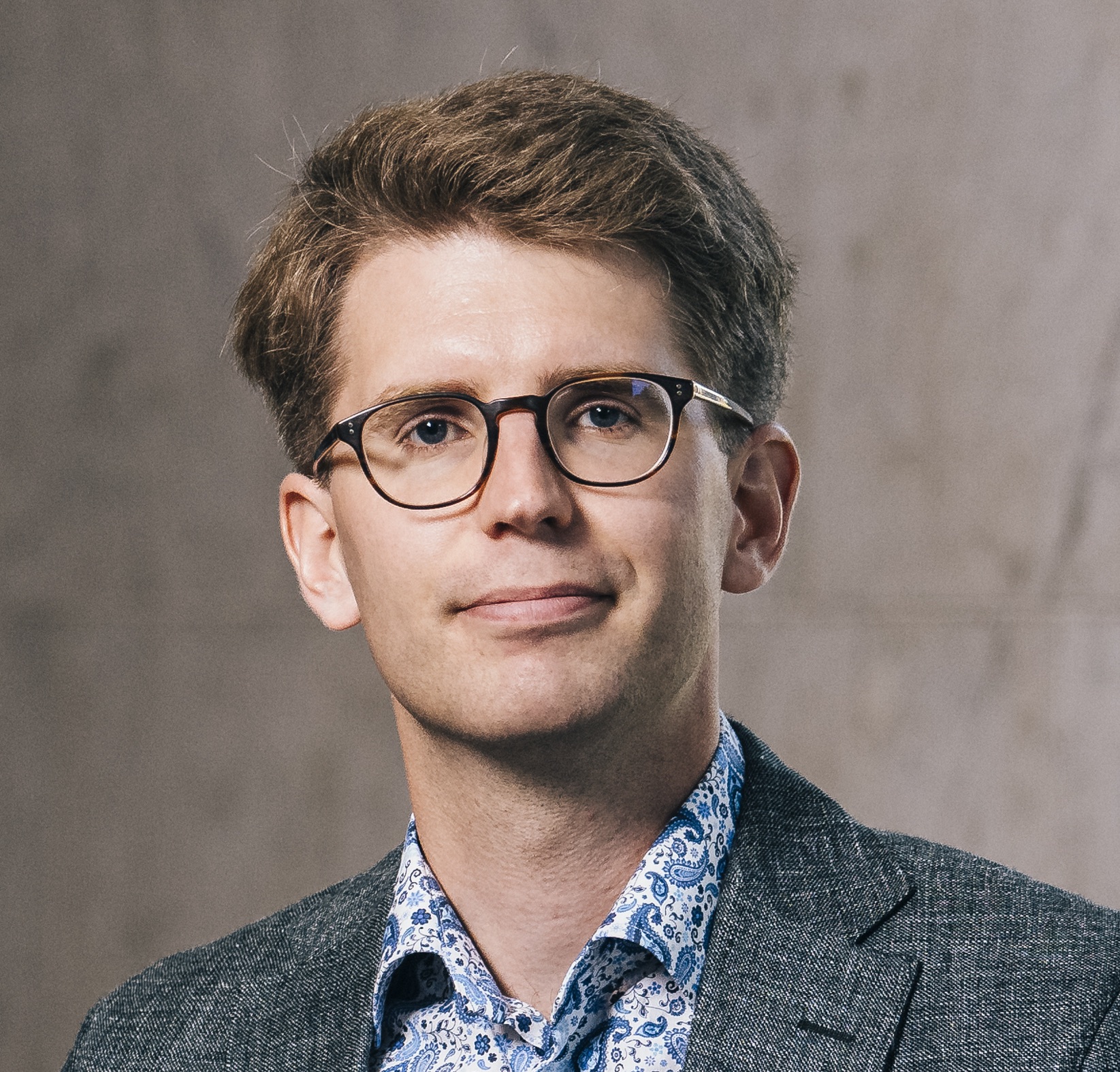
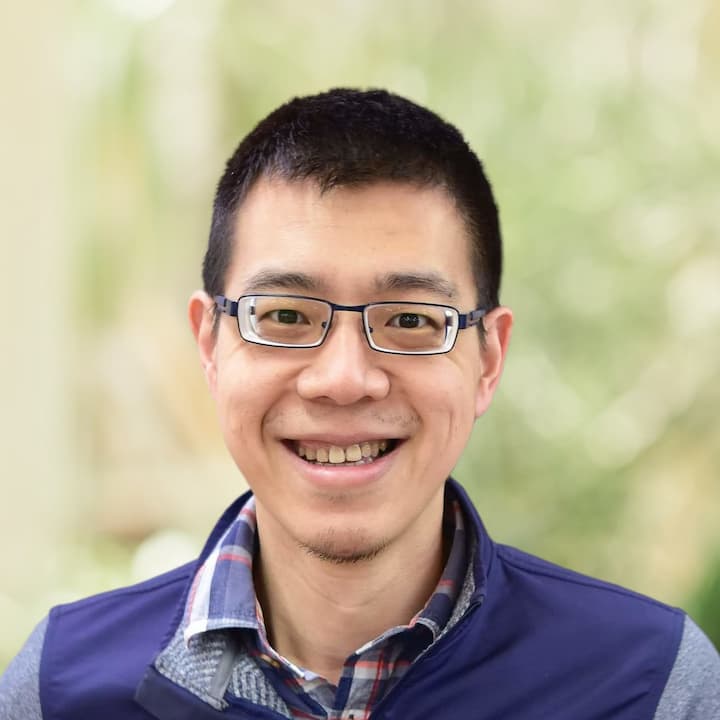
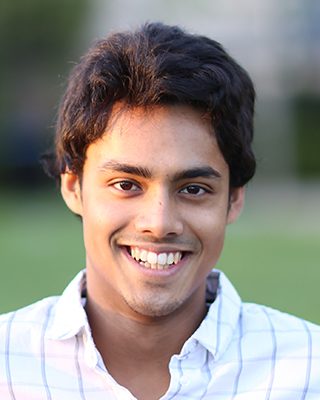
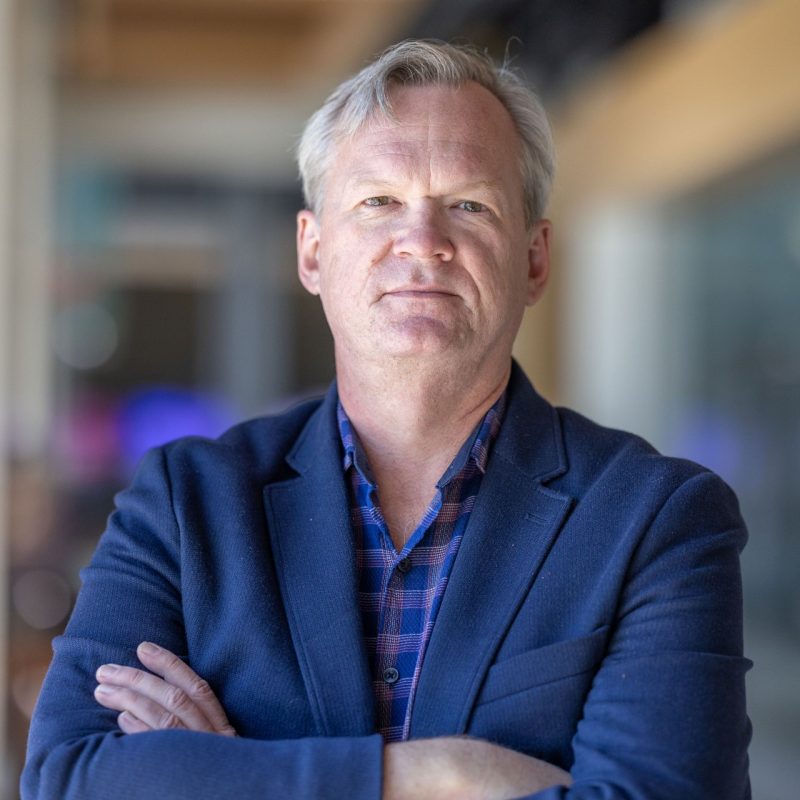
Filip Elvander is an Assistant Professor in the Department of Information and Communications Engineering at Aalto University, Finland. Previously, he served as a postdoctoral research fellow at KU Leuven (2020-2022), supported by the Research Foundation - Flanders (FWO). PhD in Mathematical Statistics (2020) and MSc in Industrial Engineering and Management (2015) from Lund University Assistant Professor at Aalto University since 2022 Leader of the Structured and Stochastic Modeling Group (SSMG) His research focuses on statistical signal processing, particularly inverse problems and optimal transport theory. Key application areas include acoustic localization, spectral estimation, audio processing, and spectroscopy. Current research directions involve: Optimal transport for geometric signal space modeling Spatio-temporal signal modeling in remote sensing and audio Misspecified modeling impacts and mitigation Optimal sampling schemes for efficient data collection Recent publications demonstrate trends in optimal transport applications for multi-pitch estimation, room acoustics, sensor networks, and audio restoration. His group includes 5 PhD students working on these topics. Awards include FWO postdoctoral fellowship (2021-2022). Collaborations span Lund University, KU Leuven, and Aalto University research teams.
Prof. Adrian Evans serves as Deputy Head of Department in the Department of Electronic & Electrical Engineering at the University of Bath, where he leads research within the Electronics Materials, Circuits & Systems Research Unit (EMaCS) and The Foundry: Centre for Digital, Manufacturing & Design. His academic profile demonstrates active engagement in doctoral supervision and cutting-edge research across multiple domains of image processing and biometrics. His primary research focuses on biometrics—particularly 3D face recognition techniques resilient to facial expressions—and advanced colour/multispectral image processing. He has pioneered methods for colour edge detection, nonlinear filtering, and scale-space sieve-based segmentation. His motion estimation work specializes in analyzing non-rigid bodies like clouds and glaciers, while his nonlinear image processing research centers on mathematical morphological sieves and granulometric texture analysis. Recent publication trends (2021-2025) reveal a strategic shift toward computer vision applications in transportation (multi-camera vehicle tracking systems) and healthcare (non-contact cardiorespiratory monitoring). His work increasingly integrates radar technology with computer vision for vital sign detection while maintaining foundational contributions to mathematical morphology and image enhancement techniques. No major scientific awards are documented in the provided materials. His supervisory record includes 11 doctoral students, with current openness to new PhD candidates. Research funding spans UK government and industry collaborations including EPSRC projects like High Speed 4K Video Transmission (2016-2018) and multiple KTP partnerships with Seiche Measurements Limited and Navtech Radar Limited. He operates within Bath's EMaCS research unit and The Foundry center, leveraging these interdisciplinary environments for digital manufacturing and design innovation. His work directly supports UN Sustainable Development Goals through applications in smart transportation systems and healthcare technology development.
Claudio Fontanari is an Associate Professor of Geometry at the Department of Mathematics , University of Trento , Italy. His research spans algebraic geometry, birational geometry, and the history/philosophy of mathematics, with interdisciplinary applications in multimedia engineering. Research Focus : Algebraic curves and moduli spaces, geometric modeling, shape matching, and digital forensics. Teaching : Offers courses in Linear Algebra, Analytic Geometry, and Geometry for Industrial Engineering and Philosophy programs. Interdisciplinary Work : Exploits algebro-geometric tools like linear algebra, commutative algebra, and conformal geometry for multimedia engineering tasks such as asymmetric watermarking and digital fingerprinting. Publications highlight his contributions to multimedia security, including hierarchical watermarking schemes and genetic algorithm-based robustness evaluation. He also organizes the Multimedia Geometry Seminar , fostering academic exchange in geometry and its applications.
Assoc. Prof. Dr. Mustafa Berke Yelten is an Associate Professor at the Electronics and Communication Engineering Department , Istanbul Technical University , specializing in Analog Circuit Design , Semiconductors , and MEMS Technologies . With a PhD from North Carolina State University (2008), he has held academic roles since 2015 and served as Deputy Head of Department (2020) and Vice Dean (2018-2020). His research focuses on Cryogenic Electronics , Integrated Circuit Reliability , and Biomedical Device Design , particularly for Wireless Capsule Endoscopy . He has developed Low-Noise Amplifiers , Power Amplifiers , and MEMS Actuators with applications in Space Electronics and Medical Imaging . Recent publications highlight his work on LSTM-Based Transistor Reliability , 3D-Printed Medical Actuators , and Machine Learning Applications in analog circuit modeling. His projects include TÜBİTAK and BAP -funded initiatives for Cryogenic Communication Systems and Optical Sensor Development . Scientific Awards ITU Academic Performance Award (2023) ITU Academic Performance Award (2022) Key Collaborations IEEE Senior Member (2003-present) Co-editor, IEEE Transactions on Device and Materials Reliability
Dr. Todd Alamin is a Professor in the Department of Orthopaedic Surgery at Stanford University School of Medicine. He serves as director of the Spine Surgery Fellowship Program and the Minimally Invasive Spine Center at Stanford Health Care Orthopaedics and Sports Medicine. As a board-certified, fellowship-trained orthopaedic surgeon and spine specialist, Dr. Alamin has established himself as a global leader in innovative spine surgery techniques with decades of clinical experience. Dr. Alamin earned his medical degree from Yale School Of Medicine (1995), completed his Surgery Residency at UCSD (1996), Orthopaedic Surgery Residency at UCSD (2000), and a specialized Spine Fellowship at Stanford University (2001). He is board-certified by the American Board of Orthopaedic Surgery (2003) and holds fellowship status with the American Academy of Orthopaedic Surgeons. Dr. Alamin's research program focuses on developing effective treatments for vertebral fractures, spinal deformities, scoliosis, herniated discs, and spondylolisthesis. His work explores nerve ablation techniques for chronic low back pain and motion-preserving lumbar fusion approaches. He has published over 65 peer-reviewed articles and written multiple book chapters on spine conditions. A recognized innovator, he has invented dozens of medical devices and techniques for spine surgery, holding numerous patents that have revolutionized back pain treatments worldwide. Analysis of Dr. Alamin's recent publications (2022-2025) reveals a strong research trajectory across multiple dimensions of spine care: optimizing surgical decision-making through understanding patient preferences, improving pain management protocols particularly regarding opioid use, advancing measurement technologies for spinal assessment, developing classification systems for spinal conditions, and refining surgical techniques including anterior approaches. His work consistently bridges clinical practice with rigorous scientific investigation to improve patient outcomes. Fellow of the American Academy of Orthopaedic Surgeons (FAAOS) As director of the Spine Surgery Fellowship Program, Dr. Alamin mentors the next generation of spine specialists, overseeing comprehensive training in both traditional and innovative surgical techniques. His leadership extends to the Minimally Invasive Spine Center, where he guides clinical practice and research initiatives. Dr. Alamin serves as principal investigator for multiple clinical trials exploring novel treatments for spinal conditions, with his patented innovations being adopted by physicians worldwide. His clinical practice focuses on minimally invasive approaches for spinal stenosis, scoliosis, degenerative disc disease, and traumatic injuries, emphasizing personalized care that combines extensive expertise with cutting-edge technology. Dr. Alamin leads a multidisciplinary team at the Minimally Invasive Spine Center, collaborating with specialists across departments to advance less invasive approaches to spinal surgery. His clinical focus spans minimally invasive spine surgery, cervical spine procedures, spinal tumor treatment, and correction of complex spinal deformities, with an emphasis on evidence-based approaches that maximize patient recovery while minimizing surgical trauma.
Dr. Jian Lin, an ACM Senior Member (2023), is a prominent researcher in machine learning and computer vision, with a focus on graph-based models, hashing techniques, and cross-modal learning. His work bridges theoretical advancements with practical applications in areas like medical imaging and video analysis. Scientific Awards : ACM Senior Member (2023) His research spans robust self-expression learning, latent graph inference, and dimensionality reduction, emphasizing adaptive algorithms and semi-supervised/unsupervised frameworks. Key trends include integrating uncertainty quantification, contrastive learning, and attention mechanisms to enhance model performance across diverse domains. Dr. Lin has contributed extensively to the field of artificial intelligence through publications on asymmetric transfer hashing, deep neural architectures, and graph convolutional methods. While details about his academic affiliations or teaching roles are not explicitly provided, his body of work underscores a commitment to advancing machine learning methodologies and their applications.
Sung-Min Sohn serves as Assistant Professor in the School of Biological and Health Systems Engineering within Arizona State University's Ira A. Fulton Schools of Engineering. His research pioneers RF/analog/digital circuit innovations for biomedical imaging systems, with particular focus on advancing magnetic resonance imaging (MRI) hardware capabilities. His academic foundation includes a Ph.D. in Electrical and Computer Engineering from the University of Minnesota-Minneapolis (2013), complemented by master's and bachelor's degrees from Korea University, Seoul (2004, 2002). Prior to academia, he gained industry experience as a circuit design engineer at LG Electronics (2004-2007). Dr. Sohn's research centers on bio-inspired electronics for medical applications, specializing in simultaneous transmit-receive (STAR) MRI systems, automatic RF tuning/matching mechanisms, and novel coil architectures. His work bridges electrical engineering principles with clinical imaging needs to develop more accessible and efficient diagnostic hardware. Publication analysis reveals an evolutionary trajectory from consumer electronics (2003-2006) to specialized MRI instrumentation (2011-2016), demonstrating consistent innovation in RF component design, field uniformity optimization, and high-power circuit integration for medical imaging systems. His scientific recognition includes the prestigious NIH Pathway to Independence Award (K99/R00) in 2016, one of only five awarded that year in biomedical imaging and bioengineering. As Principal Investigator, Dr. Sohn leads the NIH-funded Automatic RF Signal Tuning project (K99EB020058). He also contributes to major collaborative initiatives including portable MRI development (R24MH105998) and ultra-high-field (9.4T) human MRI systems (R01EB006835), working with researchers at the University of Minnesota and Columbia University. His teaching portfolio spans undergraduate and graduate biomedical instrumentation courses with honors thesis supervision.
Yao-Yuan Mao is an Assistant Professor of Physics and Astronomy at the University of Utah since July 2022. Their research delves into the mysteries of dark matter and galaxy formation, focusing on low-mass galaxies and their connection to dark matter halos through astronomical surveys and numerical simulations. Education: Ph.D. in Physics, Stanford University (2016) B.S. in Physics, National Taiwan University (2009) Research Interests: Yao-Yuan Mao's work addresses fundamental questions about dark matter, galaxy formation physics, and the uniqueness of the Milky Way. By studying low-mass galaxies in the nearby universe, they model the relationship between galaxies and their host dark matter halos to uncover the underlying cosmic structures. Their research spans cosmology and extragalactic astronomy , astroparticle physics , and astronomical instrumentation . Scientific Collaborations & Leadership: Co-leader of the SAGA Survey , a galaxy redshift survey characterizing satellite systems around Milky Way analogs. Active in the Rubin Observatory science community. Co-convener of the LSST DESC Science Release and Validation Working Group . Former co-lead of the DESC Dark Matter Working Group and Data Access Team. Served as Collaboration Council Chair and Hack/Sprint Coordinator for LSST DESC. Credited with Builder Status by DESC in 2019. Grants & Funding: HST Cycle 31 Proposal 17484: "BEYOND PANDAS: Two Extremely Faint Candidate Satellites of M33 Identified in Diffuse Light" (2024-2025) HST Cycle 31 Proposal 17501: "LONE LION OR PART OF A PRIDE: PROPER MOTION AND ORBIT OF LEO P" (2024-2027) "Discovery of Six Isolated Ultra-Faint Dwarf Galaxy Candidates in the Local Group" (2024-2027) NASA Hubble Fellowship Program: "Reconstructing the Assembly History of Andromeda" (2023-2025) Advocacy & Service: Yao-Yuan is committed to inclusion and equity in academia. They are the current maintainer of the Astronomy and Astrophysics Outlist and serve on the AAS Committee for Sexual-Orientation and Gender Minorities in Astronomy (SGMA) .
Lennard Hilgendorf is a Researcher at the Department of Computer Science , University of Copenhagen . His work focuses on Machine Learning with applications in quantum computing, medical imaging, natural language processing, and environmental sustainability. Research Trends: His recent publications highlight interdisciplinary work at the intersection of quantum mechanics and machine learning, efficient AI architectures for environmental sustainability, explainable models for medical diagnostics, and multimodal approaches to ecological monitoring. Key keywords include Machine Learning , Quantum Computing , Medical AI , and Environmental Science . Labs & Collaborations: Affiliated with the SCIENCE AI Centre and the TreeSense Centre , which specialize in foundational machine learning research and remote sensing for global tree resources, respectively.
Ranjay Krishna is an Assistant Professor at the Paul G. Allen School of Computer Science & Engineering at the University of Washington, with a Ph.D. in Computer Science from Stanford University (2021). He co-directs the RAIVN Lab and leads the computer vision team at Ai2 . His research sits at the intersection of computer vision , human-computer interaction , robotics , and natural language processing .
Dr. Mohamed Al-Hussein is a Professor and NSERC Industrial Research Chair in the Industrialization of Building Construction at the University of Alberta’s Department of Civil and Environmental Engineering. His work focuses on advancing modular and offsite construction technologies through automation, lean principles, and Building Information Modelling (BIM). PhD, Construction Engineering & Management, Concordia University (1999) MASc, Construction Engineering and Management, Concordia University (1995) MSc, Civil Engineering, University of Architecture & Civil Engineering, Bulgaria (1988) BSc, Civil Engineering, University of Architecture & Civil Engineering, Bulgaria (1983) Dr. Al-Hussein’s research spans five key domains: Modular Construction: Pioneering high-efficiency offsite building systems, including rapid assembly of student dorms and mid-rise residential buildings. BIM & Digitalization: Developing 3D/4D modeling frameworks, automated design systems, and digital twin applications for construction optimization. Environmental Sustainability: Quantifying CO2 emissions, exploring nano energy storage, and advancing solar PV integration in residential construction. Urban Planning: Specializing in age-restricted community design, municipal infrastructure maintenance, and housing affordability analysis related to paving standards. Construction Safety: Applying ergonomic risk assessment tools and virtual reality to enhance worker safety and reduce construction-related hazards. His 400+ peer-reviewed publications reflect cutting-edge applications of AI, deep learning, and simulation across construction processes. Recent work explores metaverse integration, blockchain collaboration tools, and advanced crane operation optimization using reinforcement learning. As Editor-in-Chief of the International Journal of Industrialized Construction , Dr. Al-Hussein remains a global authority in this field. He has developed industry-transforming technologies like the Quikmod-2 modular lift frame and PCL lift frame project , with real-world implementations ranging from Shell Scotford complex equipment replacement to CBC News and Forbes featured projects.
David A. Robb is a Research Fellow in the School of Mathematical and Computer Sciences at Heriot-Watt University, where he has been actively contributing to academic research since completing his PhD in 2015. His career progression shows a clear trajectory from PhD student (2011-2015) to Research Associate (2015-2020) to his current Research Fellow position. Robb is currently leading research efforts across three major EPSRC/UKRI projects: DeMILO (studying expert laser aligners' thinking and strategies), @tas_trust (investigating trust in autonomous systems), and HUME (focusing on human-machine teaming for AUVs). Robb's research interests span multiple interconnected domains within human-centered computing. His primary focus areas include Human-Computer Interaction (HCI) and Human-Robot Interaction (HRI), where he investigates how humans interact with and trust autonomous systems. Additional interests include image-based emotion feedback mechanisms, image summarization techniques, cognitive aspects of human-computer interaction, computer-supported cooperative work (CSCW), and visualization of complex data. His work often bridges theoretical understanding with practical applications in industrial and service environments. Analysis of Robb's publication record reveals a strong trajectory of scholarly contribution with 54 publications to date. His recent work demonstrates a clear focus on practical applications of human-robot interaction in real-world settings, particularly in industrial automation (laser alignment systems) and service robotics (robo-barista studies). A notable trend is his increasing focus on understanding human factors in automation adoption, trust dynamics in human-machine teams, and the practical implementation challenges of deploying autonomous systems in complex environments. His publications span top-tier venues in HCI, HRI, and robotics, demonstrating both breadth and depth in his scholarly contributions. ACM ICMI2021 Best Reviewer Awards (Top 5%) ACM ICMI 2023 Outstanding Reviewer Award ACM ICMI 2024 Outstanding Reviewer Award Honourable Mention ACM CHI 2017 Research Papers and Notes Honourable Mention ACM DIS 2017 Research Papers and Notes Robb has been instrumental in securing and executing multiple significant research grants, particularly through EPSRC/UKRI funding mechanisms. His current role as Experimental Lead for the HRI theme of the ORCA Hub project (a major £5.7 million EPSRC-funded initiative) demonstrates his capability in managing substantial research programs. While specific details about student supervision aren't prominently featured in the provided materials, his active research program and teaching responsibilities (Experimental Design and Web Design and Databases) suggest engagement with graduate students. His work extends beyond pure research to practical implementation, as evidenced by projects like the MIRIAM multimodal interface for autonomous systems and the robo-barista field studies. Robb is affiliated with the Strategic Futures Lab at Heriot-Watt University and has been involved with the ORCA Hub (Offshore Robotics for Certification of Assets), a major UK Robotics and Artificial Intelligence Hub. His collaborative network is extensive, with co-authors from multiple departments at Heriot-Watt as well as international collaborators. Recent projects like the DeMILO study of laser alignment expertise and the @tas_trust project on human trust in autonomous systems indicate his work is increasingly focused on translating fundamental HRI research into practical industrial applications.
Prof. Thomas Bohlen is a Professor at the Karlsruhe Institute of Technology (KIT), affiliated with the Geophysical Institute (GPI). He leads the GPI research group and is based at Campus West 06.36. His work focuses on advanced seismic imaging techniques, including Full-Waveform Inversion (FWI) and its applications in environmental geophysics, CO₂ sequestration, and glacial sediment characterization. He has contributed to developing numerical methods for seismic wave modeling and boundary conditions like perfectly matched layers (PML). Research Interests: His primary areas include seismic inversion methodologies, viscoelastic and poroelastic modeling, crosshole and surface seismic imaging, and integrating multi-source geophysical data (e.g., GPR and seismic) for subsurface characterization. Applications span CO₂ storage monitoring, glacial geology, and infrastructure safety assessments. Key Achievements: Over 100 peer-reviewed articles since 2013, focusing on FWI advancements, anisotropy detection in glacial sediments, and innovative numerical techniques. He collaborates on projects like the ICDP DOVE site and the Sleipner CO₂ reservoir. His work bridges computational geophysics with field applications, emphasizing high-resolution subsurface imaging. Labs/Teams: Active in the GPI, leading research on FWI and seismic tomography. Involved in the Toolbox for Applied Seismic Tomography (TOAST) and underground lab experiments at Freiberg Reiche Zeche.
Jeffrey Walling is an Associate Professor in the Bradley Department of Electrical and Computer Engineering at Virginia Tech. His research focuses on advanced RF and microwave circuits, including power amplifiers, switched-capacitor architectures, and next-generation communication systems. He holds a mailing address at 453 Whittemore (0111), Blacksburg, VA 24061, and can be reached at jswalling@vt.edu. Walling's work emphasizes innovation in energy-efficient RF systems, with notable contributions to switched-capacitor power amplifiers (SCPA), beamforming techniques, and metamaterial-based designs. His research integrates cutting-edge semiconductor technologies (e.g., FD-SOI, FinFET) and explores applications in biomedical engineering, full-duplex communication, and EV sector policy analysis. His articles span topics like high-Q coplanar waveguides, magnet-less circulators, and ultra-compact inductors using Dirac semimetals. Recent work (2024–2025) highlights advancements in inverse design methods for pixelated surfaces and low-power mm-wave frequency multipliers. He has contributed to IEEE conferences and journals, authoring over 50 publications since 2009. Walling's academic contributions include editorial roles for IEEE publications and involvement in industry-academia partnerships. His research group collaborates on projects funded by federal grants and industry partnerships, though specific grants are unspecified in the provided texts.
Jun Lei is a researcher at the National University of Defense Technology, College of Systems Engineering, with significant contributions to machine learning, biomedical informatics, and network analysis. His work spans interdisciplinary domains including wireless sensor networks, clinical diagnostics, and recommendation systems. University: National University of Defense Technology School: College of Systems Engineering Primary Fields: Machine Learning, Artificial Intelligence, Data Science Research interests focus on deep learning for clinical and behavioral analysis, tensor decomposition for network modeling, and multi-modal entity alignment in federated systems. His recent work emphasizes uncertainty quantification in fake news detection and adversarial robustness in neural networks. Key publication trends from 2023-2025 include CTR prediction (via attention networks and auxiliary tasks), biomedical signal processing (atrial fibrillation risk analysis), and network latency modeling using tensor completion. Collaborators include Jia Cheng, Ke Hu, and Zhe Wang on 8+ joint publications.