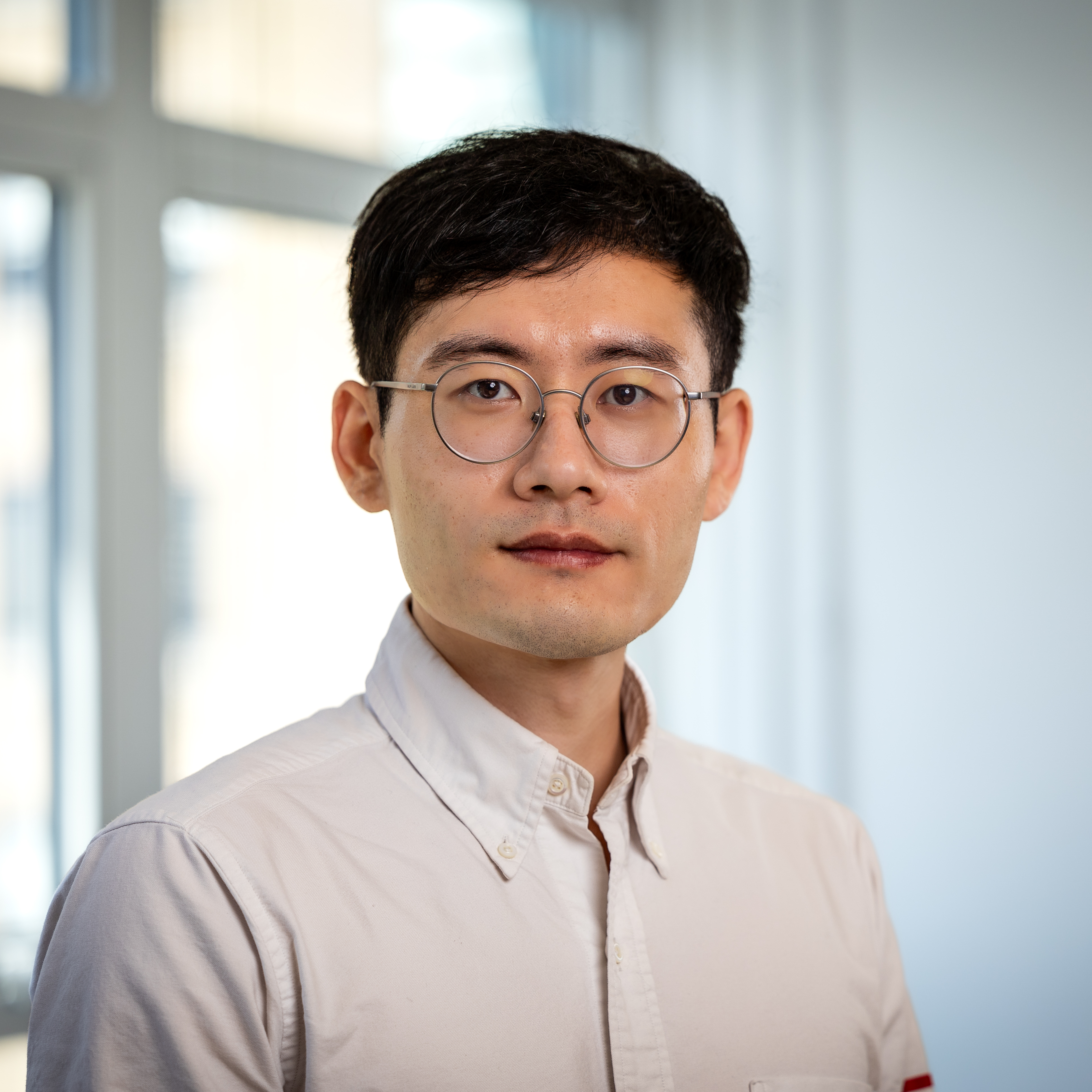
Dorin Boldor holds the Charles P. Siess Jr. Professorship at Louisiana State University's Department of Biological and Agricultural Engineering. His research specializes in microwave heating, bioprocessing, and bioenergy systems. He teaches BE 4303: Engineering Properties of Biological Materials and holds a Ph.D. from North Carolina State University. Research encompasses microwave-assisted biomass conversion, pyrolysis kinetics, and sustainable fuel production, with emphasis on reactor design and catalytic processes. Recent publications (2022-2025) explore lignin pyrolysis, biodiesel co-formulants, and oil containment technologies, reflecting applied engineering solutions for energy and environmental challenges.
Junming Zeng is a Researcher at the Department of Electrical and Electronic Engineering, Faculty of Engineering at Imperial College London. His work focuses on advanced CMOS technologies for biomedical applications, including lab-on-chip platforms and ion imaging systems. He holds a PhD from Imperial College London (2022), following a Master's in Analogue and Digital Integrated Circuit Design (2017) and a Bachelor's in Electronic Engineering (2016), both from UK institutions. His research interests span analogue/mixed-signal IC design, FPGA-based digital systems, and ultra-high-speed ion sensing solutions. He has pioneered CMOS lab-on-chip platforms for real-time chemical monitoring and developed compressed sensing techniques for optimizing sensor array performance. His work integrates deep learning for applications like diabetes glucose prediction and drift compensation in ISFET sensors. Zeng has received the Best Student Paper Award (1st Prize) at ISCAS 2018 and Imperial's Department PhD Scholarship. His research bridges electrical engineering and biomedical engineering, with a focus on scalable, energy-efficient systems for healthcare and diagnostics. He leads projects involving edge computing, temporal fusion transformers, and microfluidic integration, demonstrating expertise in both hardware innovation and algorithmic development. His lab develops cutting-edge systems such as 1000fps ISFET SoCs with programmable gain and high-throughput digital readout architectures. Recent work includes live demonstrations of real-time pH monitoring in 3D-printed microfluidic systems and spatio-temporal ion membrane characterization platforms.
Jonathan Sauder is a Researcher and Doctoral Assistant at EPFL, affiliated with the School of Architecture, Civil and Environmental Engineering (ENAC) and the Institute of Infrastructure and Environment (IIE). He is part of two laboratories: the Computational Science Laboratory for Environment and Earth Observation (ECEO) in Sion and the Biogeochemistry Laboratory (LGB) in Lausanne. His research focuses on environmental science, computational methods applied to coral reef ecosystems, deep learning, and signal processing. He is enrolled in the doctoral program in Civil and Environmental Engineering at EPFL. His work bridges environmental science and artificial intelligence, with notable contributions to coral reef monitoring using 3D mapping, semantic segmentation of benthic environments, and self-supervised learning techniques for underwater imaging. He has also explored structured sparse matrices in signal recovery and neural-augmented algorithms for iterative processes. His research locations include EPFL Valais Wallis (Sion) and the EPFL main campus in Lausanne, with labs located at ALP 2 011 (Sion) and GR C2 524 (Lausanne). He collaborates with interdisciplinary teams in environmental engineering and computational science. Professional activities include membership in the EDOC doctoral school (EDCE) and engagement in international conferences. His research themes emphasize scalable solutions for environmental monitoring and advancing deep learning applications in geoscience and marine biology.
Ajit Singh Puri, MD, DM, DMRE, is a Professor in the Department of Radiology at UMass Chan Medical School, with cross-appointments in Neurological Surgery, Neurology, and the NeuroNexus Institute. His primary clinical focus is Neurointerventional Radiology, where he leads research on stroke interventions and aneurysm treatments. Dr. Puri maintains active collaborations with international multicenter research consortia including the WorldWideWEB Registry and CLEAR Study Group. Education & Training: DM Neuroradiology - Autonomous University of Barcelona, Spain MBBS - Jawaharlal Nehru Medical College, India DM-Neuroradiology Fellowship - All India Institute of Medical Sciences Neuroradiology Fellowships - University of Arkansas for Medical Sciences & Brigham and Women's Hospital Residency in Radiology - B.Y.L. Nair Hospital, India Research Focus: Dr. Puri's research advances neurointerventional techniques for acute stroke and aneurysms. He specializes in mechanical thrombectomy optimization for medium vessel occlusions, endovascular device innovation (WEB, flow diverters), and multicenter clinical trials evaluating thrombectomy systems. His work emphasizes real-world procedural efficacy, complication mitigation, and socioeconomic factors in neurovascular care. Publication Trends: Recent articles (2023-2025) demonstrate three key themes: 1) Multicenter trials of thrombectomy in extended time windows/distal occlusions, 2) Woven EndoBridge device outcomes for aneurysms, and 3) Flow diverter safety evaluations. His research consistently incorporates propensity scoring, device comparison methodologies, and registry data from international collaborations.
Sio Kei Im is an active researcher with a focus on computer science, machine learning, and human-computer interaction. His recent work spans multiple domains including image processing, quantum computing, and virtual reality. Publications address advanced data augmentation (LogicMix), multi-modal quantum watermarking (MMQW), and efficient neural decoding algorithms (TRHyper). Research interests include time series optimization, dialogue summarization, and haptics in VR environments. Collaborations with experts in linguistics, electrical engineering, and software development indicate interdisciplinary expertise. Key contributions involve adaptive algorithms for AI model protection, speaker recognition systems, and real-time 3D rendering techniques.
Dr. Heidi Ploeg is a Full Professor in the Department of Mechanical and Materials Engineering at Queen's University, holding the inaugural Chair for Women in Engineering. She leads the Queen's Bone and Joint Biomechanics (Q-BJB) Lab, focused on musculoskeletal system mechanics and orthopaedic implant development. Her research integrates experimental and computational methods across scales from whole-body biomechanics to bone microstructure analysis. Education: BSc, MSc, PhD in Mechanical Engineering (Queen's University) Affiliations: ORS Orthopaedic Implants Section Chair, Editorial Board Member (Medical Engineering & Physics), and multiple professional societies Research interests include bone biomechanics, implant fixation, and medical device evaluation. Key projects involve trabecular bone modeling, dental implant stability, and antibiotic-loaded bone cement properties. She has advised over 50 students and secured grants like NSERC Discovery and CFI John R Evans Funds. Publications span biomechanical testing, finite element analysis, and orthopaedic device evaluation. Awards include the Women’s Leadership Forum Award and AAOS Women’s Health Advisory Board recognition. Her lab emphasizes diversity and inclusion, fostering collaborative training environments through industry partnerships and outreach.
Professor Anne L'Huillier is a renowned French/Swedish physicist at Lund University, specializing in atomic physics and attosecond science. She holds the rank of Professor in the Department of Atomic Physics within the Faculty of Engineering (LTH). Her research focuses on ultrafast phenomena, particularly high-order harmonic generation and attosecond light pulses for studying electron dynamics. She leads projects like QU-ATTO and New Trends in Attosecond Science, funded by the EU and Swedish Research Councils. Education: Earned her PhD in 1986 from Université Pierre et Marie Curie (Paris) and CEA. Postdoctoral roles at Chalmers Institute of Technology (1986) and University of Southern California (1988). Became Associate Professor at Lund University in 1995 and Full Professor in 1997. Research Interests: Experimental and theoretical studies of attosecond pulses, laser-atom interactions, and ultrafast electron dynamics. Her work enables insights into quantum processes at the atomic scale. Collaborations span global institutions, advancing applications in condensed matter physics and quantum information science. Key Contributions: Pioneered methods to generate attosecond pulses, recognized by the 2023 Nobel Prize in Physics. Her team's innovations include optimizing attosecond source development and applying these pulses to study electron motion in matter. Awards: Nobel Prize in Physics (2023), Wolf Prize in Physics (2022), and multiple grants including Horizon Europe and Wallenberg Foundation funding. Active in conferences and mentoring, with 34 supervised works and 352 research outputs. Labs/Teams: Principal Investigator at NanoLund, a nanoscience center, and member of strategic initiatives like Light & Materials and Photon Science and Technology profile areas.
Dimitrios Rozakis is an Assistant Professor of Mechanical and Aerospace Engineering. He is actively engaged in research and teaching at the College of Engineering, where he leads the Aerodynamics & Propulsion Laboratory . Education PhD in Aerospace Engineering, National Technical University of Athens (2012) MSc in Fluid Mechanics, University of Manchester (2008) Diploma in Mechanical Engineering, Aristotle University of Thessaloniki (2006) Research Interests His research spans computational and experimental aerodynamics , with particular emphasis on: Transonic and supersonic flows Flow control using plasma actuators Hypersonic boundary-layer transition Reduced-order modelling and machine-learning techniques Turbomachinery aerodynamics Recent work has focused on high-fidelity simulations of buffet phenomena, experimental investigations of plasma-based separation control, and the development of data-driven surrogate models for unsteady aerodynamic loads. Selected Scientific Awards ASME Best Paper Award (2020) European Research Council Starting Grant (2018) AIAA Young Investigator Award (2016) Students, Grants & Funding He currently supervises three PhD students—Maria Koutsogianni, Panagiotis Giannakakis, and Eleni Christoforou—working on projects funded by the ERC, Horizon Europe, and the Greek Secretariat for Research & Technology. Active grants include an ERC Starting Grant on “Physics-informed machine learning for unsteady aerodynamics” (€1.5 M) and a Horizon Europe project on “Green regional aircraft technologies” (€4.2 M). Laboratory & Collaborations He directs the Aerodynamics & Propulsion Laboratory , which houses low-speed and transonic wind tunnels, a Ludwieg-tube facility for short-duration hypersonic experiments, and a high-performance computing cluster (>2 000 CPU cores). Ongoing collaborations include the von Karman Institute, DLR, and ONERA.
Yucheng Xie is a Tenure-track Assistant Professor in the Graduate Department of Computer Science and Engineering at Yeshiva University, affiliated with the Katz School of Science and Health. He holds a Ph.D. in Electrical and Computer Engineering from Purdue University and a Master’s in Computer Science from Stevens Institute of Technology. His research focuses on Security in Machine Learning/AI Systems , Smart and Mobile Healthcare , and Mobile Computing and Sensing . Notable contributions include non-invasive wireless sensing via mmWave and Wi-Fi signals for health monitoring, adversarial attacks on activity recognition systems, and secure mobile deep learning. His recent articles explore topics like contactless human concentration monitoring, palm-based authentication, and environment-invariant eating behavior tracking. These works highlight innovations in mmWave technology, cybersecurity for AI systems, and healthcare applications. Awards : Best Paper Runner-up (IEEE Conference on Communications and Network Security, 2024) Best Paper Runner-up (IEEE International Conference on Computer Communications and Networks, 2022) Best Paper Award (EAI International Conference on IoT Technologies for HealthCare, 2019) While no advising or grant details are provided, his work emphasizes practical applications of wireless sensing and secure AI systems. No specific lab affiliations are mentioned, though his research often involves interdisciplinary collaboration.
Prof. Dr. Senol Ataoglu is a Professor in the Department of Civil Engineering at Istanbul Technical University (ITU). He holds administrative roles including Vice Rector (2024–present) and Acting Dean (2020–2020). His expertise includes Structural Mechanics, Numerical Modeling, Solid Mechanics, and Buried Pipes. He has advised numerous graduate students on topics like composite materials, thermal stress analysis, and pipeline design. His research focuses on civil infrastructure durability, material behavior under extreme conditions, and innovative engineering solutions for urban systems. He has published over 38 peer-reviewed articles and contributed to projects such as the 2017 BAP-funded study on concrete shear strength. Education: PhD in Structural Engineering from ITU (1997–1999). Academic career spans roles from Research Assistant (1993) to Professor (2017–present). He has served on editorial boards, including the El-Cezeri Journal of Science and Engineering, and holds patents in plastic pipe design. His work emphasizes practical applications in earthquake-resistant construction, utility tunnel systems, and composite material analysis. Recent research highlights include post-earthquake building assessments in Hatay, stress analysis of pretensioned structures, and utility tunnel applications for natural gas pipelines. He actively collaborates internationally and mentors students via thesis supervision, covering structural analysis, material characterization, and computational methods.
Adjunct Professor Shuai Wan is affiliated with the School of Engineering at RMIT University (City Campus, Australia). His research focuses on computer vision, machine learning, 3D point cloud compression, neural video coding, and remote sensing . Key contributions include lightweight deep learning frameworks for image/video compression, spatio-temporal context models for point clouds, and adaptive quantization techniques. Research Outputs Insights : Wan’s work spans 2024–2025 , emphasizing end-to-end deep learning solutions for challenges in Exemplar-based colorization with semantic attention Rendering-oriented 3D point cloud compression Slimmable video codecs with variable bitrate G-PCC standard enhancements for quantization and entropy coding Adversarial example detection in remote sensing Technical Domains : His articles intersect artificial intelligence, signal processing, and computer graphics , with applications in cloud gaming, SAR systems, and industrial data compression. Methods include transformers, attention networks, and 3D convolutional architectures .
Hugo Larochelle is an Associate Professor at the Université de Montréal's Department of Computer Science and Operations Research (DIRO) within the Faculty of Arts and Sciences. His expertise spans Neural Networks, Deep Learning, and Machine Learning, with contributions to fields like Computer Vision and Natural Language Processing. A graduate of DIRO (Bacc 2004, PhD 2009), he held roles at the University of Sherbrooke (2011–2016) and co-founded Whetlab (acquired by Twitter in 2015). Currently at Google Brain, he balances academic and industrial research, leading projects like the UNIQUE initiative exploring neuroscience-AI intersections. He actively contributes to Quebec’s AI ecosystem through MILA and has received prestigious awards, including the 2019 Diplômé d'honneur. His work emphasizes ethical AI, reproducibility, and interdisciplinary applications. Education: Baccalauréat (Computer Science), Université de Montréal, 2004 Doctorat (Computer Science), Université de Montréal, 2009 Research Interests: Hugo’s work focuses on advancing deep learning techniques for real-world applications, including environmental monitoring (e.g., tree crown segmentation via drone imagery), AI ethics, and model unlearning. He explores intersections between neuroscience and AI, leveraging interdisciplinary approaches to solve complex problems. Recent efforts emphasize benchmark standardization (e.g., EEVEE/GATE) and improving model efficiency through architecture innovations like SoftMoE. Articles Trends: Recent publications highlight contributions to instance segmentation (SAM models), ethical AI (unlearning frameworks), and interdisciplinary applications (e.g., bird species modeling with remote sensing). His work bridges theoretical advancements with practical tools for industries and environmental science. Scientific Awards: 2019 Diplômé d'honneur (Université de Montréal). Advising & Grants: Supervised PhD students in topics like neural networks, code modeling, and program execution (e.g., Sara Hooker, David Bieber). Co-PI on the UNIQUE project (2019–2024, FRQNT-funded), exploring neuro-AI synergies. Recipient of CIFAR funding for ICRA research (2017–2022). Labs & Collaborations: Active contributor to MILA as an associate member. Leads interdisciplinary efforts in AI for environmental challenges and healthcare imaging optimization.
Gerhard Holzapfel is a Professor at TU Graz's Department of Biomechanics. His research focuses on biomechanics of soft biological tissues, cardiovascular systems, and advanced material modeling. He leads the Institute of Biomechanics, conducting experimental and computational studies on tissue mechanics, vascular diseases, and medical device design. Education : Details not explicitly provided in source text. Research Interests : Dr. Holzapfel's work spans constitutive modeling of soft tissues, computational fluid dynamics (CFD) in vascular systems, mechanobiology of cells and tissues, and biomaterials. He emphasizes translating biomechanical insights into clinical applications such as endovascular devices and surgical simulations. His studies often integrate microstructural analysis with macroscopic mechanical behavior to understand pathologies like atherosclerosis and aortic dissection. Publications : Recent work highlights advancements in fiber dispersion models for skin mechanics, Bayesian frameworks for material calibration, and CFD-driven evaluations of TEVAR (thoracic endovascular aortic repair). His articles emphasize predictive modeling of tissue behavior under various loading conditions, with applications in cardiology and regenerative medicine. Awards : No specific honors or fellowships mentioned in the provided text. Advising & Grants : No student/advisor relationships or grant details explicitly listed. The Institute of Biomechanics likely supports collaborative projects in biomechanical engineering and medical research. Labs/Teams : Director of TU Graz's Institute of Biomechanics, leading interdisciplinary teams in biomechanics, material science, and computational modeling. Collaborates with clinical partners on vascular biomechanics and surgical device development.
Dieter Schmalstieg is the Alexander von Humboldt Professor of Visual Computing at the University of Stuttgart and an adjunct professor at Graz University of Technology. He leads research in augmented reality (AR), virtual reality (VR), and visualization, with contributions to tracking, rendering, and medical applications. His work spans academia and industry, with over 400 publications and numerous awards, including the IEEE ISMAR Career Impact Award and Fellow of the IEEE. Education: PhD (1997), Habilitation (2001) from Vienna University of Technology. Research: Focuses on AR/VR systems, medical visualization, and real-time graphics. Key projects include the Christian Doppler Laboratory for Handheld AR and collaborations with Qualcomm and VRVis. Awards: START Prize (2002), IEEE Technical Achievement Award (2012), Humboldt Professorship (2023). His teaching includes courses on computer graphics, VR, and real-time rendering. He has advised over 30 PhD students, many of whom hold academic or industry leadership roles. Current research explores situated analytics, mixed reality telepresence (MRUnion), and AR applications in mining and medicine (MiReBooks).
Hang Li is a Researcher in the Department of Molecular Biophysics and Biochemistry at Yale University’s Yale School of Medicine. Their work focuses on advancing neural network architectures, quantization techniques, and spiking neural networks (SNNs). They are affiliated with the Molecular Biophysics and Biochemistry department and contribute to interdisciplinary research in artificial intelligence and computational neuroscience. Research interests include optimizing neural networks for efficiency through quantization, exploring spiking neural networks for low-power computing, and developing methods like hybrid SNN designs, post-training calibration, and neuromorphic architectures. Their recent work addresses challenges in extreme low-bit quantization, data augmentation for object detection, and temporal coding in SNNs. Publications highlight innovations in quantization methods (e.g., TesseraQ, GenQ), spiking transformer architectures, and workload-balanced pruning strategies. While no awards are explicitly listed, their contributions to model efficiency and neuromorphic computing are notable in the field. Hang Li collaborates on projects involving neuromorphic hardware, system inconsistency benchmarking (SysNoise), and data-driven spatio-temporal analysis. Their research bridges theoretical advancements and practical applications in AI and biomedical informatics.