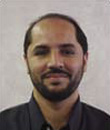
Prof. Tan Yap Peng is a Professor and Chair of the School of Electrical & Electronic Engineering at Nanyang Technological University (NTU), Singapore. He holds the President's Chair in Electrical and Electronic Engineering and serves as Associate Vice President (Lifelong Learning – Postgraduate Programmes by Coursework). His research focuses on multimedia analysis, computer vision, machine learning, and data analytics. He earned his B.S. from National Taiwan University and M.A./Ph.D. from Princeton University. He has led major initiatives including the INFINITUS Infocomm Research Centre and contributed to IEEE technical committees. His over 200 publications span image/video processing, neural network robustness, and cross-modal systems. Awards include IEEE Fellow status. Education: B.S. Electrical Engineering (NTU), M.A./Ph.D. (Princeton) Research interests emphasize interactive digital media, content-based analysis, and AI-driven solutions for visual and signal processing. His work addresses challenges in adversarial attacks, video generation, and low-light image enhancement. He has held editorial roles at IEEE Transactions and EURASIP journals. Conference leadership includes chairs for ICME and ICIP. His contributions bridge academia and industry through collaborative research networks.
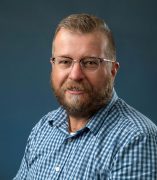
Magued Iskander is the Department Chair and Professor in the Civil and Urban Engineering Department at the NYU Tandon School of Engineering. With over 25 years of expertise, he focuses on geotechnical engineering, including foundation design, soil-structure interaction, and sustainable materials. His research emphasizes transparent soil modeling, high-strain rate soil behavior, and offshore geotechnology. He leads projects on machine learning applications for geotechnical analysis, pile capacity prediction, and UXO (unexploded ordnance) penetration studies. Research Interests: Transparent soil modeling for soil-structure interaction Sustainable piling using recycled polymers Geotechnical instrumentation and monitoring Offshore/marine foundation design High-strain rate soil mechanics Penetrating dynamics in granular media Publications highlight advancements in machine learning for geotechnical data analysis, projectile penetration mechanics, and tunneling-induced ground settlements. His work bridges experimental, computational, and AI-driven approaches to solve complex geotechnical challenges. He advises NYU Tandon’s Concrete Canoe and Steel Bridge teams, fostering student engagement in competitive engineering projects.
Jona Ballé is an Associate Professor in the Department of Electrical and Computer Engineering at New York University Tandon School of Engineering. His research focuses on visual media compression, leveraging machine learning and end-to-end optimization to advance compression techniques for traditional and emerging modalities (e.g., AR, plenoptic imaging). He holds a PhD in signal processing from RWTH Aachen University (2012), followed by postdoctoral work at NYU’s Center for Neural Science and a Research Scientist role at Google (2017–2024). His contributions include foundational work on JPEG AI and leadership in conferences such as CLIC and DCC. Education: PhD in Signal Processing, RWTH Aachen University (2012) Master’s in Signal Processing, RWTH Aachen University (2007) Research: Ballé bridges machine learning and perceptual science to improve compression efficiency. Key areas include perceptual metrics, end-to-end optimization, and distributed coding. His work on Wasserstein distortion and Fourier basis models reflects cutting-edge advancements in compression theory. Impact: As co-organizer of the Challenge on Learned Image Compression (CLIC) and program committee member of the Data Compression Conference (DCC), he drives community progress. His industry collaborations and leadership in the JPEG AI standard highlight his translational research.
Dr. Valeri Goncharov is an Assistant Professor (Research) in Mechanical Engineering at the University of Rochester and Senior Scientist at the Laboratory for Laser Energetics. His research focuses on computational physics and hydrodynamic instabilities in inertial confinement fusion (ICF), with expertise in laser-plasma interactions, implosion dynamics, and plasma diagnostics. His analytical models of Rayleigh-Taylor instability have advanced understanding of fusion target performance. Dr. Goncharov's publications address critical challenges in direct-drive ICF, including target design optimization, laser-energy coupling efficiency, and mitigation of hydrodynamic instabilities. Recent work employs advanced statistical modeling and first-principles simulations to predict fusion yields and improve equation-of-state tables for deuterium.
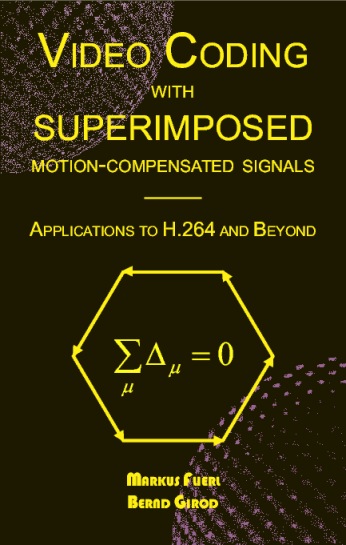
Markus H. Flierl is an Associate Professor at the School of Electrical Engineering and Computer Science, KTH Royal Institute of Technology in Stockholm. He holds a PhD in Engineering from Friedrich Alexander University (2003). His career includes senior research roles at École Polytechnique Fédérale de Lausanne (2003-2005), leadership of the Max Planck Center for Visual Computing and Communication (2005-2008), and a Visiting Assistant Professorship at Stanford University (2000-2002). He has served as Program Director of the EIT Digital Master School’s 'Visual Computing and Communication' program and as Associate Editor for the IEEE Transactions on Circuits and Systems for Video Technology. Education: PhD in Engineering, Friedrich Alexander University, 2003 Studies at Friedrich Alexander University (1999-2002), EPF Lausanne (2003-2005), and Stanford University (2005-2008) Research Interests: Focused on visual computing, machine learning, and information theory. Key areas include distributed coding of dynamic scenes, multiview video coding, motion-compensated transforms, and applications in video compression and multimedia systems. His work explores efficient signal processing techniques for video and 3D visual search, with recent contributions in drone-based environmental monitoring and adversarial training methods. Awards: SPIE VCIP Young Investigator Award (2007) Teaching & Grants: Teaches courses on image/video processing, information theory, and multimedia systems. His research is supported by Ericsson, the Swedish Research Council, the European Commission, and KTH’s Digitalization Platform. He advises PhD and master’s students in visual computing and communication. Labs & Teams: Leads the Visual Computing and Communication research group at KTH, collaborating with industry partners like Ericsson and Qamcom. Former members include researchers now at Tobii AB and the University of Iceland.
Diana Mateus is a Researcher at Centrale Nantes, affiliated with the LS2N Laboratory. She holds a bachelor's in Electronic Engineering from the University of Javeriana (Colombia), a Master's in Control and Automation from Paul Sabatier University (France), and a PhD in Computer Vision from INRIA Grenoble. After postdoctoral work and eight years as an associate researcher at Technical University of Munich and Helmholtz Zentrum (Germany), she returned to France to join Centrale Nantes via the Connect Talent Program, securing a starting grant for interdisciplinary research in medical image analysis and machine learning. Her research focuses on Milcom —a project integrating multimodal imaging (MRI, CT, ultrasound, PET) with machine learning to advance computational medicine. Key objectives include computer-aided diagnosis, disease knowledge advancement, and improving imaging quality. Collaborations include the hospital's Nuclear Medicine Department, focusing on multiple myeloma, and companies Hera-Mi and Keosys for breast cancer research. She supervises six PhD students and two postdocs, emphasizing synergies between engineering and healthcare. At Centrale Nantes, she benefits from dynamic institutional support, quality students, and complementary team skills. Her lab recently acquired a research-dedicated ultrasound machine to develop machine learning-driven imaging optimization. Living in Nantes, she values its family-friendly environment and proximity to academic and medical networks.
Karl Wegmann is a Professor and Associate Head of the Marine, Earth and Atmospheric Sciences (MEAS) department at North Carolina State University. He holds a faculty fellowship at the Center for Geospatial Analytics. His research focuses on Earth surface processes, integrating geospatial analysis with field investigations to study landscape responses to tectonic and climatic forces. Key areas include geomorphology, active tectonics, paleoseismology, and geoarchaeology. Education: Ph.D. (2008, Lehigh University), M.S. (1999, University of New Mexico), B.A. (1996, Whitman College). Research emphasizes landslide dynamics, paleoclimatic reconstructions, and planetary geoarchaeology. Notable projects include studies in Mongolia, Greece, and the Pacific Northwest. He teaches courses in geology, natural hazards, and field geology. His work bridges disciplines, applying remote sensing and machine learning to geohazard assessment and cultural heritage preservation. Scientific achievements include the 2023 NCSU Outstanding Teaching Award. Ongoing research explores lunar anthropocene frameworks and Martian surface processes. Collaborative projects involve students in global fieldwork and innovative geospatial methodologies.
Xiangren Shi is a researcher at Bournemouth University , contributing to fields such as motion capture, robotics, and machine learning. His work focuses on enhancing inertial motion capture systems using transformers and optimizing 3D point-cloud compression with convolutional neural networks. Research Interests : Motion capture algorithms, sensor calibration, machine learning applications in robotics, point-cloud processing, teleoperation systems, and sensor fusion. Recent publications highlight advancements in dynamic on-body IMU calibration for motion capture and real-time humanoid teleoperation systems. His work integrates neural networks for sensor optimization and 3D motion analysis. Key trends include wearable sensor technologies, signal processing, and 3D reconstruction techniques.
Professor Anestis Terzis serves as a Professor of Digital Systems Design and Head of the Institute for Communication Technology (IKT) at Technische Hochschule Ulm within the Faculty of Electrical Engineering and Information Technology. He coordinates the International Electrical Engineering Program and is responsible for the Vehicle Systems specialization. His office is located in Room W2405 at Albert-Einstein-Allee 53-55, 89081 Ulm, Germany. Professor Terzis specializes in digital system design with focus on FPGA, VHDL, and high-level design methodologies. His research spans Camera Monitor Systems (CMS) for automotive mirror replacement, advanced camera-based driver assistance systems, vehicle electronics, digitalization in laboratory didactics, and autonomous driving technologies. He has pioneered work in digital mirror systems compliant with ISO 16505 standards and has contributed significantly to image processing for automotive applications. His publication record demonstrates consistent contributions to automotive imaging technology, with recent work focusing on image compression impacts on detection quality, CMS image quality parameters, and programmable processing for autonomous vehicles. Professor Terzis has edited the comprehensive Handbook of Camera Monitor Systems published by Springer, establishing himself as a leading authority in this specialized field. As Head of the Institute for Communication Technology, he leads research initiatives connecting digital systems design with automotive applications. He also serves as Coordinator for the Study with In-depth Practice program and is a member of the Institute for Vehicle System Technology (IFS), demonstrating his commitment to both theoretical advancement and practical implementation in automotive electronics.
Justin Solomon is an Associate Professor in the Department of Electrical Engineering & Computer Science at Massachusetts Institute of Technology, where he serves as Principal Investigator of the Geometric Data Processing Group. He maintains dual affiliations with the Computer Science and Artificial Intelligence Laboratory (CSAIL) and the MIT Center for Computational Science and Engineering (CCSE), reflecting his interdisciplinary research bridging theoretical mathematics with practical applications in graphics and machine learning. His research interests center around geometric data processing, computational geometry, and optimal transport theory, with significant contributions to computer graphics, machine learning, and computer vision. Solomon's work spans fundamental mathematical theory to practical implementations, particularly in shape analysis, 3D reconstruction, and geometric deep learning. His research demonstrates consistent innovation in developing algorithms that bridge discrete and continuous geometry with applications in graphics, vision, and AI. The publication trends reveal Solomon's evolving research trajectory from foundational work in geometry processing toward increasing integration with modern machine learning techniques. His recent work shows strong emphasis on diffusion models, geometric deep learning, and applications of optimal transport in AI, with significant contributions to SIGGRAPH, NeurIPS, and ICML proceedings. The research demonstrates both mathematical rigor and practical impact, with applications spanning character animation, 3D reconstruction, and generative AI. Amazon Research Award (2017) for Large-Scale Geometrically-Structured Sampling Amazon Research Award (2023) for Lightweight Algorithms for Generative AI Ben Wegbreit Prize for Best Undergraduate Honors Thesis Firestone Medal for Excellence in Undergraduate Research Boothe Prize for Excellence in Writing 2nd place, SGP best paper awards (2010) Solomon has secured substantial research funding through awards like the Amazon Research Awards and maintains active collaborations across academia and industry. His group has produced numerous influential publications with students and collaborators, contributing significantly to both theoretical foundations and practical implementations in geometric data analysis. His textbook "Numerical Algorithms" demonstrates his commitment to education alongside research. As Principal Investigator of the Geometric Data Processing Group, Solomon leads a research team focused on developing mathematical foundations for analyzing and processing geometric data. The group maintains strong connections with both theoretical mathematics and practical applications, working at the intersection of computer graphics, machine learning, and computational geometry. Their work has significant implications for fields ranging from computer animation to medical imaging and scientific computing.
Mohamed Allali is an Associate Professor at Chapman University, affiliated with both the Fowler School of Engineering (Department of Electrical Engineering and Computer Science) and Schmid College of Science and Technology (Department of Mathematics). His research spans data engineering, machine learning, climate informatics, and mathematical education. He has contributed to constraint-based intelligent tutoring systems, data drift detection using KL divergence, and geospatial analysis for environmental monitoring. Education: University of Oklahoma (BS, MA, PhD). His recent work focuses on data distribution divergence, climate modeling for sea turtle habitats, and neural network applications in medical imaging. He has collaborated extensively on drought indices, satellite data validation, and educational technologies. His publications highlight expertise in statistical learning, computational methods, and interdisciplinary environmental applications.
Jim Kosmach is a Clinical Associate Professor in the Department of Electrical and Computer Engineering at the University of Illinois at Chicago. He serves as Director of Undergraduate Studies and focuses on signal processing, communications, and related disciplines. Education : Ph.D. (1998), M.S. (1990) in Electrical Engineering from Georgia Institute of Technology; B.S. in Electrical Engineering from Louisiana Tech University (1988). His research spans signal processing, communications, and multimedia systems, with emphasis on video compression, computer vision, and error-correcting codes. He has contributed to algorithms for Reed-Solomon decoding, motion compensation, and mobile messaging systems. Kosmach’s publications and patents reflect his work on video/audio processing, soft-decision decoding, and cryptographic protection in communication systems. His research trends highlight advancements in mobile technology and data transmission reliability. Kosmach is an IEEE member and holds multiple patents, including systems for video compression, data decoding, and cryptographic protection in communication systems.
Rafael Pereira Pires is a Lecturer and researcher at École polytechnique fédérale de Lausanne (EPFL) , affiliated with the Scalable Computing Systems Laboratory (SACS) and IC-SIN units. His research focuses on systems solutions at the intersection of privacy, efficiency, and machine learning in distributed environments. Education PhD in Computer Science (2019, University of Neuchâtel, Switzerland) Professional Master in Mechatronics (2014, IFSC, Brazil) Master in Computer Science (2009, UFSC, Brazil) His work explores privacy-preserving decentralized learning , trusted execution environments , and resource-efficient distributed systems . Recent publications address techniques like model fragmentation, approximate caching, and secure aggregation in decentralized learning contexts. Key trends in his 2023-2025 publications include: Advancements in federated learning and Mixture-of-Experts (MoE) models Applications of Trusted Execution Environments (SGX) to decentralized systems Optimization techniques for energy-aware and low-cost learning Scientific recognition includes the 2019 Léon Du Pasquier et Louis Perrier award for his PhD thesis. He has contributed to open-source tools like DecentralizePy and served as reviewer/PC member for top conferences including NeurIPS , Middleware , and ICDCS .
Dr. Andrew Kingston is a Postdoctoral Fellow in the Department of Materials Physics at the Australian National University, where he contributes to the X-ray tomography and applications research group. His work focuses on advancing imaging technologies with applications across materials science, geology, and potentially medical fields. Dr. Kingston's research spans X-ray tomography, computed tomography, ghost imaging, and digital image processing. He has developed novel techniques for high-fidelity X-ray micro-tomography and image reconstruction algorithms that address challenges in image quality, radiation dose reduction, and complex material analysis. His work bridges theoretical developments with practical applications in materials characterization and geological analysis. Analysis of Dr. Kingston's publication trend shows consistent innovation in X-ray imaging technologies, particularly in ghost imaging techniques and micro-tomography. His work demonstrates increasing sophistication in handling beam hardening effects, motion correction, and spectral information extraction, reflecting the evolving complexity of modern imaging challenges. Dr. Kingston actively collaborates with researchers across multiple institutions, contributing to the advancement of X-ray imaging methodologies. His work with the X-ray tomography and applications group at ANU has produced significant contributions to the field, particularly in developing methods that improve image quality while addressing practical constraints like radiation exposure and computational efficiency.
Ayhan Demircan is an Adjunct Professor at the Leibniz School of Optics and Photonics in Leibniz University Hannover. He leads the Micro and Nano Photonics task group and contributes to institutions including the Institute of Quantum Optics , Ultrafast Laser Laboratory , and Hannover Centre for Optical Technologies (HOT) . His work spans photonics, quantum optics, and nonlinear dynamics, with applications in terahertz technology, soliton physics, and optical modeling. Research Interests: Photonics, quantum optics, terahertz radiation, soliton dynamics, nanophotonics, and computational modeling of optical systems. Key Institutions: Leibniz School of Optics and Photonics, Institute of Quantum Optics, HOT, and PhoenixD Cluster of Excellence. Technical Expertise: Develops Python-based tools for nonlinear Schrödinger equations, optical parametric oscillators, and ultrafast laser systems. Contact: demircan@iqo.uni-hannover.de