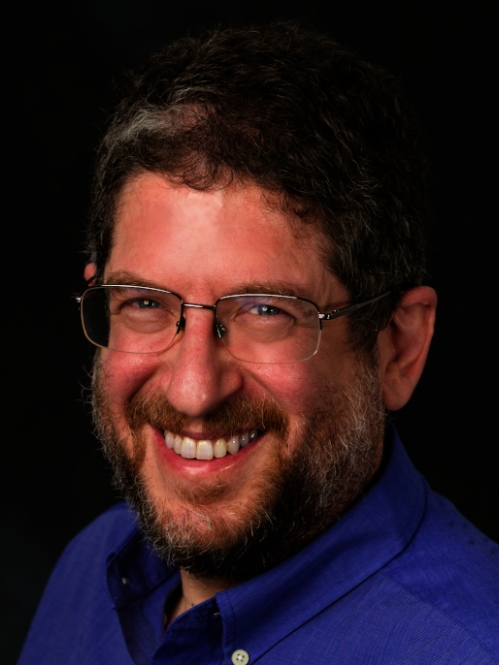
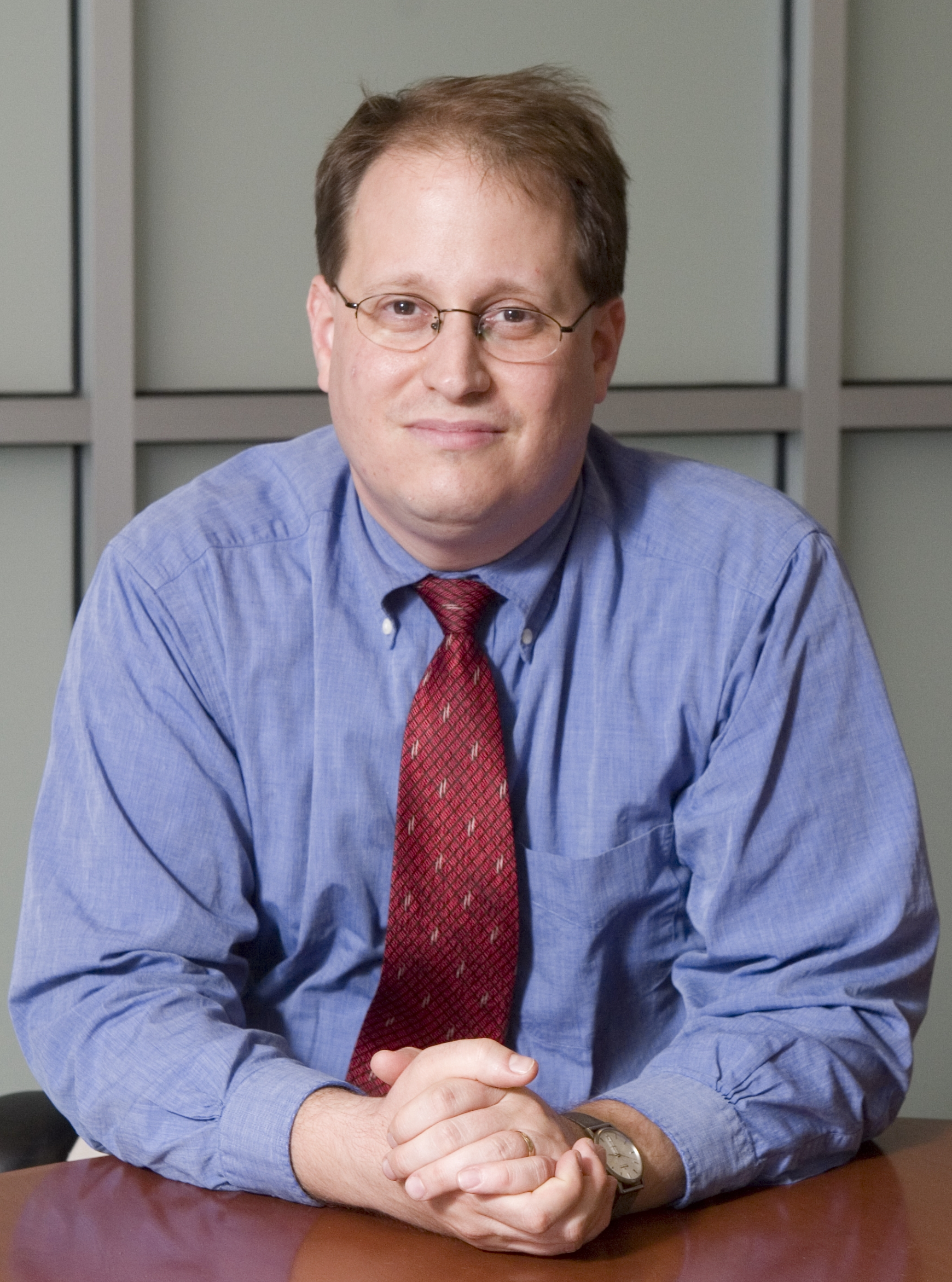
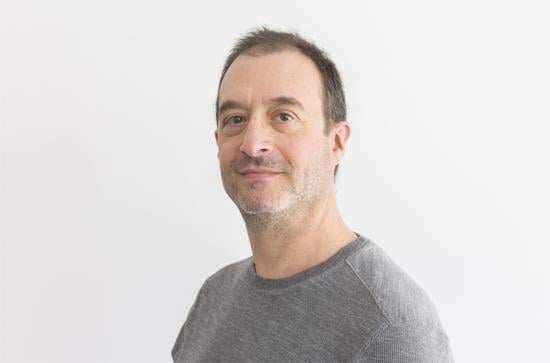
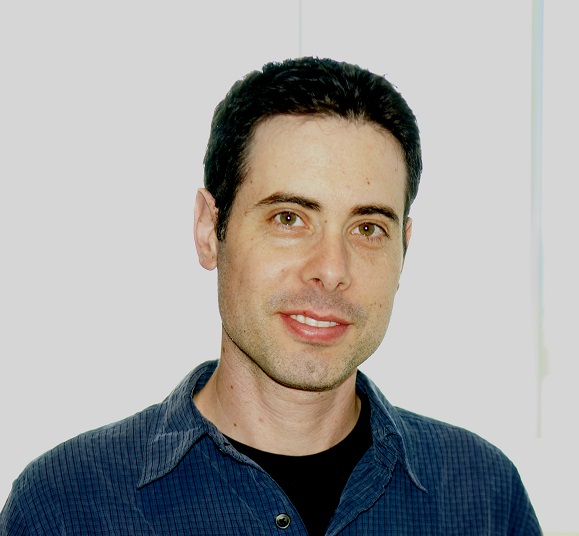
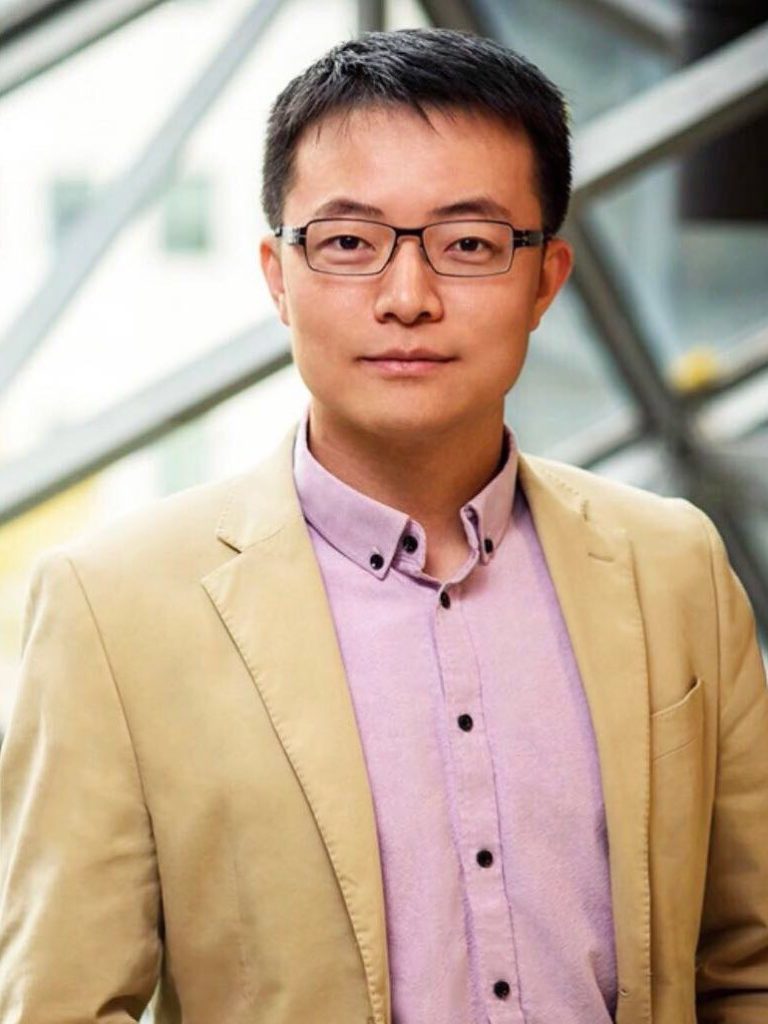
Dov Kruger is an Associate Teaching Professor in the Department of Electrical Engineering at Rutgers University. He holds a BE in Electrical Engineering, an MS in Computer Science, and a PhD in Ocean Engineering, all from Stevens Institute of Technology. Prior to Rutgers, he spent 10 years as a professor at Stevens. His research focuses on high-performance computing, network programming, 3D printing, and computing education. He explores re-engineering software for efficiency, distributed programming models, and innovations in data compression and secure networking. His work also encompasses underwater acoustics and sensor systems from earlier career phases. Key themes in his recent articles include real-time video processing, federated learning privacy, AI bias mitigation, and blockchain-based systems. His earlier contributions involved underwater robotics and environmental sensor networks in estuaries. Dr. Kruger seeks collaborators in FPGA, network programming, and 3D printing. He has no listed scientific awards but maintains active research in multidisciplinary computer science and engineering education.
Francesc Arandiga Llau is a Professor in the Department of Mathematics at the Faculty of Mathematics, Universitat de València, Spain. He is affiliated with the ANIMS (Numerical Analysis, Images, Multiresolution and Simulation) research group, where he conducts research in applied mathematics with a focus on numerical methods and their applications. Education: PhD from Universitat de València (1992), thesis on operator approximation and spectral radius continuity, supervised by Dr. Vicent Caselles Costa. His research interests center on Numerical Analysis , Approximation Theory , and Multiresolution Methods , with significant contributions to WENO schemes , nonlinear interpolation , and image and signal compression . His work often bridges theoretical developments with practical implementations in computational mathematics and engineering. He has made notable advances in the stability, accuracy, and adaptability of reconstruction techniques for piecewise smooth and discontinuous functions. The analysis of his recent publications reveals a consistent focus on high-order numerical methods, particularly in the context of image processing and data compression . His work leverages multiresolution analysis , radial basis functions , and adaptive interpolation to improve accuracy and efficiency. Themes across his articles include monotonicity preservation, error control, and the design of nonlinear schemes that avoid spurious oscillations near discontinuities. There are no scientific awards explicitly mentioned in the provided text. Francesc Arandiga has extensive collaborative research, particularly with scholars such as Rosa Donat, Dionisio F. Yáñez, Pep Mulet, and Antonio Baeza. His work has been supported through various research projects, though specific grants are not detailed in the text. He has advised students, including those who have completed theses under his supervision, although a full list is not provided. He is a key member of the ANIMS research group, which focuses on Numerical Analysis, Images, Multiresolution, and Simulation. This team works on developing and analyzing advanced computational methods for scientific and engineering applications, particularly in the areas of data representation, image processing, and numerical solutions to differential equations.
Fabio Pareschi is an Associate Professor at the Department of Electronics and Telecommunications (DET), Politecnico di Torino, where he conducts research in circuit architectures, embedded systems, and signal processing with applications in security, AI, and power electronics. He is affiliated with the VLSILAB research group and leads multiple high-impact research projects. Research Interests: Chaos theory and true random number generation for cryptographic applications Compressed sensing for secure and efficient signal acquisition EMI reduction techniques in DC-DC power converters Tiny machine learning and low-power embedded systems Circuit design for IoT and biomedical applications The recent articles highlight a strong trend in integrating compressed sensing with encryption, leveraging chaos-based randomness for security, and optimizing power electronics for EMI reduction. His work bridges theoretical foundations with practical hardware implementations in microelectronics and embedded systems. Scientific Awards: Best Student Paper Award (IEEE, 2005) Best Paper Award (IEEE, 2005) IEEE PRIME Gold Leaf Certificate (2019) BioCAS Transactions Best Paper Award (2019) Best Student Paper Award at EMCCompo (IEEE, 2019) Advising and Grants: He supervises multiple PhD students in the Electrical, Electronics, and Communications Engineering program. He is the Scientific Director of the CESOIA project (Non-EU International Research, 2025–2028) on low-complexity AI models, and leads the ECS4DRES project (EU-funded, 2024–2027) on resilient energy systems. He also heads a commercial research project on high-performance DC-DC converters (2022–2025). His editorial roles include Associate Editor for IEEE Transactions on Circuits and Systems and guest editorships in multiple IEEE journals. Labs and Teams: He is a key member of the VLSILAB Group (DET), which focuses on VLSI systems, embedded signal processing, and secure hardware design.
Tom Ryen is an Associate Professor and Head of the Department of Electrical Engineering and Computer Science at the University of Stavanger (UiS), Faculty of Science and Technology. He plays a key leadership role in advancing artificial intelligence research and education, including co-founding the Stavanger AI Lab and chairing the board of the Norwegian Artificial Intelligence Research Consortium (NORA). His work bridges technical research and public engagement, particularly on the societal implications of AI. His research focuses on artificial intelligence, machine learning, digital signal processing, and bioinformatics. He has made significant contributions in gene prediction, splice site analysis using neural networks, ECG signal compression, and GPU-based optical flow algorithms. His recent work emphasizes AI ethics, education, and public understanding, reflecting a shift toward societal impact and policy. Tom Ryen's publications from 2024 show a strong trend in public outreach, with articles and lectures on AI literacy, misinformation, workplace integration, and educational challenges. These works highlight his role as a thought leader in Norway’s AI discourse, advocating for responsible adoption, national infrastructure, and ethical guidelines. Scientific Awards: No scientific awards mentioned in the text. Tom Ryen actively mentors students and collaborates across disciplines, though specific advisees are not listed. He has been involved in significant initiatives such as launching new master’s programs, expanding IT education, and promoting AI in medical and urban technologies. He has not received any mentioned grants, but his leadership in NORA and the Stavanger AI Lab suggests substantial project involvement. He is a founding figure in the Stavanger AI Lab, a research unit at UiS dedicated to AI innovation, education, and collaboration with industry and public sectors. The lab focuses on practical applications and ethical deployment of AI, aligning with national and regional development goals.
Panajotis Agathoklis is a Professor in the Department of Electrical and Computer Engineering at the University of Victoria. His research focuses on multidimensional signal processing, control systems, adaptive optics, and applications in radio astronomy. He holds a Dr.Sc.Techn. from the Swiss Federal Institute of Technology (1980) and is a Professional Engineer (PEng). Teaching: ECE460 (Control Theory II), ECE426 (Robotics), ECE360 (Control Systems I), and ECE483/583 (Digital Video Processing). Research interests include stability analysis of systems, image/video/lightfield processing, and filter design for light field and radio astronomy applications. Notable contributions include work on 3D/4D/5D signal processing architectures, FPGA implementations for real-time light field processing, and stability criteria for multidimensional systems. His recent work emphasizes advanced filtering techniques for enhancing light field videos and developing low-complexity solutions for broadband signal processing. He advises graduate students like LeHung Nguyen (TA Excellence Award recipient).
Eric Miller is a Professor of Electrical and Computer Engineering at Tufts University's School of Engineering. He also holds adjunct professorships in Computer Science, Biomedical Engineering, and Mathematics. His academic roles include serving as Chair of the Electrical and Computer Engineering department and leading the Lab for Imaging Science Research (LaISR). Miller earned his SB, SM, and PhD in Electrical Engineering from MIT (1990–1994). His research focuses on signal and image processing, particularly inverse problems, tomographic imaging, and applications in medical imaging, environmental monitoring, and security screening. He has pioneered methods like the parametric level-sets (PaLEnTIR) for reconstruction and shape-based inversion algorithms. His work integrates physics-based modeling with computational techniques, addressing challenges in subsurface sensing, biomedical diagnostics, and materials science. Miller is a Fellow of IEEE and a member of honor societies like Tau Beta Pi and Phi Beta Kappa. Over 489 publications reflect his contributions to imaging science, with recent advancements in AI-driven pedestrian behavior analysis and X-ray anomaly detection.
Varun Ojha is an active researcher with a strong focus on machine learning, neural networks, and optimization techniques applied to diverse domains. His work spans environmental engineering (flood risk management via camera-based river monitoring), biotechnology (metabolic engineering), geotechnical engineering (rock strength prediction), and biomedical applications (ECG denoising). His research emphasizes hybrid methods combining evolutionary algorithms with neural architectures (e.g., neural trees, echo state networks) and multiobjective optimization frameworks. Key collaborations include institutions in Europe and Asia, with a recurring focus on environmental safety and sustainable systems. Ojha has published extensively in high-impact journals like Neural Networks and Biotechnology and Bioengineering , as well as conferences including IEEE CEC and ISDA. His recent work explores transfer learning for waste segmentation, adversarial robustness in deep learning, and surrogate modeling for complex systems.
Lei Jiao is a Professor in the Department of Information and Communication Technology at the University of Agder's Faculty of Engineering and Science. Previously serving as an Associate Professor from May 2014 to October 2022, Dr. Jiao has established himself as a leading researcher in artificial intelligence, with particular expertise in Tsetlin Machines and their applications across diverse domains. PhD in Information and Communication Technology, University of Agder (2008-2012) Master of Engineering in Communication and Information System, Shandong University (2005-2008) Bachelor of Engineering in Telecommunication Engineering, Hunan University (2001-2005) Dr. Jiao's research spans multiple cutting-edge areas including interpretable artificial intelligence, wireless communication protocols, network resource allocation, and signal processing. His work on Tsetlin Machines has pioneered new approaches to machine learning that emphasize interpretability while maintaining high performance. The research group he contributes to at the University of Agder focuses on Autonomous and Cyber-Physical Systems (ACPS), Battery recycling, and the Centre for Artificial Intelligence Research (CAIR). Analysis of Dr. Jiao's recent publications reveals a strong emphasis on interpretable AI systems, particularly through Tsetlin Machines. His work spans applications in GNSS jammer detection, crowd anomaly detection, DNA sequence classification, and hardware acceleration of machine learning models. The research consistently demonstrates how logical, rule-based approaches can provide transparent alternatives to traditional neural networks while maintaining competitive performance. Supervised numerous PhD students including Vojtech Halenka, Ahmed K. Kadhim, and Sindhusha Jeeru Mentored over 30 Master's thesis projects covering topics from Tsetlin Machines to signal processing and computer vision Collaborates extensively with Ole-Christoffer Granmo and other leading researchers in the AI field Dr. Jiao actively contributes to advancing the field through supervision of doctoral candidates, collaboration on major research projects, and development of novel machine learning approaches that balance performance with interpretability. His work bridges theoretical foundations with practical applications across telecommunications, computer vision, and natural language processing domains.
Valentino Peluso is a Fixed-Term Assistant Professor at the Department of Control and Computer Engineering (DAUIN) of Politecnico di Torino. His research focuses on Edge AI , Electronic Design Automation , Federated Learning , and Low-Power Design , with applications in distributed systems and cyber-physical technologies. Associate Editor at IEEE Transactions on Circuits and Systems II (2025-) Organizer of workshops on smart grids and IoT at IEEE conferences Recipient of Politecnico di Torino's RIMINI SCHOOL 2025 badge for research funding participation His recent work explores homomorphic encryption for secure federated learning, DVFS side-channel attacks in edge inference, and energy-efficient pipeline optimization for embedded systems. Publications span IEEE Transactions, ICECS, ICCD, and VLSI-SoC conferences. Scientific Awards & Roles: RIMINI SCHOOL 2025 Certification Learning to Teach (L2T) badge Editorial contributions to IEEE journals Chair and co-chair roles in hardware/software co-design sessions He contributes to teaching in High-Level Synthesis , Machine Learning for IoT , and Efficient AI Computing at both PhD and MSc levels.
Zico Kolter is a Professor and Director of the Machine Learning Department at Carnegie Mellon University . He also serves on the OpenAI Board of Directors as chair of the safety and security committee, co-founded Gray Swan AI (an AI security company), and acts as a Chief Expert at Robert Bosch, LLC . Research Focus: AI safety and robustness, LLM security, data impact on models, implicit models, and adversarial defense. Teaching: Offers graduate courses in artificial intelligence and deep learning systems. His work investigates robustness in deep learning, constraints in optimization, and security in foundation models. Recent publications address adversarial compression, diffusion models, and prompt engineering. Notable Awards: DARPA Young Faculty Award Sloan Fellowship Best Paper at NeurIPS, ICML (honorable mention), AISTATS (test of time), IJCAI, KDD, and PESGM.
Professor Barak Pearlmutter is affiliated with Maynooth University in the Faculty of Science & Engineering . His research spans multiple domains including automatic differentiation , neural networks , machine learning , and neuroscience . He has contributed significantly to adaptive systems , brain imaging , and programming language design . Research Interests include: Adaptive systems, automatic differentiation, theoretical neurobiology, neural networks, machine learning, acoustic source separation/localization, neuroscience, brain imaging, programming language design, and computational neuroscience. Publications focus on applying algorithmic differentiation to machine learning, developing neural ODE models for biomedical signals, advancing sparse NMF techniques, and integrating functional programming with numerical methods. Collaborations span institutions like MIT, Oxford, and IEEE societies, with work in brain-computer interfaces , MEG source localization , and neuromodulation for tinnitus treatment. Technical Contributions include the DiffSharp AD library for .NET languages and foundational work on reverse-mode automatic differentiation in functional frameworks. His 2018 Journal of Machine Learning Research survey on AD remains a seminal reference in the field. Application Areas cover biomedical signal processing , optical brain-computer interfaces , cognitive modeling , and neural code optimization . His work intersects computer science, neuroscience, and mathematical computing through sparse decomposition and probabilistic modeling .
Eran Treister is an Assistant Professor at the Ben Gurion University of the Negev in the Department of Computer Science. He completed his postdoctoral fellowship at the University of British Columbia (2014-2016) and earned his PhD from the Technion in 2014 under Prof. Irad Yavneh. His research spans computational science, numerical methods, and machine learning, with a focus on: Scalable algorithms for inverse problems Graph Neural Networks (GNNs) optimization Seismic and optical imaging via PDE solvers Low-precision deep learning acceleration Multilevel preconditioning techniques Recent work explores: Graph neural networks for PDEs with adaptive meshes Deep learning approaches to Helmholtz equation modeling 3D shape reconstruction via parametric level sets He serves on editorial boards: SIAM Journal on Scientific Computing (2024-) Copper Mountain Conference on Multigrid Methods (2025) International Conference on Machine Learning (ICML) as Area Chair (2025) Current teaching: Optimization Methods for Data Science (Spring 2025) Deep Learning Mini-Project (Winter 2024/5) Advanced Numerical Optimization (Spring 2025)
Bilal Ahmed is a Research Fellow at the Strathclyde Institute Of Pharmacy And Biomedical Sciences, University of Strathclyde, UK. His work merges advanced process modeling with experimental techniques in pharmaceutical engineering, focusing on industrial applications. Education: MChem Chemistry for Drug Discovery, University of Bradford (2010-2014) PhD in Particle Engineering (2019), supervised by Professors Alastair Florence and Jan Sefcik Research Focus: Specializing in particle technology, Ahmed develops methodologies for optimizing pharmaceutical manufacturing processes. His expertise spans crystallization, granulation, and continuous direct compression, with emphasis on: Designing industrial-scale particle processes Application of inline sensing and modeling Multi-objective optimization of drug formulation Collaborative industry-academia-government projects Scientific Contributions: Key outputs include mechanistic models for twin screw granulation and data fusion techniques for particle size distribution analysis. His work aligns with UN Sustainable Development Goals through process innovation. Awards: Best Poster: Runner-up (2015) Collaborations: Active in international conferences like Industrial Crystallisation (2017), I2APM Symposium (2016), and involved in 3 major research projects.
Jan-Willem van de Meent is an Associate Professor at the University of Amsterdam where he co-directs the AMLab with Max Welling. He also maintains an Assistant Professor position at Northeastern University, though currently on leave while continuing to advise students and collaborate. His research develops AI models by combining probabilistic programming and deep learning, focusing on understanding inductive biases that enable models to generalize from limited data. His research spans multiple domains: Probabilistic programming frameworks and inference methods Inductive biases for generalization from limited data Physical system simulators incorporating domain knowledge Causal structure and symmetries in AI models Applications in robotics, NLP, healthcare, and physical sciences Van de Meent is one of the creators of Anglican, a probabilistic programming language based on Clojure, and currently develops Probabilistic Torch, a library for deep generative models extending PyTorch. He is writing a book on probabilistic programming (draft available on arXiv) and serves as co-chair of the international conference on probabilistic programming (PROBPROG). His recent publications show a strong trend toward developing more efficient inference methods for probabilistic models, exploring disentangled representations across vision and language domains, and applying these techniques to healthcare, robotics, and neuroscience. His work on nested variational inference, energy-based models, and state abstraction in reinforcement learning has been particularly influential. Awards and Recognition NSF CAREER award (2021) Van de Meent actively advises multiple PhD students and postdocs across interdisciplinary projects. His lab maintains strong collaborations with researchers in robotics, healthcare, neuroscience, and other scientific domains, applying advanced probabilistic modeling to challenging real-world problems. He also develops practical tools for the research community, making advanced inference techniques more accessible to practitioners.
Song Han is an Associate Professor in the Department of Electrical Engineering and Computer Science (EECS) at the Massachusetts Institute of Technology (MIT). His research focuses on efficient deep learning computing, bridging algorithm and hardware design to enable scalable AI systems. PhD in Electrical Engineering from Stanford University Research Interests Efficient Deep Learning Neural Network Compression Hardware-Aware Transformers Sparse Attention Mechanisms Quantization Techniques Edge and IoT Computing Recent Publication Trends highlight advances in LLM optimization, diffusion model quantization, and quantum-classical co-design. His work emphasizes reducing computational costs while maintaining model fidelity. Scientific Awards Best Paper, ICLR and FPGA Symposium NSF CAREER Award MIT Technology Review 35 Innovators Under 35 Collaborations include the MIT-IBM Watson AI Lab, focusing on AI hardware and system co-design. Many of his techniques are integrated into commercial AI chips.