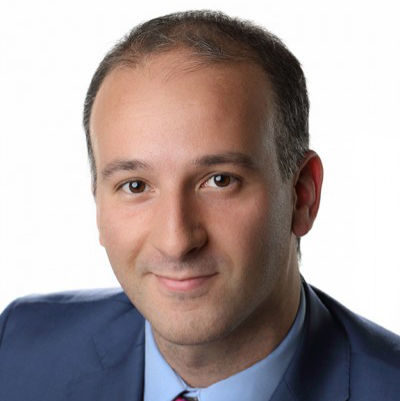
Johannes Larsch is a tenure-track Assistant Professor at the Center for Integrative Genomics within the Faculty of Biology and Medicine at Université de Lausanne (UNIL). His research focuses on understanding the neuronal mechanisms underlying social interactions, using larval zebrafish as a model organism. He employs advanced techniques like virtual reality and optical imaging to study how social signals are processed in the brain. Education: Bachelor of Biology, University of Konstanz, Germany PhD in Neurobiology, Rockefeller University, USA (lab of Cori Bargmann) Postdoc at Max Planck Institute of Neurobiology, Germany (with Herwig Baier) Research interests center on neuronal circuits driving group behavior, social recognition, and the interplay between genetics and environment in shaping behavior. His lab investigates how individual brains coordinate collective social behaviors through studies of neuronal activity and circuit dynamics. Current lab openings include fully funded PhD and PostDoc positions focused on social neuroscience and neurogenomics. Contact: johannes.larsch@unil.ch .
Margarita Boenig-Liptsin is a tenure-track Assistant Professor of Ethics, Technology and Society at ETH Zurich's Department of Humanities, Social and Political Sciences, a position she has held since September 2022. Trained in Science, Technology and Society with dual PhDs from Harvard University (History of Science) and Université Paris-Sorbonne (Philosophy), she brings interdisciplinary expertise to examining the relationship between technology, power, democracy, and ethics. Her research spans several interconnected areas focusing on transformations to human identity and citizenship in relation to information technologies across time and cultures. She investigates the social and political aspects of digital technologies, identity and selfhood in technological societies, ethics of technology, and comparative cultures of innovation. Her work uniquely bridges historical analysis with contemporary ethical concerns, examining how concepts like human dignity evolve alongside technological developments from punch cards to AI governance frameworks. Her recent publications (2023-2025) reveal a strong focus on AI ethics, data justice, and the philosophical implications of algorithmic systems. These works demonstrate her consistent interest in how technology shapes democratic processes, citizenship, and ethical frameworks. Her research shows progression from historical studies of computer literacy programs to contemporary analyses of generative AI's impact on knowledge production and everyday ethics. Her scientific recognition includes: NSF funding for her collaborative project on Silicon Valley's innovation imaginary Mozilla Foundation Responsible Computer Science Challenge grant (2018-2021) Academic Data Science Alliance support (2020-2022) Sorbonne Université's Paris IAS Chair on 'Major Changes' (2021-2022) At ETH Zurich, she leads research and teaching initiatives that build connections between engineering and social sciences. Previously at UC Berkeley, she directed the Human Contexts and Ethics Program, developing the Human Contexts and Ethics component for data science education. Her work consistently emphasizes translating social science theory for diverse audiences and connecting scholarly work to community needs in Zurich, Switzerland, and Europe. She teaches courses including 'Artificial Intelligence and Human Values' and 'Research in Ethics, Technology and Society' for the Fall 2025 semester.
Jeff B Murray serves as Professor and Department Chair in the Department of Marketing at the Sam M. Walton College of Business, University of Arkansas, teaching in the full-time MBA, Executive MBA, and Marketing Doctoral programs. His leadership extends to international doctoral seminars across Europe and Australia, reflecting his scholarly influence. His academic foundation includes a Ph.D. from Virginia Tech. His research program examines critical marketing, interpretive consumer research, and philosophy of science through frameworks like Consumer Culture Theory and Transformative Consumer Research. Murray's scholarly contributions reveal a trajectory from foundational critical theory toward contemporary applications in arts markets, sustainable fashion, and digital consumption. His work consistently bridges philosophical inquiry with empirical consumer phenomena, emphasizing emancipatory interests and societal transformation. Recent publications demonstrate growing interdisciplinary engagement with sociology, anthropology, and sustainability studies. Outstanding All-Around Professor Award (2002) Charles and Nadine Baum Faculty Teaching Award (2002) Editorial board service for leading journals including Journal of Consumer Research He mentors doctoral students now holding faculty positions globally, with recent workshops in Germany, France, and Scandinavia highlighting his international impact. His professional engagements span the American Marketing Association, Association for Consumer Research, and American Sociological Association, where he contributes to critical theory development through initiatives like Consumer Culture Theory. Murray maintains active scholarly networks through Transformative Consumer Research and regularly presents at international conferences, advancing critical perspectives on marketing's societal role.
Professor Michael C.L. CHAU serves as Professor and Deputy Area Head of Innovation and Information Management at The University of Hong Kong's Faculty of Business and Economics. He also holds the position of Associate Director at the HKU HKJC Centre for Suicide Research and Prevention, and serves on the HKU Senate and Court. His academic journey includes a Ph.D. in Management Information Systems from the University of Arizona and a B.Sc. in Computer Science (Information Systems) from the University of Hong Kong. Dr. Chau's research spans business analytics, artificial intelligence, web mining, fintech, smart health, and security informatics. His work focuses on applying data/text/web mining techniques to business, education, and social domains. He leads the Artificial Intelligence Research Group at HKU Business School, which has secured significant funding from the Hong Kong Research Grants Council, Food and Health Bureau, and other agencies for projects including 'The Invisible Hand in Crowdfunding' and 'Factors Moderating the Predictive Power of Social Media Sentiment on Stock Returns'. His publication portfolio includes over 150 articles in premier journals like MIS Quarterly, JMIS, and IEEE Transactions, with recent work exploring large language models, hate speech detection, and disaster-related social media analysis. His research demonstrates strong interdisciplinary connections across computer science, information systems, and business applications. INFORMS ISS Design Science Award (2020) IEEE ITSS Leadership Award in Intelligence and Security Informatics (2020) AIS Sandra Slaughter Service Award (2016) HKU Outstanding Young Researcher Award (2014) Faculty Research Postgraduate Supervision Award (2020 & 2025) Cited over 9,400 times (h-index = 47) Dr. Chau actively mentors doctoral students and has supervised numerous PhD graduates who now hold academic positions at institutions including Fudan University, Xi'an Jiaotong-Liverpool University, and the University of Maryland. His research grants portfolio demonstrates sustained funding success across diverse areas including blockchain, mental health applications, and social media analytics. The Artificial Intelligence Research Group he leads maintains strong industry connections through projects with Hong Kong Red Cross and the Hospital Authority.
Prof. Dr. Barbara Kraus is the Chair of Quantum Algorithms and Applications at the Technical University of Munich (TUM), affiliated with the TUM School of Natural Sciences. She previously held academic positions at the University of Innsbruck, where she founded her research group in 2010. Education : Physics and Mathematics at the University of Innsbruck; Post-doctoral work at MPI for Quantum Optics and University of Geneva. Her research focuses on foundational problems in quantum information theory, particularly entanglement in multipartite systems, quantum simulation, and verification of quantum processors. She develops theoretical tools for quantum many-body systems and explores applications in quantum computing, emphasizing error characterization and experimental validation. Recent publications highlight advancements in Hamiltonian learning, symmetry-resolved entanglement detection, and multipartite state transformations. Her work bridges theoretical quantum physics with practical implementations, including Rydberg platforms and quantum metrology. Key Awards : START Prize (2010), Ignaz L. Lieben Award (2013), Boltzmann Prize (2011), Südtiroler Sparkasse Research Prize (2019). She supervises doctoral students and postdocs in quantum information theory, with a focus on stabilizer states, quantum networks, and entanglement measures. Her courses at TUM include Quantum Information , Quantum Algorithms , and workshops on entanglement manipulation.
Jennifer Leeman is a Professor at George Mason University , focusing on the sociopolitics of language, with emphasis on multilingualism, Spanish in the US, and heritage language education. Her interdisciplinary work bridges critical applied linguistics, sociolinguistics, education, Latinx studies, and linguistic anthropology. BA in Spanish, University of Pennsylvania MA in Hispanic Civilization, New York University in Madrid MAT in TESOL & Bilingual Education, Georgetown University PhD in Hispanic Linguistics, Georgetown University Her research examines: Language ideologies and racialization processes in censuses Antiracist pedagogical frameworks for Spanish teaching Multilingual policy analysis across education and governance Critical service-learning in heritage language contexts Recent publications analyze census categorization, language and immigration policies, and critical pedagogy implementation. She received a 2024-25 Fulbright Senior Scholar award for research at the University of Murcia, Spain, and a 2023-24 Residential fellowship at Mason's Center for Humanities Research. Key scientific contributions include: Pioneering the online graduate certificate in Spanish Heritage Language Education (2021) Leadership roles in AAAL, MLA, and Instituto Cervantes’ advisory committees Editorial board memberships across journals like Language Policy and Hispania Her 15 most recent articles (2018-2025) reveal trends in: Language-race-national identity intersections Census-driven ethnoracial classifications Antiracist pedagogy in language classrooms Heritage speaker identity dynamics Monolingual policy critiques Transnational demographic analysis Contact: jleeman@gmu.edu | Office: Horizon Hall 5132
Linda Argote is the Thomas Lord Professor of Organizational Behavior and Theory at the Tepper School of Business, Carnegie Mellon University. She serves as Director of the Center for Organizational Learning, Innovation, and Knowledge. Her academic journey includes prior roles such as David M. Kirr Professor and Carnegie Bosch Professor. She holds a Ph.D. in Organizational Psychology from the University of Michigan and a B.S. in Psychology from Tulane University. Her research focuses on organizational learning, innovation, knowledge transfer, and group processes, with notable contributions to transactive memory systems and team performance. Argote has received prestigious awards like the Joseph E. McGrath Award and an Honorary Doctorate. She actively contributes to academic leadership through roles in editorial boards, grant reviews, and university committees. Her teaching includes courses on organizational learning and strategic management.
Furkan Alaca is an Assistant Professor at Queen's University's School of Computing, part of the Faculty of Arts and Science. His research focuses on user authentication systems, addressing security and usability challenges. He holds a Ph.D. (2018) in Computer Science from Carleton University, an M.A.Sc. (2012) in Electrical and Computer Engineering, and a B.Eng. (2010) in Communications Engineering, all from Carleton University. His academic career includes teaching roles at Queen's University and the University of Toronto Mississauga, where he taught courses such as Cryptography, Cybersecurity, and Discrete Mathematics. He is affiliated with Queen's Security Research Group and Computer Security Research Lab. Research interests include computer and internet security, usable security, authentication mechanisms, and systems security. He has contributed to advancements in web authentication frameworks, malware analysis, and privacy-preserving technologies. His work spans conferences like IEEE and ACM, with notable publications in cybersecurity, machine learning, and network efficiency. Current teaching includes CISC 447 (Introduction to Cybersecurity) and CISC 468 (Cryptography). He has advised on courses ranging from undergraduate programming to graduate-level security topics.
Alison J. Mackey is Professor and Chair of the Department of Linguistics at Georgetown University, College of Arts and Sciences. She is a leading scholar in second language acquisition (SLA), with a focus on interaction, feedback, research methodology, and language learning across the lifespan. Her research interests include second language acquisition , task-based language teaching , research methodology , interaction and corrective feedback , and language learning in children and adults . She has published extensively in top-tier journals and book series, shaping methodological standards in the field. Her recent publications reflect a strong trend in methodological rigor , interactionist approaches , and practical applications of SLA research. Themes include data elicitation , stimulated recall , task design , and pragmatic development , spanning both theoretical and classroom-based inquiry. Mildenberg Prize (2012) for The Handbook of Second Language Acquisition American Association for Applied Linguistics Distinguished Scholarship and Service Award International Association of Task-based Language Learning and Teaching Distinguished Achievement Award CHOICE Outstanding Academic Title (2012) Alison Mackey has advised numerous scholars through co-authorship and editorial leadership. She is Editor-in-Chief of Cambridge University Press Annual Review of Applied Linguistics and Editor of the Routledge Second Language Research series, guiding the publication of cutting-edge research. While specific grants are not listed, her editorial work and high citation count (>35,000) reflect significant research impact and funding support. She leads and contributes to major research initiatives such as the IRIS Repository , promoting open-access research instruments in SLA. Her work fosters collaboration across institutions and supports methodological transparency and replication in the field.
Dr. Feng Cheng is a Senior Researcher and head of the IT Security Engineering (Sec-Eng) Team at the Hasso Plattner Institute (HPI), Germany, and serves as the Representative of the Chair "Internet Technologies and Systems" at the Digital Engineering Faculty, University of Potsdam. He holds a PhD from the University of Potsdam, an MEng from Beijing University of Technology, and a BEng from Beijing University of Aeronautics and Astronautics. His research is centered on data-driven security engineering, security analytics, network security, cloud security, firewall, IDS/IPS, attack modeling, and penetration testing. Dr. Cheng's research interests span a broad range of cybersecurity domains, with a strong emphasis on security analytics , data-driven threat detection , cloud and network security , and authentication . His work integrates advanced data engineering and machine learning techniques to enhance security operations, including intrusion detection, threat intelligence, and security information and event management (SIEM). Key application areas include IoT security, mobile security, and web security. The recent publications of Dr. Cheng and his team reflect a significant trend towards leveraging big data analytics , machine learning , and graph-based methods for cybersecurity. Their work focuses on developing frameworks for blockchain-based public key infrastructures, advanced SIEM analytics, malware detection using NLP, and chaos engineering for cloud security. This demonstrates a strong commitment to creating practical, scalable, and intelligent solutions for modern security challenges in complex, distributed environments. Dr. Cheng is actively involved in the academic community as a member of ACM and IEEE, a program committee member for numerous international conferences, and an organizer of workshops on cloud computing and cybersecurity. He has also served on editorial boards for international journals. He supervises a large group of PhD, master's, and bachelor's students, guiding research on topics such as security analytics, cyber threat intelligence, digital credentials, and behavioral authentication. He leads the Sec-Eng team, which conducts research on a diverse portfolio including the Security Analytics Lab, HPI-VDB (vulnerability database), Lock-Keeper (physical separation technology), and the Security Lab Generator for scenario-driven security training.
Prof. Martin Messner is a University Professor at the University of Innsbruck, leading the Controlling Institute within the Department of Organization and Learning. His work focuses on management accounting, performance measurement, and the intersection of accounting practices with organizational behavior. He holds editorial leadership roles, including Editor-in-Chief of Accounting, Organizations and Society (2021–present) and previously served on the Management Accounting Research editorial board (2015–2019). Prior to his current position, he was an Assistant Professor at HEC Paris (2006–2011). Research Interests: His research explores performance measurement systems, ethics in management control, and the evolving roles of accounting in organizational narratives and governance. He investigates topics like algorithmic decision-making, narrative reporting, and entrepreneurial governance structures. Professional Activities: Member of the European Accounting Association’s Publications Committee Co-organizer of the MASOP Workshops (2008–2023) His publications span academic journals and edited volumes, addressing themes such as zero-based budgeting, data scientist identities, and the ethical implications of control systems. He actively bridges theoretical and practical accounting issues through interdisciplinary collaboration.
Mark de Rond is Professor of Organisational Ethnography at Cambridge Judge Business School and Fellow of Darwin College, University of Cambridge. His work focuses on immersive ethnographic studies of human behavior in extreme contexts including war zones, high-stakes sports, and controversial social movements, revealing how individuals navigate challenging circumstances through compromise and sensemaking. His educational background includes a DPhil from the University of Oxford alongside advanced degrees in management and economics, photojournalism, documentary photography, biography, creative nonfiction, and prose fiction. This multidisciplinary training informs his unconventional methodological approach. De Rond's research centers on extreme context ethnography, examining how pressure-cooker environments expose fundamental organizational dynamics. His work spans military medicine (Camp Bastion fieldwork), elite sports (Cambridge Boat Race), Amazon river expeditions, and controversial practices like paedophile hunting. Key contributions explore negotiation, conflict resolution, serendipity, institutional persistence, and the emotional toll of fieldwork, often employing innovative methods like enactive ethnography and linguistic analysis of digital communities. His recent publications reveal a growing focus on digital vigilantism and the societal implications of extreme practices, with increasing interdisciplinary reach across organizational studies, criminology, medical anthropology, and sociology. The work demonstrates methodological creativity through linguistic analysis of Facebook groups, embodiment studies in extreme environments, and dream-based reflexive techniques. Scientific recognition includes: BEST ARTICLE AWARD FOR 2016 Favorite MBA Professor honors from Poets & Quants (2021, 2022) Guinness World Record for first unsupported Amazon row De Rond advises MBA students and delivers executive education to top law firms (Slaughter and May, Allen & Overy), professional services (McKinsey, KPMG), corporations (Sky, BT, Diageo), and NGOs (UNICEF, NHS). His negotiation training from Harvard Law School informs both academic work and university mediation practice. Current research involves collaborative teams studying paedophile hunting (featured in Sundance-nominated documentary Predators ) and high-performance sports organizations, with fieldwork requiring deep immersion in challenging environments. His research methodology involves embedded collaboration with diverse teams including medical personnel in conflict zones, elite rowers, and controversial activist groups, often pushing methodological boundaries through photojournalism and creative nonfiction approaches.
Jill Newton is a Professor in the Department of Curriculum and Instruction at Purdue University’s College of Education. Her work focuses on mathematics education curriculum development, teacher training, and equity in education, with additional contributions to international and study abroad programs. Ph.D. in Curriculum, Teaching, and Educational Policy (Mathematics Education), Michigan State University (2008) M.A. in International Education, George Washington University (1995) B.S. in Mathematics and Secondary Teaching Certification, Michigan State University (1987) Newton’s research spans algebra teaching, curriculum coherence, and social justice in education. She has led national studies on mathematics teacher preparation and explored how teachers use curricular resources post-COVID. Her work also emphasizes international education, including virtual communities of practice for global social justice. Recent publications highlight her focus on algebraic reasoning, curricular alignment, and equity. She has co-authored studies on elementary teachers’ curriculum use, preservice teacher development, and virtual intercultural collaborations. Terry L. Wood Mathematics Teacher Educator Award (2024-25) Book of Great Teachers Inductee (2023) Outstanding Leadership in Globalization Award (2022-23) Charles B. Murphy Outstanding Undergraduate Teaching Award (2017) Newton has coordinated undergraduate research at Purdue since 2018 and has taught mathematics education courses since 2004. Her teaching experience spans secondary schools in Venezuela, Tanzania, Bulgaria, and Papua New Guinea, enriching her global perspective.
Ira Lit is a Teaching Professor at the Graduate School of Education at Stanford University. They serve as Faculty Director of the Stanford Teacher Education Program (STEP) and are affiliated with the Stanford Woods Institute for the Environment . Their work bridges teacher education, elementary education, and educational equity. Key research areas include: Equity in education systems Design of schooling models Experiences of marginalized students Family-school partnerships Recent publications analyze teacher preparation programs, voluntary desegregation, and multilingual education. Lit has supervised doctoral students like Elena Darling Hammond and Nallely Aceves , with a focus on race, identity, and policy in California schools. They hold a Ph.D. from Stanford in Curriculum Studies and Teacher Education (2003) and have taught at Stanford since 1986.
Dr. Emilio Ferrara is a Professor of Computer Science & Communication at the University of Southern California, holding appointments in the Viterbi School of Engineering, Annenberg School for Communication and Journalism, and Keck School of Medicine. He serves as Associate Director of Applied Data Science at USC, Research Team Leader at the USC Information Sciences Institute, and Principal Investigator at the USC/ISI Machine Intelligence and Data Science (MINDS) group. His educational background includes a PhD in Machine Learning and BSc & MSc in Computer Science. Ferrara's research focuses on the intersection of artificial intelligence and computational social science, specifically using AI to model and predict human behavior in techno-social systems. His work spans social networks, machine learning, and network science with applications to understanding communication dynamics in digital environments. Ferrara has published over 150 articles in prestigious venues including Proceedings of the National Academy of Sciences, Communications of the ACM, and Physical Review Letters. His research has been widely featured in major news outlets and examines topics ranging from social media manipulation to AI ethics and online behavior. His scientific achievements have been recognized with numerous awards: 2019 Viterbi Scientific Award 2018 DARPA Director's Fellowship 2016 DARPA Young Faculty Award 2016 Complex Systems Society Junior Scientific Award 2015 IBM Watson Big Data Influencer Ferrara's research is supported by major funding agencies including DARPA, IARPA, Air Force, and Office of Naval Research. He leads the HUMANS LAB (Humans & Machines + Networks & Social Systems) which has trained numerous PhD students who have gone on to successful careers in academia and industry. His work on social bots, election integrity, and AI ethics continues to shape understanding of digital social dynamics.