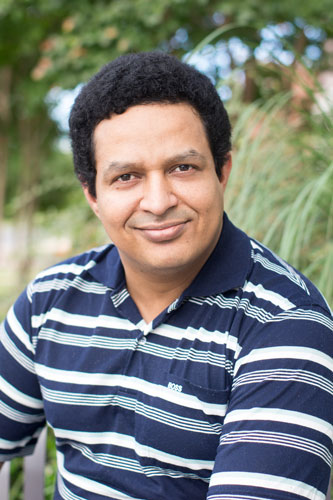
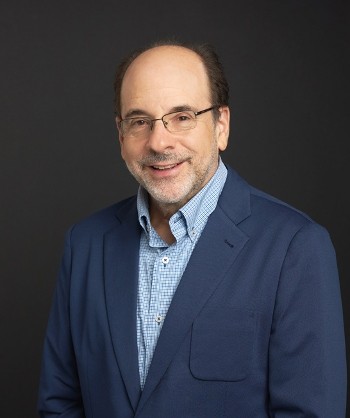
Lance Rips is a Professor in the Psychology Department at Northwestern University , Evanston, IL. His research focuses on cognitive psychology, particularly concepts, reasoning, and autobiographical memory. Academic Rank: Professor Institution: Northwestern University Department: Psychology Department Contact: ripslab@gmail.com , rips@northwestern.edu Research interests include: Deductive and inductive reasoning Concepts of objects/events over time Causal cognition Mathematical thinking (numbers, non-Euclidean geometry) Informal argumentation and survey methodology His lab investigates foundational questions in cognition, with recent work on conditional reasoning, object individuation, and developmental understanding of substances. Publications span journals like Cognitive Science , Psychological Science , and Cognition .
Ronja Sczepanski is an Assistant Professor at the Centre for European Studies and Comparative Politics (CEE) at Sciences Po. Her research explores the intersection of national and European identities, focusing on how political perceptions, social sorting, and behavioral processes drive identity change. Specializes in identity formation through political events like referenda Analyzes neighborhood effects and ethnic diversity on identity dynamics Investigates political party framing of social groups Her recent work examines how differentiated integration impacts EU policy compliance and validates open-source machine translation for text analysis. She teaches courses on European integration at institutions including ETH Zurich and the University of Cologne. Recipient of the PolMeth Europe Best Poster Award (2023) Published in journals like Comparative Political Studies and European Union Politics
Krishan Kumar is a University Professor and William R. Kenan, Jr. Professor of Sociology at the University of Virginia, specializing in political sociology, historical sociology, and social theory. His research spans nationalism, global history, and comparative-historical sociology, with a focus on empires and societal transformations. Research Interests: Stratification and social inequality Political sociology and social thought Cultural and comparative-historical analysis Dynamics of nationalism and national identity Publications: His works include groundbreaking books on empires, revolutions, and societal transitions, reflecting a thematic arc from industrial/post-industrial societies to contemporary global challenges. Key trends include the interplay between utopian ideals and realpolitik, and historical comparative analysis of state structures.
Elaine M Shenk is a Professor of Spanish and Chair of the Department of Languages and Linguistics at Saint Joseph's University. Her work focuses on sociolinguistic phenomena in language contact settings, emphasizing language ideologies, bilingualism, and policy debates across Puerto Rico and the United States. Education : PhD in Spanish-Linguistics from the University of Iowa; MA in Spanish-Linguistics from the University of New Mexico; BA in Liberal Arts from Eastern Mennonite University. Her research explores the symbolic values and political dimensions of language contact, with a focus on Puerto Rican communities, U.S. legislative discourse, and educational contexts. She examines metaphors in language-status dynamics, sociolinguistic variation in intermediate classrooms, and the historical evolution of language policies in Congressional bills. Recent publications address language ideologies in Puerto Rican migration, metaphors in language debates, and policy frameworks. These works span sub-fields like language legitimation campaigns, bilingual education strategies, and discourses on protectionism versus receptivity in language officialization. Scientific Awards : 2019 Ed Brady SJ Faith in Action Award 2019 Alpha Sigma Nu Teaching Award 2016 Honorable Mention, AATSP Outstanding Scholarly Publication Award Multiple research grants including the Michael J. Morris Grant (2014) Service-learning and curriculum development grants (2012-2010)
Rika Hanamitsu is a Professor at the School of Social Sciences, Waseda University, where she teaches courses related to intercultural communication studies. She holds a Doctor of Philosophy degree from Waseda University and is also affiliated with the Center for International Education and the Global Education Center at the university. Education: Doctor of Philosophy from Waseda University Affiliations: Center for International Education, Global Education Center Her research focuses on intercultural communication and applied linguistics, particularly examining how cultural stereotypes, identities, and communication styles are represented in media and literature. She has conducted extensive research on Allen Say's works and their cultural implications, analyzing how they depict multicultural experiences and identity formation. Professor Hanamitsu's educational activities include teaching various courses including 'Seminar III (Intercultural Communication Studies)', 'Exploring Cultures through Film', 'Inter-Cultural Communication', 'Freshman Seminar', and 'Intercultural Communication' in both fall and spring semesters of 2025. Her teaching emphasizes the use of films as educational tools for intercultural understanding and literacy development. She has participated in overseas activities such as attending the Summer Institute of Intercultural Communication at Hope College, University of Michigan in 2002. Her social activities include intercultural communication training using games to develop communication skills, which she has conducted since 2011. International Presentations: 35th IBBY World Congress (2016), Summer Institute of Intercultural Communication (2002) Domestic Conferences: Japan Association for Language Education & Technology, Japan Association of College English Teachers, Japan Society of English Usage and Style Research Projects: Cultural Comparison of Conflict Scenes in Movies and Their Treatment (2005)
James Lin is an Assistant Professor at the University of Washington Jackson School of International Studies and an Adjunct Assistant Professor in the Department of History (College of Arts & Sciences). He holds a Ph.D. in History from UC Berkeley (2017), an M.A. from Columbia University (2010), and a B.A. from UC Berkeley (2007). His research focuses on modern Taiwan’s global engagements, agrarian development, and Cold War-era technical diplomacy. He is the author of *In the Global Vanguard: Agrarian Development and the Making of Modern Taiwan* (UC Press, 2025), examining rural reform and Taiwanese development missions in the Global South. Lin’s work bridges political economy, environmental history, and science studies. He has held fellowships at the Shanghai University Center for Global Development History and Academia Sinica. His awards include the Chiang Ching-Kuo Foundation Fellowship and Fulbright. He teaches courses on global capitalism, Taiwan studies, and modern East Asia. Lin actively engages in public scholarship through writing for *The Guardian*, *Jacobin*, and media consultations (e.g., for *Last Week Tonight*).
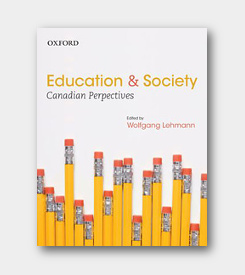
Wolfgang Lehmann is a Professor and Acting Chair of the Department of Sociology at Western University, where he also serves as Undergraduate Program Chair and Assistant Dean for Student Experience in the Faculty of Social Science. He holds a Ph.D. in Sociology from the University of Alberta, an MBA from the City University of New York, and additional degrees from the University of Toronto/OISE and the University of Mannheim. His research focuses on social inequality, social class, and educational transitions, particularly examining how class impacts access to education and employment opportunities. Lehmann’s academic career includes extensive grant funding, including SSHRC grants totaling over $750,000 for studies on youth apprenticeships, first jobs, and educational inequality. He has supervised numerous graduate students and authored/edited influential books such as Education and Society: Canadian Perspectives (Oxford University Press) and Choosing to Labour? School-Work Transitions and Social Class (McGill-Queen’s University Press). His research highlights the challenges faced by working-class students in higher education and their transitions to employment. Key contributions include analyses of social capital, habitus, and vocational training systems. Lehmann has received recognition for his teaching, including multiple USC Teaching Honour Roll placements and a nomination for the USC Teaching Award. Lehmann’s work extends to international collaborations and policy advocacy, addressing issues like skilled labor shortages and the status of vocational education in Canada. He actively participates in academic leadership roles, including editorial boards for journals like the British Journal of Sociology of Education and the International Journal of Lifelong Learning .
Ali Ghodsi is a Professor at the University of Waterloo and Director of the Data Science Lab, with affiliations at the Vector Institute. His research spans machine learning, deep learning, and artificial intelligence, with applications in natural language processing, bioinformatics, and computer vision. His group develops theoretical frameworks and algorithms for analyzing large-scale datasets, focusing on neural network architectures, knowledge distillation, and model efficiency. Current projects include deep learning for identity control, computational antibody design, and generative AI/large language models. Ghodsi has authored influential tutorials on diffusion models, graph neural networks, and large language models. Notable research contributions include computational methods for de novo peptide sequencing from mass spectrometry data, green simulation-assisted reinforcement learning, and efficient natural language processing models. His lab maintains collaborations with industry partners including Google, Amazon, and Roche.
Cristina Bettinelli is a full professor in the Department of Management at the University of Bergamo. She serves as Director of the MSc Program in International Management and Marketing (IMM) and Director of the Center for Young and Family Enterprise (CYFE). Her research focuses on family business governance , entrepreneurial firm innovation , and internationalization , with publications in journals like Family Business Review , Entrepreneurship Theory and Practice , and Journal of Family Business Strategy . Member of editorial boards: Family Business Review , Journal of Family Business Strategy Professional activities: Innovative training projects, Marketing Lhab research group (since 2024) Scientific Awards: Best Contribution to Practice Paper (2024) - IFERA Best Unpublished Research Paper Award (2022, 2015) - FFI Multiple Best Paper Awards/Nominations - IFERA, EIASM, ICSB Family Business Review Best Paper Award (2012) Recent Research Trends: Analyzes family firm dynamics, pandemic response behaviors, cross-border e-commerce strategies, and B corporation ethics. Her 2024-2025 publications emphasize organizational identity , crisis management , and strategic governance .
Ragib Hasan is a Professor in the Department of Computer Science at the University of Alabama at Birmingham (UAB), affiliated with the College of Arts and Sciences. His research focuses on cybersecurity, with specialties in cloud security, IoT systems, digital forensics, and biomedical device security. He leads the Secure and Trustworthy Computing Lab (SECRETLab) and contributes to the UAB Center for Cyber Security and NIST Cloud Forensics Working Group. Education: M.S. and Ph.D. in Computer Science from the University of Illinois at Urbana-Champaign, followed by a postdoctoral fellowship at Johns Hopkins University. Affiliations: NIST Cloud Forensics Working Group, UAB Center for Cyber Security. His research addresses threats in smart cities, autonomous vehicles, and healthcare technologies. Key interests include securing IoT networks, mitigating cyberattacks on critical infrastructure, and advancing forensic methodologies in cloud environments. Recent work emphasizes threat modeling for connected vehicles, medical devices, and AI-driven systems. Dr. Hasan’s funding comes from the Department of Homeland Security, NSF, ONR, and industry partners like Facebook, Google, and Amazon. His awards include the NSF CAREER Award (2014), Google RISE Award (2013), and Deutsche-Welle Best of Blogs (2014) for his BanglaBraille initiative. Grants & Projects: Supported by DHS, NSF, and corporate collaborations. Outreach: Founded Wikimedia Bangladesh, Shikkhok.com (STEM education platform), and contributed to Bangla and English Wikipedia. His lab develops frameworks like StreetBit for pedestrian safety and InSight for emergency alert systems, integrating Bluetooth beacon technology to enhance urban security and sustainability.
Baha Yiğit Sayın is an Assistant Professor of Roman Law at Koç University's Law School since 2009. He holds a PhD from Istanbul University (2009), an LLM from the University of Warwick (2002), and a Bachelor's degree from Istanbul University (1999). His research focuses on Roman Law, Comparative Law, Slavery in Antiquity, and Gender Studies in Legal Contexts. He has authored books like Roma’da Köle ve Hukuku (2020) and Roma Klasik Hukukundan Modern Hukuklara Obligatio Naturalis (2023), and contributed to journals such as Annales de la Faculté de Droit d’Istanbul and Bahçeşehir Hukuk Fakültesi Dergisi . Prof. Sayın has served as Head of the Roman Law and Legal History Departments at Koç Law School since 2011. He received teaching awards from Koç University (2013–2014, 2018–2019) and the Crystal Tulip Award for Jurist of the Year (2019). His work bridges ancient legal systems with modern legal theory, emphasizing historical continuity and comparative analysis. He has lectured globally, including at the University of Oxford and the University of Cape Town, and contributed to initiatives like the Legal Philosophy Summer School at Koç University. His administrative roles include Dean of Students at Koç University (2019–2022), member of the Koç University Press editorial board, and participation in international academic organizations like the Société Internationale Fernand De Visscher pour l’Histoire des Droits dl’Antiquité.
David L. Blustein is a Professor and Golden Eagle Faculty Fellow in the Department of Counseling, Developmental, and Educational Psychology at Boston College . He holds a Ph.D. from Columbia University, with expertise in the psychology of working, career development, and social justice advocacy. His research focuses on decent work, work dignity, and precarity, with global collaborations through initiatives like the International Labor Organization (ILO) and the United Nations Development Program. Blustein has authored influential books, including The Psychology of Working and The Importance of Work in an Age of Uncertainty , and has been recognized with prestigious awards such as the Leona Tyler Award (2022) and the Eminent Career Award (2018). He teaches courses like Advanced Counseling Practicum and Psychology of Work , emphasizing formative education and equity. His work addresses systemic issues in employment, advocating for policies that promote dignity and fairness in workplaces globally. Recent studies include interventions for mental health through work (WIN program) and analyses of pandemic-era precarity. Blustein’s international network and publications reflect a commitment to bridging psychological theory with real-world labor challenges.
J. Paul Goode is an Associate Professor and McMillan Chair in Russian Studies at the Institute of European, Russian and Eurasian Studies (EURUS) within Carleton University’s Faculty of Public and Global Affairs. His research focuses on nationalism, authoritarianism, and political identity in Russia and post-Soviet states. He holds degrees from the University of Oxford (PhD, MPhil), University of Wisconsin-Madison (MA), and University of Texas-Austin (BA). Professor Goode serves as Editor-in-Chief of Communist and Post-Communist Studies and Associate Editor of Nationalities Papers . He contributes to editorial roles at Russian Politics and Social Science Quarterly , and advises Nations and Nationalism . His professional memberships include the Program Committee and advisory board of the Association for the Study of Nationalities, and the Department Development Partnership Program of European University at St. Petersburg. Previous roles include founding Director of the Center for the Study of Nationalism and Coordinator for Russian and East European Studies at the University of Oklahoma, and Convenor of the Research Group on Nationalism, Populism, and Radicalism at the University of Bath. His research explores nationalism in authoritarian contexts, the interplay between state strategies and everyday patriotic practices, and political legitimation mechanisms. Recent projects investigate pandemic politics, AI’s impact on identity, and the evolution of Putin’s governance. He consistently analyses how regimes engineer nationalist narratives to sustain power, with a focus on Russia’s territorial and ideological boundaries. Goode’s work bridges theory and practice through interdisciplinary frameworks, emphasizing constructivist approaches to mass-level nationalism. His editorial leadership aims to democratize scholarly discourse on post-communist and authoritarian systems. He has pioneered studies on hybrid regimes and the challenges of conducting fieldwork in restricted environments. His contributions highlight the need for adaptive research strategies in politically volatile regions.
Anthony Lising Antonio is an Associate Professor at the Stanford Graduate School of Education and Associate Director of the Stanford Institute for Higher Education Research . He serves as the founding faculty director of LifeWorks , an undergraduate integrative learning program. His work focuses on postsecondary access, racial diversity in education, student development, and social stratification. PhD, University of California, Los Angeles (1998) MA, University of California, Los Angeles (1994) MS, Stanford University (1992) BS, University of California, Berkeley (1988) Dr. Antonio's research spans stratification in higher education, racial and ethnic minority student development, and the impact of diversity on institutions. Recent work explores college admissions essays, synthetic text analysis, engineering equity, and social network applications in educational research. His 2024-25 courses include Diversity and Equity Issues in Higher Education and Holistic College Student Development. His publications address critical themes like racialization in STEM, gender dynamics in undergraduate applications, intersectionality in student status, and college access program partnerships. Articles frequently employ social network analysis, critical race theory, and interdisciplinary methodologies to examine educational equity and institutional change. Principal investigator for educational RCTs Co-author on large language model demography studies Contributor to affirmative action policy debates Dr. Antonio advises doctoral students in education and sociology, with affiliations to the Center for Comparative Study in Race and Ethnicity and the Asian American Studies program. He resides in EAST House, a Stanford residential fellowship focused on equity and societal issues.
Diana Allan is an Associate Professor in the Department of Anthropology at McGill University, affiliated with the Institute for the Study of International Development (ISID) and holding the Canada Research Chair in the Anthropology of Living Archives. She holds a Ph.D. from Harvard University (2008). Her work focuses on Palestinian refugee experiences in Lebanon, particularly through the Nakba Archive and her ethnographic films. Affiliations: McGill University Anthropology, ISID, Leadership for the Ecozoic Key roles: Co-lead of the Critical Media Lab, filmmaker, and activist scholar Research interests center on camp ecologies, cultural memory, and colonial histories. She explores how material environments shape refugee life through projects like Past Continuous (camp archives) and Partition (film on colonial archives). Themes: Exile, displacement, sensory memory, transnational solidarity Recent publications include Voices of the Nakba (2021) and Refugees of the Revolution (2014), award-winning works analyzing Palestinian narratives. Her films Still Life and So Dear, So Lovely critically examine camp life and memory. Awards: English PEN Award, Palestine Book Award, AAA Middle East Section Prize Current projects investigate Palestinian coastal life, urban food systems in Lebanon, and digital platforms for refugee histories. She collaborates with artists, activists, and communities to create accessible pedagogical tools about displacement.