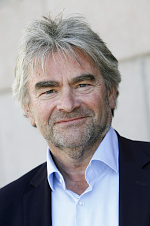
Rune Andersen is a Senior Lecturer at the University of Agder , affiliated with the Department of Information and Communication Technology . He has pioneered Europe's first holistic Bachelor's program in Academic Esports and serves as its Program Head, while also leading external communication and innovation initiatives within the department. Education: General Teacher (1999) Master's in Educational Use of ICT (2008) Guidance Pedagogy (2012) Welfare Technology (2018) His research interests focus on ICT integration in education , gamification , and leveraging transferable skills from esports for workforce development. He emphasizes interdisciplinary collaboration and industry partnerships to bridge academic and professional transitions. Recent publications highlight esports as a pedagogical tool, gamification in higher education, and skill transfer from digital environments to real-world applications. His work spans game-based learning, universal design, and curriculum innovation.
Anis Yazidi is a Professor at Oslo Metropolitan University, affiliated with the Faculty of Technology, Art and Design and the Department of Information Technology. His research focuses on Artificial Intelligence, Machine Learning, Medical Technology, and IoT Security, with a particular emphasis on Applications of AI in Healthcare, EEG Signal Processing, and Digital Transformation. Active research projects include AI Mind (dementia diagnostics), Glycopathology in dry eyes, and Pain and mental distress analysis Completed projects: Digital hate speech analysis, AI in reproductive technology, Nano-antibiotics development His recent publications (2023-2025) demonstrate expertise in: Tsetlin Automaton algorithms for concept learning EEG classification using visibility graphs and vision transformers AI ethics frameworks for medical practice Deepfake detection methodologies Collaborative work spans institutions in Norway, Czech Republic, and international AI research communities.
Jenny Edkins is a Professor of Politics at the University of Manchester, specializing in critical international relations, postcolonial politics, and the intersection of performance and politics. She holds a physics degree from the University of Oxford, a social sciences degree from the Open University, and a PhD from Aberystwyth University (1997), supported by a Leverhulme Special Research Fellowship. Her research explores trauma, humanitarian aid, and political uncertainty through interdisciplinary lenses. Notable works include Change and the Politics of Certainty (2019) and After Grenfell (2019). She co-founded the Performance and Politics international research centre and leads initiatives like the Gregynog Ideas Lab. Edkins’ collaborative projects bridge academia and activism, addressing famine policy, missing persons, and urban disaster responses. Her creative works include poetry and narrative politics, exemplified by her poem As it turned out (2019). Leverhulme Fellowship (1997) Her advisory roles include contributions to UK government and NGO policies on humanitarian crises. She has authored over twelve books, including foundational texts in poststructuralist IR and narrative politics.
Pouria Akbarighatar is a PhD Research Fellow in Responsible Data Science at the Department of Information Systems , University of Agder, Norway, and a visiting PhD researcher at the Centre for Information Resilience (CIRES) , University of Queensland Business School. He holds a BSc in Industrial Engineering and an MSc in Information Systems from the University of Tehran. His research focuses on Responsible AI , including maturity models , fairness frameworks , and ethical implementation in sociotechnical systems. His work combines Fuzzy mathematics , decision science , and data science to address uncertainty and complexity in AI systems. Recent publications explore responsible AI principles in practitioner contexts, operationalizing AI ethics , and credibility assessment in online reviews . He contributes to journals like AI and Ethics , IEEE Access , and Expert Systems with Applications , alongside conferences such as ECIS , AMCIS , and PACIS . He teaches courses in Data Science Applications , Algorithmic and Data Structures , and Data Science Applications II . He is affiliated with the Human-Centered AI (HCAI) research group.
Ola Mestad is a Professor at the Nordic Institute of Maritime Law, Faculty of Law, University of Oslo. His academic career spans several decades with a distinguished focus on constitutional law, maritime law, petroleum law, and historical legal analysis. Mestad maintains an active research profile with publications extending into 2025, demonstrating his ongoing contribution to legal scholarship. Mestad's research interests encompass a wide range of legal domains with particular emphasis on Norwegian constitutional history, especially regarding the 1814 Constitution. His scholarly work explores the historical development of legal frameworks, their interpretation, and contemporary applications. He has produced extensive commentary on specific constitutional provisions through his contributions to Grunnloven: Historisk kommentarutgave 1814-2020 , examining everything from property rights to parliamentary procedures and judicial powers across different historical periods. His recent publications reveal evolving research trajectories into stakeholder engagement in Sami areas, EFTA Court jurisprudence, and the historical connections between Norwegian and American democratic practices. Mestad's work consistently bridges historical legal analysis with contemporary legal challenges, demonstrating how historical context informs current governance structures and international legal obligations. Mestad has contributed significantly to understanding Norway's legal relationship with international frameworks, including the EEA Agreement and EFTA Court decisions. His research on maritime resources, particularly the historical and contemporary rights to seaweed and kelp, demonstrates practical applications of legal history to current resource management challenges. His scholarly output shows remarkable consistency in connecting historical legal development with modern applications across constitutional law, maritime law, and energy law domains, establishing him as a leading authority on Norwegian legal history and its contemporary relevance.
Norwegian University of Science and TechnologyNorway
Aida Akbarzadeh is a Senior Researcher at the Norwegian University of Science and Technology (NTNU) , specifically within the Department of Information Security and Communication Technology under the Faculty of Information Technology and Electrical Engineering . Her work focuses on cybersecurity, critical infrastructure protection, and cyber-physical systems (CPS). Research Areas: Threat modeling, digital twins for security, dependency-based risk analysis, advanced persistent threats (APT), IT/OT integration, and industrial control system vulnerabilities. Publications: Recent work includes studies on automating threat modeling, digital twin applications, APT attacks on power grids, and protocol-specific vulnerabilities (PTP, IEC 61850, IEC 60870-5-104). Collaborations: Active in interdisciplinary research with colleagues like Laszlo Erdodi, Siv Houmb, Sokratis Katsikas, and Tore Soltvedt. Labs & Groups: Member of the Critical Infrastructure Security and Resilience Group (CISaR) . Contact: aida.akbarzadeh@ntnu.no
Astrid Kvalbein is the Principal at the Norwegian Academy of Music (NMH) since August 2021, with Morten Qvenild as deputy principal (2023). She has led NMH through post-pandemic economic restructuring and its 2023-2024 anniversary year, emphasizing student-employee engagement through dialogue and development. Education: Doctorate (2013) and degree in music pedagogy (1998) from NMH. Research Focus: Historical and contemporary performance practices, Nordic music history, modernization/modernism, and gender dynamics in composition. Recent Publications: 2024 economic analysis of music institutions, 2021 gender studies in composition, 2019 avant-garde critiques, and interdisciplinary explorations of physicality in performance. Scientific Awards: Postdoctoral Fellow at the University of Oslo Research Fellow at Norwegian Academy of Music Leadership & Collaborations: Project leader for Musical Modernization: Pauline Hall (1890–1969) (2006–2013) under NordART, and active in organizations like Ny Musikk. Her work bridges classical and contemporary music through biographical, performance, and discourse-oriented approaches.
Torbjörn Andersson is a docent (Associate Professor) in sports science at Malmö University's Department of Sports Science within the Faculty of Education and Society. His academic career has been dedicated to the historical and cultural study of football, particularly focusing on Swedish football's development and its societal impact. Andersson's research interests center on football history with a particular emphasis on Swedish football culture across different historical periods. His work explores themes such as football hooliganism from 1900-1970, the relationship between football and alcohol in Swedish society, football's role in urban identity and city marketing, and the cultural significance of football clubs in local communities. He has extensively documented how football has shaped and reflected Swedish social history. His publication record spans several decades with notable works including his doctoral dissertation "Kung Fotboll. Den svenska fotbollens kulturhistoria från 1800-talets slut till 1950" (King Football: The Cultural History of Swedish Football from the End of the 19th Century to 1950) and co-edited special issues of "Soccer and Society" on topics like "Football in Scandinavia: A Fusion of Welfare Policy and the Market" and "Centres and Peripheries in Soccer." His recent work shows continued engagement with contemporary football scholarship through numerous book reviews on football politics, history, and culture. Andersson is currently working on a book about Swedish football's cultural heritage, continuing his lifelong scholarly commitment to documenting and analyzing the historical significance of football in Swedish society. His research demonstrates consistent focus on how football reflects broader social, political, and cultural developments in Sweden.
Jonathan William Kuyper is a Professor at the Department of Political Science, Faculty of Social Sciences, University of Oslo. A political theorist and international relations scholar, his work focuses on democratic theory, particularly deliberative democracy, and its application to global governance challenges like climate change and intellectual property rights. He explores how globalization reshapes domestic politics and democratic legitimacy. Key Research Areas: Deliberative democracy, non-state actors in global governance, climate change politics, transnational accountability, institutional design. Recent Research Trends: His publications analyze systemic representation, orchestration mechanisms, and flexibility in global institutions. He emphasizes empirical and normative dimensions of transnational climate governance and regime complexity. Scientific Awards: Riksbanken Jubileumsfund Grant (€250,000) Swedish Energy Agency Grant (€600,000) Australian National University PhD Scholarship ($70,000 AUD) COST Short Term Scientific Mission Grant (€2,500) Endeavour Award ($25,000 AUD) Collaborations: Joint-position at Stockholm University; visiting researcher roles at Oxford, Canberra, and European University Institute. His grants highlight leadership in climate governance and TTIP/TPP legitimacy studies.
Dr. Tobias Michael Scholz is an Associate Professor at the University of Agder within the Department of Information and Communication Technology . Widely recognized as the "godfather of esports research", he has dedicated 25 years to exploring the intersection of esports, human resource management, and digital transformation. As founder of the Esports Research Network and chief scientific officer of metagame , Scholz bridges academia and industry, particularly focusing on innovative educational programs that utilize esports to develop future workforce skills in Norway. Research Interests include gamification in HR, transferable skill development, corporate esports strategies, and sustainability in digital environments. His work examines how gaming mechanics can enhance hybrid team collaboration, risk governance, and intercultural management practices in global business contexts. Publication Trends reveal his specialization in esports business models, digitalization of work, and skill transfer mechanisms. Recent articles explore metaframe frameworks for professional dynamics, Olympic esports integration, and AI's impact on human resources. Professional Networks include the Esports Research Network and metagame . He actively collaborates with institutions like IATED and Routledge , contributing to annual conferences such as HICSS and ICERI.
Tom Brökel is Professor in Regional Innovation at the University of Stavanger Business School, Norway, and is associated with the Center of Regional and Innovation Economics at the University of Bremen, Germany. He is affiliated with the UiS School of Business and Law, specifically within the Department of Innovation, Management and Marketing. His research and teaching focus on innovation, economic geography, and network analysis. His research interests include: Geography of Innovation Regional Innovation Systems Technological and Skill Complexity Social Network Analysis R&D and Innovation Policy Renewable Energy and Sustainability Transitions Smart Specialization Strategies News Media as Big Data for Regional Science Tom Brökel's recent publications reveal a strong thematic focus on the interplay between technological complexity, regional economic growth, and innovation policy. His work frequently employs network and spatial analysis to study regional diversification, co-patenting dynamics, and the diffusion of innovation. He has developed novel methodologies using news media and press releases as data sources to assess regional economic sentiment and innovation visibility. His scientific contributions have been published in high-impact journals such as Research Policy , Technovation , Regional Studies , and Journal of Economic Geography . He actively collaborates with scholars across Europe, particularly on topics related to smart specialization, regional transformation, and green transitions. Notable scientific contributions include: Analysis of urban scaling of innovation across global cities Long-term evolution of technological complexity and its impact on economic growth Role of relatedness in regional job creation Impact of R&D subsidies on technological diversification Use of media narratives to understand public perceptions of wind energy Brökel regularly presents at international conferences such as RSA, ERSA, and Geography of Innovation. He is involved in research dissemination, policy advising (e.g., for Rogaland County), and public engagement. He has no listed PhD students in the provided text, but he supervises research projects and collaborates widely. He is not part-time, not retired, and currently active in both research and teaching.
Thomas Laudal is an Associate Professor at the University of Stavanger, affiliated with the UiS School of Business and Law, Department of Innovation, Management and Marketing. His academic work bridges business strategy, sustainability, and innovation, with a strong focus on institutional and societal implications of emerging technologies and business models. His research interests center on sustainable business strategies, corporate social responsibility (CSR), institutional perspectives on innovation, public goods economics, circular economy, and digital transformation in healthcare. He explores how organizations can align profitability with social and environmental responsibility, particularly in regulated sectors such as healthcare and public procurement. Laudal's recent publications reflect a consistent interdisciplinary focus on sustainability, innovation, and responsible business practices. His work spans circular value chains, responsible innovation in healthcare, economies of scale in digital service models (XaaS), and stakeholder dynamics in sustainable construction. These contributions highlight a trajectory toward integrating technological change with ethical and systemic considerations. No scientific awards are listed in the provided text. Laudal has supervised or collaborated with numerous researchers and has contributed to major research projects on digital health, circular economy, and CSR. He teaches courses in organizational theory and sustainable business practices at both undergraduate and graduate levels. His work includes formative contributions to understanding patient-initiated innovation, hairy goals in change management, and the role of public goods in economic systems. He has also been active in public engagement, presenting on AI in healthcare and future care models such as 'Carebnb' platforms. He is associated with research initiatives including the 'Releasing the power of the user' project and has contributed to workshops and seminars on digital health, circular economy, and responsible innovation. His collaborations span multiple institutions and disciplines, particularly in sustainability and healthcare innovation.
Martin Wulf Gerdes is an Associate Professor at the Department of Information and Communication Technology, University of Agder, Norway. With a Ph.D. in eHealth and over two decades of experience in telecommunications and healthcare technology research, he focuses on developing user-friendly, interoperable eHealth solutions using ICT and IoT. His career spans roles at Ericsson Eurolab and academic leadership in Norway. Education: M.Sc. equivalent in General Electrical Engineering (1998) from RWTH Aachen, emphasizing ICT. Ph.D.: Information and Communication Technologies with eHealth specialization (2019) from University of Agder. Research Interests: Gerdes explores AI-driven decision support systems, distributed eHealth infrastructure, telemedicine, and assistive technologies for chronic disease management. His work bridges IoT, data privacy, and user-centered design in healthcare robotics. Teaching: Since 2014, he has taught at bachelor's and master's levels, currently leading courses in Communication & Cooperation, Technology Understanding, and seminar projects in eHealth. Scientific Publications: His 15 most recent articles (2020-2024) span AI in dental radiology, blood glucose prediction, digital twins, and ethical considerations in healthcare algorithms. Topics include IoT integration, data privacy, and pandemic analytics.
Sunniva Engh is a Professor of Modern History at the Department of Archaeology, Conservation and History , University of Oslo. Her research bridges political, social, and medical history with transnational and international dimensions. Education: D.Phil. (2006) and M.Phil. (2000) in Modern/Economic History from the University of Oxford. Her expertise spans: International development cooperation and global health governance Scandinavian-Indian family planning collaborations Nordic model of society and its global export India-China-Myanmar strategic dynamics Recent work focuses on Nordic civil society (co-edited 2025 Routledge book), population control in Cold War contexts, and Norway's transition from aid recipient to donor. She leads the Nordic Civil Societies project (UiO-funded) and co-leads The Sustainability Lab (HK-dir funding). Teaching includes courses on international history, Nordic model, and global health. Active in media communication and public debates on Asian security, global governance, and sustainable development.
Magne Jørgensen serves as a Research Professor in the Department of IT Management at Simula Metropolitan, a research center operated by Simula Research Laboratory in collaboration with Oslo Metropolitan University. His work bridges academic research and practical public sector IT implementation, focusing on evidence-based solutions for digitalization challenges. His research centers on critical gaps in software project management, particularly examining human judgment biases in estimation, benefits realization frameworks for agile public sector projects, and the statistical properties of software productivity distributions. He investigates how front-end project phases impact success in Norwegian government IT initiatives and develops methods for more accurate cost-benefit analysis in digital transformation. Analysis of his 15 most recent publications reveals three dominant research trajectories: (1) Agile adaptation challenges in public sector contexts, (2) Empirical studies of productivity variation and estimation bias, and (3) Benefits management frameworks connecting technical delivery to organizational outcomes. His work consistently employs mixed-method approaches combining systematic literature reviews with Norwegian case studies. Jørgensen actively contributes to the EDOS research center at SimulaMet, collaborating with public sector agencies like NAV and the Ministry of Finance. His frequent presentations at governmental seminars (e.g., for Statsministerens kontor and Finansdepartementet) demonstrate direct policy impact, while his Norwegian-language publications target local practitioners through outlets like Magma and Stat & Styring.