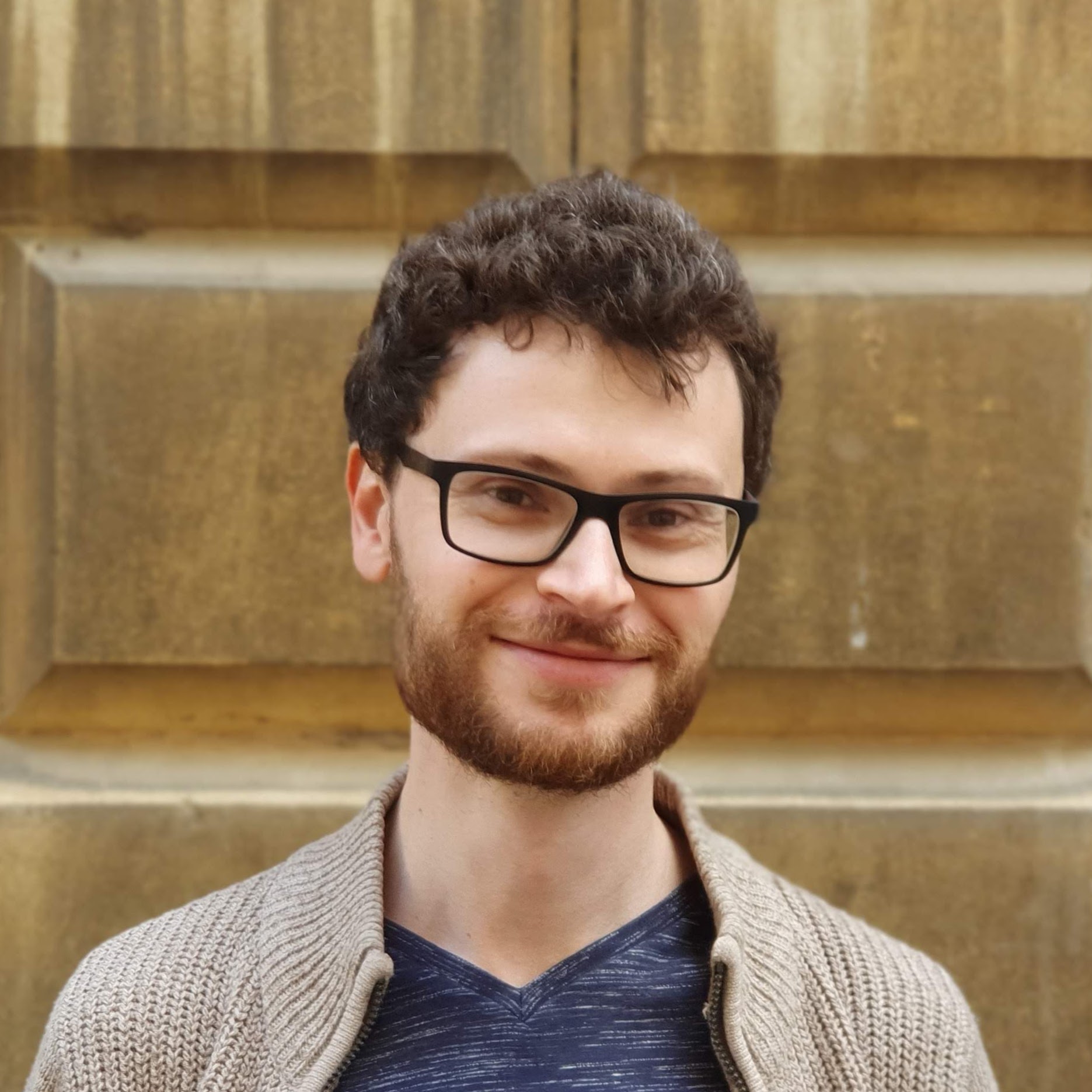
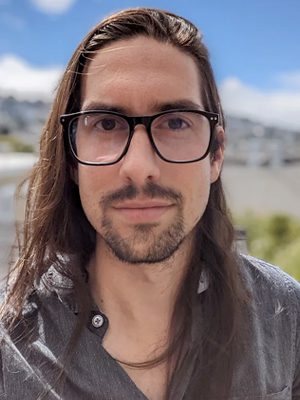
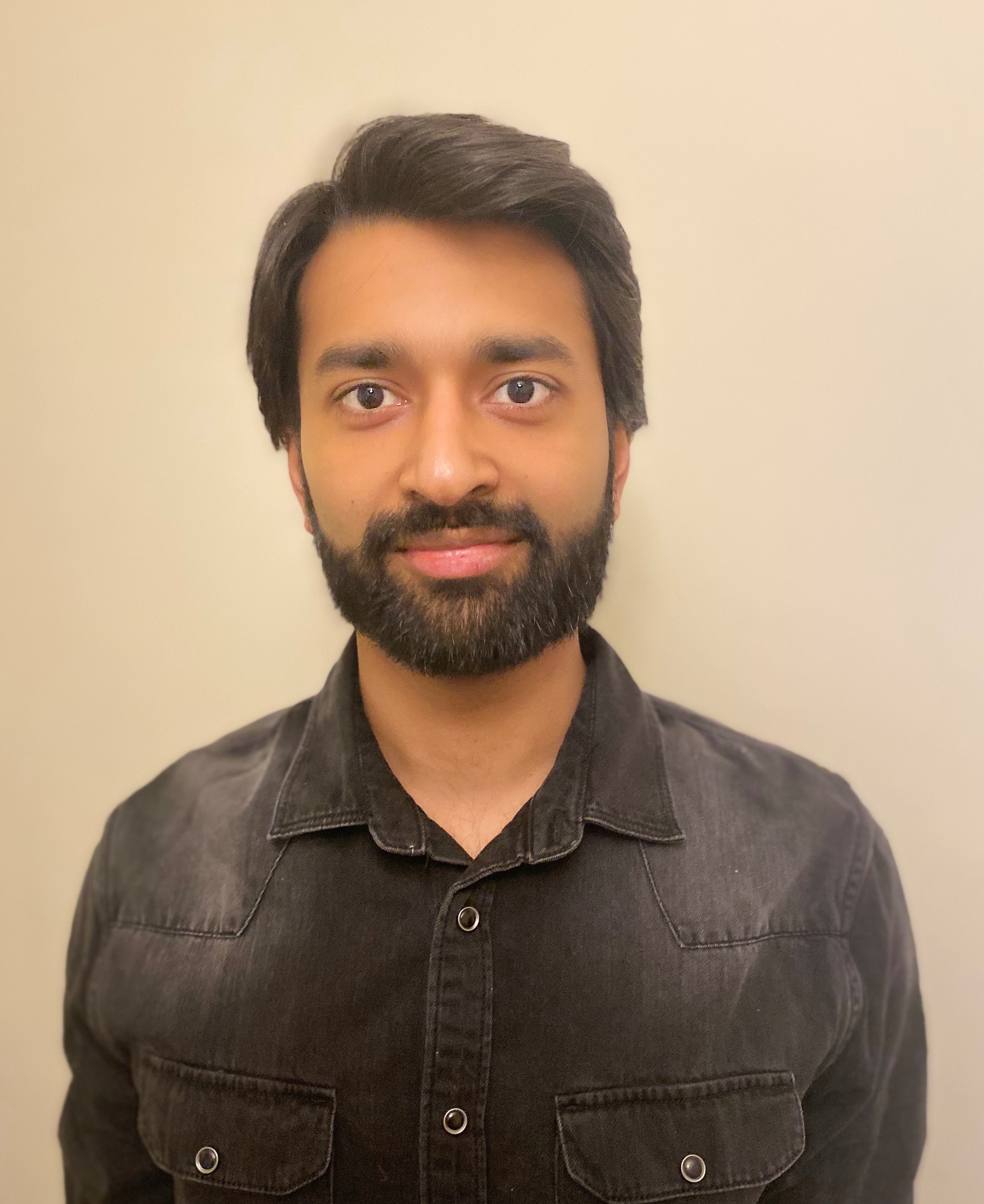
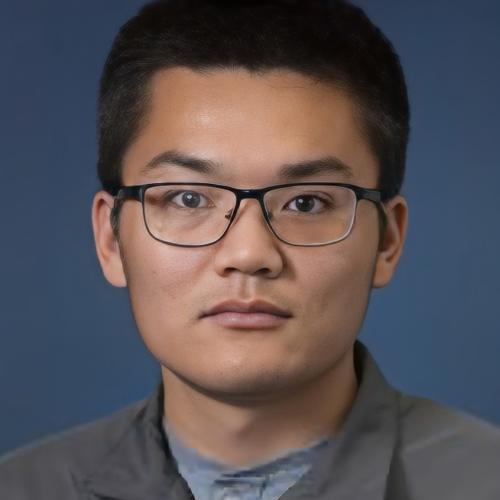
Daniel Karapetyan is an Assistant Professor at the School of Computer Science , University of Nottingham, and a member of the Computational Optimisation and Learning Lab . His research spans Artificial Intelligence , Data Science , Operational Research , and Optimization , with applications in transportation , logistics , satellite mission planning , and access control . Education: PhD in Computer Science, Royal Holloway, University of London (2007–2010) BSc/MSc in Computer Science, Bauman Moscow State Technical University (2001–2007) His research interests focus on the automated design of heuristic algorithms , multi-objective optimization , and parameter tuning for machine learning and combinatorial problems. He integrates Large Language Models (LLMs) and hyperparameter optimization into practical systems, addressing real-world challenges in airport sequencing , TV ad scheduling , and electric vehicle range prediction . Notable scientific contributions include the CORS Practice Prize (2014) for ferry scheduling work and pioneering fixed-parameter algorithms in security-related optimization problems. His publications emphasize combinatorial optimization , Markov Chain methods , and automated algorithm configuration . Teaching roles include module convener for COMP3008: Knowledge Representation and Reasoning , personal tutoring for COMP1002 , and supervision of COMP2002: Software Engineering Group Project . He also offers PhD supervision in areas like AI for optimization , interpretability in ML , and emergency department coordination .
Alejandro Schuler is an Assistant Professor at the University of California, Berkeley, specializing in causal inference, biostatistics, and machine learning. He earned his PhD in Biomedical Informatics from Stanford University (2018) and completed a postdoctoral fellowship under Mark van der Laan. His industry experience at Kaiser Permanente’s Division of Research and a health tech startup informs his applied research agenda focused on bridging mathematical formalisms with real-world healthcare challenges. PhD – Biomedical Informatics, Stanford University, 2018 MS – Mechanical Engineering, University of California, Los Angeles, 2013 BS – Mechanical Engineering, University of California, Berkeley, 2012 His research centers on developing statistical methods for causal inference, including the selectively adaptive lasso, prognostic adjustment, and NGBoost. Recent work emphasizes power calculation in randomized trials, robust neural network frameworks, and stochastic intervention models for healthcare and environmental exposure analysis. His publications highlight advancements in targeted maximum likelihood estimation, Riesz regression, and efficient covariate adjustment. These methods aim to improve the accuracy and interpretability of causal effect estimates in complex datasets. Dr. Schuler collaborates with domain experts to translate clinical and public health questions into mathematical models, ensuring his work maintains relevance beyond academia. He is actively involved in methodological development and application to healthcare data, focusing on reducing hospital readmissions and optimizing trial design.
Ayush Bharti is an Academy Research Fellow at the Department of Computer Science, School of Science, Aalto University, supported by the Research Council of Finland. He is affiliated with the Probabilistic Machine Learning research group and the Finnish Centre for Artificial Intelligence (FCAI). Previously, he was a postdoctoral researcher working with Prof. Samuel Kaski at Aalto University. Dr. Bharti received his PhD from the Department of Electronic Systems, Aalborg University, Denmark, where he focused on making approximate Bayesian computation methods for estimating parameters of stochastic models in radio propagation. His primary research area is simulation-based inference (or likelihood-free inference), with specific interests in developing approximate inference methods that are (i) robust to model misspecification, and (ii) computationally efficient. His work bridges machine learning, statistics, and wireless communications, with applications in radio channel modeling and parameter estimation for stochastic systems. His recent publications show a strong trend toward robustness in simulation-based inference, with multiple papers on handling model misspecification, missing data, and cost-aware approaches. His research increasingly integrates neural networks and deep learning techniques into traditional statistical inference frameworks. Academy Research Fellowship grant from the Research Council of Finland (June 2024) Dr. Bharti has received significant research funding through his Academy Research Fellowship. He has supervised student projects on radio channel model calibration and recently welcomed Yuga Hikida as a PhD student on his Research Council of Finland project. His collaborative work spans institutions including Aalto University, University College London, and the Alan Turing Institute. He is actively involved in the Probabilistic Machine Learning research group at Aalto University and contributes to the Finnish Centre for Artificial Intelligence, fostering collaborations between Finnish and international researchers in machine learning and artificial intelligence.
Philip Kenneweg is a Researcher at the Faculty of Engineering , University of Bielefeld , working within the Machine Learning Group at Center for Cognitive Interaction Technology (CITEC) . Since 2023, he serves as a Research assistant with teaching duties , supporting courses like Deep Learning and Introduction to Machine Learning. Education : PhD in Computer Science (2020–2025), M.Sc. in Natural and Computer Sciences (2016–2019), B.Sc. in Natural and Computer Sciences (2013–2016), Abitur (2005–2013) His research focuses on advancing optimization techniques for neural networks and transformer models , with significant contributions to line search adaptation , debiasing embeddings , and generative modeling . Philip has pioneered the SaLSa optimizer for automated learning rate determination and explored diffusion models for synthetic genotype generation in bioinformatics. Recent publications span transformer fine-tuning , retrieval-augmented generation systems , and reinforcement learning architectures , reflecting his expertise in bridging theoretical innovation with practical AI solutions. His work emphasizes ethical considerations in NLP and computational efficiency in large-scale model training. Scientific Awards : 1st place, it's OWL Makeathon 2022 1st place, RoboCup@Home 2016 As part of CITEC, Philip contributes to cognitive interaction technology research, combining machine learning with real-world applications in robotics and data analysis.
Marius Geitle is an Assistant Professor at the Department of Computer Science and Communication , Østfold University College, Halden. His academic interests include Machine Learning , Evolutionary Optimization , and Automatic Programming . His research focuses on advancing machine learning techniques, particularly in dimensionality reduction , hyperparameter optimization , and node evaluation models for IoT-Mist networks . He utilizes methods like deep ensemble transformers , XGBoost , and evolutionary algorithms to address challenges in computational efficiency and data-driven learning. Recent publications highlight trends in automated programming and fog computing , with keywords spanning Machine Learning , Internet of Things , and Big Data . He coordinates the course ITL25019: Big Data: Storage and Processing and supervises master's theses and project assignments in machine learning. He serves as chairman of Future Then AS and collaborates on projects related to the digital society . His work is affiliated with the Machine Learning research group at Østfold University College.
Md Morshed Alam is a Part-Time Lecturer at the Faculty of Engineering and Information Technology , University of Technology Sydney. He holds a B.Sc. in Electrical and Electronic Engineering from Khulna University of Engineering and Technology, an ERASMUS MUNDUS certificate in Power Systems from University do Porto, and an M.Sc. in Electronics Engineering from Kookmin University. Focuses on Artificial Intelligence integration in Smart Grids Specializes in Energy Consumption Forecasting and Renewable Energy Optimization Proficient in Python, MATLAB/Simulink , and Arduino His 15 most recent publications analyze topics like AI-driven microgrid control, drone detection systems, and air quality prediction models, with significant citations in energy storage and wireless communication domains. While no scientific awards are explicitly listed, his work spans diverse applications from Terahertz communication to IIoT security frameworks . He contributed to Wireless Communication and AI Lab projects during his time at Kookmin University.
Yang Zhang is a Teaching Assistant Professor at the School of Information Sciences (iSchool) at the University of Illinois Urbana-Champaign (UIUC). He holds a Ph.D. in Computer Science and Engineering from the University of Notre Dame and is affiliated with the Social Sensing & Intelligence Lab at UIUC as a Senior Researcher. His research focuses on Human-Centered Artificial Intelligence , emphasizing collaboration between humans and AI to enhance model performance, fairness, and accountability. Education: Ph.D. in Computer Science and Engineering, University of Notre Dame; First Class Scholarship, Wuhan University Yang’s work integrates Crowd Intelligence to optimize AI models for applications in disaster response, smart urban sensing, and social impact-aware systems. His recent publications explore hybrid learning frameworks, neural architecture search, and hyperparameter optimization. Yang has received multiple accolades, including a Best Paper Award at ACM/IEEE ASONAM 2022 and a Data Science Scholar Fellowship from Indiana University. Scientific Awards: Best Paper Award (ASONAM 2022), Best Paper Honorable Mention (SMARTCOMP 2022), Outstanding Graduate Research Assistant (Notre Dame), Video Presentation Award (IWQoS 2020), IEEE Student Travel Awards (BigData 2018, 2019), Data Science Scholar Fellowship (Indiana University), First Class Scholarship (Wuhan University) Yang is actively involved in graduate education as a Graduate Faculty member at UIUC. He has cohosted international scholars through the Bolashak International Scholarship Program and been recognized for excellence in teaching. His collaborations span institutions like Argonne National Laboratory, where he served as a W. J. Cody Research Associate.
Fang Chen is a Professor and Executive Director of the Data Science Institute at the University of Technology Sydney . With a career spanning academia, industry, and government, she has held leadership roles including Dean at Beijing Jiaotong University and senior positions at Intel, Motorola, and CSIRO. Research Interests include: Artificial Intelligence and Ethical AI Human-Computer Interaction and Cognitive Modeling Structural Engineering and Infrastructure Analytics Digital Transformation and Cybersecurity Optimization Algorithms and Multimodal Learning Article Trends demonstrate expertise in AI fairness frameworks, structural optimization, digital twins for transportation systems, causal reasoning in LLMs, and cybersecurity applications. Her work bridges theoretical innovation (e.g., ASM framework, SPFP algorithm) with real-world deployments (rail networks, illicit marketplace detection). Scientific Awards include: 2018 Eureka Prize for Excellence in Data Science 2021 NSW Premier's Science and Engineering Prize Women in AI Award (Australia & New Zealand) Intelligent Transport Systems Australia National Awards (2014-2018) iAwards (2017-2024) Leadership & Grants : She has supervised over 60 PhD students and leads major funded projects including ImpleMATE Responsible AI , ChatECG for cardiac monitoring, and Beihive Health Data for agricultural productivity. Her 400+ publications and 30+ international patents reflect her global impact across eight countries.
John Harer is a Professor in Mathematics, specializing in geometric, combinatorial, and computational techniques for data analysis, shape recognition, image segmentation, cyber security, IoT, and biological networks. His work integrates topological data analysis (TDA) with applications in gene expression, pandemic surveillance, and network dynamics. Education: Ph.D. in Mathematics, University of California at Berkeley (1979) B.A. in Mathematics, Haverford College (1974) Research Interests: His research spans computational topology, geometric data analysis, and network inference. Key contributions include persistent homology for biological rhythm detection, topological methods in cyber threat modeling, and multi-scale sensor fusion. He bridges theoretical mathematics with practical challenges in public health, blockchain privacy, and adaptive urban infrastructure. Publication Trends: His 15 most recent publications (2014–2023) emphasize topological data analysis, machine learning, and computational biology. Themes include pandemic modeling (SARS-CoV-2 surveillance), gene regulatory networks, and cybersecurity (blockchain analysis). Early works focus on computational topology foundations, while recent studies apply TDA to real-world data merging and IoT resilience.
Sofia Triantafillou is an active Assistant Professor at the University of Crete specializing in causal inference and machine learning, with research applications spanning healthcare, telecommunications, and environmental health. Her work bridges theoretical advances in causal discovery with real-world problem solving across diverse domains. Her educational background includes a PhD from the University of Crete completed in 2015. Dr. Triantafillou's research focuses on developing robust methods for causal discovery, treatment effect estimation, and data integration. Key contributions include foundational work on causal Markov boundaries, identifiability frameworks, and automated causal pipelines. She addresses critical challenges in heterogeneous data settings, particularly in healthcare applications like sepsis treatment optimization and environmental health impact analysis. Her interdisciplinary approach combines computer science, statistics, and domain-specific knowledge to advance both methodological rigor and practical utility. Analysis of her 2021-2025 publications reveals a sustained emphasis on automating causal discovery processes and handling complex real-world data scenarios. She has pioneered techniques for integrating observational and experimental data, with growing applications in biomedical informatics (e.g., sepsis heterogeneity analysis) and industrial domains (e.g., 5G network optimization). Her work demonstrates consistent innovation in making causal methods more accessible, reliable, and applicable across disciplines.
Claire Cury is a Research Scientist in Computational Neuroscience at IRISA / Inria Rennes and an associated researcher at the ICM, Brain and Spine Institute, Paris . She leads projects in EEG-fMRI neurofeedback and computational anatomy, with recent funding from the NIRVANA and INCA grants (2024). She serves as Scientific Mediation Officer at Inria Rennes and co-organizes events like Journée Science et Musique and Brainhack Rennes . Research Focus : Computational anatomy of the hippocampus, multi-modal neurofeedback (EEG-fMRI), and signal processing for neuroimaging. Her work bridges statistical shape analysis, neurodegenerative disease detection, and machine learning applications in clinical settings. Recent Projects : NIRVANA : 18-month postdoc and PhD on EEG neurofeedback and artifact correction (2024) EyeSkin-NF : Completed Inria Exploratory Action on neurofeedback engagement metrics (2024) INCA : Extracting attentional features from EEG, eyetracking, and skin conductance (2024) Teaching : Advanced image processing and statistics at Rennes School of Engineering (ESIR) since 2021. Past lectures on SQL databases and medical imaging processing at University College London and Université Paris Sorbonne.
Dr. Abtin Nourmohammadzadeh is a scientific assistant (Researcher) at the Institute for Business Information Systems, University of Hamburg Business School, since July 2019. He previously served as a doctoral researcher at Clausthal University of Technology (2014-2019) and holds a PhD in Informatics. Current Role: Researcher at University of Hamburg Education: Master's and Bachelor's in Industrial Engineering Research Focus: Optimization techniques, transportation logistics, and machine learning His research integrates meta-heuristic optimization (e.g., genetic algorithms, particle swarm optimization) with transportation problems (truck platooning, container terminals) and machine learning (ANNs, SVMs) for industrial fault diagnosis. Publications demonstrate applications of mathematical programming , swarm intelligence , and hybrid algorithms to logistics and engineering challenges. Recent work emphasizes fuel-efficient vehicle coordination , noise-resilient diagnostic systems , and port operations optimization . No specific scientific awards are mentioned in the provided text.
Ammas Periasamy is a Professor of Biology and Biomedical Engineering at the University of Virginia and serves as the Center Director of the W.M. Keck Center for Cellular Imaging . His research focuses on advanced microscopy techniques, particularly fluorescence lifetime imaging microscopy (FLIM) and Förster resonance energy transfer (FRET), to study molecular imaging in living cells, tissue, and animal models. Education: B.S. from the University of Madras; M.S. and Ph.D. from the Indian Institute of Technology at Madras; Post-Doc from the University of Washington. His research interests center on Medical and Molecular Imaging , with emphasis on protein-protein interactions, mitochondrial energy metabolism, and metabolic changes in cancer and neurodegenerative diseases. He has pioneered the use of FLIM to measure calcium oscillations and developed multi-color FRET imaging systems for dynamic cellular analysis. Recent publications highlight applications of multiphoton FLIM in prostate cancer and Alzheimer's disease, machine learning integration for metabolic imaging, and lysosome-mitochondria signaling pathways. Over 100 peer-reviewed articles and book chapters document his contributions. Scientific Awards Fellow of the SPIE Optical Society (2012) He organizes the annual International Conference on Multiphoton Microscopy in the Biomedical Sciences through SPIE and co-founded the W.M. Keck Center for Cellular Imaging , a hub for advanced microscopy training and research.
Marcos Kalinowski is an Associate Professor at the Department of Informatics, Pontifical Catholic University of Rio de Janeiro (PUC-Rio), where he has served as a faculty member since 2017. He is the co-founder and coordinator of the ExACTa PUC-Rio laboratory, General Chair of the International Conference on Software Engineering (ICSE) 2026, and Associate Editor of the Journal of Systems and Software. His academic affiliations also include membership on the steering committees of ICSE and the Ibero-American Conference on Software Engineering (CIbSE), as well as being a Senior Advisor and Lead Appraiser for the Brazilian Software Quality Program (MPS.BR). Dr. Kalinowski earned his Ph.D. and M.Sc. in Software Engineering from COPPE/UFRJ under advisor Guilherme Travassos, and his B.Sc. in Computer Science from UFRJ. His academic career includes previous faculty positions at Fluminense Federal University (UFF) from 2014-2017 and the Federal University of Juiz de Fora (UFJF) from 2012-2014. His research focuses on bridging software engineering and data science, with particular emphasis on developing reliable and maintainable AI/ML systems through rigorous engineering practices. His work addresses critical challenges in requirements engineering for ML-enabled systems, investigating how to effectively specify quality attributes and functional requirements for complex AI applications. His research on software process and product quality emphasizes agile methods adapted to modern data-intensive development contexts. Through experimental software engineering approaches, he validates these methods through empirical studies in both academic and industrial settings. His work has significantly contributed to establishing Software Engineering for Data Science as a distinct discipline, including creating Brazil's first extension course on the subject in 2021. His publication record demonstrates a strong focus on the intersection of software engineering and artificial intelligence, with recent work addressing technical debt in ML systems, requirements engineering for AI, and lean methodologies for industry-academia collaboration. His research shows a clear trajectory toward making AI development more systematic, reliable, and aligned with software engineering best practices, evidenced by his over 160 scientific publications and multiple books including the Jabuti Acadêmico award-finalist 'Engenharia de Software para Ciência de Dados' (2023). Dr. Kalinowski has received numerous prestigious awards including: CNPq Research Productivity Grant (Level 1D, 2024-2028) FAPERJ Scientist of Rio de Janeiro State Distinction (2024) Multiple best paper awards at international conferences including SWQD 2025 and CAIN 2024 Recognition as advisor of multiple award-winning Ph.D. and M.Sc. theses SBES 2024 Advisor of the Best Brazilian Software Engineering Ph.D. Thesis As an academic leader, Dr. Kalinowski has supervised numerous doctoral and master's students, many of whom have received national awards for their research. He has secured significant research funding from Brazilian Research Council (CNPq) and Rio State Agency (FAPERJ), as well as industry collaborations with major organizations including CEPEL, Eletrobras, Galp, Petrobras, and Stone. His laboratory, ExACTa PUC-Rio, has established successful industry partnerships through its Lean R&D approach, creating a robust pipeline between research and practical application. Dr. Kalinowski leads the ExACTa PUC-Rio laboratory which focuses on applying lean R&D methodologies to industry-academia collaboration projects. He also created and coordinates PUC-Rio's specialization courses in Software Engineering and Full Stack Development through CCEC PUC-Rio, demonstrating his commitment to bridging academic research with industry needs. His leadership in bringing ICSE 2026 to Brazil represents a significant milestone for the software engineering community in Latin America.
Alain Zemkoho is a Professor of Mathematical Optimization at the School of Mathematical Sciences, University of Southampton, where he is affiliated with the OR Group and CORMSIS (Centre for Operational Research, Management Science and Information Systems). Prior to joining Southampton, he was a Research Fellow at the University of Birmingham and a Research Associate at the Technical University of Freiberg. Professor Zemkoho's research centers on continuous optimization with special emphasis on bilevel optimization. His work spans theoretical developments in optimization theory as well as practical applications across multiple domains including transportation systems, medical technology, and cybersecurity. He has made significant contributions to optimality conditions, stability/sensitivity analysis, and numerical algorithms for bilevel optimization problems. His research bridges theoretical mathematics with real-world applications, particularly in developing algorithms that capture both optimistic and pessimistic features of complex optimization problems. His work has implications for transportation (toll setting, network design), data analysis, forecasting, trust topology, phase retrieval, and medical applications including cardiac device screening. Professor Zemkoho's publication record demonstrates a clear progression from theoretical optimization foundations to increasingly diverse applications. While maintaining a core focus on bilevel and hierarchical optimization, his recent work has expanded into medical applications (particularly cardiac device screening), cybersecurity (honeypot systems and cyber deception), and transportation optimization. This evolution shows his commitment to applying mathematical theory to solve complex real-world problems across disciplines. Professor Zemkoho has received significant recognition for his contributions to the field: Alexander von Humboldt Experienced Fellow (2024-2026) Fellow of the Alan Turing Institute for Data Science and Artificial Intelligence (2019-2023) Fellow of the Institute of Mathematics & Its Applications Fellow of the Higher Education Academy As an academic advisor, Professor Zemkoho currently supervises four PhD students: David Benfield, Samuel Jericho Ward, Rachel Shaw, and Marah-Lisanne Thormann. His research is supported by multiple grants including several EPSRC-funded projects: Approximation theory for two-level value functions with application Zemkoho - EPSRC First Grant The Mathematics Of Stackelberg Games In Machine Learning HEIF 2022/23 Carisbrooke Shipping – Optimisation of operations Professor Zemkoho is actively involved with the OR Group and CORMSIS at the University of Southampton, contributing to collaborative research efforts in operational research and management science. His work increasingly intersects with medical applications through the Institute for Life Sciences, demonstrating the interdisciplinary nature of modern mathematical optimization research.