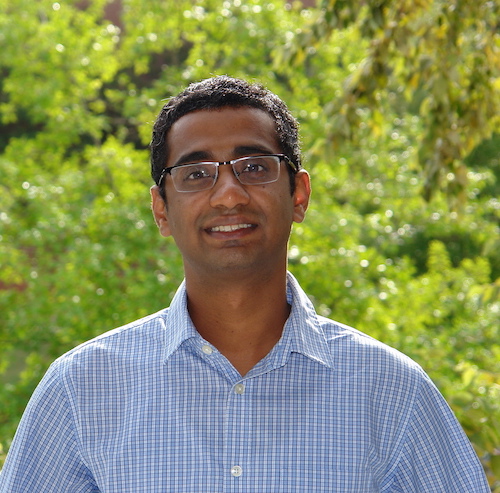
Arvind Krishna Saibaba is an Associate Professor in the Department of Mathematics at North Carolina State University, within the College of Sciences. He holds a PhD in Computational and Mathematical Engineering from Stanford University (2013). His research focuses on inverse problems, numerical linear algebra, and their applications in medical imaging and geosciences. He is particularly known for developing efficient algorithms for large-scale Bayesian inverse problems and randomized numerical methods. Dr. Saibaba’s work bridges theoretical advancements with practical applications, including parametric kernel approximations, tensor train decompositions, and hybrid projection methods. His recent publications (2023–2025) address cutting-edge topics such as edge-preserving regularization, Monte Carlo diagonal estimation, and non-Gaussian randomized low-rank approximations. He leads research in computational frameworks for dynamic inverse problems and has contributed to geophysical modeling and medical imaging techniques. Grants: Collaborative Research: Randomized Algorithms For Dynamic and Hierarchical Bayesian Inverse Problems RTG: Randomized Numerical Analysis ATD: Collaborative Research: Computationally Efficient Algorithms for Detecting Anomalous Atmospheric Emissions He is affiliated with the Faculty Research Group in Numerical Analysis and Scientific Computing. While no specific awards are listed here, his prolific publication record and grant activity reflect his impactful contributions to computational mathematics.
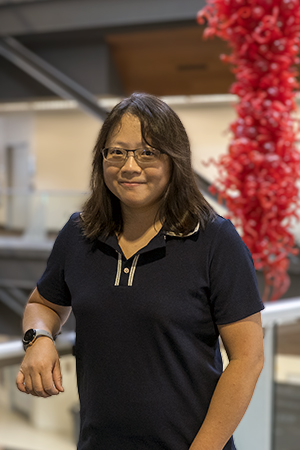
Pei-Chi Huang is an Associate Professor in the Department of Computer Science at the University of Nebraska at Omaha's College of Information Science & Technology. His research focuses on Cyber-Physical Systems, Machine Learning, Real-time Computing, and Wireless Communication/Networking. He holds a Ph.D. in Computer Science from The University of Texas at Austin (2017). Research Interests: Huang's work spans autonomous robotics (e.g., construction robots, healthcare attendants), real-time system design, deep learning applications in healthcare and cybersecurity, and network optimization. Notable projects include frameworks for integrating large language models with robots, secure zero-trust networks, and biofilm classification systems. Awards: Outstanding Paper Award (2018) Grants & Advising: Advises on projects related to autonomous systems, cybersecurity, and biomedical applications. His recent work includes grants for construction robotics task planning, autonomous driving frameworks, and healthcare robotic systems integration. Labs/Teams: Leads research in robotics programming systems (e.g., SQRP, TopExplorer tools) and collaborates on cyber-infrastructure for real-time applications. Engages in interdisciplinary projects combining AI with biomedical engineering and construction automation.
Prof. Dr. Ali Sunyaev is a Professor of Computer Science at the Technical University of Munich (TUM), serving as Vice President of TUM Campus Heilbronn. He holds dual affiliations with the TUM School of Computation, Information and Technology and the TUM School of Management. His academic career includes roles as Director of the Institute for Applied Informatics and Formal Description Methods at the Karlsruhe Institute of Technology (KIT) and professorships at the Universities of Cologne and Kassel. Education: Studied Computer Science at TUM (2000–2005), earned a PhD in Computer Science and Information Systems focused on healthcare telematics security analysis. Research Interests: Interdisciplinary work on digital systems' societal impacts, health IT, cloud computing, blockchain, trustworthy AI, and information security. Notable Projects: Funded by DFG, Helmholtz Association, and Russian Science Foundation, exploring topics like federated learning, AI accountability, and decentralized systems. Awards: AIS Distinguished Member (Cum Laude), KIT Faculty Teaching Award (2020) Labs/Teams: Leader of the Karlsruhe Decision & Design Lab (KD²Lab), part of DFG Review Board and German Informatics Society (GI) Board. Grants: Multiple projects on health AI, blockchain in mobility, and cloud security certifications. Future Focus: Developing AI accountability frameworks, advancing federated learning applications in healthcare, and addressing ethical challenges in decentralized technologies.
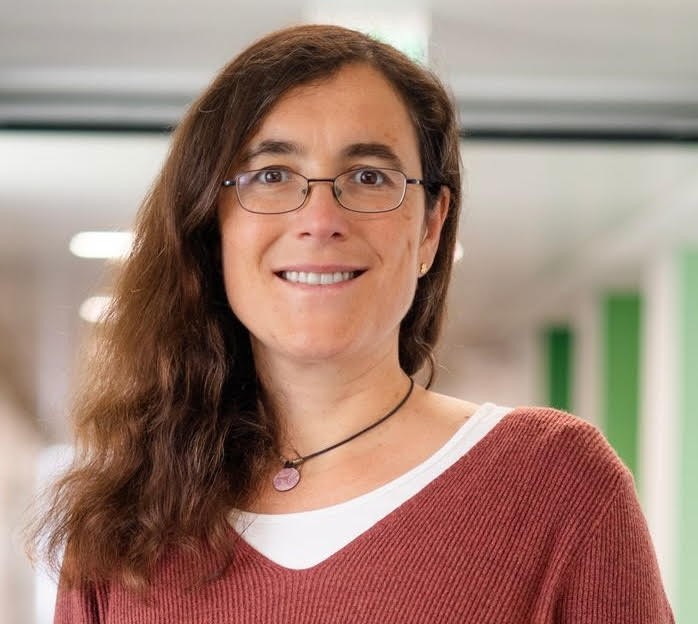
Prof. Dr. Anne-Laure Boulesteix is an Associate Professor (W2, tenured) at the Department of Medical Informatics, Biometry and Epidemiology, Faculty of Medicine, Ludwig Maximilian University of Munich (LMU). She holds a PhD in Statistics from LMU Munich (2005) and a Habilitation (HDR) from the University of Évry Val d'Essonne, France (2011). Her research focuses on biostatistics, machine learning, metascience, and evaluation of methods, with a particular emphasis on reproducibility and Open Science. She has held roles including Junior Professor (W1, 2009–2012) and Visiting Professor of Biostatistics (2008). Affiliations: Head of the Biometry in Molecular Medicine research group, Steering Committee member of the STRATOS initiative, and President of the German Region of the International Biometric Society. Awards: Chikio-Hayashi-Award (2013), Gay-Lussac-Humboldt Award (2011). Research Interests: Methodological research in statistics, validation of methods, simulation studies, and addressing challenges in clinical prediction models. Her work emphasizes rigorous validation, transparency, and reproducibility in methodological research. She has authored over 150 peer-reviewed publications and contributes to editorial roles in journals like Statistics in Medicine and Journal of Classification .
Geoffrey J. Gordon is a Professor in the Machine Learning Department at Carnegie Mellon University and affiliated with the Robotics Institute. His research spans multi-agent planning, reinforcement learning, decision-theoretic planning, statistical models of complex data, computational learning theory, and game theory. He leads the SELECT lab (SEnse, LEarn, and aCT), focusing on predictive state representations, spectral learning, and applications in robotics. His recent work integrates deep learning with controlled dynamical systems and optimization, as seen in publications at AAAI and AISTATS. Research Interests: Multi-agent systems and game theory Reinforcement learning and dynamical systems Statistical models for high-dimensional data Spectral learning and quantum Markov models Scientific Awards: Best paper award at ICML 2010 Teaching: 10-405/605: Machine Learning with Large Datasets (2023) 10-606/607: Mathematical/Computational Background for ML (2022, 2017) 10-701: Intro to Machine Learning (2021, 2014) Labs & Teams: SELECT Lab (SEnse, LEarn, and aCT) Collaborations with Stanford Robotics Lab, AUTON Lab, and others
Tobias May is an Associate Professor at the Department of Health Technology, Technical University of Denmark (DTU). He holds a binational Ph.D. from the University of Oldenburg and Eindhoven University of Technology, with postdoctoral experience at DTU since 2013. Current academic rank: Associate Professor Department: Health Technology Research focus: Computational auditory modeling, signal processing, and hearing technology Research Interests His work spans computational auditory scene analysis, binaural signal processing, and machine learning applications in hearing instruments. Key contributions include diffusion-based speech enhancement systems and studies on communication in noisy environments. Research aligns with UN SDGs related to health and technology innovation. Supervision Active PhD supervision in projects like Characterizing Listener Behaviour and Robust Speech Enhancement . Collaborates internationally with institutions in Germany, Netherlands, and Denmark. Contact Email: tobmay@dtu.dk | DTU Health Technology Website
Volkan Cevher is an Associate Professor at the Swiss Federal Institute of Technology Lausanne (EPFL), where he leads the Laboratory for Information and Inference Systems (LIONS). He also serves as an Amazon Scholar and previously held positions as a Research Scientist at the University of Maryland (2006-2007) and Rice University (2008-2009), as well as a Faculty Fellow at Rice University (2010-2020). Dr. Cevher received his B.Sc. (valedictorian) in electrical engineering from Bilkent University in Ankara, Turkey, in 1999 and his Ph.D. in electrical and computer engineering from the Georgia Institute of Technology in 2005. His research spans machine learning, optimization theory, signal processing, and their applications. He focuses on developing theoretically grounded algorithms for robust machine learning, with particular emphasis on non-convex optimization, adversarial training, and distributed learning. His work addresses fundamental challenges in optimization landscapes for neural networks and min-max problems like GANs and robust reinforcement learning. Dr. Cevher's recent publications demonstrate strong trends in optimization for machine learning, with significant contributions to adversarial robustness, federated learning, and efficient training methods. His work bridges theoretical foundations with practical applications across multiple domains including NLP, computer vision, and reinforcement learning. Dr. Cevher has received numerous prestigious awards including: IEEE Fellow (2024) ELLIS fellow ICML AdvML Best Paper Award (2023) Google Faculty Research award (2018) IEEE Signal Processing Society Best Paper Award (2016) ERC Consolidator Grant (2016) ERC Starting Grant (2011) As head of the Laboratory for Information and Inference Systems at EPFL, Dr. Cevher leads a research group focused on advancing the theoretical foundations of machine learning and optimization. His lab has secured significant funding through competitive grants including multiple ERC grants. He actively mentors PhD students and postdoctoral researchers, with many of his advisees going on to successful careers in academia and industry. The Laboratory for Information and Inference Systems (LIONS) at EPFL is a leading research group in optimization and machine learning, known for developing theoretically sound algorithms with practical impact. The lab collaborates extensively with industry partners and other academic institutions worldwide.
Christoph Meinrenken is Professor of Professional Practice at Columbia University’s Faculty of Professional Studies , Principal Investigator at the Climate School, and Academic Director of the M.S. in Information & Knowledge Strategy. An expert in Life Cycle Assessment (LCA) and enterprise-scale sustainability analytics, he leads research on low-carbon energy systems, synthetic fuels, and product carbon footprinting. He co-chairs the Columbia University Seminar on Complexity Science, Modeling, and Sustainability and contributes to the World Resources Institute ’s GHG Protocol technical working group. Doctorate in Physics from the Max Planck Institute (2001) Master of Science in Engineering (MSE) from Princeton University (1996) His research focuses on computer modeling of techno-economic performance for low-carbon energy systems. Key projects include smart building electricity arbitrage (DoE, NSF, NYSERDA, NIST), transportation electrification , synthetic fuels (ABB, EDF), and automated product carbon footprinting (PepsiCo, IBM). He has collaborated with organizations like the Carbon Disclosure Project and The Sustainability Consortium , integrating LCA with data science for value-chain engineering. Recent publications explore topics like urban circular economy strategies (2025), healthcare carbon emissions (2025), industrial park energy integration (2024), and personalized eco-feedback systems (2023). His work bridges computational modeling and applied sustainability , with a focus on data-enabled decision-making for industries and urban systems. Grants and industry partnerships include funding from the Department of Energy , National Science Foundation , and multinational corporations like IBM and PepsiCo . He applies advanced analytics to address climate policy , smart grid stability , and corporate decarbonization challenges.
Dr Onyema Nduka is a Senior Lecturer in Sustainable Power Systems at the Department of Electronic Engineering, School of Engineering, Physical and Mathematical Sciences (EPMS), Royal Holloway University of London. He holds IEEE Senior Membership, IET Membership, COREN Registration, and is a Fellow of the Higher Education Academy with a Postgraduate Certificate in Academic Practice from RHUL. His educational background includes: PhD in Electrical Engineering from Imperial College London (awarded 2018) MSc in Control Systems from Imperial College London (awarded 2014) Dr Nduka's research centers on sustainable power systems, developing analytical and computational tools for deeply decarbonised electricity networks. His work spans power system planning, physics-driven and data-driven modeling, and control strategies for high-renewable integration scenarios involving solar PV, electric vehicles, and battery storage. He employs advanced mathematics, statistics, control theory, and machine learning to address grid stability challenges. His recent publications (2022-2025) reveal strong thematic convergence in machine learning applications for power flow analysis, microgrid resilience under extreme weather, and optimization frameworks for electric vehicle charging. These works consistently integrate data-driven methodologies with traditional power engineering to enhance grid flexibility and reliability amid renewable energy transitions. Key recognitions include: Best Paper Award (Second Place) at International Conference on Smart Grid 2025 Aluminum Extrusion Industries Plc Alex prize for best graduating student at FUTO Best Graduating Student in EEE Department at FUTO Mathematics Olympiad top honors from Mathematical Association of Nigeria Nestle PLC competition excellence award for South-south Nigeria zone Dr Nduka actively mentors PhD researchers and secures competitive research funding through structured project leadership. His supervision portfolio includes current primary supervision of two funded doctoral candidates investigating data-driven grid operations and battery storage flexibility frameworks, alongside previous co-supervision of completed EV charging research at Imperial College. Active Projects: DENOC (2023-2027) on data-driven network operations; Automated framework for battery storage flexibility (2023-2026) Collaborations: TNEI Services Ltd (industry), Imperial College London, Nigerian/Indian universities He operates within Royal Holloway's Power Systems Engineering Research Centre while maintaining cross-institutional partnerships that drive innovation in decarbonised electricity network solutions through both theoretical and applied research initiatives.
Manuel Chica Serrano is a Senior Researcher at the University of Newcastle (Australia) and a Ramon y Cajal Senior Researcher at the University of Granada (Spain). He holds an Adjunct Lecturer position at the School of Information and Physical Sciences, University of Newcastle, where he conducted an Endeavour Research Fellowship (2016-2017). His interdisciplinary work bridges artificial intelligence , agent-based simulation , and marketing analytics . Education : BSc/MSc in Computer Science (University of Granada), PhD cum laude (University of Granada 2011) Research Areas : Metaheuristics, Machine Learning, Complex Systems, Agent-Based Modeling, Multiobjective Optimization With over 100 JCR publications (40+ Q1 journals) and 1.4k+ Google Scholar citations (h=20), his work focuses on evolutionary game theory applications in tourism sustainability, tax fraud detection, and maritime decarbonization. Recent studies include WPT retrofit modeling , startup user retention , and tax fraud dynamics . He supervises five PhD students and co-invented two international patents in AI applications. Scientific Contributions : CTO of ZIO Analytics , commercializing AI solutions Principal Investigator for €3M+ in R&D projects (including 2 EU-funded) 2017 Best Paper Award (IEEE CEC track) 2-year postdoctoral at four international institutions
Raymond Chiong is an Associate Professor at the School of Electrical Engineering and Computing , University of Newcastle, Australia. He holds a PhD in Computer Science (University of Melbourne) and an MSc in Computer Science (University of Birmingham, UK). His research spans machine learning , agent-based modeling , and evolutionary optimization , with applications in depression detection , energy-efficient scheduling , malicious domain identification , and financial forecasting . Education PhD, University of Melbourne MSc, University of Birmingham (UK) Research Interests Automated intelligent computing methods Agent-based modeling of societal dynamics Machine learning for health and finance Evolutionary algorithms for industrial optimization Scientific Awards 2019 Faculty Award for Research Supervision Excellence 2016 Vice Chancellor's Early Career Research Award 2015 NSW Young Tall Poppy Science Award 2015 Faculty Award for Research and Innovation Industry Collaborations Scientific Advisory Board of Complexica (Australia) International Scientific Advisory Board of Zio (Spain) Projects with Komatsu and SOS Technology Editorial Roles Editor-in-Chief, Journal of Systems and Information Technology Editor, Engineering Applications of Artificial Intelligence Former Editor-in-Chief of Interdisciplinary Journal of Information, Knowledge, and Management Former Associate Editor for IEEE Computational Intelligence Magazine
Mohammad Ghaith Altarabichi is a postdoctoral researcher at the School of Information Technology , Halmstad University. His research focuses on leveraging Evolutionary Computation (EC) to optimize Deep Learning (DL) models, covering feature selection, hyperparameter tuning, and architectural decisions like loss and activation functions. He has published in top-tier venues such as Expert Systems With Applications , Information Sciences , and conferences like GECCO and IEEE CEC . His work intersects Artificial Intelligence , Battery Technology , and Transportation Systems , particularly in optimizing DL for battery state-of-health estimation and fault detection in evolving environments. Recent publications explore Randomness Techniques in DNNs and Kolmogorov-Arnold Networks (KANs) for regularization and performance enhancement. Scientific Awards: 2nd place in ESREL 2020 AI competition Global Swede 2017 award He has contributed to advancing Evolutionary Deep Learning frameworks, with applications spanning Health Informatics , Computational Neuroscience , and Energy Systems . His research also includes Accessible Technology , such as a vision-based indoor navigation system for visually impaired individuals.
Senén Barro Ameneiro is a Professor at the University of Santiago de Compostela (USC) and Scientific Director of CiTIUS (Singular Research Centre on Intelligent Technologies). With a PhD in Physics (Extraordinary Prize), his career spans academia, research leadership, and university entrepreneurship. He served as Rector of USC (2002-2010), during which he championed research and innovation, leading to the 'Campus Vida' international excellence recognition. He also held leadership roles in RedEmprendia and the Conference of Rectors of Spanish Universities. Education: PhD in Physics (Extraordinary Prize) Research Areas: Artificial Intelligence Machine Learning Explainable AI Natural Language Processing Federated Learning Robotics Scientific Awards: National Computer Science Award ‘José García Santesmases’ (2020) PhD in Physics with Extraordinary Prize Projects: CONFIA: Developing Reliable AI Proxecto Nós: AI for Galician Language His work includes over 300 publications and co-founding spin-offs SITUM Technologies and InVerbis. He contributes to interdisciplinary programs like Interactive Natural Language Technology for Explainable AI , focusing on human-centered AI systems and trustworthiness. His articles demonstrate expertise in scalable machine learning, signal processing, and AI ethics, with recent projects emphasizing trustworthy AI ecosystems and language preservation.
João Gama is a Full Professor at the School of Economics, University of Porto, Portugal, and a researcher at LIAAD - INESC TEC (Laboratory of Artificial Intelligence and Decision Support). He holds the position of Professor Emeritus at the University of Porto and serves on the board of directors of LIAAD. His professional affiliations include being a Fellow of EurIA (since 2020), IEEE Fellow (since 2021), Fellow of the Asia-Pacific AI Association, and an ACM Distinguished Speaker. Dr. Gama received his Ph.D. in Computer Science from the University of Porto in 2000. His academic journey has established him as a leading researcher in the field of machine learning and data mining, with an h-index of 67 on Google Scholar. Professor Gama's research primarily focuses on knowledge discovery from data streams , evolving data , probabilistic reasoning , and causality . His work addresses fundamental challenges in processing continuous, high-volume data streams where traditional batch processing methods are inadequate. He has made significant contributions to developing algorithms that can adapt to concept drift, handle evolving data distributions, and maintain high performance in real-time applications. His research has practical applications in diverse domains including predictive maintenance, financial analysis, transportation systems, and environmental monitoring. With over 300 publications to his name, he is the author of the influential book 'Knowledge Discovery from Data Streams' (2010). With an extensive publication record of over 300 reviewed papers in top-tier journals and conferences, Professor Gama's recent work shows a strong trend toward explainable AI for predictive maintenance , edge computing for IoT data streams , and advanced techniques for handling concept drift . His 2024-2025 publications demonstrate increasing focus on practical industrial applications, particularly in transportation systems (like the Metro do Porto case study), financial portfolio management, and resource-constrained edge devices. There's also a clear emphasis on making stream mining techniques more interpretable and applicable to real-world problems, with several papers specifically addressing how to explain anomalies and failures in complex systems. Professor Gama's scientific achievements have been recognized through several prestigious fellowships: EurIA Fellow (since 2020) IEEE Fellow (since 2021) Fellow of the Asia-Pacific AI Association ACM Distinguished Speaker As an educator and mentor, Professor Gama has supervised numerous doctoral students who have gone on to establish their own research careers. His current PhD students include Thiago Andrade, Mário Cordeiro, Shazia Tabassum, and Sofia Fernandes. Among his former students are notable researchers such as Pedro Pereira Rodrigues, Hadi Fanaee, and Elena Ikonomovska. Professor Gama has secured significant research funding through projects like MAESTRA (Learning from Massive, Incompletely annotated, and Structured Data) and Knowledge Discovery from Ubiquitous Data Streams (PTDC/EIA/098355/2008). He has also served in leadership roles for major conferences including ECMLPKDD 2005, IDA 2011, ECMLPKDD 2015, and DSAA 2017, and is currently organizing ECMLPKDD 2025. Professor Gama leads research activities at LIAAD - INESC TEC, where he heads a team focused on data stream mining and knowledge discovery. His laboratory collaborates extensively with industry partners, particularly on predictive maintenance applications as evidenced by the MetroPT-3 Dataset developed for train systems. The team has developed several influential algorithms and frameworks for processing data streams, with applications spanning transportation, finance, healthcare, and environmental monitoring. Current research directions include integrating foundational models with stream processing, enhancing explainability of stream mining results, and developing efficient techniques for edge devices that can operate with limited computational resources.
Federica Porta is an Associate Professor at the Department of Physical, Computer and Mathematical Sciences, University of Modena and Reggio Emilia. Her academic career focuses on numerical analysis, optimization, and stochastic gradient methods, particularly in machine learning and image restoration. Her research interests include: Numerical Analysis and Statistics for Computer Engineering Numerical Optimization for Artificial Intelligence Stochastic Gradient Descent with Variance Control Deep Image Prior Frameworks Regularization Techniques for Biomedical Imaging Federica's recent publications (2021–2025) demonstrate expertise in hybrid gradient projection methods, adaptive learning rate selection, and deep learning applications for image segmentation and classification. She collaborates extensively with researchers like Giorgia Franchini, Valeria Ruggiero, and Luca Zanni, applying these methods to both convex and non-convex optimization problems. She teaches courses such as Numerical Analysis and Statistics for Computer Engineering, Numerical Analysis for Mathematics, and Numerical Optimization for Artificial Intelligence. Her teaching emphasizes MATLAB/Python implementation of numerical methods, convergence properties, and computational complexity analysis. Contact: federica.porta@unimore.it | Office: Mathematics Building, Via Campi 213/b