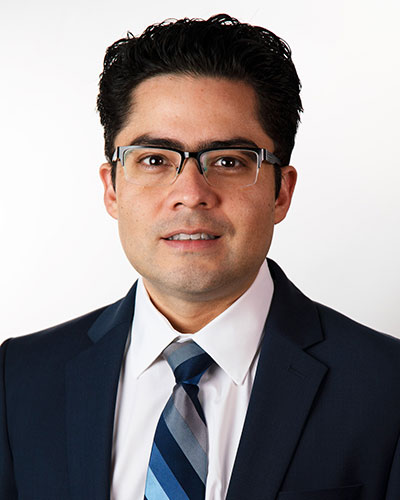
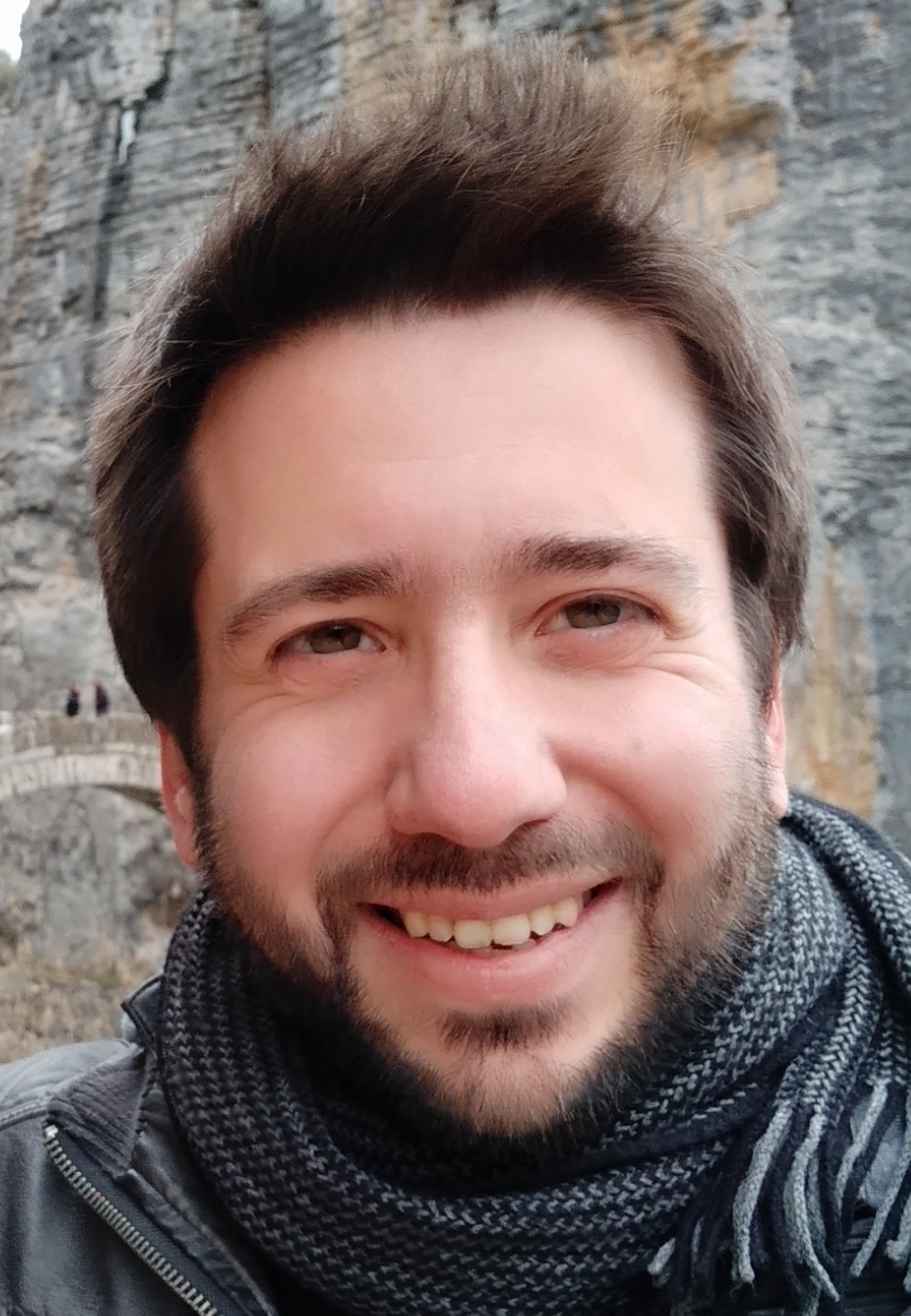
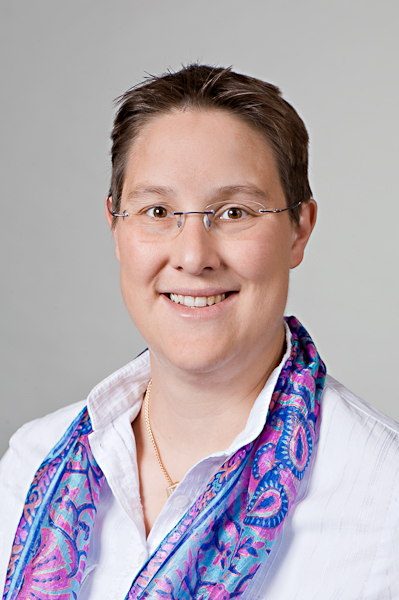
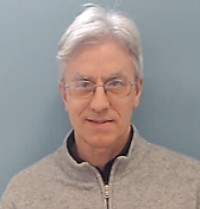
Assoc. Prof. Mircea Claudiu Crâşmăreanu is a mathematician affiliated with the University 'Al. I. Cuza' in Iasi, Romania, where he has held academic positions since 1996. Currently serving as Associate Professor in the Faculty of Mathematics, his career progression includes roles such as Instructor (1996–1998), Assistant Professor (1998–2001), and Lecturer (2001–2008). His research focuses on Differential Geometry and its applications in Physics, particularly in Finsler Geometry, Riemannian structures, and geometric mechanics. He earned his Ph.D. in 1999 under the supervision of Academician Radu Miron, exploring 'Geometrization of higher-order Lagrangians.' Teaching: Courses and tutorials in Mathematics at the Faculty of Mathematics. Research: Over 170 publications in peer-reviewed journals, including studies on Ricci solitons, geometric flows, and curvature theories. Notable contributions to Tzitzeica curves and Finslerian geometries. Awards:Recipient of the prestigious Gheorghe Titeica Prize from the Romanian Academy (2010). He has served on over 20 Ph.D. committees across institutions like the University of Timisoara and Babes-Bolyai University, contributing to the supervision of research in geometric mechanics and differential systems. His work often bridges pure mathematics with applications in physics, particularly in the geometric foundations of physical theories and dynamical systems.
Dr. Małgorzata Nowak-Kępczyk is an Assistant Professor in the Department of Mathematical Modeling at the Institute of Mathematics, Informatics and Landscape Architecture, Faculty of Natural and Technical Sciences, John Paul II Catholic University of Lublin. Her academic profile demonstrates a strong interdisciplinary approach bridging pure mathematics with practical applications across physics, biology, and linguistics. Her research interests focus on mathematical structures, particularly binary, ternary, quaternary, quinary and senary systems, with applications spanning from protein science to cardiac physiology. She has made significant contributions to Galois theory applications in physics and linguistics, fractal geometry, and chaos theory related to Ising-Onsager-Zhang lattices. Her work often explores the connections between algebraic structures and physical phenomena, particularly in polymer research and molecular modeling. Analysis of her publication record reveals a consistent research trajectory examining mathematical structures across diverse scientific domains. Her most recent work shows increasing interdisciplinary connections between pure mathematics and biological systems, particularly in protein studies and cardiac function. She has developed novel approaches connecting Galois theory with language evolution and physical systems. Organizer of the XXIst HyperComplex Seminar (2023) Creator of educational YouTube content on mathematical topics Developer of scientific-artistic exhibitions Her collaborative research network centers around Julian Ławrynowicz and extends to international researchers in Japan and Malaysia. She has secured research funding for mathematical physics projects and maintains active participation in specialized mathematical physics conferences. Her laboratory work focuses on mathematical modeling of complex physical and biological systems using advanced algebraic and geometric approaches.
Dr. Ann Parchment is a Senior Lecturer in Management at the University of Surrey’s Surrey Business School. She holds a PhD from Cranfield University and advanced qualifications including an MBA (City University) and MA in Professional Education (UCL). Her roles include Teaching Lead for Strategy and International Business, UN PRME Champion, and former Deputy Head of Department. She pioneered modules like Strategic Risk Management (Level 7) and Business Ethics, Governance and Risk (Level 5), emphasizing cross-disciplinary risk education. Research focuses on hypercomplex risk identification, SDGs, and climate change mitigation. Her 2024 publication addresses risk prioritization for transnational infrastructure projects. She has presented globally at venues like iNTeg-Risk Stuttgart and SRA-E Conferences. Professional affiliations include the Society of Risk Analysts and Chartered Insurance Institute. Awards include Teacher of the Year 2020 and fellowships in higher education and sustainability. She advises on risk management for energy/water infrastructure and led teams at Marsh Ltd as Senior Vice President. Current initiatives include embedding responsible management education via the PRME framework and developing the ‘Data to Impact Challenge’ at Surrey.
Arturo Montoya is a tenured Associate Professor in the Department of Civil and Environmental Engineering and Department of Mechanical Engineering at the University of Texas at San Antonio (UTSA) , where he has served since 2012. He also holds the title of Associate Dean of Undergraduate Programs at the Klesse College of Engineering and Integrated Design. His research focuses on computational modeling, fracture mechanics, and energy harvesting from infrastructure. Ph.D., Civil Engineering and Engineering Mechanics, Columbia University M.S., Structural Engineering, Columbia University B.S., Civil Engineering, Columbia University Research Interests: Computational Modeling: Specializing in finite element methods for structural analysis and fracture mechanics. Material Deterioration: Investigating hydrogen embrittlement and corrosion in high-strength steel. Energy Harvesting: Developing systems to convert roadway energy into usable power. Scientific Trends: His recent publications highlight expertise in computational fracture mechanics , thermomechanical modeling , and roadway energy harvesting through advanced finite element techniques. Awards: AIAA Zarem Distinguished Award (2014): Recognizing innovation in aerospace structural analysis. Grants: Secured over $2.7 million in funding from agencies like the Nuclear Regulatory Commission , Department of Defense , and Texas Department of Transportation for projects on probabilistic risk assessment and energy conversion systems. Student Mentoring: Advised 6 doctoral students (including Reza Nasouri and Daniel Ramirez-Tamayo) and 2 master's students, with research spanning bridge safety , progressive fracture , and polymer stabilization .
Artur Siemaszko is a Professor in the Faculty of Mathematics and Computer Science at the University of Warmia and Mazury in Olsztyn. He serves as a promoter for doctoral candidates and specializes in topological dynamical systems, ergodic theory, and classical/quantum stochastic processes. Department: Department of Analysis and Differential Equations Email: artur@uwm.edu.pl Research Interests: Topological Dynamical Systems Ergodic Theory Classical and Quantum Stochastic Processes Group Theory (Modular Groups) Scientific Contributions: His research spans integrability in geometric structures, spectral quantization of random walks, and the interplay between algebraic and topological properties in dynamical systems. Articles highlight applications in mathematical physics, computer science, and epidemiology. Grants & Resources: He confirms funding availability and infrastructure support for doctoral projects through the Department of Analysis and Differential Equations.
Professor Derek Abbott is a faculty member in the School of Electrical and Mechanical Engineering at the University of Adelaide, within the Faculty of Sciences, Engineering and Technology. He holds the academic rank of Professor and is actively involved in supervising Masters and PhD students. His research interests span a wide range of interdisciplinary fields, including biomedical engineering, optical systems, game theory, quantum mechanics, stochastic phenomena, computational neuroscience, and forensic engineering. Professor Abbott has also contributed to energy systems optimization and space-based sensor technology. His recent work includes studies on neural network robustness, gravitational redshift measurement, and cardiovascular disease prediction using machine learning. His research often bridges theoretical concepts with practical applications in engineering and healthcare. Key research areas include the development of terahertz technology, bio-inspired engineering systems, and quantum game theory frameworks. He has published extensively on topics ranging from deep learning security to renewable energy grid optimization. His interdisciplinary approach integrates principles from physics, mathematics, and computer science to address complex real-world problems. Professor Abbott is eligible to supervise postgraduate research students and collaborates internationally on projects related to forensic genealogy, platonism in science, and energy storage solutions. His work often emphasizes the intersection of technology and societal challenges, such as climate change and healthcare innovation.
Dr. Daniel Alpay is a Professor and holder of the Foster G. and Mary McGaw Professorship in Mathematical Sciences at Chapman University. He is affiliated with both Schmid College of Science and Technology and Fowler School of Engineering, contributing to mathematical research and its applications in electrical engineering. His expertise spans Schur Analysis, Slice-Hyperholomorphic Functions, Signal Processing, Linear Systems, Wavelet Filters, and White Noise Space. Dr. Alpay earned his PhD and MSc in Theoretical Mathematics from the Weizmann Institute of Science (Israel) under Prof. Harry Dym (1986, 1980-1986) and an Electrical Engineering degree from École Nationale Supérieure des Télécommunications (France, 1975-1978). His research focuses on infinite-dimensional analysis, hypercomplex structures, and interdisciplinary applications in signal processing and electrical engineering. His recent publications (2024) demonstrate a strong emphasis on Schur Analysis, hyperholomorphic functions, and their applications in stochastic processes, interpolation theory, and superoscillations. These works bridge pure mathematics with engineering, particularly in wavelet filters and linear systems. Dr. Alpay serves as Editor-in-Chief for the journal Complex Analysis and Operator Theory , reflecting his leadership in advancing mathematical research. His work continues to explore connections between abstract mathematical theories and practical engineering problems.
Giorgos Sfikas is an Assistant Professor at the University of West Attica and a researcher at the National Centre for Scientific Research 'Demokritos'. He holds a PhD in Image Processing and Computer Vision (University of Strasbourg, 2012), MSc in Computer Science (University of Ioannina, 2007), BSc in Computer Science (2004), and a BA in History & Archaeology (2014). His research focuses on Computer Vision, Machine Learning, Document Image Processing, and applications in Cultural Heritage. He has authored over 50 peer-reviewed publications, including best paper awards in biomedical imaging and bioengineering. Notable contributions include work on quaternionic neural networks, GANs for document processing, and the Bessarion dataset for medieval Greek inscriptions. Teaching includes courses on Computer Graphics, Machine Learning, and Photogrammetry. He leads projects in multispectral imaging, historical document analysis, and AI-driven archaeology.
Igor Frenkel is the Sol Goldman Family Professor of Mathematics at Yale University, specializing in infinite-dimensional algebras, representation theory, and mathematical physics. He earned his Ph.D. from Yale University in 1980 under the supervision of himself (self-referential note: likely a formatting error, but his thesis is listed as 'Orbital Theory for Affine Lie Algebras'). His research focuses on vertex operator algebras, quantum groups, and their connections to Lie algebras, conformal field theory, and quaternionic analysis. Notable contributions include the development of the Moonshine Module for the Monster group and foundational work on affine Lie algebras. His publications span over four decades, with recent works exploring quaternionic analysis, categorification of algebraic structures, and geometric realizations of quantum groups. Awards include membership in the National Academy of Sciences and the Guggenheim Fellowship. Frenkel has advised over 20 doctoral students, many of whom have become prominent in representation theory and quantum algebra. His research also intersects with topology, including contributions to quantum Teichmüller spaces and universal automorphic functions.
Abdulla Al Mamun is an Associate Professor in the Department of Mathematics at Gonzaga University, within the College of Arts and Sciences. His academic work bridges rigorous statistical theory with practical applications in biostatistics and public health. Education: Ph.D. in Statistics, University of Windsor M.S. in Mathematics, Western University M.S. in Mathematics, Shahjalal University of Science & Technology B.S. in Mathematics, Shahjalal University of Science & Technology Dr. Mamun's research centers on biostatistics, with a focus on Longitudinal Data Analysis , Generalized Linear Models (GLM) , Survival Analysis , and Regression Diagnostics . His work extends into public health, clinical trials, and epidemiology, where he develops and applies advanced statistical models. He is currently investigating joint mean-covariance models and model selection techniques in GLMs, including over-dispersed and zero-inflated variants. The recent publications show a consistent trend in statistical methodology development, particularly in semiparametric modeling and longitudinal data, indicating a strong theoretical and applied research trajectory. Scientific Awards: No awards listed in the provided text. Dr. Mamun is actively involved in teaching and academic advising. He has taught a wide range of courses including Precalculus, Calculus, Differential Equations, and advanced statistics courses such as Probability Theory, Mathematical Statistics, and Experimental Design. While no formal advisees are listed, his engagement in research and graduate-level teaching suggests mentorship activities. There is no mention of external grants or funded research projects in the provided material. There is no information available about research labs, collaborative teams, or ongoing group projects.
Brigitte Forster-Heinlein serves as a Professor in the Department of Applied Mathematics within the Faculty of Computer Science and Mathematics at the University of Passau. Her academic responsibilities include teaching advanced courses such as Differential Geometry, Distribution Theory, and seminars on Spectral Methods and Numerical Algorithms. She maintains an active research profile with connections to the Passau Math Museum and the INDIGO STEM network. Her research spans Applied Mathematics with specialization in Harmonic Analysis , Signal Processing , and Hypercomplex Analysis . Current work focuses on spectral methods, numerical algorithms, and geometric modeling applications. She contributes to interdisciplinary STEM initiatives through the INDIGO network, promoting mathematics education in K-12 settings. Publications demonstrate consistent contributions to hypercomplex analysis frameworks, particularly in quaternionic systems and Clifford algebra applications. Recent work examines rebricking methodologies for structural optimization in mathematical modeling. Professor Forster-Heinlein actively engages in academic community building through the Passau Math Museum and coordinates STEM outreach via the INDIGO network. She participates in institutional events including workshop organization and museum development initiatives. Her laboratory activities center around the Passau Math Museum , where theoretical concepts are translated into interactive educational exhibits. She collaborates with the INDIGO network to develop STEM curricula and teacher training programs across Bavaria.
Debra Polignone Warne is a Professor of Applied Mathematics in the Department of Mathematics & Statistics at James Madison University (JMU), where she has been since 2000. Her research focuses on continuum mechanics, nonlinear elasticity, differential equations, and hypercomplex numbers. She holds a PhD in Applied Mathematics from the University of Virginia (1993), preceded by an MS (1991) and BS (1989) in Applied Mathematics from the University of Virginia and University of Pittsburgh, respectively. Her research interests include the mathematical modeling of deformable solids, nonlinear material behavior, and analytical solutions to complex mechanical systems. Key contributions involve torsion analysis in elastic cylinders, biomechanical models of cerebral aneurysms, and asymptotic studies of hyperelastic materials under load. No awards or grants are explicitly listed in the provided text. She has collaborated with researchers like P.G. Warne and Amber Russell (via co-authorships), but no student advisees are mentioned here. Her work bridges theoretical mathematics with engineering applications, particularly in solid mechanics and biomedical contexts.
Wen Luo is a Professor at Peking University's School of Computer Science, affiliated with the State Key Laboratory of Multimedia Information Processing. His work spans Computer Science , Geometric Algebra , and Remote Sensing , with a focus on Medical Imaging and GIS Applications . Current affiliation: Peking University Research areas: Geometric Algebra, Spatio-Temporal Analysis, Medical Informatics His recent publications highlight trends in Deep Learning for medical diagnosis, Geospatial AI , and Remote Sensing innovations. Collaborations include Zhaoyuan Yu, Linwang Yuan, and Fei Deng.
Alessandro Perotti is an Associate Professor of Geometry at the Department of Mathematics, University of Trento, Italy. His research focuses on hypercomplex analysis, particularly slice regular functions over quaternions, Clifford algebras, and other noncommutative structures. He has contributed extensively to topics such as Fueter regularity, Cauchy integral formulas, and spectral theory in quaternionic Hilbert spaces. Teaching responsibilities include courses like Geometria B , Geometria differenziale , and Geometria e algebra lineare . His work bridges pure mathematics and applications, with collaborations in operator theory and differential geometry. Key contributions include foundational studies on slice function algebras, eigenvalue problems, and harmonicity in noncommutative settings.
Vincenzo Recupero is an Associate Professor in the Department of Mathematical Sciences "GL Lagrange" (DISMA) at Politecnico di Torino, Italy. His research and teaching are centered on advanced topics in mathematical analysis, with a focus on functional, nonlinear, and quaternionic analysis, as well as partial differential equations and hysteresis models. He teaches core mathematics courses such as Mathematical Analysis II and Mathematical Methods for Engineering to undergraduate students in computer, mechanical, and engineering physics programs, and also lectures in PhD programs on variational evolution problems. His research interests span Quaternionic and Hypercomplex Analysis , motivated by applications in quantum mechanics; Partial Differential Equations in Phase Transition Models such as Penrose-Fife and Stefan systems; and Rate-Independent Processes and Moreau Sweeping Processes , with applications in elastoplasticity, hysteresis, and crowd dynamics. His work emphasizes the well-posedness and continuity of solution operators under various topologies, ensuring robustness and applicability of mathematical models. The recent publications (2011–2023) reflect a consistent focus on sweeping processes, BV solutions, and quaternionic operator semigroups, with increasing sophistication in algebraic and functional-analytic frameworks. These works appear in prestigious journals such as Transactions of the American Mathematical Society and Journal of Differential Equations , indicating strong theoretical contributions to nonlinear analysis and mathematical physics. He is actively involved in the academic community, serving on program committees for international conferences like the International Symposium on Hysteresis Modeling and Micromagnetics (HMM 2025) and chairing organizing committees for summer schools on multi-rate processes and slow-fast systems. His research is aligned with ERC sectors in analysis, mathematical physics, and dynamical systems, and contributes to UN SDGs on quality education and reduced inequalities. Scientific Service and Leadership: Program Committee, International Symposium on Hysteresis Modeling and Micromagnetics (HMM 2025) Program Committee, Two-day Workshop on Nonlinear Analysis Chairman, Organizing Committee, Summer School on Multi-Rate Processes, Slow-Fast Systems and Hysteresis (2019) Program Committee, Control of State Constrained Dynamical Systems (2017) Chairman, Organizing Committee, Summer School on Multi-Rate Processes, Slow-Fast Systems and Hysteresis (2017) He has held external research appointments, including as a Researcher at Tongji University (2013). He is a member of the College of Computer, Film and Mechatronics Engineering and part of the Nonlinear Analysis and Calculus of Variations research group at DISMA. While no formal advisees are listed, his collaborative work includes prominent mathematicians such as Riccardo Ghiloni, Pavel Krejci, and Filippo Santambrogio.