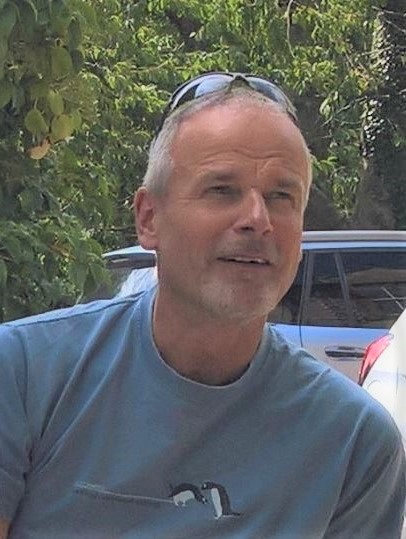
Professor Patrick Moss is a leading academic in Physical Geography and Head of School at QUT's School of Earth & Atmospheric Sciences. His research focuses on understanding landscape responses to climate change and human impacts, with expertise in palaeoecology, Quaternary Science, and environmental management. He holds a PhD from Monash University and supervises PhD and undergraduate students in these disciplines. Key research interests include wetland resilience, fire ecology, and the application of palynology to environmental history. His work integrates archaeological perspectives to address contemporary conservation challenges, such as ecosystem restoration and climate adaptation strategies. Publications span over three decades, emphasizing global fire regimes, human-environment interactions, and Quaternary environmental reconstruction. Collaborations include international projects on peatlands, monsoon variability, and volcanic ash stratigraphy.
Mark Abbott is a Professor at the University of Pittsburgh, specializing in paleoclimatology and environmental science. He holds a PhD from the University of Minnesota (1997) and conducted postdoctoral research at the University of Massachusetts. His research integrates stratigraphy, geochemistry, and isotopic analysis to study climate change impacts on human societies and environmental systems. Abbott leads projects recovering lake sediment cores to document Holocene climate variability, focusing on annual-resolution records for temperature and drought reconstructions. He has authored over 50 peer-reviewed articles, with recent work emphasizing monsoon dynamics, Arctic mercury deposition, and tropical Andean glacial retreat. His fieldwork spans North America, South America, and Asia, including collaborative projects in Alaska, Peru, and India. Education: PhD in Geology (Minnesota, 1997), MS (Colorado, 1991), BA in Biology (Colorado, 1987) Postdoctoral Training: Climate System Research Center (UMass) Research interests include reconstructing past environmental changes via lacustrine archives, with emphasis on human-environment interactions. His lab analyzes stable isotopes, organic biomarkers, and sedimentology to address critical climate questions. Recent studies highlight climate-vegetation-fire linkages in the Pacific Northwest and Holocene lake-level changes in Canada/Yunnan. Recent articles focus on decadal-to-millennial climate shifts in mountain regions, Arctic permafrost dynamics, and anthropogenic impacts on lake ecosystems. Abbott’s work is supported by grants from NOAA and the NSF, with field sites in the Canadian Rockies, Himalayas, and Alaskan Arctic.
Mingfang Ting is a Professor of Climate at the Columbia Climate School , affiliated with the Lamont-Doherty Earth Observatory . She co-directs the M.S. in Climate program and serves as Co-Senior Director for Education at the Columbia Climate School. Her research focuses on climate variability, extremes, Asian monsoons, Arctic sea ice, and climate change impacts on agriculture and health. Education: Ph.D. in Climate Dynamics (Princeton University, 1990), M.S. and B.S. from Peking University (1985, 1983). She has taught climate science at Columbia since 2004. Research Interests: Investigates weather/climate extremes in a warming world, Asian monsoon dynamics, Arctic sea ice variability, decadal climate modes, and hydroclimate impacts. Recent work emphasizes heatwaves, drought-flood linkages, and climate model projections. Key Projects (2020–2023): Advancing predictive understanding of North American drought Asian monsoon response to climate change Causal mechanisms of dry/humid heat extremes Arctic transport pathways and sea ice loss Scientific Contributions: Authored/co-authored over 200+ peer-reviewed articles. Her 2022 analysis of the 2021 North American heatwave and 2022 Pakistan floods exemplifies climate attribution science. Awards: AMS Distinguished Scientific Award (2021) AGU Fellow (2022) NSF CAREER Award (1995) Reuters' World’s Top Climate Scientists (2021) Leadership: Former Co-Editor-in-Chief of Journal of Climate (2020–2023). Active in climate education and global resilience initiatives through the Decarbonization Network. Labs/Teams: Leads interdisciplinary teams at LDEO focusing on climate dynamics and extreme event analysis. Collaborates internationally on monsoon systems and Arctic research.
Jan Esper is a Professor in Climate Geography at the Department of Geography, Johannes Gutenberg University Mainz. His research focuses on dendrochronology, paleoclimatology, global climate change, and urban climate. He maintains significant affiliations as a Member of the Academy of Sciences and Literature, Member of the National Academy Leopoldina, Member of the Global Change Research Institute of the Czech Academy of Sciences, Fellow at the Center for Interdisciplinary Research, and Fellow at the Gutenberg Research College. Esper's research interests center on dendrochronology and paleoclimatology, with specific expertise in tree-ring analysis for climate reconstruction. His work spans the Holocene period, examining climate variability across Europe and globally. He investigates how tree growth patterns reflect past climate conditions and how these patterns can inform our understanding of current and future climate change. His research also extends to urban climate systems and the impacts of climate change on forest ecosystems. His extensive publication record demonstrates a consistent focus on high-resolution paleoclimate reconstructions using tree-ring data. Recent work has examined the context of the 2023 extreme summer within the last 2000 years, Holocene temperature records in Europe, and climate-driven tree longevity patterns. His research often involves international collaborations and integrates multiple proxy methods to refine climate reconstructions and understand climate impacts on ecosystems. Among his notable scientific achievements are his contributions to understanding long-term climate variability, volcanic impacts on climate, and the relationship between historical societies and climate conditions. His work on tree-ring stable isotopes has provided new insights into hydroclimate shifts and long-term drying trends in the European Alps. Esper leads research projects including the Tree Ring Lab, Urban Climate Sensor Network, Air Quality monitoring, Urban Vegetation studies, and UNESCO Beech Forest research. His work bridges the gap between historical climate patterns and contemporary climate change challenges, providing essential context for understanding current climate extremes.
Dr. Jonathan T. Overpeck is the Samuel A. Graham Dean of the School for Environment and Sustainability (SEAS) at the University of Michigan, where he also holds the William B. Stapp Collegiate Professorship of Environmental Education. He is a Professor of both Climate and Space Sciences and Engineering, and Earth and Environmental Sciences, with a career spanning climate-vegetation interactions, abrupt climate change, monsoon dynamics, drought hydroclimate, sea level rise research, and interdisciplinary climate assessment. Overpeck has published over 230 works cited 60,000+ times, emphasizing public education, university-community partnerships for climate solutions, and environmental justice initiatives. PhD in Geological Sciences, Brown University MSc in Geological Sciences, Brown University BA in Geology (Honors), Hamilton College His research spans climate-biosphere interactions , climate variability and abrupt change , monsoon dynamics , drought and hydroclimate , sea level rise , climate law , and climate adaptation . Overpeck pioneered studies on megadrought terminology, temperature-driven drought intensification, and the aridification of North America. His work with the NOAA Paleoclimate Program and World Data Center for Paleoclimatology established foundational understanding of climate dynamics through annually-laminated sediment analysis in the Cariaco Basin. Overpeck's 2020-2024 research includes climate aridification , hydroclimate scaling mismatches , and temperature-precipitation interactions , with recent focus on Antarctic heatwaves, Mississippi River Basin changes, and corporate climate accountability. His article trends show concentration in climate attribution , hydrological extremes , paleoclimate modeling , and climate policy analysis . Scientific Honors: 2024 U.S. National Academy of Sciences 2015 American Geophysical Union Fellow 2009 AAAS Fellow 2007 Nobel Peace Prize contributor (IPCC) 2005 Guggenheim Fellowship Multiple U.S. Department of Commerce awards Overpeck has led or participated in significant climate adaptation projects , including NSF grants totaling $5.1M+ for Southwest Hydroclimatic Extremes (2017-2020), Amazon Drought Impacts (2014-2018), and Quantifying Drought Risk (2013-2018). He serves on the Colorado River Research Group (2014-present) and advises Climate Communication (2011-present). Current initiatives include Great Lakes University positioning, Michigan's climate resilience planning, and the Audacious Water podcast series examining Mississippi River Basin transformations. Overpeck actively contributes to climate policy discourse , advocating for science-informed decision-making and stakeholder collaboration across government, military, and corporate sectors.
Dr Conrad Wasko is a Sydney Horizon Fellow at the University of Sydney and an honorary fellow at the University of Melbourne. He specializes in environmental hydrology and climate change impacts on extreme rainfall and flooding. His work has been cited by the IPCC and he co-leads the update to Australia’s flood estimation guidelines. Previously, he held an ARC DECRA Fellowship and a McKenzie Fellowship. He has published over 50 articles and received awards including the Batterham Medal (2023) and the MSSANZ Early Career Research Excellence Award (2019). His research focuses on quantifying climate-driven changes in rainfall patterns and flood risks, with applications to infrastructure resilience and policy. Education: PhD in Civil Engineering, UNSW Sydney (2016) Bachelor/Master’s qualifications (not explicitly stated in text) Key Roles: Member of The Net Zero Institute Editor of Journal of Hydrology X and Advances in Water Resources Hydroclimate Stream Leader, Modelling and Simulation Society of Australia and New Zealand His research emphasizes the intensification of extreme rainfall events with global warming, particularly their implications for flood risk and urban infrastructure. He uses advanced statistical models and climate data to project future flood scenarios and improve design standards. Recent work includes analyzing non-stationary rainfall patterns and improving flood frequency analysis techniques. Awards and Honors: Batterham Medal (Australian Academy of Technological Sciences and Engineering, 2023) Veski Victoria Fellow (2020) MSSANZ Early Career Research Excellence Award (2019) Lorenz G Straub Award (2016) Grants and Projects: ARC DECRA Fellowship (University of Melbourne) Contributions to national climate change adaptation frameworks Labs and Collaborations: Partnerships with the Water Research Centre (UNSW) and the Net Zero Institute Collaborations on global flood risk assessments and hydrological modeling tools
Peter U. Clark is a University Distinguished Professor in the College of Earth, Ocean, and Atmospheric Sciences at Oregon State University, with an Adjunct Professor role in Quaternary Studies at the University of Ulster. His research focuses on glaciers and ice sheets , sea level change , paleoclimatology , and abrupt climate change . He holds a Ph.D. in Geology from the University of Colorado (1984), following an M.S. (1980) and B.S. (1978) from the University of Waterloo and St. Lawrence University, respectively. Clark's recent work analyzes deglacial ocean heat content , Antarctic ice sheet stability , and paleoclimate reconstructions using geochemical proxies. His studies emphasize ice-ocean-atmosphere interactions , cosmogenic dating , and sea level fingerprinting . He has contributed extensively to IPCC assessments and pioneered models linking ice sheet collapse to thermohaline circulation shifts. Scientific honors include the Milutin Milankovic Medal (2024), Cesare Emiliani Lecturer (2023), and Guggenheim Fellowship (declined in 2016). His 2025 National Academy of Sciences election 2016 AAAS Fellowship multiple teaching awards highlight his academic leadership. Clark's editorial roles span Science Advances , Journal of Climate , and Quaternary Science Reviews . He has mentored 21 graduate students and postdocs, including current faculty at Boston College, University of Wisconsin-Madison, and California State University. His 15 most recent articles (2015-2025) focus on sea level projections , deglacial carbon cycle , and ice sheet-ocean feedbacks , with methodologies involving cosmogenic nuclide dating , isotope geochemistry , and transient climate modeling .
Paul D. Brooks is a Professor in the Department of Geology/Geophysics at the University of Utah, where he has been a faculty member since July 2014. His research focuses on understanding water, energy, and biogeochemical cycling in seasonally snow-covered catchments, with increasing emphasis on predicting how climate and land use changes impact snow accumulation, ablation, and snowmelt-derived surface and ground water resources. His educational background includes a BS in Biology and Chemistry from Florida State University, followed by an MS in Ecohydrology (1991) and PhD in Biogeochemistry (1995), both from the University of Colorado, Boulder. Prior to his position at the University of Utah, Dr. Brooks was a Professor in the Department of Hydrology and Water Resources at the University of Arizona from December 2000 to June 2014. Dr. Brooks' research spans multiple disciplines within earth sciences, focusing primarily on hydrology, ecohydrology, and biogeochemical cycling in mountainous, snow-dominated environments. His work examines how climate change affects snowmelt processes, groundwater-surface water interactions, and water resource availability in the western United States. He employs a combination of field measurements, isotope hydrology, and modeling approaches to understand complex hydrological processes across multiple spatial and temporal scales. His research increasingly involves collaboration with stakeholders to translate scientific findings into practical water resource management applications. Analysis of Dr. Brooks' recent publications reveals a strong focus on groundwater-surface water interactions in snowmelt-dominated systems, with particular attention to how climate change affects streamflow generation processes. His work bridges fundamental hydrological science with practical water resource concerns, examining topics such as runoff efficiency, groundwater storage dynamics, and the impacts of land cover changes on hydrological processes. A significant portion of his recent research investigates the Western United States water resources under changing climate conditions. AGU Fellow (American Geophysical Union) Dr. Brooks actively mentors graduate students through thesis research (both PhD and Master's level) as evidenced by his teaching activities. His lab conducts research supported by various grants focused on understanding water resources in mountainous regions, particularly examining how climate change affects snowmelt hydrology and water availability. He collaborates extensively with researchers across multiple institutions, as demonstrated by his numerous co-authored publications with scientists from various universities and research organizations. Dr. Brooks leads research efforts through his lab at the University of Utah and is involved with the Wasatch Environmental Observatory, a mountain-to-urban research network in the semi-arid Western US. His work integrates field measurements across complex terrain to understand how topography, vegetation, and climate interact to control water, energy, and biogeochemical cycling in seasonally snow-covered environments.
Dr. Chijun Sun is an Assistant Professor in the Department of Earth and Planetary Sciences at the University of California, Davis. He holds a Ph.D. from The University of Texas at Austin (2021) and completed postdoctoral research as an ASP Fellow at the National Center for Atmospheric Research. His research focuses on paleoclimatology, utilizing biomarkers and climate models to reconstruct past climate changes and assess model performance. Key themes include orbital-to-millennial climate variability, ocean-atmosphere dynamics, and paleoextreme weather events. He integrates proxy data with high-resolution simulations to explore mechanisms driving abrupt climate shifts and their implications for future climate projections. Dr. Sun’s work emphasizes understanding climate forcings (e.g., volcanic activity, orbital changes) and their impacts on hydroclimate patterns, monsoons, and Arctic expansion. His lab recruits graduate students to advance interdisciplinary research at the intersection of geochemistry, climate modeling, and paleoenvironmental reconstruction. Current projects address the role of land-ocean interactions in Northern Hemisphere glaciation and the influence of meltwater events on deglacial climate dynamics. Education: Ph.D., The University of Texas at Austin (2021) Postdoctoral Training: National Center for Atmospheric Research (NCAR) Labs/Teams: UC Davis Paleoclimate Research Group His research bridges observational proxy records (e.g., biomarkers, isotopic analyses) with advanced climate models to address unresolved questions about climate system sensitivity and past climate extremes. Recent efforts focus on atmospheric rivers, mesoscale convective systems, and tropical cyclone dynamics under past and future climate scenarios.
Dr. Max Torbenson serves as an Assistant Professor at Texas A&M University, specializing in paleoclimatology and dendrochronology. His research focuses on hydroclimatic variability over the past millennium using tree-ring proxies . With fieldwork spanning multiple continents, he combines climate reconstruction with modern environmental challenges in water resources and risk management. Education: PhD in Geoscience, University of Arkansas (2019) MA in Geography, University of Minnesota (2014) BSc in Archaeology-Palaeoecology, Queen's University Belfast (2011) His research emphasizes paleoclimatic extremes , ENSO teleconnections , and drought patterns across diverse regions including the Rocky Mountains, Tibetan Plateau, and Amazon Basin. Recent work explores anthropogenic signals in climate proxies and methodological improvements for tree-ring analysis. Publications reveal expertise in multi-proxy integration , climate reconstruction techniques , and historical climate-society interactions . His fieldwork spans the American Southwest, Spanish Pyrenees, and subtropical catchments, with current work focusing on temperature trends in the Mediterranean region and El Niño impacts on North American precipitation.
Jonathan M. Winter is an Associate Professor in the Department of Geography and an Adjunct Associate Professor in the Department of Earth Sciences at Dartmouth College . His research explores climate prediction and the impacts of climate variability and change on human health , water resources , and agriculture . He focuses on drivers of tickborne disease expansion, future water availability for irrigation, high-resolution climate projections, uncertainty in regional climate models, and the predictability of climate extremes in the Northeastern United States. Education : PhD and MS from Massachusetts Institute of Technology , BS from SUNY College of Environmental Science and Forestry . Research Interests : Climate impacts on agriculture and human health, bias correction of climate data, crop modeling, extreme precipitation analysis, and Lyme disease expansion. Teaching : Courses on Global Climate Change , Water Resources , and Climate Change Effects on Agriculture . Labs & Teams : Leads the Dartmouth Applied Hydroclimatology Group (AHCG) , mentoring graduate and undergraduate researchers. Publications : Recent work includes high-resolution climate projections , water scarcity implications , and climate-agriculture interactions , with a focus on the Northeastern U.S. and global croplands. Contact : Jonathan.M.Winter@dartmouth.edu | Phone : 603-646-6456
Nik Callow is an Associate Professor at the UWA School of Agriculture and Environment and co-Director of the UWA Centre for Water and Spatial Science. His expertise spans hydrology, geomorphology, remote sensing, and GIS. He leads major projects like the Australian Plant Phenomics Network (APPN) and WaterSmart Dams, focusing on water-dependent ecosystems and spatial science innovations. Callow oversees UWA’s drone operations and supports ~60 drone pilots. He teaches courses in geographical sciences and environmental monitoring, and his research integrates drone technology with climate change studies. Education: PhD in Geography (UWA, 2007), GCHEd (UQ, 2011) Affiliations: Member of the Western Australian EPA Expert Scientific Advisory Council, Resilient Landscapes Hub (NESP), and multiple industry collaborations. Research interests include ecohydrology, marginal snowpacks, and palaeoclimate studies. Projects address water management, biodiversity, and climate resilience in Australia and globally. His work has received the EGU Jim Dooge Award (2020) for contributions to wetland salinity research. Active grants include partnerships with Snowy Hydro, Rio Tinto, and the Grains Research and Development Corporation. Teaching focuses on field science, GIS, and climate processes.
Summer Rupper is a Professor at the School of Environment, Society & Sustainability at the University of Utah, where she has held her position since July 2019. Her research focuses on understanding the interactions between climate, glaciers, and water resources, with particular emphasis on high mountain regions including High Mountain Asia, the Himalayas, and polar regions. She leads multiple research projects examining glacier dynamics, hydrological processes, and climate change impacts on water security for downstream populations. BS in Geology from Brigham Young University (2001) MS in Geology from University of Washington (2004) PhD in Earth and Space Sciences from University of Washington (2007) Professor Rupper's research spans physical geography, environmental geoscience, and climate change science, with specific expertise in glaciology, hydrology, and atmospheric sciences. Her work integrates field measurements, remote sensing, and numerical modeling to understand glacier dynamics, snow processes, and water resource availability in mountainous regions. She has particular expertise in High Mountain Asia, where glaciers provide critical water resources for over a billion people. Her research addresses fundamental questions about glacier response to climate change, hydrological partitioning, and the implications for water security in vulnerable regions. Her recent publications demonstrate a consistent focus on understanding glacier dynamics, hydrological processes, and climate interactions in mountainous regions. The work spans multiple methodologies including remote sensing analysis, numerical modeling, statistical approaches, and field-based measurements. Key themes include glacier melt contributions to river systems, precipitation patterns in complex terrain, snow density modeling, and the impacts of climate change on water resources in High Mountain Asia and polar regions. Her research often integrates multiple data sources and approaches to address complex questions about cryospheric processes and their societal implications. Superior Research Award (2024, CSBS, University of Utah) G.K. Gilbert Award for Excellence in Geomorphic Research (2022) Outstanding Utah Higher Education Science Teacher (2021) Top Researcher Award, Celebrate U showcase (2017) Antarctic Service Medal (2010, USAF) Professor Rupper actively mentors graduate students through thesis research courses at both the PhD and Master's levels, as well as individual projects. She has secured significant research funding from multiple federal agencies including NSF, NASA, and USAID, with current projects examining climatic controls on Antarctic ice sheets, glacier dynamics in High Mountain Asia, and historical glacier changes. Her collaborative work extends across international boundaries, working with scientists in Pakistan, Bhutan, and other regions to address shared water security challenges. She also engages in community outreach through workshops with school districts and science teacher associations to communicate climate science to broader audiences. Professor Rupper participates in multiple collaborative research teams including the NASA High Mountain Asia Team (HiMAT), where she contributes expertise in glacier dynamics and hydrology. She serves on several scientific committees including the NSF Ice Core Facility Sample Allocation Committee and the American Geophysical Union Cryosphere Section Fellows Committee. Her research often involves interdisciplinary teams combining expertise in glaciology, hydrology, remote sensing, and climate modeling to address complex questions about mountain water systems under changing climate conditions.
Ulrich Salzmann is a Professor of Palaeoecology & Palaeoclimatology at the Department of Geography & Environmental Sciences, Northumbria University, and Director of the NERC Doctoral Training Partnership ONEPlanet. His research focuses on reconstructing past environments, particularly in tropical and polar regions, with an emphasis on understanding climate-vegetation interactions and human impacts. Prior to his current role, he worked at institutions including the British Antarctic Survey and the Leibniz Centre for Tropical Marine Research. Salzmann holds a PhD in vegetation and climate history from the University of Frankfurt (1998) and an MSc in 1994. He is a Fellow of the Higher Education Academy (2018). His research projects include global climate proxy data synthesis, Antarctic and Arctic climate studies, and the role of early human influence on vegetation. His work integrates palynology with numerical climate models to improve future climate predictions. Key research interests include polar glaciation mechanisms, Eocene-Oligocene transitions, and Pliocene climate analogs. He collaborates internationally on initiatives like the Pliocene Model Intercomparison Project (PlioMIP3) and the NERC ONEPlanet DTP. His publications span over 30 years, addressing topics from Antarctic amber discovery to mangrove resilience in Indonesia. Salzmann’s labs and teams focus on interdisciplinary paleoenvironmental reconstruction, combining fieldwork, proxy data analysis, and model simulations. His work contributes to understanding climate feedbacks and informing sustainable environmental management strategies.
Stephen J. Burns is a Professor in the Department of Geosciences at the University of Massachusetts Amherst, within the College of Natural Sciences. His research centers on paleoclimatology using speleothems as high-resolution archives of continental climate change. He investigates stable isotopes and trace elements to reconstruct past precipitation and monsoon dynamics, with a focus on tropical and subtropical regions such as Mexico, Madagascar, South America, and Southeast Asia. Education: Ph.D., Duke University, 1987 (Dolomite Geochemistry) M.S., University of North Carolina (Carbonate Sedimentology) B.A., Rice University Post-11 years at University of Bern, Switzerland His research focuses on understanding climate variability on orbital to decadal timescales, especially in continental regions where data are sparse. He uses speleothems—cave deposits like stalagmites—as 'underground ice cores' to extract paleoclimate signals from oxygen and carbon isotopes. His work explores climate-culture interactions, including links between climate shifts and the decline of the Mayan civilization and Madagascar's megafauna. He has led major projects in the Yucatan, Peruvian Andes, Oman, Yemen, Brazil, and Vietnam, often in collaboration with anthropologists and international climate scientists. The recent publications reflect a strong trend in tropical paleoclimatology, with emphasis on monsoon systems, interhemispheric climate dynamics, and human-environment interactions during the Holocene and Late Pleistocene. His work frequently appears in top-tier journals such as Science , PNAS , and Geophysical Research Letters , demonstrating both methodological rigor and broad scientific impact. Scientific Awards: No awards explicitly mentioned in the text. Stephen J. Burns actively mentors students and leads interdisciplinary research teams. He has secured sustained funding for field expeditions and laboratory analyses, though specific grants are not listed. His collaborations span departments (e.g., Anthropology at UMass) and institutions (e.g., MIT, Duke, international universities). He is currently engaged in three major speleothem-based projects: (1) climate variability in the Yucatan and its link to Mayan cultural evolution, (2) environmental history of Madagascar and megafaunal extinction, and (3) climate change in Vietnam with David McGee (MIT). These efforts are supported by advanced geochemical facilities and fieldwork logistics. Labs and Research Teams: Geochemistry and Paleoclimate Laboratory at UMass Amherst (implied through research activity) Collaborative network with stable isotope labs (e.g., Cheng/Edwards lab for U-Th dating) Field teams in tropical cave systems across multiple continents Interdisciplinary group including anthropologists and climate modelers