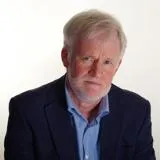
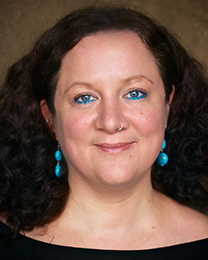
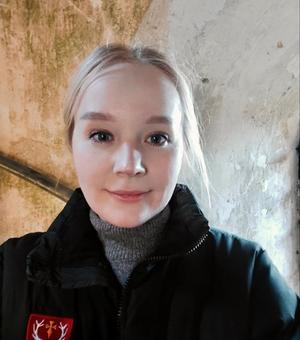
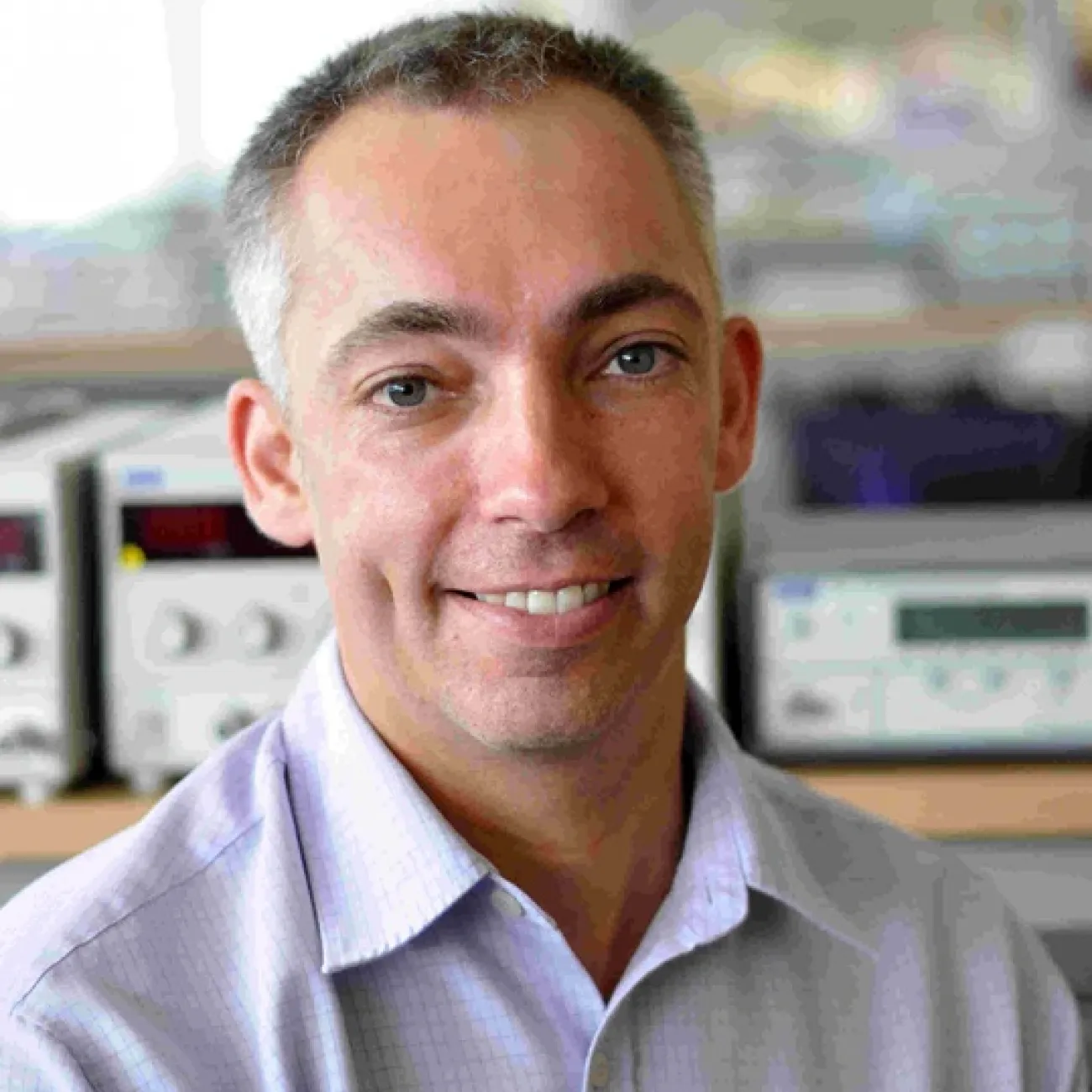
Dr Rod Thornton is a Senior Lecturer in Russian Defence and Security Studies at King’s College London, affiliated with the Defence Studies Department and School of Security Studies. He specializes in the Russian military's kinetic and sub-threshold warfare, with a focus on cyber capabilities, space warfare, and UK homeland resilience. His research includes recent British Academy-funded work on UK civil defense capacity during the pandemic, advocating for dedicated civil defense organizations. He has published extensively on Russian military tactics in Ukraine, AI-cyber integration, and space-based deterrence. Russian military cyber operations Space warfare dynamics UK resilience capacity gaps Scientific awards include a British Academy grant (2020). His students focus on asymmetric warfare, AI, cyber, and regional security issues. He teaches at the UK Defence Academy and has collaborated with institutions in Finland, South Korea, and the Freeman Air and Space Institute.
Timothy M. Hospedales is a Professor of Artificial Intelligence at the Institute of Perception, Action and Behaviour within the School of Informatics at the University of Edinburgh . He also serves as VP AI and Head of Samsung AI Research Centre Europe . His research focuses on efficient and robust AI , emphasizing meta-learning , lifelong transfer-learning , and domain adaptation in both probabilistic and deep learning frameworks. Applications span computer vision , vision and language , reinforcement learning for robotics , and finance . Professor at University of Edinburgh (2020–present) ELLIS Fellow (2021) Head of Samsung AI Research Europe (2020–present) Founding Director of Applied Machine Learning Lab at QMUL (2012–2016) His work includes pioneering contributions to meta-learning , few-shot learning , and self-supervised methods , with notable awards such as the Best Paper Prize at ICML AutoML 2018 and Best Student Paper at ICPR 2018 . He has co-authored 15+ recent papers on topics like Vision-Language Models , Medical AI Fairness , and Diffusion Model Optimization . He served as Program Co-Chair for BMVC 2018 and AAAI 2022 , and authored a book on Visual Adaptation in the Deep Learning Era (2022). Co-Chair, BMVC 2018 Guest Editor, IET CV Special Issue (2016) Keynote Speaker at TASK-CV Workshop (ECCV 2016) Special Issue on Fewer Labels (IEEE PAMI 2020) His leadership extends to organizing workshops like the Learning-to-Learn Workshop at ICLR 2021 , Meta-Learning Workshop at NeurIPS 2020 , and Domain Generalisation Workshop at ICLR 2023 . Current projects include Meta-Omnium (CVPR 2023) for general-purpose meta-learning and MetaAudio (ICANN 2022) for few-shot audio classification benchmarks.
Professor Lizelle Bisschoff is a Professor of Film Studies at the University of Glasgow’s School of Culture & Creative Arts. She specializes in African cinema with particular focus on gender representation, digital technologies, and film festival curation. Her research bridges academic scholarship and practical initiatives, such as co-founding the Africa in Motion Film Festival (AiM). She holds a PhD from the University of Stirling and has held prestigious fellowships including the Leverhulme Trust (2010-2012) and Lord Kelvin Adam Smith (2012-2015). Education: PhD in African Cinema (University of Stirling, 2009) MSc in Cultural Studies (University of Edinburgh, 2005) Research Interests: Gender dynamics in African filmmaking Emerging digital film industries across sub-Saharan Africa Postcolonial cinema and modernist aesthetics Her work emphasizes decolonizing film studies through projects like AiM Festival and edited volumes such as Women in African Cinema . Recent research explores African science fiction and feminist archives. She has secured £115k in grants for film restoration and educational outreach programs. Awards: Leverhulme Trust Postdoctoral Fellowship AHRC Follow-on Funding for Impact (£90k) British Federation of Women Graduates Scholarship Teaching: Convenes MSc Film Curation program Teaches Introduction to African Cinemas and Race on Screen Key Projects: Lead curator for Africa’s Lost Classics restoration initiative Organized international symposia on African art and activism
Dr. Doyle D. Calhoun serves as University Assistant Professor of Francophone Postcolonial Studies within the Department of French at the Faculty of Modern and Medieval Languages and Linguistics, University of Cambridge, where he is also a Fellow of Peterhouse College. His scholarly profile spans African and Caribbean literary studies, cinema analysis, and historical sociolinguistics with a focus on resistance narratives. His educational trajectory includes a Ph.D. in French from Yale University (2022), an M.A. in Linguistics from KU Leuven, and undergraduate studies in Linguistics and French Literature at Boston College. Additional academic development occurred through residencies at Fondation Camargo (Cassis) and Bibliothèque Marmottan (Paris). Calhoun’s research centers on Francophone postcolonial resistance, particularly suicidal acts against French colonialism as documented in The Suicide Archive (2024). His work excavates silenced histories of Atlantic slavery, abolition movements, and Négritude philosophy through literary and cinematic archives, emphasizing Senegalese and Caribbean contexts. He explores how contemporary writers reconstruct erased narratives of enslaved resistance through transmedia practices. His recent publications reveal a methodological convergence between literary analysis, historical recovery, and decolonial theory. Articles frequently address archival silences in colonial documentation while examining how contemporary artists reimagine resistance through linguistic innovation, cinematic storytelling, and embodied protest. Key thematic clusters include the weaponization of silence, subversive uses of missionary linguistics, and the politics of memory in postcolonial contexts. 2024 Malcolm Bowie Prize (Society for French Studies) 2024 William R. Parker Prize (Modern Language Association) 2021 Ralph Cohen Prize (New Literary History) 2016 Vivien Law Prize (Henry Sweet Society) Calhoun actively mentors graduate students in African/Caribbean literatures and cinema studies, with current projects including Africa after 1848 and Florence . His grant history features academic residencies at Fondation Camargo and Bibliothèque Marmottan, alongside a 2021 scholarship from the latter institution. Public engagement includes the 2025 La Noire de... film symposium and contributions to Los Angeles Review of Books and Salon . He contributes to the Cambridge Language Collective and Polyglossia Magazine while organizing events through Peterhouse. His 2025 podcast appearances on Stegi Radio and New Books Network demonstrate active knowledge dissemination beyond traditional academic channels.
Marya Besharov is a Professor of Organisations and Impact at Saïd Business School, University of Oxford, and Academic Director of the Skoll Centre for Social Entrepreneurship. She holds a BA, MA, and PhD from Harvard University, alongside an MBA from Stanford University. Her work focuses on leadership, social impact, and hybrid organizations, advising global entities on balancing social and financial priorities. Education: PhD in Organizational Behavior, Harvard University MA in Sociology, Harvard University BA in Social Studies, Harvard University MBA, Stanford University Research Interests: Dr. Besharov’s research explores how organizations navigate competing goals, particularly in hybrid models like social enterprises. She investigates organizational identity, institutional logics, and leadership frameworks for systemic change. Her findings appear in Administrative Science Quarterly , Harvard Business Review , and Stanford Social Innovation Review . Engagement & Teaching: She leads executive education programs and workshops on leadership and systems change through the Skoll Centre. Her teaching emphasizes contingency-based frameworks for managing organizational complexity. Labs & Initiatives: Academic Director of the Skoll Centre for Social Entrepreneurship, a global hub for social impact education and research.
Loli Kim is a Lecturer on Modern Korea at the Faculty of Asian and Middle Eastern Studies, University of Oxford, with a Leverhulme Postdoctoral Research Fellowship (2022–2025). She specializes in cross-cultural multimodal analysis of Asian communication systems, particularly Korean cinema, folklore, and representation in media. Education: DPhil in Asian and Middle Eastern Studies (2019–2022), University of Oxford Research Focus: Multimodal discourse analysis, foodscaping theory, haenyeo women’s communication Editorial Roles: Assistant Editor of European Journal of Korean Studies; General Editor of 'Foodscaping Asia' series Her work develops the Segmented Film Discourse Representation Structures (SFDRS) methodology for analyzing Korean films' narrative conventions, including violence in revenge cinema and socio-pragmatic dimensions of fashion. She collaborates globally as a visiting lecturer and conference organizer. Kimi’s recent publications examine multimodal translation gaps, cultural representation in children’s literature, and the sociocultural implications of foodscaping. She has delivered keynote talks at institutions including Edinburgh University and SOAS, and co-organizes the Translating Squid Game talks series.
Professor Adam Yuet Chau is a Fellow and Director of Studies at St John's College and holds the Professor of the Anthropology of China position at the Faculty of Asian and Middle Eastern Studies, University of Cambridge . His academic journey includes training at Stanford University (PhD in Anthropology, 2001) and teaching roles at Oxford and SOAS before joining Cambridge in 2008. Focus on Chinese religions and their social dimensions Specializes in ritual theory and cultural transformations Develops comparative frameworks for understanding religious practices His research spans religion under socialism , hosting in political/religious contexts , and ritual polytropy . Recent projects include editing Chinese Religious Culture in 100 Objects and analyzing 'spheres' (界) in Chinese society . Publications like Miraculous Response (2006) and Religion in Contemporary China (2011) establish him as a key figure in religious anthropology. Current and past PhD/MPhil students explore topics from temple festivals in Taiwan to religious subjectification . He actively reviews for leading presses (Cambridge, Oxford, Harvard) and journals ( Ethnos , Modern China ), and participates in international academic workshops.
Professor Stephen Chan is a faculty member at SOAS University of London in the Department of Politics and International Studies (POL) . With a focus on African political thought and international relations, his work critically examines postcolonialism, decoloniality, and global governance. Key research themes include: Decolonizing international relations theory Sino-African political dynamics Election observation and democratic processes Non-Western cosmopolitanism Comparative diplomatic practices His recent publications analyze the ideological ambiguity of decoloniality (2023), pluralist visions for global security (2017), and the legacy of African liberation movements (2021). He has advised multiple theses on topics ranging from parliamentary governance in Kenya/Zimbabwe to China-Africa media interactions. Notably: Critiqued the misuse of 'decoloniality' as ideological rhetoric (2023) Authored a poetic autobiography of political engagement (2022) Traced Africa's intellectual history of freedom (2021) Examined Zimbabwean elections (2017) Explored non-Western modernity (2018)
Professor Stephen Beeby is a leading academic at the University of Southampton in the Electronics and Computer Science department. His research spans Electronic Textiles , Flexible Electronics , and Energy Harvesting technologies. Research Focus: His work emphasizes the integration of smart printable materials into fabrics, enabling invisible wearable technologies . Projects include energy-harvesting insoles , skin hydration sensors , and thermoelectric devices for sustainable power. Recent Publications highlight advancements in zinc oxide nanoparticle films , flexible antennas , and gold-tooled e-textile circuits , reflecting his interdisciplinary approach to biomedical monitoring and smart clothing . Scientific Honors: Royal Academy of Engineering Chair in Emerging Technologies Fellow of IEEE (FIEEE) Fellow of Institute of Physics (FInstP) Fellow of Institution of Engineering and Technology (FIET) PhD Students: Supervising 10 active PhD candidates in areas like flexible sensors , smart garments , and energy-harvesting systems . Labs & Collaborations: Core member of the Centre for Flexible Electronics and E-Textiles (C-FLEET) and collaborates with European Union-funded initiatives like EnABLES and TEAM-NANO .
Professor Phil Clark is a Professor of International Politics at SOAS University of London, specializing in conflict and post-conflict issues with a focus on transitional justice, peacebuilding, and reconciliation after mass atrocity in Rwanda, Uganda, the Democratic Republic of Congo, and Burundi. He holds a DPhil in Politics from the University of Oxford, where he studied as a Rhodes Scholar, and a Bachelor of International Studies from Flinders University. His research focuses on international, national, and community-based responses to mass violence in Central Africa, particularly examining the gacaca community courts in post-genocide Rwanda and the International Criminal Court (ICC). Professor Clark has advised multiple governments (Danish, Sudanese, Swedish, Ugandan, and UK), international organizations (ICC, International Criminal Tribunal for Rwanda), and NGOs (Human Rights Watch, Crisis Group) on conflict issues in Africa. Professor Clark's work spans several key areas including the History, Politics and Law of the African Great Lakes; Transitional Justice Theory and Practice; the Politics of Violence; Community-Based and Customary Law; Conflict Resolution and Reconciliation; the Politics of International Criminal Justice; Peacebuilding, Security and Post-Conflict Reconstruction; and Moral and Political Philosophy. His approach often combines theoretical analysis with practical fieldwork in post-conflict societies. His publications reveal a consistent focus on the tension between international legal frameworks and local justice mechanisms, particularly examining how post-genocide societies navigate complex reconciliation processes. Over time, his work has evolved from documenting specific cases (like the gacaca courts) to analyzing broader patterns of transitional justice and international criminal law across the African continent. Shortlisted for the Raphael Lemkin Award for best book on genocide and mass violence (for "Distant Justice: The Impact of the International Criminal Court on African Politics") Regular contributor to major media outlets including The New York Times, Foreign Affairs, Washington Post, The Guardian, and BBC Frequent media commentator on international news networks including BBC, France 24, Al Jazeera, CNN, and Deutsche Welle Professor Clark has supervised multiple PhD students working on topics related to conflict analysis, women's access to transitional justice, China-Africa relations, and conflict transformation. His current research includes "Intergenerational Justice in Eastern Africa" and "Reframing Justice after Atrocity," which examines justice interactions beyond the linear international-to-national transmission of norms and practices. He has led significant research projects, including serving as technical advisor and co-author of a 2007 UN Office of the High Commissioner for Human Rights project surveying popular perceptions of transitional justice and peacebuilding in northern Uganda. His ongoing work continues to shape academic and policy discussions about justice mechanisms in post-conflict societies.
Bruño Fraga is an Assistant Professor in the Department of Civil Engineering at the University of Birmingham, part of the School of Engineering. He specializes in Computational Fluid Dynamics (CFD) with a focus on turbulent and multiphase flows, particularly in applications like indoor air quality, water treatment, and airborne pathogen transport. His research group develops models such as Multiflow3D, addressing challenges in multiphase flow dynamics and environmental engineering. Education: MEng in Environmental Engineering (University of Santiago de Compostela, 1st class honors), MSc in Applied Math and Numerical Simulation (University of A Coruña), PhD in Civil Engineering (Universities of A Coruña and Chalmers). Research Interests: CFD modeling, bubble-induced turbulence, indoor air quality, water treatment technologies, and multiphase flow dynamics. Dr. Fraga leads major projects such as Fusion Forest (£1m, UKRI) and the IAQ-EMS initiative (£1m, Met Office), focusing on indoor air quality and pathogen transmission modeling. His work includes collaborations with organizations like Deltares Institute and Severn Trent, addressing wastewater treatment and environmental challenges. He is co-leader of the Fluids Research Group and the Water Technology stream at the University of Birmingham’s Water Centre. Scientific Awards: National Outstanding Graduate Prize (2011). Advising & Grants: Supervises graduate students in CFD and multiphase flow research. Oversees grants totaling over £2.1M, including fusion forest and buildair projects. Focuses on translating CFD expertise into real-world solutions for public health and environmental sustainability. Labs & Teams: Leads the Multiflow3D development team and collaborates with the Fluids Research Group and Water Technology stream.
Jakob Klein is a faculty member in the Department of Anthropology and Sociology at SOAS University of London. His research focuses on the anthropology of food, with emphasis on Chinese and Asian culinary cultures, ethical consumption, heritage politics, and the interplay between state policies and market forces in shaping food systems. Klein's work explores themes such as: Culinary modernity and identity in China State-led food security initiatives (e.g., potato promotion) Heritage commodification of regional foods Buddhist vegetarianism and changing meat consumption Alternative food movements in postsocialist contexts His publications demonstrate consistent focus on: Cultural adaptation of global food trends Political economy of dietary change Ethnographic analysis of food practices across urban/rural divides He has supervised doctoral research on food tourism in Istria, gastronomic reinvention in Bulgaria, and cultural capital in Chinese leisure industries.
Lesley Gourlay is a Professor of Education at the IOE - Culture, Communication & Media , part of University College London . She has held leadership roles including Director of the Academic Writing Centre (2010-2020) and Head of the Department of Culture, Communication and Media (2014-2018). Research Focus: Science and Technology Studies in Education, Posthuman Theory, Sociomaterialism, Digital Engagement Awards: Leverhulme Major Research Fellowship (2021-2025) for 'The Datafied University' Her publications explore postdigital education, algorithmic governance, and digital performativity. Recent work includes the open-access monograph The University and the Algorithmic Gaze (2025) and co-editing the Palgrave Handbook of Science and Technology Studies in Education . She is currently working on two forthcoming monographs: The University and the Writing Machine and Weave: The Making of Meaning . Lesley's scientific contributions analyze digital education through postphenomenological, sociomaterial, and posthumanist lenses. Key themes include learning analytics, AI's role in education, and the materiality of digital practices. Her work challenges binary distinctions between online/campus education and human/nonhuman agency. Collaboration Network: Extensive co-authorships with scholars like Petar Jandrić, Clara O’Shea, and Martin Oliver. She co-organizes the UK-wide Digital University Network and contributes to journals such as Postdigital Science and Education and Educational Philosophy and Theory .
Maureen Meadows is a Professor of Strategic Management at Coventry University's Research Centre for Business in Society. Her work focuses on strategic decision-making, big data applications, privacy in business models, and M&A dynamics. She previously held leadership roles at the Open University and Warwick Business School, where she contributed to strategic management education and research. Education: PhD in Open University (2016) MSc in Management Science from University of Warwick (1987) Bachelor of Arts in Mathematics (Oxford University, 1986) Research Interests: Strategic management tools (e.g., scenario planning), customer data analytics, privacy implications of data sharing, and post-merger integration. She has co-led projects on surveillance society blurring and privacy in the digital economy, funded by Leverhulme and EPSRC. Key Projects: Leverhulme-funded 'Taking Liberties?' (surveillance society) EPSRC-funded 'Monetize Me?' (privacy and quantified self) Co-designing digital strategies for museums and education sectors Grants & Collaborations: Multiple internally-funded projects on board assurance frameworks, creative accounting, and hybrid business models in museums. Active in international conferences and professional bodies like BAM Council. Awards: While no specific prizes are listed, her h-index of 24 and 1,891 citations reflect significant scholarly impact.
Dr. Muhammad Imran is a Reader and Lecturer in Mechanical, Biomedical & Design Engineering at Aston University, UK. He is affiliated with the Energy and Bioproducts Research Institute (EBRI) and the College of Engineering and Physical Sciences. His research focuses on energy efficiency, waste heat recovery, and low-temperature power cycles such as Organic Rankine Cycle (ORC) and Supercritical CO₂ systems. He has contributed to the commercialization of ORC systems and collaborates internationally on hybrid energy systems, solar-thermal integration, and district heating networks. Dr. Imran holds a PhD in Energy System Engineering (2016), MSc in Thermal Power Engineering (2012), and BEng in Mechanical Engineering (2009). He has held academic roles at institutions in Pakistan, South Korea, and Denmark, including a Marie Curie Fellowship at the Technical University of Denmark. His awards include the Marie Curie Fellowship (EU), Innovation Award (South Asia Triple Helix), and multiple Research Excellence Awards from South Korea. He leads funded projects on hybrid energy systems for agriculture, waste heat recovery in industries, and sustainable energy solutions in developing countries. His editorial roles include associate editorships in Frontiers in Thermal Engineering and Resources, Environment and Sustainability . He supervises PhD students in renewable energy and low-temperature thermodynamic systems, with ongoing projects on solid-state heat pumps and advanced ORC control strategies. Dr. Imran’s work bridges engineering, data science, and environmental science to address energy challenges. Notable collaborations include projects in Ethiopia, Kenya, Nigeria, and Sudan, focusing on off-grid cold storage, smart irrigation, and biomass energy systems. His research outputs include over 130 peer-reviewed articles, patents, and contributions to international conferences.