Henrik Myhre Jensen is a Professor at the College of Engineering , Aarhus University, specializing in Mechanics of Materials , Solid Mechanics , and Mechanical Engineering . His research focuses on fracture mechanics, composite materials, and computational modeling of structural behaviors. Research Focus Fracture mechanics in composites and layered materials Computational modeling of kink band propagation Surface wear and coating technologies Ultrasound imaging applications in mechanical systems Notable Contributions Henrik has contributed to understanding crack propagation in cantilever beams, developed numerical methods for simulating delamination in composites, and explored buckling instabilities in solids. His recent work connects machine learning (holomorphic neural networks) to traditional fracture mechanics problems. Key Projects MAGFLY (2017-2021): Magnets for Flywheel Energy Storage InnoVacc (2009): Pressure Testing of Vacuum Chambers Simulation of composite structures (2011-2020): Micro-mechanical modeling
Vassilis Christophides is a Professor of Computer Science at the University of Crete and holds an advanced research position at Inria Paris, where he leads work in the MiMove team. His research spans databases, web information systems, big data processing, and IoT analytics, with a strong emphasis on entity resolution, data integration, and scalable data mining. He has supervised numerous research projects funded by the European Union and the Greek State, and has published over 130 articles in top-tier conferences and journals. Research Interests: His primary research areas include Databases, Web Information Systems, Big Data Processing and Analytics, and Information Systems for the Internet of Things. He also focuses on entity resolution, knowledge graphs, streaming data, and explainable AI, particularly in the context of anomaly detection and fairness-aware data systems. His recent work explores hybrid attention models for entity alignment and causal analysis in time series classification. Recent Research Trends: Analysis of his recent publications (2021–2025) reveals a strong focus on entity resolution with fairness constraints, explainable anomaly detection, and adaptive scheduling in IoT edge analytics. He also investigates deepfake detection, crop type mapping using satellite data, and structural bias in knowledge graphs, demonstrating a broad and impactful research portfolio at the intersection of data management and machine learning. Scientific Awards: 2004 SIGMOD Test of Time Award Best Paper Award, ISWC 2003 Best Paper Award, ISWC 2007 Advising and Grants: While specific student names are not listed in the provided texts, Christophides has co-authored numerous papers with researchers such as Vasilis Efthymiou, Ioannis Tsamardinos, and Nikolaos Myrtakis, suggesting active mentorship. He has been the scientific coordinator of multiple EU and national research projects, indicating substantial grant leadership and project management experience. Labs and Teams: He is affiliated with the MiMove team at Inria Paris, a research group focused on mobility and data-intensive systems. His work bridges academic and applied research, leveraging Inria’s infrastructure for large-scale data experimentation and innovation in IoT and edge computing environments.
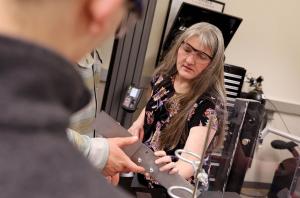
Natasha Smith is a Professor in the Department of Mechanical and Aerospace Engineering at the University of Virginia. She holds a Teaching Track position and serves as Director of Undergraduate Mechanical Engineering. Her research focuses on pedagogical strategies in engineering education, systems engineering design, reliability assessment using probabilistic methods, and material property analysis through statistical approaches. A registered professional engineer in Maine, she has 20 years of military service as a U.S. Navy Civil Engineer Corps officer (Seabees), including roles as a military instructor at the U.S. Naval Academy and Associate Professor at the University of Southern Indiana. Dr. Smith’s academic contributions include advancing hybrid course design, integrating industry partnerships into finite element education, and developing hands-on laboratory experiments. She has received the Hartfield Excellence in Teaching Award from The Jefferson Scholars Foundation for her impactful instruction. Her work highlights the intersection of military precision, engineering fundamentals, and innovative teaching methods. Current projects include a Jefferson Trust-funded Moon Base simulation lab for NASA competition training. Her military experience and engineering expertise inform her teaching philosophy, emphasizing practical problem-solving and technical communication. She actively collaborates with industry on experimental design and has published extensively on laboratory pedagogy, reliability analysis, and aerospace systems design since 2001.
Zoran J. Stankovic is a Full Professor at the Faculty of Electronics, University of Niš, Serbia, in the Department of Telecommunications. He has been an integral part of the institution since earning his PhD in 2007, progressing from Assistant to Associate Professor (2020) and Full Professor (2024). He is actively involved in research, education, and academic leadership. Education: PhD in Telecommunications, Faculty of Electronics, University of Niš (2007) Master's in Telecommunications, Faculty of Electronics, University of Niš (2002) Bachelor's in Electronics and Telecommunications, Faculty of Electronics, University of Niš (1994) His research focuses on applying artificial neural networks to solve complex problems in electromagnetics and wireless systems. Key areas include antenna design optimization , direction-of-arrival (DoA) estimation , microwave cavity modeling , and smart textile antennas . His work bridges machine learning with electromagnetic theory, enabling efficient and adaptive RF system design. The analysis of his recent publications reveals a strong trend in using deep and hybrid neural networks for electromagnetic modeling and signal processing. His research emphasizes real-world applications such as wearable antennas, mobile source tracking, and intelligent antenna systems, often published in high-impact IEEE and Wiley journals. Scientific Awards: Commemorative Plaque from the Yugoslav Society for Microwave Techniques and Technologies (2005) for outstanding scientific results in microwave engineering Advising and Grants: While specific students are not listed, he has supervised numerous academic works. He has participated in 17 research projects (13 national, 4 international including DAAD, NATO, COST) and 8 educational development projects (including ERASMUS+, TEMPUS, WUS). These reflect sustained funding and academic collaboration. Labs and Teams: He is the founder and head of the Laboratory for Antennas and Propagation at the Faculty of Electronics, Niš. He is actively involved in organizing and leading the international conferences TELSIKS and ICEST , serving on their program and organizational committees, demonstrating strong leadership in the academic community.
Haochen Li is an Assistant Professor in the Department of Civil and Environmental Engineering at the University of Tennessee, Knoxville, within the College of Engineering. He leads the multidisciplinary Water Infrastructure Laboratory (Ψ Lab), which focuses on advancing urban water infrastructure through high-fidelity computational fluid dynamics (CFD), physical modeling, and physics-informed machine learning (ML). Education: PhD in Environmental Engineering, University of Florida, 2019 MS in Mechanical Engineering, University of Florida, 2019 MS in Civil Engineering, University of Florida, 2015 BS in Coastal Engineering, Hohai University, 2013 His research centers on environmental fluid dynamics , particularly multiphase and multiphysics flows in urban water systems. He investigates turbulence, particulate matter transport, pathogen fate, and chemical dynamics using advanced CFD simulations, volumetric particle image velocimetry (PIV), and AI-driven models. His lab develops open-source tools like InterAdsFoam for adsorption systems and integrates ML with CFD to optimize infrastructure design, retrofit, and regulatory frameworks. The recent publications reflect a strong trend toward hybrid CFD-ML frameworks for water infrastructure, with applications in clarifier design, stormwater basin optimization, and real-time sensing. His work emphasizes model validation, scalability, and practical deployment, including web-based tools for engineers. Scientific Awards: Rudolph Hering Medal, ASCE, 2023 Editor choice, Journal of Environmental Engineering ASCE, 2021 Editor choice, Journal of Environmental Engineering ASCE, 2020 Graduate School Fellowship, University of Florida, 2015 Academic Achievement Award, University of Florida, 2013 Haochen Li actively advises researchers and students in his lab, including Kai Liu, Mohamed Shatarah, and Ahmed Abdelmeguid. His team works on AI-empowered reactive flows, physics-informed ML, and CFD applications in energy and environmental systems. He has served as a reviewer for top journals and is a member of the ASCE/EWRI Computational Fluid Dynamics Committee. His lab is equipped with state-of-the-art HPC platforms and physical modeling facilities for experimental validation.
Dr. Sinno Jialin Pan is a leading researcher in machine learning and artificial intelligence at Nanyang Technological University, Singapore. His work focuses on domain adaptation, sentiment analysis, and efficient neural network optimization. Key research areas: Machine Learning, Domain Adaptation, Reinforcement Learning, Sentiment Analysis Recent publications demonstrate expertise in time-series classification (2025) using hierarchical domain adaptation, LLM efficiency (2025) through expert pruning, and graph generation (2024) via spectral diffusion. His work spans both theoretical advancements and practical applications in neural architecture optimization and adversarial learning. Scientific contributions include: 2025: Virtual-label hierarchical domain adaptation 2024: Spectral diffusion for graph generation 2024: Multilingual jailbreak analysis in LLMs Current trends show increasing focus on large language model optimization and robust neural architectures , with applications in fault diagnosis, recommender systems, and misinformation detection.
Miloš Pupavac is affiliated with Singidunum University in Belgrade, Serbia, where he contributes to research and teaching in foreign language education. His work spans both traditional and digital methodologies, with a focus on Russian language instruction and the impact of technology on pedagogy. Education: Master's and Doctoral studies in Russian Language and Literature and Language, Literature, Culture at the University of Belgrade. Research interests include the motivational role of textbooks, hybrid teaching models, translation reliability in the AI era, and the effectiveness of digital tools like AI-generated texts, e-books, and presentations in language classrooms. His publications often intersect foreign language teaching , educational technology , and pedagogical innovation . Recent publications (2021–2025) analyze challenges in online/hybrid teaching, AI integration, communication disruptions, and presentation-based pedagogy. These works reflect trends in technology-enhanced language learning and digital literacy . Contact: mpupavac@singidunum.ac.rs .
Jelena Zdravkovic is a Professor and Head of the Department of Computer and Systems Sciences (DSV) at Stockholm University. She leads the PRECIS research group which focuses on Process, Requirements, Enterprise, Capability, and Information Systems modelling. Her work spans theoretical and practical aspects of enterprise and IT solutions with a particular emphasis on digital transformation. Professor Zdravkovic's research interests center around Digital Business Ecosystems , Digital Twins , and Data-driven Requirements Engineering . Her work in Enterprise Modeling explores capability-oriented and consumer-oriented approaches to requirements engineering. She investigates how digital transformation and big data can be leveraged to improve requirements elicitation processes, and how organizations can model and manage complex digital business ecosystems. Her research has significant implications for how businesses can adapt to rapidly changing technological environments while maintaining resilience and competitiveness. Her recent publications reveal a clear trajectory toward integrating artificial intelligence with digital modeling techniques, particularly in the context of smart buildings and business ecosystems. There's a consistent focus on how data-driven approaches can transform traditional requirements engineering practices, making them more responsive to the velocity and variety of digital data sources. Her work bridges theoretical modeling with practical applications across various industries including healthcare, energy, and transportation. Professor Zdravkovic has been actively involved in mentoring PhD students, including supervising research on the Management Framework of Resilient Digital Business Ecosystems. She has participated in numerous national and international projects focused on interoperability and model-driven engineering, securing research funding for innovative work at the intersection of business and technology. She leads the PRECIS research group which deals with theories, methods and tools for analysis and design of organizational and IT solutions in congruence. The group's research covers three key topics – Enterprise Modelling, Business Process Management, and Conceptual Modelling. Their work brings together academic rigor with practical applications to solve real-world business challenges through innovative information systems approaches.
Victor M. Preciado is a Professor in the Department of Electrical and Systems Engineering at the University of Pennsylvania. His research focuses on network science , control theory , and graph signal processing . Research Interests: Modeling and controlling spreading processes on complex networks Optimization algorithms for time-varying systems Applications in public health and cyber-physical security Selected Publications: Recent work includes machine learning for operator inference (2022), hybrid systems stability analysis (2021), and pandemic modeling frameworks (2021). Earlier contributions focus on spectral analysis of epidemics (2009-2016) and geometric optimization (2014).
Professor Abdy Kermani serves as Professor and Director of the Centre for Timber Engineering within the School of Engineering and The Built Environment at Edinburgh Napier University. With over 80 research outputs spanning nearly two decades, his work focuses on advancing timber engineering practices and sustainable construction methodologies. His research portfolio includes significant contributions to timber frame construction, structural analysis, and innovative timber applications in building systems. Professor Kermani's research interests center on timber engineering with particular emphasis on structural performance, racking behavior in timber framed walls, vibration analysis of timber floors, and innovative applications of timber in bridge construction. His work bridges theoretical analysis with practical applications, addressing critical challenges in sustainable construction and building performance. Through his leadership at the Centre for Timber Engineering, he has developed methodologies for assessing timber structural elements and implemented innovative design approaches for timber construction systems. Analysis of Professor Kermani's 15 most recent publications reveals a consistent focus on timber structural performance, with particular attention to racking resistance in timber framed walls, vibration characteristics of timber floors, and innovative applications of timber in structural systems. His research demonstrates a progression from fundamental structural analysis toward practical implementation of timber engineering solutions, with increasing emphasis on computational modeling and optimization techniques in recent years. KTP Simpson Strong Tie (2007-2012): £191,048 - Developed structural elements for timber frame market providing racking resistance KTP Diageo Plc (2007-2011): £213,688 - Optimized whisky cask design POC: Composite Insulated Beams (2004-2009): £179,881 James Jones & Sons Ltd (2004-2006): £70,429 - Secured European Product Approval for timber products Oregan Timber Frame Ltd (2004-2006): £69,596 - Developed integrated manufacturing strategy Professor Kermani has supervised numerous doctoral students including Roshan Dhonju (Racking performance of platform timber framed walls), Ahmed Mohamed (Photogrammetric techniques for evaluating timber properties), Eleni Tsechelidou (Investigating gaps in civil engineering education), Zaihan Jalaludin (Water vapour sorption behaviour of wood), and Kenneth Leitch (Development of a hybrid racking panel). His leadership extends to the Centre for Timber Engineering, where he directs research initiatives focused on advancing timber construction technologies and promoting sustainable building practices through innovative engineering solutions.
Asif Ali Zaman is an Associate Professor in the Department of Mathematics at the University of Toronto's Faculty of Arts and Science. He specializes in analytic and probabilistic number theory, with applications to algebraic structures and arithmetic statistics. His work intersects prime distribution, zeros of L-functions, Chebotarev density theorem, random multiplicative functions, and binary quadratic forms, extending to elliptic curves, modular forms, and mass equidistribution. PhD in Mathematics (2017), University of Toronto NSERC Postdoctoral Scholar (2017–2019), Stanford University MSc in Mathematics (2012), University of British Columbia BSc in Mathematics (2010), Simon Fraser University His research leverages log-free zero density estimates, Deuring-Heilbronn phenomenon, and Artin's holomorphy conjecture to derive bounds for primes, ℓ-torsion class groups, and equidistribution on modular surfaces. Recent publications (2025–2022) focus on Tauberian theorems, multiplicative chaos, and large sieve inequalities. Grants include sponsored research on L-functions (2022–2027) and computational projects (2025). He supervises Masters and PhD students in number theory and teaches multivariable calculus and cryptology courses.
Marc C.W. Geilen is an Associate Professor at the Electronic Systems group , Eindhoven University of Technology. He leads the Model-Based Design Lab and contributes to the CompSOC Lab and High Tech Systems Center . His work focuses on model-based design methods, design automation, and optimization for real-time and embedded systems. Research Keywords: Cyber-Physical Systems, Real-Time Systems, Embedded Systems, Performance Analysis, Design Automation Key Collaborations: EU ECSEL TRANSACT project, SAM-FMS project, Arrowhead Tools initiative His recent publications address weakly-hard timing constraints in server-based systems, hybrid performance modeling for cyber-physical systems, and neural network optimization for communication. Article trends span Real-Time Scheduling , Trustworthy Modeling , Neural Network Efficiency , and Resource Allocation in distributed environments. Scientific Awards : Partial-Order Reduction for Performance Analysis (2018) Teaching activities include courses in Computational Modeling , Embedded Signal Processing , and Discrete Mathematics . He collaborates across projects like TRANSACT, SAM-FMS, and Arrowhead Tools, focusing on flexible manufacturing and cloud-to-edge transitions.
Aysegul Liman-Kaban serves as an Assistant Professor in ICT/Digital Learning STEM Education at Maynooth University. Her work focuses on integrating immersive technologies like augmented reality, gamification, and AI into educational practices. She actively supervises PhD students and leads international research projects such as MIXAP-EU and From AI Anxiety to Empowerment. Education: Not explicitly stated in provided text Her research interests span: Immersive learning technologies (AR/XR, digital escape games) AI in education and generative AI applications Teacher digital competencies and professional development Flipped learning and multimedia pedagogy Ethical challenges in AI research Blended learning practices Recent publications demonstrate a focus on gamification, mixed reality, and AI applications in education, with methodological expertise in structural equation modeling, mixed methods research, and task-based learning analysis. She contributes to journals like Smart Learning Environments and Higher Education Quarterly . Key activities include: Organizing international conferences on STEAM education Leading EU-funded research on immersive learning tools Developing open-source educational technologies Pioneering generative AI integration frameworks
Professor Farookh Hussain is a distinguished academic at the School of Computer Science , University of Technology Sydney , specializing in Artificial Intelligence , Cloud Computing , and Software Engineering . His research spans diverse sectors including agriculture, manufacturing, healthcare, and transportation. Affiliated with the Australian Artificial Intelligence Institute (AAII) , he leads impactful work in business intelligence and carbon credit systems. Key research areas: AI applications, blockchain for provenance, carbon credit analytics Active in Masters/PhD supervision and cloud computing education Research Highlights : Developed KACINO framework for carbon dynamics modeling Created hybrid cybersecurity frameworks for supply chain risk management Advanced chatbot dialogue breakdown solutions through systematic reviews Proposed hypercomplex knowledge graph recommenders Published extensively on carbon credit price prediction and blockchain storage methods Contributions to water demand forecasting and collaborative robotics adoption Grant Activities : Secured funding from Hampton Capital Asset Management , Innovation Connections , and Science and Industry Endowment Fund Projects include LLM-driven text-to-SQL conversion , blockchain for melanoma data , and AI for storm water management
Fabiana Pirola is an Associate Professor at the University of Bergamo, holding positions in both the Department of Engineering and Applied Sciences and the Department of Management, Information, and Production Engineering. Her academic career spans over 17 years since completing her PhD at the University of Bergamo, progressing through research fellow positions to her current associate professorship in the ING-IND/17 – MECHANICAL INDUSTRIAL SYSTEMS scientific sector. Her research interests focus on supply chain management , risk management , service engineering , and industrial maintenance , with recent emphasis on Industry 4.0 and 5.0 technologies. She investigates how digital innovations connect with the design and management of production and service delivery systems, bridging theoretical research with industrial applications through collaborations with organizations like AFIL (Lombardy smart factory technology cluster), Confindustria Bergamo, and Consorzio Intellimech. Analysis of her recent publications reveals a strong focus on Product-Service Systems (PSS), digital transformation in manufacturing, and workforce development for Industry 4.0/5.0. Her work spans sustainability assessment of PSS, AI education through learning factories, servitization business models, and human factors in technology adoption. A significant portion of her research addresses practical implementation challenges in industrial settings, particularly through data-driven approaches to maintenance, service delivery, and decision-making. Dr. Pirola leads multiple significant research projects including Co-Creative Decision-Makers for 5.0 Organizations (Erasmus+, 2023), Green and Resilient European Excellence Network for Smart MED SMEs (2024), Methods and Tools Supporting Digital Product Service System Passport (Horizon Europe, 2024), and TechFact - Design and adoption of Teaching Factories (PRIN Projects, 2023). She teaches various courses related to production management, operations modeling and simulation, and service engineering across multiple engineering programs at the University of Bergamo.