Károli Gáspár University of the Reformed ChurchHungary
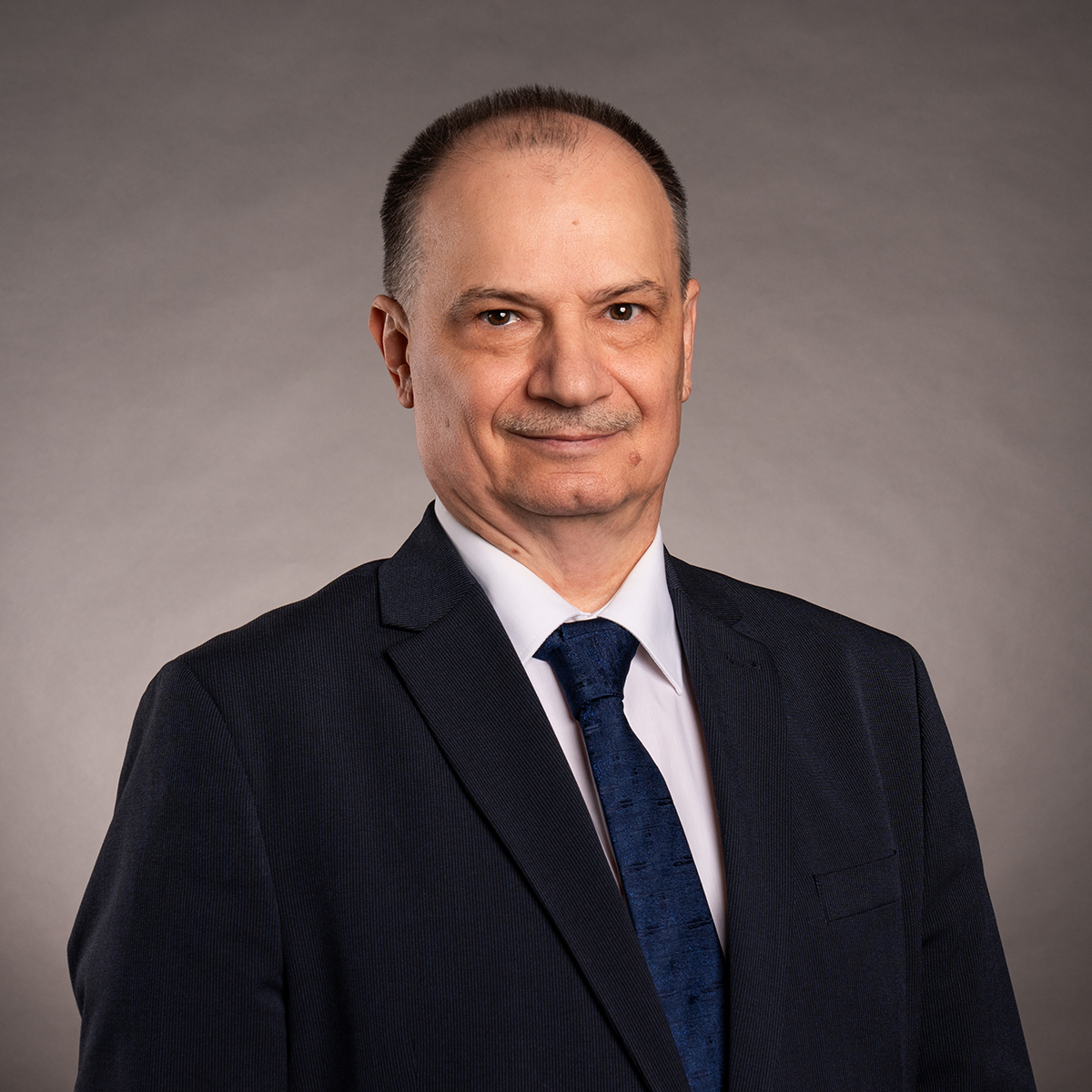
Dr. Gábor Pintér holds dual academic appointments as Assistant Professor at Károli Gáspár Reformed University's Faculty of Humanities and Social Sciences (Department of Japanology) and as Associate Professor at Kobe University's School of Languages and Communication. Born in Hungary in 1977, he earned his MA (2005) and PhD (2008) in Linguistics from Kobe University, Japan, with a dissertation on asymmetrical segment distributions in Japanese. His research focuses on three interconnected domains: phonological theory (especially Japanese phonology), experimental phonetics, and applications of automatic speech recognition in language education. Specific interests include vowel devoicing patterns, prosodic perception in L2 learners, phonotactic constraints, and diachronic sound changes in Japanese. Pintér actively contributes to international research collaborations, including the JSPS-funded project 'Stochastic & theoretical phonological research' and serves as chair of the Phonology Association in Kansai (PAIK). His 15 most recent publications demonstrate methodological diversity, combining theoretical linguistics with computational approaches and experimental studies, primarily focused on Japanese phonetics and speech technology applications. Professional memberships include board positions in The Phonological Society of Japan and memberships in the International Speech Communication Association and Association for Laboratory Phonology.
Zsófia Zvolenszky is an Associate Professor at the Department of Logic, Institute of Philosophy, Eötvös Loránd University (ELTE). She earned her Ph.D. in Philosophy from New York University (2007) and is a Marie Curie Fellow (2016-2018). Her research focuses on the semantics of natural language, including proper names, indexicals, and modal logic, with a special emphasis on fictional discourse and relevance theory. Ph.D., Philosophy, New York University Marie Curie Fellow, Slovak Academy of Sciences Head of the Analytic Philosophy Ph.D. Program at ELTE Her recent work explores the intersection of literal and figurative meaning, particularly metaphor and malapropism, using relevance-theoretic frameworks. She has edited the Hungarian anthology Metaphor, Relevance, Meaning (2015/2016) and coordinates interdisciplinary collaborations through the Erasmus Collegium Language Research Group . Scientific awards include: Marie Curie Fellow (SASPRO, 2016-2018) She has supervised three Ph.D. students and secured two major grants: Principal Investigator, OTKA-NKFIH K-116191 (2016-2020) Senior Researcher, OTKA-NKFIH K-109456 (2013-2017)
Katalin Piniel is an Assistant Professor at the Department of English Applied Linguistics within the School of English and American Studies at Eötvös Loránd University, Budapest. Her work bridges applied linguistics and educational psychology , focusing on the dynamic interplay of emotions , including language anxiety , motivation, and self-efficacy in foreign language learning contexts, particularly in Hungary. PhD in Language Pedagogy (ELTE) Associate Editor of Studies in Second Language Learning and Teaching Active reviewer for applied linguistics journals Her research integrates complex dynamic systems theory to analyze longitudinal changes in affective variables and employs meta-analytic techniques to validate anxiety measurement tools like the Foreign Language Classroom Anxiety Scale (FLCAS) . She explores formative and summative assessment practices in Hungarian high schools and investigates flow experiences during language tasks. Her methodological interests include quantitative tools (e.g., Rasch analysis), collaborative research , and cross-cultural comparisons (e.g., Hungarian-Kazakh studies). Recent publications highlight trends in emotion-motivation dynamics , skills-based anxiety measurement , and the impact of online education on affective variables. She collaborates on projects examining special needs learners , including Deaf and hard-of-hearing students , in foreign language acquisition. Contact: brozik-piniel.katalin@btk.elte.hu | ORCID | Google Scholar | ResearchGate
Károli Gáspár University of the Reformed ChurchHungary
István Zalatnay is an Associate Professor in the Department of Liberal Arts at the Faculty of Humanities and Social Sciences, Gáspár Károli Reformed University. His academic work bridges philosophy and theology, with a strong focus on liturgical studies, the philosophy of religion, and the history of philosophy. His educational background includes a PhD in Philosophical Sciences from Eötvös Loránd University (2004), an MA in Philosophy from the same institution (1995), and training as a Reformed pastor (1985). He previously served as an Associate Professor and Vice-Rector at Pápai Reformed Theological Academy. His research interests are extensive, encompassing logic, epistemology, systematic theology, and international relations with a focus on minority policy. His scholarship is deeply rooted in phenomenological analysis, particularly of liturgical texts and religious experience. His recent publications, spanning from 2011 to 2023, demonstrate a consistent focus on Hungarian Reformed theology, liturgical practice, and the interplay between philosophy and religion. Key themes include the future of the church, sacred time and space, the interpretation of historical and theological texts (such as the Heidelberg Catechism), and the legacy of Hungarian philosophical and theological figures. He has supervised doctoral students, including Ágnes Fekete on the topic of liturgy and time. His international experience includes a research fellowship at the North Atlantic Assembly in 1992. He is fluent in English, German, and French, with reading proficiency in Italian. His primary point of contact is via email at zalatnay.istvan@kre.hu.
Károli Gáspár University of the Reformed ChurchHungary
Eva Banki is an Associate Professor at the Department of Ancient and Classical Hungarian Literature, Institute of Hungarian Language, Literature and Cultural Studies, Faculty of Humanities and Social Sciences at Károli Gáspár University of the Reformed Church in Hungary. Previously, she served as a Lecturer at ELTE BTK (Eötvös Loránd University Faculty of Arts). Her academic career spans medieval literature, world literature, and creative writing. Banki earned her PhD in Romance studies/world literature from ELTE BTK in 1999 with a dissertation titled "Lyrical temporal relations in Provençal troubadour poetry." She completed her MA in Hungarian language and literature – Portuguese language and literature at ELTE BTK in 1991-92. She has advanced proficiency in Portuguese, intermediate in German, and reading comprehension in Spanish, Italian, and French. Her research focuses on medieval literature, particularly Provençal troubadour poetry, world literature, and creative writing. She has made significant contributions to the study of hard-boiled crime fiction in Hungarian literature and courtly literature. Her scholarly work explores themes of identity, time, cultural memory, and political discourse across historical periods and literary traditions, bridging medieval studies with contemporary literary analysis. Banki's recent publications demonstrate a scholarly trajectory examining Arthurian legends, chivalric romances, and medieval poetry while engaging with modern Hungarian authors like Tar Sándor and Bodor Ádám. Her work consistently explores the intersections of identity, politics, and literary form across historical periods, with particular attention to narrative structure and symbolic representation. Fiction Observer Award (2004) Mikes Kelemen Award (2008) Fiction Writers Award (2021) Attila József Award (2024) Literary Magazine Award (2024) Banki has been actively involved in doctoral education, serving as an opponent at doctoral defenses for topics including female characters in French literature, gender and structure in Bernardim Ribeiro's novel, and contemporary Brazilian literature. She co-founded the Creative Writing specialization at her institution with István Géher in 2014 and has served as subject manager for multiple courses including World Literature and Translation in Culture. She participates in several research groups including the Latin America Research Group (KRE), the Hungarian Branch of the International Courtly Literature Society, and the Contemporary Central European Novel Research Group (KRE), reflecting her interdisciplinary approach to literary studies across historical periods and cultural contexts.
Károli Gáspár University of the Reformed ChurchHungary
Thomas Cooper holds a PhD in Comparative Literature from Indiana University (2003) and an MA in Central Euro-Asian Studies (1998). He is currently an Adjunct Assistant Professor at Károli Gáspár University of the Reformed Church in Hungary, affiliated with the Faculty of Humanities and Social Sciences and the Department of English Literatures and Cultures. Previously, he served as Associate Professor at Eszterházy Károly College and Assistant Director at Columbia University's Institute for Comparative Literature and Society. Cooper's research focuses on literary history, translation theory, and the interplay of culture and narrative. His recent articles explore topics such as storytelling techniques, cultural mediation in translation, and the literary impact of 20th-century historical events like the 1956 Hungarian Revolution. His work also intersects with musicology, analyzing tonal innovations in Ferenc Liszt's compositions. Scientific Awards: György Ránki Award (1998) Cooper has held guest teaching and research roles, including at Columbia University (2006), and presented at the United Nations Study Group on Languages (2015). His linguistic expertise includes near fluency in French, German, and Hungarian, alongside native English proficiency.
Gyula Tankó is a habilitated Associate Professor at the Department of English Applied Linguistics , School of English and American Studies, Eötvös Loránd University . His research focuses on language assessment validity , particularly for advanced-level English exams. Research interests include: Constructive justification of EFL school-leaving examinations Psychometric challenges in reading and listening comprehension assessments Alignment of national language policies with assessment practices Development of analytic rating scales for EAP (English for Academic Purposes) Cognitive processes in L2 listening behaviors Selected publications address topics like: Test fairness and generalizability Impact of punctuation errors on EFL assessment CEFR taxonomy in listening evaluation His work contributes to improving language proficiency certification and university admissions in Hungary. Contact : Email: tanko.gyula@btk.elte.hu Address: Room 430, Eötvös Loránd University, Faculty of Humanities, Rákóczi út 5, Budapest, H-1088
Károli Gáspár University of the Reformed ChurchHungary
Dr. Orsolya Nador is an Associate Professor at the Department of Hungarian Linguistics, Institute of Hungarian Language, Literature and Cultural Studies, Faculty of Humanities and Social Sciences at Károli Gáspár Reformed University in Budapest, Hungary. With a PhD in Linguistics and Applied Linguistics from the Hungarian Academy of Sciences (1998), she has dedicated her career to the study of language policy, Hungarian as a foreign language, and the linguistic landscape of East-Central Europe. Her work bridges academic research with practical applications in language teaching and policy development across Central and Eastern European contexts. PhD in Linguistics and Applied Linguistics, Hungarian Academy of Sciences (1998) MA in Hungarian Language and Literature, Eötvös Loránd University (1983) Habilitation, University of Pécs (2001) Dr. univ. in Contemporary Hungarian Literature, Eötvös Loránd University (1988) Teacher of Hungarian-Russian Primary School, Eger Teacher Training College (1981) Dr. Nador's research focuses on language policy history, Hungarian as a foreign language (including educational policy and psycholinguistic aspects), Hungarian as a language of origin, the history of Hungarian applied linguistics, and diachronic analysis of linguistic-ethnic issues in East-Central Europe. Her interdisciplinary approach connects historical linguistics with contemporary language policy challenges, particularly regarding minority languages in the Carpathian Basin region. She has pioneered research on language identity formation and the relationship between linguistic diversity and social cohesion in multi-ethnic contexts, examining how language policies shape national identities across Central Europe. Her recent publications reveal a consistent focus on the linguistic landscape of the Carpathian Basin, with particular attention to language policy development, minority language rights, and the teaching of Hungarian as both a foreign and heritage language. Dr. Nador's scholarly work demonstrates how historical language policies continue to influence contemporary linguistic practices and identity formation across East-Central Europe. Her research increasingly addresses digital aspects of language teaching and the evolving role of Hungarian in the European multilingual context, reflecting her commitment to adapting linguistic research to contemporary educational challenges. Teacher of the Year, Károli Gáspár Reformed University (2015) Brassai Prize, Hungarian Association of Applied Linguists and Language Teachers (2023) Dr. Nador has supervised numerous doctoral students working on language policy issues across Europe, including research on Norwegian language policy, Swiss multilingualism, Hungarian language in Burgenland, and media discourse analysis. She has led international research projects including Te-Le-Hu (2008-2010) and Hungarobox (2013-2015), focusing on language teaching methodologies for Hungarian as a foreign language. Her editorial work includes serving as editor-in-chief for Modern Language Teaching journal since 2018 and previously for THL2 - Journal of Hungarian Language Teaching (2005-2018), where she shaped the discourse on Hungarian language pedagogy for over a decade. As leader of the Hungarology Research Group, Dr. Nador coordinates collaborative research on Hungarian language and culture across international borders. Her team works closely with institutions in Slovakia, Croatia, Romania, and Serbia to document and analyze the linguistic practices of Hungarian minority communities throughout the Carpathian Basin, creating a comprehensive picture of how Hungarian functions as both a majority and minority language in different national contexts.
Péter Szigetvári is an Associate Professor at the School of English and American Studies , Eötvös Loránd University , specializing in the Department of English Linguistics . His work bridges phonology, morphology, and theoretical linguistics, with a focus on Hungarian and English language structures. Academic Rank: Associate Professor Department: Department of English Linguistics University: Eötvös Loránd University His research explores phonological patterns , including vowel harmony, syllable structure, and morphological constraints. He investigates the interplay between morphology and phonology in Hungarian and English, analyzing phenomena like diminutive formation, diphthong debates, and stress-related vowel reduction. Recent publications highlight trends in Vowel Harmony , Syllable Typology , and Morpho-Phonological Variation . His work often challenges traditional frameworks, proposing paradigm-based or VC phonology approaches. Péter Szigetvári's professional activities include contributions to linguistic journals and a blog at nyest.hu . His office is located at Room 302, Rákóczi út 5, Budapest (1088).
Ildikó Király is a Professor at the Institute of Psychology, Eötvös Loránd University, Budapest, currently serving as Head of the Department of Cognitive Psychology and lecturer. Her research focuses on developmental psychology, particularly social cognition, imitation behavior, and theory of mind in early childhood. Key areas: Social Cognition , Developmental Neuroscience , and Cognitive Development Recent work examines preschoolers' exploration tendencies, joint action observation effects, and linguistic group membership's role in perspective taking. She leads the Social Minds Research Group , investigating how cultural knowledge transmission shapes cognitive development. Her 2021-2025 publications reveal trends in: Imitative behavior's sensitivity to social norms and group identity Memory flexibility in adapting to changing contexts Interactions between semantic processing and mentalization in social situations Comparative studies on human and non-human primate cognition
Károli Gáspár University of the Reformed ChurchHungary
Dr. habil. Dringó-Horváth Ida is an Associate Professor at the Faculty of Humanities and Social Sciences of Károli Gáspár University of the Reformed Church in Hungary (KRE). She serves as Head of the ICT Research Center under the Rector's Office and as Head of the Educational Informatics Continuing Education Center at KRE BTK. Her leadership extends to multiple research projects focused on educational technology in higher education, particularly examining digital competencies, teacher development, and the integration of information and communication technologies in academic settings. Dr. Dringó-Horváth earned her PhD in German Studies/Linguistics from Eötvös Loránd University in 2004, with a dissertation titled "Analysis and Evaluation of the Modern Teaching and Learning Medium 'Elektronisches PC-Wörterbuch'." She completed her habilitation in Educational Science at the same institution in 2019. Her academic background includes an MA in German from Eötvös Loránd University (1998) and additional qualifications in educational informatics and social work. Her research focuses on the intersection of educational technology and higher education pedagogy, with particular emphasis on digital competence development for teachers, dictionary skills in language learning, and the digital transformation of educational practices. Dr. Dringó-Horváth leads the "Educational Informatics in Higher Education" research project, which examines effective learning/teaching opportunities in electronic learning environments and maps ICT indicators of higher education lecturers. Her work explores how reflection processes contribute to long-term teacher competency development in the digital age. Analysis of her recent publications reveals a strong focus on artificial intelligence in higher education, technostress reduction, and digital competence measurement. Her research shows how digital transformation impacts both teaching practices and student learning experiences. She has made significant contributions to understanding how educators develop digital competencies and integrate technology into their teaching practices across different disciplines. Károli Kiválóság Díj (2022) for Q1 publication Károli Kiválóság Díj (2023) for Q1 publication Károli Kiválóság Díj (2023) for Q2 publication A. S. Hornby Trust Grant for dictionary research presentation at EURALEX Conference Dr. Dringó-Horváth actively mentors doctoral students including Sebestyén Lilla Anna, Veres Violetta, and Gulmira Kusajynkyzy. She serves as institutional coordinator for multiple significant research projects including "PROFFORMANCE+" (2022-2025), "Ensuring Quality Digital Higher Education in Hungary" (2022-2023), and "Support of Digital Transformation of Hungarian Higher Education" (2021-2022). Her grant portfolio demonstrates strong institutional support for her work in educational technology and faculty development. As leader of the ICT Research and Training Centre (Educational Technology Research and Training Centre), Dr. Dringó-Horváth oversees a dynamic team conducting research on information and communication technologies in higher education. The center collaborates with international and domestic institutions to develop best practices for digital learning environments. Her team's work has significantly influenced Hungarian higher education policy regarding digital transformation and teacher development.
Károli Gáspár University of the Reformed ChurchHungary
Péter Balla is a distinguished University Professor and current International Relations Vice-Rector at Károli Gáspár Reformed University (KRE), where he has served since 1994. He is Head of the New Testament Department at the Faculty of Theology and has held numerous leadership positions including Rector (2011-2019), Religious Vice-Rector, and previously served as Deputy Dean. His academic journey began with theological studies at the University of Edinburgh, where he earned his PhD in 1994 with a dissertation on New Testament theology. Ball has made significant contributions to New Testament scholarship with his research focusing on Pauline studies, New Testament canon history, biblical exegesis, and the child-parent relationship in biblical context. His major publications include commentaries on Galatians and 2 Corinthians, as well as foundational works on New Testament writings and theology. His scholarly approach combines rigorous textual analysis with historical contextualization and contemporary application. Ball's academic output demonstrates consistent engagement with both theoretical theological questions and practical biblical interpretation. His works span from detailed linguistic studies of New Testament Greek to broader examinations of New Testament theology's coherence and relevance. The trajectory of his scholarship shows increasing focus on the practical application of biblical texts in contemporary contexts while maintaining scholarly rigor. Bolyai Plaque (2009) from the Hungarian Academy of Sciences Pro Universitate Award (2019) from KRE Soli Deo Gloria Award (2019) from Nagykőrösi Reformed Church Knight's Cross of the Order of Merit of Hungary (2024) As a dedicated educator, Ball has supervised numerous doctoral students and served on various academic committees. His research has been supported by prestigious grants including multiple MTA Bolyai János Research Scholarships and Alexander von Humboldt Foundation awards. Internationally, he has maintained significant academic connections, particularly with Stellenbosch University in South Africa where he served as Research Fellow and Research Associate for over a decade. His work bridges Hungarian Reformed theological tradition with international scholarly discourse in New Testament studies.
Károli Gáspár University of the Reformed ChurchHungary
Dr. Adam Bence Bethlenfalvy is an Associate Professor at the Faculty of Humanities and Social Sciences, Károli Gáspár University of the Reformed Church in Hungary. Born in Delhi, India in 1977, he holds a PhD in Drama Pedagogy (Education) from Birmingham City University (2017) and MA degrees in English Language and Literature from ELTE (2004). He serves as Research Group Leader of the Theatre Pedagogy and Theatre Sociology Research Group and has directed numerous theatre productions while maintaining an active research profile. Bethlenfalvy earned his doctoral degree in 2017 from Birmingham City University with a dissertation titled "Living through extremes: an exploration of integrating a Bondian approach to theatre into 'living through' drama." His educational background includes dual MA degrees from ELTE Budapest in 2004 - one in English Language and Literature and another as an English Language and Literature Teacher. He also obtained professional qualification in drama direction from the Hungarian Drama Pedagogical Society in 1996. His language proficiency includes English (C2), French (A2), and Hindi (A2). Dr. Bethlenfalvy's research focuses on drama pedagogy, theatre education, and Edward Bond's theatre. His work explores the integration of Bondian approaches into living through drama, reflective practice in educational settings, and creative partnerships in theatre education. He has made significant contributions to understanding how fictional contexts can liberate educational and artistic processes, particularly through process drama methodologies. His research also addresses contemporary challenges such as digital media usage, online learning during the pandemic, and code-switching in multilingual drama classrooms. His extensive publication record shows a clear focus on mapping and analyzing educational theatre programs in Hungary and Europe. Recent work examines methodology for national mapping of educational theatre, the big picture of objectives and strategies in Hungarian educational theatre programs, and trends in educational theatre practices. His scholarship consistently connects theory with practical applications in drama education while exploring the intersections between Edward Bond's theatrical approaches and educational drama methodologies. Dr. Bethlenfalvy has supervised doctoral students including Melinda Gemza (University of Debrecen) and Dear Kristina (Babeș–Bolyai University). He has served as an opponent at numerous doctoral defenses, including for Ramona Gecse (2021), Antal Klaudia (2022), Vera Prontvai (2022), Kata Pető (2022), and Prezsmer Boglárka Laura (2023). He leads research projects including "Theatre and society – theatre pedagogy and theatre sociology in Hungary" (2022-2024) and participates in "Victim Roles" and "Code-switching in the arts" projects. As an active practitioner, Bethlenfalvy has directed numerous theatre productions, including "OnLife" at Csokonai National Theatre (2025), "Dragon's Eye" (2024), and several Edward Bond adaptations. He has organized significant conferences such as the Democracy through Drama Summer School (2019) and The GAP conference (2016). His professional activities also include membership in academic societies like IDEA Europe, Hungarian Drama and Theatre in Education Association, and National Association for the Teaching of Drama.
Edina Robin is a Habilitated Associate Professor at the Institute of Language Mediation , part of Eötvös Loránd University . She serves as the Director of the Institute and leads two departments: the Department of Translation and Interpreting and the Department of Hungarian as a Foreign Language . Her work bridges theoretical and applied translation studies, emphasizing modern challenges in language mediation. Role: Director of Institute of Language Mediation Role: Head of Department of Translation and Interpreting Role: Head of Department of Hungarian as a Foreign Language Research Interests Translation universals and revision practices Corpus-based translation analysis Human-in-the-loop machine translation systems Ethical implications of AI in translation Distance education methodologies in translation training Publication Trends reflect her interdisciplinary focus on machine translation (33%), translation teaching (25%), corpus linguistics (20%), and crisis communication (15%). Recent works explore the intersection of artificial intelligence, human agency, and ethical frameworks in language mediation. Academic Leadership includes institutional development for language mediation, curriculum design for Hungarian as a foreign language, and fostering collaboration between academic and industry translation practices.
Dr. Alexandra Kajdi is a Lecturer at the Institute of Language Mediation , Eötvös Loránd University, specializing in Hungarian language education for foreign learners. She works within the Department of Hungarian as a Foreign Language, focusing on linguistic and cultural mediation. Institute of Language Mediation, ELTE Department of Hungarian as a Foreign Language Her research and teaching interests include: Language Education Methodologies Applied Linguistics Cultural Context in Language Learning Contact: kajdi.alexandra@btk.elte.hu | LinkedIn: Profile