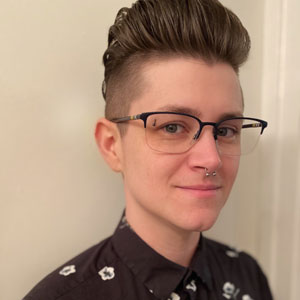
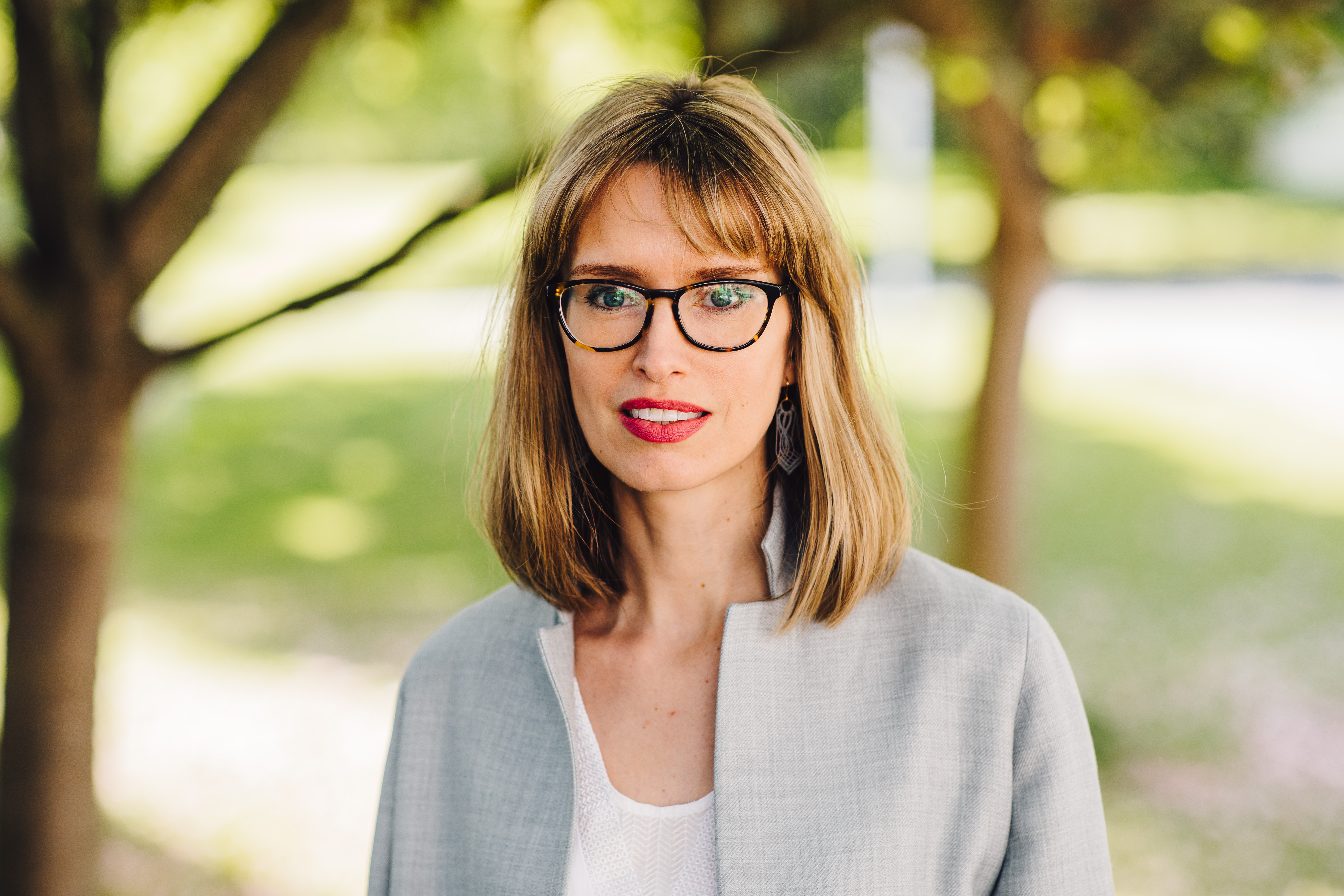
Grey Nelei, PhD, is a Licensed Professional Clinical Counselor and Teaching Faculty member at Antioch University's Clinical Mental Health Counseling program. They hold a PhD in Counselor Education and Supervision (2023) and specialize in queer theory, narrative therapy, and social justice advocacy within counseling practices. Doctor of Philosophy, Counselor Education and Supervision, Adams State University, 2023 Master of Science, Clinical Mental Health Counseling, Northern Kentucky University, 2015 Bachelor of Arts, Psychology (Minor in Sociology & Certificate in Diversity Studies), University of Cincinnati, 2012 Their research focuses on queer and trans counselor experiences, multicultural counseling, and supervision practices. Publications and presentations emphasize systemic inequities, identity exploration, and burnout prevention in counseling. Grey serves as President-Elect of SAIGE of Ohio and has held leadership roles in multicultural counseling organizations. Their teaching philosophy prioritizes ethical practice, cultural humility, and critical analysis of dominant narratives.
Christine Gerhardt is a Full Professor of American Literature and Culture at the University of Bamberg, Faculty of Humanities and Cultural Studies, Department of English and American Studies. She has held this position since October 2010 after serving as Director of the German-American Institute / Carl Schurz House in Freiburg (2008-2010) and as Acting Professor for North American Literature at the University of Freiburg (2008). She declined a W3 professorship at the University of Augsburg in 2017. Her research focuses on 19th and 20th/21st-Century American Literature with specializations in Ecocriticism, Literature of Migration and Mobility, Walt Whitman and Emily Dickinson studies, African American Literature, and Literature of the American South. Her recent publications demonstrate a strong engagement with environmental imagination, mobility studies, and the intersection of nature writing with cultural history. She has edited significant works including The American Novel of the Nineteenth Century (2017) and co-edited the special issue Environmental Imagination on the Move (2017). Professor Gerhardt has received numerous honors including the 2015 CHOICE Award for A Place for Humility: Whitman, Dickinson, and the Natural World and the Harris Distinguished Professorship at Dartmouth College (2015). She holds memberships in several professional associations including the Emily Dickinson International Society, Transnational Walt Whitman Association, and American Studies Association. Her teaching portfolio includes courses on American Literature I & II, Baldwin, The American Civil War, Presidential Elections, Walt Whitman, Toni Morrison, Herman Melville's Moby-Dick , Emily Dickinson, and various seminars on nature, environment, and contemporary American literature. She has organized numerous conferences including the International Conference on 'The Environment and Human Migration' (2016) and the Symposium on 'Nature – Mobility – Literature' (2014).
Chang-kyu Kwon serves as an Assistant Professor in the Department of Education Policy, Organization & Leadership within the College of Education at the University of Illinois, Urbana-Champaign. His academic journey includes a Ph.D. in Learning, Leadership & Organization Development from the University of Georgia (2019), an M.A. in Organizational Behavior & Evaluation from Claremont Graduate University (2015), and a B.A. in Education from Korea University (2013). Professor Kwon's research is fundamentally informed by critical systems thinking with a focus on diversity, inclusion, and the role of learning in promoting whole-person inclusion. He investigates leadership and organizing principles that cultivate 'safe to be vulnerable' learning spaces where individuals across power divides can collaborate and develop as teams, organizations, and communities. His work critically examines ableism and disability inclusion in educational and workplace settings, with international recognition for his scholarship and advocacy in countries including South Korea, Japan, Peru, and Taiwan. Currently, he leads a U.S.-based project focused on promoting disability employment in small- and medium-sized manufacturing contexts. His scholarly output demonstrates a clear trajectory toward increasingly impactful work at the intersection of critical human resource development, disability studies, and transformative learning. The publications reveal a progression from foundational theoretical work to applied research with practical implications for organizational change, particularly in creating inclusive environments for people with disabilities. His recent work shows growing emphasis on generative pedagogy, dialogic organization development, and the practical application of critical HRD principles in real-world settings. Early Career Scholar Award, Academy of Human Resource Development (2025) Richard A. Swanson Research Excellence Award, Academy of Human Resource Development (2022) Cutting Edge Award, Academy of Human Resource Development (2019) Professor Kwon teaches courses in diversity, adult learning, leadership, and organization development, with a focus on helping students develop an adaptive learning mindset to strengthen relationships and lead inclusively. His EPOL 470 course covers principles of human resource education, while EPOL 474 examines diversity in workplace environments and strategies for harnessing the power of diversity and inclusion. His teaching philosophy emphasizes genuine humility and curiosity as essential components of effective leadership in global workforce contexts. His research is characterized by a strong commitment to bridging theory and practice, with particular attention to the practical implementation of critical ideas in organizational settings.
Signy Lynch is an Assistant Professor in English and Drama at the University of Toronto Mississauga (UTM) and a graduate faculty member at the Centre for Drama, Theatre and Performance Studies. Her research focuses on contemporary intercultural/diasporic performance, Black theatre, participatory performance, audience research, and critical theatre criticism in Canada. Education : PhD and MA from York University, Hon. BA from Queen’s University Her work explores the intersections of digital media and intercultural performance, including immersive theatre practices and audience dynamics in pandemic-era performances. She co-edits Canadian Theatre Review and investigates epistemic violence in traditional criticism frameworks. In the 15 most recent publications , Lynch examines topics like racial dynamics in theatre criticism, intermedial performance technologies, audience complicity in Indigenous storytelling, and pandemic-era performance adaptations. Her articles appear in Theatre Research in Canada , Contemporary Theatre Review , and New Theatre Quarterly . Awards : Barbara Godard Prize (2021), Governor General’s Gold Medal (2022), CTCA Outstanding Critical Essay runner-up (2022) Lynch co-directs the Centre for Spectatorship and Audience Research and serves on Cahoots Theatre’s board. Her SSHRC-funded research addresses hiring equity in Canadian theatre academia and reimagines critical dramaturgy for digital futures.
Dr. Philip A. Rea is a Professor of Biology and Rebecka and Arie Belldegrun Distinguished Director of the Life Sciences & Management Program at the University of Pennsylvania's School of Arts and Sciences. With over 100 publications and two co-authored books, his work spans fundamental biochemical research and science communication, focusing on life sciences implementation challenges. Education: D.Sc. (2020) and D.Phil. in Plant Biochemistry (University of Oxford), B.Sc. First Class Honors in Biological Sciences (University of Sussex) Dr. Rea's research explores transport phenomena and cellular detoxification, including vacuolar proton pumps and ABC transporters in plants, yeast, and nematodes. His work has significant applications in phytoremediation and combating parasitic diseases. His recent publications and book Managing Discovery in the Life Sciences (2018) analyze the transition from laboratory discovery to market success through case studies like statins, ivermectin, and metformin. These works highlight serendipity in biomedical innovation and investor-driven discovery management. Scientific Awards: Jesse H. Neal Award (2025) for technical/scientific content AAAS Fellow (2013) for membrane transport research National Academies Cozzarelli Prize (2010) for original research Multiple teaching honors including Lindback Foundation Award (2014) and Ira H. Abrams Award (2009) Society for Experimental Biology President's Medal (1990) Teaching: Proseminar in Management and the Life Sciences (LSMP 1210) Biochemistry (BIOL 2810) Focus on problem-solving with incomplete datasets
Alicia Grandey is a Liberal Arts Professor in the Department of Psychology at Pennsylvania State University, specializing in Industrial-Organizational Psychology. She serves as the Area Coordinator and leads the Workplace Emotional Labor and Diversity (WELD) Lab. Education: Ph.D. in Industrial-Organizational Psychology from Colorado State University (1999) Interdisciplinary Initiatives: Founder of Penn State’s Healthy-Inclusive-Productive (HIP) Workplace Initiative Her research focuses on emotional labor, workforce diversity (gender, race, political/cultural), midlife women’s health in leadership roles, and the intersection of health, diversity, and productivity. She actively translates research into practice through executive education workshops and articles in Harvard Business Review and The Conversation . Recent publications and presentations highlight emotional labor dynamics, menopause in the workplace, and AI-driven accessibility for neurodiverse employees. Her work has been recognized with NSF grants, best paper awards, and Fellowships from SIOP and APS. Dr. Grandey advises doctoral students and postdoctoral scholars, including recent thesis defenders like Tayana Rich and Kayley Morris. She serves as Associate Editor for the Journal of Applied Psychology and engages with industry through advisory boards.
Arthur Gomez, MD, FACP, serves as Senior Associate Dean of Medical Education at Charles R. Drew University of Medicine and Science (CDU). With over 30 years of experience in medical education, he leads curriculum development for CDU's 4-year MD Program, focusing on cross-cultural medicine, system-based care, and competency training for physicians-in-training. Graduate of University of California at Irvine and UCLA School of Medicine Internal Medicine residency at UCLA-San Fernando Valley Program Kennamer Fellow in General Internal Medicine Faculty Medical Education Fellow at UCLA's David Geffen School of Medicine His research focuses on medical education , health disparities , and cultural humility , with emphasis on doctor-patient communication and curriculum design for vulnerable populations. He has led national initiatives in ambulatory care and general internal medicine. Key scientific contributions include educational grants such as the UCLA/Charles R. Drew Center of Excellence for Minority Medical Education and the HRSA-funded curriculum for patients with disabilities . His work addresses systemic challenges in healthcare access for marginalized communities. Sherman M. Mellinkoff Award (2023) Dr. Gomez has held leadership roles in both undergraduate and graduate medical education, including Clerkship Chair for Ambulatory Internal Medicine (2005-2020) and Chair of Clerkships (2015-2020) at UCLA's David Geffen School of Medicine. He developed the foundational course 'Foundations of Practice' in 2020. His collaborative efforts span institutions like UCLA, VA Greater Los Angeles, and Cedars-Sinai, with a mission to create curricula addressing underrepresentation and vulnerability in healthcare delivery.
Grant MacAskill is the Kirby Laing Chair of New Testament Exegesis at the University of Aberdeen. He holds a Ph.D. from the University of St Andrews (2005). His research focuses on New Testament studies, early Judaism, Enochic traditions, and the intersection of theology with autism and disability studies. He has authored influential books such as Union with Christ in the New Testament and Autism and the Church , and co-edits the Studia in Veteris Testamenti Pseudepigrapha series with Brill. Awards include the British Academy Mid-Career Fellowship (2021) for his project on 2 Enoch and a John Templeton Foundation grant (2014) for work on intellectual humility in the New Testament. Research interests span participatory theology, biblical ethics, and the application of New Testament thought to contemporary issues like neurodiversity. He co-directs the Centre for Autism and Theology, promoting inclusive theological engagement. His recent publications address topics such as Enochic literature in late antiquity, biblical interpretation in autism studies, and early Christian apocalyptic thought. Grants and fellowships include major support for projects like The Entangled Enoch and interdisciplinary work on disability and religion. MacAskill’s academic service includes editorial roles at journals like New Testament Studies and Journal of Disability & Religion . He has advised on projects ranging from grave goods practices to ethical biotechnology, applying biblical insights to modern dilemmas. His work bridges historical exegesis, systematic theology, and practical theology, emphasizing theological engagement with marginalized communities and ethical challenges.
Thomas W. Malone is the Patrick J. McGovern Professor of Management at the MIT Sloan School of Management. He holds joint appointments as Professor of Information Technology and Professor of Work and Organizational Studies. As founding director of the MIT Center for Collective Intelligence, he leads pioneering research on how people and computers can connect intelligently. Previously, he founded the MIT Center for Coordination Science and co-directed the MIT Initiative on 'Inventing the Organizations of the 21st Century'. His teaching focuses on organizational design, IT, and leadership. His research examines how new organizations leverage information technology, with groundbreaking predictions about electronic business in 1987. Major works include the influential books The Future of Work (2004) and Superminds (2018). Research areas span: Collective Intelligence: Designing systems combining human and machine intelligence Organizational Structure: Decentralization, coordination, and future work models Climate Solutions: Crowdsourcing through Climate CoLab AI Implications: Human-AI collaboration in business strategy His publications demonstrate consistent focus on collective problem-solving, with recent emphasis on AI-workforce integration, remote team intelligence, and computational group metrics. Key research projects include the Collective Intelligence Design Lab, Minglr, Climate CoLab, and Measuring Collective Intelligence. Honors include an honorary doctorate from the University of Zurich . He co-founded four software companies and holds 11 patents in collaboration systems and organizational modeling. He directs the MIT Center for Collective Intelligence, leading interdisciplinary teams on global challenges. Current initiatives explore AI-enhanced prediction markets, collective intelligence genomes, and hybrid human-machine systems for organizational design.
Adam Elga serves as Professor of Philosophy and Director of the Program in Linguistics at Princeton University, based in the Department of Philosophy with his office in Laura Wooten Hall (204). His contact information includes email adame@princeton.edu and phone 609 258-1477, confirming active institutional engagement. Elga's research spans philosophy of probability, decision theory, self-locating belief, and existential risk, with notable intersections in linguistics through his program directorship. His work addresses fragmentation in belief systems, cognitive instability, and rational decision-making under uncertainty, contributing significantly to epistemological frameworks and philosophical probability models. Recent publications (2020-2025) demonstrate sustained focus on existential risk analysis, decision theory paradoxes, and belief fragmentation. His scholarship bridges theoretical philosophy with practical applications in risk management and cognitive science, particularly through investigations of suboptimal risk decisions and cognitive limitations in high-stakes scenarios. Scientific awards: None mentioned in provided text. Advising and grants: The scraped text contains no information about doctoral students, mentees, or specific research funding. As a full professor and program director, he likely oversees graduate research and secures institutional support, though concrete details are absent from the source material. Labs and research teams: No dedicated laboratories, research groups, or collaborative teams are referenced in the available documentation.
Prasad Balkundi is an Associate Professor in the Department of Organization and Human Resources at the School of Management, University at Buffalo. His research focuses on social networks, team processes, and organizational behavior, with publications in top-tier journals like the Academy of Management Journal and Leadership Quarterly . He holds a PhD from Pennsylvania State University, a Post Graduate Diploma (MBA) from Xavier Institute of Management in India, and a BTech from Jawaharlal Nehru Technological University. His teaching spans courses on Organizational Behavior, Organizational Theory, and Social Networks for Managers. Balkundi’s research examines structural holes in teams, leader-follower dynamics, and the impact of age on professional networks. He has received awards including the Smeal Dissertation Research Award and the Penn State Graduate Student Outstanding Teaching Award. His industry experience includes roles as a Human Resource Executive at Larsen & Toubro in India (1995–1997). Balkundi has presented globally, including invited talks in Asia, and has taught MBA courses in the region. His recent work explores how age influences network effectiveness and the interplay of positive/negative ties in team performance. His research methodologies include network analysis and meta-analytic studies, contributing to understanding interdisciplinary collaboration and leadership prototypes.
Devasheesh P. BHAVE is a Professor of Organisational Behaviour & Human Resources at the Lee Kong Chian School of Business, Singapore Management University, currently on leave. He holds a Ph.D. and M.A. in Human Resources and Industrial Relations from the University of Minnesota (2008 and 2003, respectively). Research Interests His work focuses on Psychology of Workplace Technology , Work Design , and Emotions and Well Being , with additional emphasis on Mindfulness , Humility , and Digital Business . Key Article Themes His recent publications analyze Language barriers and emotional labor in cross-cultural workplaces Privacy implications of digital monitoring Leadership stress and sleep-related behavioral patterns Work-life conflict during economic downturns Trust and legitimacy in organizational systems Scientific Awards Dean's Teaching Honor List (multiple years: 2015-2016, 2016-2017, 2019-2020, 2020-2021, 2021-2022) Lee Kong Chian Fellow (2019-2020) Dean’s Impact Award (2017-2018) He advises SJTU-SMU DBA student HAN Shenghui and contributes to research agendas in Digital Transformation and Social Inclusion .
Don Davis is a Professor in the Department of Counseling at Georgia State University's College of Education & Human Development. He serves as program coordinator for Counseling Psychology and teaches in Clinical Mental Health and Counselor Education programs. Research Focus: Dr. Davis directs the Humility and the Advancement of Positive Psychology Interventions (HAPPI) Lab, which conducts basic and applied research on virtues including humility, forgiveness, and gratitude. His work also examines spirituality as an aspect of diversity in counseling. He leads a $6 million John Templeton Foundation grant project investigating intellectual humility development and intervention contexts. Publications explore cultural humility in clinical supervision, religious/spiritual struggles, existential humility, and multicultural counseling processes. Recent work examines how virtues like humility and gratitude impact therapeutic relationships and psychological well-being across diverse populations. Key Research Areas: Positive Psychology Interventions Cultural Humility in Counseling Spirituality and Mental Health Virtue Development in Clinical Practice
Arianne Teherani, PhD, is Professor in Residence in the Department of Medicine at the University of California, San Francisco (UCSF) School of Medicine. She serves as Founding Co-Director of the UC Center for Climate, Health and Equity and Director for Program Evaluation and Education Continuous Quality Improvement at the UCSF School of Medicine. She earned her undergraduate degree in Social Ecology from the University of California, Irvine, her master's and doctorate in Education from the University of Southern California, and completed a fellowship in Higher Education at the University of British Columbia. Dr. Teherani’s research advances equity, social justice, and climate solutions in health professions education. Her work identifies and dismantles practices that perpetuate educational disparities. She leads initiatives in equitable clinical assessment, climate-health education, and sustainable healthcare training. Her scholarship focuses on educational reform, faculty development, and community-engaged learning. She has published extensively on topics including clerkship equity, professionalism, longitudinal integrated clerkships, and the integration of climate change into medical education. Her recent publications demonstrate a strong trend toward climate-health education, healthcare decarbonization, and equity in assessment. She frequently collaborates with national and UC-system-wide teams on sustainability and educational innovation. Her work emphasizes systems-level change and the translation of research into policy and practice. UCSF Faculty Sustainability Award UC Sustainability Champion Award Faculty Climate Action Champion (University of California system) Dr. Teherani mentors students, residents, fellows, and faculty in health professions education. She has led numerous educational initiatives, including the Aspiring Physicians Program and the Academic Leadership Academy, aimed at supporting underrepresented students. She has also driven continuous quality improvement in medical education through rigorous evaluation of innovative programs. Her leadership extends to national organizations including the Association of American Medical Colleges, the American Educational Research Association, and the National Academies of Science, Engineering, and Medicine. She leads the Equity and Justice in Education initiative and is deeply involved in antiracism and DEI efforts. She co-leads faculty development programs focused on sustainable healthcare and climate education across the UC system.
Victoria Rimell is Professor of Latin and Director of Research in the Department of Classics at the University of Warwick, Faculty of Arts. She previously served as Associate Professor at Sapienza University of Rome and held research fellowships at University College Oxford and Cambridge. She joined Warwick in 2016 and was promoted to Professor in 2018. She also holds administrative roles including Deputy Head of Department and Coordinator of the joint degrees in Classics and English. Education: MA, King's College Cambridge MPhil, King's College Cambridge PhD, King’s College London MSc, University of Warwick Her research bridges Latin literature and Roman culture with modern philosophical and political thought, focusing on authors such as Seneca, Ovid, Martial, Petronius, and Horace from the first century BCE to the second century CE. She explores themes of space, enclosure, vulnerability, mourning, and identity, often engaging with critical theory, gender studies, and classical receptions. Her work frequently draws interdisciplinary connections to modern art, literature, and philosophy. The recent publications highlight a strong trajectory in Senecan studies, particularly on consolation, grief, and ethical self-fashioning, alongside continued engagement with Ovid, Martial, and Horace. The works reflect a deep integration of classical texts with contemporary theoretical frameworks, including psychoanalysis, feminist theory, and spatial theory. Topics such as the ‘labour of empire,’ ‘creative self-reproach,’ and ‘care of the other’ underscore her focus on emotional and ethical dimensions in Roman literature. Scientific Awards and Recognition: Member, Academia Europaea (2020) Leverhulme Trust Research Grant for 'Care of the Other: Senecan Consolation and the Work of Mourning' Victoria Rimell actively supervises PhD students on topics ranging from humanitas to adulatio and the disabled body in Martial. She has secured external research funding and serves on editorial boards for Classical Philology , MD , and The Journal of Roman Studies . She also contributes to interdisciplinary research through the Centre for Research in Philosophy, Literature, and the Arts. She teaches undergraduate and postgraduate modules on Latin literary texts, Roman laughter, vulnerable bodies, and ancient literature and thought. She leads a research group and collaborative projects on imperial space, the ancient novel, and Vergil and the Feminine (co-edited with Dr Elena Giusti). Her current Leverhulme-funded project continues to expand the dialogue between classical texts and modern ethical theory.