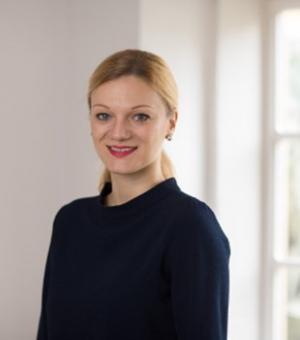
Dr. Leanne Archer is a Researcher in the School of Geographical Sciences at the University of Bristol, specializing in hydrology and climate change impacts. Her work focuses on flood risk assessment in Small Island Developing States, extreme rainfall events, and the application of convection-permitting climate models. She collaborates with experts like Prof. Paul Bates and Dr. Jonty Rougier on interdisciplinary projects addressing tropical cyclone hazards and climate adaptation strategies. Her research interests include analyzing flood exposure in vulnerable regions, soil moisture dynamics in urban flooding, and improving global flood forecasts for humanitarian operations. Archer’s publications emphasize the implications of climate change on rainfall-driven disasters, particularly in Puerto Rico and East Africa, using high-resolution climate projections to evaluate future risks under 1.5° C and 2° C warming scenarios. Recent work explores innovations like the Surface Water Ocean Topography Mission for flood modeling and evaluates the suitability of TanDEM-X data for inundation studies in island nations. Her contributions bridge environmental science with policy, aiming to enhance disaster preparedness and resilience in climate-sensitive regions.
Janina Dill holds the Dame Louise Richardson Chair in Global Security at the Blavatnik School of Government, University of Oxford. She is also a Professorial Fellow at Trinity College and Co-Director of the Oxford Institute for Ethics, Law, and Armed Conflict (ELAC). Her academic work focuses on the intersection of law, morality, and international relations in the context of war. Her research spans three interconnected strands: the legal requirements for military operations under international law; theoretical frameworks for understanding how international law serves as an instrument of morality in war; and empirical investigations into how moral and legal norms affect real-world military decision-making and public opinion in conflict zones. Professor Dill's work has particular relevance to contemporary conflicts, with extensive analysis of the wars in Ukraine and Gaza. She has examined how international humanitarian law applies to these conflicts, the moral arguments employed by different parties, and the practical challenges of implementing legal constraints in complex warfare environments. Her research has been recognized with the prestigious Philip Leverhulme Prize in 2021, which she has used to advance her work on the moral psychology of decision-making in war. She is currently leading multiple significant research projects, including a three-year ESRC/NSF-funded study on "Cumulative Civilian Harm" and an expert process with the ICRC on military objectives under international humanitarian law. Professor Dill is frequently consulted by international media outlets including The Guardian, The Economist, BBC, CNN, and major European publications. Her expertise is regularly sought on matters related to the laws and ethics of war, particularly regarding the conflicts in Ukraine and Gaza. She has received recognition for her contributions to the field through numerous speaking engagements, media appearances, and her influential research that bridges theoretical legal scholarship with practical applications in contemporary conflicts.
Mauro Barelli is Professor of International Law at The City Law School, City, University of London. He holds a PhD from Cardiff University and an LLM from the University of Bristol, and has been a faculty member at City since 2009, progressing from Lecturer to Professor in 2024. He teaches Advanced Issues of International Law, International Human Rights Law, and a course on Minority and Indigenous Peoples' Rights. He has held visiting positions at the University of Cambridge (Lauterpacht Centre), Nanjing University, the University of Iceland, and the University of Trento. His research focuses on: Rights of ethno-cultural and indigenous peoples Law on the use of force Chinese perspectives on international law Soft law and normative development Minority rights and litigation His publications include four books and numerous articles in leading journals such as Journal of Conflict and Security Law , Human Rights Quarterly , and Asian Journal of International Law . His recent work analyzes China’s engagement with international law, the UK’s relationship with the ICJ, and the synchronization of biodiversity protection with indigenous rights. Key scientific recognitions include: Higher Education Academy Fellow (since 2012) He is an experienced PhD supervisor, having chaired and served on numerous doctoral committees, including as PhD Programme Director. His advisee Engin Firat is currently a research student at City. He has also served in administrative roles such as Assistant Dean (Research). His expertise has been sought by national governments, parliaments, and international NGOs. He is an active participant in international academic events, particularly through the European China Law Studies Association.
Professor Sandesh Sivakumaran is a Professor of International Law at the University of Cambridge, serving as Director of the Lauterpacht Centre for International Law and Fellow of St Edmund's College. He holds affiliations with the Lieber Institute for Law and Warfare, the University of Nottingham Human Rights Law Centre, and the Centre on Armed Groups. His expertise spans public international law, humanitarian law, human rights, and the law of armed conflict. Prof. Sivakumaran's research focuses on non-international armed conflict, armed groups' obligations, and the development of international law. He authored The Law of Non-International Armed Conflict , which has earned multiple prestigious awards, and co-authored Oppenheim's International Law: United Nations . His work has been cited by international courts and tribunals, including the International Court of Justice and the International Criminal Court. Prof. Sivakumaran advises governments, international organizations, and NGOs, and contributes to legal reform initiatives. He is a member of the ICRC's Commentaries Reading Committee and the advisory board of Geneva Call. His training programs target diplomats, military personnel, and UN staff, emphasizing practical applications of international law. His academic career includes roles at the International Criminal Tribunals for the former Yugoslavia and Rwanda, the International Court of Justice, and Realizing Rights: the Ethical Globalization Initiative. He holds advanced degrees from the University of Cambridge (MA, PhD) and New York University School of Law (LLM). Prof. Sivakumaran's honors include the Francis Lieber Prize and European Society of International Law Book Prize. His scholarship bridges theoretical and applied dimensions, addressing contemporary challenges such as humanitarian access, gender-based violence, and the evolving role of non-state actors.
Richard Caplan is Professor of International Relations at the Department of Politics and International Relations (DPIR), University of Oxford, and an Official Fellow of Linacre College. His academic career spans several decades with significant contributions to the field of international relations, particularly in the areas of international organizations, conflict management, and peacebuilding. Professor Caplan holds an MA and PhD from the University of London. His academic journey has included visiting positions at prestigious institutions including the European University Institute (EUI), University of Konstanz, University of Pavia, Princeton University, and Sciences Po (Paris). Professor Caplan's principal research interests focus on international organizations and conflict management, with particular emphasis on peacekeeping and post-conflict peace- and state-building. His work explores critical questions about how international institutions manage conflicts, the effectiveness of peacekeeping operations, and the complex processes of rebuilding societies after conflict. His research has significantly contributed to understanding the challenges of measuring peace, the dynamics of international administration in war-torn territories, and the recognition of new states in contested contexts. Professor Caplan has received considerable recognition for his scholarly contributions through fellowships and grants from leading organizations including the British Academy, the British Council, the Carnegie Corporation of New York, the Economic and Social Research Council (ESRC), the Folke Bernadotte Academy, the John Fell OUP Research Fund, the Leverhulme Trust, the MacArthur Foundation, the Oxford Martin School, and the US Institute of Peace. As a dedicated educator and mentor, Professor Caplan has supervised numerous graduate students including Ishrat Hossain, Ebenezer Azamati, Michaela Coplen, Lucy Maycox, John Helferich, Gwendolyn Whidden, Alejandro Posada Téllez, Colm Trant, Salma Daoudi, Nadila Ali, and Katharina Engel. His current research focuses on the aftermath of UN peacekeeping operations through the ESRC-funded "After Exit" project, which investigates conditions in countries following the withdrawal of large-scale UN peacekeeping missions. Professor Caplan leads the "After Exit" research team, which includes collaborators from Oxford, Cornell University, and the University of North Carolina at Wilmington. Previously, he contributed to the Oxford Martin Programme on Transboundary Resource Management, which explored cross-border cooperation on natural resource management in the eastern Nile River Basin and the Jordan River Basin.
Dr. David Jordan is a Senior Lecturer in Defence Studies at King's College London, based at the Defence Academy of the UK. He serves as Co-Director of the Freeman Air and Space Institute and holds roles such as Academic Director (Air) for the Advanced Command & Staff Course. His research focuses on air and space power, military history, and strategic studies, with notable works including Understanding Modern Warfare . He has contributed to radio/TV commentary on air power and defence matters and is a Fellow of the Royal Aeronautical Society, Royal Historical Society, and Royal Society of Arts. Education: Doctorate in relevant field (not explicitly stated). Affiliations: RAF Centre for Air & Space Power Studies (RAFCASPS) Chief of the Air Staff’s Air Power Workshop His teaching includes modules on air power theory, the Falklands War, and Royal Air Force history. He supervises PhD students researching topics like space power theory, air power doctrine, and British military history since 1914. Recent research highlights include analyses of air power in the Falklands Conflict, RAF maritime operations, and space strategy. He has authored over 30 publications, including peer-reviewed articles on historical battles and contemporary military operations. Grants and projects involve collaboration with institutions like the Freeman Air and Space Institute, focusing on independent research into air and space power issues. His work often intersects with policy analysis, such as NATO operations and defense reviews.
Karen Hulme is a Professor at the University of Essex's Essex Law School, where she has been affiliated since 2001. She holds a PhD from Essex (2002), an LL.M. in Public International Law from Nottingham (1996), an LL.B. from Nottingham (1995), and a Postgraduate Certificate in Higher Education Practice (2006). Her research focuses on the intersection of environmental law, armed conflict, and human rights, with particular emphasis on climate change governance, biodiversity conservation, and remediation of conflict-related environmental damage. Her scholarly work explores environmental protection mechanisms during military operations, human rights frameworks for ecological governance, and legal responses to emerging threats like fracking and marine litter. She collaborates extensively with NGOs including the Conflict and Environment Observatory (CEOBS) and chairs the IUCN WCEL Specialist Group on Peace, Security and Conflict. Professor Hulme's publications demonstrate sustained focus on developing legal frameworks for environmental protection in conflict zones, with recent work addressing energy justice and planetary crises. She received the American Society of International Law's Francis Lieber Prize (2004) for her book War Torn Environment: Interpreting the Legal Threshold . Current PhD Students: Enitan Adetutu Lawson Charles Williams Junior Mensah Research Grants: Reimagining Food Systems (ESRC, 2024) Implementing ILC Principles on Environmental Protection in Conflict (ESRC IAA, 2022) Litter Law Strategy (CPRE, 2016)
Professor Jonathan Goodhand is a distinguished academic in the Department of Development Studies at SOAS University of London, where he has established himself as a leading expert on conflict, peacebuilding, and political economy in fragile and post-conflict states. His work focuses on the complex interplay between illicit economies, borderland dynamics, and political settlements in South and Central Asia, with particular expertise in Nepal, Sri Lanka, and Afghanistan. As a prolific researcher and supervisor, he has shaped the field through both theoretical contributions and empirical studies grounded in extensive fieldwork. Professor Goodhand's research interests span several interconnected domains: Conflict and peacebuilding dynamics in post-war contexts Political settlements and statebuilding processes Borderland and frontier studies, particularly the role of brokers Illicit economies, especially drug economies and their relationship to conflict The intersection of development and security in fragile states Humanitarian action and its political implications in conflict zones His recent publications reveal a sophisticated analytical framework that connects spatial dimensions of conflict with political economy approaches. Goodhand has pioneered research on "frontier brokers" who operate in the margins between state and non-state authority, examining how these figures shape post-war transitions. His work on the "drugs-development-peacebuilding trilemma" has gained significant traction in policy circles, challenging conventional approaches to drug policy in conflict-affected regions. The Drugs & (dis)order research project, which he leads, represents a major contribution to understanding how illicit economies can be transformed into peace economies. Professor Goodhand has supervised numerous doctoral students whose work extends his research agenda into new contexts including Afghanistan, Colombia, South Sudan, and Myanmar. His influence extends beyond academia through policy engagement with international organizations working on conflict resolution and development.
Dr. Marco Longobardo is a Reader in International Law (equivalent to Associate Professor) at the University of Westminster's School of Law. He holds a master's degree from the University of Messina (2012) and a PhD from Sapienza University of Rome (2016). In 2023, he served as a Visiting Professor at the University of Trento, University of Messina, and Université Libre de Bruxelles. He is a Fellow of the Higher Education Academy. His research specializes in Public International Law , with emphasis on International Humanitarian Law, International Criminal Law, Law of Armed Conflict, and Peacekeeping. Current projects examine military occupation, ICC jurisdiction, and ICJ procedures for community interests. His work is cited by the ICC Prosecutor, UN Special Rapporteurs, and national courts. Longobardo has published monographs with Cambridge University Press and articles in leading journals including the American Journal of International Law and European Journal of International Law . His scholarship analyzes trends in occupation law, IHL compliance, peacekeeping legitimacy, and human rights in conflict zones. Awards & Honors: Paul Reuter Prize (ICRC, 2021) Lieber Prize Honorable Mention (ASIL, 2023) Italian Society of International Law Prize (2021) Rosalyn Higgins Prize (Third Place, 2020) He mentors PhD students in international law topics and serves on editorial boards for the Journal of International Humanitarian Legal Studies and International Community Law Review . He is a member of the European Society of International Law and International Law Association.
Mariam Zachariah serves as a Research Fellow at the Centre for Environmental Policy within the Faculty of Natural Sciences at Imperial College London. She is a core contributor to World Weather Attribution (WWA), an international scientific collaboration conducting rapid climate change attribution analyses for extreme weather events globally. Her work bridges climate science, vulnerability assessment, and policy-relevant research. Her educational foundation includes a PhD from the Indian Institute of Technology Bombay (IITB), where she investigated climate impacts on Indian agriculture. This research focused on drought and extreme temperature effects on crop yields in major agrarian regions, recognizing agriculture's critical role in India's climate-vulnerable economy. Zachariah's research centers on near-real-time attribution of extreme events to quantify human-induced climate change influences. Her expertise spans climate modeling, statistical analysis of extreme weather, and integrating vulnerability frameworks to assess compound impacts on communities. She examines how climate change interacts with socioeconomic factors to exacerbate disasters, particularly in agricultural systems and flood-prone regions worldwide. Analysis of her recent publications reveals a dominant focus on rapid attribution of droughts, floods, and heatwaves across diverse global contexts - from the Horn of Africa to Central Europe and South America. These studies consistently demonstrate climate change as a significant amplifier of event severity, while emphasizing how pre-existing vulnerabilities determine actual impacts. Her work increasingly addresses compound hazards and the intersection of climate change with infrastructure failures and land management. As a key member of the World Weather Attribution initiative, Zachariah collaborates with climate scientists, social scientists, and vulnerability experts in a unique operational framework that delivers scientific assessments within days of extreme events. This work directly informs policymakers, media, and affected communities about climate change's role in contemporary disasters.
Dr. Jack McDonald is a Senior Lecturer in War Studies at King’s College London’s Department of War Studies, and Director of the Centre for Science & Security Studies. He holds affiliations with the Environmental Security research group, Military Innovation Network (MIN), and the Leverhulme Centre for Research on Slavery in War. His research examines the intersection of ethics, law, technology, and warfare, focusing on issues like targeted killings, autonomous weapons, and the legal frameworks governing modern conflict. Education details are not explicitly stated, but his academic output demonstrates expertise in international law, military strategy, and technology’s role in warfare. He has authored two major books and contributed to peer-reviewed journals and policy papers for entities including Chatham House and the UN Mine Action Service. Recent publications emphasize digital technology’s impact on warfare ethics, including works on data privacy in conflict zones and the legitimacy of remote warfare tactics. His research also addresses emerging challenges like climate change’s role in conflict dynamics and the slavery-war nexus. Dr. McDonald supervises PhD students in his specialist areas and teaches courses such as Dirty Wars and War, Technology, and Innovation . He regularly participates in international conferences and public discussions on modern warfare trends, including panels on drones, cyber warfare, and the Ukraine conflict’s strategic implications.
Professor Noam Lubell is a leading academic in International Law of Armed Conflict at the University of Essex, where he also serves as Director of the Essex Armed Conflict and Crisis Hub (since 2017). He previously held the Swiss Chair of International Humanitarian Law at The Geneva Academy (2013–2019) and was Head of the Law School at Essex (2014–2017). His roles include Rapporteur of the International Law Association's Committee on the Use of Force (2010–2018) and Senior Research Fellow at Johns Hopkins University Applied Physics Laboratory (US), focusing on legal aspects of new military technologies. Lubell has collaborated with the ICRC on IHL investigations and works extensively with governments, UN bodies, and NGOs on issues like occupation law, self-defense, and autonomous weapons systems. Education: Ph.D. in Law LL.M. B.A. in Philosophy Research Interests: International Humanitarian Law (IHL) Human Rights Law in Armed Conflict Legal Frameworks for Use of Force Cyber Warfare and Emerging Technologies Occupation Law and Transnational Conflicts Accountability Mechanisms for Violations of IHL His work analyzes modern warfare challenges, including the application of proportionality, fragmented conflicts, and the impact of AI and cyber capabilities on legal boundaries. He advocates for ethical and lawful military practices while engaging with interdisciplinary topics like neuroscience in warfare. Publications highlight trends in cyber warfare, autonomous systems, and IHL's evolving role in contemporary conflicts. His research bridges traditional legal principles with modern technological and strategic realities, emphasizing accountability and human rights protections. Scientific Awards: None explicitly listed, though his work has received widespread academic and professional recognition. Advising & Grants: Principal Investigator on a project addressing cumulative civilian harm and proportionality (2024–present) Co-led ICRC partnership producing IHL investigation guidelines (2013–2019) Consultancies with military, governments, and media organizations Member of expert groups on occupation law, autonomous weapons, and battlefield scope No formal advisees (PhD/Master’s students) are listed in the provided texts. Labs & Teams: Essex Armed Conflict and Crisis Hub Johns Hopkins University Applied Physics Laboratory (Senior Research Fellow) International Law Amicus Curiae Clinic (Co-Director at Concord Research Centre)
Nonhlanhla Dube is a Lecturer in Operations Management at Lancaster University's Management School. She holds a PhD from the University of Groningen and has extensive experience in humanitarian logistics and supply chain management, particularly in resource-poor settings and conflict zones. BSc (Hons) Applied Mathematics, National University of Science and Technology (2002–2006) BSc (Hons) International Business Administration, Vrije Universiteit Amsterdam (2008–2011) MSc Economics and Business, University of Groningen (2011–2013) PhD in Management Science, University of Groningen (2013–2022) Her research focuses on operations management in humanitarian and public sectors, including supply chain resilience, medicine shortages, and interdisciplinary approaches. She has contributed to projects such as the Gavi-funded Afghanistan vaccine initiative (2016–2021) and the MIA project on UK medicines supply (2020–2024). Her articles explore topics like supply chain resilience in healthcare, strategic agility in medicine systems, and paradox management in humanitarian logistics. She actively collaborates on Global South perspectives addressing supply chain challenges like child labor and sustainability. No scientific awards are explicitly mentioned, but her work emphasizes impactful research in humanitarian and public sector operations. She supervises PhD student Henry Kasadha and is involved in research groups like the Chartered Institute of Logistics and Transport in the UK.
Professor Joseph Amankwah-Amoah is a leading academic in International Business and Strategy at Durham University Business School, UK. He holds additional roles as Distinguished Visiting Professor at Coal City University (Nigeria) and Adjunct Professor at Kwame Nkrumah University of Science and Technology (Ghana). His research focuses on business failure dynamics in emerging economies, sustainability, institutional voids, and digital transformation. He has authored over 160 peer-reviewed articles in top-tier journals like Journal of International Business Studies and International Business Review , with over 7,000 Google Scholar citations. His awards include four consecutive years on Stanford's World Top 2% Scientists list (2020–2023) and the 2021 AIB Insight Outstanding Article Award. He serves as an international expert for the UN Office of the Special Adviser on Africa and has guest-edited over 10 special journal issues. His work bridges academic theory with real-world challenges in global business, sustainability, and institutional development. Key research themes include leveraging business failure for innovation, green industrial policies, and the impact of digital technologies on emerging markets. He actively contributes to policy discussions on Africa's economic development and has collaborated with institutions across Europe, Africa, and Asia.
Dr. Majid Azadi is an Assistant Professor of Business Analytics at Aston Business School, Aston University. He holds a PhD in Business Analytics and Operations Management from the University of Technology Sydney (2021) and was a postdoctoral fellow at Deakin University. His research focuses on Business Analytics, Operations Management, Resilient Supply Chains, and Information Systems. He has published over 60 papers in top-tier journals like European Journal of Operational Research and Transportation Research Part E. His work emphasizes sustainability, digital technologies, and operational efficiency. He is currently accepting PhD students. Education: PhD in Business Analytics and Operations Management, University of Technology Sydney (2021) Awarded multiple research awards (specifics not listed) Research interests include data-driven decision-making, supply chain resilience, and cloud computing sustainability. Collaborations span global institutions, focusing on operational research methodologies like Data Envelopment Analysis. His recent articles explore green gas emissions, humanitarian logistics, and Industry 4.0 applications.