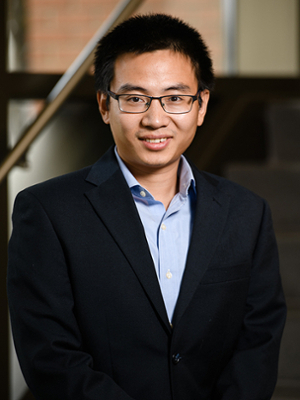
Haruka Nagao is an Assistant Professor at the Schnitzer School of Global Studies and Languages within the University of Oregon . Their research focuses on health governance , Africa-China relations , gender dynamics , public opinion , soft power diplomacy , and East Asia . Recent publications highlight interdisciplinary trends: (1) Public Health and Health Governance (e.g., mental health in rural China, prenatal care, vaccine distribution), (2) Political Science and Policy Analysis (e.g., grassroots elections, women's leadership, immigration policy), and (3) International Relations and Diplomacy (e.g., China's global soft power, Africa-China collaborations). Their work integrates China studies with comparative analysis , addressing intersections between social networks , democratic understanding , and global health politics .
Anupama Rao is Professor of History and MESAAS (Institute for Comparative Literature and Society) at Columbia University, with affiliations in Women's, Gender and Sexuality Studies and Human Rights. She is based at Barnard College, where she holds office hours and engages in interdisciplinary teaching and research. Her educational background includes a B.A. with honors from the University of Chicago and a Ph.D. from the Interdepartmental Program in Anthropology and History at the University of Michigan. Rao’s research spans South Asian history and anthropology , gender and sexuality studies , caste and race , social theory , comparative urbanism , and colonial genealogies of human rights . She is known for her groundbreaking work on anti-caste thought, particularly the political philosophy of B. R. Ambedkar, and for theorizing caste subalternity in modern India. Her scholarship critically examines the intersections of caste, gender, urban space, and political subjectivity. Her recent and ongoing publications reflect a deep engagement with global racisms, Cold War humanism, and justice futures. Key themes across her articles include Dalit aesthetics, subaltern urbanism, affirmative action, and the transnational dimensions of caste. Her work shows a consistent trend toward interdisciplinary, postcolonial, and decolonial frameworks that challenge Western-centric epistemologies. Fellow-in-Residence, National Humanities Center (2008–2009) Fellow, Center for Advanced Study in the Behavioral Sciences, Stanford (2010–2011) Fellow, REWORK, Humboldt University, Berlin (2014–2015) Global Humanities Institute Awardee, CHCI (2023) Rao has served as Senior Editor of Comparative Studies in South Asia, Africa, and the Middle East (2012–2021), President of the Society for the Advancement of the History of South Asia (SAHSA), and member of the South Asia Council of the Association for Asian Studies. She is Principal Investigator for the Mellon-funded Global Humanities Institute project Global Racisms, Cold War Humanism, and Just Futures (2022–2024) and co-directs Geographies of Injustice at Columbia’s Center for the Study of Social Difference. She has secured major research grants from the ACLS, NEH, SSRC, and Mellon Foundation. She advises and mentors graduate students, though specific names are not listed in the text. Rao directs the Institute for Comparative Literature and Society and convenes the Ambedkar Initiative, fostering interdisciplinary research and public engagement on caste, race, and justice. She leads and participates in multiple research collectives, including the Geographies of Injustice project and the Asian Spatialities initiative. She is deeply involved in institutional leadership through her roles at the Institute for Comparative Literature and Society and the Ambedkar Initiative, both of which serve as hubs for critical humanities research.
University of Illinois Urbana-ChampaignUnited States
Jana Diesner is a Professor at the Technical University of Munich (TUM), leading the Human Centered Computing group within the School of Social Science and Technology. Previously, she held a tenured position at the University of Illinois Urbana Champaign (UIUC) School of Information Sciences. She earned her PhD in Computation, Organizations, and Society from Carnegie Mellon University's School of Computer Science. Her research focuses on human-centered data science, computational social science, network science, and ethical AI. She integrates methods from natural language processing, machine learning, and social science theories to study societal systems and responsible computing. Key areas include crisis informatics, data regulations, and impact assessment of media and research. Leadership Academy Fellow for underrepresented STEM leaders (2020) R.C. Evans Data Analytics Fellow (2018) NCSA Faculty Fellow (2015) Siebel Scholarship (2011) Recent work addresses stereotypes in large language models, reliability of crisis data extraction, and societal impact assessment of research. She advises on projects like the NCSA Faculty Fellowship and collaborates with organizations globally. Her teaching includes independent studies at TUM. Her research has been presented at venues like the International Conference on Computational Social Science (IC2S2), European Computational Social Science Symposium, and conferences on ethics in AI. She actively engages in initiatives promoting inclusive STEM leadership and responsible data science practices.
Dr. Yongjia Song is an Associate Professor in the Department of Industrial Engineering at Clemson University's College of Engineering, Computing and Applied Sciences. His research focuses on optimization under uncertainty, stochastic programming, and network interdiction with applications in disaster logistics, energy systems, and humanitarian operations. BS in Computational Mathematics (2009), Peking University MS in Industrial Engineering (2012), University of Wisconsin-Madison MS in Computer Sciences (2012), University of Wisconsin-Madison PhD in Industrial Engineering (2013), University of Wisconsin-Madison His work addresses complex systems under uncertainty through: Stochastic and robust optimization frameworks Integer programming for discrete decision problems Applications in disaster response and transportation networks Evacuation planning and shelter management Human trafficking disruption modeling Recent publications demonstrate trends in: Multistage stochastic programming for dynamic disaster response Bayesian preference elicitation for complex design problems Network interdiction models for security and trafficking disruption Integration of logistics and evacuation planning under uncertainty Adaptive algorithms for large-scale optimization Professional affiliations include: Institute for Operations Research and the Management Sciences (INFORMS) Mathematical Optimization Society (MOS) Society for Industrial and Applied Mathematics (SIAM) He teaches graduate courses in risk modeling (IE 8090) and actively works on practical implementations of optimization techniques in real-world systems.
Pinar Keskinocak serves as the H. Milton and Carolyn J. Stewart School Chair and Professor in the H. Milton Stewart School of Industrial and Systems Engineering at the Georgia Institute of Technology. She co-founded and directs the Center for Health and Humanitarian Systems, demonstrating leadership in both academic administration and research innovation. Her career includes prior roles as College of Engineering ADVANCE Professor and interim associate dean for faculty development, alongside industry experience at IBM T.J. Watson Research Center. Her educational foundation includes a Ph.D. in Operations Research from Carnegie Mellon University and M.S. and B.S. degrees in Industrial Engineering from Bilkent University. This rigorous training underpins her interdisciplinary approach to complex societal challenges. Dr. Keskinocak's research pioneers operations research applications for societal impact , with dual emphases on health systems and humanitarian logistics . She develops advanced models for infectious disease dynamics (including COVID-19, malaria, and Guinea worm), vaccination strategies, disaster response, and supply chain optimization. Her work uniquely bridges engineering analytics with real-world implementation through partnerships with the CDC, American Red Cross, Carter Center, and Children's Healthcare of Atlanta. Analysis of her 2023-2025 publications reveals intensifying focus on eradication program modeling for polio and Guinea worm, with increasing integration of machine learning for predictive accuracy in vaccine distribution. A pronounced trend addresses health equity through targeted interventions for under-immunized populations in Sub-Saharan Africa, emphasizing resource allocation under constraints and cross-border coordination challenges. Her scientific recognition includes: INFORMS Fellow (2015) NSF CAREER Award (2001) Outstanding Professional Education Award, Georgia Tech (2018) Denning Award for Global Engagement, Georgia Tech (2016) Women in Engineering Excellence Teaching Award (2005) Moving Spirit Award, INFORMS (2005) Dr. Keskinocak has secured extensive project funding through collaborations with federal agencies and NGOs, directing research on pandemic response systems, vaccine logistics, and disaster debris management. While specific advisees aren't publicly cataloged, her leadership in the Center for Health and Humanitarian Systems mentors numerous graduate researchers through interdisciplinary projects. She significantly influences national policy via National Academies committees addressing supply chain resilience and vaccine distribution infrastructure. The Center for Health and Humanitarian Systems operates as a dynamic hub where engineering rigor meets humanitarian action, coordinating multi-institutional teams to develop deployable solutions for global health crises and disaster response systems.
Jonathan P. Wong is a Senior Policy Researcher at the RAND Corporation and Professor of Policy Analysis at the RAND School of Public Policy. His work bridges academic research and defense policy, focusing on military strategy, acquisition, force planning, and the integration of emerging technologies into military operations. Education: Ph.D. and M.Phil. in Policy Analysis (Pardee RAND Graduate School), M.A. in Security Studies (Georgetown University), B.A. in Political Science (UC San Diego) Professional Experience: U.S. Marine Corps infantry officer (2001–2011), Consultant at Boston Consulting Group, current RAND researcher and professor Wong’s research interests center on defense innovation, military logistics, artificial intelligence in warfare, space capabilities, and the human dimension of military operations. He has led studies on human-machine teaming, non-lethal weapons, defense acquisition reform, and U.S. military posture in the Indo-Pacific. His work emphasizes practical, policy-relevant insights grounded in operational experience. The trends in his recent publications reveal a deep engagement with modern defense challenges: integrating commercial technologies into military systems, improving acquisition agility, enhancing battlefield awareness, and ensuring that defense innovation serves warfighter needs. His research spans strategic, operational, and tactical levels, often focusing on the U.S. Army and Marine Corps. Wong has not received public recognition in the form of listed awards in the provided texts, but his leadership in congressionally mandated studies and high-impact policy research suggests significant influence in defense circles. Advising & Grants: Co-led major projects such as the Long Range Precision Fires study and research on integrating women into Marine Corps infantry. His work is frequently funded by the Department of Defense and other federal entities, though specific grant details are not listed. Wong is affiliated with RAND’s defense and national security research teams, contributing to strategic analysis and policy development. He is not associated with a formal lab but works within RAND’s collaborative research environment, often partnering with other veterans and defense experts to produce actionable insights for military leaders and policymakers.
Nancy Mock is an Associate Professor in the Department of Global Health Systems and Development at Tulane University's School of Public Health & Tropical Medicine. She holds affiliated faculty status at the Stone Center for Latin American Studies. Her academic journey includes a B.S. in Biology from Yale University (1976), an M.P.H. in International Health from Tulane (1979), and a Dr.P.H. in International Health from Tulane (1985). Dr. Mock's research focuses on global health systems, evaluation methodologies, complex emergencies, and health systems in Latin America and Africa. Notable areas include Haiti's public health challenges and Rwanda's educational health programs. She has directed key institutions like the Center for International Resource Development and contributed to the Famine Early Warning System (FEWS). Her work is supported by major grants, including the Robert Wood Johnson Foundation Grant (2007), USAID's Regional Public Health Leadership Initiative (2006-2007), and Rwanda-focused projects (2000-2004). She has consulted for organizations such as the World Food Program, UNICEF, and the Pan American Health Organization. Fluent in French and Spanish, her overseas experience spans Honduras and extensive fieldwork in Africa and Asia.
Dr. Min Chi is a Professor in the Department of Computer Science at North Carolina State University, where she joined in 2013 as a Chancellor's Faculty Excellence Program cluster hire in the Digital Transformation of Education. Her academic journey includes a Ph.D. and M.S. in Intelligent Systems from the University of Pittsburgh and a B.E. in Information Science and Technology from Xi'an Jiaotong University, China. She completed postdoctoral fellowships at Carnegie Mellon University's Machine Learning Department and Stanford University's Human Sciences and Technologies Advanced Research Institute. Dr. Chi's research focuses on the development and empirical evaluation of cutting-edge Artificial Intelligence, Deep Learning, and Reinforcement Learning frameworks tailored for addressing human-centric challenges. Her work spans multiple domains including advanced learning technologies, AI and intelligent agents, data sciences and analytics, and human-computer interaction. She has made significant contributions to intelligent tutoring systems, healthcare applications, nuclear power systems, and humanitarian efforts such as food distribution and disaster relief. Her publication record demonstrates a strong focus on applying AI techniques to real-world educational challenges, with recent work examining metacognitive knowledge transfer, reinforcement learning for pedagogical policy induction, and deep learning approaches for proactive help in educational settings. Her research also extends to healthcare applications, food distribution systems, and other socially impactful domains. 10 Best Paper, Best Student Paper, and Outstanding Paper Awards Prestigious Alcoa Foundation Engineering Research Achievement Award NSF CAREER Award Dr. Chi leads multiple significant research projects funded by the National Science Foundation, National Institutes of Health, and the Department of Energy, with a total funding exceeding $7 million. Her work bridges theoretical advances in AI with practical applications that address critical societal challenges in education, healthcare, and humanitarian operations.
Raquel E. Aldana is the Martin Luther King Jr. Professor of Law at UC Davis School of Law, where she rejoined as a full-time faculty member in 2020 after serving as Associate Vice Chancellor for Academic Diversity (2017–2020). She holds a J.D. from Harvard Law School and B.A. degrees in English and Spanish from Arizona State University (summa cum laude). Her academic career includes prior roles at the McGeorge School of Law and the University of Nevada, Las Vegas, as well as a Fulbright Scholarship in Guatemala (2006–2007). Her research focuses on transitional justice, criminal justice reform, sustainable development in Latin America, and immigrant rights. Aldana has authored or edited five books and over thirty law review articles, earning recognition through grants such as the UC Davis Academic Senate Interdisciplinary Grant for the project Building Bridges: Narrowing the Legal-Scientific Divide in Immigration Forensic Assessments . She teaches courses on immigration law, asylum, comparative forced displacement, and critical race theory. Aldana leads the Aoki Center for Critical Race and Nation Studies, co-directing its mission to advance interdisciplinary scholarship on race, ethnicity, and law. She co-founded the Critical Race Theory Book Series with UC Press, aiming to globalize and diversify critical race discourse. Her awards include the ABA’s Margaret Brent Women Lawyers of Achievement Award and the UC Davis Chancellor’s Achievement Award for Diversity. Her service includes roles on the American Law Institute, American Bar Foundation, and the Council on Foreign Relations. She chairs the ABA’s Latin America and Caribbean Council and co-chaired the UC Davis taskforce to achieve Hispanic Serving Institution (HSI) status, realized in 2024. Her work integrates legal education, policy reform, and grassroots advocacy to address systemic inequities in migration, criminal justice, and global development.
Keli Feng is a Professor of Business Administration at South Carolina State University, affiliated with the College of Business and Information Systems. He joined the university in 2008 as an assistant professor, received tenure and promotion to associate professor in 2013, and became a full professor in 2022. Ph.D. in Operations Management (2005), University of Cincinnati M.S. in Quantitative Analysis (2005), University of Cincinnati B.A. in Economics (1997) and Law (1997), Nankai University Dr. Feng's research focuses on supply chain modeling, production optimization, and data-driven decision-making in business operations. His work spans humanitarian logistics, industrial engineering, and international management applications. As Principal Investigator, he has secured multiple USDA grants, including the Capacity Building Grant and 1890 Evans Allen Grant. He actively contributes to academic peer review as a journal reviewer for the International Journal of Production Research and Applied Mathematical Modelling.
Alison Galvani is the Burnett and Stender Families Professor of Epidemiology at Yale School of Public Health and Yale School of Medicine, where she serves as founding director of the Center for Infectious Disease Modeling and Analysis (CIDMA). Her interdisciplinary work bridges epidemiology, evolutionary ecology, and health economics to inform public health policies for diseases including HIV, Ebola, influenza, and COVID-19. Her research focuses on optimizing vaccination strategies and healthcare interventions through mathematical modeling. Recent studies examine SARS-CoV-2 transmission dynamics, RSV vaccine impact, and integration of social determinants into infectious disease models. She has pioneered frameworks for conflict-induced migration analysis and pharmaceutical policy evaluations. Notable scientific awards include the Bellman Prize, Blavatnik Award for Young Scientists, and Guggenheim Fellowship. Her publications span top journals like The Lancet , Nature Communications , and PNAS , with media coverage in major outlets and policy references.
Andrea Tapia is an Associate Professor of Information Sciences and Technology at Pennsylvania State University. She holds a Ph.D. in Sociology from the University of New Mexico (2000). Her research focuses on the intersection of social theory, ICT, and crisis response, with a particular emphasis on leveraging social media for disaster resilience and humanitarian action. She has secured over $3.7 million in external funding, supervised 16 graduate committees (including 10 PhDs and 6 master’s theses), and authored over 40 journal articles, 60 conference papers, and 12 book chapters. Tapia is an elected leader in the American Sociological Association and the International Association for Information Systems for Crisis Response and Management. Her work directly influences UN policy, international relief organizations, and U.S. governmental initiatives. She has pioneered platforms like Aurorasaurus and contributed to frameworks for social media integration in emergency dispatch systems. Her research spans crisis informatics, crowdsourced early warning systems, and inter-organizational collaboration in humanitarian contexts. Notable achievements include developing methodologies for trust detection in social media data and analyzing disaster response coordination networks. Tapia has presented at 73 conferences, including 31 invited talks, and her scholarship emphasizes actionable insights for policymakers and practitioners. Tapia teaches 12 courses across undergraduate, Honors, and graduate levels, reflecting her commitment to education. Her current focus includes refining frameworks for social media data adoption in public safety answering points and advancing resilience analytics for cyber-physical-social systems. She leads interdisciplinary teams addressing challenges in disaster response, digital volunteering, and technology-mediated collaboration.
Michael Stonebraker is a renowned computer scientist and Adjunct Professor of Computer Science at MIT's CSAIL. He is a pioneer in database technology, having developed foundational systems like INGRES and POSTGRES at UC Berkeley. His work spans database management, distributed systems, and data integration. He has founded multiple startups to commercialize his research and holds numerous awards, including the ACM Turing Award (2014) and IEEE John von Neumann Medal (2005). He earned his Ph.D. from the University of Michigan and undergraduate degrees from Princeton and Michigan. His research focuses on advancing database systems, operating systems, and big data analytics. Recent work includes contributions to video data management, cloud computing optimization, and data discovery systems. Education: Ph.D., Computer, Information and Control Engineering, University of Michigan (1971) M.S.E., Electrical Engineering, University of Michigan (1966) B.S.E., Electrical Engineering, Princeton University (1965) Research Interests: Database Technology, Distributed Systems, Data Integration, and Big Data Analytics. His work bridges theory and practice, emphasizing scalable architectures and real-world applications. Awards & Recognition: ACM Turing Award (2014) ACM SIGMOD Systems Award (2015) MIT Tech Review TR7 (2016) C&C Prize (2020) Grants & Labs: His research is supported by grants from NSF, DARPA, and industry collaborations. He leads MIT's efforts in database systems and is affiliated with CSAIL labs focused on data management and high-performance computing.
Mehdi Farahani is an Assistant Professor at the C.T. Bauer College of Business, University of Houston, in the Department of Decision & Information Sciences. He holds a Ph.D. in Operations Management from the Jindal School of Management, The University of Texas at Dallas, and has previously served as an Assistant Professor at the University of Miami and as a Postdoctoral Associate at MIT's Center for Transportation & Logistics. His research focuses on Operations Management , with specialized interests in Socially-Responsible Operations , Service Operations , and Supply Chain Contracting . His work integrates sustainability, equity, and efficiency in operational decision-making, particularly in humanitarian and environmental contexts. The recent publications highlight a strong trend in sustainable and resilient operations, with applications in agriculture, infrastructure, cloud computing, and urban services. His research often involves modeling complex trade-offs under uncertainty and designing contracts or policies to improve system performance. Scientific Awards and Recognitions: Honorable Mention: POMS Humanitarian Operations and Crisis Management Best Paper Award Selected for presentation at the SIG Meeting on Service Operations MSOM 2021 Conference Featured in INFORMS Analytics Collections (formerly Editor's Cut) Mehdi Farahani advises on operations and supply chain research and contributes to graduate education through courses such as SCM 6301 (Supply Chain Management in Executive MBA) and SCM 7330 (Demand and Supply Integration). While specific grant details are not mentioned, his publication record in premier journals indicates strong research support and scholarly impact. He collaborates with leading researchers including M. Dawande, G. Janakiraman, and H. Gurnani. He is actively contributing to the advancement of operations management through high-impact research and academic engagement, with no indication of affiliation with a formal lab or research team beyond his published collaborations.
Thomas Pepinsky holds the prestigious Walter F. LaFeber Professorship of Government and Public Policy at Cornell University, where he is a faculty member in the Department of Government within the College of Arts and Sciences. He additionally serves as a Nonresident Senior Fellow at the Brookings Institution, bridging academic research with policy engagement. His academic career, which began at Cornell in 2008 after earning his Ph.D. from Yale University, has established him as a leading scholar in comparative politics with deep regional expertise in Southeast Asia. Professor Pepinsky's research examines the complex interactions between political and economic systems globally, with particular attention to democratic backsliding in Southeast Asia and Europe, the evolution of social categories like ethnicity in the Malay world, and methodological approaches to social science explanation. His work consistently connects theoretical political science with empirical analysis of real-world political phenomena, often employing innovative methodological frameworks to understand complex political dynamics across different contexts. His scholarly output demonstrates a clear trajectory from foundational work on Southeast Asian politics to increasingly comparative analyses examining democratic erosion, electoral behavior during political transitions, historical persistence of political attitudes, and the intersection of social categories with political economy. Recent publications reveal growing attention to contemporary crises including refugee flows, pandemic politics, and the challenges to democratic institutions worldwide. Among his significant professional activities, Dr. Pepinsky serves as editor of the Journal of East Asian Studies and is a co-founder and Executive Board member of the Southeast Asia Research Group (SEAREG). He also contributes to the Association for Analytical Learning about Islam and Muslim Societies (AALIMS) and the International Political Economy Society (IPES), reflecting his interdisciplinary approach. At Cornell, he actively participates in the Southeast Asia Program (SEAP) and teaches courses including Introduction to Comparative Government and Politics, Southeast Asian Politics at both undergraduate and graduate levels, and independent study opportunities. His international scholarly engagement is evident through visiting appointments at institutions including Amsterdam, the Australian National University, Freiburg, Griffith University, the Hertie School, and the National University of Singapore.