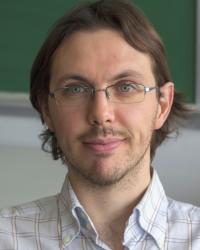
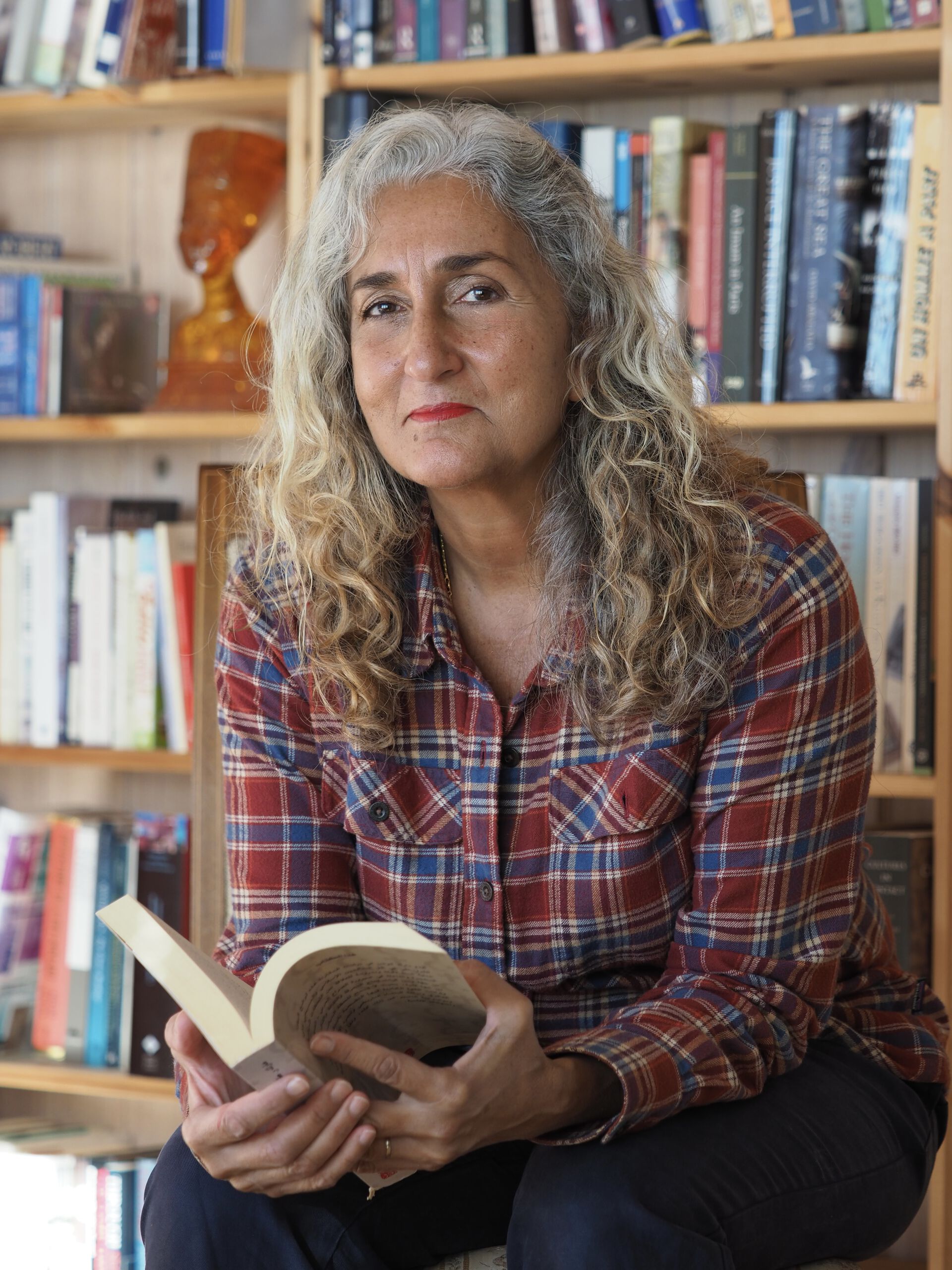
Thomas B. Smith is a distinguished Research Professor in the Department of Ecology and Evolutionary Biology and the Institute of the Environment and Sustainability at UCLA. As a founding Co-Director of the Center for Tropical Research and the Congo Basin Institute in Cameroon, he has led interdisciplinary efforts in biodiversity conservation, evolutionary ecology, and climate change mitigation across tropical regions for over 35 years. His work spans Central and West Africa, the Amazon, and beyond. Research Focus: Tropical biodiversity, avian ecology, human-altered ecosystems, and climate change impacts. Awards: Recognized with multiple academic honors, though specific titles are not listed. Collaborations: Partnerships with National Geographic Society, International Institute for Tropical Agriculture, and global conservation teams.
Maxime Aubert is Professor of Archaeological Science at Griffith University, Australia, specialising in geochemical dating of early rock art and hominin fossils. He is a National Geographic Explorer and ARC Future Fellow whose discoveries have twice (2014 & 2020) been selected among the top-10 scientific breakthroughs by the journal Science . His research centres on uranium-series and other micro-analytical techniques to illuminate the timing and context of human evolution, early symbolic behaviour and the colonisation of Wallacea and Sahul. Education PhD Earth Sciences (Uranium-isotope Geochemistry), Université du Québec / INRS, 2009 Research Interests Aubert develops and applies cutting-edge geochemical methods to key questions in human evolution: Dating of Palaeolithic cave art and rock engravings Geochronology of hominin fossils and archaeological deposits Early human dispersals through Island Southeast Asia and into Australia Conservation science for Pleistocene rock-art heritage His recent publications reveal 51,200-year-old narrative art in Sulawesi, 1.04-million-year-old hominin sea-crossings to the same island, and the world’s earliest known surgical amputation (31,000 BP, Borneo), collectively reshaping global timelines of art, technology and medicine. Scientific Recognition Science journal Top-10 Scientific Breakthroughs 2014 & 2020 National Geographic Explorer ARC Future Fellowship Grants & Projects Aubert has secured > AUD 6 million in competitive funding, including ARC Discovery and Linkage projects, National Geographic grants, and industry partnerships with Google Arts & Culture. Current major projects investigate early art and occupation along the northern route to Australia, Aboriginal rock-art management in Cape York Peninsula, and the archaeology of the Great Papuan Plateau. Doctoral Supervision & Team Science He currently supervises Griffith doctoral candidates working on oxalate dating of Australian rock art and Tasmanian hand-stencil heritage, and has previously led or co-supervised PhD projects on Sulawesi underwater archaeology, Indonesian prehistoric migration, Siberian rock art, and Philippine cave archaeology. His team collaborates closely with Indonesian, Australian and European institutions, conducting large-scale field programs in Sulawesi, Borneo and Papua New Guinea.
Vuokko Heikinheimo is a Visiting Researcher at the University of Helsinki , affiliated with the Department of Geosciences and Geography and the Digital Geography Lab under the Helsinki Institute of Sustainability Science (HELSUS). She holds a PhD and MSc in Geography/Geoinformatics from the University of Helsinki and serves as a Senior Researcher at the Finnish Environment Institute SYKE since 2021. Education PhD in Geography/Geoinformatics, University of Helsinki MSc in Geography/Geoinformatics, University of Helsinki Her research focuses on environmental sciences and geoinformatics , leveraging social media data for conservation science, geospatial modeling of urban dynamics, and accessibility analysis for sustainable city planning. She has contributed to datasets like the Helsinki Region Travel Time Matrix and CO2 emission models, integrating open data and open-source tools. Recent work includes analyzing global urban indicator frameworks, climate zone typologies for smart cities, and land use impacts on ecosystem services in the Taita Hills, Kenya. Her 2025 articles examine social media platform longevity and climate-responsive urban planning. Scientific Awards Stora stipendiet för forskning (2024) Heikinheimo collaborates on projects such as MOBICON (ERC-funded), MAPHEL (linguistic landscape mapping), and ELY-GIS (GIS applications in conservation). She contributes to peer-review processes for journals like Landscape and Urban Planning and Land , and has organized events including the NECTAR conference on human-scale cities.
Annette Oertle, PhD, is a researcher in the Faculty of Life Sciences, Department of Evolutionary Anthropology, specializing in biomolecular approaches to archaeological questions. Her work contributes to UN Sustainable Development Goals related to environmental protection and cultural heritage. Her research focuses on the intersection of evolutionary anthropology and biomolecular science, with particular expertise in: Analysis of extinct megafauna through collagen peptide markers Human-environment interactions during Pleistocene-Holocene transitions Biomolecular archaeology techniques including ZooMS and stable isotope analysis Human migration patterns and subsistence strategies in Pacific regions Dr. Oertle's publication record shows consistent output since 2022, with increasing productivity through 2025. Her work demonstrates strong interdisciplinary connections between archaeology, paleontology, and biomolecular science, with particular emphasis on Pacific Islander contexts and Australian megafauna extinction events. She received the DENI-CESTOR Fellowship in September 2022, recognizing her contributions to human evolution research with applications of stable isotope analysis and radiocarbon dating. Dr. Oertle actively disseminates her research through conference presentations, including recent talks on biomolecular archaeology in the Pacific and subsistence strategies in the New Guinea Highlands. Her research has garnered significant attention, with mentions in news outlets, social media platforms, and academic networks.
Valeria Bello is a Full Professor at the Blanquerna School of Communication and International Relations, Ramon Llull University, where she works within the Globalisation, Conflict, Development & Security research group. Her academic profile demonstrates extensive expertise in international relations with particular focus on migration, security, and political extremism in European contexts. Her research interests center on International Relations, Migration Studies, Securitization Theory, and Far-Right Politics, with special attention to Italian and Spanish contexts. Professor Bello's work consistently examines how security frameworks are applied to migration issues, how far-right groups construct narratives around ontological security, and how these discourses translate into policies affecting immigrants and refugees across Europe. Her research combines theoretical frameworks from security studies with empirical analysis of specific cases, particularly in Mediterranean European countries. Analysis of her recent publications reveals a clear trajectory examining the securitization of migration in European contexts, with increasing focus on far-right narratives and their impact on policy formation. Her work demonstrates how migration has become increasingly framed within security discourses, leading to more restrictive policies and practices across European states. Principal Investigator for 'Migration Report. Catalunya' (June-October 2024) Key researcher in GLOBALCODES project (2022-2025) Previous researcher in GLOBALCODES project (2017-2021) Professor Bello's research contributes significantly to United Nations Sustainable Development Goals related to peace, justice, and strong institutions, with particular relevance to migration governance and human rights protection in Europe.
Annett Junginger is a researcher at the University of Tübingen's Department of Geosciences, leading the Micropaleontology research group and contributing to the Senckenberg Center for Human Evolution and Paleoenvironment (HEP Tübingen). With a career spanning over two decades, she specializes in paleoclimatology, micropaleontology, and environmental-geochemical analysis of rift lakes. Education: Dr.rer.nat. in Paleoclimatology (2011) and Diploma in Geosciences (2006) from University of Potsdam/FU Berlin Key Projects: Hominin Sites and Paleolakes Drilling Project (HSPDP), Chew Bahir Basin studies, Suguta Valley hydrology Her research focuses on paleoclimate dynamics in East Africa, using lake sediments , isotope geochemistry , and micropaleontological proxies to understand climate variability across Quaternary periods. She investigates how hydroclimate fluctuations impacted hominin evolution and dispersal routes, particularly during the African Humid Period (15–5 ka BP) and MIS 12 glacial stage. Recent publications (2024) examine Lake Albert biodiversity via environmental DNA, Lake Naivasha metal sources , and Chew Bahir strontium isotopes . Earlier work includes volcano-tectonic fragmentation of Turkana-Suguta Megalake (2023), paleo-hydrology of Greece (2021), and Angolan diatom studies (2020). She employs multi-sensor remote sensing and phytolith analysis for climate modeling. Teaching responsibilities include BSc/MSc courses in Micropaleontology, Paleontology, and field practicals in Austria. She organizes African fieldtrips (Kenya, Tanzania, Ethiopia, etc.) for paleoenvironmental data collection.
Hongbo Yu is an Associate Professor in the Department of Geography at Oklahoma State University (OSU), where he has served since 2005. His research focuses on transportation geography, time-geography frameworks, GIS applications, and spatio-temporal analysis. He earned his Ph.D. in Geography from the University of Tennessee at Knoxville in 2005. Dr. Yu integrates GIS tools to study urban dynamics, accessibility, and transportation systems, with a particular emphasis on how temporal and spatial constraints influence human mobility and societal interactions. His teaching responsibilities include courses such as Fundamentals of Geographic Information Systems and Geographic Information Systems: Socioeconomic Applications . He emphasizes practical GIS skills, theoretical spatial concepts, and real-world problem-solving in his instruction. Dr. Yu has secured funding for projects like the Black Ice Detection and Road Closure Control System and GIS-based Livestock Disease Routing Framework , demonstrating his commitment to applied research impacting transportation safety and public health. His service includes peer review for journals like Transportation Research Part D and Annals of GIS , and committee roles such as Program Committee Member for academic conferences. His work bridges theoretical geography with technological innovation, addressing challenges in urban planning, climate adaptation, and transportation logistics.
Deni S. Galileo is a Professor in the Department of Biological Sciences at the University of Delaware. His research focuses on cell migration mechanisms in the developing brain and malignant gliomas, utilizing chick embryo models and retroviral gene transfer technologies. His work explores how integrins, extracellular matrix molecules, and adhesion proteins like L1CAM regulate normal and abnormal cell migration. Key projects include developing novel models for studying glioma invasiveness and breast cancer brain metastases, and investigating the role of QSOX1 and PMCA4 in tumor progression. Education: B.A., New College of Florida Ph.D., University of Florida College of Medicine and Whitney Laboratory Postdoctoral Research, Washington University School of Medicine (St. Louis) Research interests span developmental neurobiology, tumor biology, and gene therapy. Current projects include: Control of glioma invasiveness via L1CAM Integrins' roles in neuronal migration and survival Ex vivo analysis of glioblastoma behavior using chick embryos His lab has pioneered the use of replication-competent retroviral vectors and in ovo electroporation for widespread protein misexpression in developing brains. Collaborations with Dr. John Koh (Chemistry and Biochemistry) explore axon outgrowth on gene-patterned cell monolayers. Lab Resources: Office 232 Wolf Hall, Lab 248 Wolf Hall Teaching: Courses include Cell Biology (BISC 305), Developmental Neurobiology (BISC 439/639), and Special Topics in Modern Biological Microscopy (BISC 400). Notable contributions include establishing chick embryo models for studying glioma and breast cancer metastasis to the brain, and discovering roles for integrin α6β1 and α8β1 in cell migration and survival.
Professor Sarah Mills is a Professor of Human Geography and Fellow of the Academy of Social Sciences (FAcSS) at Loughborough University's School of Social Sciences and Humanities. She serves as Research and Innovation Director for Geography and Environment and Cluster Lead for 'Digital Communities and Inclusion'. Her academic career spans over a decade at Loughborough University, progressing from Lecturer to her current Professorship since 2023, with prior experience as an ESRC Postdoctoral Fellow at the University of Leicester. Dr. Mills' research critically examines childhood, youth, education, citizenship and volunteering, with particular focus on refugee youth experiences, digital geographies, and the politics of volunteering. Her work bridges theoretical and empirical approaches to understanding how young people navigate citizenship, migration, and digital spaces, often through comparative case studies in Uganda and the UK. Recent projects explore the intersection of gaming and gambling behaviors among children, the impact of digital interfaces on citizenship practices, and the complex role of volunteering in refugee integration. Her extensive publication record reveals a clear trajectory toward examining the digital dimensions of childhood and youth experiences, with increasing focus on refugee youth in Uganda and the relationship between gaming cultures and citizenship practices. The geographical scope of her work has expanded from primarily UK-based studies to more international comparative research, particularly in East Africa. Gill Memorial Award, Royal Geographical Society (2017) AAG Political Geography Speciality Group's Outstanding Research Award (2015) Fellow of the Academy of Social Sciences (2024) Multiple Loughborough University teaching and research awards Professor Mills actively contributes to the academic community through editorial roles including Co-Editor of Geopolitics (2018-2020) and membership on the editorial boards of Social & Cultural Geography and Environment and Planning A. She has held significant committee positions with the Royal Geographical Society's Geographies of Children, Youth and Families Research Group, serving as Treasurer, Chair, and currently as an Ordinary Committee Member. Her policy engagement includes membership in the College of Experts for the Department for Culture, Media and Sport and the All-Party Parliamentary Group on Political Literacy.
Emilio Zagheni is an Affiliate Associate Professor at the University of Washington and Director of the Max Planck Institute for Demographic Research (MPIDR) in Rostock, Germany since 2018. He holds a Ph.D. in Demography from the University of California, Berkeley (2010). His research focuses on leveraging big data and digital trace data (e.g., social media, search engines) to study migration, fertility, aging, and intergenerational transfers. He pioneered methods using non-representative internet data for demographic analysis. Key research areas include: Migration corridors and clusters via Google+ data Social media analytics for fertility behavior and search patterns Bayesian modeling of subnational mortality Input-output frameworks for unpaid resource transfers He received the Trailblazer Award for Demographic Analysis (2016) from the European Association for Population Studies. His work has advanced demographic methods through workshops on social media and cellphone data, including sessions at PAA, ICWSM, and IUSSP conferences. He co-chairs the IUSSP Panel on Big Data and Population Processes. His research integrates demographic theory with computational methods, emphasizing innovative data sources for policy-relevant insights.
Nefissa Naguib is a Professor of Social Anthropology at the University of Oslo, affiliated with the Department of Social Anthropology. Her research focuses on culturally complex societies across the Mediterranean, Middle East, Brazil, Norway, and Spain. Key thematic interests include global moments, migrations, humanitarianism, history, maritime lifeworlds, food systems, and Islamic heritage. Regional expertise spans the Mediterranean, Middle East, and transoceanic connections. Her monographs include Nurturing Masculinities: Men, Food and Family in Contemporary Egypt and co-edited volumes such as Reconceiving Muslim Men: Love and Marriage, Family and Care in Precarious Times , which challenge traditional gender norms in Arab societies. Current projects bridge anthropology, history, and global migration through initiatives like Out of the Blue (human and material migrations), We Have Given you Gardens (botany and Islamic heritage), and Feeling the Heat (environmental labor in the Middle East). Nefissa leads the Feeling the Heat project and collaborates with the CMI Centre on Law and Social Transformation. She has directed programs like the Arab World Program and Cultures and Politics of Faith. Courses taught include advanced topics in food anthropology, Middle Eastern studies, and gender kinship. Research Highlights: Pioneering work on water as an agent of history, humanitarian practices in the Arctic, and transnational gender dynamics. Awards: Al Jazeera documentary nomination (2010) for War, Women, Welfare in Jerusalem . Grants: Research Council of Norway, Norwegian Ministry of Foreign Affairs, and Norwegian Program for Development grants. Labs/Teams: Core member of YALLA (politics and aesthetics of everyday life in MENA) and leads interdisciplinary collaborations.
Professor Richard Yarwood is a Professor of Human Geography and Director of the Doctoral College at the University of Plymouth. He specializes in rural and social geography, with a focus on citizenship, policing, and marginalization. His research spans urban-rural dynamics, environmental policy, and transnational migration. He has supervised over 14 doctoral students, many funded by ESRC grants, exploring topics like homelessness, rural governance, and migrant identities. Educated at Coventry University and Plymouth University, his teaching spans undergraduate and postgraduate levels, including modules on rural planning, citizenship theory, and geographical methodologies. He established the Human Geography Research MSc, aligning with ESRC doctoral training standards. His recent work emphasizes spatial justice, cybercrime in global contexts, and the geographies of post-military communities. Notable projects include analyzing ferries as 'travelling landscapes' and exploring green burials' sustainability. He is a Senior Fellow of the Higher Education Academy, reflecting his contributions to pedagogical innovation. Research outputs often intersect with policy, such as studies on policing rural crime and the socio-spatial impacts of Brexit on agricultural labor. He collaborates internationally, with fieldwork in Australia, Sweden, and South Africa. His advisory work spans urban and rural resilience, contributing to both academic and community initiatives. Key labs/teams include the Doctoral College leadership and involvement in cross-disciplinary projects at the University of Plymouth, focusing on sustainability and global citizenship.
Bengt Erik Höglund is an Adjunct Professor at the Department of Natural Sciences, University of Agder. He holds a PhD from Uppsala University (2001) and has extensive postdoctoral experience (2001-2007) followed by a senior researcher role at the Technical University of Denmark (2007-2014). His research focuses on behavior neuroendocrinology in fish and crustaceans, emphasizing stress physiology, coping styles, and aquaculture welfare. He has coordinated courses in human physiology at UiA since 2005 and supervised four PhD students (2011, 2013) and two master’s students (1999, 2011). His recent work explores chronic stress impacts on fish neuroendocrine profiles, environmental acidification effects, and cardiac morphological development in salmon. Key themes include stress resilience, environmental signaling, and behavioral adaptations to anthropogenic changes. Collaborative projects involve hydropower impacts, predator cue responses, and aquaculture system dynamics. Notable contributions include studies on depression-like profiles in salmon, hydrogen sulphide dynamics in recirculating systems, and neuroendocrine indicators of allostatic load. He has participated in interdisciplinary initiatives like the Blekeprosjektet (2014–2017) and projects on hydropower-induced behavioral selection in salmon.
Roberta D'Alessandro is a Professor of Linguistics/Syntax and Language Variation at Utrecht University's Department of Languages, Literature and Communication, and Head of the Linguistics section. She leads the research group 'Language Structure: Variation and Change' within the Institute for Language Sciences (ILS). Her work focuses on syntactic variation, heritage language syntax, and microvariation in Italo-Romance and Indo-Aryan dialects. She is editor-in-chief of Isogloss and Grammars and Sketches of the World's Languages/Romance , and president of Going Romance . Her research explores syntactic theory through heritage language data, language contact in migration contexts, and the syntax-phonology interface. Awards include the Knight of the Italian Republic (2014) and membership in the Global Young Academy (2014–2019). She coordinates EU policy initiatives and advises on ethical research practices. Education: Ph.D. in Linguistics (not explicitly stated, inferred from career) Grants: ERC Consolidator Grant (Microcontact Project), NWO VIDI (2010–2015), Marie Curie Fellowship (2005–2007) Recent work emphasizes ethical considerations in theoretical linguistics and the integration of fieldwork with formal syntactic analysis. She collaborates internationally, leading projects on endangered languages and linguistic microvariation.
Pere Gelabert is an Assistant Professor in the Department of Evolutionary Anthropology at the Faculty of Life Sciences. His research focuses on ancient DNA analysis, population genetics, and interdisciplinary studies of human evolution and prehistoric societies. He has been involved in major projects such as 'Unveiling the Shadows: Illuminating Late Pleistocene Human-Carnivore Interactions in Europe' and 'Social genomics in Late Antique and Early-Medieval societies'. No educational background information is explicitly provided in the text. His research interests include: Analysis of ancient DNA to reconstruct population structures and ancestry Investigations into Late Pleistocene human-animal dynamics and hunter-gatherer societies Genomic studies of Neandertals and other hominin species Applications of sedimentary DNA (sedaDNA) in archaeological contexts Genetic epidemiology of ancient pathogens like Plasmodium Interdisciplinary approaches combining genomics with bioarchaeology He has received notable awards including: HEAS Seed Grant (2022) PCA Best Article 2020 Prize for 'Social genomics in Late Antique and Early-Medieval societies' (2023) While no formal advisees are listed, his research projects indicate leadership in academic grants. Grants include two active research funding projects focusing on Pleistocene human-carnivore interactions and social genomics in historical societies. His work involves collaborations across institutions and continents, with a focus on archaeological sites and museum collections. He regularly presents findings at scientific conferences and public lectures, including recent talks on sedaDNA applications and Neandertal site cataloging.



.jpg)