Nicolas Mathevon is a Professor at the University of Saint-Etienne, with a focus on Animal Behavior and Bioacoustics . He currently serves as Director of Studies at Ecole Pratique des Hautes Etudes and leads the ENES Team . His research explores acoustic communication across diverse species, including crocodiles, seals, penguins, and humans, with particular emphasis on vocal recognition, signal evolution, and neurobiological underpinnings. Major collaborations include Dr. T. Aubin (CNRS), Dr. I. Charrier (marine mammals), Dr. N. Grimault (crocodilian bioacoustics), and Prof. D. Reby (human communication). He also co-edits a new book, The Voices of Nature , published by Princeton University Press. His recent work spans ecoacoustic monitoring for conservation, multi-modal communication in crocodiles, and cross-species analysis of distress signals in bonobos, chimps, and humans. Neurobiological studies include brain activation patterns in response to vocalizations and sound localization mechanisms in reptiles. Scientific Awards include senior membership in the Institut universitaire de France .
Céline Clauzel is a Professor of Geography at the University of Paris 1 Panthéon-Sorbonne and a member of the Laboratory for Social Dynamics and Space Recomposition (LADYSS). She holds a Junior membership in the University Institute of France (IUF, 2023). Her research focuses on spatial modeling of ecological networks, biodiversity management, and human-wildlife interactions, with a geographic emphasis on France, China, and urban environments. Research Projects: Co-leader of the COOLSCHOOLS project (2022–2025) and leader of the INTERFACE project (2022–2023). Key roles in TRAMARE, REAUMUR, and ecological transparency studies for transportation networks. Administrative Roles: Member of LabEx DynamiTe Steering Committee, Scientific Council of the Foundation for Research on Biodiversity (FRB), and elected member of LADYSS laboratory council. Her work bridges ecology and urban planning, emphasizing decision-support tools for biodiversity management. Recent studies explore urban green spaces, wildlife corridors, and citizen science applications in biodiversity monitoring. Awards: Junior IUF membership (2023). Supervises doctoral students focusing on topics like railway permeability, school biodiversity engagement, and connectivity modeling in urban environments. Collaborates with institutions like SNCF, CDC Biodiversité, and the Morvan Regional Natural Park. Active in interdisciplinary initiatives, including co-creating platforms for researchers and practitioners to address ecological challenges in infrastructure and urban development.
Maud Chalmandrier is a Visiting Research Fellow at the Centre de Sociologie de l'Innovation (CSI) in Paris, funded by the Swiss National Science Foundation (SNSF) for her postdoctoral project titled « Practices and professions of urban pest management: a more-than-human approach to ecologization ». She holds a PhD in environmental geography and science & technology studies (STS), with research interests spanning urban ecology, human-animal relationships, and the historical development of ecological knowledge in urban contexts. Her current work investigates how pest management practices in Parisian public administration are reshaped by ecologization processes through ethnographic studies of rodent and bedbug control. Education & Background: PhD in Environmental Geography/STS (Switzerland) Postdoctoral Fellowship at Mines ParisTech PSL (2024–present) Research Focus: Her interdisciplinary work bridges geography, STS, and urban studies to analyze how ecological science and urban management practices co-evolve. Key themes include: Historical trajectories of urban ecology Knowledge production about urban nature Ethnographic studies of pest control professionals Policy implications of ecologization in public services Publications: Recent work includes analyses of scientific imperceptibility in urban ecology (2024), coexistence with urban wildlife (2023), and 20th-century naturalist studies of Swiss cities (2023). Her research emphasizes socio-ecological entanglements and institutional transformations in urban environments. Grants & Affiliations: SNSF Postdoctoral Mobility Fellowship (2024–2026) Member of the CSI research team at Mines ParisTech PSL, collaborating with institutions like CNRS (UMR 9217) Labs/Teams: Embedded in the CSI's interdisciplinary environment, focusing on science-society interfaces and urban sustainability challenges.
Charles Bouveyron is a Full Professor of Statistics at Université Côte d'Azur , Nice, France, and holds a Chair in Artificial Intelligence. He serves as Director of the Institut 3IA Côte d’Azur and leads the Inria research team MAASAI on Statistical Learning and Artificial Intelligence. He is an associate editor for The Annals of Applied Statistics and founded the Statlearn workshops . Research Interests: Statistical learning in high dimensions Learning on networks and functional data Deep latent variable models Adaptive learning with uncertain labels Applications in Medicine, Image Analysis, Astrophysics, and Humanities Notable Contributions: Developed multiple R packages including HDclassif , FisherEM , and FunLBM . Created the Linkage.fr platform for network analysis with textual edges. PhD Students: Current: Seydina Niang (Deep Generative Models), Kilian Burgi (Marine Diversity Monitoring), Baptiste Pouthier (Multimodal Learning) Former: Giulia Marchello (Dynamic Networks), Rémi Boutin (Network Analysis), Dingge Liang (Recommender Systems), Nicolas Jouvin (Latent Variable Models), Alexandre Saint-Dizier (Image Aggregation), Warith Harchaoui (Optimal Transport), Pierre-Alexandre Mattei (Sparse Clustering), Rawya Zreik (Temporal Networks), Anastasios Bellas (Anomaly Detection), Camille Brunet (Sparse Clustering) Contact: Email: charles.bouveyron@univ-cotedazur.fr / charles.bouveyron@inria.fr Postal: Equipe Maasai, Inria Sophia Antipolis, 2004 route des Lucioles, 06902 France
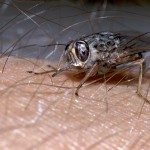
Brice Rotureau is a Director of Research at the Institut Pasteur in Paris and leads the Trypanosome Transmission Group. He also serves as the Director of the Parasitology Unit at the Institut Pasteur of Guinea in Conakry. His research focuses on the development, transmission, diagnostics, and eco-epidemiology of trypanosomatid parasites responsible for neglected tropical diseases such as Human African Trypanosomiasis (sleeping sickness). His research interests include Molecular and cellular biology of Trypanosoma species Parasite transmission mechanisms in tsetse flies Development of CRISPR-based diagnostic tools (e.g., SHERLOCK platform) Epidemiology and zoonotic reservoirs of trypanosomatid diseases Host-pathogen interactions and tissue tropism (skin, adipose) The recent articles highlight a strong trend toward innovative diagnostics (SHERLOCK), metabolic and signaling pathways in parasite development, and the role of alternative reservoirs (skin, adipose tissue) in disease persistence. His work integrates molecular biology, imaging, and field epidemiology to address both fundamental and public health aspects of parasitic diseases. Scientific awards include: Launois Prize, French Academy of Medicine (2023) Deschiens Prize, French Academy of Medicine (2017) Epidaure Prize, Foundation for Medical Research (2008) Annual prize, French Society of Parasitology (2011) Evian-les-Bains Prize, French Academy of Medicine (2009) Brice Rotureau actively advises on research strategy and grant evaluation, serving as an Associate Editor for Microbiol Spectrum and Trop Med Infect Dis , and as a reviewer and evaluator for major funding bodies (ERC, Wellcome Trust, ANR). He mentors students and contributes to teaching parasitology at multiple institutions. His leadership extends to international collaborations, including membership in the SAB of the LAMIVECT consortium and participation in WHO expert panels. He currently coordinates or partners in several ANR and BMGF-funded research projects. He is involved in the HistoPathology Core Facility and Image Analysis Hub at the Institut Pasteur, contributing to the advancement of digital pathology and quantitative histopathology through initiatives like the D-Patho project.
Jérémy Froidevaux is an Assistant Professor at the University of Franche-Comté, affiliated with the Chrono-environment Research Unit (UMR 6249 CNRS/UFC). His research focuses on conservation biology, eco-acoustics, and bat ecology, with emphasis on evaluating anthropogenic impacts on biodiversity, optimizing monitoring protocols, and assessing conservation measures' effectiveness. Key projects include studies on renewable energy infrastructure (wind turbines, solar farms) and their effects on bat populations. He leads the Silent·Cities initiative, analyzing urban soundscapes during global crises like the 2020 pandemic. Collaborative efforts with international teams address issues like light pollution, electromagnetic field exposure, and biodiversity policy implementation. His academic contributions span 150+ peer-reviewed articles, including work on bat activity patterns at power lines, solar farm impacts, and species-level trait datasets for European bats. Froidevaux advises graduate students, such as Samantha Aguillon, and actively participates in cross-disciplinary initiatives like the Réunion Island Night Environment Observatory. His work bridges ecological research with practical conservation solutions, advocating for evidence-based policies in renewable energy planning and habitat management.
Antoine Gessain is a leading medical virologist and Head of Structure at the Oncogenic Virus Epidemiology and Pathophysiology (EPVO) unit at the Institut Pasteur in Paris. He received his MD and PhD from Parisian universities and has been instrumental in advancing research on retroviruses and oncogenic viruses since the unit's founding in 2001. He leads multiple research projects and collaborates with international institutions across Central Africa, French Guiana, and Peru. His research interests include: Virology and molecular epidemiology of HTLV-1, HHV-8, and simian foamy viruses Zoonotic transmission of retroviruses from primates to humans Genetic diversity and global dissemination of oncogenic viruses Pathogenesis of HTLV-1-associated diseases such as myositis and neuromyelopathy Immunological responses to retroviral infections His recent publications (2022–2025) reflect a strong focus on emerging viral threats, structural virology, and the molecular mechanisms of viral entry and immune neutralization. Notably, his team has contributed key insights into the structure of foamy virus envelope proteins, seroreactivity to ebolaviruses in Central Africa, and the epidemiology of HTLV-1 transmission in rural populations. Dr. Gessain has received no explicitly mentioned scientific awards in the provided text. However, his role as principal investigator on multiple funded projects and his extensive publication record underscore his scientific impact. He is actively involved in mentoring researchers and post-doctoral fellows, though specific PhD advisees are not listed. His work is supported by long-term collaborations with the Réseau International des Instituts Pasteur, CIRMF in Gabon, and Peruvian academic institutions. He also contributes to teaching at the Institut Pasteur, co-directing courses in systematic virology and infectious disease circulation. His research unit operates at the intersection of basic virology, public health, and clinical applications, with strong links to hospital departments and animal care facilities for translational research.
Astrid GUILLAUME serves as an HDR Lecturer in the Faculty of Letters, specializing in semiotics with a focus on human and non-human animal communication systems. Her academic position bridges theoretical linguistics, cultural studies, and animal ethics, examining how meaning transfers across species and temporal frameworks through verbal and non-verbal channels. Her research centers on three interconnected domains: theoretical semiotics (intertheoricity and transferogenesis), zoosemiotics (animal communication, sentience, and liminality), and cultural semiotics (semiotranslationology and semiomedievalistics). GUILLAUME challenges anthropocentric paradigms by developing frameworks for understanding non-human sign systems, advocating for terms like 'animal liminaire' in academic discourse. Her work integrates medieval studies with contemporary animal ethics to analyze evolving human-animal relationships. Recent publications (2021-2023) reveal consistent focus on practical applications of semiotic theory to animal welfare crises, particularly cetacean captivity, commercial fishing practices, and hunting ethics. She employs transdisciplinary methodologies to critique anthropocentric exploitation while proposing legislative reforms based on semiotic evidence of animal sentience and communication complexity. Though specific advisory roles remain undocumented, GUILLAUME's direction of academic collections ('Zoosémiotique' and 'Traditions et Croyance') and organization of doctoral seminars demonstrates scholarly leadership. Her editorial work bridges theoretical semiotics with real-world animal advocacy, positioning her as a key figure in emerging humanimalist scholarship.
Dr. Gérard Chollet is a Professor at Telecom SudParis, associated with the SAMOVAR laboratory. His research focuses on speech processing, biometrics, privacy-preserving AI, and assistive robotics. He leads projects like the EMPATHIC virtual coach for aging populations and the Roberta IRONSIDE robot assistant. Key contributions include audiovisual identity verification, low-resource ASR systems, and privacy-conscious machine learning frameworks. His work spans over 20 years with publications in top journals and conferences, emphasizing healthcare technology and multimodal human-machine interaction. Education: Not explicitly stated in text, but expertise implies advanced degrees in electrical engineering or computer science. Research Interests: Speech recognition, audiovisual biometrics, privacy in AI, assistive robotics, and end-to-end machine learning. Recent work emphasizes ethical AI, healthcare applications, and secure cloud computing. Grants & Collaborations: Involved in EU projects (e.g., EMPATHIC, IRONSIDE). Collaborates with industry partners (e.g., SpeechMorphing Inc., University of Surrey) and global institutions (e.g., University of Tsukuba, MIT). Lab/Team: SAMOVAR lab at Telecom SudParis, focusing on media and networks research. Active in cross-disciplinary teams for health tech and AI ethics.
Aude Dziebowski is a contractual doctoral student and lecturer in sociology at the University of Strasbourg, affiliated with the SAGE laboratory (UMR 7363, CNRS). She is based at the Institute of Urban Planning and Regional Development within the Faculty of Social Sciences. Her research is conducted within Axis 3: Territorial dynamics: population, city, nature, where she co-animates the theme 'Environmental mobilizations: collective action, resources, energies' with Philippe Hamman. Research Interests: Her work focuses on the sociology of rural worlds, urban and environmental sociology, and the socio-environmental implications of agricultural methanization. Key themes include governance of rural and agricultural systems, representations and management of natural resources (renewable and fossil), energy, ecological, and agricultural transitions, environmental mobilizations, and the emergence of 'new ruralities.' She investigates how professional identities of farmers evolve in the context of energy innovation and territorial change. Publication Trends: Her recent publications analyze agricultural methanization, human-nature relations (particularly around tick proliferation), and socio-territorial dynamics in rural France. The works combine qualitative sociological methods with interdisciplinary insights, often comparing France and Germany. There is a strong emphasis on public engagement, policy relevance, and critical analysis of sustainability narratives. Scientific Awards: No awards mentioned in the text. Advising and Grants: Aude Dziebowski is a PhD candidate under the supervision of Prof. Philippe Hamman and Prof. Emmanuel Guillon. She is funded through the METHATIP project (2022–2025), an interdisciplinary CNRS 80|PRIME initiative jointly led by SAGE (University of Strasbourg) and ICMR (University of Reims). She has not advised any students as per the information provided. She actively participates in research dissemination and has co-organized academic events. Labs and Teams: She is a member of the SAGE laboratory (Sociétés, acteurs, gouvernement en Europe), a CNRS-University of Strasbourg joint research unit. She is part of the METHATIP project team and collaborates with the MéthAEurope chair and ITI MAKErS. She also engages with interdisciplinary networks such as the AgroMétha, TTA, and MERGE chairs focusing on agricultural methanization.
Véronique Beaujouan is a Researcher at the French Higher Education Institution in Agriculture, Food, Horticultural and Landscape Sciences, affiliated with UMR BAGAP in Rennes, France. Her work spans Landscape Ecology , Urban Biodiversity , and Nitrogen Cycle Modeling , with a focus on human-environment interactions in coastal wetlands, urban grasslands, and viticultural zones. Key research areas: Ecological Filtering , Environmental Policy , GIS Applications , and Agroecology . Recent publications analyze climate change impacts on coastal landscapes , citizen science data biases , and trait-based biodiversity responses across urban-rural gradients. Collaborations include projects in Nature-Based Solutions and Ecological Connectivity , contributing to frameworks like the INCA nitrogen model.
Laurence Jolivet is a researcher at IGN (Institut national de l'information géographique et forestière) and member of the LASTIG (Laboratoire des Sciences et Technologies de l'Information Géographique) laboratory, affiliated with the STRUDEL and MEIG teams. She holds a PhD in Geography (2014) from Université Paris 1 Panthéon-Sorbonne and works on spatiotemporal analysis, landscape modeling, and human-wildlife interaction studies. Research Interests : Landscape description and modeling for fauna movement simulation (BD TOPO, RGE ALTI) Volunteered Geographic Information (VGI) qualification for land use monitoring Sensitive/perceptual mapping protocols for urban space analysis Multi-source data integration in urban ecosystem management Recent Article Trends focus on: Wildlife disturbance from recreational activities Multi-source land use classification workflows Tick bite risk modeling in peri-urban zones Citizens' Books analysis for policy input Deep learning applications in landscape dynamics Supervision : Co-supervisor of Martin Cubaud (PhD, 2022-ongoing): Land use classification via deep learning Supervisor of Colin Kerouanton (PhD, 2020): Hiker mobility analysis Key Projects : IntForOut (2024-2027) : Integrating multisource data for ecosystem monitoring under outdoor recreation pressure SOTIQUE (2024-2025) : Socio-ecological tick bite risk modeling LandSense (2016-2021) : Citizen observatory for land cover monitoring CHOUCAS (2017-2022) : Heterogeneous data integration for mountain rescue
Dr. Eve Afonso is an Assistant Professor at Université de Franche-Comté, France, affiliated with the Chrono-environnement laboratory (UMR 6249 CNRS/UFC) and part of the DYNABIO research team. Her office is located in Room 209M at Campus de la Bouloie. Her research integrates molecular ecology, conservation biology, and statistical modeling to study how global change impacts wildlife ecology, with particular focus on bats and primates. She employs non-invasive techniques for population genetics and eco-epidemiological investigations. Her research interests center on biodiversity conservation under anthropogenic pressures, with specialized expertise in: Population genetics of endangered mammals Wildlife disease ecology and zoonotic transmission Ecotoxicology of pesticides in small mammals Conservation strategies for primates and bats Predator-prey dynamics in changing environments Dr. Afonso's publications demonstrate strong thematic focus on the intersection of wildlife ecology and disease dynamics, particularly regarding European bats, Yunnan snub-nosed monkeys, and arctic bird species. Her work consistently addresses conservation applications, with 57% of recent papers examining anthropogenic impacts on endangered species. She currently advises Chrono Student Laurie Bedouet and participates in international collaborations like the IRP Forêts froides project (2021-2026). Her laboratory work involves metabarcoding techniques for pathogen analysis and genetic hybridization studies.
Marie Bourjade is a Lecturer in Developmental Psychology at the Cognition, Languages, Language, Ergonomics Laboratory (CLLE, UMR 5263) of Toulouse Jean Jaurès University . She leads research on multimodal communication systems , with a focus on human-primate comparative analysis and language evolution through her MODAL project. HDR in 2022: 'Bridges between gesture and voice in primate species' Junior Member of Institut Universitaire de France since 2020 Previously held postdoctoral positions at Max Planck Institute and Aix-Marseille University Her research explores interspecific communication mechanisms , combining developmental psychology , experimental linguistics , and primate behavioral ecology . Recent publications examine attention-sensitive communication in human infants and olive baboons , revealing evolutionary continuities in multimodal signaling. She supervises master's theses in evolutionary psychology and teaches across L1-L3 psychology curricula , including developmental psychology history, observation techniques, and comparative psychology courses. Collaborations include institutions like University of California San Diego , University of St Andrews , and Tilburg University .
Charles Bouveyron is a Full Professor of Statistics at Université Côte d'Azur, Nice, France. He holds a Chair in Artificial Intelligence and serves as Director of the Institut 3IA Côte d'Azur, while also leading the Inria research team MAASAI on Statistical Learning and Artificial Intelligence. Université Côte d'Azur: Full Professor of Statistics (2019-present) Institut 3IA Côte d'Azur: Director (2019-present) Inria: MAASAI Team Leader (2019-present) His research focuses on statistical learning methodologies for high-dimensional data, network analysis, functional data modeling, and deep latent variable approaches. Key applications include medical diagnosis through radiomics, ecological monitoring, astrophysics data analysis, and humanities data science. Recent publications emphasize dynamic co-clustering techniques for count data streams, deep latent position models for network analysis, and discriminative clustering frameworks using generalized mutual information. His work integrates Bayesian sparsity, probabilistic PCA, and robust classification methods. Software development remains a core activity with tools like HDclassif, FunLBM, and Linkage.fr platform for network analysis with textual edges. He has mentored over 20 PhD/postdoc researchers in statistical learning and AI applications.