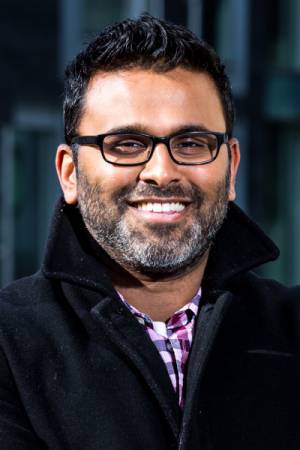
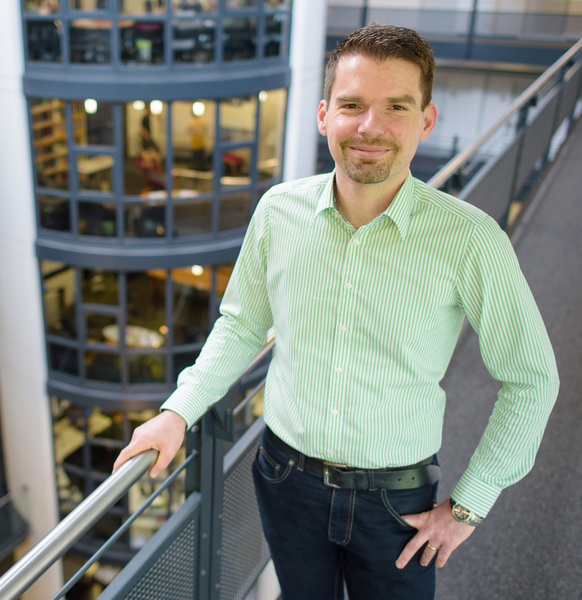
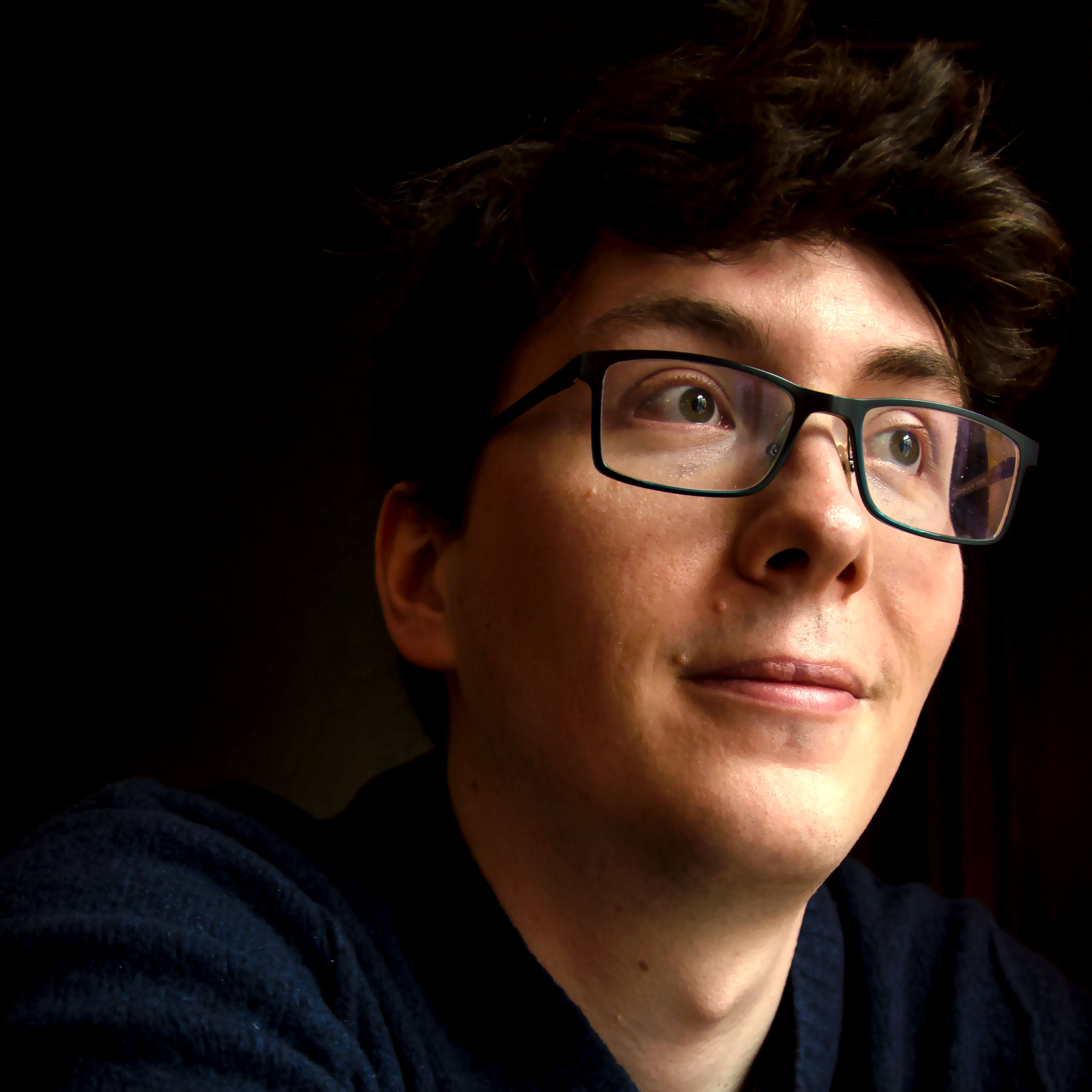
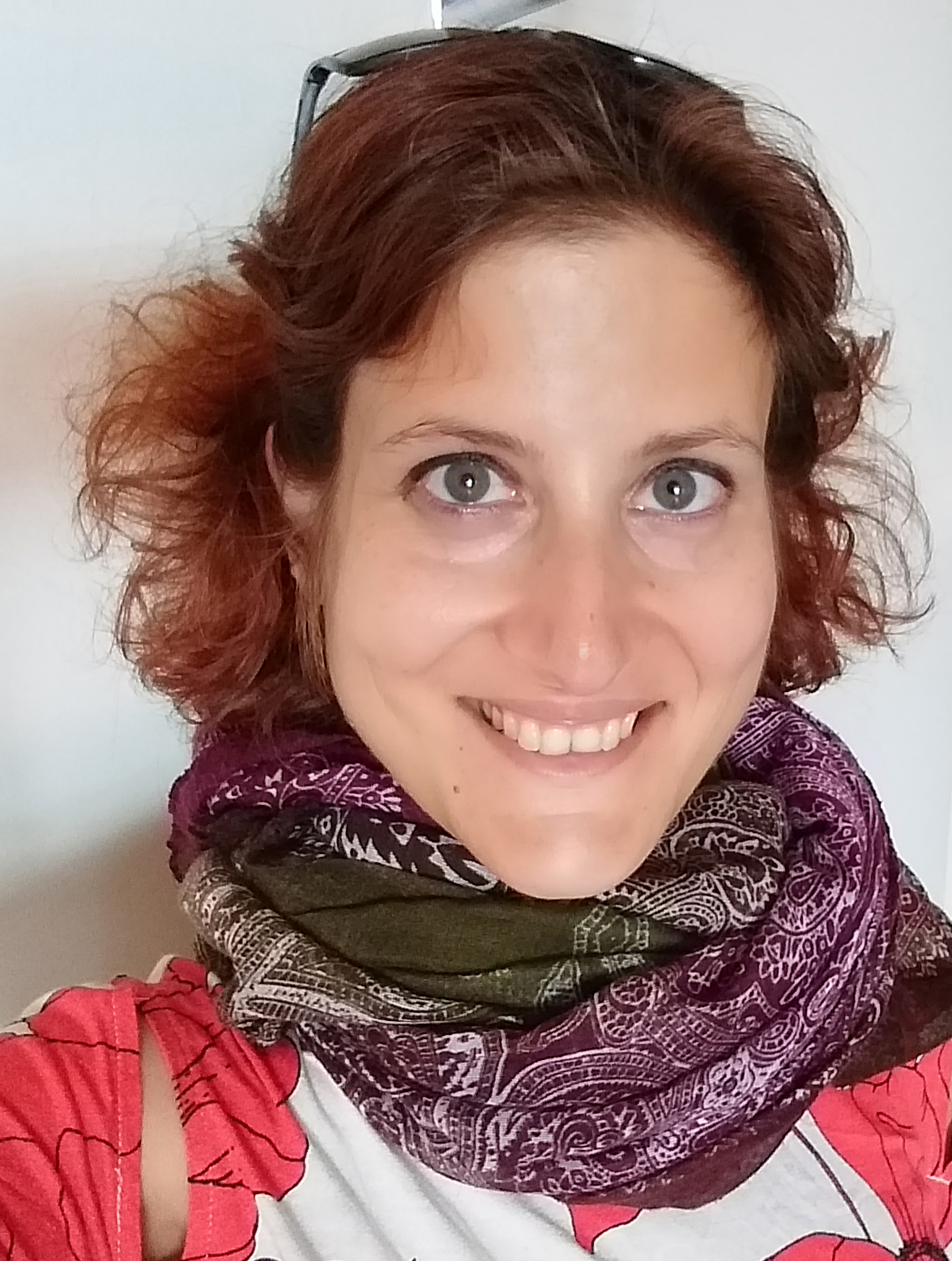
Deva Kannan Ramanan is a Professor at the Robotics Institute of Carnegie Mellon University , focusing on computer vision , machine learning , and human-centered robotics . His work bridges neurorobotics and visual perception , with applications in autonomous driving and 4D reconstruction . Research Topics Computer Vision 3-D Vision and Recognition Visual Servoing Neurorobotics Human-Centered Robotics Graphics & Creative Tools His recent publications in CVPR , ICRA , and ICCV emphasize 4D human reconstruction , neural rendering , and vision-language models for autonomous systems. He serves as General Chair of CVPR 2027 and Program Chair of CVPR 2018 , with IARPA funding for aerial-ground rendering (2023-2027). Current students include PhD candidates Sally Chen, Kangle Deng, and Zhiqiu Lin, while past advisees like Arun Vasudevan and Olga Russakovsky now hold positions at Amazon and Meta respectively.
Prof. Ingmar Posner is a leading figure in applied artificial intelligence at the University of Oxford, where he serves as Principal Investigator for the Applied Artificial Intelligence Lab (A2I) and founding Director of the Oxford Robotics Institute. His work focuses on enabling robots to operate effectively in complex real-world environments through experience-driven learning. Key research areas: robot learning, scene interpretation, data-efficient learning, and transfer learning Applications in manipulation, autonomous driving, logistics, and space exploration His team has produced groundbreaking work in world models, sim-to-real transfer, and constraint-based manipulation systems (e.g., COMBO-Grasp). Notable contributions include the TWIST distillation framework and foundational research in tactile data generation (TactGen). He has received multiple best paper awards at top robotics venues. Publications reveal evolving research themes: 2025 work emphasizes language-conditioned learning (Lumos) and multi-agent decision-making, while 2024 focused on diffusion models for locomotion and differentiable simulators. Earlier work spans from urban scene analysis to physically plausible scene synthesis (RELATE).
Justin Johnson is an Assistant Professor at the University of Michigan's College of Engineering, Department of Electrical Engineering and Computer Science, and a Research Scientist at Facebook AI Research (FAIR). His work bridges computer vision, machine learning, and deep learning, focusing on visual reasoning, vision-language tasks, image generation, and 3D reasoning using neural networks. PhD, Stanford University (advised by Fei-Fei Li) His research interests span visual reasoning , vision and language , 3D vision , and image generation , with a focus on innovative applications of deep neural networks. Recent publications highlight work on 3D consistency, self-supervised learning, and multimodal integration of vision and text. Notable contributions include PyTorch3D for 3D data processing, and foundational work in visual question answering , neural style transfer , and scene graph-based image generation . Publications span top conferences like ICCV, CVPR, and NeurIPS. He teaches courses including EECS 498/598: Deep Learning for Computer Vision and EECS 442: Computer Vision at University of Michigan, with prior involvement in Stanford's CS 231N in co-teaching roles. Software projects include open-source frameworks like fast-neural-style for real-time artistic style transfer, and PyTorch3D for efficient 3D deep learning. These tools demonstrate his commitment to practical implementations and community-driven research.
Rhenish Friedrich Wilhelm University of BonnGermany
Carl Vondrick is a Professor in the Department of Computer Science at Columbia University. His research focuses on creating robust and versatile perception systems that leverage video and interaction with the natural world, with applications in 3D reconstruction, visual question answering, and robot manipulation. Former research scientist at Google Visiting researcher at Cruise Education: PhD (2017) from MIT, advised by Antonio Torralba BS (2011) from UC Irvine, advised by Deva Ramanan His research explores multimodal approaches for cross-task and cross-modal transfer, scene dynamics, audiovisual perception, interpretable models, and spatial awareness systems. The lab emphasizes zero-shot generalization and neuro-symbolic methods while addressing safety and robustness in AI systems. Key publication trends include: 2025: Video generation for robotics 2024: Differentiable rendering and cross-modal reasoning 2023: Robust perception and 3D modeling Scientific Awards: 2024 PAMI Young Researcher Award 2021 NSF CAREER Award Teaching Roles: Teaching Computer Vision II (2021-2025), Computer Vision I (2018-2019), and Representation Learning (2020-2022). Advising: Advises 8 current PhD students and has mentored 5 graduated students now at institutions like MBZUAI and UMD. The lab recruits 1-2 PhD students annually through Columbia’s PhD program. Grants and Collaborations: Funded by NSF, DARPA, Toyota Research Institute, Amazon Research, and Google.
Christian Theobalt is a Professor of Computer Science at Saarland University and Scientific Director of the Visual Computing and Artificial Intelligence Department at the Max Planck Institute for Informatics . He leads the Saarbruecken Center for Visual Computing as a strategic partnership between Google and MPI. PhD in Computer Science (2005) from MPI-INF/Saarland University Postdoctoral Researcher at MPI (2005-2007) Visiting Assistant Professor at Stanford (2007-2009) His research focuses on the intersection of Computer Graphics, Computer Vision, and Artificial Intelligence , with specializations in: 3D/4D Human Reconstruction Neural Rendering Performance Capture Geometric Deep Learning Volumetric Video Quantum Visual Computing Recent article trends show emphasis on: Quantum computing applications in visual reconstruction Neural rendering with radiance fields Human motion capture from egocentric views Gesture-language interaction modeling Multi-modal scene understanding Real-time free-viewpoint rendering Scientific Awards : Fellow of EUROGRAPHICS (2022) CVPR Best Student Paper Honorable Mention (2020) ERC Consolidator Grant (2017) Karl Heinz Beckurts Award (2017) Busy Beaver Teaching Award (2016) ERC Starting Grant (2013) Advising over 50 students and researchers including: Current researchers: Viktor Rudnev, Linjie Lyu, Mohit Mendiratta Postdocs: Kwang In Kim, Kiran Varanasi Alumni: Franziska Mueller (Google), Dushyant Mehta (Qualcomm), Ayush Tewari (MIT) Grants include ERC grants, Google Glass Research Award, and multiple industry partnerships. His lab maintains cutting-edge facilities with: Multi-camera capture systems Quantum annealing infrastructure HDR radiance field technology GPU clusters for AI research Time-of-flight imaging systems Event camera arrays
Hao Su is an Associate Professor in the Department of Computer Science and Engineering at University of California, San Diego . He serves as Chairman & CTO of Hillbot Inc , and leads the SU Lab which focuses on building autonomous systems that learn actively in physical environments. His affiliations include the Institute for Learning-enabled Optimization at Scale , Artificial Intelligence Group , Contextual Robotics Institute , Halicioğlu Data Science Institute , and Center for Visual Computing . As a researcher in Computer Vision, Robotics, and Neural Geometry , he has made significant contributions to 3D foundation models, reward-free world models, diffusion policy frameworks, and GPU-accelerated simulation environments. His 2024-2025 publications include advancements in hand-eye calibration, dynamic mesh reconstruction, and multi-stage robotic manipulation. His scientific awards include: Frontiers of Science Award (2025) TPAMI Young Research Award (2025) NSF CAREER Award (2023) ACM SIGGRAPH Best Doctorate Thesis Honorable Mention (2019) He has served as Program Chair for CVPR 2025 and Area Chair for ICLR 2022 and NeurIPS 2023 , while previously serving as Publication Chair for 3DV 2016 and Program Committee for SIGGRAPH Asia Workshops .
Massachusetts Institute of TechnologyUnited States
Luca Carlone is the Boeing Career Development Associate Professor in the Department of Aeronautics and Astronautics at MIT and a Principal Investigator at the Laboratory for Information & Decision Systems (LIDS) . He leads the SPARK Lab , focusing on developing certifiable perception algorithms for autonomous systems. PhD in Mechatronics (Polytechnic University of Turin, 2012) Research spans robotics, computer vision, and optimization Research Interests : Certifiable Perception algorithms for high-integrity systems High-level Perception (geometric, semantic, physical understanding) Efficient Perception methods for resource-constrained robots Scientific Contributions include: 2024 Outstanding Systems Paper Award (RSS) 2023 IEEE Transactions on Robotics King-Sun Fu Award 2021 NSF CAREER Award 2020 AIAA Advising Award 2019 Amazon Research Award Advising : Teaches graduate courses like Visual Navigation for Autonomous Vehicles and Robotics: Science and Systems . Collaborates with institutions including JPL, Caltech, and KAIST through the DARPA SubT Challenge.
Tien Tsin Wong is a Professor in the Department of Data Science & AI at Monash University, Australia. Previously, he served as a Professor at the Chinese University of Hong Kong (1999–2024) and held a Visiting Assistant Professor position at the Hong Kong University of Science and Technology (1998–1999). His research focuses on Generative AI, Computer Graphics, Computer Vision, and Computational Manga, with significant contributions to GPU techniques, image-based rendering, and multimedia compression. Education: He earned a B.Sc. (1992), MPhil (1994), and PhD (1998) in Computer Science from the Chinese University of Hong Kong. Research Interests: His work bridges computational techniques with artistic applications, particularly in manga and animation. Notable areas include generative models, diffusion-based video synthesis, and physically plausible scene generation. His research aligns with UN Sustainable Development Goals through innovations in education and digital accessibility. Awards : He has received the 2004 Young Researcher Award, 2005 IEEE Transactions on Multimedia Prize Paper Award, and two international invention medals (Geneva 2018, Asia Hong Kong 2019). Editorial Roles : He serves as an Associate Editor for Computer Graphics Forum , IEEE Transactions on Visualization and Computer Graphics , and Computational Visual Media . His editorial work underscores his influence in advancing visualization and graphics research. Labs/Teams : While not explicitly named, his collaborations span global institutions, focusing on computational manga, generative AI, and GPU-optimized techniques. His work often involves interdisciplinary teams addressing challenges in digital media and AI.
Lerrel Pinto is an Assistant Professor of Computer Science at the Courant Institute of Mathematical Sciences at New York University (NYU), where he leads the General-purpose Robotics and AI Lab (GRAIL) as part of the CILVR research group. His work bridges the gap between theoretical machine learning and practical robotics applications, with a focus on enabling robots to generalize and adapt in real-world environments. Dr. Pinto received his undergraduate degree from IIT Guwahati, followed by a PhD from the Robotics Institute at Carnegie Mellon University (CMU). He then completed a postdoctoral fellowship at the University of California, Berkeley before joining NYU as faculty. His research program centers on robot learning and decision making, with several key thrusts that demonstrate his innovative approach to robotics. Pinto's work emphasizes large-scale learning techniques that leverage both extensive data and sophisticated model architectures. A significant portion of his research focuses on representation learning for sensory data, particularly developing methods that enable robots to make sense of visual, tactile, and auditory inputs. His lab has made notable contributions to reinforcement learning algorithms that allow robots to adapt to new scenarios with minimal retraining. Pinto also champions open-source robotics , developing affordable robot platforms that democratize access to robotics research. Analysis of Pinto's recent publications reveals a strong trend toward multimodal perception in robotics, integrating visual, tactile, and auditory information to create more robust robot systems. His work increasingly focuses on zero-shot and few-shot learning capabilities, enabling robots to handle novel situations without extensive retraining. There's also a clear progression toward general-purpose robotics , moving away from task-specific solutions toward more flexible systems that can handle diverse real-world challenges. Dr. Pinto's scientific contributions have been recognized with several prestigious awards: Sloan Research Fellowship (2025) NSF CAREER Award (2024) RAL Early Career Award (2024) Best Student Paper Award at ICRA (2016) Outstanding Paper Award at MFM-EAI workshop at ICML (2024) Best Paper Award at NGSM workshop at ICML (2024) Best Student Paper Award at RSS (2023) As an advisor, Pinto has mentored numerous students who have gone on to impactful careers in both academia and industry. His former PhD student Denis Yarats co-founded Perplexity.AI, while Mahi Shafiullah became a postdoc at UC Berkeley and Meta AI. Many of his Masters students have pursued PhDs at top institutions like CMU, MIT, and Stanford, or joined leading robotics companies including 1X, Fauna Robotics, and NVIDIA. Pinto's lab has secured significant research funding, including the NSF CAREER award and likely other grants supporting his robotics research program. The General-purpose Robotics and AI Lab (GRAIL) that Pinto leads brings together a diverse team of researchers working on cutting-edge robotics challenges. The lab maintains strong collaborations with industry partners and other academic institutions, facilitating technology transfer and real-world impact. GRAIL's research spans multiple robotics platforms and focuses on developing algorithms that enable robots to learn from diverse experiences and generalize across environments.
California Institute of Technology (Caltech)United States
Xingxing Zuo is an Assistant Professor (tenure-track) in the Robotics Department at MBZUAI. He holds a PhD from Zhejiang University (2021) and a Bachelor’s from UESTC (2016). Previously, he was a Postdoctoral Scholar at Caltech (2024–2025), a Postdoc at ETH Zurich (2019–2021), and held visiting roles at TU Munich, University of Delaware, and University of Technology Sydney. His research focuses on robotics, 3D computer vision, and embodied AI, with emphasis on robot-human collaboration, state estimation, and sensor fusion. Educations: PhD in Robotics, Zhejiang University (2021, with honors) Bachelor’s in Computer Science, University of Electronic Science and Technology of China (2016, with honors) Research Highlights: Develops novel methods for LiDAR-camera-inertial fusion, neural radiance fields, and radar-cameras systems Pioneered techniques like Flying Co-Stereo (long-range aerial mapping) and FMGS (vision-language embedded 3D splatting) Focuses on real-time SLAM, robust depth estimation, and photorealistic scene reconstruction Awards & Recognition: Best Paper Finalist at ICRA 2021 (CodeVIO) Oral Presentation at ICCV 2021 (MBA-VO) Recipient of Google Visiting Faculty Researcher (2023) Grants & Labs: Organized Thermal Infrared in Robotics workshop at ICRA 2025 Leads research on embodied AI and multi-sensor SLAM systems Develops open-source tools like LIC-Fusion and Coco-LIC frameworks
Katerina Fragkiadaki is the JPMorgan Chase Associate Professor of Computer Science in the Machine Learning Department at Carnegie Mellon University. She works at the intersection of Artificial Intelligence, Computer Vision, Machine Learning, Language Understanding, and Robotics. PhD from GRASP Lab, University of Pennsylvania Postdoctoral researcher at UC Berkeley (with Jitendra Malik) and Google Research Recipient of NSF CAREER, DARPA Young Investigator, Amazon, Google, Sony, UPMC, and AFOSR awards Organizer of CoRL 2023 Workshop on Generalist Robots ICLR 2024 Program Chair, multiple area chair roles Her research group focuses on developing machines that autonomously improve world models through human-environment interactions, with specific emphasis on: Representation learning and video understanding 2D/3D unified vision-language models Generative simulation and reinforcement learning Real2Sim/Sim2Real robot learning Continual learning and spatial common sense 3D scene reconstruction and dynamics Recent publications highlight advancements in: 3D mesh generation with compositional transformers Unified 2D/3D perception frameworks Physics-aware generative models Diffusion-based robotic manipulation policies Embodied agents with memory prompting Awards include: 2024: DARPA Young Investigator Award 2023: Amazon Faculty Award 2022: Sony Faculty Research Award 2021: UPMC Faculty Research Award 2020: NSF CAREER Award 2019: Google Faculty Award Key collaborations span institutions including UC Berkeley, Google Research, Stanford, MIT, and University of Tsukuba. Her work bridges theoretical innovation with practical applications in: Autonomous robot manipulation 4D world modeling Language-grounded perception Visual dynamics prediction Embodied program synthesis Physics-based simulation engines
Christian Rupprecht is an Associate Professor at the Department of Computer Science, University of Oxford, specializing in computer vision and machine learning. His research focuses on unsupervised learning, 3D reconstruction, and visual understanding. His work includes contributions to conferences such as GCPR'25, ICCV'25, and CVPR'25, with papers spanning topics like correspondence estimation, animal pose modeling, and synthetic data generation. He leads projects within the prestigious Visual Geometry Group (VGG). Notably, his paper VGGT received the Best Paper Award at CVPR'25. His research integrates deep learning and geometric modeling, emphasizing robustness and generalization in visual systems. Best Paper Award at CVPR'25
Olga Sorkine-Hornung is a Professor of Computer Science at ETH Zurich and head of the Institute of Visual Computing. She leads the Interactive Geometry Lab, focusing on theoretical and practical advancements in digital content creation, geometry processing, and shape modeling. Current position: ETH Zurich, Department of Computer Science Previous roles: Courant Institute (NYU), Technical University of Berlin Education: BSc and PhD from Tel Aviv University, postdoc at TU Berlin Her research spans shape representation, digital fabrication, computer animation, and fundamental geometry processing. Key contributions include Laplacian surface editing, as-rigid-as-possible deformation, and generalized winding numbers. She works on applications in VR, AR, and autonomous systems. Awards include Test of Time Awards (2024), ACM Fellow (2020), ERC Consolidator Grant (2020), and EUROGRAPHICS Young Researcher Award (2008). She has supervised numerous students and co-developed software libraries like libigl and Instant Meshes . Co-chair roles for SIGGRAPH, Eurographics, and Pacific Graphics Editorial board member for ACM Transactions on Graphics and other journals Keynote speaker at VMV, CVPR, and SIAM conferences Her work bridges mathematical rigor with practical implementation, advancing computer graphics and geometry processing through intuitive algorithms that maintain surface detail while enabling efficient computation.
Alexander Schwing is an Associate Professor in the Department of Electrical and Computer Engineering and Computer Science at the University of Illinois at Urbana-Champaign, affiliated with the Coordinated Science Laboratory. His research focuses on machine learning and computer vision with applications in 3D scene understanding, generative modeling, and multi-agent systems. Education: Diploma in Electrical Engineering and Information Technology, Technical University of Munich (TUM) PhD in Computer Science, ETH Zurich Postdoctoral Fellow, University of Toronto Research Interests: Structured prediction in deep learning Generative adversarial networks and stability Multi-modal vision-language models 3D scene reconstruction from single images Embodied agent collaboration Semantic segmentation with temporal coherence Recent Publications: Highlight trends in neural rendering, video object segmentation, and reinforcement learning with applications to 3D modeling and multi-agent systems. Notable innovations include SAIL-VOS dataset for amodal segmentation and NeRFDeformer for single-view scene transformation. Scientific Awards: NSF CAREER Award, 3M and Amazon research awards, multiple student recognition awards, ETH Zurich PhD medal, and best paper at Intelligent Tutoring Systems 2014. Teaching: Offers graduate courses in Pattern Recognition (ECE 544) and Machine Learning (CS 446/ECE 449). Previously taught at University of Toronto and ETH Zurich. Labs & Collaborations: Leads research at Coordinated Science Laboratory (UIUC) with collaborations across University of Toronto, ETH Zurich, and industry partners like Samsung SAIT and Amazon.
Alexei A. Efros is a Professor in the Department of Electrical Engineering and Computer Sciences (EECS) at UC Berkeley, where he holds the Howard Friesen Professorship and is affiliated with the Berkeley Artificial Intelligence Research (BAIR) Lab. He previously served on the faculty at the Robotics Institute of Carnegie Mellon University (CMU) and completed a postdoctoral fellowship at the University of Oxford. His research spans data-driven computer vision, self-supervised learning, computational photography, and applications to computer graphics and robotics. His research interests include: Data-Driven Computer Vision Self-Supervised and Unsupervised Learning Generative Models and Image Synthesis Visual Representation Learning Applications in Robotics and Human-Computer Interaction Intersections with Human Vision and the Humanities The recent publications highlight a strong trend toward self-supervised learning, visual reasoning, and generative modeling, particularly diffusion models and 3D scene understanding. His work increasingly bridges computer vision with language, robotics, and cognitive science, emphasizing interpretability and real-world applicability. There is a clear focus on leveraging unlabeled data and developing methods for robust, generalizable AI systems. His scientific awards and recognitions include: Berkeley Fellowship Google Fellowship Soros Fellowship NSF Fellowship SIGGRAPH Outstanding Doctoral Dissertation Award Facebook Fellowship Adobe Fellowship CMU School of Computer Science Distinguished Dissertation Award ACM Doctoral Dissertation Honorable Mention Alexei Efros has advised numerous PhD students and postdocs, many of whom have gone on to faculty positions at top institutions including CMU, Stanford, MIT, Columbia, NYU, and Georgia Tech. His lab has received research funding from major tech companies and federal agencies, though specific grants are not detailed in the text. He teaches core computer vision and machine learning courses at both undergraduate and graduate levels at UC Berkeley. His research group is highly active, with ongoing projects in 3D perception, generative modeling, and vision-language systems. He leads a vibrant research lab at UC Berkeley, part of the BAIR consortium, collaborating with leading researchers such as Jitendra Malik, Trevor Darrell, Pieter Abbeel, and Angjoo Kanazawa. His lab fosters strong interdisciplinary connections with institutions worldwide, including Oxford, INRIA, and École Normale Supérieure.