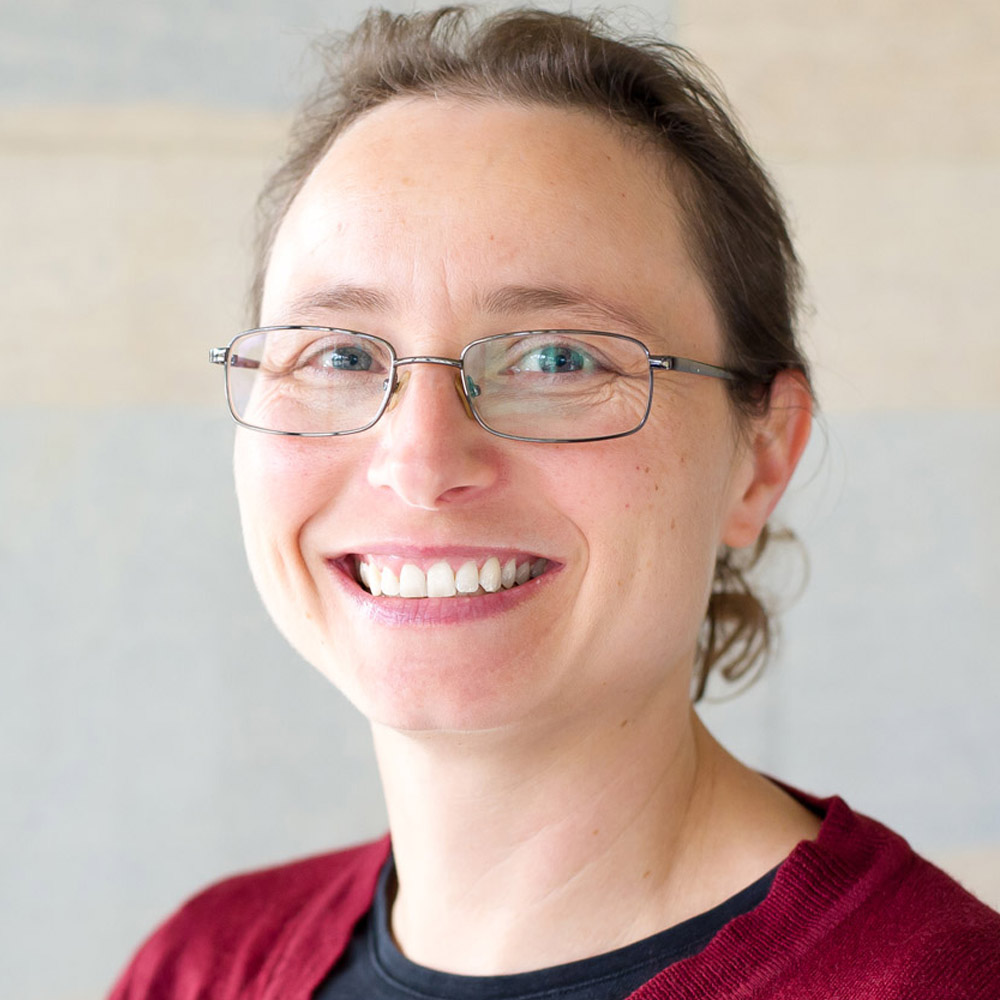
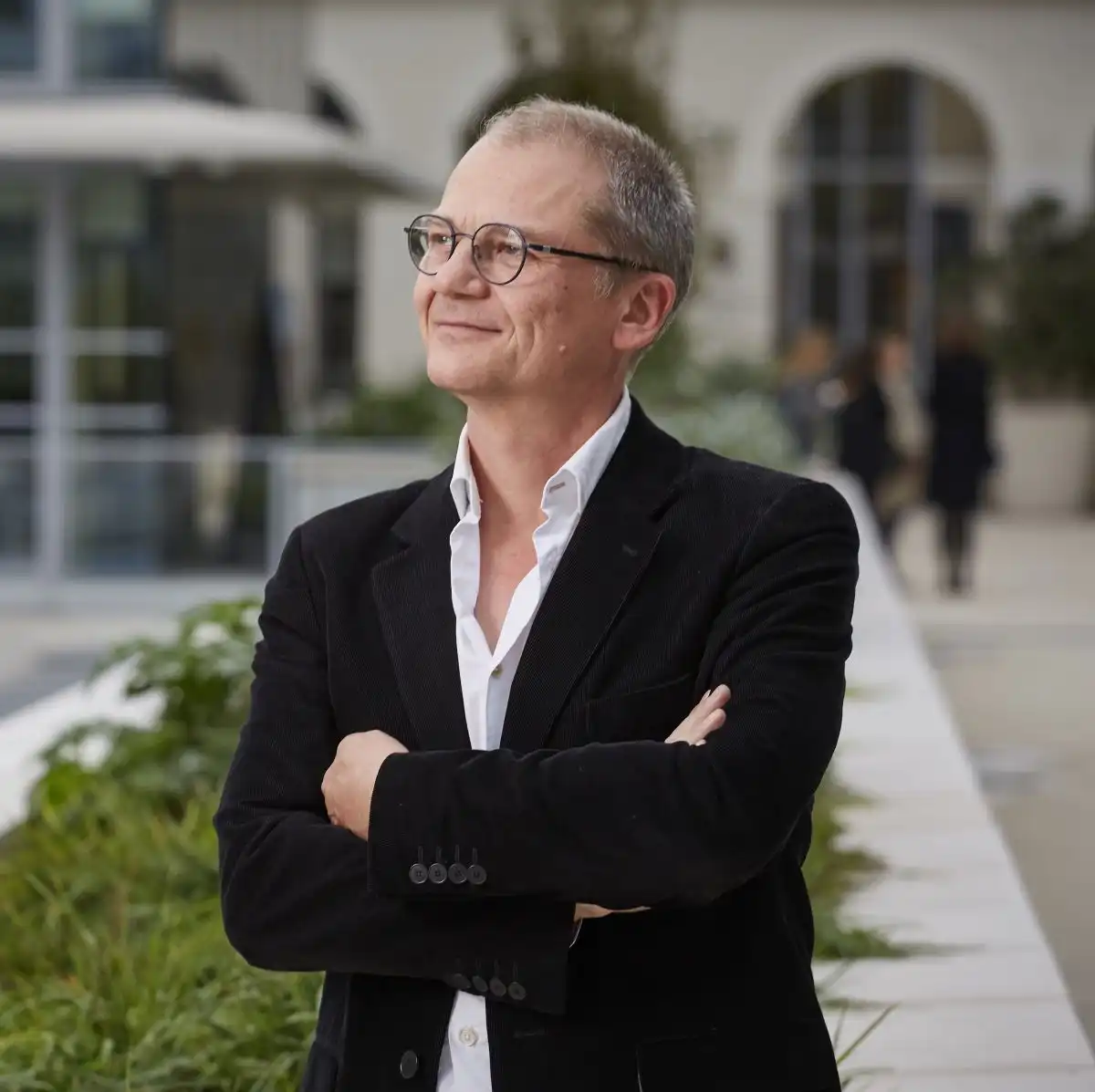
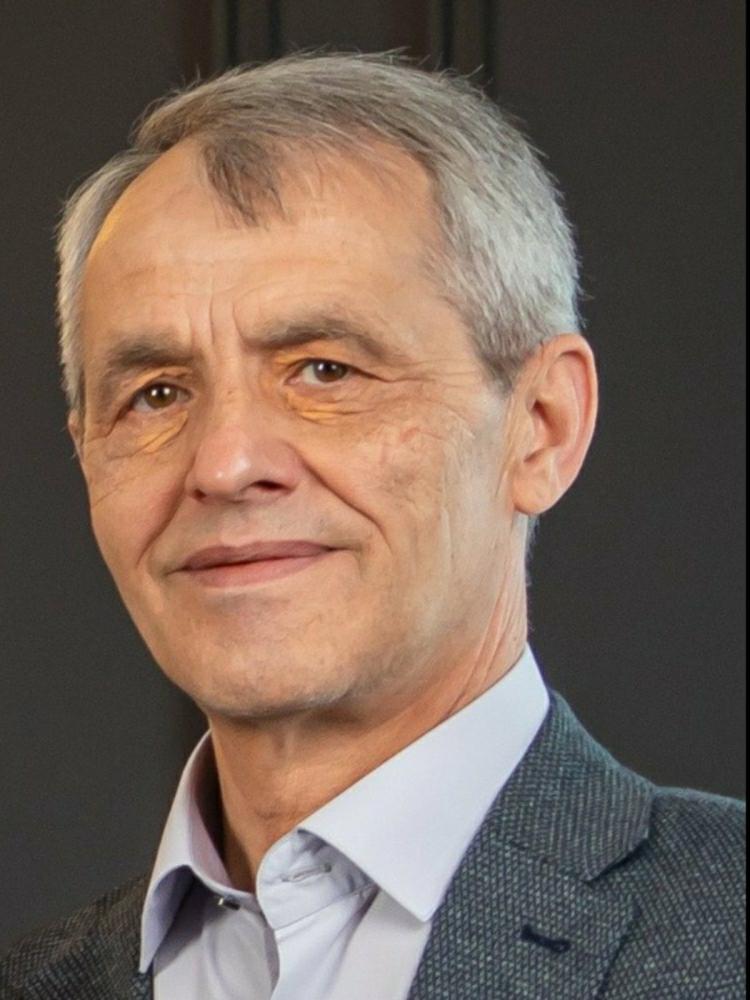
Dr. Jiahong Chen is a Lecturer in Law at the University of Sheffield School of Law . His research focuses on the intersection of law and technology, particularly Data Protection Law , Cybersecurity Law , Law and AI , and Internet Regulation . He serves as Departmental EDI Director and Deputy LLM Programme Director. PhD, University of Edinburgh LLM, China University of Political Science and Law LLB, China University of Political Science and Law His research examines regulatory challenges in smart homes , large language models , and data ethics . Current projects include the ESRC-funded "The Internet of Tactical Engagement (IoTE)" and RAI UK's "Addressing Socio-technical Limitations of Large Language Models" . Publications span GDPR interpretation, health data regulation, and smart device accountability. He teaches modules on Information Technology Law , Data Privacy and Governance , and Consumer Law .
Robin Dunford is a Principal Lecturer at the University of Brighton's School of Humanities and Social Science, affiliated with the Inclusive Digital Societies Research Excellence Group and Centre for Applied Philosophy, Politics and Ethics. His academic profile centers on critical global ethics and political philosophy with emphasis on structural justice. His research spans four interconnected domains: Civilian Protection and Responsibility to Protect, critiquing conventional frameworks through works like Just War and the Responsibility to Protect: A Critique ; Human Rights and Transnational Resistance, particularly peasant rights advocacy via the UN Declaration on the Rights of Peasants; Decolonial Ethics, advancing 'pluriversality' as an alternative to cosmopolitanism in global ethics; Law, Ethics and Democracy, co-coordinating action-research against anti-democratic governance through the Law, Ethics and Democracy Collective. Recent publications (2019-2025) reveal consistent engagement with decolonial theory, food sovereignty movements, and curriculum transformation, frequently intersecting transnational activism with critical race and peasant studies. Dunford supervises PhD candidates including Afxentis Afxentiou (drone ethics), Marina Espinoza (Obama drone program), and current students exploring nonviolence, disability movements, Marxist imperialism, and feminist cosmopolitanism. He co-edits the 'Off the Fence: Morality, Politics, Society' book series and co-convenes the British International Studies Association's Ethics and World Politics working group.
Rebecca Diamond is the Class of 1988 Professor of Economics at Stanford University’s Graduate School of Business, a Senior Fellow at the Stanford Institute for Economic Policy Research (SIEPR), and holds a courtesy appointment in the Economics Department. Her research focuses on urban economics, housing policy, economic inequality, and labor markets. Key areas include analyzing rent control effects, gig economy dynamics, nutritional disparities, and spatial sorting of workers by skill. She advises doctoral students on topics like urban economics and public policy. Her work has been published in top journals such as the American Economic Review, Quarterly Journal of Economics, and Review of Economic Studies. Teaching responsibilities include courses on applied econometrics, public economics, and social insurance. She has been involved in doctoral training through practicums and independent studies. Her research has influenced policy debates on housing affordability, racial disparities in housing returns, and the impacts of high-skilled immigration on innovation. Positions: Professor of Economics (GSB), SIEPR Senior Fellow, Courtesy Professor (Economics) Key Research Themes: Urban policy, labor market inequality, gig economy, food deserts, rent control
Robert Thomas is a Professor of Public Law at the University of Manchester's School of Law. He holds a LL.B. from Cardiff University (1995) and a Ph.D. from Nottingham University (1998). His research focuses on administrative law, immigration/asylum law, and administrative justice, with particular emphasis on tribunals, judicial review, and institutional design. He has advised the UK Parliament on immigration reforms and authored influential works like Administrative Justice and Asylum Appeals (2011), which won the Peter Birks Prize. His recent projects include studies on AI in governance, constitutional history, and systemic administrative justice failures. Thomas is actively involved in legal education, co-authoring Public Law (5th ed., 2024) and supervising postgraduate research in public law and immigration law. Key research contributions include empirical analyses of asylum appeals, administrative tribunals, and ombudsman practices. He has addressed challenges in public sector digitalisation, outsourcing impacts on administrative justice, and the implications of pandemic governance. Thomas advocates for administrative fairness agendas in immigration systems and contributes to legal scholarship through peer-reviewed articles and edited volumes on topics ranging from judicial review to constitutional caricature history. His awards include the 2011 Peter Birks Prize for Outstanding Legal Scholarship. Thomas engages with policy-making through expert testimony, public commentary, and collaborative research funded by the British Academy and Nuffield Foundation. His work intersects law, policy, and social justice, emphasizing the practical implications of legal frameworks on vulnerable populations.
Dr. Alison Braley-Rattai is an Associate Professor in the Department of Labour Studies at Brock University. Her research focuses on labour rights, employment law, and human rights in the workplace, with a particular emphasis on the intersection of labour policies and constitutional rights. She holds a PhD from the University of Western Ontario, an LLM from Osgoode Hall, an MA from York University, and a BA (Hons) from York University. Her work explores topics such as union responses to workplace mandates, constitutional challenges to back-to-work legislation, and the legal contours of academic freedom. She has published extensively on issues like the right to strike, pandemic-related labour policies, and the impact of political shifts on labour relations. Dr. Braley-Rattai’s scholarship bridges legal frameworks, policy analysis, and real-world labour dynamics. Her recent articles highlight trends in pandemic-era workplace policies, constitutional implications of labour disputes, and the evolving role of minority unionism. She actively contributes to debates on balancing employer obligations with worker rights, particularly in contexts like vaccination mandates and free speech directives.
Lena Wahlberg is an Associate Professor and Senior Lecturer at the Department of Law, Lund University, serving as Assistant Head of Department. Her roles include interdisciplinary research and teaching in medical law, evidence law, and jurisprudence. She leads the Law, Evidence and Cognition (LEVIC) research group and participates in the Science and Proven Experience (VBE) program funded by the Swedish Foundation for Humanities and Social Sciences. Her research focuses on legal causation, expert evidence evaluation, and the intersection of law with natural sciences/medicine. Notable projects include analyzing expert testimony reliability, legal implications of scientific evidence gaps, and defining 'science and proven experience' in healthcare decision-making. Recent publications (2024-2025) emphasize healthcare policy, data governance, and legislative reform in abortion laws and research ethics. She collaborates internationally with institutions like Harvard Medical School and Carnegie Mellon University. Teaching responsibilities include coordinating the doctoral course Theoretical Foundations for Doctoral Studies in Law . Supervised doctoral students include Amanda Bills (Public International Law) and Yana Litins’ka (Medical Law). Research funding includes projects from the Swedish Research Council and Riksbankens Jubilieumsfond. Key affiliations: Member of the VBE research consortium (2015-2020+), LEVIC group, and contributor to national policy consultations on health data and medical ethics.
Suzie Dunn is an Assistant Professor at Dalhousie University's Schulich School of Law and Acting Director of the Law & Technology Institute. She teaches Contracts, Judicial Decision-Making, Law and Technology, Intellectual Property, and Legal Ethics. Her research focuses on the intersection of gender, equality, technology, and law, particularly technology-facilitated violence, deepfakes, and digital privacy. Education: PhD candidate at the University of Ottawa Faculty of Law, with JD, LLM, and BA degrees. She previously served as a part-time professor at the University of Ottawa, where she taught Contracts and Law of Images, earning a 2021 teaching excellence award. Awards include the Joseph-Armand Bombardier Scholarship for PhD research and the Greenberg Prize for Feminist Research. Professional roles include advising the G7 and UN on gender-based violence in digital contexts, contributing to CIPPIC interventions in landmark Supreme Court cases (R v Jarvis, R v Downes), and serving on advisory boards for organizations like the Women’s Legal Education and Action Fund. She is a Senior Fellow at CIGI, working on global projects against online gender-based violence, and co-authored a UN resolution on digital violence prevention. Her work extends to tech safety toolkits for domestic violence shelters, policy development, and international collaborations. She was called to the Ontario bar in 2016 and actively engages in public discourse on AI ethics and digital rights.
Sarah Shirazyan is a Lecturer in Law at Stanford Law School , where she designed the Interpol-Stanford Policy Lab. She also serves as Director and Head of Meta's GenAI Product Policy work, overseeing responsible AI development across Meta's platforms. Doctor of Juridical Sciences (J.S.D.) from Stanford Law School LL.M. from SOAS/UCL, University of London Her research focuses on the intersection of national security , public policy , and international law , particularly examining: Effectiveness of UN Security Council responses to WMD terrorism Framework for regional organization collaboration in WMD prevention Platform content policy development and misinformation governance Responsible AI implementation under legal frameworks Key publication themes include: Platform algorithmic accountability Media capture in digital domains Content policy development during crises UN Security Council institutional limitations Regional organization synergies in security Recipient of Gerald J. Lieberman Award for research, teaching, and community service Professional affiliations: Stanford Law School Stanford Center for International Security and Cooperation (CISAC) INTERPOL European Court of Human Rights Council of Europe United Nations
Karen Hulme is a Professor at the University of Essex's Essex Law School, where she has been affiliated since 2001. She holds a PhD from Essex (2002), an LL.M. in Public International Law from Nottingham (1996), an LL.B. from Nottingham (1995), and a Postgraduate Certificate in Higher Education Practice (2006). Her research focuses on the intersection of environmental law, armed conflict, and human rights, with particular emphasis on climate change governance, biodiversity conservation, and remediation of conflict-related environmental damage. Her scholarly work explores environmental protection mechanisms during military operations, human rights frameworks for ecological governance, and legal responses to emerging threats like fracking and marine litter. She collaborates extensively with NGOs including the Conflict and Environment Observatory (CEOBS) and chairs the IUCN WCEL Specialist Group on Peace, Security and Conflict. Professor Hulme's publications demonstrate sustained focus on developing legal frameworks for environmental protection in conflict zones, with recent work addressing energy justice and planetary crises. She received the American Society of International Law's Francis Lieber Prize (2004) for her book War Torn Environment: Interpreting the Legal Threshold . Current PhD Students: Enitan Adetutu Lawson Charles Williams Junior Mensah Research Grants: Reimagining Food Systems (ESRC, 2024) Implementing ILC Principles on Environmental Protection in Conflict (ESRC IAA, 2022) Litter Law Strategy (CPRE, 2016)
Daniel Schneider is the Malcolm Wiener Professor of Social Policy at the Harvard Kennedy School (HKS) and a Professor of Sociology at Harvard University’s Faculty of Arts and Sciences (FAS). He holds a B.A. in Public Policy from Brown University (2003) and a Ph.D. in Sociology and Social Policy from Princeton University (2012). Prior to his current roles, he was an Assistant Professor of Sociology at UC Berkeley (2012–2020) and a Robert Wood Johnson Foundation Postdoctoral Scholar in Health Policy Research at Berkeley/UCSF. His research focuses on social demography, inequality, and the intersection of work and family life. Key themes include precarious employment, workplace scheduling instability, gender and racial inequities in labor markets, and the effects of policy interventions on worker well-being. As Co-Director of the Shift Project, Schneider leads research on unpredictable work schedules and their impacts on household economic security and health. Recent articles highlight his work on paid sick leave policies, job quality mobility during the “Great Resignation,” and the gender wage gap in the service sector. His research has been supported by grants from NIH/NIA, the Urban Institute, and the Annie E. Casey Foundation, among others. He currently serves as a W.T. Grant Foundation Faculty Research Scholar. Notable contributions include studies on the health consequences of employment shocks during the pandemic, the role of labor market conditions in job mobility, and the relationship between workplace technology and job retention for older workers. Schneider’s work bridges academic research with policy advocacy, emphasizing evidence-based solutions to reduce economic and social inequalities.
Niccolò Ridi is Senior Lecturer in Public International Law and Associate Director of the Centre for International Governance and Dispute Resolution (CIGAD) at King's College London's Dickson Poon School of Law. He joined King's in 2021 after roles at Liverpool University, Copenhagen University, and the Graduate Institute of International and Development Studies. He holds a PhD from King's, an LLM from Cambridge, and an LLB/MA from Florence. His research focuses on international law (public/private), dispute settlement, and empirical methodologies including data mining/social network analysis. He is finalizing books on international adjudication precedent and comity principles (with Thomas Schultz). He serves as Assistant Editor of the Journal of International Dispute Settlement and is affiliated with leading legal societies. Key research areas include judicial behavior analysis, international court performance, and legal communities' practices. His recent work employs scientometrics to study legal idea propagation and network analysis of scholarly collaboration. He co-leads interdisciplinary initiatives like the Centre for Data Futures, exploring data-driven legal tools. His 2020s research emphasizes ICJ dynamics, Security Council resolution impacts, and investment arbitration innovations. He has supervised 1 PhD student and participates in global legal forums.
Bruno Palier is a CNRS Research Director at Sciences Po, affiliated with the Centre d'études européennes et de politique comparée (CEE) and a key member of the Laboratoire interdisciplinaire d’évaluation des politiques publiques (LIEPP). He is a leading scholar in comparative politics and public policy, focusing on the reform of social protection and pension systems in France and Europe. University: Sciences Po School: Centre d'études européennes et de politique comparée Academic Rank: Researcher (CNRS) His research interests lie at the intersection of political science, sociology, and public policy. He is a foremost expert on the political economy of welfare state reform, social investment strategies, and the dynamics of pension reforms. His work examines how political institutions, economic pressures, and social actors shape the evolution of social policies across advanced democracies. Palier's recent projects center on the contemporary crisis of work in France. He coordinated the 2023 collective work What Do We Know About Work? , which brought together 60 social scientists to document the realities of working conditions, management practices, digitalization, and inequalities. This project has sparked a major public and academic debate, leading to a follow-up initiative, Working Better , which aims to translate research findings into concrete policy proposals for improving the quality of work. Major Works: What do we know about work? (2023) Working Better (2025, forthcoming) The World Politics of Social Investment (2022, 2 vols.) Refonder le système de protection sociale (2014) Réformer les retraites (2021) Throughout his career, Palier has led major research initiatives, including serving as the director of LIEPP (2014-2020) and coordinating the European Network of Excellence RECWOWE. He has also held visiting professorships at Harvard, Tokyo, and Stockholm universities, demonstrating his international academic standing. His work is highly influential in both academic circles and public policy debates, particularly in France. He has a strong record of scientific mediation, actively engaging with the media and policymakers to bridge the gap between academic research and public discourse. His current work on the future of work and social investment represents a significant contribution to understanding and addressing some of the most pressing social challenges of our time.
Professor Heejung Chung is Professor of Work and Employment at King’s College London and Director of the King's Global Institute for Women's Leadership. She is based in the HRM & Employment Relations department within King’s Business School. Her research focuses on flexible working, gender and racial inequalities, work-life balance, and comparative labour market policies. Institution: King’s College London School: King’s Business School Department: HRM & Employment Relations Role: Professor and Director Her research interests include human resource management, gender inequalities at work, remote and hybrid working, work-family conflict, division of domestic labour, and advanced quantitative and qualitative methods. She employs large-scale longitudinal datasets and digital diaries to examine how flexible working affects marginalized groups and shapes social policy. The most recent articles reflect a strong trend toward investigating the social implications of remote and hybrid work, particularly focusing on gender and racial equity, flexibility stigma, and policy impacts. Her work increasingly emphasizes intersectionality, national policy contexts, and organizational change. Short-listed for the Rosabeth Moss Kanter Awards for Excellence in Work-Family Research Long-listed for the Cambridge University Press Excellence in Social Policy Research Named in Onalytica’s Top Voices in Future of Work 2023 Named in HR Magazine's 'Most Influential' list Professor Chung has secured over £10 million in research funding as PI or Co-I from ESRC, ERC, Nuffield, NORFACE, and others. She actively supervises PhD students and contributes to editorial boards of journals such as Gender & Society and Work, Employment & Society. She is a member of the executive boards of the European Social Policy Analysis Network and the Work and Family Researchers Network. She leads the King's Global Institute for Women's Leadership, where she promotes research and policy initiatives on gender equality, including the Gender Equality Index UK. Her work has directly influenced the European Commission’s Work-Life Balance Directive and ongoing discussions about the 'Right to Disconnect'.
Mykola Oleksiyovych Zhuravel serves as a Senior Lecturer at Zaporizhia Polytechnic National University within the Department of Occupational Safety and Environmental Protection, part of the Faculty of Construction, Architecture and Design. With over 37 years of service since 1987, he has established himself as a dedicated educator and researcher in occupational safety, civil defense, and environmental protection fields. His research interests span occupational safety, civil defense, environmental safety, life safety, industrial safety, ergonomics, and risk management. Zhuravel's scholarly work consistently addresses practical safety concerns in Ukrainian industrial and educational settings, with a particular focus on regional environmental challenges in Zaporizhzhia. His publications demonstrate a progression from foundational safety principles to contemporary concerns like ecological energy security and digital workplace safety. Analysis of his 15 most recent publications reveals a strong emphasis on practical applications of safety science, with recurring themes in environmental protection, workplace hazard mitigation, and emergency preparedness. His work bridges theoretical safety frameworks with practical implementation strategies, particularly relevant to Ukrainian industrial contexts. Zhuravel maintains active professional development, with numerous certifications through 2024 in occupational safety, civil defense, and academic integrity. He is an associated member of the European Community for Occupational Safety and Health (EUOP register number 13823000211, registered June 12, 2023). As an educator, he teaches multiple safety-related disciplines including Safety of Life of a Specialist with Basics of Labor Protection, Protection of Human Living Environment and Occupational Safety, and Civil Protection and Occupational Safety in Industry. His teaching approach integrates theoretical knowledge with practical safety applications relevant to Ukrainian industrial contexts.
Prof. Dr. Kirsten Meyer is a full professor for Practical Philosophy and Philosophy Education at the Institute of Philosophy, Faculty of Philosophy, Humboldt University of Berlin. She has held this position since the summer semester of 2011, after serving as a junior professor from 2008 to 2011. Her work bridges philosophical theory with educational practice, with a particular focus on ethics and intergenerational justice in the context of contemporary challenges like climate change. Dr. Meyer's interdisciplinary educational background reflects her unique scholarly perspective: Diploma in Biology (1999, University of Münster/Bielefeld/St. Andrews) State Examination in Philosophy (2000) Doctorate from Bielefeld University (2002) Kirsten Meyer's research program spans several interconnected domains of philosophical inquiry. Her primary focus is on intergenerational ethics, where she examines humanity's moral obligations to future generations, particularly regarding climate change and resource consumption. She has made significant theoretical contributions to educational philosophy, exploring how philosophical reasoning can be practically integrated into school curricula. Her work on educational justice addresses complex questions about talent development, equal opportunity, and the relationship between education and conceptions of the good life. Meyer also contributes to environmental ethics, analyzing the intrinsic value of nature and our responsibilities toward it, informed by her background in biology. Analysis of her recent publications reveals a consistent thematic trajectory focused on intergenerational justice and educational philosophy. Meyer frequently examines how abstract philosophical concepts can inform practical educational policy, particularly regarding talent development and educational equity. She has become a prominent voice in climate ethics, connecting theoretical debates about future generations to concrete policy proposals like using estate tax as a climate protection instrument. Her interdisciplinary approach, combining insights from biology, philosophy, and education, allows her to address complex ethical questions with both theoretical rigor and practical relevance. Professor Meyer is deeply engaged in public philosophical discourse, regularly contributing to media discussions on intergenerational justice, climate ethics, and educational policy. She has participated in numerous interviews with major German media outlets including Deutschlandfunk, BR, ZDF, and RBB, helping translate complex philosophical concepts for broader audiences. Her practical contributions extend to educational initiatives, including the development of teaching materials for philosophy education through philovernetzt on topics ranging from 'What should I become? Work and the good life' to 'Fake News' and 'Consent.'