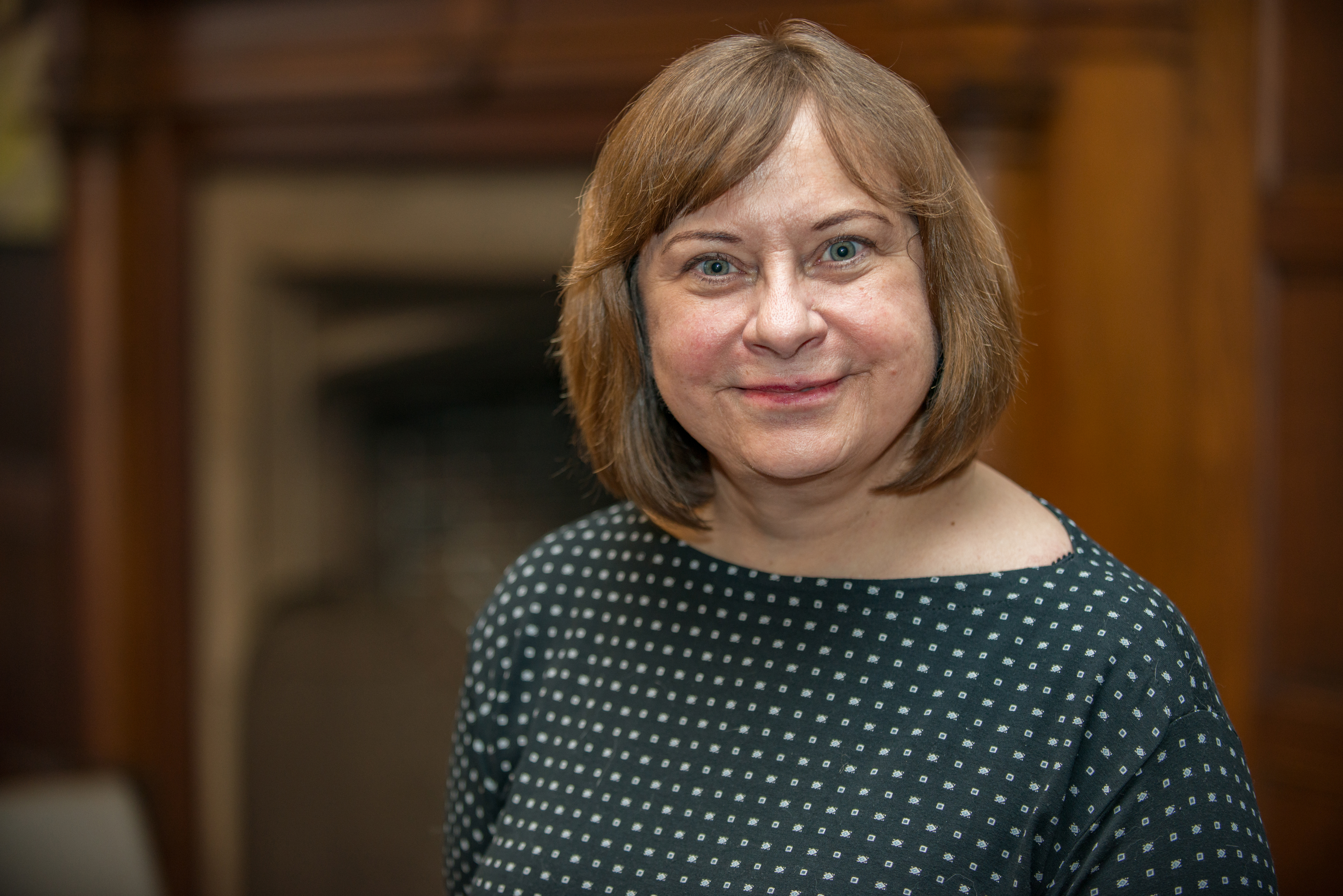
Susan L. Burns is a Professor at the University of Chicago, where she holds appointments in the Department of History, Department of East Asian Languages and Civilizations, and The College. She currently serves as Department Chair and Chair of the Undergraduate Studies Committee. Education: PhD, University of Chicago (1994) Her research focuses on Japan’s nineteenth-century social history, emphasizing intellectual and cultural practices, the intersection of medicine and public health, gender analysis, and legal discourses. She explores continuities between Japan’s early modern and modern eras, particularly how medical and legal frameworks shaped national identity. Recent publications span leprosy’s impact on citizenship, the rise of medical marketplaces, and gendered dimensions of reproductive health. Her digital humanities work on Mapping Medical Tokyo integrates GIS and text mining for historical analysis. Scientific Awards: Fulbright-Hays Fellowship IIE Fulbright Japan Foundation Japan Society for the Promotion of Science National Endowment for the Humanities She has secured grants for research on medical commodities, psychiatric practices, and the spatial dimensions of Meiji-era health policies. Her courses include Gender and Japanese History and Medicine and Culture in East Asia .
Shiri Azenkot is an Associate Professor at the Jacobs Technion-Cornell Institute at Cornell Tech and Cornell University, affiliated with the Information Science Department and Technion’s Computer Science Department. Her research focuses on accessibility innovations in emerging technologies, particularly addressing needs of people with vision impairments and neurodiverse populations. She holds a PhD from the University of Washington, advised by Richard Ladner and Jacob Wobbrock, and has been recognized with prestigious awards including the NSF Graduate Research Fellowship. Education: PhD in Computer Science & Engineering from University of Washington (advisors: Richard Ladner, Jacob Wobbrock). Research interests include VR/AR accessibility, assistive technology design, inclusive education tools, and ethical AI applications. Current projects explore social VR avatars for invisible disabilities, AR navigation aids, and AI moderation systems against ableist hate speech. Her work is funded by NSF, AOL, Verizon, and Facebook. Recent publications address video accessibility for ADHD users, AI-driven scene descriptions for blind users, and tactile learning materials co-designed with educators. She leads the XR Access initiative promoting inclusive virtual/augmented reality. Awards include the UW Graduate Medal (2020), NSF CRII Award (2017), and AT&T Labs Fellowship (2014). Her research bridges academic innovation with industry impact through collaborations with tech companies and disability advocacy groups.
Haidy Geismar serves as Professor of Anthropology at University College London (UCL), where she is affiliated with the Department of Anthropology. She co-directs UCL's Digital Anthropology Program and is the founding director of the School for the Creative and Cultural Industries at UCL East. Geismar also serves as curator of the UCL Ethnography collections, facilitating exhibitions with community groups, students, and artists. Her institutional affiliations extend to the Tate and Victoria and Albert Museum in London, where she maintains long-term professional relationships. Geismar's research explores the intersections of intellectual and cultural property, indigenous rights, and colonial legacies with digital technologies and museum practices. Her work focuses on how digital platforms transform cultural representation, particularly in the South Pacific region including Vanuatu and New Zealand. She investigates how communities engage with digital collections, examining both the materiality of digital objects and their social implications. Her research demonstrates how indigenous knowledge systems interact with contemporary digital infrastructures to create new forms of cultural expression and preservation. Analysis of Geismar's recent publications reveals a clear trajectory toward examining the material dimensions of digital culture within museum and archival contexts. Her work increasingly addresses how digital technologies reshape cultural heritage practices while maintaining critical attention to postcolonial perspectives. There is a notable emphasis on sensory experiences in digital spaces, the politics of representation in digital collections, and the ways digital platforms enable or constrain indigenous knowledge systems. Geismar's professional recognition includes: Mellon Research Fellow at Tate (2019-2020) Fellow of the Royal Anthropological Institute Chairperson of Te Maru o Hinemihi (since January 2024) Photography Committee member of the Royal Anthropological Institute (2016-2024) While specific grant information isn't detailed in the available materials, Geismar's sustained research projects indicate successful funding acquisition. Her long-term collaborations with the Vanuatu Cultural Centre since 2000 and with Maori curators in New Zealand since 2004 suggest significant research support. Current projects like 'Finding Photography' and 'Collecting in Context' demonstrate ongoing research activity requiring funding. Geismar has created the Culture Lab at UCL East, an experimental curatorial space designed as a collections-rich environment for innovative display and research. This facility serves as a hub for her work with the School for the Creative and Cultural Industries, which brings together academic research with creative practice. The Culture Lab hosts exhibitions like 'Power!' and facilitates collaborations between university researchers, community groups, and students, creating a dynamic space for exploring the intersection of material culture and digital technologies.
Michael R. Dove is the Margaret K. Musser Professor of Social Ecology and Professor of Anthropology at Yale University, where he also serves as Curator of Anthropology at the Peabody Museum and Co-Coordinator of the Combined YSE/Anthropology Doctoral Program. With over forty years of research experience, his work focuses on environmental anthropology, particularly the environmental relations of local communities in South and Southeast Asia. Dove earned his B.A. from Northwestern University and his M.A. and Ph.D. from Stanford University. His academic journey has spanned decades of field research in Asia, including more than a dozen years conducting long-term studies on human ecology in Borneo and Java, developing government research capacity in Indonesia, and advising the Pakistan Forest Service on social forestry policies. Professor Dove's research interests encompass the anthropology of climate change, cultural and political aspects of natural hazards and disasters, indigenous environmental knowledge and practice, environmental institutions and movements, history of environment-related sciences, and multispecies ethnography. His work often examines how local environmental systems interact with national and global markets, politics, and ideologies, with a focus on problematizing orthodox approaches to conservation and development. He has made significant contributions to understanding human-environment relations through both theoretical frameworks and practical applications. Dove's recent scholarly output demonstrates a progression toward more integrated approaches to environmental challenges, blending historical perspectives with contemporary issues. His publications increasingly focus on the intersections of climate change, social justice, and indigenous knowledge systems, while maintaining his longstanding interest in Southeast Asian environmental relations. The work shows a growing emphasis on post-humanist approaches and multispecies ethnography, reflecting broader trends in environmental anthropology while maintaining his distinctive focus on political ecology and institutional analysis. As an educator, Professor Dove has supervised numerous doctoral and master's students, many of whom have gone on to win research awards and secure prestigious positions. He organizes separate research labs for doctoral students from Yale School of the Environment and other departments, as well as for joint YSE/Anthropology doctoral students. His advisees typically conduct international research and have excellent records of obtaining research support both within and beyond Yale. The Dove Lab at Yale School of the Environment serves as a hub for environmental anthropology research, focusing on topics including natural resource management, property rights, power struggles, household energy transitions, and human-wildlife interactions. The lab fosters a collaborative environment with 30-50 students working on related issues each year, characterized by supportive peer dynamics rather than competition. It also contributes to policy and social change through its research and the work of its alumni.
Professor Richard Powell is a Cultural, Political, and Historical Geographer with expertise in the Polar Regions. He is currently the Professor of Arctic Studies and Director of the Scott Polar Research Institute at the University of Cambridge, while also serving as a Fellow of Fitzwilliam College. His career spans roles at the University of Oxford and the University of Liverpool, with a focus on the Arctic and its geopolitical, cultural, and environmental complexities. BA Geography, St. John's College, University of Oxford (Double First Class Honours) MA Geography, University of British Columbia (Distinction) PhD Geography, Emmanuel College, University of Cambridge PG Cert. Learning and Teaching in Higher Education, University of Liverpool Richard's research explores historical and cultural geographies, the geopolitics of the Arctic, geographies of science, and the interplay between environment and politics in the Circumpolar Region. His ERC-funded project ARCTIC CULT investigates colonial representations in Arctic studies, while prior work includes ethnographic studies of Arctic scientific practices and the political implications of resource extraction. He has authored a monograph, Studying Arctic Fields , and edited volumes on polar geopolitics. His recent publications emphasize the intersection of Arctic governance, colonial histories, and environmental science. Notable awards include the ERC Consolidator Grant and the Gill Memorial Award , alongside teaching accolades like the Teaching Excellence Award at the University of Oxford. He has supervised over 30 postgraduate students and leads interdisciplinary teams in projects funded by the Leverhulme Trust, AHRC, and ESRC. ERC Consolidator Grant (2016) Gill Memorial Award (2013) Teaching Excellence Award (2012) Environment and Planning A Ashby Prize (2007) RGS-IBG Area Prize (2002) H.O. Beckit Memorial Prize (1998) Gibbs Book Prize (1998) Richard collaborates with institutions like the Royal Society, Royal Geographical Society, and National Museum of Denmark, and has hosted seminars and workshops on Arctic geopolitics. He is a member of the UK Arctic and Antarctic Partnership Steering Committee and contributes to policy discussions on polar governance.
Joshua B. Guild is an Associate Professor in the Department of African American Studies at Princeton University. He is also an Associated Faculty member in the Program in Urban Studies and has been involved with the Center for Digital Humanities. His scholarly work bridges historical research with public engagement and digital innovation. His education includes a PhD in History and African American Studies from Yale University and an undergraduate degree from Wesleyan University, where he was a Mellon Mays Undergraduate Fellow. Professor Guild's research centers on 20th- and 21st-century African American social and cultural history, urban history, and the modern African diaspora. His interests include migration, black internationalism, black popular music, and the black radical tradition. He is deeply engaged in the digital humanities and public scholarship, organizing seminars and contributing to podcasts and public exhibitions. The recent publications and projects reflect a strong focus on urban Black communities, transnational migration, and cultural politics. Themes include the Great Migration, postwar New York and London, New Orleans after Katrina, and the Black 1980s. His work combines historical analysis with cultural critique and social justice advocacy. Scientific Awards and Fellowships: Mellon Mays Undergraduate Fellowship Andrew W. Mellon Foundation Fellowship Ford Foundation Fellowship Woodrow Wilson National Fellowship Foundation Award Charles Warren Center Fellowship (Harvard University) W.E.B. Du Bois Institute Fellow (Harvard University) Professor Guild has advised graduate students through seminars and collaborative projects, though no individual students are named. He has led initiatives supported by institutional grants, particularly in digital humanities and public engagement. His leadership in the 'Black Studies in the Digital Age' seminar and editorial work on the 'Black 1980s' special issue demonstrates his commitment to advancing the field through interdisciplinary collaboration. He is affiliated with the Program in Urban Studies and the Center for Digital Humanities at Princeton, where he contributes to shaping curricula and research directions in African American Studies and digital scholarship.
David Armitage is the Lloyd C. Blankfein Professor of History at Harvard University, where he serves as Chair of the Committee on Degrees in Social Studies and teaches intellectual history and international history. He also holds affiliations with the Harvard Department of Government, Harvard Law School, and is an Honorary Professor at the University of Sydney and Queen's University Belfast. Previously, he chaired Harvard's Department of History (2012-14, 2015-16) and taught at Columbia University for eleven years before joining Harvard in 2004. Armitage was born in Britain and educated at the University of Cambridge and Princeton University. His academic journey includes: Undergraduate studies at University of Cambridge PhD at Princeton University Teaching position at Columbia University (1993-2004) Professorship at Harvard University (2004-present) Honorary positions at University of Sydney, Queen's University Belfast, and St Catharine's College, Cambridge Professor Armitage specializes in intellectual history, international history, and global history, with particular expertise in the history of political thought, empires, and international law. His scholarly approach emphasizes the longue durée perspective, seeking to understand historical phenomena across extended time periods rather than narrow chronological frames. He has been a leading voice in advocating for historians to engage with "big history" that spans centuries, arguing that contemporary challenges like climate change and economic inequality require historical understanding that transcends the short-term thinking prevalent in modern politics and policy. His extensive publication record demonstrates consistent engagement with foundational texts and concepts in political theory, declarations of independence, civil wars, and oceanic history. Armitage's work shows a clear trajectory toward increasingly global and interdisciplinary approaches, connecting intellectual history with legal, political, and environmental frameworks. His scholarship bridges early modern and contemporary history, examining how historical concepts continue to shape modern international relations and political thought. Armitage's significant contributions to historical scholarship have been recognized with prestigious awards: Caird Medal from the National Maritime Museum (2006) for "conspicuously important work ... of a nature that involves communicating with the public" Walter Channing Cabot Fellow from Harvard (2008) for "achievements and scholarly eminence in the fields of literature, history or art" LittD from Cambridge University (2015), the university's highest degree, for "distinction by some original contribution to the advancement of science or of learning" As an advisor and mentor, Armitage has guided numerous graduate students through doctoral programs at Harvard and previously at Columbia. His scholarly leadership extends to co-editing two major book series with Cambridge University Press ( Ideas in Context and Cambridge Oceanic Histories ), serving on the Steering Committee of the Center for Early Modern Political Thought at the Folger Shakespeare Library, and contributing to various academic organizations. His work has attracted significant research funding supporting his global historical investigations. Professor Armitage is deeply involved in collaborative scholarly initiatives, particularly through his work with the Harvard Academy for International and Area Studies, where he serves as a Senior Scholar. His research often involves interdisciplinary teams examining oceanic histories, international law, and global political thought. He has been instrumental in developing the "Cambridge Oceanic Histories" series, which brings together scholars from multiple disciplines to explore the historical significance of oceans as connective spaces rather than barriers.
Courtney Rivard is an Assistant Professor in English & Comparative Literature at the University of North Carolina, Chapel Hill, with a secondary appointment at the School of Data Science & Society. She directs the Digital Literacy and Communications (DLC) Lab, focusing on digital humanities, critical game studies, and archival rhetorics. Her research bridges rhetoric, digital methods, and social justice, examining how archives and digital tools shape narratives around race, gender, and national identity. Dr. Rivard holds a Ph.D. from the University of California, Santa Cruz (2012). Her book Layered Lives (2022) combines archival and computational methods to analyze Depression-era life histories. She has secured grants from NEH, ACLS, and UNC initiatives, supporting projects like the Critical Gaming Initiative and oral history archives on PFAS contamination. Her teaching emphasizes digital literacy and public engagement, including courses on data rhetoric, game studies, and multimodal composition. The DLC Lab hosts the Greenlaw Gameroom, a game-based classroom funded by Lenovo, fostering critical pedagogies through play. Research Labs: Digital Literacy and Communications Lab, Greenlaw Gameroom Grants: NEH, ACLS Digital Extension Grant, UNC Arts & Humanities Fellowships Key Projects: Critical Gaming Initiative, Photogrammar collaboration, “Forever Chemicals” oral history archive
Carl-Gösta Ojala serves as Senior Lecturer at Uppsala University's Department of Archaeology, Ancient History and Cultural Preservation, where his research bridges archaeological practice with critical examinations of colonial history and indigenous heritage. His academic profile demonstrates deep engagement with Sámi communities across historical periods, from Bronze Age material culture studies to contemporary issues of cultural preservation and indigenous rights. Dr. Ojala's research program centers on decolonizing archaeological methodologies through rigorous analysis of how colonial frameworks have shaped archaeological knowledge production in Northern Europe. His work particularly examines the historical collection of Sámi material culture and human remains, the impact of colonial infrastructure projects like hydroelectric dams on indigenous heritage sites, and the political dimensions of archaeological interpretation in Sápmi. He investigates how archaeological narratives have been constructed within colonial contexts and how contemporary practice can better incorporate indigenous perspectives. An analysis of his recent publications reveals evolving scholarly attention from historical colonial practices to their contemporary implications for indigenous self-determination and cultural heritage management. His 2023-2025 works demonstrate increasing focus on Sámi mobilities, dammed heritage, and the politics of archaeological representation, reflecting a trajectory toward more applied, community-engaged scholarship that addresses ongoing colonial legacies in cultural heritage institutions. Dr. Ojala has established himself as a critical voice in Nordic archaeological discourse through numerous book chapters, journal articles, and edited volumes including 'Archaeologies of "Us" and "Them": Debating History, Heritage and Indigeneity' (2017). His scholarship consistently challenges conventional archaeological paradigms while offering constructive frameworks for more ethical, collaborative research practices with indigenous communities in Northern Europe.
Tera W. Hunter is the Edwards Professor of American History and Professor of History and African American Studies at Princeton University, serving as Chair of the Department of African American Studies. A specialist in 19th and 20th century U.S. history, her scholarship centers on the intersections of gender, race, labor, and Southern histories. Her educational background includes: B.A. in History with Distinction from Duke University M.Phil. in History from Yale University Ph.D. in History from Yale University Professor Hunter's research illuminates African American family structures , gender dynamics under slavery , and labor systems in the postbellum South . Her work reveals how Black communities navigated oppression through familial bonds and social organization, challenging narratives of victimhood with evidence of agency and resilience. She bridges academic rigor with public engagement through frequent media commentary. Her publications demonstrate consistent focus on historical roots of contemporary racial issues, particularly through the lens of marriage and family across centuries. Books like Bound in Wedlock and opinion pieces in major publications form a cohesive body examining systemic injustice through intimate historical narratives. Her accolades include: Stone Book Award (Museum of African American History) Joan Kelly Memorial Prize (American Historical Association) Littleton-Griswold Prize (American Historical Association) H.L. Mitchell Award (Southern Historical Association) Letitia Brown Memorial Book Prize (Association of Black Women's Historians) Professor Hunter has mentored numerous doctoral students and secured significant research funding including National Humanities Center and Radcliffe Institute fellowships. Current projects include The African American Marriage Gap in the Twentieth Century and co-authoring The Making of a People: A History of African-Americans with Robin D.G. Kelley and Earl Lewis.
Jessica Brannon-Wranosky is a Professor in the Department of History within the College of Humanities, Social Sciences and Arts at East Texas A&M University. She specializes in women, gender and sexuality history and digital humanities applications, and currently serves as Project Director for the Handbook of Texas Women, a statewide public education initiative of the Texas State Historical Association. Her educational background includes: Ph.D. in History from the University of North Texas M.S. in History from Texas A&M University-Corpus Christi B.S. in Political Science from Texas A&M University-Corpus Christi Dr. Brannon-Wranosky's research centers on 19th-20th century U.S. women's history with regional focus on Texas and the South, examining suffrage movements, gender dynamics, and digital historical methodologies. Her work bridges academic scholarship with public engagement through digital platforms and educational outreach. Her publication portfolio reveals consistent thematic focus on Texan women's historical agency, with recent works emphasizing digital curation of primary sources and intersectional analysis of suffrage activism. The Handbook of Texas Women project exemplifies her commitment to transforming archival materials into accessible public resources. Her scholarly contributions have been recognized with: John H. Jenkins Award (Texas State Historical Association, 2015) Best Article Award (Texas Oral History Association, 2016) Liz Carpenter Award (2016) for co-edited volume Texas Women/American Women As lead investigator for the Handbook of Texas Women project, she directs a multidisciplinary team developing digital infrastructure for statewide historical content, collaborating with museums and educational institutions to produce exhibits like the Bob Bullock Texas History Museum's 2019-2020 suffrage exhibition.
Enrique Sánchez Lansch is a Professor of Media Dramaturgy at the Institute for Music and Media at Robert Schumann University of Düsseldorf, appointed in 2018. Born in Gijón, northern Spain, and raised in Cologne, he has established himself as a prominent documentary filmmaker with a strong focus on music-related subjects. His educational background includes studies in music with a focus on singing, Romance languages, philosophy, and German studies. He completed his master's thesis on adaptation of literature into music films. After gaining professional experience in fictional series production, he pursued further studies in film and screenwriting at Columbia University and UCLA. Sánchez Lansch's research and creative interests center on the intersection of music and visual media. His work explores how musical experiences can be effectively translated to film, examining the relationship between sound and image. He has particular expertise in documenting musical institutions, historical contexts of music, and the educational aspects of musical performance. His approach combines rigorous historical research with innovative visual storytelling techniques that respect the integrity of musical performance while creating compelling cinematic narratives. His filmography reveals a consistent focus on music documentaries that bridge cultural and historical contexts. Early works focused on major musical institutions and figures, while more recent projects have expanded to examine the relationship between music and broader social, political, and cultural phenomena. His films consistently demonstrate a sophisticated understanding of both musical content and cinematic storytelling. His notable awards include: German Film Award German Documentary Film Award Bavarian Film Award German Critics' Award German Kinogilde Award Franz Hofer Prize Best Documentary Film at Los Angeles Latino International Film Festival Best Documentary Film at SEMINCI Festival de Valladolid Diapason d'Or Emmy nomination for "A Celebration for Gershwin" Sánchez Lansch has served as a mentor to young filmmakers, notably curating and presenting music short films by young talents for the Beethovenfest Bonn from 2006 to 2013. His professional activities extend beyond filmmaking to include teaching at institutions such as the dffb (German Film and Television Academy Berlin) and his current professorship at Robert Schumann University. He is an active member of both the German Film Academy and the European Film Academy, contributing to the broader film community through these organizations. As Professor of Media Dramaturgy, Sánchez Lansch contributes to the academic framework of the Institute for Music and Media, bringing his extensive professional experience to bear on the education of future media creators. His work bridges the gap between academic study and professional practice in the field of music-related visual media.
Vazira Fazila-Yacoobali Zamindar serves as Associate Professor of History at Brown University, specializing in modern South Asia, decolonization, and visual archives. Her interdisciplinary work bridges historical scholarship with contemporary art and public engagement, notably through her acclaimed book The Long Partition and the Making of Modern South Asia (2007). Her educational background includes a PhD from Columbia University (2003), MA from the University of Michigan Ann Arbor (1997), and BA from Wellesley College (1992). As Director of Brown's South Asian Studies Program (2012-2016), she co-organized the Brown-Harvard Pakistani Film Festivals and founded the Theory from the South reading group. Zamindar's research critically examines decolonization, displacement, and statelessness through visual and oral histories. Current projects include a graphic novel collaboration with Sarnath Banerjee on Gandhi and Abdul Ghaffar Khan (supported by the Salomon Research Grant) and the Anticolonial solo exhibition at Karachi's Canvas Gallery (2023), exploring anticolonial resistance on the Indo-Afghan border. Her publications reveal evolving interdisciplinary trends: early works focus on Partition refugees and borders, while recent scholarship (2020-2023) emphasizes repair, statelessness architectures, and secularism in South Asian art. Recurring themes include border politics, visual culture, and decolonial methodologies across historical and contemporary contexts. Scientific recognition includes: National Endowment for the Humanities Fellowship (2009-10) Fulbright Research Scholar (2008-9) Richard B. Salomon Faculty Research Award (2022-23) Visiting Fellow at FU Berlin's Center for Affective Societies (2020-21) She actively engages public scholarship through collaborations with Primary Source, RISD Museum, Lahore Museum, and media appearances on BBC Radio's Museum of Lost Objects . Her teaching portfolio includes courses like Resisting Empire: Gandhi and the Making of Modern South Asia and Art History from the South , reflecting commitment to decolonial pedagogy. Zamindar co-leads the Decolonial Initiative on Migration of Objects and People and continues developing her graphic novel project while expanding the Art History from the South series through collaborations with scholars like Tapati Guha-Thakurta.
Dr. Valerie Hebert is a Professor of History and Interdisciplinary Studies at Lakehead University, specializing in Holocaust photography, genocide studies, transitional justice, and human rights. She joined Lakehead in 2010 and previously held a SSHRC Post-Doctoral Fellowship at York University. Ph.D., University of Toronto (2006) M.A., McGill University (1999) H.B.A., McGill University (1997) Her research intersects 20th-century European history , legal historiography , and visual analysis , with a focus on post-atrocity justice (Nuremberg, Rwanda) and the role of photography in documenting human rights violations. She has presented internationally at conferences in Canada, the U.S., U.K., and Europe. Dr. Hebert has received multiple fellowships, including from the German Historical Institute , US Holocaust Memorial Museum , and Martin Buber Society . Her SSHRC Insight Grant -funded monograph project Five Shots from Sdolbunow examines Holocaust photography.
Troy Duster is the Chancellor’s Professor at the University of California, Berkeley, and a Senior Fellow at the Warren Institute on Law and Social Policy. He holds a Ph.D. in Sociology from Northwestern University (1962), an M.A. from UCLA (1959), and a B.S. in Journalism from Northwestern (1957). His career includes roles as Silver Professor at New York University (1999–2012) and Professor at UC Berkeley (1979–99), alongside leadership positions such as Director of the Institute for the Study of Social Change (1979–1997) and Chair of the Sociology Department (1985–88). Research Interests focus on the intersection of race, genetics, criminal justice, and science policy. Key areas include the social consequences of genetic research, the ethics of DNA databases, and the historical and cultural dimensions of race. His work critiques how scientific advancements like genetic testing and forensic databases perpetuate racial disparities. Publications span over five decades, with notable works such as Backdoor to Eugenics (2003) and Whitewashing Race (2003). His articles address topics like the misuse of genetic data, the implications of the Human Genome Project, and the sociological challenges posed by behavioral genetics. Awards include the DuBois-Johnson-Frazier Award (2001) and a Guggenheim Fellowship (1971–72). He has advised institutions like the National Institutes of Health on ethical issues in genetics and contributed to public debates through media appearances and museum collaborations. Professional Contributions include over 20 years on advisory boards for organizations like the National Advisory Council for the Human Genome Research and the American Sociological Association. His work bridges academia and public policy, advocating for equitable science practices and social justice.