Bo Bottomley is a Researcher affiliated with the School of Law at the University of East Anglia. She holds a Doctor of Philosophy (PhD) and is a member of the Migration Research Network. Her work focuses on migration and refugee studies, particularly examining how state policies impact human rights and refugee integration. She has contributed peer-reviewed analyses in high-impact journals such as the Journal of Refugee Studies . Bottomley’s research bridges legal frameworks, social policy, and global migration dynamics. Education: Doctor of Philosophy (PhD) from an unspecified institution (listed in her profile). Research Interests: Migration Studies, Refugee Law, Human Rights, and the intersection of state policies with international law. She critically evaluates how state actions influence refugee rights and societal inclusion, emphasizing structural inequalities and legal accountability. Publications: Her 2022 book review in Journal of Refugee Studies highlights her engagement with contemporary debates on refugee rights and state responsibilities. This work reflects her broader focus on systemic barriers faced by displaced populations. Labs/Teams: Active member of the Migration Research Network, contributing to collaborative projects on migration law and policy.
Emily Hannum is a Professor of Sociology and Education at the University of Pennsylvania's College of Arts & Sciences, where she also serves as Associate Dean for Social Sciences. She is affiliated with the Population Studies Center, Center for the Study of Contemporary China, Graduate School of Education, and Penn Development Research Initiative. Education: PhD in Sociology from University of Michigan (1998) Research Focus: Poverty and child welfare, gender and ethnic stratification, sociology of education Projects: Gansu Survey of Children and Families, climate-environment-childhood inequalities in LMICs Workshops: Co-organizer of Penn Education and Inequality Workshop Her research explores childhood poverty in China, demographic impacts on education systems, and climate risks affecting children's welfare. She investigates environmental hazards, educational disparities, and family separation effects across China, India, and low/middle-income countries. Recent publications analyze educational expansion in East Asia, climate crisis impacts on child health, and gender disparities in Latin America. She directs longitudinal studies on rural poverty and collaborates on cross-national projects related to environmental and educational equity. Scientific awards include the Stanley I. Sheerr Term Professorship in Social Sciences.
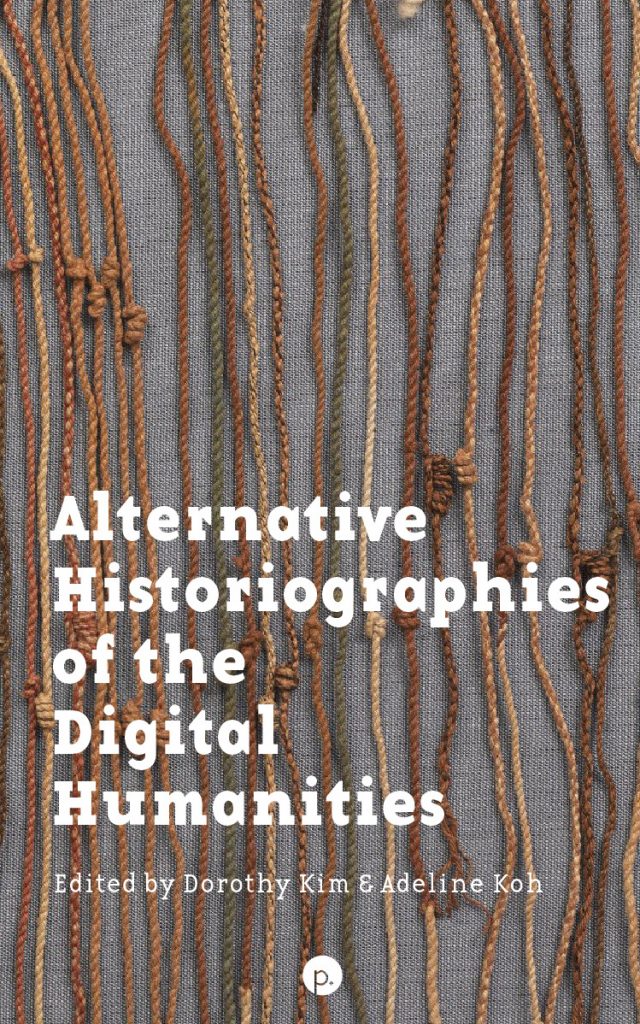
Dorothy Kim serves as Assistant Professor of English at Brandeis University with cross-appointments in the Department of Women's, Gender and Sexuality Studies and the Women's Studies Research Center. Her innovative scholarship bridges medieval literary studies, digital humanities, and critical race theory, examining how medieval history is weaponized by contemporary white supremacist movements and advocating for antiracist frameworks in academia. She earned her Ph.D. and M.A. from the University of California, Los Angeles and her B.A. from the University of California, Berkeley. Her educational trajectory reflects deep engagement with interdisciplinary approaches to literature and cultural studies. Kim's research centers on exposing the racialized foundations of medieval studies, particularly through projects analyzing digital white supremacy and medievalism's role in alt-right ideology. She pioneers methodologies connecting medieval women's literary cultures with contemporary trans feminism while interrogating Jewish/Christian difference in manuscript studies. Her work consistently challenges the field's historical whiteness and develops decolonial digital humanities practices. Her publication trends reveal a decisive shift toward critical race interventions in premodern studies, with increasing focus on database methodologies, sonic histories, and the material politics of medieval manuscript transmission. Recent works demonstrate how digital tools can either reinforce or dismantle racial hierarchies in academic knowledge production. Her distinguished honors include: 2023 Medieval Academy of America Article Prize in Critical Race Studies American Studies Association Digital Humanities Book Prize (2021) Society for Medieval Feminist Scholarship's Best Feminist Article Award (2021) AAUW Postdoctoral Fellowship (2018-2019) Folger Shakespeare Library Long-Term Fellowship (2025-2026) SSHRC, Ford Foundation, Fulbright, and Mellon fellowships Kim directs major collaborative projects including the NEH-funded An Archive of Early Middle English (161-manuscript database) and co-leads the Global Middle Ages Project. As co-director of RaceB4Race and the Reckonings Institute, she creates platforms for community archiving and social justice praxis. Her mentorship focuses on training students in critical digital methodologies through Brandeis' DH Lab while developing antifascist frameworks for humanities education. She currently leads the Brandeis University DH Lab housing her NEH project, co-edits Literature Compass's pre-1800 section, and develops two major book projects: Race, the Crusades, and the Katherine Group (based on her AAUW fellowship) and Music, Multimodal Manuscripts, and Remediating the Medieval Lyric for ArcPress.
Dr. Elaine T. Jurkowski serves as Professor in Social Work at Southern Illinois University's College of Health and Human Sciences, holding multiple leadership roles including Graduate Program Director (2021-present) and Program Director for Gerontology Programs (2020-present). She maintains cross-appointments as Adjunct Professor in the School of Medicine's Family Practice Residency Program and Professor in the Department of Health Education, demonstrating her interdisciplinary impact. B.S.W. (Industrial Social Work), University of Manitoba, Canada M.S.W. (Policy and Administration), University of Manitoba, Canada Ph.D., Public Health, University of Illinois at Chicago M.B.A., Southern Illinois University Carbondale (2022) Dr. Jurkowski's research program centers on health disparities, access to mental health services, aging, and disability issues, with particular focus on rural populations. Her work bridges public health, social work, and gerontology through innovative approaches to program evaluation, technology-enhanced teaching, and culture change in long-term care settings. She has developed expertise in international health planning and inter-professional collaboration across diverse cultural contexts. Her publication portfolio shows consistent thematic development across decades, with recent work focusing on medical tourism during the pandemic, rural-urban health disparities, and technology applications in gerontology education. These publications reflect her commitment to addressing healthcare access challenges for vulnerable populations through both scholarly inquiry and practical interventions. Great Cities Research Fellow in Health Provost Faculty Fellow (2018) Provost Assessment Fellow (2016) Student Hotspotting certification (2018-present) A.P.M. Assessment Academy certification (2016, 2017) Dr. Jurkowski has successfully secured over $1 million in research funding from agencies including Health Resources and Services Administration, The Hartford Foundation, and Administration on Aging. Her grant portfolio demonstrates sustained commitment to improving services for older adults and people with disabilities, particularly in rural settings. She has served as Graduate Program Director twice (2003-2014, 2021-present), mentoring numerous social work students through their academic and professional development. Her professional activities extend beyond campus through international consulting in West Africa, Hong Kong, India, China, Russia, and Egypt, and community engagement via the "Dare to Care" radio show and board service with Caring Counseling Ministries, Supporting People in Need, and UNA/USA Southern Illinois Chapter.
Maria José Lisboa Brites de Azeredo is an Associate Professor with Habilitation at Lusófona University, Portugal. She serves as Vice-President of the Centre for Research in Applied Communication, Culture and New Technologies (CICANT) and coordinates the Media Literacy and Civic Cultures Lab (MeLCi Lab). She holds leadership roles in the Portuguese Association for Communication (SOPCOM) and the European Communication Research and Education Association (ECREA). Her academic career spans over two decades, including roles at institutions like Universidade Lusófona do Porto and Universidade Nova de Lisboa. Her education includes a PhD and Habilitation in Communication Sciences from Universidade Nova de Lisboa. She has completed specialized courses in digital education, intercultural dialogue, and pedagogical training from institutions like the University of Edinburgh and the Knight Center for Journalism in the Americas. Brites’ research focuses on youth journalism, audience studies, digital citizenship, and participatory methodologies. She has led projects such as the YouNDigital study (PTDC/COM-OUT/0243/2021) and the SMaRT-EU initiative. Her work has been recognized with awards including the Research Prize (2017, 2020, 2023) and the Gold Medal of Academic Value (2019). She coordinates the Master's Degree in Media and Information Literacy and Digital Citizenship at Lusófona University and has trained educators through initiatives like the Media in Action (MIA) project. Her publications span peer-reviewed journals, edited books, and conference proceedings addressing media literacy, generational media practices, and civic engagement.
Amy Bruckman is a Regents’ Professor and Senior Associate Chair in the School of Interactive Computing at Georgia Institute of Technology. As a Fellow of The ACM and member of the SIGCHI Academy , she contributes to social computing research focusing on online collaboration, cross-cultural understanding, and content moderation. Her 2022 book "Should You Believe Wikipedia? Online Communities and the Construction of Knowledge" explores digital knowledge creation. Education: Ph.D. from MIT Media Lab (1997), B.A. in Physics from Harvard (1987) Research Affiliations: GVU Center, IRI People and Technology Her work addresses social computing challenges including: AI ethics in human-AI interaction Algorithmic bias in content moderation Epistemic justice in online communities Comparative platform analysis (Reddit, Discord, TikTok) Grassroots technology movements Recent publications examine: AI support tools for online counseling Community-driven research frameworks Racial bias mitigation in toxic language detection Designing teachable social media experiences Human trafficking intervention ethics Scientific recognition includes: ACM Fellowship SIGCHI Academy membership She has contributed to: Georgia Tech's Computing Education initiatives Research ethics frameworks for Human-Computer Interaction
Martin T. Wells is the Charles A. Alexander Professor of Statistical Sciences at Cornell University, with joint appointments in the Department of Statistical Science, Department of Biological Statistics and Computational Biology, Department of Social Statistics, and as Professor of Clinical Epidemiology and Health Services Research at Weill Medical School. He serves as Editor-in-Chief of the ASA-SIAM Book Series and Co-Editor of the Journal of Empirical Legal Studies. Cornell University, Ithaca, NY Weill Cornell Medical College Research Interests span applied and theoretical statistics, Bayesian methods, biostatistics, clinical epidemiology, and computational biology. His work bridges disciplines like finance, legal studies, and health services research. Article Trends highlight advancements in Bayesian modeling, quantum cognition machine learning, tensor analysis, and misclassification correction, with applications in genomics, finance, and public health. Fellow of the American Statistical Association Fellow of the Royal Statistical Society Contributions include developing statistical software (e.g., rTensor), methodological innovations in clinical trials, and empirical legal studies on civil rights and the death penalty.
Eduardo Araral is an Associate Professor at the Lee Kuan Yew School of Public Policy, National University of Singapore. With over 30 years of experience in academia and government, he holds a PhD in Public Policy from Indiana University-Bloomington under Nobel Laureate Elinor Ostrom. His research focuses on collective action, institutions, and water governance, with publications in Nature Human Behaviour , Public Administration Review , and World Development . He has held fellowships at Stanford University and centers associated with Coase, Ostrom, and Stigler. Research Interests : Collective action, institutional analysis, water governance, digital technologies in public policy, political economy, and socio-ecological systems. Scientific Awards : Ostrom Prize for the Governance of the Commons, Fulbright PhD Scholarship, and Presidential Award for Outstanding Overseas Filipinos. Leadership Roles : Vice Dean for Research, Assistant Dean for Academic Affairs, and Co-Director of the Institute of Water Policy (2016-2022) at LKYSPP. Global Engagement : Advised 20+ international organizations including ADB, World Bank, UNDP, and Fortune 500 companies, while lecturing to 7,000+ government officials across 50+ countries.
Daniel E. Ho holds multiple prestigious positions at Stanford University: William Benjamin Scott and Luna M. Scott Professor of Law Professor of Political Science Professor of Computer Science (by courtesy) Senior Fellow, Stanford Institute for Economic Policy Research Senior Fellow, Stanford Institute for Human-Centered Artificial Intelligence Faculty Fellow, Center for Advanced Study in the Behavioral Sciences He serves on the National Artificial Intelligence Advisory Commission (NAIAC), as Senior Advisor on Responsible AI at the U.S. Department of Labor, and as a Public Member of the Administrative Conference of the United States (ACUS). Ho earned his J.D. from Yale Law School and Ph.D. from Harvard University, completing a clerkship with Judge Stephen F. Williams on the U.S. Court of Appeals for the District of Columbia Circuit. His research bridges artificial intelligence, law, and public policy with emphasis on: Regulatory governance frameworks for AI systems Fairness and bias mitigation in algorithmic decision-making Environmental enforcement using satellite imagery and computer vision Methods for estimating racial disparities without direct demographic data Legal AI reliability and statutory research systems Analysis of his 2025 publications reveals a consistent focus on practical AI governance tools addressing real-world regulatory challenges. Key themes include developing benchmarks for legal applications, mitigating hallucination in legal AI tools, and creating systems for statutory research. His work demonstrates strong integration of technical AI methods with policy implementation, particularly in environmental enforcement and fairness assessment. As Director of the Regulation, Evaluation, and Governance Lab (RegLab), Ho leads interdisciplinary research partnerships with government agencies. While specific grant details aren't provided, RegLab's operational model indicates substantial research funding for policy-relevant AI projects. No student advisees are mentioned in available materials. Ho's leadership extends to national advisory roles where he shapes federal AI policy through evidence-based recommendations, particularly regarding environmental protection and civil rights enforcement mechanisms.
Professor Tamsin Bradley is a leading academic in International Development Studies at the University of Portsmouth, affiliated with the School of Area Studies, Sociology, History, Politics and Literature. Her research focuses on ending violence against women and girls, social inclusion, and harmful cultural practices. She holds a PhD from SOAS, University of London, and has held roles at institutions like the University of East Anglia and London Metropolitan University before joining Portsmouth in 2011. She was promoted to Professor in 2017. Her work is supported by grants from the British Academy, ESRC, and AHRC. Bradley is also a Fellow of the Royal Anthropological Institute. She currently supervises two PhD students on ESRC-funded projects and collaborates with organizations like Plan International and Stop Domestic Abuse. Her research integrates applied social anthropology with policy-relevant outcomes, addressing issues such as FGM, breast ironing, and gender-based violence in South Asia and Africa. Education: Bachelor's in Politics and Study of Religion (SOAS, 1996) MA in Social Anthropology of Development (SOAS, 1997) PGCE (University of Cambridge) PhD (SOAS, 2006) Research Focus: Ending violence against women and girls, harmful cultural practices, gender and social inclusion in South Asia/Africa, humanitarianism in conflict zones. Key Grants: £300k from British Academy (2018) for the 'Art Heritage, Resilience and Humanitarianism in South Sudan' project. External Roles: Council member of British Association of South Asian Studies (2014–2016), Editorial Board member of African Identities . Media Availability: Actively engages with media on gender-based violence and development topics. Bradley’s work bridges academic research and practical solutions, emphasizing community-led approaches. Her recent publications highlight intersections between culture, conflict, and gendered violence, with a focus on marginalized communities in South Sudan, Sudan, and South Asia.
Professor Jennifer M. Welsh is a leading scholar in global governance and security, holding the Canada 150 Research Chair at McGill University. She previously served as Professor at the European University Institute and the University of Oxford, where she co-founded the Oxford Institute for Ethics, Law and Armed Conflict. Her work focuses on humanitarian intervention, the 'Responsibility to Protect' (R2P), UN Security Council dynamics, and Canadian foreign policy. Welsh advised UN Secretary-General Ban Ki-moon on R2P (2013–2016) and directed a five-year European Research Council project on 'The Individualisation of War.' Education : D.Phil. in International Relations, St. Antony's College, University of Oxford (Oxford, England) Masters and Doctorate from University of Oxford (Rhodes Scholar) BA, University of Saskatchewan (Canada) Research Interests : Welsh examines ethical and legal dimensions of armed conflict, atrocity prevention, and norms governing state sovereignty. Her work bridges theoretical analysis and policy implementation, with key contributions to R2P frameworks and non-state actor engagement in conflict zones. Recent publications explore localization in governance, Canada's geopolitical role, and civilian self-protection mechanisms. Key Awards : Leverhulme Trust Research Fellowship Trudeau Fellowship Grants & Advising : Directed a €2.5M ERC-funded project (2014–2019) Advisory roles include Peace Research Institute Frankfurt, Global Centre for R2P, and Auschwitz Institute Editorial boards: Global Responsibility to Protect , International Journal , and Ethics and International Affairs Labs/Teams : Directs McGill's Centre for International Peace and Security Studies (CIPSS), fostering interdisciplinary research on global security challenges.
Patrick Metze is Professor of Law at Texas Tech University School of Law, where he has served since 2008. He initially joined as an adjunct professor teaching the criminal defense clinic in 2007 and became a full-time Associate Professor of Law and Director of the Criminal Defense Clinics in May 2008. He was promoted to Professor of Law with tenure in September 2012. Professor Metze has established several groundbreaking clinical programs including the Capital Punishment Clinic (2010), the Caprock Regional Public Defender Office and Clinic (2010) - the first full-time public defender office operated from within a law school, and the Texas Tech School of Law Innocence Clinic (2016). Professor Metze earned his B.A. from Texas Tech University in 1970 and his J.D. from the University of Houston in 1973. Before joining academia, he maintained a private law practice in Levelland and Lubbock, Texas for over 30 years, initially handling general practice including banking, collections, corporate law, and oil and gas matters, but shifting focus to criminal and family law following the 1986 oil industry collapse in West Texas. He was one of only 14 attorneys qualified for appointment as first chair in Capital Murder cases in the 9th Administrative Judicial Region. Professor Metze's research focuses on criminal law and procedure, with particular emphasis on capital punishment, innocence projects, and the school-to-prison pipeline. His publications reveal a consistent concern with constitutional protections, ethical obligations of courts and practitioners, and systemic reforms in criminal justice. His work spans both theoretical analysis of legal principles and practical guidance for criminal defense attorneys. Among his professional recognitions, Professor Metze is a Life Fellow of The Texas Bar Foundation and maintains membership in The Pro Bono College of the State of Texas. His presentations at numerous professional seminars demonstrate his active engagement with the criminal defense bar and commitment to advancing legal practice. Professor Metze has served on various committees including the Criminal Justice Council of the State Bar of Texas, the Advisory Committee to the Lubbock Special Needs Defenders Office, and as a former board member of the Lubbock Criminal Defense Lawyers Association (where he served as President) and the Texas Criminal Defense Lawyers Association.
Angelika Sjöstedt serves as Professor and Chair of Gender Studies within the Department of Humanities and Social Sciences at Mid Sweden University. Her academic leadership spans teaching across Bachelor's, Master's, and PhD programs in Gender Studies and Sociology, while actively contributing to institutional discourse through roles such as delivering the 2024 academic celebration lecture. She maintains significant engagement with contemporary academic freedom debates, notably co-organizing the 2024 seminar series addressing responsible internationalization amid the Gaza conflict. Her research profile reveals deep expertise in intersectional analysis of gender, settler colonialism, and labor precarity, particularly examining how chronic crises manifest in peripheralized regions. Recent work demonstrates acute responsiveness to geopolitical emergencies, with 2024 publications directly confronting academic complicity in genocide. Her methodological approach bridges ethnographic rigor with activist scholarship, evident in long-term collaborations like the Båskoes Sámi research network and Forum for Gender Research. Sjöstedt's scholarly trajectory shows consistent thematic development from early work on flexible knowledge-work subjectivity (2012) through nuanced examinations of rural resilience (2017-2020) to current urgent interventions in academic freedom. Her publications reveal distinctive geographic focus on Norrland's inland regions while maintaining transnational theoretical relevance, particularly regarding mining resistance movements and crisis management frameworks. The 2021-2024 output demonstrates accelerated engagement with acute political emergencies, signaling scholarly adaptation to escalating global crises. Professional networks constitute a critical dimension of her work, with sustained involvement in the Forum for Gender Research since at least 2015 and leadership in the Båskoes network advancing Indigenous research methodologies. Her editorial work on critical anthologies like Aktivism: En antologi om arbete för social och politisk förändring (2022) demonstrates commitment to bridging academic and activist knowledge production.
Elizabeth Bernstein is a Professor of Women's, Gender & Sexuality Studies and Professor of Sociology at Barnard College, Columbia University, where she has been a faculty member since September 2002. Her work bridges sociological theory with feminist analysis, focusing on the intersections of gender, sexuality, and political economy. Bernstein directs significant research initiatives including the Gender Justice and Neoliberal Transformations Working Group, a transnational collaboration among thirteen scholars examining gender justice in contemporary global contexts. She is currently developing a new book project titled "Imagining Immunity: Precarious Bodies and the Governance of Gendered Dis-ease," which explores immunological metaphors in understanding bodily risk and suffering. B.A., University of California, Berkeley M.A., University of California, Berkeley Ph.D., University of California, Berkeley Professor Bernstein's research focuses on the political economy of the body, gender, and sexuality, with particular attention to sexual commerce, sex trafficking, and neoliberal governance. Her work employs ethnographic methods to examine how intimate relations become sites of economic exchange and political regulation. She investigates how concepts of authenticity, freedom, and rights are mobilized in debates about sexual commerce and trafficking. Bernstein's scholarship critically engages with feminist theory, carceral politics, and transnational governance frameworks, challenging conventional approaches to sex work and trafficking that often reinforce punitive systems rather than advancing gender justice. Analysis of Bernstein's scholarly output reveals a consistent trajectory examining the intersections of gender, sexuality, and political economy within neoliberal frameworks. Her work demonstrates increasing attention to transnational governance mechanisms and their impact on intimate relations and bodily autonomy. A notable trend is her critical examination of how anti-trafficking campaigns often employ carceral logic that undermines feminist goals of gender justice. Her scholarship consistently challenges binary frameworks that position sex work solely as exploitation or liberation, instead analyzing the complex economic, political, and social dynamics that shape sexual commerce globally. Bernstein's research has received significant recognition through prestigious awards including: Distinguished Book Award, American Sociological Association, Sociology of Sexualities Section (2020) for "Brokered Subjects" Honorable Mention, Society for the Study of Social Problems Global Division Book Award (2019) Norbert Elias Prize, Norbert Elias Foundation (2009) Distinguished Book Award, American Sociological Association, Sex and Gender Section (2009) Her work has also been supported by major funding organizations including the Institute for Advanced Study, National Science Foundation, Social Science Research Council, AAUW, and Mellon Foundation. As a principal investigator along with Janet Jakobsen for the Gender Justice and Neoliberal Transformations Working Group, Bernstein leads a significant collaborative research initiative sponsored by the Barnard Center for Research on Women. Her grant portfolio demonstrates sustained support from major research institutions, reflecting the significance of her work in gender studies and sociology. While specific student advisees aren't listed in the available materials, her role as a full professor at Barnard College indicates extensive mentorship of undergraduate and likely graduate students in Women's, Gender & Sexuality Studies and Sociology. Bernstein co-leads the Gender Justice and Neoliberal Transformations Working Group, a collaboration among thirteen scholars working transnationally on questions of gender justice. This initiative represents a significant research collective examining how neoliberal policies reshape gender relations globally. Her work with the Barnard Center for Research on Women provides institutional support for this transnational feminist research network, facilitating scholarly exchange and collaborative publication projects that advance critical perspectives on gender, sexuality, and political economy.
Dr. Shahrzad Fouladvand is an Associate Professor in International Criminal Law at the University of Sussex's School of Law, Politics and Sociology. Her research focuses on transnational criminal law, human trafficking, and corruption, particularly their interplay in contexts like Albania. She previously worked at the International Criminal Court (ICC) and the International Labour Organisation (ILO), contributing to human rights conventions. A member of RUSI's Strategic Hub for Organised Crime (SHOC), she advocates holistic approaches to combating human trafficking beyond prosecution-centric methods. Dr. Fouladvand holds a PhD from the University of Sussex and is a Fellow of the UK Higher Education Academy. Education: PhD in Law, University of Sussex (2008–2012) Common Professional Examination (CPE)/Graduate Diploma in Law (GDL), University of Huddersfield (2012–2014) Certifications in Machine Learning for Social Scientists (2023) and Social Network Analysis (2020) Research Interests: Dr. Fouladvand explores the nexus between human trafficking and corruption, emphasizing evidentiary challenges and institutional complicity. Her work integrates network analysis and responsibilisation frameworks, critiquing prosecution-centric approaches. Recent projects include a monograph on 'Human Trafficking, Corruption and Corporate Complicity' for Routledge, examining public-sector complicity in trafficking. Key Contributions: Authored over 30 publications, including journal articles and book chapters on ICC jurisprudence, anti-corruption law, and trafficking dynamics. Advised UK parliamentary committees on human trafficking and migration policies. Edited volumes on transnational organized crime and economic criminology. Awards and Fellowships: Fellow of the UK Higher Education Academy (2016) Visiting Scholarship at Max-Planck Institute (2021–2022) Elected Special Rapporteur on Contemporary Slavery for BACL Labs/Teams: Active member of RUSI's SHOC, focusing on policy-relevant research to combat organized crime.