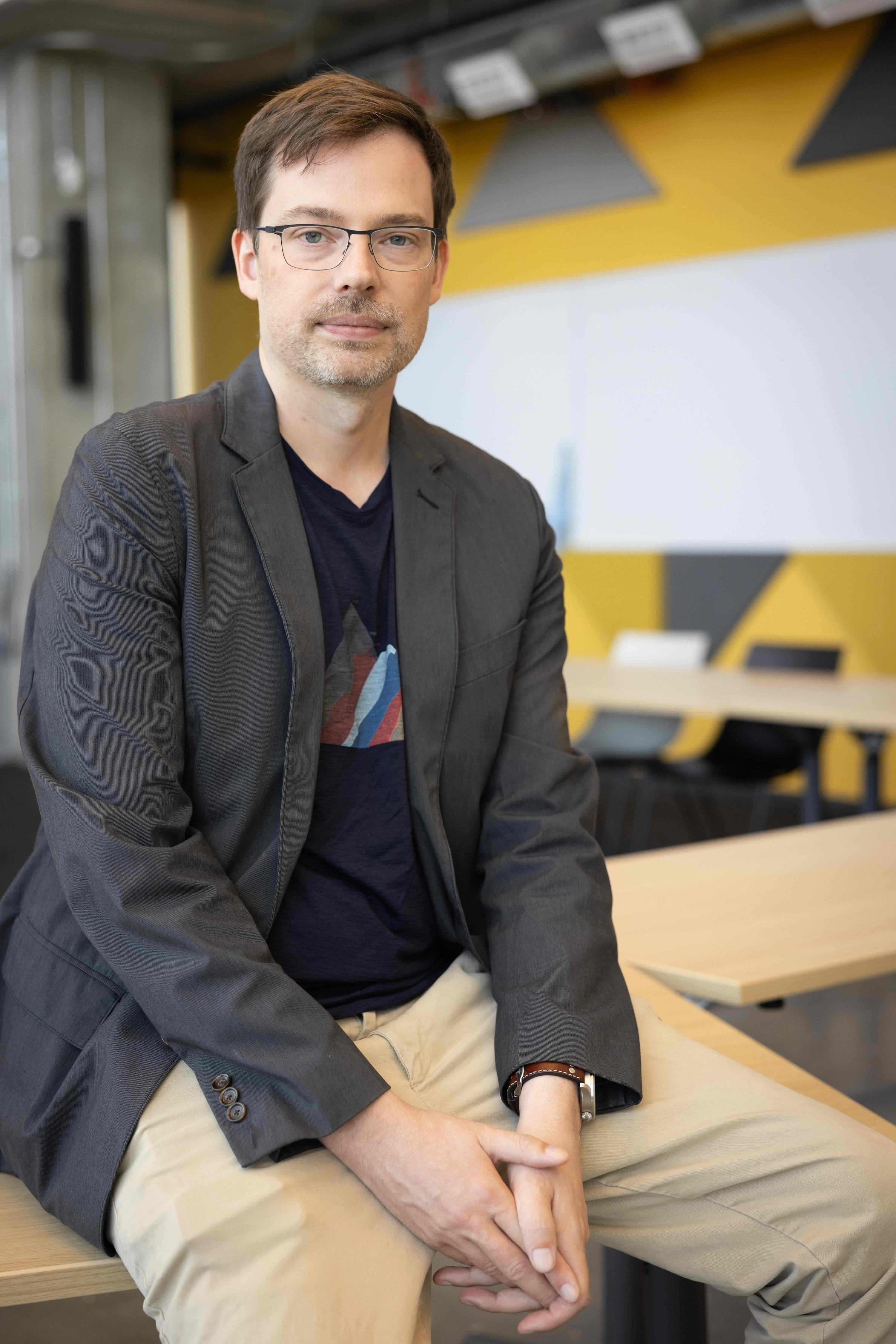
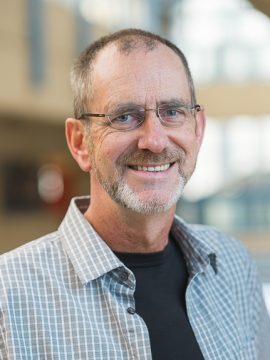
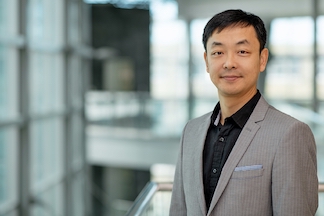
Alan Ritter is an Associate Professor at the School of Interactive Computing , Georgia Institute of Technology, with additional affiliation to the Machine Learning Center . His research focuses on Natural Language Processing , particularly robust models across domains/languages with fewer labels and efficient resource use, plus data-driven dialogue agents for open-topic conversations. Research Interests : Robust NLP models, cross-lingual transfer, resource-efficient learning, dialogue systems, cultural bias measurement, and privacy-aware language models Students : Mentors Ph.D. students in Georgia Tech's ML and CS programs, including Junmo Kang, Yang Chen, and Duong Minh Le. Alumni include Fan Bai (Ph.D. 2023), Yang Chen (Ph.D. 2024), and Andrew Li (M.S. 2024). Awards : NSF CAREER Award, Amazon Research Award, ACL 2024 Best Social Impact Paper, IUI 2009 Best Student Paper. Recent Work : Studies training budget allocation between supervised and preference-based finetuning, cross-lingual information extraction, cultural bias in LLMs, and privacy risk mitigation in social media disclosures. Service : Served as Program Chair for NAACL 2025, Area Chair for multiple top-tier conferences (COLM, EMNLP, ACL, EACL, AAAI). Email : alan.ritter@cc.gatech.edu
Dr. Jillianne Code is an Associate Professor at the University of British Columbia's Faculty of Education, Department of Curriculum & Pedagogy, directing the ALIVE Research Lab. Her work focuses on learner agency, educational technologies, and social media's impact on student success. Specializes in immersive virtual environments for assessment Researches self-regulated learning and formative feedback Investigates health education through digital interventions Her recent publications examine pandemic-era educational transitions, digital literacy in teacher training, and cognitive tools in virtual reality. She has received Outstanding Paper Awards for her work on immersive assessment. Dr. Code leads research projects on learning analytics, student engagement in digital spaces, and technology education sustainability. Her work bridges educational theory with practical interventions through digital badges, mobile health applications, and 3D learning environments.
Qingguo Li is a Professor and Associate Head at the Department of Mechanical and Materials Engineering , Queen's University , and a member of the Ingenuity Labs Research Institute . He specializes in biomechanical system design, energy harvesting, wearable sensors, gait analysis, and load carriage systems. His research integrates robotics, biomedical engineering, and sensor technology to develop human-centric devices and mobility aids. Current Roles : Professor, Associate Head, Queen's University Research Institute : Ingenuity Labs Research Institute Lab : Bio-Mechatronics and Robotics Laboratory His work focuses on biomechanical energy harvesting , IMU-based motion analysis , and assistive device development . Key applications include stroke rehabilitation, gait monitoring, and wearable power generation systems. Articles span cable-driven robots , smart walkers , and 3D printing mechanisms , emphasizing human-robot interaction and dynamic modeling . The lab explores sensor calibration , adaptive control algorithms , and human movement optimization . Areas of impact include rehabilitation engineering , load carriage stability , wearable sensor accuracy , and assistive robotics . His team develops solutions for gait asymmetry detection , post-stroke mobility , and low-cost energy systems , leveraging machine learning and kinetic modeling .
Margaret P. Chapman is an Assistant Professor in the Department of Electrical and Computer Engineering at the University of Toronto's Faculty of Applied Science and Engineering. She leads the DATA Lab (Decision Analysis for Trustworthy Autonomy), focusing on risk-averse and stochastic control theory with applications to environmental and human health. Education: B.S. and M.S. in Mechanical Engineering from Stanford University (2012, 2014), Ph.D. in Electrical Engineering and Computer Sciences from UC Berkeley (2020, advised by Claire Tomlin) Her research bridges robust and stochastic optimal control via risk measure theory, emphasizing safety-critical applications in healthcare and sustainable cities. Key challenges include scalable risk-sensitive control methods, integrating physics-based and data-driven models for safety analysis, and promoting technologies that enhance planetary and human well-being. Recent publications focus on risk-averse autonomous systems, CVaR-based safety analysis, and multi-time-scale modeling for cancer treatment. She has advised students in both graduate and undergraduate research roles, including NSERC awardees and thesis participants. Awards: US National Science Foundation Graduate Research Fellowship, Berkeley Fellowship, Terman Engineering Scholastic Award, Leon O. Chua Award She teaches courses like ECE 557 (Linear Control Theory) and ECE 1643 (Risk-Averse Control with Learning). Her invited talks span institutions such as MIT, Princeton, and Georgia Tech, highlighting risk-sensitive analysis and control for trustworthy autonomy.
Dr. Frances Chen is a Professor and Area Coordinator in the Department of Psychology at the University of British Columbia (UBC), located on the traditional, ancestral, and unceded territory of the Musqueam People. She holds a PhD from Stanford University (2009). Her research integrates health psychology, social psychology, and neuroendocrinology to explore how social experiences influence mental and physical health. Key areas include the physiological impacts of loneliness, social support, and hormonal changes during puberty on adolescent development. Education: PhD, Psychology, Stanford University, 2009 Research Focus: Dr. Chen investigates how social interactions 'get under the skin' through studies on loneliness, stress, conflict negotiation, and hormonal mechanisms. Her work emphasizes interventions to enhance social connection and reduce health disparities. Recent Article Trends: Recent publications highlight interdisciplinary approaches, including genetic influences on depression, effects of near-infrared lighting on cognition, and longitudinal studies on adolescent hormonal contraceptive use. Her work bridges basic science and applied health outcomes. Awards & Grants: Michael Smith Health Research BC C2 Award (2022) Killam Faculty Research Fellowship (2019) Teaching & Learning Enhancement Fund Grant (2025) SSHRC Prosociality Project Funding (2023) Lab & Mentorship: Director of the Social Health Lab, she mentors graduate and undergraduate students, prioritizing equity and inclusion. Recent lab achievements include studies on teen health development and interventions to improve student success in psychology programs. Lab Initiatives: UBC Teen Health and Development Study (longitudinal hormonal/mental health tracking) NIR lighting health impact research (collaborative interdisciplinary project) Prosociality 'in the Wild' SSHRC project
Professor Peter F. Driessen is a faculty member in the Department of Electrical and Computer Engineering at the University of Victoria, with a cross-appointment in the School of Music. He holds a BSc and PhD from the University of Victoria and is a Professional Engineer (PEng). His research focuses on communication systems, signal processing, control, and interdisciplinary projects in computer music and wireless technologies. Key areas include audio/video signal processing, radio propagation, sound recording, and multimedia systems. He leads the University of Victoria Propagation Laboratory, which explores radio wave propagation and Amateur radio integration with engineering education. His work spans theoretical research and applied projects like ECOSat satellite systems, software-defined radio (SDR), and innovative musical instruments such as the Radio Drum. He supervises undergraduate and graduate projects in these domains through ELEC 499 courses. Notable contributions include the APEGBC Editorial Board Award for Best Paper (2002) and patents in wireless networking and signal processing. His teaching includes courses in signal analysis and electromagnetics, and he collaborates on interdisciplinary programs like the Music/Computer Science degree. Education: BSc in Electrical Engineering, University of Victoria PhD in Electrical Engineering, University of Victoria Research Interests: Audio and video signal processing for music and media Software-defined radio and Amateur radio technologies Satellite communication and ground station development Gesture-based interfaces and musical instrument design Error mitigation in streaming audio/video Optical and microwave-photonic systems Labs & Collaborations: Propagation Laboratory (radio wave research) UVic Experimental Radio Group (Amateur radio club) UVic Satellite Design Team (ECOSat projects) UVic Centre for Aerospace Research Grants & Awards: APEGBC Editorial Board Award (2002) Multiple US patents in wireless systems and signal processing
Jay Henderson is an Assistant Professor in the Department of Computer Science at Memorial University of Newfoundland, leading the Human-Computer Interaction (HCI) Lab. His research focuses on quantitative HCI, measuring human performance with emerging technologies such as mixed reality and generative AI. He holds a PhD from the University of Waterloo and has held roles including Postdoctoral Fellow at Carleton University and Senior Research Scientist at Huawei Technologies Canada. Education: PhD in Computer Science, University of Waterloo (2021) BSc Hons in Computer Science (minors in Mathematics and Psychology), Mount Allison University (2016) Research Interests: Henderson’s work bridges computer science with psychology and mathematics, emphasizing objective measurement of user interactions. Key areas include mixed reality productivity, generative AI interfaces, gesture-based input, and multimodal feedback systems. His quantitative approach ensures practical insights for technology design. Key Grants & Awards: NSERC Discovery Grant ($155,000 over 5 years) NSERC Discovery Launch Supplement ($12,500) David R. Cheriton Graduate Scholarship ($20,000 over 2 years) Teaching & Supervision: Teaches courses like COMP 4303 (AI for Games) and supervises multiple graduate and undergraduate researchers. Notable supervisees include Daniel Jo (MSc) and Arunav Saha (BSc Honours). Service Contributions: Served on ACM committees including Graphics Interface and CHI Late Breaking Work. Acted as Virtual Chair for ACM ASSETS 2024 and contributed to ACM’s name change policy as a transgender advocate.
James T. Enns is a Professor and Distinguished University Scholar in the Department of Psychology within the Faculty of Arts at the University of British Columbia. His research primarily focuses on the role of attention in human vision, with secondary interests in developmental psychology and human-machine interaction. Dr. Enns' research interests span perception, attention, vision, cognition, development, and human-machine interaction. His work explores how the human mind selects information, with particular emphasis on visual attention mechanisms. His laboratory research investigates the fundamental processes of visual perception and how attention modulates these processes across different contexts and developmental stages. Analysis of Dr. Enns' publication record reveals consistent engagement with visual perception, attentional mechanisms, and cognitive processing. His research demonstrates expertise in both theoretical frameworks and experimental methodologies related to visual attention, with applications spanning basic cognitive science to potential implementations in human-computer interaction systems. His work often bridges theoretical cognitive psychology with practical applications. Canadian Society for Brain, Behaviour and Cognitive Science Donald O. Hebb Distinguished Contribution Award (2013) Distinguished University Scholar, UBC (2004) Robert E. Knox Master Teaching Award (2004) Royal Society of Canada Fellow (2002) Killam Faculty Research Prize (1994) Killam Faculty Research Fellowship (1993) Society of Experimental Psychology Fellow Dr. Enns has served as Editor for the Journal of Experimental Psychology: Human Perception and Performance, and as Associate Editor for Psychological Science, Consciousness and Cognition, and Visual Cognition. His research has been supported by grants from NSERC, the Canadian Foundation for Innovation, the Australian Research Council, BC Health, and Nissan. He has authored textbooks on perception, edited research volumes on the Development of Attention, and published numerous scientific articles on vision, attention, and cognitive science. Dr. Enns is currently accepting graduate students and continues to mentor the next generation of cognitive scientists. Dr. Enns leads the UBC Vision Lab, which focuses on how the human mind selects information. The lab conducts research on visual attention, perception, and cognitive processes using a variety of experimental methodologies.
Dr. Gary Scavone is a Professor and Department Chair in the Music department at McGill University's Schulich School of Music. He holds a PhD in Computer-Based Music Theory & Acoustics and MS in Electrical Engineering from Stanford University, alongside degrees from Syracuse University in Music and Electrical Engineering. His research focuses on music technology, including acoustic modeling, sound synthesis, and instrument design. He directs the Computational Acoustic Modeling Laboratory (CAML), which explores advanced techniques for simulating musical instruments and developing software tools. As a saxophonist, he specializes in contemporary concert music performance. Research interests include physically-based sound synthesis, wind instrument acoustics, and digital waveguide modeling. He has contributed to studies on brass and woodwind impedance measurements, violin soundpost dynamics, and free-reed instrument modeling. His work bridges engineering and artistry, with applications in music pedagogy, instrument design optimization, and virtual acoustic replication. Key contributions include open-source projects for wind instrument modeling and the development of tools for automated timbre assessment. His research often combines experimental methods with computational simulations, addressing challenges in both theoretical and applied music acoustics. Current projects focus on deep learning for friction modeling, impedance measurement systems, and cross-cultural instrument analysis.
Scott MacKenzie is an Associate Professor at the Lassonde School of Engineering, York University, where he leads research in Human-Computer Interaction (HCI). He holds a Ph.D. from the University of Toronto (1992) and specializes in interaction devices, mobile computing, and human performance modeling. His work emphasizes accessibility, text entry systems, and assistive technologies. He maintains an active research group focused on advancing HCI through empirical studies and innovative design. Education: Ph.D. in Computer Science, University of Toronto, 1992 Dr. MacKenzie’s research explores how interaction techniques can enhance user performance and accessibility. Key areas include touch-based interfaces, gestural input, and systems for users with disabilities. His recent work investigates eye-tracking for wheelchair control, mid-air gesture interaction, and text entry methods for VR environments. His publications reflect a focus on practical applications of HCI principles, such as improving mobile device usability and evaluating novel input methods. Notable contributions include studies on soft keyboards, tilt-based interaction, and accessibility solutions for motor-impaired users. Labs/Teams: Affiliated with the Lassonde School of Engineering’s research initiatives in interactive systems and human-centered computing.
Samuel Jean Bassetto is an Associate Professor in the Department of Mathematics and Industrial Engineering at Polytechnique Montréal. He serves as Director of the Continuous Improvement Laboratory (LABAC) and holds membership in multiple prestigious research groups including the Research Group on Globalisation and Management of Technology (GMT), Poly-Industries 4.0 Laboratory, Interuniversity Research Centre on Enterprise Networks, Logistics and Transportation (CIRRELT), and Institute for Data Valorization (IVADO). Dr. Bassetto's research spans multiple disciplines, focusing on continuous improvement through the integration of engineering, artificial intelligence, cognitive science, psychology, and design. His primary sphere of excellence is in New Frontiers in Information and Communication Technologies, with secondary expertise in Modeling and Artificial Intelligence and Human Health. He develops tools that place humans at the center of technology to enhance organizational performance while respecting human rhythms and cognitive limitations. His recent publication portfolio reveals a strong interdisciplinary approach, with research bridging industrial engineering, cognitive neuroscience, and AI ethics. His work addresses practical challenges in lean manufacturing assessment, racial bias in medical AI systems, cognitive data collection in natural environments, and condition monitoring for industrial machinery. The research consistently demonstrates a commitment to developing practical solutions that integrate human factors with technological innovation. NSERC Synergy Prize for Innovation recipient Principal investigator on multiple research grants from NSERC, FRQ, and MITACS Collaborations with over a dozen institutions across multiple countries Supervision of over 150 highly qualified personnel throughout his career Dr. Bassetto teaches specialized courses including CAP7011 (Creativity in Research), IND8444 (Continuous Improvement), IND8203 (Industrial Launch), and previously taught IND8178 (Production). His teaching philosophy emphasizes practical application, with courses featuring hands-on exercises, real-world scenarios, and gamification techniques to enhance learning. His supervision portfolio includes numerous Ph.D. and Master's students working on topics ranging from human-technology collaboration to reinforcement learning for production management. Through LABAC, Dr. Bassetto leads research initiatives focused on developing human-centered tools for continuous improvement in organizational settings. The laboratory conducts projects related to industrial IoT applications, cognitive aspects of process improvement, and the development of practical frameworks for organizations to enhance performance while maintaining respect for human rhythms and cognitive capabilities.
Yuanzhu Chen is a Professor in the School of Computing at Queen’s University, affiliated with the Faculty of Arts and Science. He previously served as Professor and Department Head at Memorial University of Newfoundland (2005–2021). His research focuses on computer networking, mobile computing, complex networks, and applied machine learning, emphasizing wireless innovation beyond traditional wired systems. He holds a PhD from Simon Fraser University (2004) and a B.Sc. from Peking University (1999). Education: PhD in Computing Science (Simon Fraser University, 2004); B.Sc. in Computer Science (Peking University, 1999). Earlier roles include Post-doctoral Researcher at Simon Fraser University (2004–2005) and leadership positions at Memorial University, including Department Head (2019–2021). Research Interests: Network Coding and Opportunistic Routing Mobile and Wireless Network Protocols Complex Network Analysis Machine Learning Applications Indoor Positioning Systems Social Network Dynamics Selected Awards: Recipient of Queen’s University President's Award for Distinguished Teaching. Lab Affiliation: Director of the Wireless Networking and Mobile Computing Lab (WineMocol). Active in collaborative projects involving smartphone sensors, community-based environmental monitoring, and stock market prediction using web data.
Gauthier Gidel is an Associate Professor at the Department of Computer Science and Operations Research (DIRO) within the Faculty of Arts and Science at Université de Montréal, where he also holds the prestigious Canada CIFAR AI Chair position. He is a core faculty member of Mila, Quebec's AI research institute, and maintains active research collaborations with leading institutions. His academic journey includes a PhD in Computer Science under the supervision of Simon Lacoste-Julien, with internships at Sierra, ElementAI, and DeepMind during his doctoral studies. Dr. Gidel's research spans multiple critical areas in machine learning, with particular emphasis on generative modeling , adversarial machine learning , and variational inequalities for machine learning. His work explores the intersection of optimization theory and practical AI systems, focusing on challenges like LLM safety alignment, multi-agent cooperation, and robustness against adversarial attacks. He is particularly known for his contributions to understanding the theoretical foundations of generative adversarial networks through variational inequality frameworks. His recent publications reveal a strong trend toward addressing critical challenges in large language model safety and alignment, with numerous 2024-2025 papers focusing on adversarial robustness, safety evaluation methodologies, and alignment techniques for LLMs. Simultaneously, his foundational work continues in optimization theory, particularly in variational inequalities and performative prediction, demonstrating his dual focus on practical AI safety concerns and theoretical machine learning foundations. Canada CIFAR AI Chair Core member of Mila Organizer of popular NeurIPS workshops on smooth games Co-founder of the ICLR blog post track Dr. Gidel actively supervises an extensive research group with approximately 10 current graduate students and numerous alumni who have secured positions at leading institutions including Inria Lyon, Oxford, and industry research labs. His research is supported by multiple substantial grants from CRSNG, MITACS, and IVADO, including the prestigious CRSNG Discovery Grant program and MITACS Acceleration Québec projects focused on fraud detection in music streaming and conditional generation. His laboratory maintains strong connections with both academic and industry partners, fostering a collaborative environment focused on advancing AI safety and theoretical understanding.
Maria Camila Ceballos Betancourt is an Assistant Professor (Teaching & Research) in Beef Cattle Welfare at the Faculty of Veterinary Medicine , University of Calgary . She holds a Ph.D. and M.Sc. in Animal Welfare and Behaviour from São Paulo State University (UNESP) , Brazil, and a B.Sc. in Animal Science from National University of Colombia . Her research focuses on animal welfare , human-animal interactions , and cattle temperament , with an emphasis on livestock handling practices and sustainable production systems . Education: B.Sc. in Animal Science, National University of Colombia (2010) M.Sc. in Animal Welfare and Behaviour, UNESP (2014) Ph.D. in Animal Welfare and Behaviour, UNESP (2017) She teaches VETM322: Animal Welfare and Behaviour annually since 2020. Her research integrates animal behavior , physiological and reproductive performance measures , and applied handling interventions . Recent publications address grimace scales for pain assessment , human-animal dynamics in livestock systems , and technological innovations for piglet monitoring , reflecting her interdisciplinary approach between agricultural science , veterinary medicine , and behavioral neuroscience . Her work spans continents, including internships at the Animal Welfare Science Centre (University of Melbourne, Australia) and postdoctoral research at the University of Pennsylvania (USA). While no formal awards are listed, her research has been highlighted in media outlets like Canadian Cattlemen’s The Beef Magazine and CBC Calgary .
Robert S. Allison is a Professor in the Department of Electrical Engineering & Computer Science at York University's Lassonde School of Engineering. His research focuses on human perceptual responses in virtual environments, stereoscopic vision, and eye movement analysis. He is affiliated with the York Centre for Vision Research, Sensorium (Digital Arts & Technology), and the Centre for Innovation in Computing at Lassonde. His research interests include depth perception in natural and virtual environments, human-computer interface design for VR, machine vision applications, and the measurement of human motion. He has supervised multiple graduate students and contributed to over 260 publications. His work spans topics like cybersickness mitigation, display lag effects, and perceptual adaptation in VR. Key grants include NSERC-funded projects on perception in virtual environments and collaborations with institutions like the Australian Research Council. His teaching includes courses on human perception in human-computer interaction and digital logic design. Recent articles highlight advancements in understanding motion perception, VR-induced sickness, and multisensory integration. He collaborates widely, with affiliations including the VISTA program and York's Connected Minds initiative.