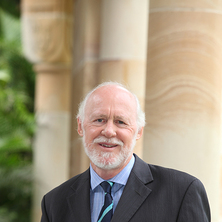
Edward Ashworth is a Postdoctoral Research Associate at the Sydney School of Health Sciences, University of Sydney. He is affiliated with the Thermal Ergonomics Laboratory and the Heat and Health Research Incubator. His research focuses on human adaptations to extreme environments, including heat, altitude, hyperbaric conditions, and space-related stressors. Key projects include improving sleep quality in hot environments and enhancing physical work capacity for outdoor workers. Edward's research interests span environmental physiology, with a focus on thermal tolerance, radiation injury mitigation, and the physiological effects of extreme conditions. He has contributed to studies involving nitrogen kinetics tracking using PET imaging, hyperbaric oxygen therapy, and robotic surgery applications. Awards: Young Investigator Award (2023), Art of Science Contest 1st Prize (2024), Australia Space Biology Summit 1st Place (2022), and Sporting Blue (Auckland University of Technology). Associations: The Physiological Society and American Physiological Society. His work integrates clinical trials, statistical research design, and translational approaches to address challenges in environmental health, cardiovascular disease, and healthy ageing. Current projects aim to optimize thermal tolerance strategies for military and occupational settings.
Noah A. Smith is an Adjunct Professor of Computer Science and Engineering at the University of Washington. His work focuses on computational linguistics, machine learning, and natural language processing. He holds a Ph.D. in Computer Science from Johns Hopkins University (2006). His research explores ethical AI applications, multimodal systems, and foundational aspects of language models. Key research areas include: Ethical considerations in NLP, such as detecting rights abuses through text analysis Efficient decoding and alignment strategies for large language models Large-scale evaluation frameworks for multitask and multimodal generation Understanding pretraining dynamics and data composition effects Recent work emphasizes transparency in language models (e.g., tracing outputs to training data) and improving alignment through human feedback. He has contributed to open-source projects like OLMo and Dolma, advancing reproducibility in NLP research. No awards explicitly listed in provided texts. No specific advising or grant details available, though extensive publication output indicates active research involvement.
Edward Awh is a Professor at the University of Chicago in the Department of Psychology, specializing in cognitive neuroscience, working memory, and attentional mechanisms. His research explores the neural basis of memory storage, spatial attention, and the interplay between cognitive systems using EEG and neuroimaging techniques. University of Chicago, Department of Psychology NIH R01 grants on working memory and ADHD Research Interests: Awh investigates discrete resource limits in working memory, the role of alpha oscillations in attention, and neural mechanisms underlying memory encoding and retrieval. His work addresses how the brain manages distractor suppression, spatial representations, and the relationship between attention and memory capacity. Scientific Trends: Recent publications focus on content-independent memory encoding, EEG decoding of attentional processes, and the intersection of sustained attention with memory performance. His studies frequently employ human behavioral experiments, EEG analysis, and computational modeling. Grants: Principal Investigator on multiple NIH R01 grants, including projects on working memory states (R01MH087214), perceptual interference in ADHD (R01MH077105), and attentional control mechanisms.
Gerald Reiner serves as Head of the Institute for Production Management at the Vienna University of Economics and Business (WU), within the Department of Information Systems and Operations Management. He holds a Magister Degree, doctorate, and Habilitation in Business Administration from WU. His academic career includes positions as full professor in Production Management and Logistics at the University of Neuchatel (Switzerland, 2007-2014) and Universitaet Klagenfurt (Austria, 2014-2018), where he also served as head of the department of Operations, Energy, and Environmental Management. Dr. Reiner has held visiting professorships at Aston Business School (UK), HEC Lausanne (Switzerland), University of Bergamo, and Università Cattolica del Sacro Cuore in Milan (Italy). His research spans several critical areas including Industry 4.0 implementation, integrated capacity and inventory management, humanitarian logistics operations, circular supply chains, and operations management for base of the pyramid contexts. His work particularly focuses on practical applications addressing food waste reduction, sustainable manufacturing, and blockchain technology in supply chains. His publication portfolio demonstrates a clear evolution toward digital transformation in operations, with recent focus on hydrogen production systems, AI integration in manufacturing, and blockchain applications for food supply chain transparency. The research shows increasing emphasis on sustainability integration within traditional operations management frameworks, particularly addressing European manufacturing challenges and food system inefficiencies. Publication Excellence Award 2021 (2023) Researcher of the month (January 2023) Highly Commended paper in the 2017 Emerald Literati Network Awards for Excellence ISIR Service Award (2014) Emerald Outstanding Paper Award (2013) Dr. Reiner coordinates multiple significant international research projects including EU-project 'Keeping Jobs in EU', EU/Ecsel-project 'Power Semiconductor and Electronics Manufacturing 4.0', 'Integrated Development 4.0', and 'Artificial Intelligence in Manufacturing leading to Sustainability and Industry 5.0'. His current projects focus on FOODIS (cross-border ecosystem for innovation in food supply chains), Circular Design implementation, and blockchain applications for banana supply chains. He actively supervises research teams working on food waste reduction, sustainable packaging systems, and AI applications in operations management.
Susan Helper is the Frank Tracy Carlton Professor of Economics at the Weatherhead School of Management , Case Western Reserve University . She also holds the title of Professor in the Department of Economics at the same institution. Beyond academia, she served as Chief Economist of the U.S. Department of Commerce (2013–2015) and as Senior Economist on the White House Council of Economic Advisers (2012–2013). She is a Research Associate at the National Bureau of Economic Research, Non-resident Senior Fellow at the Brookings Institution, and Co-Chair of the National Academy of Sciences. Education: PhD in Economics, Harvard University (1987) BA in Economics, Government, and Spanish, Oberlin College (1979) Research Focus: Susan Helper's research centers on the globalization of supply chains , manufacturing revitalization , and the interplay between technology, work systems, and policy . She explores how organizational structures, relational contracts, and digital transformation influence innovation, productivity, and job quality. Her work spans both theoretical and empirical studies, with a strong emphasis on policy implications for U.S. manufacturing competitiveness. Scientific Awards & Honors: Becker Friedman Fellow , University of Chicago (2018) Women of Achievement Award , Flora Stone Mather Center for Women, CWRU (2009) Professional Service & Impact: Helper has held influential roles such as Program Organizer for the Canadian Institute for Advanced Research (2019–2024), Editorial Review Board Member for the Strategic Management Journal (2008–present), and Member of the Bureau of Labor Statistics Technical Advisory Committee. Her advisory work bridges academic research and federal policy, shaping strategies for industrial innovation and workforce development.
Bradford S. Bell is the William J. Conaty Professor in Strategic Human Resources and Director of the Center for Advanced Human Resource Studies at Cornell University's ILR School. His academic career spans roles as editor of Personnel Psychology and fellowships with the Society for Industrial and Organizational Psychology and American Psychological Association. He holds a Ph.D. in Industrial and Organizational Psychology from Michigan State University. Education: B.A. Psychology, University of Maryland (College Park) M.A. and Ph.D. Industrial and Organizational Psychology, Michigan State University Research Focus: Dr. Bell's work centers on training/development, team dynamics, virtual work, and technology's impact on organizations. He has published widely in journals like Journal of Applied Psychology and Academy of Management Learning & Education , with over 150+ publications. His research emphasizes practical applications in workplace learning systems and team effectiveness. Awards: Early Career Achievement Award (Academy of Management HR Division, 2008) Professional Contributions: Advises organizations globally on HR strategy through the Center for Advanced Human Resource Studies. His consulting spans banking, manufacturing, and public sectors. Active in professional development, he teaches courses on HR management, training, and work teams.
Barbara A. Knuth is a Professor Emerita at Cornell University's College of Agriculture and Life Sciences, Department of Natural Resources and the Environment. She previously served as Dean of Cornell's Graduate School (over 10 years), Vice Provost/Senior Vice Provost (8 years), and Senior Associate Dean in CALS (3 years). Her academic career began with a PhD in Fisheries and Wildlife Sciences from Virginia Tech (1987), making her the first woman in tenure-track faculty at Cornell's Department of Natural Resources. Education: Ph.D., Fisheries and Wildlife Sciences (Virginia Tech) M.En., Environmental Science (Miami University) B. Phil. & A.B., Zoology/Environmental Studies (Miami University, Phi Beta Kappa) Research Interests: Focuses on ecosystem-based management in Great Lakes/marine systems, risk communication around chemical contaminants in fish, and environmental stewardship. Also studies equity/inclusion in graduate education. Key themes include: Social science integration in natural resource policy Health benefits/risk trade-offs in fish consumption Community-based conservation strategies Outreach: Advises state/tribal agencies on fishery management and public health. Led initiatives improving graduate education through professional development, mental health support, and faculty mentoring programs. Awards: Debra W. Stewart Award (2019) Fellow, American Fisheries Society (2015-) Council of Graduate Schools Recognition Multiple teaching/research awards (1999-2006) Grants & Funding: Supported by NSF, Sea Grant, EPA, Sloan Foundation, and others for projects on Great Lakes management, educational equity, and contaminant risk communication. Labs/Teams: Affiliated with Cornell's Center for Conservation Social Sciences. Collaborated with Ecologists Without Borders, Great Lakes Fishery Commission, and National Academies Ocean Studies Board.
Professor Daniel Eyers is a Professor of Manufacturing Systems Management at Cardiff Business School, Cardiff University , where he also serves as Director of Quality Assurance & Enhancement. He is co-director of the Centre for Advanced Manufacturing Systems (CAMSAC) and Cardiff University RemakerSpace , highlighting his leadership in sustainable and advanced manufacturing innovation. Professor of Manufacturing Systems Management, Cardiff University (2024–present) Co-Director, Centre for Advanced Manufacturing Systems (CAMSAC) (2024–present) Co-Director, Cardiff University RemakerSpace (2020–present) External Advisor, Open University (2022–present) His research focuses on the strategic management of advanced manufacturing technologies , particularly Additive Manufacturing (3D printing) , within operations and supply chain contexts. He explores how digital technologies enhance supply chain flexibility, sustainability, and performance. His work spans flexible manufacturing systems, servitization, and change management in industrial settings. His recent publications (2020–2025) reveal a strong trajectory in AI-human collaboration in decision-making , sustainable manufacturing , urban logistics , and the integration of 3D printing in circular economies. Themes include risk management, digital transformation, and the strategic impact of emerging technologies on operations. He frequently publishes in top-tier journals such as International Journal of Operations and Production Management , Production Planning and Control , and Omega . CEng, Engineering Council (UK) FHEA, Higher Education Academy ESRC Early Career Impact Acceleration Fellowship Daniel Eyers actively supervises PhD, MSc, and MBA students and has attracted over £2.5 million in research funding from research councils, the Welsh Government, and industry. He contributes to academic program design and quality assurance, serving on university committees and as an external examiner for other institutions. He is deeply engaged in applied research with industrial partners, reflecting his background in commercial manufacturing. His leadership in research centers and commitment to sustainability, digital innovation, and education underscore his role as a key figure in modern operations management scholarship.
Dr. Sophie Adams serves as an ARC DECRA Fellow in the Department of Sociology at La Trobe University, where she conducts interdisciplinary research at the intersection of human geography and Science and Technology Studies. Her work critically examines the social dimensions of climate change mitigation and adaptation, with particular emphasis on renewable energy transitions and the societal implications of technological solutions to environmental crises. Adams' research program centers on the politics of environmental knowledge , investigating how climate science informs policy formation and the negotiation of social objectives in decarbonisation processes. She employs qualitative and participatory methodologies to analyze climate change adaptation in energy systems , social license for technological interventions , and the redistribution of expertise in public health and environmental governance. Her scholarship consistently addresses power dynamics in knowledge production and the democratic challenges of sustainability transitions. Analysis of her publication trajectory (2019-2025) reveals increasing focus on energy-social interfaces, with significant contributions to understanding virtual power plants, demand-side management, and the role of modeling in climate policy. Her work demonstrates methodological innovation through participatory approaches while maintaining critical engagement with resilience thinking and adaptation frameworks. Scientific recognition includes: Australian Research Council Discovery Early Career Researcher Award (ARC DECRA) Supported by her DECRA fellowship, Adams leads independent research projects examining the societal dimensions of energy transitions. Her collaborative work spans geography, public health, and energy engineering, as evidenced by interdisciplinary co-authorship patterns. Current projects investigate Australian householders' conditions for participating in virtual power plants and the social implications of climate modeling in adaptation planning, reflecting her commitment to socially relevant environmental research.
Sean McGinnis serves as a Professor of Practice and Director of the Green Engineering Program within the Department of Materials Science and Engineering at Virginia Tech's College of Engineering. His academic and professional endeavors focus on advancing sustainable engineering practices through education, research, and industry collaboration. Dr. McGinnis earned his educational qualifications from prestigious institutions: a B.S. in Chemical Engineering and Materials Science from the University of Minnesota, followed by a Ph.D. in Materials Science and Engineering from Stanford University. His research program is centered on Green Engineering principles, with specific expertise in Life Cycle Assessment, Sustainable Manufacturing Processes, Design for Environment, Carbon Footprint Analysis, Renewable Energy systems, and Interdisciplinary Education methodologies. He has pioneered courses such as Introduction to Green Engineering (ENGR 3124) and Environmental Life Cycle Analysis (ENGR 4134) that equip students with tools to evaluate environmental impacts across product lifecycles. His Earth Sustainability course (UCCS 2984) further extends this interdisciplinary approach to broader societal challenges. Analysis of his publication record reveals a consistent trajectory toward sustainable technology innovation, particularly in the life cycle assessment of nanomaterials and waste streams. Recent work examines circular economy models for nanowaste recycling, environmental implications of nanoparticle synthesis, and the development of optical systems that mitigate harmful blue light exposure while maintaining visual performance. This research bridges materials science, environmental engineering, and human health considerations. Professional recognition for Dr. McGinnis includes: LEED AP BD&C certification Life Cycle Assessment Certified Professional designation Johnson & Johnson Standards of Leadership Award (2003) In his leadership capacity as Director of the Green Engineering Program, Dr. McGinnis oversees curriculum development that integrates sustainability across engineering disciplines. He has published on educational methodologies for assessing interdisciplinary integration of green engineering knowledge and has organized introductory green engineering courses for undergraduates. His work extends to operational phase life cycle assessment of facilities and sustainable provision of food and water systems.
Professor Vania Sena is a Chair in Entrepreneurship and Enterprise at the Management School of the University of Sheffield. She is a leading scholar in innovation, entrepreneurship, big data analytics, and institutional economics, with a strong focus on productivity, SMEs, and collaborative innovation systems. Her work spans finance, public policy, and technology management, often employing advanced econometric and network analysis methods. Her research interests include big data and performance , open and collaborative innovation , institutional impacts on innovation , entrepreneurship and SMEs , circular economy , and peer-to-peer lending . She has extensively studied the role of human capital, governance, and intellectual property in firm performance and innovation outcomes. The 15 most recent articles reflect a consistent trajectory in data-driven innovation research, with increasing emphasis on AI, machine learning, resilience in supply chains (notably hydrogen), and the circular economy. Her publications appear in top journals such as Technological Forecasting and Social Change , British Journal of Management , Journal of Banking & Finance , and Journal of Economic Literature , showcasing interdisciplinary reach and methodological rigor. Her scientific contributions include influential reviews on appropriability mechanisms and innovation, empirical studies on R&D spillovers, and frameworks for evaluating resilience in emerging energy systems. While specific awards are not listed, her publication record indicates significant recognition in the field. She has supervised doctoral researchers, including recent completions on immigrant entrepreneurship and institutional effects on business survival. Her work is supported by extensive collaborations across Europe and beyond. She is actively involved in PhD supervision and research leadership within the Entrepreneurship, Strategy and International Business group. Professor Sena has contributed to major research themes such as the impact of big data on SMEs, stakeholder diversity in innovation, and the role of policy in enabling circular economy business models. She is also engaged in policy-relevant research on financial inclusion, data intelligence in local government, and the effects of labor market restructuring.
Professor Victor Callan AM is Professor of Leadership and Organisational Change at the University of Queensland Business School within the Faculty of Business, Economics and Law. With over 300 publications to his name, including 179 journal articles, 60 conference publications, and 17 books, he is one of Australia's most recognized researchers in organizational change, leadership performance, and employee training. His influential work has shaped public policy in workforce development, vocational education, and organizational change management. Education: Bachelor (Honours) of Arts, University of New South Wales Doctor of Philosophy, Australian National University Professor Callan's research focuses on two primary areas: organizational change and leadership, with special interest in employees' and leaders' experiences with large-scale change; and employee skills, capabilities and training, examining effective responses to skills development and shortages. His work explores adaptation levels, personal capabilities, communication dynamics, and team processes during organizational transitions. He has pioneered research on maverickism in organizations, investigating how positively deviant change agents drive radical organizational transformations. His recent publications reveal a strong trend toward gender equality research, Indigenous knowledge integration, and maverick leadership. These works span multiple disciplines including organizational behavior, human resource management, vocational education, and leadership studies. His research on workplace gender inequality employs wicked problems frameworks, while his work on Indigenous knowledge holders emphasizes co-creation and positioning as expert researchers. Major Awards and Recognition: Fellow of the Academy of Social Sciences in Australia Fellow of the Queensland Academy of Arts and Sciences Fellow of the Australian Institute of Company Directors Member (AM) of the Order of Australia for significant service to higher education University's Award for Excellence in Higher Degree Research Supervision Two UQ Excellence in Leadership Awards Professor Callan has supervised numerous PhD students across diverse topics including leadership ascension, maverickism, CEO appointments, and organizational change. He has secured substantial research funding, including his 14th Australian Research Council project in 2025 focusing on Indigenous women environmental rangers. His advisory work spans over 100 projects for government departments and international organizations across South Africa, Ghana, Tanzania, Indonesia, Bhutan, Brunei, New Zealand, PNG, and South Pacific countries, addressing employee skills, vocational education, industry closures, and workforce development. He actively contributes to executive education for senior managers globally and has developed strong research, consulting, and industry partnerships. His current teaching focuses on MBA programs and the Bachelor of Advanced Business Honours program at UQ.
Sir Paul Collier is a distinguished Professor of Economics and Public Policy at the Blavatnik School of Government, University of Oxford, where he also directs the Centre for the Study of African Economies. He serves as the Oxford Academic Director of the International Growth Centre, a collaboration between the London School of Economics and Oxford University. Professor Collier has established himself as a leading authority on development economics, particularly focusing on African economies, poverty reduction, and the political economy of development. His academic journey includes significant public service, having served as Director of the World Bank Research Development Department from 1998 to 2003. He currently advises the International Monetary Fund Strategy and Policy Department and writes regularly for major publications including The Independent and The New York Times. His extensive contributions to economic thought have been recognized with numerous prestigious awards. Professor Collier's research interests span a wide range of critical development issues. He has made significant contributions to understanding the "bottom billion" - the poorest populations in the world - and has developed innovative approaches to addressing regional inequality, natural resource management, and the political barriers to development. His work consistently bridges academic rigor with practical policy applications, making complex economic theories accessible to policymakers and the general public alike. His publications reveal a consistent focus on practical solutions to development challenges. Recent works have examined urbanization in developing countries, the relationship between elections and economic performance, infrastructure investment in Africa, and the cultural foundations of economic success or failure. His research demonstrates how institutional design, cultural factors, and appropriate policy frameworks can enable neglected regions to "spiral up" toward prosperity. A.SK Social Science Award (2013) Arthur Ross Prize (for The Bottom Billion) Handesblatt Prize (for The Future of Capitalism) Adam Smith Prize by Glasgow's Philosophical Society (2023) Global Citizenship Award by Belgium's cooperative movement (2018) Professor Collier is actively engaged in advising governments on practical approaches to regional renewal. His recent work emphasizes the importance of local agency, collective learning, and moral leadership in addressing the challenges faced by neglected communities in both developed and developing countries. He challenges conventional economic orthodoxies that prioritize market forces alone and advocates for more nuanced, context-specific policy approaches that recognize the complex interplay of economic, social, and political factors in development processes.
Joe Stock is an Assistant Professor in Kinesiology at East Carolina University's College of Health and Human Performance. He operates the Human Performance Lab, focusing on cardiovascular wellness in aging and at-risk populations. B.S. in Exercise Science, Slippery Rock University M.S. in Health, Physical Activity and Chronic Disease, University of Pittsburgh Ph.D. in Kinesiology and Applied Physiology, University of Delaware His research examines aortic hemodynamics, vascular function, and lifestyle interventions through echocardiography, blood vessel ultrasound, and non-invasive blood pressure analysis. He explores sex differences in neurocardiovascular responses and salt sensitivity mechanisms. Recent publications demonstrate expertise in chronic kidney disease adaptations, exercise-induced vascular changes, and central sodium sensing. Collaborations span cardiovascular physiology, nephrology, and autonomic neuroscience. National Heart, Lung, and Blood Institute grant (2021-2023) University of Delaware Dissertation Fellowship (2019) University of Delaware Summer Doctoral Fellowship (2018) Professional service includes American Heart Association membership, ACSM regional committee work, and development of clinical exercise programs for renal patients. His work integrates applied physiology with translational medicine.
Dr. Andrew Best is an Assistant Professor of Biology at Massachusetts College of Liberal Arts (MCLA), specializing in biological anthropology with a focus on human physiological evolution. His primary research examines the role of sweating in human evolution, contemporary human sweat characteristics, and the metabolic limits of endurance performance. He holds a Ph.D. from the University of Massachusetts (2021), an M.A. from the University of Massachusetts (2016), an M.A. from Quinnipiac University (2006), and a B.A. from Saint Michael’s College (2004). Dr. Best teaches courses including BIOL 101: Biology Seminar for Majors , BIOL 342/343: Anatomy and Physiology , BIOL 440: Exercise Physiology , and BIOL 484: Biomechanics . His research integrates evolutionary biology, thermal physiology, and exercise science to explore how human metabolic and thermoregulatory systems have evolved to support extreme endurance activities. Key projects include studying sweat gland density variation across populations and the physiological constraints of ultra-endurance events. His publications span topics such as ultramarathon energy expenditure, strength training’s impact on endurance, and primate sweat gland evolution. He actively participates in academic conferences and collaborates with researchers globally. No scientific awards are explicitly noted in the provided materials. Dr. Best’s work reflects interdisciplinary approaches to understanding human biological adaptation, with ongoing projects likely extending into nutritional strategies for endurance athletes and comparative analyses of primate thermoregulation systems.