Ueli Zahnd is a Full Professor and Director at the Institute for the History of the Reformation (University of Geneva). His research spans Late Medieval Intellectual History , Reformation Theology , and Digital Humanities projects. Key areas include scholastic traditions of Peter Lombard's Sentences , 16th-century Pauline exegesis, and medieval-reformed theological continuities. Current projects: A Digital Repertory of Peter Lombard's Sentences , Pauline Exegesis in the 16th Century (SNSF-funded), and Reformation Readings of Paul database Academic leadership roles: Steering committee member of International Federation of Institutes for Medieval Studies , Curatorium for Swiss manuscript cataloguing, and Scientific Council of the International Museum of the Reformation His recent publications focus on: Medieval scholastic commentaries' influence on reformed thought Calvin's theological development through digital humanities Reformation-era hermeneutics and philosophical debates Networks of reformed exegesis across Europe Editorial roles include: Texts and Studies of the Middle Ages (Brepols) Zwingliana (Zurich) Revue suisse d’histoire religieuse et culturelle
Miguel Garcia-Sancho is a Senior Lecturer in the Department of Science, Technology and Innovation Studies at the University of Edinburgh . He previously held positions at Manchester University and the Spanish National Research Council (CSIC), focusing on the history of contemporary biomedicine. PhD from Imperial College London ERC-funded research on medical translation in genomics BBSRC-funded project on Dolly the sheep His research spans the history of genomics , biotechnology , and bioinformatics , with a focus on the transition from molecular biology to modern knowledge production. Key themes include: Large-scale genome projects (1980s–1990s) Interactions between biology and computing Socio-political dimensions of biomedical expectations Edinburgh's role in animal biotechnology His 2022 special issue in Historical Studies in the Natural Sciences explores mixed-methods approaches to genomics history. He co-authored the 2023 book A History of Genomics across Species, Communities and Projects and continues to investigate agricultural biotechnology and genomic data practices. As a science communicator, he contributes to public engagement via platforms like Investigación y Ciencia . Current projects include a Chancellor's Fellowship on genomic infrastructures and socio-political change in Spain, including the history of 'stolen babies' and genetic identity.
Alireza Mohammadinodooshan is a Postdoctoral Fellow at Linköping University's Department of Computer Science (IDA), Sweden, working within the Database and Information Technology (ADIT) research group. He contributes to the Wallenberg AI, Autonomous Systems and Software Program (WASP) – Sweden's largest individual research initiative – focusing on data-driven analysis of social media engagement dynamics across Twitter, Facebook, and Instagram platforms. His research centers on quantifying how political bias, news reliability, and content-agnostic factors shape temporal user engagement patterns. Key interests include social media analysis, user engagement dynamics, data mining, information systems, network science, and artificial intelligence, with emphasis on cross-platform comparative studies and algorithmic amplification effects in news consumption. Analysis of his 15 most recent publications reveals consistent focus on temporal modeling of engagement decay, multi-format content interaction (photos/videos/albums), and the interplay between news source characteristics and user behavior. His methodological approach combines large-scale dataset analysis with network theory to identify virality predictors and platform-specific engagement mechanics. No scientific awards were documented in available sources. No advising roles or research grants were referenced in the provided materials. He operates within the ADIT research group at Linköping University, which specializes in advanced database and information systems for the digital society. This group forms part of IDA's broader WASP-affiliated ecosystem focused on AI-driven autonomous systems, enabling interdisciplinary collaboration on large-scale data challenges in social computing.
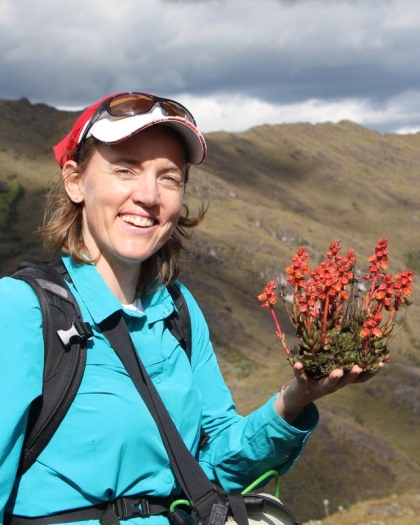
Suzette Flantua is a Researcher at the Department of Biological Sciences (BIO) , University of Bergen, Norway. She leads the PPF-Alpine project (2022-2026), funded by the Trond Mohn Foundation and the University of Bergen, integrating biology, geography, and climatology for mountain biodiversity conservation. Her research focuses on Global change ecology through macroecology, biogeography, and paleoecology Climate-biodiversity dynamics across past, present, and future time scales GIS and remote sensing applications in spatial analysis Historical environmental impacts on tropical mountain ecosystems Recent studies highlight 2025: Advancing paleoecological data standardization for global biomes 2024: Quantifying fire regime changes and bridging ecological disciplines through publishing guidelines 2023: Investigating diurnal temperature effects on plant elevation ranges and anthropogenic pollen indicators She contributes to Outreach via video communication about sustainability and has been featured in Science , Nature Geoscience , and J. Biogeography papers, with media coverage from Smithsonian Tropical Research Institute and Phys.org . Her work spans fieldwork in Andean expeditions, teaching university courses in GIS and global change, and organizing scientific events.
Massimiliano M. Schiraldi is a Full Professor of Industrial Plants at the University of Rome Tor Vergata, where he teaches Industrial Plants and Production Management at the School of Engineering. He also teaches Lean Production and Operations Management in the Master's program in Business Engineering. His academic appointment is in the Department of Business Engineering (IIND-05). Professor Schiraldi received his PhD in Management Engineering in 2003 and has been teaching Operations Management subjects since 2000. His research interests span multiple areas of industrial engineering and operations management, including production systems management, logistics and supply chain optimization, industrial plant design, production cost reduction techniques, and production information systems. He has pioneered approaches in Lean Production, Six Sigma standards, and advanced production management techniques with hybrid kanban systems. Professor Schiraldi's recent publications demonstrate his continued leadership in operations management, with a focus on digital transformation, performance measurement, Industry 4.0 technologies, and the human factor in operations excellence. His work bridges theoretical research with practical applications in manufacturing and service industries. Co-Editor of the International Journal of Engineering Business Management (Sage) Area-Editor (Supply Chain Management & Logistics) of Computers and Industrial Engineering (Elsevier) Reviewer for many primary international journals including International Journal of Production Research and International Journal of Logistics Systems and Management Professor Schiraldi has supervised over 20 PhD students and more than 300 undergraduate theses, many of which were conducted in collaboration with major Italian and multinational companies. He has participated in over 50 research and consulting projects with industrial companies at national and international levels. He established the Operations Excellence Think Tank and has served in numerous administrative roles at the university, including as Rector's Delegate for major events and coordinator of university merchandising and social media. He maintains strong industry connections with companies including Amazon, Ferrero, Calzedonia, Gucci, Ferrari, Johnson & Johnson, and many others across various sectors. Internationally, he serves as a Guest Professor at Guizhou University of Finance & Economics in China and a Visiting International Fellow at the University of Essex in the UK.
Anna Maria Romani Cornet is a Professor in the Department of Environmental Sciences at the University of Girona’s College of Sciences. She leads the Continental Aquatic Ecology Research Group (GRECO) and serves as the principal investigator for EcoAqua research initiatives. Her work focuses on microbial biofilm ecology, organic matter cycling, and climate change impacts on aquatic ecosystems. Current projects explore extreme environments like hypersaline lakes and alpine acidic streams Key research areas: Biogeochemical cycles, microbial interactions, drought effects Editorial service: Limnology and Oceanography, Freshwater Biology, Aquatic Microbial Ecology Research Trends: Recent publications emphasize climate change effects on microbial processes, DOM dynamics in transitional ecosystems, and biofilm responses to hydrological extremes. Her work bridges soil science and aquatic ecology through biofilm studies in drying streams and hypersaline systems. Academic Leadership: She has mentored 9 PhD students (Lucie Laffet et al.) and 7 postdocs, directed 12 MSc theses, and annually advises 2-3 undergraduate projects. Her team publishes in top journals across Ecology, Environmental Sciences, and Microbiology (61.8% international co-authors; 65.6% Scopus top-cited).
Sarah Matej is a Researcher at the Institute for Social Ecology , affiliated with the University of Natural Resources and Life Sciences, Vienna (BOKU) . Her work focuses on global land use systems, human-nature interactions, and environmental sustainability metrics. Research Interests : Human Appropriation of Net Primary Production (HANPP) Carbon cycle and land use change GIS and spatial modeling Urban-rural telecoupling Biodiversity footprint analysis Notable Contributions : Co-developed the Biospheremetrics R package for assessing biosphere integrity Published in Scientific Data , Global Ecology and Biogeography , and Journal of Cleaner Production Projects : EO AFRICA - Continental Demonstrator LUISA (2023-2025) LandCube: Global Land Use Data Cube (2022-2026) Biodiv Vienna: Urban Biodiversity Footprint (2018-2022)
Emili García-Berthou is a prominent researcher affiliated with the Institute of Aquatic Ecology and the Department of Environmental Sciences at the University of Girona. His work focuses on understanding the impacts of human activities on freshwater fish, particularly species introductions, hydrologic alterations, and water quality degradation. As head of the GRECO research group, he leads studies on invasive species, ecosystem dynamics, and conservation strategies. Research Focus: Biological invasions, aquatic ecosystem health, environmental impact assessment. Methodologies: Species distribution modeling, genetic analysis, ecological time-series databases. Policy Engagement: Contributing to invasion science terminology standardization and EU invasive species lists. His recent publications emphasize global invasion patterns, human economic drivers of species spread, and physiological responses of fish to environmental stressors. While no explicit awards are listed, his editorial roles in journals like Biological Invasions highlight his influence in interdisciplinary ecological research.
Maja Bucan, PhD, is a Professor of Genetics and Co-Director of the Autism Spectrum Program of Excellence at the Perelman School of Medicine, University of Pennsylvania. Her research focuses on genetic dissection of complex behaviors in mice and humans, with expertise in functional genomics , bipolar disorder , and autism spectrum disorders . She is affiliated with multiple graduate groups, including Cell and Molecular Biology, Genomics and Computational Biology, and Neuroscience. Research Interests Dr. Bucan investigates: Genetic basis of psychiatric disorders (autism, bipolar disorder) Role of circadian rhythms in mental health Functional annotation of mammalian genomes Behavioral mutations in mouse models Actigraphy studies for sleep/activity patterns Recent Trends Her latest work involves machine learning analysis of actigraphy data for sleep-mortality links, whole-genome sequencing in autism cohorts , and heritability studies of sleep-wake traits using twin data. Collaborations include the Center for Autism Research and iPSYCH Consortium . Outreach Dr. Bucan engages in educational outreach , partnering with Philadelphia high schools to teach sleep/activity studies through hands-on science projects.
Deb Donig is an Assistant Professor of English Literature at California Polytechnic State University and a Lecturer at the University of California, Berkeley's School of Information in the Data Science master's program. She is a fellow at the Cal Poly Center for Entrepreneurship and Innovation, co-founder of the Cal Poly Ethical Technology Initiative, and host of the "Technically Human" podcast, ranked among the top 15 ethics and technology podcasts. Her research spans ethical technology development, literary globalization, and human rights frameworks. She examines how literary forms migrate into human rights discourse and employs data analytics to study The New Yorker's century-long evolution of fiction, creating a database of over 10,000 stories with dynamic mapping technology. Her work bridges humanities and data science to address representation issues in gender, nationality, and geopolitical contexts. Analysis of her publications reveals a consistent focus on ethical frameworks for technology development, with increasing emphasis on practical implementation through her Ethical Technology Initiative. Her research combines literary analysis with data-driven approaches to examine how cultural narratives shape and are shaped by technological development. National Science Foundation Grant as Primary Investigator for 'The Future of Work: Ethical Technology' Co-founder of the Cal Poly Ethical Technology Initiative Host of 'Technically Human' podcast (top 15 ethics/technology podcasts) Dr. Donig advises on film and television projects including 'Hunters' produced by Jordan Peele, served on the Biden/Harris Policy Strategy Team in Higher Education, and teaches 'Data Science 231: Behind the Data: Humans and Values' across multiple semesters. She previously served as Interim Director of the Center for Expressive Technologies (2021-2022) and continues to bridge academic research with real-world policy and media applications.
Jussi Eronen is a Professor of Socio-ecological Systems at the University of Helsinki , affiliated with the Faculty of Biological and Environmental Sciences and the Ecosystems and Environment Research Programme . He also serves as Vice-Dean for Societal Interaction and maintains an external affiliation with the BIOS Research Unit . His research focuses on three main areas: (1) long-term biotic interaction changes due to human influence, (2) socio-ecological system analysis in Northern Fennoscandia, and (3) policy path-dependencies affecting sustainability transitions. The Past Present Sustainability Research Unit (PAES) he leads employs transdisciplinary approaches combining natural science perspectives with social science collaborations. Recent work examines reindeer herding futures using wild logic scenarios, policy implementation challenges in forest industries, and cultural transmission patterns through string figure analysis. His publications span journals like Journal of Land Use Science , Anthropocene Review , and Ecological Economics , reflecting his integrative approach to sustainability science. Current projects include EU-funded research on regional sustainability pathways (2023-2025) and Academy of Finland initiatives for university profiling (2025-2030). He maintains active roles in scientific networks like the Scientific Consensus on Maintaining Humanity's Life Support Systems .
Dr. Ariel Greiner is an NSERC Postdoctoral Fellow in the Department of Biology at the University of Oxford and Pennsylvania State University, supervised by Dr. Katrina Davis and Dr. Katriona Shea. Her interdisciplinary research applies mathematical and statistical modeling to conservation challenges, with current focus on optimizing coral reef management in Melanesia through value-of-information frameworks and socioeconomic integration. Her academic foundation includes: PhD in Ecology and Evolutionary Biology from the University of Toronto (supervised by Dr. Martin Krkošek, Dr. Marie-Josêe Fortin, and Dr. Emily Darling) Bachelor of Science from McGill University (research with Dr. Andrew Gonzalez on ecosystem functioning debts and global genetic diversity patterns) Dr. Greiner's research centers on coral reef resilience under anthropogenic pressures, employing network theory and dynamical systems to model connectivity, regime shifts, and climate impacts. Her work bridges theoretical ecology with practical conservation, emphasizing equity in scientific practice. Recent publications demonstrate methodological innovation in state-space modeling, macrogenetics, and disease epidemiology while maintaining consistent focus on coral reef sustainability. Analysis of her 15 most recent publications reveals dominant themes in coral reef dynamics (73% of works), with significant contributions to disease modeling (13%) and conservation genetics (13%). Temporal trends show increasing integration of socioeconomic factors since 2021, while mathematical approaches consistently emphasize network connectivity and stability analysis across all publications. Her accolades include: Excellence in Doctoral Research Award (Canadian Society of Ecology and Evolution) Harold H. Harvey Prize for Academic Leadership NSERC Doctoral Scholarship NSERC Postdoctoral Fellowship Supported by NSERC funding throughout her career, Dr. Greiner has collaborated extensively with the Wildlife Conservation Society (WCS) Fiji and Melanesia, including fieldwork surveying Fijian reefs. While no formal advisees are documented, her work demonstrates strong mentorship through collaborative publications and educational contributions like the 'Ten Simple Rules' modeling guide. Her current Melanesian reef project exemplifies her signature approach: integrating mathematical optimization with community engagement to develop context-specific conservation strategies that balance ecological resilience and human needs.
Shuo Lin is a Professor in the Department of Molecular, Cell and Developmental Biology at UCLA since 2001, with a focus on zebrafish genetics to study hematopoietic and vascular development , pancreas organogenesis , and chemical genetics . He earned his Ph.D. in Biological Chemistry from Boston University in 1991, followed by postdoctoral work at MIT. His lab develops zebrafish as a model organism for human disease and drug discovery. Research interests include: Genetic pathways of hematopoiesis and vasculogenesis , emphasizing hemangioblast determination and lineage specification . Genetic basis of pancreatic organogenesis , particularly beta cell development for diabetes research. Pre-clinical drug discovery using zebrafish models for cancer and neurodegenerative diseases . His lab pioneered genome-wide mutagenesis via retroviral insertions and BAC transgenesis with GFP/RFP reporters , generating hundreds of transgenic lines for tissue-specific gene expression. Publications span developmental biology , genetics , and nano-EHS studies , often involving high-throughput screening and transgenic zebrafish models . Graduate students Haishan Zhao and Jason Ear are part of his team. His work integrates biomedical research , transgenesis , and chemical genetics to address fundamental questions in developmental biology and disease modeling.
Dietmar Seipel is a Professor at the University of Würzburg, affiliated with the Department of Computer Science within the Faculty of Mathematics and Computer Science. He has held this position since November 1995, establishing a distinguished academic career spanning over 25 years with significant contributions to logic-based computer science. Professor Seipel's research focuses on Logic Programming and Deductive Databases, with substantial expertise in Knowledge Engineering and Artificial Intelligence. His scholarly work bridges theoretical foundations with practical applications, particularly in rule-based systems, knowledge representation, and declarative programming paradigms. He has consistently advanced the field through both theoretical developments and practical implementations, creating tools that enable more effective knowledge management and reasoning systems. His publication trajectory demonstrates a clear evolution from foundational work in disjunctive logic programming to contemporary applications in knowledge representation and semantic technologies. Recent research shows continued innovation in integrating logic programming with modern programming languages and systems, including Python and JavaScript implementations. His work spans theoretical contributions to practical tool development, with applications across diverse domains including space systems, medical informatics, and business process management. Professor Seipel has made extensive contributions to the academic literature, with publications appearing consistently from the 1980s through to the present. His work has influenced both theoretical developments in logic programming and practical applications in knowledge-based systems. He has been actively involved in academic community building through conference organization, particularly for events related to declarative programming and knowledge management.
Maribel Yasmina Campos Alves Santos serves as a Full Professor in Information Systems in Organisations and Society at the Department of Information Systems, School of Engineering, University of Minho, Portugal. She is a Senior Researcher at the ALGORITMI Research Centre and the CCG/ZGDV ICT Innovation Institute, where she leads the data engineering and analytics group. Previously, she led the Software-based Information Systems Engineering and Management Group (2017-2022) and currently coordinates the 'Organisational and Analytical Data-intensive Systems' research track since 2009. Her research focuses on Business Intelligence and Analytics, with particular emphasis on Big Data Analytics including data architectures, processing, analysis, and visualization. She contributes to international classifications through the Association for Information Systems (AIS) Topics in Decision Support and Analytics, Geographic Information Systems, and Big Data Application Processes, as well as IFIP Technical Committee on Information Systems. Dr. Santos has held significant administrative roles including Vice-Dean of the School of Engineering (2019-2022), Dean of the Pedagogical Council (2019-2022), and Associate Director of the Department of Information Systems (2010-2014). Since February 2024, she has served as Director of the Doctoral Program in Information Systems and Technologies. She was actively involved with AGILE as Secretary-General (2013-2015) and remains a member of the Association of Information Systems (AIS). Her recent publication portfolio demonstrates strong focus on emerging technologies, with 15 most recent works spanning large language models for conceptual modeling, storytelling dashboards for Industry 4.0, data mesh adoption, and model-to-model transformations. These publications reveal consistent themes in data architecture innovation, visualization techniques, and the integration of AI in information systems. Associate Editor, Business & Information Systems Engineering Journal (Q1, since January 2022) Scientific/Program/Organizing Committee member for over 140 international conferences Co-inventor of two patents (one national, one international) Dr. Santos has supervised 7 PhDs, 60 MSc, and 2 post-doc students, and currently mentors 4 PhD students, 4 MSc students, and 1 post-doc. She has supervised over 45 research grants and participated in more than 30 funded research projects. Her leadership extends to coordinating the Doctoral Program in Information Systems and Technologies and contributing to European research initiatives including a Marie Skłodowska-Curie Actions Joint Doctorate Program in Geoinformatics.