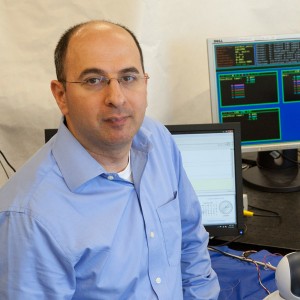
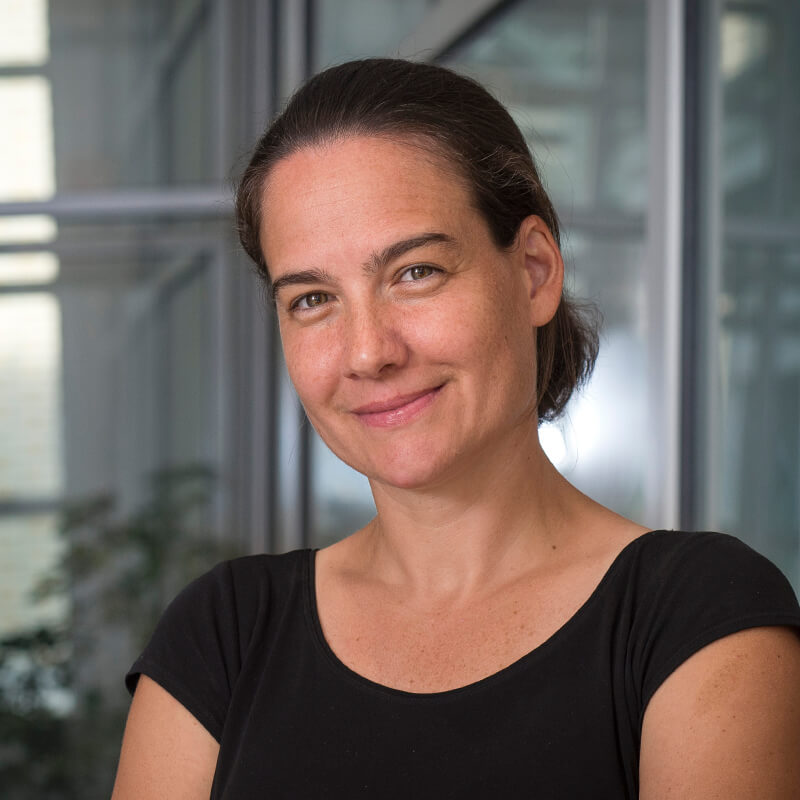
Prof. Dr. Nuri Başoğlu is a Professor at Izmir Institute of Technology (IYTE). His educational background includes a BSc in Industrial Engineering from Boğaziçi University, and both MSc and PhD in Production Management from Istanbul University. Research Focus His research spans interdisciplinary domains with emphasis on: Technology Adoption : Healthcare systems, mobile services, and education. Innovation Processes : Sociotechnical systems, product design, and decision support. Information Systems : Strategic implementation and human-computer interaction. Recent publication trends (2010–2013) highlight technology diffusion in healthcare, including telemedicine, health informatics, and e-learning. Cross-cultural studies on mobile services and ERP optimization in manufacturing also feature prominently. No awards, grants, or supervised students are documented in the provided materials.
Jessica Hullman is the Ginni Rometty Professor of Computer Science at Northwestern University's McCormick School of Engineering and a Faculty Fellow at the Institute for Policy Research. Her research develops theoretical frameworks and interfaces for human-AI collaboration, focusing on uncertainty quantification, statistical modeling, and decision-making in domains like scientific research and AI-assisted analysis. Education: PhD in Information (Visualization), University of Michigan (2013) MS in Information Analysis, University of Michigan (2008) BA in Comparative Studies, Ohio State University (2003) Tableau Postdoctoral Fellowship, UC Berkeley (2015) Research Focus: Hullman's work bridges formal models of rational inference (e.g., Bayesian decision theory) with real-world applications. Key areas include: human-AI complementarity in decision-making, visualization of uncertainty, statistical reform, and LLM applications in behavioral science. Her research consistently addresses the alignment of data-driven interfaces with human cognitive capabilities. Publication Trends: Recent work demonstrates a strong emphasis on human-AI collaboration frameworks, decision-theoretic evaluation of visualizations, and methodological rigor in machine learning and social science. Key themes include uncertainty quantification (conformal prediction, privacy tradeoffs), behavioral experiments in AI-assisted tasks, and critical analyses of scientific practices. Awards & Honors: Microsoft Faculty Fellow (2019) Google Faculty Award NSF CAREER, Medium, and Small Awards Multiple best paper/honorable mention awards at top HCI/visualization venues (CHI, VIS) Funding & Labs: Principal Investigator for NSF-funded projects including HCC: Medium on visualization tools. Previously affiliated with University of Washington's Interactive Data Lab and DataLab. Current research includes NSF-supported work on improving data visualization for reasoning about analytical assumptions.
Dr. Steven Jacobsen is a Professor in the Molecular, Cell, and Developmental Biology Department at the University of California, Los Angeles (UCLA), where he leads the Jacobsen Lab. His work focuses on epigenetic inheritance and gene regulation in Arabidopsis thaliana and mammalian stem cells, utilizing genetic screens, genomics, epigenomics, and biochemical approaches. The lab also pioneers CRISPR-mediated genome editing techniques. University: University of California, Los Angeles Department: Molecular, Cell, and Developmental Biology Research Interests: Jacobsen's research spans multiple interconnected domains in epigenetics, including DNA methylation patterning, histone modification interplay, and transposable element silencing. His team investigates how chromatin structure influences gene expression and epigenetic inheritance, with applications from plant development to human health. Key areas include: CRISPR-based epigenetic modifications RNA-directed DNA methylation (RdDM) mechanisms Chromatin compaction via MORC proteins Histone variant functions in methylation Transposon control in plant genomes Comparative epigenomics across species Advising Legacy: Over two decades, Dr. Jacobsen has mentored 21 former lab members who now hold academic and industry positions globally, including professors at Chinese Academy of Sciences, University of Georgia, and Southern University of Science & Technology. His lab's publications reveal a consistent focus on DNA methylation dynamics, chromatin remodeling, and small RNA pathways, with recent work emphasizing CRISPR innovations and structural insights into epigenetic regulators.
Prof. Dr. Matthias Rarey is a computer scientist and Professor at the University of Hamburg's Center for Bioinformatics. He holds a Ph.D. in Computer Science from the University of Bonn (1996) and has been leading the Algorithmic Molecular Design working group since 2002. His research focuses on molecular design algorithms, cheminformatics tools, and 3D bioinformatics. Co-founder of BioSolveIT GmbH Former cheminformatics group leader at Fraunhofer SCAI Former researcher at SmithKline Beecham and Roche Bioscience Head of Helmholtz Data Science Graduate School DASHH Director of Center for Data and Computing in Natural Science (CDCS) Research interests span algorithmic molecular design, cheminformatics, structure-based drug discovery, and machine learning applications in bioactivity prediction. His group developed widely used tools like FlexX, PoseView, and SpaceLight for molecular modeling and fragment space analysis. Recent publications focus on geometric pattern matching in protein-ligand interfaces, combinatorial fragment space encoding, adverse drug reaction network analysis, and efficient shape-based virtual screening. The work emphasizes scalable algorithms for billion-sized compound libraries and integration of machine learning with traditional cheminformatics approaches. Scientific awards include: GMD Award 1996 (Best Dissertation) GMD Award 2000 (Best Project) NRW Wissenschaftspreis 2002 Corwin Hansch Award 2005 Emerging Technologies Award 2011 Norddeutscher Wissenschaftspreis 2020 Academic leadership roles: Founding director of Center for Bioinformatics Co-founder of M.Sc. Bioinformatics and B.Sc. Computing in Science programs Chair of doctoral committee at Faculty of Computer Science Member of EMBL-EBI's Molecular and Cellular Structure advisory board Former Associate Editor of Journal of Chemical Information and Modeling
Nabil Simaan is a Professor of Mechanical Engineering at Vanderbilt University with secondary appointments in Computer Science and Otolaryngology . He leads the Advanced Robotics and Mechanism Applications (ARMA) laboratory, focusing on surgical robotics, continuum robots, and intelligent human-robot interaction. Education : Ph.D., M.Sci., and B.S. in Mechanical Engineering from the Technion—Israel Institute of Technology . Postdoctoral Research at Johns Hopkins University NSF ERC-CISST (2003-2004). Research Interests : Medical robotics for minimally invasive procedures Kinematic modeling and optimization of parallel/continuum robots Telemanipulation and semi-autonomous control Flexible mechanisms and actuation redundancy Article Trends : His recent work emphasizes subretinal surgical robots, continuum manipulators for transurethral operations, and multi-scale dexterity through mathematical synthesis using screw theory and algebraic geometry. Scientific Awards : NSF Career Award (2009) for intelligent surgical robots IEEE Senior Member (2013) for contributions to robotics Advising & Grants : Advises PhD/MSc students in robotics and mechanism design. NIH-funded work on OCT-guided retinal surgery robots. NSF grants for continuum robot kinematics and redundancy control. Labs & Collaborations : Leads the ARMA Lab , bridging engineering and clinical medicine. Collaborates with Vanderbilt Institute for Surgery and Engineering (VISE) and industry partners like AURIS Surgical Robotics. Translational focus through Titan Medical Inc. partnerships.
Sylvie Delacroix is the Inaugural Jeff Price Chair in Digital Law and Director of the Centre for Data Futures at King's College London. She is also a Visiting Professor at Tohoku University, focusing on bridging theory and practice in ethics and public policy initiatives. Her research spans Data & machine ethics Ethical agency and habit Social sustainability of data ecosystems Participatory infrastructure for AI systems Uncertainty communication in LLMs Legal theory and digital law Recent publications address LLM interfaces as transitional spaces for democratic revival and sustainable data rivers in generative AI. Her work has attracted significant grant funding from the Patrick J. McGovern Foundation, Wellcome Trust, and Omidyar Network. Scientific awards include the Leverhulme Prize Peter Birks 2d Prize for Outstanding Legal Scholarship Montgomery Fellowship at Dartmouth College She supervises PhD research on large language models and uncertainty communication, as well as habit in ethical lives. Her policy contributions include advising the Law Society of England and Wales on algorithmic justice systems.
Filipa Matos Wunderlich is an Associate Professor in Urban Design at University College London's Bartlett School of Planning, where she serves as Director of the cross-faculty MRes Interdisciplinary Urban Design (MRes IdUD) program and Urban Design Strategic Coordinator. She previously co-designed and directed the MSc Urban Design and City Planning program and has held academic positions at UCL since 2008, initially as a Research Associate before becoming a Lecturer in 2010. Her educational background includes a PhD from University College London (2010), a Diploma of Architecture from Universidade do Porto (2000), and a Bachelor of Music from ArtEZ Institute of the Arts (2001). This interdisciplinary foundation informs her unique approach that bridges architecture, urban design, and musical performance. Wunderlich's research centers on temporality in urban places, urban rhythms, and place-rhythmanalysis, with significant contributions to temporal urban design theory and practice. Her work explores sensory and performative urbanisms, affect in the city, and the interface between urban and musical aesthetics. She also investigates gender-neutral urban design and alternative hybrid typologies in contemporary cities, emphasizing the synergy between theoretical innovation and practical application in urban design. Her publication record reveals a clear evolution from foundational theoretical work on urban rhythms and place-temporality toward increasingly sophisticated applications of temporal design principles. The most recent publications demonstrate a maturation of her temporal urban design framework, moving from conceptual explorations to practical implementations across diverse urban contexts, with growing emphasis on wellbeing, health, and sustainability implications. As a respected academic, Wunderlich regularly serves as keynote speaker at international conferences, including recent invitations to Oxford University, AESOP conferences, and the Conscious Cities Festival. She is a guest editor for Planning Theory and Practice and Architecture Open-Access journals, and frequently reviews for leading urban studies publications. In her teaching and advising roles, Wunderlich directs the MRes IdUD program and coordinates the Major Research Projects module across multiple postgraduate programs. Her grant activities include Innovate UK's Smart Walkability Platform project, UCL ChangeMakers initiatives, and the European COST Action Go2CHANGE research project on cultural heritage conservation under climate change. Wunderlich leads several research initiatives including the Post Growth Planning Research Cluster, Temporal Urban Design Research Podcast and Journal, and Collective Zebra - an online journal focused on walking. These platforms foster interdisciplinary dialogue on temporal approaches to urban design and facilitate knowledge exchange between academic research and professional practice.
Prof. dr. Enoch O. Aboh is Professor of Linguistics at the University of Amsterdam , Faculty of Humanities, Department of Literature and Linguistics. His office is located at Spuistraat 134, room 647, and he can be contacted at e.o.aboh@uva.nl . Research Interests: Prof. Aboh’s work lies at the intersection of formal syntax, language contact, and learnability. He investigates creole formation , multilingual ecologies , Gbe and Kwa syntax , cartographic approaches to clause structure , and sign language morphosyntax . A recurring theme is the emergence and evolution of grammatical systems under contact, approached through both descriptive fieldwork and formal theoretical modelling. His publications reveal a methodological breadth spanning experimental studies with kindergarteners on statistical learning, computational detection of loanwords, and fine-grained syntactic analyses of serial verb constructions, predication patterns, and determiner systems. This spectrum underscores his commitment to integrating cognitive, typological, and formal perspectives on language. Awards & Recognition: While no specific prizes are listed in the current material, Prof. Aboh’s extensive editorial and collaborative work—evidenced by numerous co-edited volumes and Festschrift contributions—attests to his standing in the field. Students & Grants: Details on PhD advisees or funded projects are not provided in the source text. Labs & Teams: No dedicated laboratory or research group names are mentioned, yet his affiliation with the Amsterdam Center for Language and Communication (ACLC) can be inferred from the institutional context.
Heather O'Brien is a Professor at the School of Information , University of British Columbia, specializing in user engagement with digital technologies , information retrieval , and knowledge exchange . Her work bridges human-computer interaction and health informatics through projects like the User Engagement Scale (UES) and the PolarUs app for bipolar disorder management. Education: MLIS and PhD from Dalhousie University Research: Focuses on engagement theory, digital health, and university-community knowledge exchange Her STOREE project (SSHRC-funded) develops frameworks for open scholarship and community-centered metadata practices. She co-developed the internationally adopted UES tool for measuring technology engagement, translated into French, German, Italian, and Portuguese . Scientific Awards: 2022 ASIS&T Research in Information Science Award 2018 ASIS&T SIG USE Best Paper Award Professor O'Brien mentors graduate students in information behavior and digital health while leading interdisciplinary collaborations with institutions like CREST.BD and BC Centre on Substance Use .
Lyndia Wu is an Assistant Professor in the Department of Mechanical Engineering at the University of British Columbia's Faculty of Applied Science, where she holds the prestigious Canada Research Chair in Wearable Brain Injury Sensing. She leads the SimPL (Sensing in Biomechanical Processes Lab) and maintains an active research program focused on biomechanics and medical device development. Her educational background includes: B.A.Sc. from the University of Toronto M.S. from Stanford University Ph.D. from Stanford University Postdoctoral Fellowship from Stanford University Dr. Wu's research program centers on developing novel sensing and data analytics technologies to study human biomechanics in health and disease states. Her primary research areas encompass brain injury or concussion biomechanics using advanced sensing, modeling, and machine learning approaches, as well as the development of innovative sensors and algorithms for studying sleep disorders like obstructive sleep apnea. She specializes in wearable sensors for brain health monitoring, traumatic brain injury mechanisms, and AI applications in healthcare settings. Analysis of her recent publications reveals a strong focus on sports-related head impacts (particularly in soccer), EEG monitoring following impacts, and sleep monitoring after concussions. Her work demonstrates interdisciplinary collaboration across biomechanical engineering, neuroscience, and clinical medicine, with publications spanning biomechanics, neurotrauma, biomedical instrumentation, and signal processing domains. Dr. Wu has received significant recognition for her work, including: Scholar Award from the Michael Smith Foundation for Health Research (2019) Junior Faculty Teaching Award from UBC Mechanical Engineering (2022) She actively supervises graduate students in Mechanical Engineering programs (MASc and PhD) and collaborates extensively across disciplines. Dr. Wu is affiliated with multiple research centers including the Institute for Computing, Information and Cognitive Systems (ICICS), Origins of Balance Deficits and Falls, and SmarT Innovations for Technology Connected Health (STITCH), reflecting her interdisciplinary approach to solving complex biomedical challenges. As director of the SimPL lab, she leads a research team developing cutting-edge sensing solutions for biomechanical processes with particular emphasis on brain injury prevention, monitoring, and recovery assessment through innovative engineering approaches.
Armin Grunwald serves as Head of the Institute for Technology Assessment and Systems Analysis (ITAS) at Karlsruhe Institute of Technology (KIT) and Head of the Office of Technology Assessment at the German Bundestag (TAB). Since 2007, he has held the Chair of Philosophy and Ethics of Technology at KIT's Institute of Philosophy, building on his previous professorship at the University of Freiburg (1999-2007). His leadership positions include membership in the German Ethics Council, the National Advisory Board for Repository Search, and the Science-Policy Advisory Board of ETH Zürich. Grunwald's research focuses on the theory and practice of technology assessment, ethics of technology, sustainability concepts, and digital transformation. His work explores humanity's relationship with technology, particularly examining how digitalization challenges human self-understanding and autonomy. He investigates philosophical questions surrounding artificial intelligence, anthropocentrism in the Anthropocene, and the ethical dimensions of technological progress. His extensive publication record demonstrates consistent scholarly output across multiple disciplines. Recent work shows increasing focus on AI ethics, the philosophical implications of digital transformation, and technology assessment methodologies for addressing grand societal challenges. His publications span philosophical analyses, empirical studies on technology implementation, and policy-relevant assessments for governmental bodies. Grunwald has supervised numerous doctoral students across interdisciplinary fields including energy transition, AI governance, urban sustainability, and technology ethics. His leadership extends to directing major research initiatives through ITAS, which serves as Germany's parliamentary technology assessment body providing scientific advice to the Bundestag on emerging technologies and their societal implications.
Sergio Burgos, PhD is an Associate Professor in the Department of Animal Science at McGill University's Faculty of Agricultural and Environmental Sciences, and a Scientist at the Research Institute of the McGill University Health Centre (RI-MUHC). He leads an interdisciplinary research program integrating animal nutrition, human health, and environmental sustainability. Pan-American School of Agriculture, Zamorano, Honduras (Agrónomo) University of Florida (BSc Animal Science) University of California, Davis (MSc Animal Science) University of Guelph (PhD Animal Science, 2009) Research Focus examines protein foods' roles in: Human Nutrition & Cardiometabolic Health Dairy Production Systems & Rumen Microbiome Milk Metabolomics & Bioactive Compounds Climate Impact Reduction through Dietary Transitions Publication Trends demonstrate: 2024-2025: Prioritization of plant-animal protein substitutions for climate & health 2020-2023: Mechanistic studies on amino acid regulation of mammary cell function 2016-2020: Foundational work on insulin resistance and dairy nutrition Awards Richard and Edith Strauss Postdoctoral Fellowship (2010-12) Professional Affiliations Regroupement OptiLAIT (2015-present) American Society for Nutrition (2015-present) Canadian Diabetes Association (2012-present) Teaches core courses in animal nutrition, protein metabolism, and computational ration balancing.
Christina Tringides is a tenure-track Assistant Professor in Materials Science and NanoEngineering at Rice University, affiliated with the Neuroengineering Initiative (NEI). She holds the CPRIT Scholar in Cancer Research title and leads the Tringides Lab, which develops soft materials and neurotechnologies for neural system interfaces. Her interdisciplinary work spans from cellular to organ levels, addressing both in vivo and in vitro applications. Education: B.S. in Materials Science & Engineering and Physics from MIT (2015); Ph.D. in Biophysics from Harvard University (2022) under David Mooney. Postdoctoral research at ETH Zürich with Janos Vörös as an ETH Fellow. Recognized with awards including the WIMA laureate (2023), NSF GRFP (2017), and Fulbright Scholar (2015). Research focuses on hydrogels, bioelectronics, and implantable electrode arrays. Key projects include biomimetic in vitro platforms for neural studies and viscoelastic biohybrid interfaces for neuromodulation. Her lab’s innovations aim to advance neurological disorder treatments and diagnostics. Scientific contributions include over 20 peer-reviewed articles, with recent work emphasizing conductive hydrogels, synaptic stimulation systems, and immunotherapy biomaterials. Active in professional organizations like the Materials Research Society and American Chemical Society.
Rebecca Nugent is the Stephen E. and Joyce Fienberg Professor of Statistics & Data Science and Department Head at Carnegie Mellon University. She holds a PhD in Statistics from the University of Washington (2006), an MS in Statistics from Stanford (2006), and a BA in Mathematics, Statistics, and Spanish from Rice University (2002). Her research spans clustering methodology , record linkage , educational data mining , public health , and semantic organization , with a focus on high-dimensional data and adaptive learning environments. She leads the Integrated Statistics Learning Environment (ISLE) and Corporate Capstone programs, emphasizing low-barrier data platforms for education and industry collaboration. Academic Roles : Department Head, Carnegie Mellon; Affiliated Faculty, Block Center for Technology and Society Research Grants : NSF (2017-2019), NIH (2018), Carnegie Mellon ProSEED/Simon Initiative (2020, 2018), Berkman Fund (2014) Her 15 most recent publications focus on data science pedagogy, clustering algorithms, record linkage applications in historical and medical data, educational data mining, and semantic organization studies. Awards include the ASA Waller Education Award (2015) and the William H. and Frances S. Ryan Award (2015) . She mentors a diverse group of PhD, Master's, and undergraduate students, with alumni pursuing careers in academia, industry, and sports analytics.
Jessica Hammer is an Associate Professor of Learning Sciences at Carnegie Mellon University, jointly appointed in the Human-Computer Interaction Institute (HCII) and the Entertainment Technology Center (ETC). She directs the Center for Transformational Play, focusing on games that provoke meaningful change in players' perspectives and behaviors. Her research explores how virtual reality (VR), serious games, and interactive narratives can address complex societal issues like environmental awareness, mental health stigma, and AI ethics. She is also an award-winning game designer, with projects including Eye into AI , Monsters of Appalachia , and Project Echo of the Abyss . Hammer's academic background integrates computer science, education, and design thinking. Her work spans diverse domains such as healthcare through games, gender-inclusive game narratives, and AI literacy education. She has advised students including Erica Cruz, Noor Hammad, and Beatrice Maggipinto, mentoring them in projects that bridge technology and humanistic goals. Current research initiatives include: AI Ethics: Developing frameworks like RAD to help youth critique algorithmic systems VR for Education: Creating deep-sea exploration experiences to foster ecological empathy Inclusive Design: Addressing accessibility in game streaming for vision-impaired users Her projects often involve collaboration with interdisciplinary teams across CMU's schools, leveraging partnerships with game developers, educators, and social scientists. Hammer's work has been featured in venues like CHI and The Link magazine, reflecting her commitment to both academic rigor and real-world impact.