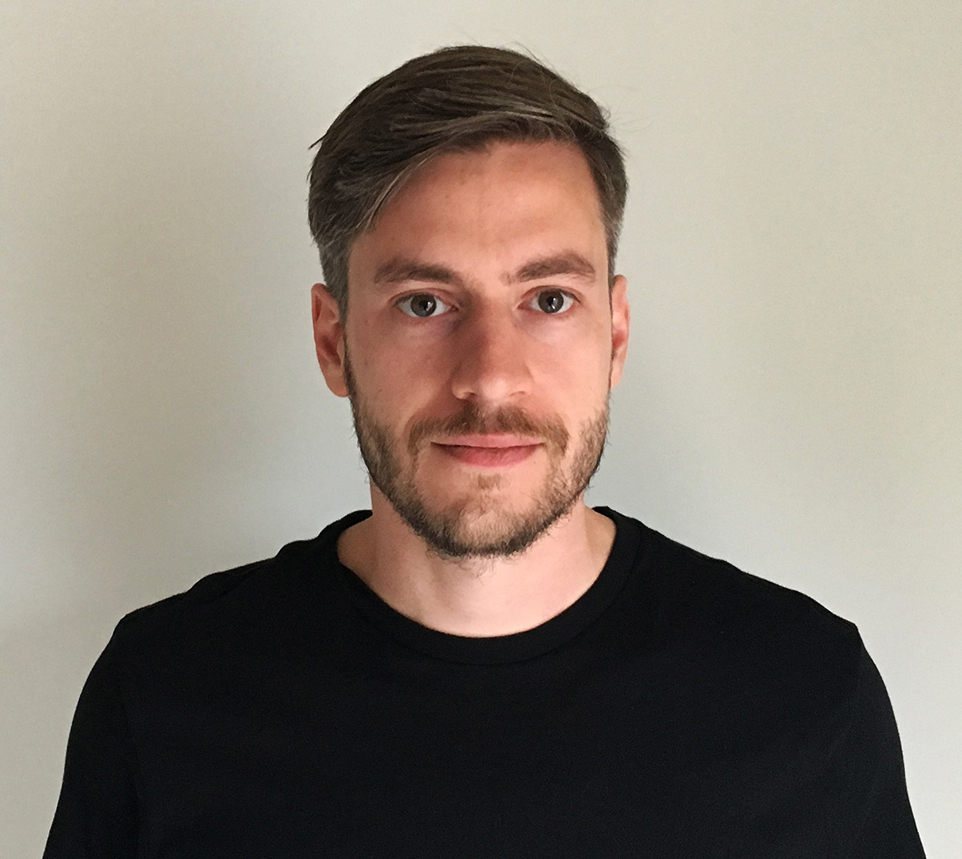
Rodrigo Ventura is an Associate Professor at the Department of Electrical and Computer Engineering, Instituto Superior Técnico (IST), University of Lisbon. He is also a senior researcher at the Institute for Systems and Robotics (ISR-Lisbon), leading the Space and Aeronautics thematic line. His research focuses on the intersection of Robotics and Artificial Intelligence, emphasizing human-robot interaction, space robotics, and cognitive architectures. He coordinates the Minor in Space Sciences and Technologies at IST and the MBE on Space Systems for Tecnico+. As Adjoint Faculty at the International Space University (ISU), he contributes to global academic initiatives. His work includes experiments on the International Space Station and participation in analog space missions. Research interests span biologically inspired systems, machine learning, and teleoperation interfaces. Recent publications address reinforcement learning for UAVs, microgravity experiments, and pseudo-haptic feedback for robotic control. He teaches subjects like Artificial Intelligence and Decision Systems, Satellite Engineering, and Autonomous Systems.
David Lindlbauer is an Assistant Professor at the Human-Computer Interaction Institute (HCII) within Carnegie Mellon University's School of Computer Science. He leads the Augmented Perception Lab and co-directs the CMU Extended Reality Technology Center (XRTC) . His research bridges Human-Computer Interaction, Computer Graphics, and Computer Vision to create adaptive interfaces that enhance human-digital interaction. Education : PhD (summa cum laude) from Technische Universität Berlin , MSc and BSc from University of Applied Sciences Upper Austria Previous Affiliation : Postdoctoral Researcher at ETH Zurich (2018-2020) David's research focuses on understanding human perception of digital information and developing computational approaches to optimize AR/VR interface usability. Key areas include: Context-aware adaptive interfaces Visual saliency and attention modeling Spatial audio-haptic systems Optimal placement algorithms Object manipulation in Remixed Reality Diminished/ambient MR interfaces His 15 most recent publications (2024-2025) span topics in adaptive XR interfaces, multimodal notifications, haptic systems, and spatial cognition. These works appear at venues like ACM CHI, ACM UIST, IEEE VR, and Frontiers in VR. Common themes include: Machine learning for interface adaptation Human factors in XR design Real-time environment analysis Privacy-aware display systems Collaborative MR interfaces Accessibility enhancements Scientific Recognition : Best Paper Honorable Mention Award (ACM CHI 2024) Best Paper Award (ACM ISS 2023) ETH Zurich Postdoctoral Fellowship Multiple best paper recognitions at CHI, UIST, and IEEE VR Teaching & Leadership : Course developer for CMU's "Interactive Extended Reality" Mentor for NASA SUITS Challenge team Co-chair roles at CHI and UIST Overseeing PhD students and research interns
João F. Mano is a Full Professor at the Department of Chemistry, University of Aveiro, and Director of the Doctoral Program on Biotechnology. He leads the COMPASS Research Group and serves as Vice-Director at CICECO - Aveiro Institute of Materials. His academic appointments include Invited Professor at University of Lorraine (France), Visiting Professor at KAIST (South Korea), and Adjunct Professor at Ajou University (South Korea). Education: PhD in Chemistry (1996, Technical University of Lisbon); D.Sc. in Tissue Engineering, Regenerative Medicine and Stem Cells (2012, University of Minho) Research Interests focus on Biomaterials for Regenerative Medicine , integrating Nanotechnology , Microtechnology , and Biofabrication . His group develops Bioinspired Materials using polymer chemistry, Decellularized Extracellular Matrix , and 3D Bioprinting to engineer Cell Microenvironments for therapeutic applications. Recent Publications highlight advancements in Human-Derived Hydrogels , Photopolymerizable Scaffolds , Magneto-Responsive Biomaterials , and Programmable Bioinks . Trends show emphasis on Organ-on-a-Chip integration, Smart Living Materials , and Green Bioprinting methodologies. Scientific Awards include: European Research Council Advanced Grants (2015, 2020) Fellow at IUPAC, European Academy of Sciences, and American Institute of Medical and Biological Engineering ERC Proof of Concept Grants Doctor Honoris Causa from University of Lorraine and Utrecht UNESCO Chair on Biomaterials George Winter Award (European Society for Biomaterials) Supervisions & Collaborations encompass 74+ MSc, 26+ PhD students, and 40+ postdocs. He co-founded METATISSUE and CELLULARIS Biomodels , and serves as Editor-in-Chief of Materials Today Bio .
Leid Zejnilovic is an Assistant Professor at Nova School of Business and Economics (Nova SBE), where he co-founded the Data Science Knowledge Center and serves as Academic Director, and co-founded the Open and User Innovation Knowledge Center as Scientific Deputy Director. He also co-founded the Patient Innovation platform, enabling patients and caregivers to share self-made healthcare solutions. With a double PhD from Carnegie Mellon University and Católica-Lisbon School of Business and Economics, his career spans over 20 years of international consulting, academic entrepreneurship, and teaching at institutions like Imperial College Business School and Ludwig Boltzmann Institute. PhD in Strategy, Entrepreneurship and Technological Change (Carnegie Mellon University / Catholic University of Portugal, 2014) Master in Engineering and Public Policy (Carnegie Mellon University, 2012) Master in Information Technology (Dzemal Bijedic University, 2007) Bachelor in Telecommunications (University of Sarajevo, 2002) His research focuses on Technology and Innovation Management, Human-Computer Interaction, and data-driven solutions across healthcare, tourism, and education. He has published extensively in journals like California Management Review , PLoS ONE , and Marine Policy , with recent work analyzing big data in tourism, machine learning for oral health, and pandemic impacts on fisheries. As an Associate Editor for Data & Policy Journal , his contributions bridge academic research and real-world applications. Co-founding the Data Science for Social Good Foundation and leading over 100 talks in industry and academia, Zejnilovic's career emphasizes translating innovation into social and economic impact through platforms, policy, and education.
Rui Pedro Figueiredo Marques is a Professor at the Higher Institute of Accounting and Administration, University of Aveiro, where he teaches Information Systems across technical, bachelor's, master's, and doctoral programs. He serves as course director for the Professional Higher Technical Course in Organizational Informatics and Communication and holds a board position at the Institute of Accounting and Administration, University of Aveiro. As a Full Researcher at GOVCOPP's Competitiveness, Innovation and Sustainability (CIS) group, his work focuses on Information Systems for Business, with recent emphasis on AI, Blockchain, and Business Intelligence applications in auditing and accounting contexts. Marques' academic credentials include a Ph.D. in Computer Science (2014, Universities of Minho/Aveiro/Porto), a Master's degree (2008), and a Bachelor's in Electronics and Telecommunications Engineering (2005, University of Aveiro). He has authored/co-authored over 50 publications, including journal articles, conference papers, and book chapters on topics ranging from ERP systems in auditing to digital transformation in low-density territories. He is editor-in-chief of the International Journal of Business Innovation and actively participates in funded research projects addressing governance, competitiveness, and public policies. His research explores intersections between technology and business practices, with notable contributions to AI in auditing, blockchain's role in financial transparency, and sustainable development frameworks for social economy entities. Notable projects include evaluations of ERP systems' impact on internal audit maturity and frameworks promoting accountability in private social solidarity institutions. Marques' work frequently emphasizes practical applications of technology in audit processes, education, and public sector modernization. He collaborates with institutions like the Portuguese Social Solidarity Sector and has advised on digital transformation strategies for tourism and hospitality industries.
Alberto Rodrigues da Silva is a Professor at the Institute Superior Técnico , part of the University of Lisbon . He teaches Fundamentals of Information Systems , primarily during the 1st Semester of the 2025/2026 academic year. His scientific interests revolve around Information Systems , Model-Driven Engineering (MDE), Requirements Engineering (RE), Social Computing , and Software Engineering . He has extensively contributed to the development of rigorous requirements specification languages like RSL (Requirements Specification Language) and its extensions (e.g., RSL-IL4Privacy for privacy policies). His collaborative work spans automated acceptance testing, GDPR compliance, and domain-specific languages (DSLs) for applications such as mobile development , digital twins , and legal contexts (e.g., LegalLanguage ). His research trends focus on integrating model-driven engineering with privacy policies , IoT applications , and low-code platforms . He has also explored tools like Maestro for data classification and usability testing, and RiverCure for flood simulation. Email: alberto.silva@tecnico.ulisboa.pt .
Jesualdo Cerqueira Fernandes is an Assistant Professor at ISEG - Lisbon School of Economics and Management , part of the University of Lisbon. He also serves as a researcher at the ADVANCE Centre for Advanced Research in Management, contributing to studies in information systems and management. Education: PhD in Management (ISEG, 2018), Master’s in Information Management (University of Sheffield/Universidade Minho, 1994), and Bachelor’s in Computer Science (Faculty of Sciences, University of Lisbon, 1989) His research focuses on information systems strategy , agile methodologies , gamification , and benefits management . He has explored applications of these topics in environmental sustainability, banking, and insurance sectors. His work often bridges technical implementation with organizational impact. Recent publications highlight his interdisciplinary approach, with studies on gamification for sustainability and benefits management in insurance and banking sectors. Collaborative efforts span industries such as finance, energy, and education. Scientific Award: Commendation by ISEG Dean (2022) for advisory excellence in information systems He has supervised over 40 Master’s students and contributed to curriculum development, including coordination of the Master in Information Systems Management at ISEG.
Helder Carvalho is an Associate Professor at the University of Minho's School of Engineering, Campus de Azurém, where he also serves as Director of the Department of Textile Engineering and Director of the Master's program in Textile and Accessories Product Design and Innovation. His academic career spans over three decades, with a focus on textile engineering and its intersection with electronics and automation systems. His educational background includes: PhD in Textile Engineering (2004) from University of Minho, School of Engineering MSc in Textile Engineering (1998) from University of Minho, School of Engineering BSc in Electrotechnical and Computer Engineering (1992) from University of Porto, Faculty of Engineering Professor Carvalho's research primarily focuses on smart textiles, textile sensors, and instrumentation systems for industrial sewing machines. His work bridges the gap between traditional textile manufacturing and modern electronics, creating innovative solutions for interactive textiles and wearable technology. He has particular expertise in developing flexible sensors that can be integrated into fabrics for applications ranging from sports performance monitoring to healthcare. His recent publications demonstrate a strong trend toward sports applications of smart textiles, with numerous papers on fencing apparel, karate body protectors, and general athletic performance monitoring. The research spans material science, sensor development, and user experience design, showing a comprehensive approach to creating functional and attractive smart textile products. Professor Carvalho has received recognition through research funding from major institutions: BE@T Bioeconomy Textile and Clothing (current) Greenauto - Green Innovation for the Automotive Industry (current) Factor ST+ (2021-2023) FAMEST (2017-2020) TSSIPRO (2016-2019) He has directed multiple academic programs including the Master's in Textile and Accessories Product Design and Innovation, and coordinated educational initiatives like the CET 'Fashion Commerce' program. His work at the Textile Science and Technology Centre demonstrates a commitment to translating research into practical applications across sports, healthcare, and industrial manufacturing sectors.
Aurélien Tabard is an Associate Professor at LIRIS (Laboratoire d'InfoRmatique en Image et Systèmes d'information), a joint research unit between Université Claude Bernard Lyon 1 and CNRS. His academic career spans over a decade with positions at prestigious institutions including the IT University of Copenhagen, University of Munich, and INRIA. He completed his PhD at Université Paris-Sud in 2009, focusing on supporting lightweight reflection on familiar information. Tabard's research centers on convivial informatics, exploring alternatives to computational platforms that consider digital limits and foster sufficiency, maintenance, autonomy, and durability. His work emphasizes participatory approaches to designing resilient infrastructures and tools for rapid prototyping by non-designers. He investigates software obsolescence, digital sufficiency, and the materiality of data physicalization through projects like Limites Numériques and PC4-Congrats within PEPR eNSEMBLE. His recent publications reveal strong trends toward sustainability in computing, examining how digital systems can be designed with longevity and environmental impact in mind. There's a clear progression from technical HCI research toward broader societal implications of digital technology, particularly focusing on how users experience aging devices and negotiate digital limits collectively. Honorable mention award for 'Obsolescence Paths: living with aging devices' at ICT4S 2023 Student Lea Mosesso received the prize for best MSc thesis from Conseil National du Numérique Tabard actively mentors PhD students including Maëva Calmettes (working on skill and expertise sharing), Edlira Nano (studying software obsolescence), and Lea Mosesso (researching digital sufficiency). He collaborates extensively with researchers across France and internationally, particularly with Inria Lille where he spent a sabbatical in 2023. His current projects involve understanding software obsolescence, digital sufficiency, and the interplay between micro design decisions and systemic forces shaping ICT. He leads the Limites Numériques team, which investigates how to design computational platforms that take digital limits into consideration. The team recently developed an exhibit on water in the digital sector that will travel to Rhône-Alpes in spring 2025. Tabard also contributes to participatory design tools and critical approaches to participatory design, working with colleagues like Nolwenn Maudet, Thomas Thibault, and Romain Rouvoy.
Higher Institute of Education and SciencesPortugal
Nuno Miguel Fonseca Ferreira is a Full Professor at the Instituto Superior de Engenharia de Coimbra (ISEC), part of the Polytechnic of Coimbra, where he currently serves as President of the Scientific Council. His academic career spans over 25 years at ISEC, progressing from Assistant to Professor Coordenador Principal. He has held significant leadership positions including Vice-President of ISEC (2001-2005), Pro-President of the Polytechnic of Coimbra (2009-2010), President of ISEC (2010-2013), and Vice-President of the Polytechnic of Coimbra (2013-2017), where he was responsible for internationalization initiatives. His educational background includes a degree in Electrical Engineering from the University of Porto (1996), a Doctorate in Electrical Engineering from the University of Trás-os-Montes and Alto Douro (2006), and a Habilitation Title (Aggregation) from the same institution (2020). His research focuses on Robotic Systems, with specialization in cooperative robotic systems as evidenced by his Habilitation work. Professor Ferreira's research spans multiple domains of robotics and intelligent systems, with particular emphasis on multi-robot coordination, environmental applications, and medical robotics. His work bridges theoretical control systems with practical applications across diverse fields including forestry, healthcare, manufacturing, and education. He has developed innovative approaches to robotic manipulation, sensor integration, and human-robot interaction, often incorporating advanced techniques from artificial intelligence and machine learning. His recent publications demonstrate a strong trend toward practical applications of robotics in real-world environments, particularly in forestry maintenance, industrial automation, and medical applications. The research shows progression from theoretical control systems to applied robotics in challenging environments, with increasing integration of computer vision, deep learning, and collaborative systems. His work spans both fundamental robotics research and immediate industrial applications, reflecting a balance between academic inquiry and practical implementation. Professor Ferreira has supervised two doctoral theses and participated in numerous research projects with substantial funding. His leadership extends to coordinating 15 of the 33 national and international R&D projects he has participated in, demonstrating significant grant acquisition and management capabilities. His international collaborations through Erasmus+ and other European programs highlight his role in fostering global research partnerships. He is an integrated member of GECAD (Research Group in Engineering and Intelligent Computing for Innovation and Advanced Development), a Portuguese R&D unit classified as Excellent by the Portuguese Science and Technology Foundation. Additionally, he is a member of LASI (Associated Laboratory for Intelligent Systems), the Portuguese laboratory associated with Artificial Intelligence, connecting him to a broader national research ecosystem.
Fernando Manuel Marques Batista is an Associate Professor at ISCTE – University Institute of Lisbon, Department of Information Science and Technology, and an integrated researcher at INESC-ID Lisbon. He serves as the Executive Coordinator of the Human Language Technologies (HLT) Scientific Area at INESC-ID and is a member of its Scientific Council. He previously held leadership roles including President of the Pedagogical Council of ISCTE-IUL (2017–2019) and member of its Standing Committee (2015–2017). Research Interests: Natural Language Processing Machine Learning Text and Speech Processing Sentiment and Emotion Analysis Hate Speech Detection Social Media Analytics Automatic Speech Recognition and Transcription His recent publications reflect a strong focus on applying NLP and machine learning to social media, with particular emphasis on hate speech detection, sentiment analysis, and user behavior modeling. He has also contributed significantly to speech processing, including punctuation restoration and prosody modeling, and to digital humanities through medieval text analysis. His work spans both technical innovation and real-world applications in tourism, finance, and public discourse. Scientific Recognition: Senior Member of IEEE (since 2016) Member of ISCA (International Speech Communication Association) Fernando Batista actively advises numerous PhD and Master’s students, supervising research in areas such as generative AI, hate speech detection, sentiment analysis, and economic forecasting. He has coordinated research projects like SPEDIAL and AppRecommender and is involved in organizing major conferences including PROPOR, EAMT, IPMU, and the Lisbon Machine Learning Summer School (LxMLS), where he has served in editorial and technical roles. Research Labs and Teams: He is a key member of the HLT@INESC-ID research group, contributing to its leadership and scientific direction. This group focuses on human language technologies, including speech processing, natural language understanding, and multilingual systems.
Adriano Jorge Cardoso Moreira is an Associate Professor with Habilitation at the Department of Information Systems, School of Engineering, Universidade do Minho, Portugal. He is also a Senior Researcher at the Algoritmi Research Centre and Scientific Coordinator of the Urban and Mobile Computing department at Centro de Computação Gráfica. His research focuses on indoor positioning , mobile and context-aware computing , urban computing , and simulation of wireless networks . Research Interests : Indoor Positioning, Mobile Computing, Urban Mobility, Sensor Networks, Wi-Fi and UWB Localization, Smart Cities. Leadership : Coordinated the Computer Communications and Pervasive Media Group (2008-2016), Scientific Committee member (Director of MAP-tele PhD program in multiple terms), and leads the Master in Telecommunications and Informatics since 2021. Publications : Over 100 papers, including IEEE Transactions and Sensors journal articles, with an h-index of 23 and 2136 citations. Awards : First and second prizes in EvAAL-ETRI Indoor Localization Competitions (2015, 2016, 2017).
Maria Leonilde Rocha Varela is an Associate Professor with Habilitation at the School of Engineering, University of Minho, Portugal, where she also serves as a Senior Researcher at the Algoritmi Research Centre. She has been an integrated member of the Algoritmi Research Centre since 2012 and works in the Department of Production and Systems. Dr. Varela earned her degree in Production Engineering from the University of Minho in 1994, completed a Master's in Computer Integrated Production at DPS-UMinho in 1999, and received her Ph.D. in Production and Systems from the University of Minho in 2007. Her primary research focuses on Manufacturing Management, particularly Production Planning, Control and Optimization, and Collaborative Paradigms, Networks and Decision Making Models. She maintains extensive international collaborations with institutions worldwide including the National Institute of Industrial Engineering, VSB-Technick Univerzita Ostrava, University of Belgrade, and others. Her research spans Web Applications and Services for supporting Engineering and Production Management, with increasing emphasis on Artificial Intelligence, Robotic Process Automation, and Industry 4.0/5.0 applications. She has made significant contributions to scheduling algorithms, optimization techniques, and decision support systems for manufacturing environments. Analysis of her recent publications reveals a strong trend toward integrating Artificial Intelligence with traditional manufacturing processes, particularly in Robotic Process Automation applications. Her research increasingly focuses on sustainable manufacturing practices, with numerous publications addressing energy efficiency, environmental sustainability, and resource optimization. There is a clear emphasis on multi-objective optimization approaches to solve complex manufacturing problems, particularly in distributed job shop scheduling. Her work demonstrates an evolution from traditional production planning methods to more advanced AI-driven approaches for Industry 4.0 and 5.0 environments. Dr. Varela has held significant academic leadership roles, currently serving as the director of the master's course in Engineering and Quality Management at DPS-UMinho. She previously coordinated the industrial management and systems subgroup from 2012 to 2021 and was part of the steering committee for the master's course in systems engineering between 2016 and 2019. She has successfully supervised more than 70 MSc projects, with over 15 currently ongoing, focusing on Production and Systems Engineering. Her supervision encompasses collaborative management models, traditional decision approaches, and web-based platforms incorporating AI techniques. She coordinates research projects including 2 concluded Ph.D. projects and 6 ongoing ones. She collaborates as a research member in several R&D projects with national and international industrial enterprises and institutions, and in international Erasmus projects. Dr. Varela is an active participant in the academic community, serving on editorial boards of several international journals and as a member of organizing and scientific committees for numerous international conferences. She is a member of several prestigious research networks including the Euro Working Group of Decision Support Systems (EWG-DSS), Institute of Electrical and Electronics Engineers (IEEE), Industrial Engineering Network, and the Institute of Industrial and Systems Engineers (IISE).
João Magalhães is a Full Professor in the Department of Computer Science at the Faculty of Science and Technology, Universidade NOVA de Lisboa, Portugal. He serves as Group Coordinator of the Multimodal Systems Group at the NOVA Laboratory for Informatics and Computer Science and leads the NOVASearch research group at FCT/UNL. His research focuses on vision and language information understanding, with particular emphasis on multimodal information understanding, multimodal conversational AI, multimedia search and summarization, temporal and memory models, and social media information quality. His work spans both theoretical foundations and practical applications across web, social media, and clinical domains. Analysis of his recent publications reveals a strong trajectory in multimodal conversational AI systems, with increasing sophistication in handling both voice and visual inputs. His research has evolved from foundational work in cross-modal embeddings to advanced large language models for dual-goal conversational settings, demonstrating consistent innovation in the field of multimodal understanding. 1st prize winner of the second Alexa TaskBot Challenge (2023) Award-winning solution in the Alexa TaskBot Challenge (2022) Best paper award at the Portuguese NLP conference (PROPOR) (2020) Best paper nominations at ACM conferences (2018) Professor Magalhães has advised numerous graduate students through the NOVASearch group and has secured substantial research funding through projects including Amazon Alexa TaskBot Challenge (2021-2023), iFetch (2020-2023), SmartyFlow (2017-2020), COGNITUS (2016-2019), GoLocal (2016-2020), QSearch (2012-2015), ImTV (2010-2013), and CS4SE (2010-2013). He actively serves the research community as ACM Multimedia 2026 Program Committee Chair and has held leadership roles in numerous conferences including ACM Multimedia 2022 General Chair and ECIR2020 General Chair. He leads the Multimodal Systems Group within the NOVA Laboratory for Informatics and Computer Science, where his team develops cutting-edge solutions for multimodal understanding with applications in conversational AI, multimedia search, and social media analysis.
Rui Prada is a Full Professor at the Department of Computer Engineering, Instituto Superior Técnico, University of Lisbon. His research focuses on Artificial Intelligence , Game Development , and Human-Machine Interaction , with emphasis on socially intelligent agents and affective computing. His work explores Multi-Agent Systems , XR Testing , and Educational Game Design , particularly for neurodiverse populations. Recent publications highlight Procedural Content Generation , Human-AI Collaboration , and Social Power Dynamics in agent-based systems. Scientific contributions include the Best Poster Award and leadership in projects like PartiPlay and RAGE , advancing Inclusive AI and Game Technologies Marketplace frameworks.