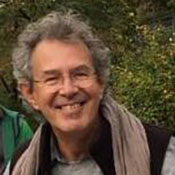
Nicholas Evans is Distinguished Professor of Linguistics and Director of the ARC Centre of Excellence for the Dynamics of Language (CoEDL) at the Australian National University’s School of Culture, History & Language. His work bridges fieldwork-based language documentation with theoretical questions in typology, cultural evolution, and social cognition. Focus on endangered Australian and Papuan languages Director of ARC Laureate Project on 'The Wellsprings of Linguistic Diversity' Co-leader of SCOPIC (Social Cognition Parallax Corpus) study Collaborator in global linguistic diversity initiatives His research explores how micro-level community multilingualism shapes macro-level linguistic diversity, with fieldwork spanning seven years in remote Indigenous communities. Recent projects include PARABANK (paradigm syncretism analysis) and Southern New Guinea language studies, particularly Nen and Yam family languages. Scientific recognition includes the Ken Hale Award (Linguistic Society of America), Anneliese Maier Forschungspreis, and fellowships in the Australian Academy of Humanities, Australian Social Sciences Academy, and the British Academy.
Ajmal Mian is a Professor of Computer Science at the University of Western Australia (UWA), affiliated with the School of Physics, Maths and Computing. He holds an Australian Research Council Future Fellowship (2022) and leads research in Artificial Intelligence, Computer Vision, and Machine Learning. His work focuses on 3D computer vision, adversarial AI defense, and explainable AI. His research interests include 3D point cloud analysis, face recognition, human action recognition, and remote sensing. He has published over 300 papers and secured major grants from ARC, NHMRC, and DARPA, totaling millions in funding. He has supervised 29 PhD students and mentored 12 postdoctoral researchers. Key projects include 3D diffusion models for scene generation, robust 3D vision systems, and defense against AI deception attacks. He serves as a fellow of IAPR, an ACM Distinguished Speaker, and has editorial roles at IEEE Transactions on Neural Networks and Pattern Recognition. Research Awards: HBF Mid-Career Scientist of the Year, West Australian Early Career Scientist of the Year, IAPR Best Scientific Paper Award. Grants: ARC Discovery Projects, National Intelligence & Security Discovery grants, DARPA grants for AI security. His teaching spans computer vision, machine learning, and programming courses. Collaborations include defense, medical, and agricultural applications.
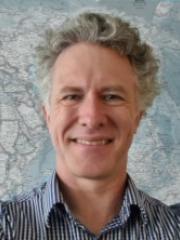
Lexing Xie is a Professor in Computer Science at the Australian National University. He leads the ANU Computational Media Lab ( http://cm.cecs.anu.edu.au ) and the ANU Integrated AI Network. His work focuses on the intersection of machine learning, social media analysis, and multimedia understanding. Dr. Xie's research broadly focuses on innovative design and use of machine learning algorithms, especially on large-scale graph data and collective behaviour. His recent work spans several key areas: Popularity in social media -- understanding, predicting, and optimization Multimedia knowledge graphs, vision and language integration Humanising machine intelligence through better understanding of social dynamics His publications reveal a strong trend toward understanding information diffusion patterns in social media, particularly through visual content. He has made significant contributions to the study of visual memes, popularity prediction using point processes, and multimodal learning that connects vision with language. His work often bridges theoretical machine learning with practical applications in social media analysis. Dr. Xie has received recognition for his research, including an Honourable Mention at CSCW 2019 for his work on attention flow in online video networks. His research has been supported by collaborations with major institutions including IBM Research and Columbia University. As an advisor, Dr. Xie has mentored numerous students who have gone on to contribute significantly to publications in top-tier conferences. His lab, the ANU Computational Media Lab, serves as a hub for interdisciplinary research connecting computer science with social sciences.
Professor Simon Buckingham Shum is a leading academic in Learning Informatics at the University of Technology Sydney (UTS), serving as inaugural Director of the Connected Intelligence Centre since 2014. His work bridges Human-Computer Interaction, Educational Technology, and Learning Analytics to develop AI-driven tools like OnTask that enhance student belonging through personalized feedback. Key research areas: Human-Computer Interaction, Learning Analytics, AI in Education, Collective Intelligence Recent work focuses: LLM-augmented qualitative analysis, Belonging Analytics frameworks, and ethical AI implementation in education CIC received the 2024 Vice-Chancellor’s Student Experience Award for scaling OnTask across multiple faculties. His contributions span over 30 years, including founding roles at The Open University’s Knowledge Media Institute and innovations in Open Educational Resources (OER), SocialLearn, and FutureLearn platforms. Notable awards: 2024 Student Experience Award (OnTask), Fellow of the Royal Society of Arts (RSA), DEFI STRI Researcher at University of Cambridge Education: B.Sc. in Psychology (York), M.Sc. in Ergonomics (UCL), PhD in Human-Computer Interaction (York) He leads multidisciplinary collaborations with teams across Business, Law, and Education faculties, pioneering tools like Theme Explorer and Qreframer bot. His recent focus on the "metacrisis" reframes educational technology’s role in addressing global systemic challenges through transdisciplinary approaches.
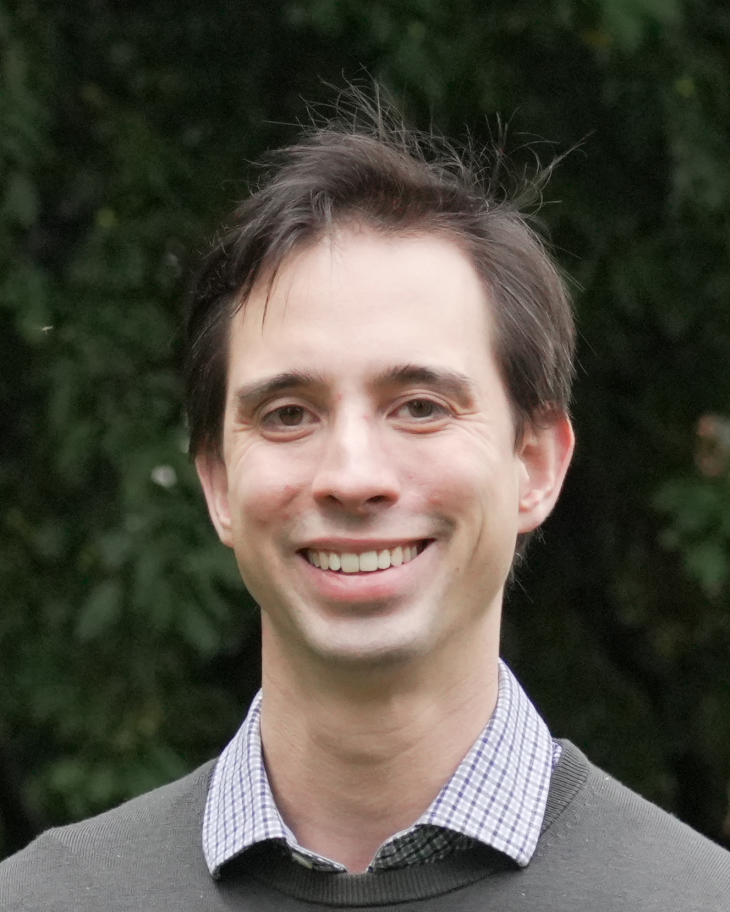
Dr. Scarlett Raine is a Lecturer in the School of Electrical Engineering and Robotics at Queensland University of Technology (QUT), where she serves as a Chief Investigator at the QUT Centre for Robotics and an Associate Investigator at the QUT Centre for Data Science and QUT Centre for Environment and Society. Her work focuses on applying Artificial Intelligence to automate underwater image analysis for marine ecosystem monitoring.
Massimo Piccardi is a Professor of Natural Language Processing (NLP), Computer Vision, and Machine Learning at the University of Technology Sydney (UTS) , where he has been since 2002. He currently serves as the Head of the School of Electrical and Data Engineering and leads the Big Data Analytics program at the Global Big Data Technologies Centre. His research focuses on advancing NLP, machine learning applications in healthcare, and cybersecurity in IoT systems. He has authored over 200 journal papers and conference proceedings, secured significant ARC and CRC grants, and holds the IEEE Computer Society Distinguished Contributor Award (2022). Education & Professional Roles: Joined UTS in 2002, progressing from Associate Professor (2002–2007) to Professor (2008–present). Serves as Associate Editor for IEEE Transactions on Big Data and Editor for Artificial Intelligence in Medicine. Active in professional societies including IEEE, ACL, and ALTA (President, 2023–2024). Research Interests: Core areas include NLP (translation, summarization, adversarial attacks), healthcare informatics (clinical NLP, health service analysis), and cybersecurity (IoT security, privacy-preserving systems). Cross-cutting themes include generative models, cross-lingual systems, and ethical AI. Grants & Projects: Principal Investigator on ARC Discovery/Linkage projects and CRC grants. Recent projects include controllable machine translation (Amazon), privacy-preserving digital agriculture, and STEM innovation (ASTRID project with NBN Co). Labs & Collaborations: Leads the UTS Global Big Data Technologies Centre, collaborating on projects like adversarial NLP attacks, medical machine translation, and secure IoT frameworks.
Dr. Ly Fie Sugianto is an Associate Professor in the Department of Accounting at Monash Business School, Monash University. Her research focuses on the integration of data analytics, artificial intelligence, and machine learning in accounting and business systems, with applications in the energy sector and organizational behavior. Monash Business School, Monash University Department of Accounting Specialization: Accounting Information Systems, Data Analytics, AI Her research interests span Accounting Information Systems , Agent-Based Simulation , Decision Support Systems , and Technology Adoption . She applies computational methods to study competitive dynamics in deregulated electricity markets and the impact of digital tools on employee well-being and organizational resilience. The recent publications reflect a strong trend in using AI and simulation to analyze complex socio-technical systems, particularly in energy markets and leadership dynamics. Keywords across her work include agent-based modeling , data analytics , servant leadership , and enterprise social media , indicating interdisciplinary research at the intersection of information systems, management, and public policy. Her scientific awards include competitive grants from the ARC (SPIRT/Linkage) , the Australia Indonesia Governance Research Partnership (AIGRP) , and the Sumitomo Foundation . ARC Grant: Dispatch Optimisation in the Australian National Electricity Market Sumitomo Foundation: Technology Use and Employee Well-Being AIGRP: Governance and MSME Resilience during Pandemic Dr. Sugianto has advised research projects and collaborated with industry partners such as Western Power , Ecogen Energy , and AEMO . She is currently accepting PhD students and leads externally funded research initiatives. Her work contributes to UN Sustainable Development Goals related to industry innovation and responsible consumption. She is affiliated with research teams focusing on intelligent decision support systems and digital transformation in business , with active collaborations in Australia and Indonesia.
Professor Sarath Kodagoda is a leading academic and researcher in robotics and mechatronics at the University of Technology Sydney (UTS), where he serves as Acting Director of the UTS Robotics Institute. He specializes in sensor fusion, data processing, and machine learning, with a focus on robotic solutions for infrastructure inspection and assistive technologies. His work includes developing the Robotic Remote Lab teaching facilities and founding the iPipes lab for wastewater infrastructure research. Affiliations: UTS Robotics Institute, Faculty of Engineering & IT Leadership Roles: President of the Australian Robotics & Automation Association, Ambassador for NSW Smart Sensing Network His research interests span robotics, sensor networks, and infrastructure robotics, with notable contributions to pipeline inspection and tactile sensing. He has published over 170 papers, attracted $6M+ in grants, and supervised 12 PhD students now working at Amazon, Google, and ABB. Awards include the UTS Medal for Teaching & Research Integration and multiple national/international innovation awards. Recent work emphasizes robotic systems for wastewater infrastructure, assistive robotics for vision-impaired individuals, and advanced sensor technologies. His articles highlight innovations in tactile sensing skins, 3D object detection (e.g., CaLiJD, LMIINet), and pipeline defect detection (PIPE-CovNet+). Grants: Contracts with Amplitel, NBN Co Ltd, and ARC Linkage Projects Labs/Teams: UTS Robotics Institute, iPipes Lab
Deborah Richards is a Professor in the School of Computing at Macquarie University, affiliated with the Ethics and Agency Research Centre, Performance and Expertise Research Centre, and Frontier AI Research Centre. She holds roles as Industry and External Relations Director for the School and Director of the Virtual Reality Lab. Her research focuses on Intelligent Virtual Agents, Virtual Reality applications in education and health, knowledge acquisition, and cybersecurity ethics. She has authored over 425 publications and led 19 research projects, including studies on AI in healthcare and ethical AI design. Education: PhD (Artificial Intelligence, Macquarie University), MAppSc (Information Studies), BBus (Computing and MIS), and a Postgraduate Certificate in Higher Education (Leadership and Management). She advises on PhD and MRes students in Intelligent Virtual Agents research. Research interests include virtual agents for health behavior change, AI ethics, and educational technology. Notable projects include the eADVICE web-based management system for urinary incontinence and the development of embodied conversational agents for wellbeing support. Awards include the ABC Science Media Fellowship (2005) and Vice-Chancellor’s Citations for Outstanding Contributions to Student Learning (2017). Grants and collaborations span health informatics, cybersecurity, and AI ethics. She co-leads initiatives like the Respectful Maternity Care study and the Virtual Reality Lab’s immersive learning environments. Future work emphasizes ethical AI integration in education and healthcare.
Neil Selwyn is a Professor in the Faculty of Education at Monash University with over 30 years of research experience focusing on the integration of digital technology into educational settings. His work centers on the 'real-life' constraints and problems faced when implementing technology-based education, with expertise in AI, automation, data-driven education, and digital degrowth. His primary research interests span digital technology and society, the use of digital technologies in educational settings, digital sociology of education, and environmental sustainability issues associated with digital technology use. Professor Selwyn is recognized internationally for his critical approach to educational technology and has led numerous nationally-funded projects examining educational data, learning analytics, and AI technologies. His recent publications reflect a growing focus on the environmental implications of AI in education, digital degrowth, and the practical challenges teachers face when implementing AI tools in classrooms. This work demonstrates a shift toward examining the sustainability and ethical dimensions of educational technology. Fellow of the Academy of Social Sciences in Australia (2024) Professor Selwyn serves as a media commentator for major outlets including the NYT, WSJ, CNN, Guardian, BBC, and ABC, and hosts the 'Education Technology Society' podcast. He maintains significant international collaborations, currently holding visiting positions at Lund University (2025), University of Oxford (2023-2027), and previously at the University of Gothenburg (2016-2017).
Dr. Sirui Li is a Lecturer at Murdoch University's School of Information Technology within the College of Science, Technology, Engineering and Mathematics. Her research focuses on Artificial Intelligence, Natural Language Processing (NLP), Machine Learning, Knowledge Graphs, Data Analysis, Temporal Data, and Multi-modal Models, with applications in medicine, agriculture, and mining. She collaborates with industry partners like BHP and has published in journals such as Food Chemistry and Knowledge and Information Systems , as well as conferences like ICSME and IJCNN. Education: Bachelor of Advanced Computing (Honours) in Computer Science at Australian National University Master of Computing (Specialising in AI) at ANU Ph.D. in Information Technology (AI) at Murdoch University Research interests include interdisciplinary applications of AI, such as clinical coding privacy solutions, disease spread modeling, and drug repurposing for pandemics. Her work emphasizes practical industry integration, demonstrated through awards like the 2024 EMNLP Best Demo Award and the 2023 Iron Ore Circuit Hackathon innovation prize. Professional roles include IEEE Western Australia Section committee membership, conference chair positions, and peer review for top journals. She actively mentors students pursuing Honours, Master's, or PhD projects in her areas of expertise.
Dr. Rene Ferdinands is a Lecturer at the University of Sydney's School of Health Sciences, specializing in sports biomechanics, particularly in cricket and golf. He leads research programs focused on optimizing techniques and minimizing injury risks, such as lumbar load analysis in fast bowlers and spin bowling biomechanics. His work includes developing 3D models for analyzing bowling actions and spin delivery mechanics. Education: MSc and PhD from the University of Waikato. Research Themes: Cricket biomechanics, golf swing dynamics, equine biomechanics, and injury prevention. Professional Roles: Editor of the Cricket Coaching Information service for the International Society of Biomechanics in Sports, Honours Committee Member. His research interests span biomechanical analyses of sports techniques, including the development of smart cricket balls for performance assessment and injury mitigation. Key contributions include refining bowling action legality criteria and advancing understanding of lumbar kinetics in elite athletes. He actively supervises Honours and PhD students in biomechanics research across cricket, golf, and other sports. Notable grants include studies on hydration status in cricket performance (2008), lumbar injury prevention (2013), and biomechanical modeling of fast bowling (2009). His work bridges applied research with practical applications in sports technology and athlete development. Dr. Ferdinands collaborates with the Biomechanics Research Team at the University of Sydney, focusing on innovative tools like smart balls and advanced motion analysis techniques to improve sports performance and safety.
Professor Guy Wallis is a Professor and Director of Research at the School of Human Movement and Nutrition Sciences, Faculty of Health, Medicine and Behavioural Sciences at the University of Queensland. He is also an Affiliate of the Centre for Sensorimotor Performance. His work bridges visual neuroscience, computational modeling, and applied human factors research, with significant contributions to understanding visual recognition and visuomotor behavior. Education: Bachelor (Honours) of Engineering in Electrical and Electronic Engineering from Imperial College London PhD in Visual Neuroscience from University of Oxford, UK Prof. Wallis's research program combines computational modeling with behavioral studies, many conducted in computer-controlled virtual environments. His work spans visual neuroscience, object recognition, visuomotor control, and simulator-based training. He has made significant theoretical contributions to understanding how visual recognition is achieved in biological systems and how everyday visuomotor tasks are regulated, challenging existing paradigms and offering new insights. His recent publications reveal a strong focus on virtual reality applications, visual-motor integration challenges, and cross-species cognitive studies. There's a clear trend toward investigating how virtual environments can be optimized for training and assessment, with particular attention to visual perception limitations and how humans adapt to these environments across diverse contexts from surgical training to aviation. Scientific Awards and Recognitions: Elected Fellow of the Queensland Academy of Arts and Sciences (2022) ARC Medical Research Advisory Group (2022-2024) ARC College of Experts (2019-2021) CSIRO CSS Human Research Ethics Committee member (2020-2022) UQ Health and Behavioural Sciences Faculty, HDR Supervision Award (2018) ARC Future Fellowship (2011-2014) ARC QEII Fellowship (2003-2007) UQ Postdoctoral Fellowship (2001-2003) Prof. Wallis has successfully secured funding from major organizations including the Australian Research Council, the Human Frontier Science Program, and the Wellcome Trust. His industry partnerships span diverse sectors such as construction training, mining, healthcare, and aerospace. His research has led to the development of novel training programs for health professionals, impacted the design of man-machine interfaces for mining equipment, and informed the design parameters for pilot training systems. As Director of Research, he oversees the research direction of the School of Human Movement and Nutrition Sciences, fostering interdisciplinary collaborations and supporting early-career researchers through his leadership in the Centre for Sensorimotor Performance.
Dylan Campbell is a Lecturer in Computing at the Australian National University (ANU), affiliated with the ANU College of Systems & Society. His research focuses on computer vision, optimization, and robotics, particularly in 3D vision and deep learning applications. He has held prior roles as a Research Fellow at the University of Oxford’s Visual Geometry Group and ANU’s Australian Centre for Robotic Vision. Campbell holds a PhD from ANU (2018) and a BE in Mechatronic Engineering from UNSW (2012). Research interests include geometric sensor alignment, neural radiance fields, and differentiable optimization layers. He actively supervises students (7 PhD/DPhil, 3 MEng, 9 honours) and teaches advanced courses in computer vision and robotics. Notable awards include the Marr Prize Honourable Mention (2017) and the IEEE Australia Council Postgraduate Student Paper Competition (2018). He has organized workshops at ECCV and CVPR, served as a reviewer for top conferences like CVPR/ICCV/ECCV, and contributed to datasets like SEED4D and RefRef. His work emphasizes efficient training of neural networks and leveraging symmetries in data for long-range connections.
Associate Professor Mohsen Kalantari is a Geospatial Engineering academic at the University of New South Wales (UNSW) School of Civil and Environmental Engineering , with concurrent roles as co-founder of the startup Faramoon . His career spans roles at the University of Melbourne's Department of Infrastructure Engineering and Victorian government's land administration initiatives through DELWP. Education : PhD in Geomatics Engineering (2008, University of Melbourne), Master of GIS Engineering (2004), Bachelor of Surveying Engineering (2001) His research bridges geospatial engineering with construction automation , focusing on 3D cadastre , BIM-GIS integration , and smart cities . Recent publications show trends in underground land administration , digital twins , and LADM standard implementations . Scientific Awards : National educational recognition (2019), Victorian educational grants (2018), and prestigious fellowships (2012) As a supervisor , he guides PhD candidates in topics ranging from BIM for waste management to underground cadastral systems . His industry engagement includes partnerships with the United Nations , Open Geospatial Consortium , and Singapore Land Authority .