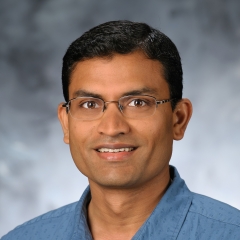
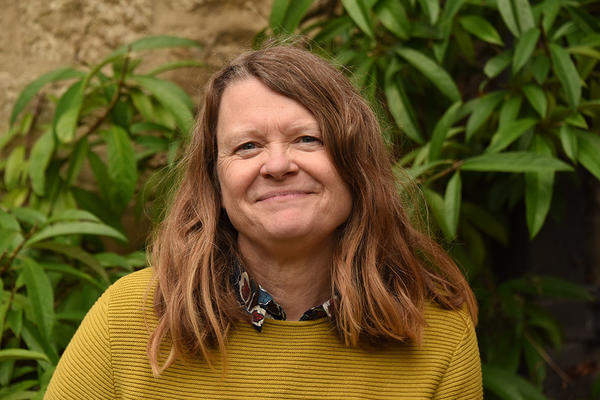
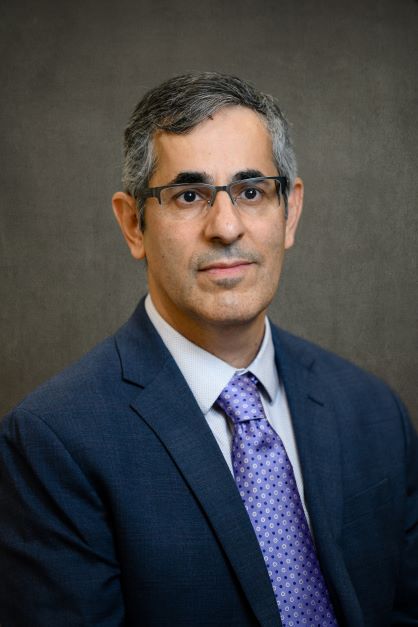
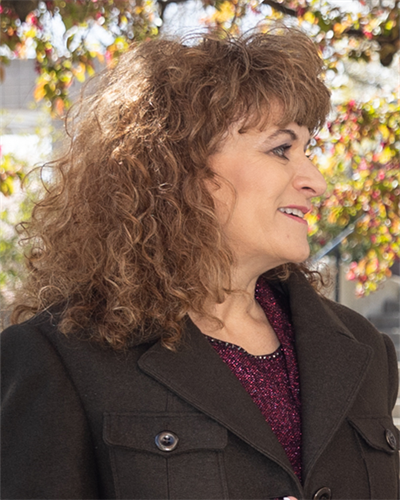
Yogananda Isukapalli is a Teaching Professor and Vice Chair in the Computer Engineering Program at the Electrical and Computer Engineering Department , University of California, Santa Barbara . He joined the faculty in Winter 2017 after a career as a staff scientist at Broadcom (2010–2017), where he designed Wi-Fi chips (11n/11ac/11ax) and worked on underwater wireless communication models during a postdoctoral stint at Scripps Institution of Oceanography (2009–2010). His PhD in Communication Theory and Systems from UC San Diego (2009) forms the basis of his expertise in wireless systems and digital design .
Dr. Craig S. Levin is a Professor of Radiology at Stanford University's Molecular Imaging Program at Stanford (Nuclear Medicine), with courtesy appointments in Physics, Electrical Engineering, and Bioengineering. He also holds memberships in Bio-X, the Cardiovascular Institute, the Wu Tsai Human Performance Alliance, and the Stanford Cancer Institute. Dr. Levin received his B.S. Summa Cum Laude in Physics and Mathematics from UCLA in 1985, followed by M.S., M.Phil., and Ph.D. degrees in Physics from Yale University in 1987 and 1993. His educational achievements were recognized with multiple honors including Phi Beta Kappa, Sigma Pi Sigma, and various departmental awards at UCLA. Dr. Levin's research focuses on the development of novel instrumentation and software algorithms for molecular imaging. His work spans medical physics, biomedical engineering, and instrumentation development with specific emphasis on positron emission tomography (PET), gamma camera technology, and multimodal imaging systems. His laboratory explores new concepts in radiation detection, image reconstruction algorithms, and the application of these technologies to cancer, heart disease, and neurological disorders. A notable aspect of his research involves pushing the physical limits of sensitivity and spatial, spectral, and/or temporal resolutions in imaging systems. His recent publications demonstrate a strong focus on enhancing PET technology, particularly time-of-flight capabilities, with significant work on improving coincidence timing resolution, developing MR-compatible PET systems, and applying deep learning techniques to image reconstruction and normalization. His research shows a clear trajectory toward higher resolution imaging with improved quantitative accuracy for both clinical and preclinical applications. Dr. Levin's scientific achievements have been recognized with numerous awards: American Institute for Medical and Biological Engineering's College of Fellows Academy of Radiology Research Distinguished Investigator Recognition Award National Research Service Award from NIH (1993-5) Pilot Research Award from the Society of Nuclear Medicine (1996) Multiple honors from UCLA including Phi Beta Kappa and Sigma Pi Sigma Full Tuition and Research Fellowship and Bates Graduate Fellowship from Yale University As an educator and mentor, Dr. Levin directs the NIH-NCI funded T32 Stanford Molecular Imaging Scholars postdoctoral training program and serves as a Doctoral Dissertation Advisor for students in Bioengineering and Biophysics. He currently advises five postdoctoral scholars and three doctoral candidates. His laboratory, the Molecular Imaging Instrumentation Laboratory, comprises approximately 20 members who work on developing new imaging technologies and translating them into clinical applications. Dr. Levin has secured substantial NIH funding as Principal Investigator along with grants from other government agencies, industry partners, and private institutions to support his research program. Dr. Levin's Molecular Imaging Instrumentation Laboratory is at the forefront of developing new imaging technologies that bridge physics, engineering, and medicine. The lab focuses on creating instrumentation for in vivo imaging of cellular and molecular signatures of disease, with particular emphasis on pushing the physical limits of imaging performance. Their work spans computer modeling, sensor development, electronics design, data acquisition systems, and advanced image processing algorithms. The lab maintains strong industry partnerships to translate their innovations into products used for patient care worldwide.
Ben Seiyon Lee is an Assistant Professor in the Department of Statistics at George Mason University's College of Science. His work bridges computational statistics, climate modeling, and environmental risk assessment. Education: PhD in Statistics, Pennsylvania State University (2020) Lee specializes in computational methods for high-dimensional spatiotemporal data and uncertainty quantification in climate models. His research explores climate change impacts on extreme hydrological events, wildfire emissions, and medical decision-making. Recent publications focus on Bayesian spatiotemporal frameworks for extreme precipitation analysis, zero-inflated spatial models, and multisector uncertainty quantification. His work addresses challenges in flood risk assessment, agricultural yield projections, and healthcare compliance metrics.
Jinjin Gu is a tenure-track Assistant Professor at Sofia University "St. Kliment Ohridski" 's INSAIT (Institute for Computer Science, Artificial Intelligence, and Technology), leading research on visual cognition and intelligence. Her work spans visual perception, processing, generation, and reasoning. Education: Ph.D. in Electrical and Computer Engineering (2024), University of Sydney B.Sc. in Computer Science and Engineering (2020), Chinese University of Hong Kong, Shenzhen Her research focuses on visual cognition , including agentic systems , diffusion models , GAN architectures , model interpretability , super-resolution , and multimodal vision-language systems . She has developed novel paradigms like HYPIR for diffusion-quality restoration at GAN speeds. Recent publications highlight advancements in image/video restoration , generative modeling , and visual reasoning . Her work addresses critical challenges in model generalization , causal interpretation , and real-world application robustness . Scientific Awards: Stanford University's World's Top 2% Scientists (2024) Yunfan Award at World Artificial Intelligence Conference (WAIC) (2023) She has advised students contributing to TPAMI, CVPR, and ICLR publications, and serves as Area Chair for ICLR 2026, NeurIPS 2025, and ICML 2025.
Christoph Stadtfeld is Associate Professor of Social Networks at ETH Zurich's Department of Humanities, Social and Political Sciences and co-director of the ETH Social Networks Lab. His research examines social network dynamics, focusing on tie formation processes, network effects on individuals, and advanced statistical methodologies for longitudinal network analysis. Education: PhD from Karlsruhe Institute of Technology (2011) Postdoctoral researcher and Marie-Curie fellow at University of Groningen, University of Lugano, and MIT Media Lab (2011-2014) His work bridges sociology, statistics, and computer science to address fundamental questions about how social structures evolve and influence behavior. Key interests include relational event modeling, co-evolution of networks and attributes, and applications in mental health, political polarization, and scientific collaboration. He develops innovative methods for analyzing dynamic networks using cutting-edge computational approaches. Recent publications reveal strong emphasis on methodological rigor in temporal network analysis, with significant contributions to relational event modeling and dynamic network actor frameworks. His work increasingly addresses societal challenges including political polarization, mental health impacts of social isolation, and innovation dynamics in healthcare. Scientific awards: Raymond Boudon Award of the European Academy of Sociology (2017) Freeman Award of the International Network for Social Network Analysis (2021) As co-director of the ETH Social Networks Lab, Stadtfeld leads interdisciplinary research teams developing novel network methodologies. His work has been supported by prestigious fellowships including Marie-Curie funding, and he actively mentors graduate students in network science methodology and applications across diverse domains. The ETH Social Networks Lab serves as a hub for advancing network theory and methodology, with ongoing projects examining student networks during crises, scientific collaboration dynamics, and innovation ecosystems through the lens of network science.
Ravi Dhar is the George Rogers Clark Professor at the Yale School of Management and holds an affiliated appointment as a Professor of Psychology at Yale University. He serves as Director of the Center for Customer Insights , focusing on consumer behavior, branding, and marketing strategy through psychological and economic frameworks. Ph.D. in Marketing, University of California at Berkeley (1992) MS, University of California at Berkeley (1990) MBA, Indian Institute of Management (1987) BTech, Indian Institute of Technology (1986) His research examines preference formation, self-regulation, and the interplay of conflicting goals in consumer decisions. Recent work explores sustainability, mobile commerce, and how guilt paradoxically enhances consumer pleasure. He has published over 50 articles and advised Fortune 100 companies across industries. Key trends in his publications include behavioral economics , eco-conscious consumption , and technology-mediated decisions . His studies address choice overload, goal systems, and the psychological drivers of indulgence versus self-control. Distinguished Scientific Contribution Award (Society for Consumer Psychology, 2012) Yale SOM Alumni Teaching Award (2012) William O'Dell Award Finalist (2004, 2008, 2012) AMA Doctoral Consortium Fellow (1991) Dhar consults firms on customer insights and has held visiting roles at HEC Paris , Erasmus University , and Stanford/NYU . He edits top journals like Journal of Consumer Research and Marketing Science , shaping academic and industry discourse.
Professor Lindsay Turnbull is a Professor of Plant Ecology at the University of Oxford's Department of Biology. Her research focuses on understanding the evolutionary and ecological basis of plant trait diversity and its consequences for ecosystems. Key interests include seed size variation, plant-soil interactions, and the impact of organic farming on biodiversity. She leads a research group exploring topics such as mutualism stability, species coexistence, and island conservation genetics. Turnbull's work integrates experimental, observational, and computational approaches to address fundamental questions in ecology. Her lab, based at the Department of Biology (Mansfield Road and South Parks Road campuses), has contributed to global understanding of biodiversity-ecosystem functioning relationships and plant-microbe symbioses. Notable projects include studies on Aldabra giant tortoises and coral reef connectivity in the Seychelles, highlighting her commitment to applied conservation science. Her research spans multiple scales—from molecular interactions in legume-rhizobia systems to large-scale biodiversity patterns in grasslands and tropical ecosystems. Recent work emphasizes the role of trait-based approaches in predicting ecological responses to environmental changes such as eutrophication and climate variability. Her publications frequently bridge theoretical and applied ecology, offering insights into both natural and human-managed ecosystems.
Agnieszka Leszczynski is an Associate Professor in the Department of Geography and Environment at Western University. Her research focuses on digital geographies, platform urbanism, and the intersections of technology with urban development. She leads a SSHRC-funded project examining the visual aesthetics of urban platformization across Canada, Poland, and South Africa. Additional projects include studying digital experimentation in small Canadian cities and analyzing spatial relationships between urban platforms and gentrification. She teaches courses on GIScience, digital technology, and spatial research methods. Leszczynski actively supervises graduate students exploring topics like smart cities, platform urbanism, and spatial equity. Her work bridges theoretical and applied GIScience with critical urban studies. Education details are not explicitly listed in the provided text, but her academic contributions include over two decades of research output, including co-editing Digital Geographies (SAGE, 2019) and publishing widely in leading journals. She collaborates internationally on projects like the Esri Canada GIS Centre of Excellence and engages with equity, diversity, and decolonization initiatives in academia. Her research methodologies emphasize digital-visual approaches, glitch studies, and critical analyses of spatial technologies. Recent work explores how cities use digital aesthetics to achieve 'world-class' status, while other projects assess micromobility equity and conservation mapping in Patagonia. Leszczynski’s teaching portfolio includes graduate supervision on topics such as dockless micromobility systems and smart home analysis. Key funding sources include SSHRC grants supporting comparative urban studies and technology experimentation. She mentors students through Western’s Geography People’s Society and collaborates with interdisciplinary teams on spatial equity and platform urbanism challenges.
Ardalan Vahidi is a Professor of Mechanical Engineering at Clemson University, joining in 2005 after receiving his Ph.D. from the University of Michigan. His research focuses on optimal control, energy-efficient mobility, connected and automated vehicles, and human bioenergetics during exercise. Education: Ph.D. Mechanical Engineering, University of Michigan, Ann Arbor, 2005 M.Sc. Transportation Safety, George Washington University, 2001 M.Sc. Structural Engineering, Sharif University of Technology, 1998 B.Sc. Civil Engineering, Sharif University of Technology, 1996 Research Interests: His work integrates control theory with transportation systems to reduce energy use and emissions. He explores eco-driving algorithms, vehicle connectivity, and human factors in cycling performance, leveraging both modeling and extensive vehicle-in-the-loop experimentation. Publications Trend: Recent articles emphasize validated experiments on energy-efficient automated driving, cyclist fatigue modeling, and cooperative control strategies, demonstrating a shift toward cyber-physical validation and interdisciplinary sports science applications. Scientific Awards: Best Paper Award, Road User Measurement and Evaluation Committee, TRB 2024 2nd Best Paper Award, IEEE International Automated Vehicle Validation Conference 2023 ASME Automotive and Transportation Systems Best Paper Award 2020 & 2018 IFAC Young Author Award 2019 Advising & Grants: He mentors numerous graduate researchers and postdocs; prospective students are directed to an online form for open positions. His research has been supported by NSF, DOE, DOT, and industry partners, although specific grant details are not listed here. Labs & Teams: He leads the Clemson Vehicle & Energy Systems Laboratory, conducting vehicle-in-the-loop experiments and collaborating with interdisciplinary teams across mechanical engineering, transportation, and sports science.
Karen Panetta is a Professor at Tufts University School of Engineering with appointments in Electrical and Computer Engineering, Computer Science, Mechanical Engineering, and Academic Services. She currently serves as Dean of Graduate Education for the School of Engineering and holds the title of Distinguished Professor. Ph.D. in Electrical Engineering, Northeastern University M.S. in Electrical Engineering, Northeastern University B.S. in Computer Engineering, Boston University Dr. Panetta's research focuses on developing efficient algorithms for simulation, modeling, and signal and image processing for security and biomedical applications. Her work brings together artificial intelligence, machine learning, and visual sensing systems to create solutions for robot vision and biomedical imaging. She develops algorithms inspired by the human visual system to enable machines to 'see' like humans, with applications in homeland security, biomedicine, facial recognition, and search and rescue operations. Her research has significant humanitarian applications, addressing global challenges facing women and children. Dr. Panetta has received numerous prestigious awards including induction into the National Academy of Engineering (2023), the Presidential Award for Science and Engineering Education and Mentoring (2011), and the IEEE Award for Distinguished Ethical Practices (2013). She is a fellow of multiple prestigious academies including the National Academy of Inventors, European Academy of Sciences and the Arts, and IEEE. Member, National Academy of Engineering (2023) Presidential Award for Science and Engineering Education and Mentoring (2011) IEEE Award for Distinguished Ethical Practices (2013) Fellow, National Academy of Inventors Fellow, European Academy of Sciences and the Arts Fellow, Asia-Pacific Artificial Intelligence Association As an educator and mentor, Dr. Panetta founded the nationally acclaimed Nerd Girls program to promote engineering to young students, particularly women. She previously served as worldwide director for IEEE Women in Engineering and editor-in-chief of the IEEE Women in Engineering magazine. Her approach to graduate education emphasizes the importance of building strong collaborative relationships between faculty and students, with a focus on proactive communication and documentation of research progress. Dr. Panetta's humanitarian research applies engineering solutions to global challenges, including developing technology to help doctors find cancerous tumors, security screeners find concealed weapons, and law enforcement agencies find criminals and missing children. Her work demonstrates a commitment to 'Doing The Right Thing' by addressing issues affecting populations with limited resources or 'voice' in society.
Nicholas Ruozzi is an Assistant Professor of Computer Science at The University of Texas at Dallas (UTD), affiliated with the Erik Jonsson School of Engineering and Computer Science. His research focuses on machine learning, statistical inference, and probabilistic graphical models, with applications in virtual reality (VR) training, computer vision, and explainable AI. He has contributed to areas such as tractable probabilistic modeling, activity recognition in videos, and user tracking in VR systems. His work often bridges theoretical foundations with practical applications, such as developing algorithms for data privacy in VR training sessions and enhancing deep learning models through hybrid approaches with graphical models. Recent research trends include exploring multimodal interaction, distributionally robust models, and novel instance detection techniques in computer vision. Ruozzi's publications span topics like user identifiability in VR, predictive task guidance in AR, and systematic analysis of device interactions in VR systems. While no specific awards or grants are listed, his contributions reflect a strong emphasis on interdisciplinary applications of machine learning and probabilistic methods.
Adriana I. Kovashka is an Associate Professor in the Department of Computer Science at the University of Pittsburgh's School of Computing and Information. She serves as Chair of the Department of Computer Science. Her research focuses on computer vision, machine learning, and their intersections with human-machine communication and visual rhetoric analysis. Kovashka earned her BA in Computer Science and Media Studies from Pomona College (2008) and her PhD in Computer Science from the University of Texas at Austin (2014). She joined Pitt in 2015. Her work emphasizes improving image retrieval systems through semantic attributes, human-in-the-loop feedback, and crowd-sourced data. Notable projects include analyzing advertisements' persuasive strategies, developing object detection models resilient to domain shifts, and exploring multimodal learning with linguistic and visual inputs. She has secured significant grants, including NSF awards for geographic diversity in object detection (2023), CAREER funding for weak supervision methods (2021), and multiple Google Faculty Research Awards. Kovashka advises PhD students on topics ranging from multimodal intent modeling to domain generalization. She has organized workshops on advertising understanding and subjective attributes in vision conferences. Her lab's datasets, such as the 64,832-image ad repository and video ad collections, are widely used in vision research. Recent efforts include quantifying perceptual diversity in multilingual systems and mitigating bias in CNNs through shape regularization. Awards and recognitions include the NSF CAREER Award, Pitt's CRDF grants, and leadership roles in CVPR and WACV conferences. Her research bridges technical innovation with societal impact, addressing challenges in visual communication, ethical AI, and educational robotics.
Michael C. Frank is the Benjamin Scott Crocker Professor of Human Biology at Stanford University and Director of the Symbolic Systems Program. He leads the Stanford Language and Cognition Lab and has pioneered large-scale collaborative projects including Wordbank (open vocabulary data), MetaLab (developmental meta-analyses), ManyBabies (replication network), childes-db (language transcripts), and Peekbank (eye-tracking repository). His research examines children's language learning and its interaction with social cognition, utilizing computational modeling, large datasets, and open science frameworks. Key interests include: Mechanisms of early language acquisition Pragmatic inference in social contexts Cross-cultural variability in cognitive development Data-driven approaches to developmental science Reproducibility and meta-scientific innovation Recent publications (2022-2025) demonstrate strong emphases on: 1) Novel methods for measuring language environments and cognitive abilities, 2) Computational models of learning and perception, 3) Cross-cultural investigations of social cognition, and 4) Infrastructure for open developmental science. The majority employ multimodal data, meta-analytic techniques, and large-scale collaborations. He teaches courses including Experimental Methods, Developmental Psychology, and interdisciplinary seminars on language, cognition, and computation. His lab maintains active research teams across multiple continents through initiatives like ManyBabies and LEVANTE.
Siyu Tang is an Assistant Professor in the Department of Computer Science at ETH Zürich, where she leads the Computer Vision and Learning Group (VLG) at the Institute of Visual Computing. Her research focuses on computational models for human perception and digitalization through computer vision and machine learning. Her educational background includes: PhD in Computer Science, Max Planck Institute for Informatics (2017), supervised by Prof. Bernt Schiele Master of Science in Media Informatics, RWTH Aachen University Bachelor of Science in Computer Science, Zhejiang University, China Dr. Tang specializes in human-centric computer vision, developing statistical models for motion analysis, pose estimation, and digital human creation. Her work integrates machine learning with optimization techniques to enable machines to interpret human activities from visual data, with applications spanning virtual reality, healthcare, and human-computer interaction. Key research thrusts include generative models for content creation, egocentric vision, and human motion synthesis. Her recent publications (2024-2025) demonstrate intense focus on 3D human modeling and neural rendering, with Gaussian splatting emerging as a dominant technique for efficient avatar creation and scene reconstruction. Significant themes include text-driven motion synthesis using diffusion models, relightable avatars, surgical training applications, and egocentric multimodal pretraining. This work bridges computer vision, graphics, and machine learning to advance human digitalization. No scientific awards were mentioned in the provided text. Dr. Tang leads the VLG research group at ETH Zürich, mentoring PhD and Master's students in human-centric AI. She previously secured an early career research grant from the Max Planck Institute for Intelligent Systems to establish her independent research program. Her group actively pursues funding for projects in human motion analysis, 3D reconstruction, and generative modeling, with strong industry and clinical collaborations. The Computer Vision and Learning Group (VLG) operates within ETH's Institute of Visual Computing, maintaining dedicated facilities for motion capture, 3D scanning, and high-performance computing. The team collaborates internationally with institutions like the Max Planck Society and focuses on scalable solutions for real-world human digitalization challenges, including surgical training systems and immersive virtual environments.
Edwin Olson is an Associate Professor of Computer Science and Engineering at the University of Michigan, where he directs the APRIL Robotics Lab. He also serves as CEO of May Mobility Inc., a company focused on developing driverless shuttles. His research spans autonomy, perception, robotics, and learning, with notable contributions to technologies like AprilTags and the LCM middleware. Olson has led groundbreaking projects, including the 2010 MAGIC competition-winning robot team and the DARPA Urban Challenge. He has been recognized with awards such as Popular Science's 'Brilliant Ten' (2012), the DARPA Young Faculty Award (2013), and the College of Engineering Education Excellence Award (2015). His work emphasizes real-world applications of autonomous systems, including risk assessment, multi-policy decision making, and sensor fusion. Recent articles focus on autonomous agent behavior prediction, remote assistance systems, and infrastructure calibration. Olson's academic contributions are complemented by industry roles, including his tenure at Toyota Research Institute as Co-Director for Autonomous Driving Development. Education: PhD in Computer Science from MIT (2008) Key Projects: MAGIC 2010, DARPA Urban Challenge, Toyota Research Institute Labs: APRIL Robotics Lab Awards: DARPA Young Faculty Award, Brilliant Ten, Education Excellence Award