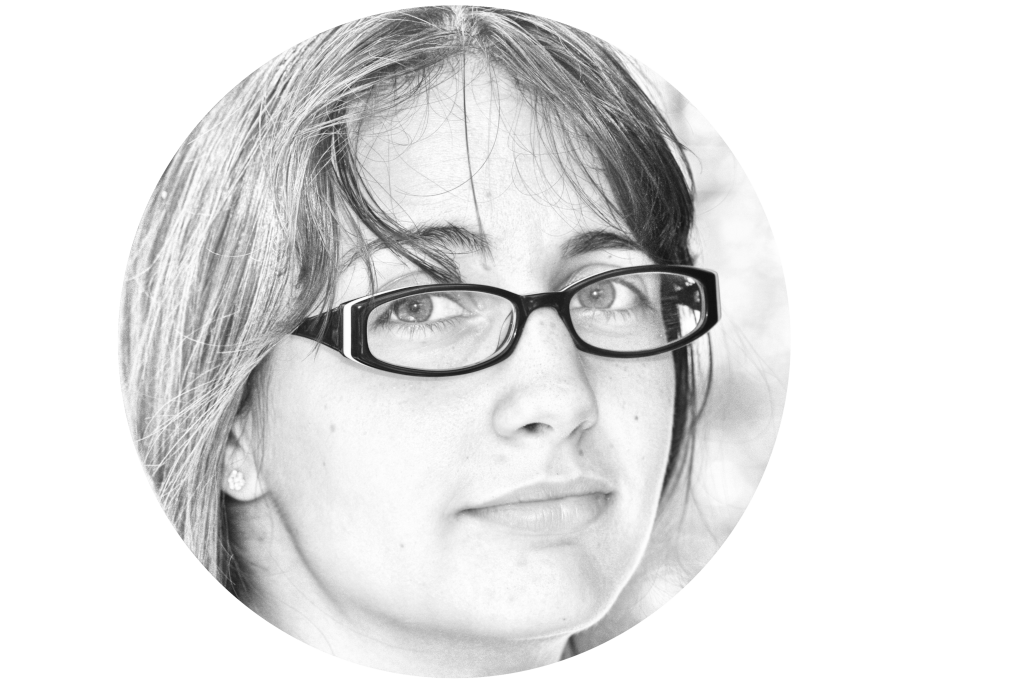
Dr. Philipp Stalder is a Lecturer in Business Informatics at the Zurich University of Applied Sciences (ZHAW) School of Management and Law , where he teaches both Bachelor's (BSc) and Master's (MSc) level courses. With dual academic backgrounds in Medical Informatics and Human Medicine , he bridges healthcare and information systems in his research and practice. Current affiliation: ZHAW School of Management and Law Department: Information Systems - Infrastructure & Processes ORCID ID: 0000-0002-9910-3733 Research Focus : Digital health solutions, machine learning applications in clinical environments, information systems for healthcare data management, and technology adoption challenges in hospitals. His work emphasizes regulatory compliance, data privacy, and human-centered design in digital transformation. Key projects: Privacy Label for digital trust, ML validation in Swiss hospitals, iPaaS cloud solutions for health data Active in Swiss research networks: Digital Health Lab, eduhub.ch SIGs Recent Publications show interdisciplinary trends spanning digital health , regulatory frameworks , and information systems for healthcare. His studies focus on physician-patient dynamics, Swiss hospital compliance, and emerging technology adoption. Education : MSc in Information Science (ZHAW, 2017-2018) MSc in Human Medicine (University of Zurich, 2010-2012) CAS in Higher and Professional Education (ZHAW, 2009-2011)
Nicolai Fabian is a researcher at the Faculty of Economics and Business, University of Groningen, specializing in Digital Transformation and its intersections with organizational strategy, ethics, and technology. His work addresses critical challenges in digital governance, artificial intelligence applications, and business model innovation for SMEs. Key Research Areas: Digital Transformation, Knowledge Engineering, AI Ethics, and Digital Governance. Recent Collaborations: Frequent co-authorship with scholars like Dong, Broekhuizen, and Verhoef on topics spanning cybersecurity, digital trace data, and platform dynamics. Research Trends (2022–2025): Focuses on the dual-edged impacts of digitalization, from economic value creation in SMEs to dystopian risks in AI and cybersecurity. Explores how organizations adapt to digital disruption through strategic learning, ethical frameworks, and data-driven governance. Network & Visibility: Active in international collaborations and cited across multidisciplinary domains, reflecting his engagement with global research communities.
Sahar Abdelnabi is an AI Security Researcher at Microsoft and will join the ELLIS Institute Tübingen as a Faculty/Principal Investigator. She is co-affiliated with the Max-Planck Institute for Intelligent Systems and Tübingen AI Center , leading the COMPASS Research Group focused on safe, aligned, and steerable AI agents with emphasis on security, human-AI interaction, and cooperative systems. Her research spans three pillars: (1) Probing AI failures through biases, emergent risks, and misuse scenarios; (2) Developing defenses like white-box control methods and reasoning enhancements; and (3) Leveraging AI for societal good through scientific discovery. Key contributions include coining indirect prompt injection vulnerabilities (2023), pioneering generative AI watermarking (2020), and receiving the ACL2025 Best Paper Award for work on LLM sampling heuristics. PhD in Computer Science (2019-2024) from CISPA Helmholtz Center , advised by Prof. Dr. Mario Fritz MSc in Computer Science from Saarland University Research Highlights Her work bridges AI security and safety with sociopolitical implications, focusing on prompt injection , cooperative multi-agent systems , and contextual integrity . She has been recognized by policymakers and industry leaders, including NIST , OWASP , and Microsoft's AI Bug Bounty Program . Scientific Awards Best Paper Award at ACL2025 Best Paper Award at AISec'23 Workshop Spotlight Paper at NeurIPS Datasets and Benchmarks 2024 Academic Leadership She actively contributes to the AI and security communities through: Program Committee: IEEE S&P (2026) , SaTML (2024-2026), USENIX Security (2025) Organized IEEE SaTML'25 LLMail-Inject Challenge Reviewed for top conferences: ICLR , NeurIPS , CVPR
Robert Godwin-Jones is a Professor in the Department of Foreign Language at Virginia Commonwealth University's College of Humanities and Sciences, where he has served since 1979. He holds the position of Foreign Language Liaison and maintains active scholarly contributions through his "German Stories" digital repository and "Communicating Across Cultures" blog, focusing on technology-enhanced language pedagogy and intercultural communication. His educational background includes: B.A. in French and German from Franklin and Marshall College (1971) M.A. in Comparative Literature (German, French, and English) (1973) Ph.D. in Comparative Literature from the University of Illinois Urbana-Champaign (1977) Dr. Godwin-Jones specializes in Computer-Assisted Language Learning (CALL), with research spanning artificial intelligence applications, virtual reality environments, and digital literacies for language learners. His work examines how emerging technologies transform second language acquisition through ecological semiotics, distributed agency models, and multimodal communication frameworks. He investigates pedagogical translanguaging strategies for less commonly taught languages and analyzes authenticity in AI-mediated language interactions, particularly in pragmatics and writing development. Analysis of his 2021-2025 publications reveals three dominant trajectories: (1) generative AI integration in language instruction with emphasis on ethical implementation and threat mitigation; (2) extended reality applications creating immersive language spaces in the metaverse; and (3) ecological approaches connecting smart devices, ambient intelligence, and situated learning contexts. His scholarship consistently bridges theoretical frameworks with practical classroom applications across 19th-century German literature studies and contemporary language education. He maintains active professional engagement through memberships in: Delta Phi Alpha German Honorary Society Phi Kappa Phi Honorary Society Modern Language Association American Association of Teachers of German American Association of Teachers of French Foreign Language Association of Virginia As director of the "German Stories" project since 1994, he has curated verified editions of 19th-century German narratives with English translations under Creative Commons licensing, creating what has become a foundational resource for literary study and language acquisition. His blog extends this work through contemporary analyses of intercultural communication challenges, while his scholarly leadership in organizations like CALICO shapes national discourse on technology in language education. His laboratory functions as the "German Stories" digital ecosystem, which has evolved into a comprehensive platform hosting annotated texts, pedagogical resources, and research archives. This environment supports both formal classroom instruction and informal learning communities, demonstrating his commitment to porous classroom models that integrate physical and digital learning spaces.
Dr. James N. Gilmore is an Associate Professor of Media and Technology Studies and Graduate Coordinator in the Department of Communication at Clemson University's College of Behavioral, Social and Health Sciences. He joined Clemson in 2018 after completing his PhD at Indiana University and has established himself as a leading scholar in media technology studies, with expertise in wearable technologies, datafication, and media infrastructure. Dr. Gilmore's educational background includes: Ph.D. in Communication and Culture from Indiana University (2018) M.A. in Film and Television from University of California, Los Angeles (2013) B.A. in Film and Media Studies from University of South Carolina (2011) His research focuses on the cultural politics of media and communication technologies, particularly how computational technologies convert human behavior to data (datafication). Dr. Gilmore examines how everyday devices like smartwatches, fitness trackers, and body cameras reinforce systems of normalcy, surveillance, and solutionism across health, labor, accessibility, law enforcement, and other domains. His work bridges theoretical frameworks from media studies, cultural studies, and science and technology studies to analyze the social implications of emerging technologies. Dr. Gilmore's publications demonstrate consistent engagement with emerging technologies across multiple domains. His recent work spans wearable technologies, virtual reality, AI platforms like ChatGPT, streaming services, and smart home devices, revealing patterns in how technologies mediate everyday life while raising critical questions about privacy, surveillance, accessibility, and corporate power. His scholarship consistently connects technological developments to broader social, political, and cultural contexts. Dr. Gilmore has received numerous honors and awards for his research and teaching: Top Paper Award, Popular Communication Division, Southern States Communication Association (2024) Outstanding Teaching of the Year (Junior Tenure-Track), College of Behavioral, Social, and Health Sciences (2022-2023) Outstanding research publication award for 'Securing the kids' (2022) Research Faculty Spotlight (Spring 2021) Ray Camp Award for Most Outstanding Research Paper (2018) As Graduate Coordinator, Dr. Gilmore actively mentors students, with numerous co-authored publications featuring graduate and undergraduate researchers. His students have contributed to research on AI adoption, virtual reality, wearable technologies, and platform politics. Dr. Gilmore has secured internal research funding at Clemson University, including recognition through the university's research reporting system. His book projects, including the forthcoming DeGruyter Handbook of Wearable Technologies and Society, represent significant scholarly contributions that bring together international researchers. Dr. Gilmore leads research initiatives focused on wearable technologies and media infrastructure, with his recent book 'Bringers of Order' establishing him as a leading voice in wearable technology studies. He is currently editing a comprehensive handbook that will expand this research area significantly.
Tiffany Wang is an incoming Assistant Professor in the Department of Computer Science at the University of Illinois Urbana-Champaign, starting August 2025. Her research bridges human-computer interaction (HCI), human-centered artificial intelligence (HAI), and usable security/privacy, with a focus on vulnerable populations like children. She will complete a one-year postdoctoral fellowship at Stanford HAI (2024-2025) prior to her faculty appointment. At Oxford, she earned her D.Phil. in Computer Science and previously completed an MSc in Information Science at UCL and a BSc in Physics at Oxford. Her work at the OATS Lab (Openness, Autonomy, Trust in Supportive AI) examines how AI systems in smart devices can better support user agency, particularly for marginalized communities. She actively seeks to collaborate with motivated students on projects related to algorithmic impact, datafication risks, and empowering design.
Larry P. Heck is a Professor with a joint appointment in the School of Electrical and Computer Engineering and School of Interactive Computing at the Georgia Institute of Technology. He holds the Rhesa S. Farmer Advanced Computing Concepts Chair and is a Georgia Research Alliance Eminent Scholar . Education: BSEE, Texas Tech University (1986) MSEE, Georgia Institute of Technology (1989) PhD EE, Georgia Institute of Technology (1991) His research focuses on conversational AI , dialogue systems , and machine learning applied to natural language processing and speech recognition . He pioneered early industrial applications of deep learning in speech processing and has contributed to advancements in multimodal interaction, knowledge distillation, and real-time question answering systems. Recent publications emphasize moral reasoning in AI , multimodal dialogue , and large-scale dataset creation for conversational systems. His work bridges language modeling , sensor fusion , and ethical AI through innovations in contextual reasoning and interface masking. Scientific Distinctions: IEEE Fellow (2020) IEEE Signal Processing Society Best Paper Award Academy of Distinguished Engineering Alumni, Georgia Tech (2017) Distinguished Engineer Award, Texas Tech University (2017) Fellow, National Academy of Inventors (2025) He has secured significant funding from DARPA and NSA for speaker recognition systems and has led cutting-edge research at institutions including Microsoft, Google, and Samsung. His lab focuses on conversational systems and deep learning for speech and multimodal data.
R.L. Lagendijk serves as a Professor within the Faculty of Electrical Engineering, Mathematics and Computer Science at Delft University of Technology, specializing in Cyber Security research. His academic profile demonstrates sustained leadership in privacy-enhancing technologies and cryptographic systems development across diverse application domains. His core research spans Cyber Security, Cryptography, and Privacy-Preserving Computation with specialized expertise in Differential Privacy and Algorithmic Security. Lagendijk pioneers practical implementations for sensitive data protection in supply chain logistics, healthcare diagnostics, and blockchain infrastructure, consistently bridging theoretical cryptography with real-world security challenges through innovative protocol design. Analysis of his publication trajectory since 2020 reveals concentrated advancement in differential privacy applications, particularly for trajectory data obfuscation in supply chains and bin-packing optimization in logistics. His work increasingly integrates blockchain security with AI ethics frameworks, demonstrating evolving focus toward human-centric privacy solutions in emerging technologies. His distinguished career includes recognition through significant professional honors: NAE Fellow (2023) Professor Lagendijk has guided 44 students through academic supervision while actively leading European research initiatives including H2020 IRIS, SPECIES, and SESAME projects. His editorial contributions to IEEE Transactions on Information Forensics and Security underscore his influence in shaping cryptographic standards. As a core member of TU Delft's Cyber Security research group, he drives collaborative innovation in privacy-preserving computation through both theoretical exploration and industry-engaged solutions development, maintaining active participation in national and international cybersecurity discourse.
Leonardo Tonetto is a researcher at Technical University of Munich (TUM) within the Chair of Connected Mobility, working under Prof. Jörg Ott. His office is located in FMI 01.05.038 and he maintains an active presence in both academic research and open-source development with significant GitHub contributions (19 repositories, 73 stars). His work bridges theoretical research and practical implementation in mobility systems. Dr. Tonetto's research spans Mobile User Modeling , Deep Learning & Data Analysis , Signal Processing , and Complex Networks . His work demonstrates particular expertise in extracting meaningful patterns from human mobility data while addressing critical privacy concerns. Recent publications show increasing focus on ethical implications of location-based data and energy-efficient computing for augmented reality applications. Analysis of his publication record from 2014-2025 reveals a consistent research trajectory evolving from fundamental mobility pattern analysis toward more complex systems integrating privacy considerations and energy efficiency. His work increasingly intersects computer science with social implications, particularly in location-based services and epidemic modeling. The research shows strong methodological diversity, employing machine learning, network analysis, and signal processing techniques across various application domains. Through his GitHub profile and open-source contributions, Tonetto demonstrates commitment to reproducible research and community engagement. His technical skills span multiple programming languages and systems, supporting both theoretical research and practical implementation of mobility-aware systems. While specific grant information isn't publicly available, his consistent publication output suggests successful research funding.
Lei Bu is a Professor and Vice Dean at the Software Institute , Nanjing University . He leads research in formal verification, cyber-physical systems, and software engineering, with a focus on bounded model checking and hybrid system analysis. B.Sc. and Ph.D. in Computer Science from Nanjing University (2004, 2010) Visiting student at Carnegie Mellon University and University of Texas at Dallas His research integrates formal methods and machine learning for verifying complex systems like IoT and software with real-time constraints. Key projects include BACH Toolset and BRICK for reachability analysis. Recent publications demonstrate expertise in hybrid system verification , cache side-channel detection , and parallel code analysis frameworks . His work bridges theoretical advancements with practical applications in safety-critical systems. Zhongchuang Software Talent Award (2023) CCF-IEEE CS Young Computer Scientist Award (2022) High-Tech Software Innovation Awards (2019-2023) As Principal Investigator, he leads major projects funded by National Science Foundation of China and Jiangsu Natural Science Foundation (2020-2027). Current tools include BACH for hybrid systems and MLB for Java symbolic execution.
Timothy Hale is a Teaching Assistant Professor in the Department of Kinesiology and Community Health at the University of Illinois. His research focuses on digital inequality , health information technology , and technology usability for older adults . Collaborations with institutions like Taylor and Francis, Frontiers in Public Health, and the International Symposium on Human Factors and Ergonomics in Health Care Research areas include: Social media regulation in healthcare LGBTQ+ virtual outreach Usability testing for mobile health apps Legacy and emergent digital inequalities Key research trends from 2014-2024 show interdisciplinary work at the intersection of public health , gerontechnology , and digital equity . His work spans user-centered design , telemedicine , and health behavior analysis across diverse populations.
Dr Cuong Nguyen is a Lecturer in the Department of Mathematical Sciences at Durham University, specializing in Machine Learning, Artificial Intelligence, and Statistics. His research bridges theoretical foundations with practical applications, with particular expertise in Bayesian methods, transfer learning, and multimodal systems. His educational background includes a PhD in Computer Science or a related field (specific institution not mentioned in provided data), with research focusing on machine learning theory and applications. Nguyen has established himself as a researcher with publications spanning top conferences including NeurIPS, UAI, and ACM Web Conference. Research Interests: Nguyen's work centers on lifelong learning systems that overcome catastrophic forgetting, transferability estimation between tasks, and multimodal learning applications. His research integrates Bayesian principles with deep learning to create more robust and adaptable AI systems. Recent Trends: Analysis of his 15 most recent publications reveals a strong focus on practical applications of theoretical machine learning concepts, particularly in security (CAPTCHA systems), real-world problem solving (fake advertisement detection), and fundamental learning theory (transferability metrics). Dr Nguyen has made significant contributions to understanding the theoretical underpinnings of transfer learning and continual learning, with his work on LEEP providing a practical metric for transferability estimation. His research on CAPTCHA systems demonstrates both theoretical rigor and practical security implications. Advising: While specific students aren't listed in the provided data, his publications show collaborations with researchers across institutions, suggesting active supervision of PhD and Master's students. Research Groups: He is affiliated with the Statistics research center within Durham's Department of Mathematical Sciences, contributing to the university's strength in mathematical and computational research.
Johanna Ullrich is a Professor at the University of Vienna's Faculty of Computer Science and a Key Researcher at SBA Research in Vienna. She leads the Research Group Communication Technologies and serves as Head of the Networks and Critical Infrastructures Security Group at SBA Research. Her academic journey includes positions as Principal Investigator & Manager of Third Party Funded Projects at the University of Vienna and Post-Doctoral Researcher at the Christian Doppler Laboratory for Security and Quality Improvement in the Production System Lifecycle. Her educational background includes a PhD sub auspiciis praesidentis in Computer Science from TU Wien (2013-2016), an MSc in Automation Engineering from TU Wien (2010-2013), and a BSc in Electrical Engineering from TU Wien (2007-2010). She also holds a Venia Docendi for Computer Engineering from the University of Vienna. Ullrich's research focuses on the intersection of computer science and classical engineering, with particular emphasis on network security, IPv6 measurement experiments, and critical infrastructure protection. Her groundbreaking work demonstrated vulnerabilities in the IPv6 Privacy Extension that led to modifications in major client operating systems, protecting millions of users. She is renowned for her research on cyber-physical attacks against power grids, showing how coordinated load attacks can destabilize electrical infrastructure. Her work spans both theoretical security frameworks and practical implementations with significant real-world impact. Her publication record reveals a consistent trajectory from fundamental network security research toward increasingly complex interdisciplinary investigations at the boundary of computer science and physical infrastructure. Recent work emphasizes AI/ML applications for network security, power grid resilience, and socio-technical approaches to cybersecurity. Her research demonstrates a progression from protocol-level security (IPv6) to system-level security (cloud, IoT) and now to infrastructure-level security (power grids, critical national infrastructure). 2nd in the Faculty of Computer Science's Best-of-the-Best Ranking 2024 Category Third Party Funding Nomination for the Hedy Lamarr Prize 2019 and 2020 Scholarship of Excellence 2018 Research Prize of the Dr. Maria Schaumayer Foundation 2018 Promotio Sub Auspiciis Praesidentis 2017 Diploma Thesis Award of the City of Vienna 2013 Ullrich actively contributes to the academic community through extensive grant acquisition and service. She has secured numerous research projects including SPyCoDe (Semantic and Cryptographic Foundations of Security and Privacy by Compositional Design), DynAISEC (Adaptive AI/ML for Dynamic Cybersecurity Systems), and Q-Crit (Quantum-Safe Critical Infrastructure for Austria). Her leadership extends to committee roles including Program Committee Member of IEEE Symposium on Security and Privacy (S&P) 2024 and Technical Program Chair of Network Traffic Measurement and Analysis Conference (TMA) 2023. At SBA Research, she leads the Networks and Critical Infrastructures Security Group, which investigates security challenges at the intersection of digital networks and physical infrastructure. The group conducts both theoretical research on security frameworks and practical measurements of real-world systems. Their work combines network measurement techniques with power systems engineering to develop comprehensive security approaches for critical infrastructure.
Olga Viberg is an Associate Professor at KTH Royal Institute of Technology, specializing in Technology-Enhanced Learning within the Division of Media Technology and Interaction Design at the School of Electrical Engineering and Computer Science. With a PhD in Informatics from Örebro University (2015), she brings extensive experience from Dalarna University (2008-2016) as a lecturer in Media Technology and Learning Sciences. Current roles: Associate Professor, Docent, Course Coordinator Key research areas: AI in Education, Learning Analytics, Privacy & Ethics Leadership roles: Editor-in-Chief of International Journal of Learning Analytics , Vice-President of SoLAR Research Focus : Viberg's work bridges AI, learning analytics, and educational design through value-sensitive approaches. Her studies address: Privacy concerns in learning analytics Cultural alignment of AI systems Self-regulated learning frameworks Trust dynamics in AI adoption Responsible data practices in education Generative AI applications in assessment Scientific Contributions : Recognized through: 2024 Google Academic Research Award Multiple conference recognitions (LAK'24, LAK'23) Leadership in international initiatives like UNESCO's online education policy Educational Impact : Directly shaping academic programs through: Coordination of Bachelor's course in Media Technology Teaching PhD courses in Learning Analytics Organizing Nordic Learning Analytics Summer Institute
Fosca Giannotti is a Full Professor at Scuola Normale Superiore in Pisa, Italy, and leads the Pisa KDD Lab - Knowledge Discovery and Data Mining Laboratory, a joint research initiative of the University of Pisa and ISTI-CNR. Founded in 1994, the Pisa KDD Lab is one of the earliest research labs focused on data mining. Giannotti is a pioneering scientist in mobility data mining, social network analysis, and privacy-preserving data mining. Her educational background includes a Master Degree in Computer Science from the University of Pisa (1982) with 110/100 cum laude. She has held numerous visiting positions including at MCC in Austin, CWI Amsterdam, UCLA, and the Barabasi Lab at Northeastern University. Giannotti's research focuses on social mining from big data, encompassing smart cities, human dynamics, social and economic networks, ethics and trust, and diffusion of innovations. She has authored more than 300 papers and coordinated tens of European projects and industrial collaborations. Her current work increasingly centers on Explainable AI (XAI), as evidenced by her prestigious ERC Advanced Grant for the XAI project focused on "Science and technology for the explanation of AI decision making." Her recent publications reveal a strong emphasis on trustworthy AI, with research spanning privacy-preserving techniques, fairness in machine learning, human-AI collaboration frameworks, and medical applications of explainable AI. The breadth of her work demonstrates how data mining principles are being applied across diverse domains from social sciences to healthcare. ERC Advanced Grant for XAI project Premio Internazionale Tecnovisionarie 2021 Intelligenza Artificiale Giannotti has coordinated numerous significant projects including SoBigData (the European research infrastructure on Big Data Analytics and Social Mining), XAI, TAILOR (Foundations of Trustworthy AI), HumanE-AI-Net, and AI4EU. As former coordinator of SoBigData, she led an ecosystem of ten cutting-edge European research centers providing an open platform for interdisciplinary data science. She leads the Pisa KDD Lab, which serves as a hub for research on knowledge discovery and data mining. The lab has been instrumental in developing techniques for mobility data analysis, social network mining, and privacy-preserving data analytics, with applications ranging from smart cities to pandemic response.