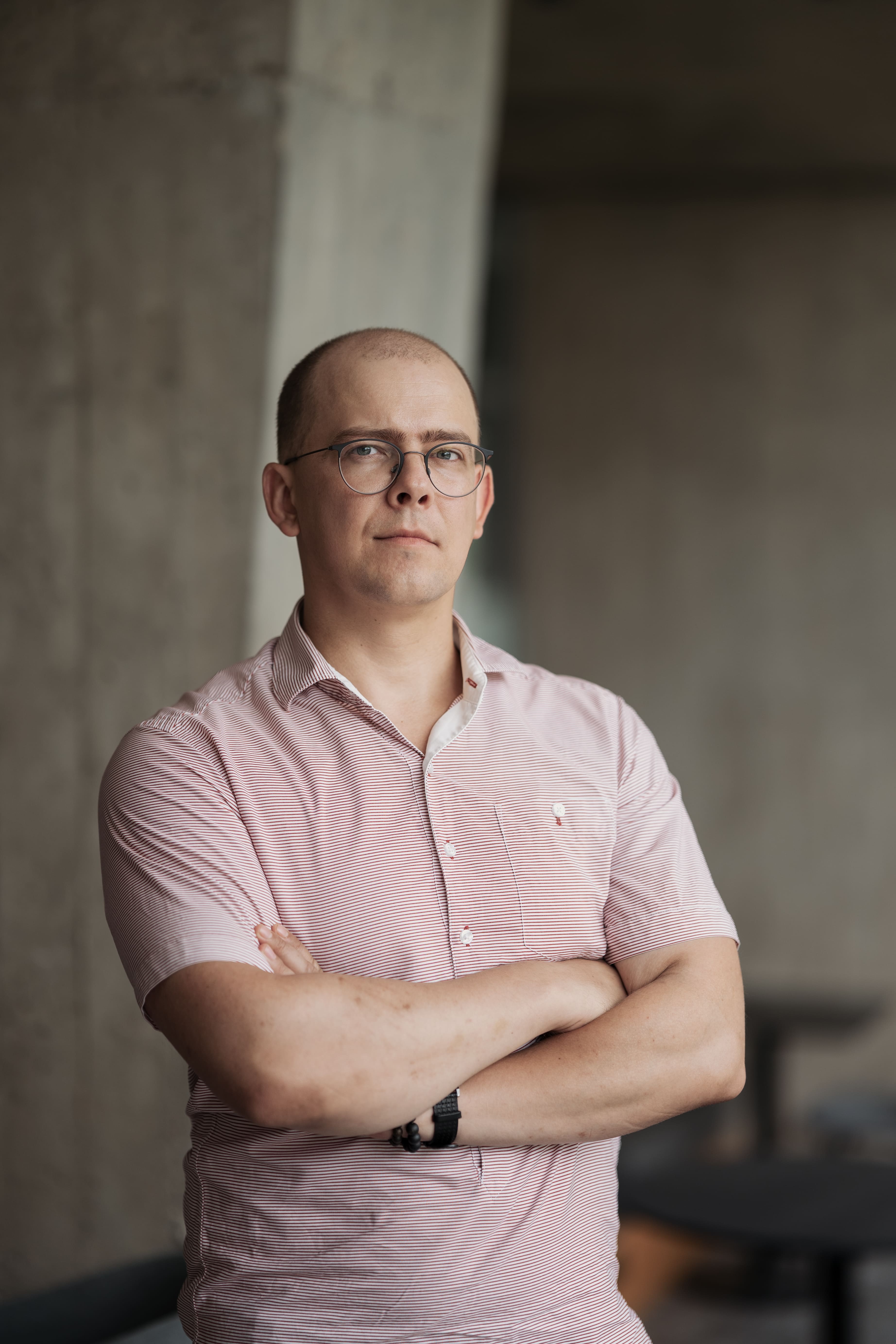
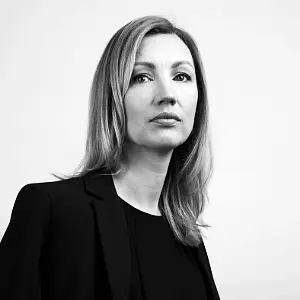
Dr. Kaie Maennel, Dr. Agnė Brilingaitė, and Linas Bukauskas are cybersecurity education researchers who have co-authored studies on multidimensional approaches to Cyber Defense Exercises (CDX). Their work emphasizes integrating psychological safety , intrinsic motivation , and cognitive agility into cybersecurity training frameworks. They have contributed to understanding how behavioral aspects and educational theory can enhance technical skill development and team coordination during large-scale exercises like Locked Shields and Amber Mist. Key areas of focus include: Applying Self-Determination Theory (SDT) to improve participant motivation and learning outcomes. Developing adaptive performance metrics that evaluate non-technical skills such as communication and decision-making under stress. Advancing slow education techniques to scaffold technical and soft skill development in cyber operators. They have secured significant funding through the EEA Grants project ADVANCES , which aims to personalize cybersecurity competence development. Their research has been published in journals like Computers & Security and International Journal of Cyber Warfare and Terrorism , influencing pedagogical practices in hybrid cybersecurity exercises and incident response training.
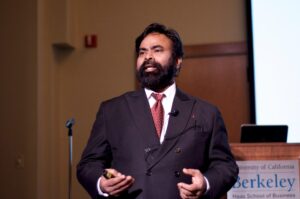
Professor Solomon Darwin is the Executive Director of the Garwood Center for Corporate Innovation and the Center for Growth Markets at the University of California, Berkeley . He is renowned as the father of the Smart Village Movement and specializes in open innovation, business models, and sustainable development in emerging economies. Open Innovation Business Models Smart Village Movement Sustainable Development Research Focus: His work bridges technology and socioeconomic development, emphasizing scalable solutions for smart cities/villages, ethical implications of Industry 4.0, and digital ecosystem design. Scientific Awards: Recognized as a leading international speaker on innovation Active director of Silicon Valley Chief Innovation Officer roundtables Affiliations: Collaborates with global brands and governments across Europe, China, Russia, India, and Latin America to advance corporate innovation frameworks.
Rimantas Plungė is a Professor at the Department of Contemporary Arts, Faculty of Arts, Vytautas Magnus University. His academic career spans over a decade, with significant contributions to media education and digital art research. Doctor of Sciences (2010) Professor (2020) Department of Contemporary Arts Faculty of Arts Plungė's research focuses on interdisciplinary art and media education , particularly how computer animation and artificial intelligence transform artistic creation. His work bridges digital culture with traditional media, exploring the evolution of visual storytelling in contemporary films and documentaries. His students' recent theses demonstrate applications of AI in filmmaking, data visualization in photography, and experimental documentary techniques. The research trends highlight digital humanities and ethical implications of technology in art. Plungė supervises advisees across diverse media projects, including: Dovydas Bučas - Documentary narrative authenticity Kajus Jurevičius - AI-algorithm collaboration in video art Ugnė Lisauskaitė - AI portrayal in cinema His work continues to shape modern media culture and creative education in Lithuania.
Dr. Vytautas Čyras serves as an Associate Professor at Vilnius University's Faculty of Mathematics and Informatics, specifically within the Institute of Computer Science and Department of Software Engineering. With over three decades of academic experience since 1984, he bridges computer science and legal theory through groundbreaking interdisciplinary research. Education: Master's in Applied Mathematics (Computer Science) from Vilnius University (1979) Doctorate from Moscow State University's Faculty of Computational Mathematics and Cybernetics (1985) Second Master's in Law from Vilnius University and German Law Centre (2007) Dr. Čyras' research spans legal informatics, information systems, and computer science. His primary focus includes artificial intelligence and law, regulatory compliance, legal requirements, and pioneering work in legal visualization. His Structural Blanks approach to programming with recurrences demonstrates deep expertise in both foundational computer science and legal applications. His research explores how visual and multisensory approaches can transform legal reasoning and compliance in digital environments. His publication trajectory reveals an evolution from technical computer science topics toward sophisticated legal informatics applications. Recent work emphasizes multisensory legal machines, legal visualization frameworks, and the integration of AI with legal reasoning systems. He has made significant contributions to understanding how legal norms can be transformed into operational rules for virtual environments and digital governance systems. Professional Activities: Active participant and organizer of major legal informatics conferences including IRIS, Baltic DB&IS, and EGOVIS Contributor to European Framework Programme projects including VirtualLife and SKY-Scanner Longstanding member of the Lithuanian Computer Society and its Intellectics Section Dr. Čyras teaches courses including Artificial Intelligence, Knowledge Representation, and Human-Computer Interaction. His interdisciplinary background enables him to bridge theoretical legal concepts with practical applications in regulatory compliance systems and legal technology development.
Gintautas Grigas is an Associate Professor and Affiliated Scientist at the Institute of Mathematics and Informatics , Vilnius University, Lithuania, serving within the Educational Systems Group . Since joining the Institute in 1965, he has become one of Lithuania’s most prolific authors in computer science education and software localization. Education: 1959 – Graduated, Faculty of Electrical Engineering, Kaunas Polytechnic Institute (now Kaunas University of Technology) 1970 – Candidate of Technical Sciences (post-graduate), nostrified 1992 to Doctor of Mathematical Sciences Continuing education courses in programming languages, data types and programming technology at Vytautas Magnus University, Vilnius University and Vilnius Pedagogical University Research Interests Grigas’ scientific work centres on four tightly interwoven themes: abstract data types , programming teaching methodology , computer terminology , and software localization . His contributions range from theoretical analyses of data structures to practical guidelines for localizing major software suites into Lithuanian. He has also pioneered studies on how interface defects influence national language culture and on letter-frequency analyses supporting cryptography and linguistic research. Publication Trends Across more than 150 scholarly and professional works, a clear progression is evident: early focus on programming fundamentals and Lithuanian computing history, followed by intensive investigation of localization pedagogy, and more recently, mobile-device text input and cultural impacts of internationalization errors. Collaborative volumes such as the Encyclopedic Dictionary of Computing and the textbook Fundamentals of Software Localization have become standard references in Lithuanian computer science curricula. Awards & Recognition No specific competitive awards are listed; however, his sustained output—40 books, 100+ scientific articles, 250+ popular/professional articles—is itself a testament to national academic recognition. Doctoral Advising & Grants While individual doctoral students are not named, Grigas has long contributed to doctoral education through the Institute’s doctoral committees and study guides. His research has been supported by national projects on software localization and educational technology, although explicit grant numbers are not provided in the text. Labs & Teams He carries out his work within the Educational Systems Group , a subdivision of the Institute of Mathematics and Informatics, located at Akademijos St. 4, Vilnius. The group investigates learning technologies, curriculum design, and the societal impact of digital systems, providing a collaborative environment for his ongoing projects.
Goda Klumbytė is a Lecturer and post-doctoral researcher at the University of Kassel, working within the Participatory IT Design department in the Faculty of Electrical Engineering and Computer Science. She is an interdisciplinary scholar bridging informatics with humanities and social sciences, with particular expertise in feminist new materialism, posthumanism, and human-computer interaction. Her research focuses on creating more contextualized and accountable machine learning systems through feminist and critical theoretical approaches. Her research interests include Critical Algorithm Studies, Science and Technology Studies, Human-Computer Interaction Design, Feminist Epistemology, Critical Theory, Posthumanism, and New Materialism. She approaches the study of algorithmic systems from a feminist perspective that emphasizes situated knowledges, intersectionality, and material-semiotic approaches to technology design. Her recent publications demonstrate a clear trend toward developing feminist frameworks for explainable AI and accountable machine learning systems. Her work examines how critical theoretical concepts from social sciences and humanities can be integrated into computing practices, with particular attention to how power relations and structural inequalities manifest in algorithmic systems. She has been particularly active in exploring how feminist intersectional perspectives can reshape approaches to AI explainability and accountability. Co-edited 'More Posthuman Glossary' with R. Braidotti and E. Jones (Bloomsbury, 2022) Published in 'Posthuman Glossary' (Braidotti & Hlavajova, 2018) Contributed to 'Everyday Feminist Research Praxis' (Leurs & Olivieri, 2015) Published in journals including Online Information Review, Digital Creativity and ASAP Presented at major informatics conferences including ACM's CHI, nordiCHI and FAccT Dr. Klumbytė leads significant research projects including 'AI Forensics: Accountability through Interpretability in Visual AI Systems' (funded by Volkswagen Foundation, 2022-2025) and 'CF+: Reconfiguring Computing Through Cyberfeminism and New Materialism' (University of Kassel, 2018-2019). She also serves as one of the editors of the critical computing blog 'engines of difference,' which provides a platform for critical perspectives on computing and technology.
Arūnas Gudinavičius is a Professor and Vice-Dean for Science at Vilnius University's Faculty of Communication, Department of Digital Cultures and Communication. He holds a PhD in Communication and Information Sciences (2012) from Vilnius University, following a Master's in Electrical Engineering from Kaunas University of Technology (1999) and a Bachelor's in Electrical Engineering (1997). His research focuses on digital publishing, human-computer interaction, and usability in digital media, with notable projects like the 'Digital Publishing in Lithuania' initiative (2014) and contributions to the COST Action E-READ (2014-2018). Key research interests include digital book quality, e-book markets, museum website usability, and accessibility in publishing. He has published extensively on topics such as reading behavior, piracy dynamics, and digital literacy, with over 30 peer-reviewed articles and several books. Notable awards include the 2017 Vilnius University best article award (shared with colleagues). He teaches courses on digital publishing and media technologies, advising PhD students like Alisa Žarkova and Arūnas Šileris. His professional roles include editorial board memberships for journals like Information & Media and leadership in organizations such as the Lithuanian Publishers Association. He has participated in international conferences globally and led projects on digital literacy, museum accessibility, and scholarly communication.
Dr. Dervinis Donatas is an Assistant Professor at the Department of Electrical and Electronic Engineering, VU Šiauliai Academy. His research focuses on Renewable Energy, Automation, Computer Vision, and Cybersecurity, with a strong emphasis on practical applications in industrial systems and educational technologies. He holds a Doctor of Science in Electrical and Electronics Engineering and has over 22 months of academic experience. His educational background includes advanced studies in electrical engineering, complemented by a prolific career in research. Key research areas include solar energy systems, image processing, and automated systems for transportation and security. He contributed to the development of a textbook on Image Processing (2012) and has been affiliated with the eLABa research group. Donatas has authored or co-authored over 15 peer-reviewed publications, exploring topics such as energy-efficient cloud computing, password security, and real-time video analysis for human recognition. His work bridges theoretical advancements with practical implementations in fields like industrial automation and biomedical engineering. While no specific awards are listed, his publications appear in reputable journals like Applied Scientific Research and Professional Studies: Theory and Practice . His academic advising and grant activities are not explicitly detailed, though his research often involves collaborative projects with institutions like Tallinn University of Applied Sciences and Šiauliai State College. Donatas is actively involved in the eLABa research team, focusing on innovative solutions in electrical engineering and technology education. His future work continues to emphasize sustainable energy systems and advanced computer vision applications.
Vytautas Žalys is an Associate Professor and PhD at the VU Šiauliai Academy, primarily affiliated with the Department of Informatics Engineering. His research focuses on audiovisual technologies in music education, computer-assisted data analysis, and the integration of digital tools in special education contexts. He has led multiple international projects, including the 'ART HOUSE: Restoration of the Zubov Palace' and 'Digital Competence and Digitized Musical Heritage,' highlighting his commitment to innovative educational infrastructure and cultural preservation. Žalys holds a PhD and has over 35 years of professional experience, spanning roles as a music teacher, radio show creator, and project leader in educational technology. His educational background includes advanced studies in music and informatics. Key projects include developing distance education courses on ICT in music education and contributing to EU-funded initiatives like the Leonardo da Vinci project on digital technologies. His publications emphasize the application of multimedia and AI in autism education, music pedagogy, and cross-disciplinary arts integration. He actively participates in academic associations such as EERA and ATEE, furthering research in educational innovation and lifelong learning.
Agnė Brilingaitė is an Associate Professor at the Faculty of Mathematics and Informatics, Vilnius University. Her work bridges cybersecurity with transportation systems and mobile services, focusing on practical skill development, risk assessment, and human-centric approaches to security education.
Kristina Lapin serves as an Associate Professor at Vilnius University's Faculty of Mathematics and Informatics, maintaining continuous teaching responsibilities from the 2016/2017 academic year through the 2025/2026 term. Her role includes delivering lectures and leading exercise sessions for Human-Computer Interaction across multiple student subgroups, with scheduled classes extending into evenings and covering both theoretical and practical components of the discipline. Her academic focus centers on Human-Computer Interaction , reflecting expertise at the intersection of user experience design and computing systems. This specialization aligns with broader engagement in Computer Science and Information Technology through the faculty's institutional framework. Teaching patterns indicate consistent involvement in curriculum delivery without seasonal interruptions. Professor Lapin participates in academic governance as evidenced by scheduled meetings with the study program committee chairperson and curators. However, no details regarding student advising, research grants, laboratory affiliations, or scientific awards were extractable from the provided schedule data, which exclusively documents teaching assignments and institutional service activities.
Assoc. Prof. Dr. Asta Slotkienė is an Associate Professor and Researcher at the Cybersocial Systems Engineering Group , Institute of Mathematics and Informatics, Vilnius University , Lithuania. She has been a faculty member since at least 2009 and is based at Akademijos St. 4, Vilnius. Education PhD in Computer Science Engineering, Kaunas University of Technology (2009) MSc in Computer Science Engineering, Kaunas University of Technology (2004) BSc in Physics and Computer Science, Šiauliai University (2002) Research Interests Dr. Slotkienė’s research spans software quality assurance , development process improvement , e-learning systems , and cognitive decision-making . She investigates how rigorous evaluation methodologies and AI techniques can enhance the reliability and usability of software products and services. Her recent work explores the intersection of large language models and automated software testing , as well as the modeling of web service quality using fuzzy logic and ontology-based approaches. Research Trends Across her latest publications, a clear trend emerges toward leveraging AI and machine learning , particularly large language models , to automate and improve software testing practices. Simultaneously, she continues to deepen the theoretical foundations of software and service quality modeling , integrating fuzzy logic , ontology engineering , and bibliometric analyses to build robust frameworks for quality evaluation. Scientific Service & Awards Program Committee Member: ACM/SIGAPP SAC (2023–2025) Organizing Committee Member: Baltic DB&IS 2024 Program Committee Member: SS AIEDUMED’25, CompSysTech’25 Reviewer for Informatica, Baltic Journal of Modern Computing, New Trends in Computer Sciences Projects & Funding 2022–2026 Master of Science in Smart, Secure and Interconnected Systems (EU Grant 101083531) 2022–2024 Embracing RAD Skills for Employability and Innovation 2020–2022 AI-Enhanced Accounting and Business Management Systems (Grant 01.2.1-LVPA-K-856-01-0083) 2014–2018 Erasmus+ “Open University for Virtual Mobility” (2014-1-LT01-KA203-000550) 2012–2015 Tempus “High Objectives of National Organizational Reform” (530284-TEMPUS+1-2012-1-ES-TEMPUS-JPHES) International Collaboration & Training Through multiple Erasmus+ teaching and learning visits (Las Palmas de Gran Canaria, Madeira, Azores, Maia), as well as participation in DeepLearn schools and professional training (Devbridge/Cognizant Softvision, Robotic Process Automation, Creative Commons, Contextual Modeling), Dr. Slotkienė actively fosters cross-border academic cooperation and continuous professional development.
Tadas Žižiūnas is a researcher at the Faculty of Communication , Vilnius University , specializing in the intersection of 3D technologies , artificial intelligence , and cultural heritage preservation . His work focuses on developing automated systems for monitoring urban heritage, applying advanced digital methods to historical artifact analysis, and integrating spectroscopy with 3D modeling in archaeological contexts. Academic Qualification: PhD (2019) in cultural heritage research, Vilnius University Key research areas include digital urban heritage practices , AI-driven preservation tools , and 3D technology applications in archaeology . His publications demonstrate a consistent focus on technological innovation in heritage management, with projects funded by the European Regional Development Fund (2018–2022). His recent work explores democratization of heritage conservation through 3D scanning and AI, while earlier contributions examined spectroscopy for historical document analysis and augmented reality for preserving genius loci in urban settings. Notable projects include the Automated Heritage Monitoring of Urbanised Areas initiative, which combines AI with 3D digitization to assess risks to cultural assets.
Prof. Ramunė Kasperė is a Professor and Vice-Dean for Research at the Faculty of Social Sciences, Arts and Humanities (FSSAH) at Kaunas University of Technology (KTU). She leads the 'Language and Technologies' research group, focusing on interdisciplinary studies at the intersection of technology, language, and education. Her research explores AI's societal impacts, technopedagogy in language education, and experimental methodologies in research ethics. She holds multiple roles including Chief Project Researcher at the Academic Centre of Social Sciences, Arts and Humanities and serves on KTU's Projects Development Centre as a Project Expert. Research Interests : Prof. Kasperė's work bridges artificial intelligence applications with sociocultural contexts, emphasizing: Machine translation's role in modern education systems Ethical frameworks for technology integration in academia Quantitative analysis of user interactions with translation technologies Post-pandemic adaptations in translator training programs Teaching & Projects : Develops study modules like 'Digital Support for Research Writing' and 'Translation Project Management' Guides students through advanced linguistic analysis and localization projects Leads research initiatives on sustainable technology adoption in multilingual contexts Labs & Teams : Active in KTU's interdisciplinary research networks, particularly in the Language and Technologies group which collaborates with industry partners on localization solutions and educational tech development.
Žilvinas Ledas is an Associate Professor at the Faculty of Mathematics and Informatics, Vilnius University. He has been actively teaching courses like Computer Game Design and Development since at least 2016, with scheduled lectures and exercises continuing into the 2025/2026 academic year. Research Interests focus on game development, interactive systems, and virtual environments. His work bridges software engineering principles with creative digital media applications.