David C. Gross serves as a Teaching Professor in the Department of Industrial & Manufacturing Engineering at Florida State University's Panama City campus, specializing in model-based systems engineering, digital engineering, and human-computer interaction with emphasis on virtual environments and naval/aerospace systems. His industry leadership at Boeing and Lockheed Martin includes roles as Chief Technologist for Modeling & Simulation and Deputy Chief Engineer for simulation labs. Dr. Gross holds a PhD in Systems and Industrial Engineering from the University of Central Florida, an MS in Operations Research from the University of Alabama at Huntsville, and a BS in Computer Science from Auburn University. His research bridges theoretical frameworks with practical applications in power distribution systems for naval vessels, CubeSat-based space situational awareness, and affordance theory in virtual environments. His scholarly output demonstrates consistent innovation in Model-Based Systems Engineering (MBSE) methodologies across defense and aerospace domains. Recent work focuses on functional architecture baselining for power electronic systems, parameter optimization in naval design, and space situational awareness visualization. Cross-cutting themes include semantic interoperability, fidelity measurement, and human factors integration in complex systems engineering. Dr. Gross has been awarded the NASA Faculty Fellowship for his contributions to aerospace research. His industry impact includes leading $1B+ technical innovations and influencing over $3B in business opportunities through systems engineering leadership at major defense contractors. His academic work is deeply informed by two decades of industry experience where he pioneered modeling and simulation standards through organizations like the Simulation Interoperability Standards Organization (SISO). Current research directions include sustainable transportation planning and MBSE applications for emerging energy systems, building on his foundational work in affordance-based virtual environment design.
Matthew Lease is a Professor at the School of Information, University of Texas at Austin, where he serves as Director of Doctoral Studies and Assistant Graduate Advisor. He is a Distinguished Member of the Association for Computing Machinery (ACM), a Senior Member of the Association for the Advancement of Artificial Intelligence (AAAI), and an Amazon Scholar. Lease co-directs the $20M NSF-Simons AI Institute for Cosmic Origins (CosmicAI) and is a faculty founder and leader of UT's Good Systems, an eight-year, $20M university-wide Grand Challenge aimed at designing responsible AI technologies. In 2023-2024, he was invited four times to address the Texas Legislature on responsible AI. Ph.D. Computer Science, Brown University, 2010 M.Sc. Computer Science, Brown University, 2004 B.Sc. Computer Science, University of Washington, 1999 Lease directs the UT Austin Laboratory for Artificial Intelligence and Human-Centered Computing (AI&HCC), where his research spans artificial intelligence modeling and human-computer interaction design. His work focuses on creating novel datasets, building AI models, and evaluating both model performance and their impact on end-users. When automated AI falls short, his team designs human-in-the-loop approaches, leveraging AI model explanations and creative user interfaces. To promote fair AI, they focus on better annotation techniques to avoid bias and develop modeling strategies to mitigate dataset biases. Their work tackles real-world problems as part of UT Austin's Good Systems Grand Challenge, with an ongoing emphasis on content moderation—exploring automated, human-in-the-loop, and human-safe practices to combat disinformation, hate speech, and online polarization. Lease's recent publications (2021-2024) demonstrate a strong focus on human-centered AI, particularly in the areas of fair and explainable AI, content moderation, fact-checking, and crowdsourcing. His research integrates technical AI development with human factors considerations, emphasizing the importance of designing AI systems that work effectively with human users. The publications reveal a consistent theme of addressing bias in AI systems, improving human-AI collaboration, and developing methods to ensure the ethical deployment of AI technologies in sensitive domains like content moderation and misinformation detection. His work shows progression from foundational techniques in crowdsourcing and human computation toward more sophisticated approaches that consider psychological impacts and ethical implications. 2024 Test of Time Paper Award, AAAI Conference on Human Computation and Crowdsourcing (HCOMP) 2024 Most Influential Paper Award, IEEE/ACM International Conference on Automated Software Engineering (ASE) 2024 Best Paper Honorable Mention, ACM Conference on Computer Supported Cooperative Work (CSCW) 2022 Best Student Paper, Conference on Information Systems and Technology (CIST) 2020 Conference Award Track, Journal of Artificial Intelligence Research (JAIR) 2019 Best Student Paper, European Conference for Information Retrieval (ECIR) Early Career awards from DARPA, NSF, and IMLS Lease has secured significant funding for his research, including the $20M NSF-Simons AI Institute for Cosmic Origins and the $20M Good Systems Grand Challenge. His lab, AI&HCC, has developed numerous tools and methodologies for human-AI collaboration, particularly in the context of content moderation and fact-checking. He has advised numerous students who have gone on to publish in top-tier conferences and journals in AI, HCI, and NLP. Lease actively collaborates with industry partners including Amazon, where he serves as an Amazon Scholar, and has served on advisory boards for JASIS&T, Texas Advanced Computing Center (TACC), and UT Austin-Amazon Science Hub. His research has led to practical tools like SQUARE for aggregating crowd responses and methods for transparent AI evaluation. Lease leads the UT Austin Laboratory for Artificial Intelligence and Human-Centered Computing (AI&HCC), which has developed innovative approaches to human-AI collaboration. The lab's work on content moderation addresses critical challenges in online safety, including the psychological well-being of content moderators who face traumatic material. Their research on fair and explainable AI has produced methods for detecting toxic speech while maintaining accuracy across demographic groups. The lab actively collaborates with fact-checking organizations through co-design processes to create tools that meet real-world needs. As part of UT Austin's Good Systems initiative, the lab is developing AI technologies that prioritize human values and social responsibility from the outset of the design process.
Cansu Demir is a Researcher at the University of Salzburg within the Artificial Intelligence and Human Interfaces department. She holds a Dr. technical and M.Sc. in Human-Computer Interaction alongside a B.Sc. in Computer Science, with research centered on human-AI interaction in automated vehicles and emergency response systems. Education Dr. technical in Human-Computer Interaction M.Sc. in Human-Computer Interaction B.Sc. in Computer Science Her work investigates trust dynamics in autonomous systems, mode awareness transitions via ambient interfaces, and empathic communication to mitigate bystander effects in accidents. She designs and evaluates in-vehicle agents that enhance driver-vehicle collaboration through innovative sensory feedback mechanisms. Recent publications (2021-2024) reveal consistent focus on automotive human factors, with growing emphasis on empathic AI for crisis scenarios and SAE Level 5 autonomy challenges. Her research bridges theoretical HCI frameworks with real-world vehicle interface implementations. Scientific Awards Best paper award in AUI'21 (2021) Exclusive Salzburg AG Scholarship (2022) Performance Scholarship for Master’s excellence (2023) Marie Andeßner Prize for Master's Thesis (2024) World EXPO 2025 Travel Grant (2025) As a core contributor to the EXDIGIT project (2022-2028), she secures interdisciplinary funding while mentoring junior researchers. Her grant portfolio emphasizes European collaborative frameworks for digital innovation. She operates within Salzburg’s AI and Human Interfaces research cluster, collaborating with international teams across the EXDIGIT consortium on long-term automated vehicle studies.
Claes Thorén is a Senior Lecturer at the Department of Informatics and Media, Uppsala University, Sweden, where he has held academic positions since 2013 (Researcher 2013-2014, Senior Lecturer 2014-present). His research investigates the societal and organizational consequences of digitalization with particular focus on technological disengagement, resistance, and disillusionment in contemporary post-digital contexts. His educational background includes: Master of Arts in Cultural Studies (with distinction) from University of East London (2006-2008) Bachelor of Arts in English Literature from Wilfrid Laurier University, Canada (2003-2005) Bachelor of Science in Information Systems from Systems Analysis program (1995-1998) Thorén's research explores digital disconnection and resistance phenomena through frameworks of cultural theory, practice theory, and socio-materiality. He examines how individuals and communities navigate technological saturation by seeking meaningful encounters beyond digital interfaces, analyzing non-use practices across diverse contexts from tabletop gaming to religious communication. His work reveals how analogue alternatives and disconnection strategies emerge as responses to digital disillusionment. Analysis of his 15 most recent publications (2016-2025) shows consistent investigation of post-digital resistance across multiple domains. Key trends include examination of digital disenchantment signals in social media, analogue aesthetics in digital landscapes, and institutional tensions in technology implementation. His interdisciplinary approach bridges media studies, organizational communication, and cultural sociology to understand how societies renegotiate technology relationships in an era where digital saturation has become normalized.
Rachel Falconer is a Lecturer in the Department of Computing at Goldsmiths, University of London, and serves as Head of the Digital Arts Computing BSc program. She is also the Goldsmiths Digital Project Manager. Her work bridges digital art curation, feminist technoscience, and critical engagement with emergent technologies. Falconer holds an MA in Curating Contemporary Art from the Royal College of Art and a BA in Industrial Design and Multimedia Communications from UCL/Politecnico di Milano. Her research focuses on networked curatorial strategies, human-computer interaction, and decentralized technologies. She has curated exhibitions at institutions like Tate, Barbican, and V&A, and her writing appears in Frieze , British Journal of Photography , and The Guardian . Falconer supervises PhD students in computational arts and digital arts computing, including primary supervision of Yajuan Han. Her articles explore themes like distributed knowledge production and the societal implications of AI. She frequently speaks at events such as EVA London and the Institute of Network Cultures, advocating for critical perspectives on technology's role in culture and society.
Dr. Shameem Ahmed is an Associate Professor in the Department of Computer Science at Western Washington University. He co-founded and co-directs the NEAT (Next Generation Effective Affective Technology) research group, focusing on interdisciplinary work at the intersection of technology for neurodivergent individuals, human-computer interaction (HCI), and information and communication technologies for development (ICTD). Education: Ph.D. in Information Science from University of Illinois at Urbana-Champaign MS in Computer Science from University of Illinois at Urbana-Champaign MS in Computer Science from Marquette University B.Sc. in Computer Science and Engineering from Bangladesh University of Engineering and Technology His research explores assistive technologies for autistic individuals, including emotion detection, stress prediction, and accessible education design. Recent work includes IEEE COMPSAC 2024 publications on emotion recognition systems and assessment techniques for autistic students. His peer-reviewed articles span topics like mixed-reality training platforms , data-driven stress analysis , and self-healing middleware , with a focus on surveys, systematic reviews, and technology deployment in developing regions. He has mentored students receiving WWU CS Outstanding Graduate Student and Alumni Awards . Awards: Outstanding Poster Award, Undergraduate Scholars Poster Session, WWU (2017, 2016) Dissertation Fellowship, iSchool, UIUC (2014) Honorable Mention: Best Poster Award, ACM iConference (2013) Sohaib and Sara Abbasi Fellowship, CS, UIUC (2008) Runner-up, CS UIUC Internet Television (IPTV) Development Competition (2008) Shameem Ahmed teaches courses in database systems , mobile programming , and technology for social good . His NEAT lab has produced impactful tools like InterViewR for job interview training simulations and studies on autism support systems in Bangladesh.
Sidney S. Fels is a Professor at the University of British Columbia, affiliated with the Human Communication Technologies Lab in Vancouver. His research spans Human-Computer Interaction (HCI), Virtual Reality, Biomechanical Engineering, Speech Synthesis, and Medical Imaging. He focuses on innovative interfaces, surgical simulation, and AI-driven educational tools. Recent work includes advancements in touch interaction systems (e.g., HaloTouch), chatbot-assisted learning, and biomechanical modeling for medical applications. His research interests emphasize bridging computational models with real-world applications, particularly in healthcare and education. Notable contributions include contributions to CHI conferences, SIGGRAPH, and INTERSPEECH, showcasing work on AI ethics in learning environments, vocal tract modeling, and pervasive computing systems. Fels collaborates extensively with researchers in engineering, medicine, and computer science, reflecting his interdisciplinary approach to solving complex human-centric challenges. Labs/Teams: Human Communication Technologies Lab at UBC.
Niall Williams is a Faculty Fellow & Postdoctoral Researcher at the New York University Tandon School of Engineering, part of the Immersive Computing Lab . He holds a PhD in Computer Science from the University of Maryland, College Park (expected April 2024), where he specialized in computational methods for natural walking in virtual reality under Professors Dinesh Manocha and Aniket Bera. His undergraduate studies at Davidson College focused on redirected walking thresholds, advised by Prof. Tabitha Peck. Education: PhD in Computer Science, University of Maryland, College Park (2024) B.S. in Computer Science, Davidson College (Honors, 2019) Research Focus: His work bridges computer graphics, human perception, and virtual reality. Key areas include redirected walking algorithms, haptic guidance, and perceptual thresholds for VR locomotion. He explores how gaze, posture, and environmental compatibility influence user experience in immersive environments. Awards: Best Paper Honorable Mention at IEEE VR (2021) Best Paper Honorable Mention at IEEE ISMAR (2021) Best Paper Honorable Mention at IEEE VR (2021) Teaching & Service: Taught courses on Information Visualization and Programming at NYU, and served as a teaching assistant in advanced data structures and game programming at UMD. Active reviewer for IEEE TVCG, VR, ISMAR, and CHI. Labs & Collaborations: Member of NYU's Immersive Computing Lab and UMD's GAMMA lab. Collaborates with industry partners like NVIDIA and Meta Reality Labs through internships.
Dr. Abe Karnik is a Senior Lecturer in Human-Computer Interaction (HCI) at the School of Computing and Communications (SCC), Lancaster University. He has been at Lancaster since 2013 and previously worked as an Assistant Systems Engineer at Tata Consultancy Services (2004-2009). His research focuses on hardware-centric prototyping of novel display technologies, including multi-view, organic, and stereoscopic systems. He integrates HCI principles into cross-disciplinary projects to enhance scientific research through digital technology. Education : Ph.D. in Computer Science, University of Bristol, UK B.E. in Instrumentation and Control Engineering, Nirma Institute of Technology, Gujarat University, India PG Cert. in Academic Practice, Lancaster University, UK Research Interests : Deformable displays, tangible interactibles, haptics, brain-computer interfaces, and volumetric displays. Current projects include 3D volumetric displays (EPSRC-IAA) and Sci-Seedlets (plant science education). Teaching : Module convener for undergraduate and postgraduate courses, co-teaching roles, and supervision of undergraduate and MSci dissertations. Active in international partnerships at Lancaster University Ghana, Sunway Malaysia, and BJTU China. Grants & Projects : MRC-P2D (MobiESense) and EPSRC-IAA (Volumetrics) AI:Lab (AI in Low Carbon Building, 2024-2025) Sci-Seedlets (plant science education initiatives, 2021-2023) Labs/Teams : Based at InfoLab21, involved in prototyping labs for interactive systems and display technologies.
Henning Pohl is a Tenure Track Assistant Professor in the Department of Computer Science at Aalborg University, affiliated with The Technical Faculty of IT and Design. His research focuses on Human-Centered Computing, emphasizing Virtual Reality (VR), Augmented Reality (AR), and subtle/casual interaction techniques. He explores how technology can be integrated into everyday life through wearable devices and contextual computing. Key research interests include body-based AR interfaces, mobile interaction design, and the ethical implications of AI-generated advice. Notable projects include developing tools like Hafnia Hands for VR research and investigating user perceptions of AI limitations. His work bridges HCI with practical applications in mental health support, collaborative platforms like OpenStreetMap, and playful AR environments. Recent publications highlight advancements in AR feedback during conversations, LLM denial mechanisms, and fear-inducing game design. His articles reflect a commitment to understanding human-technology relationships across psychological, social, and technical dimensions. Labs/Teams: Human-Centered Computing group at Aalborg University Advising: No formal student advisees listed in available texts.
Dr. Sergio Cervera Torres is a Researcher at the Institute for Science Education (IWM) within the University of Tübingen , affiliated with the Media Technology Department and the Multimodal Interaction Lab . His work focuses on Human-Computer Interaction (HCI), Affective Computing, and Virtual Reality, with a particular emphasis on Spatial Affective Interaction (SAI) frameworks. He holds a Ph.D. from the IWM (2017) and received the DFG Grant (2021) for his contributions to cognitive and affective sciences. Education: Ph.D. in Multimodal Interaction, IWM, University of Tübingen (2017) Research Interests: Embodied Cognition and Biometric Feedback Virtual Reality Applications in Healthcare and Education Cognitive Processes in Neurodevelopmental Disorders (e.g., Autism Spectrum Disorder) Affective Spatialization and User Experience Design Publications: His research spans affective computing, spatial valence associations, and clinical applications of VR. Recent work includes studies on emotion regulation, executive function assessment in schizophrenia, and human-robot interaction in healthcare. Awards: Recipient of the Deutsche Forschungsgemeinschaft (DFG) Grant (2021) for pioneering contributions to HCI and affective sciences. Grants/Advising: Led projects on biometric feedback in VR and contributed to eHealth technologies. No formal advisees listed, but collaborates extensively on interdisciplinary teams. Labs/Teams: Member of the Multimodal Interaction Working Group , focusing on the intersection of technology, cognition, and emotion.
Way Kiat Bong is an Associate Professor at the Department of Computer Science, Oslo Metropolitan University (Oslomet), specializing in Human-Computer Interaction (HCI) and Universal Design of ICT. His research focuses on accessibility, assistive technologies, welfare technologies, and healthcare applications, particularly targeting older adults and individuals with health risks. He leads the Universal Design of ICT (UD-ICT) research group and has contributed to projects like NORtritious, a digital platform for healthy food innovation, and Gluco Coach, a diabetes self-management app. Key research areas include designing age-friendly technologies for social interaction, mobile health apps for chronic disease management, and inclusive online education. Bong has published widely on topics such as authentication systems for elderly users, cognitive training via smartphones, and usability testing for health interventions. He actively disseminates findings through conferences and guest lectures, including presentations at Lund University and Universidade Estadual Paulista. Key Projects: NORtritious (digital health platform), Stepping Stones (diabetes prevention app evaluation), Tangible Cup (social interaction TUI). Dissemination: Over 27 scientific publications, conference presentations, and international collaborations (e.g., Aging Globally Initiative). Labs/Teams: Universal Design of ICT (UD-ICT) research group.
Yixuan (Janice) Zhang is an Assistant Professor in the Department of Computer Science at William & Mary, holding a Ph.D. in Human-Centered Computing from Georgia Tech (2023). Her research focuses on Human-Computer Interaction (HCI), Human-LLM Interaction, Data Visualization, and Trust Dynamics, with cross-disciplinary applications in health informatics and STEM education. She has published in top venues like ACM CHI, CSCW, and IEEE VIS, earning awards including the 2022 Rising Star in EECS and Foley Scholar recognition. Research Highlights: Explores ethical implications of LLMs in education and healthcare. Investigates trust dynamics in crisis informatics and social media. Designs AI-driven tools for Alzheimer’s awareness and mental health support. Grants & Collaborations: NSF RITEL Grant ($900K) for LLM-powered collaborative learning systems. Partnerships with WHO, Microsoft Research, and Virginia educational institutions. Co-chaired ACM DIS'24 and served on CHI'24 program committees. Awards: Best Paper Award at CHI'23 Learn, Discover, Innovate grant (2023) General Assembly of Virginia grant for ADRD awareness systems. Her lab actively engages in projects like MetaAgents (CSCW'25) and EmotionPrompt (enhancing LLMs with emotional stimuli). She advises PhD students in AI ethics and education technology.
Overview Gualtiero Volpe is a Professor affiliated with the Department of Informatics at the University of Genoa, Italy. His research focuses on Human-Computer Interaction (HCI), Affective Computing, and Multimodal Interaction, with particular emphasis on analyzing social interactions, embodied cognition, and expressive movement qualities in contexts such as music performance and education. He has collaborated extensively with researchers like Antonio Camurri, contributing to interdisciplinary projects that bridge computer science, cognitive science, and the arts. Research Interests Analysis of human movement and affect through computational methods Design of multimodal interactive systems for education and healthcare Investigation of laughter and social dynamics in human interactions Development of technologies for music performance and collaborative creativity Key Contributions Volpe's work spans over 140 publications in top-tier venues such as IEEE Transactions on Affective Computing, ACM Conference on Human Factors in Computing Systems (CHI), and International Conference on Multimodal Interaction (ICMI). His research has led to innovations in: Automated analysis of movement qualities using machine learning Sonification platforms for exergames and rehabilitation Embodied interaction frameworks for children's education Computational models of group cohesion and synchronization Recent Trends in Publications Recent studies emphasize the integration of cognitive science principles into movement analysis and the application of multimodal systems to address challenges in post-pandemic social interaction (e.g., digital commensality). His work on 'Embodied Multisensory Training' and 'Hybrid Co-Working in Industry 5.0' highlights a growing focus on real-world applications of HCI research. Awards & Grants No specific awards or grants are explicitly mentioned in the provided data, though his prolific publication record and leadership in collaborative projects suggest sustained academic recognition and funding support. Labs & Teams Volpe is part of the EyesWeb XMI research group at the University of Genoa, developing open-source platforms for real-time multimodal interaction analysis. He collaborates with institutions like the University of Trento and Goldsmiths, University of London on projects related to music technology and social robotics.
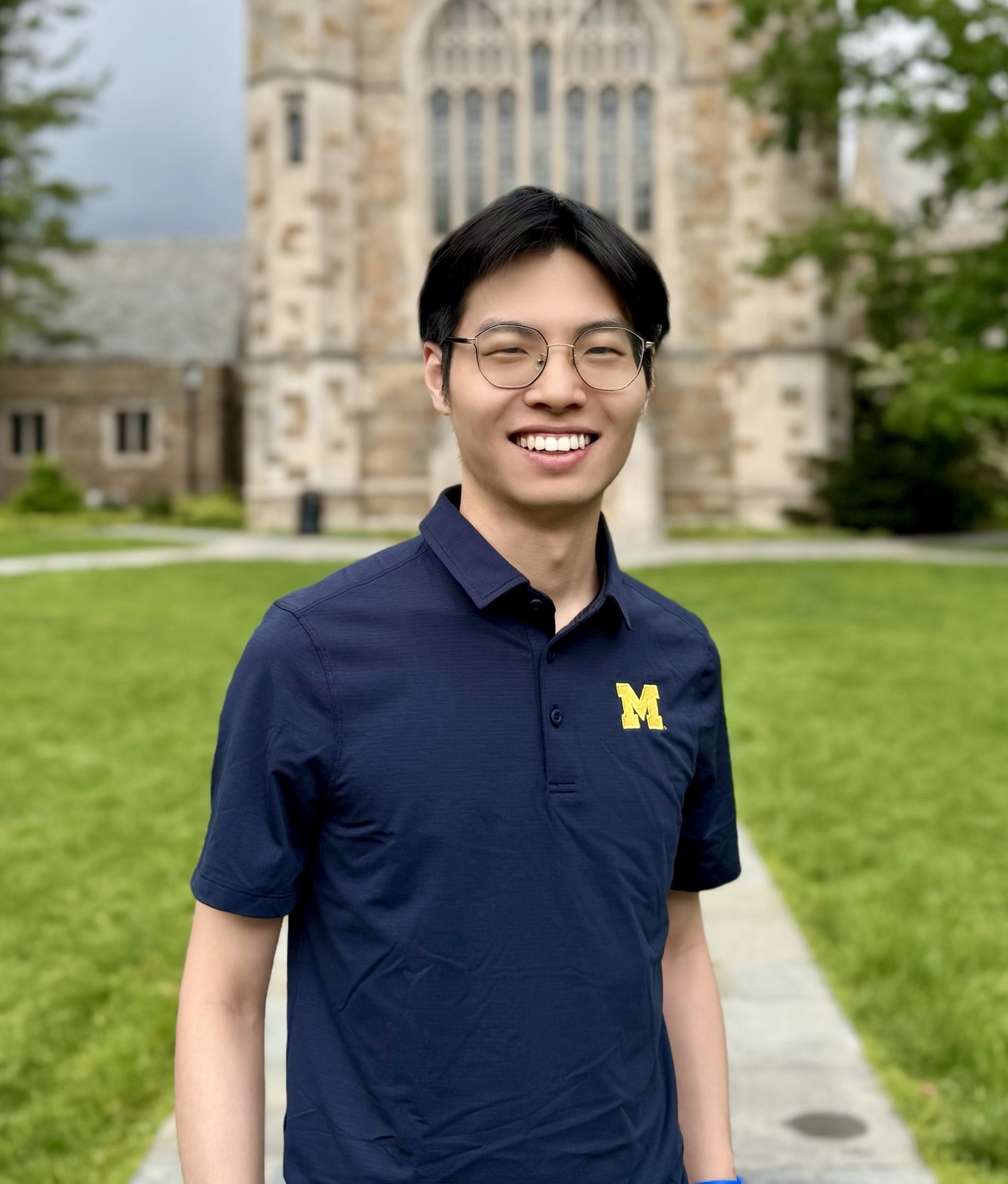
Ke Sun is an Assistant Professor in the EECS Department at the University of Michigan, Ann Arbor. His research develops intelligent, deployable sensing systems for mobile, wearable, and IoT ecosystems, with applications in HCI, cybersecurity, health monitoring, and robotics. His work has been implemented in commercial devices like Amazon Echo and Google Home. Research spans: HCI for Mobile/IoT : Touch/gesture sensing (VSkin, RFCanvas) Cybersecurity : Privacy protection against eavesdropping (EveGuard, StealthyIMU) Health/Environmental Sensing : Vital sign monitoring (LoEar), activity logging (EgoADL) Wireless/Robotics : mmWave radar navigation (milliEgo), acoustic temperature sensing (VECTOR) Publication trends show consistent focus on acoustic/wireless sensing (13/15 papers), cybersecurity (5/15), and cross-modal AI fusion. Recent work explores adversarial ML attacks and LLM vulnerabilities. Awards include: Google Ph.D. Fellowship (2023) UbiComp Distinguished Paper Award (2023) ACM SenSys Best Poster Runner-up (2020) ACM-ICPC Asia Gold Medal (2015) Industry collaboration includes three internships at Amazon Lab126 where his research influenced Echo device development. He serves on program committees for ACM MobiSys/SenSys and organized the ICLR ML for IoT Workshop.