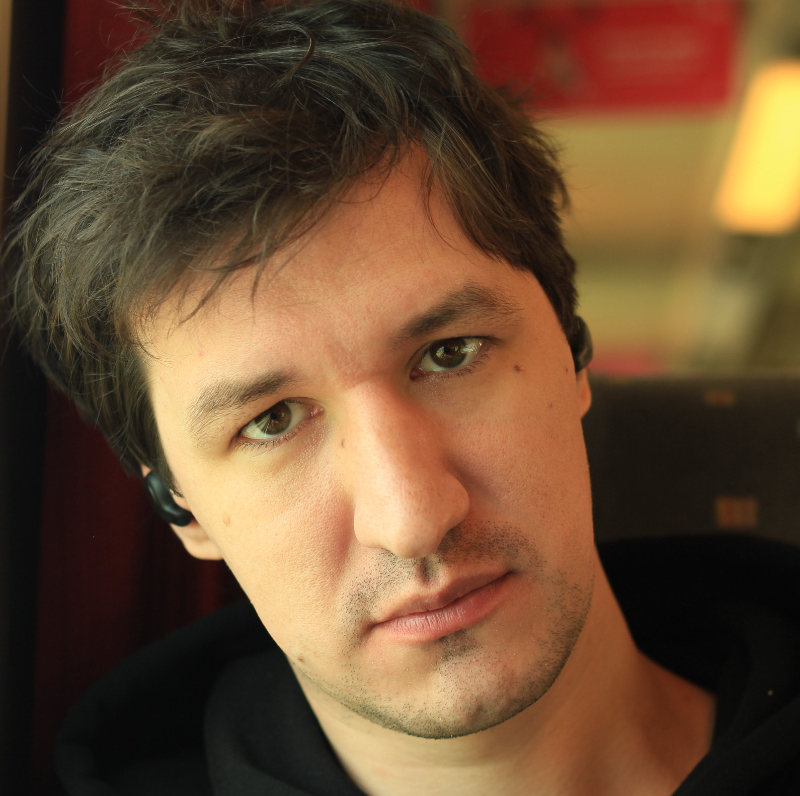
Kyoungwon Seo is a Professor affiliated with Hanyang University, actively contributing to interdisciplinary research spanning Human-Computer Interaction (HCI), Machine Learning, and Cognitive Science. His work focuses on applying advanced technologies like VR, EEG analysis, and large language models to address challenges in healthcare diagnostics, education, and workplace design. Co-founded the Imagine Lab at Hanyang University, exploring innovative HCI applications. Expertise in gamification strategies for manufacturing workforce behavior modification. Pioneer in developing EEG-SSVEP based machine learning models for early detection of Mild Cognitive Impairment (MCI). His research bridges theoretical foundations in decision theory (e.g., ambiguity models) with applied work in educational technology, including AI-enhanced learning platforms and chatbot systems for career counseling and critical thinking assessment.
Adriana Wilde is a Lecturer in Digital Health and Biomedical Engineering at the University of Southampton's Electronics and Computer Science (ECS) school. She holds a PhD from ECS, focusing on learner engagement in peer-supported digital environments, and has over 30 years of teaching experience across universities like Southampton, Winchester, and St Andrews. Her research emphasizes safe, inclusive, and secure digital technologies for health, with a focus on aging populations' independent living. Education: B.CompSc.(Hons) from Universidad Central de Venezuela, MSc in Computer Science (Distributed Systems & Education minor) from Swiss universities, and PhD at Southampton as a Mayflower Scholar. She is a Communication co-chair for ACM Women (since 2023) and previously served ACM-W Europe. Research interests include digital health, cybersecurity education, HCI, and sensing technologies. She has supervised 21 MSc projects and 19 undergraduate dissertations. Her work spans topics like robotic process automation trust, gamified cybersecurity education (CyberGuard app), and remote health monitoring via photoplethysmography. Teaching spans 30+ modules in computer science, cybersecurity, and digital health at multiple institutions. Notable courses include Digital Health Principles, Cybersecurity Management, and Human-Computer Interaction. Professional contributions include mentoring initiatives, workshop leadership (e.g., HCI education), and advocacy for gender diversity in computing. Her recent articles highlight educational technology innovation and ethical considerations in smart home sensors for elderly care.
Professor Damien Masson is an Assistant Professor in Human-Computer Interaction (HCI) at the Université de Montréal , affiliated with Mila and IVADO . He leads the Montréal HCI group and focuses on interactive systems for AI, document interaction, and software learning. His research bridges HCI principles with AI to enhance user experience in complex applications. Education : PhD in Computer Science (University of Waterloo, 2019-2023), MSc in Computer Science (Université de Lille, France), BSc in Computer Science (Université de Lille, France). Research Interests : Designing intelligent systems (e.g., DirectGPT), visualizing information (e.g., Charagraph/ChartDetective), and augmenting digital documents (e.g., Chameleon). He explores how interface metaphors and direct manipulation can improve interactions with AI and data. Recent Work : His 2025 CHI papers introduced Textoshop (drawing-inspired text editing) and linked writing tools to user needs. In 2024, DirectGPT demonstrated faster LLM interactions via direct manipulation. Earlier work includes Statslator (statistical reporting) and ChartDetective (data extraction from vector charts). Awards : 2024 Bill Buxton Award (best HCI dissertation), 2023 CHI Best Paper (ChartDetective), and 2020 CHI People's Choice Award (Chameleon demo). Lab & Collaborations : Based in the André-Aisenstadt building, his group collaborates with institutions like Mila and UWaterloo. He actively mentors students in HCI and AI-related projects.
Patrizia Di Campli San Vito is a Researcher in the School of Computing Science at the University of Glasgow, focusing on Human-AI Interaction and Assistive Technologies. She holds a PhD from the University of Glasgow and prior degrees from the University of Ulm, Germany. Her current work involves participatory harm auditing of AI systems through the PHAWM project and developing adaptive radio systems (RadioMe) for dementia care. Previously, she contributed to ENTER and RadioMe projects addressing aging populations' needs through multimodal interfaces. Education: PhD: University of Glasgow Master's & Bachelor's: Media Informatics, University of Ulm Research Interests: Human-Computer Interaction (HCI), Assistive Technology for Aging Populations, Thermal/Haptic Feedback Systems, Automotive UIs, and Ethical AI Evaluation. She explores how multimodal interactions (e.g., thermal, haptic, audio) can improve accessibility and safety in healthcare and automotive domains. Key Projects: RADIO-ME: Adaptive radio system with agitation detection and music intervention for dementia patients PHAWM: Tools for non-experts to evaluate AI systems' societal impacts ENTER: Multimodal interaction for older adults Recent Work: Her publications focus on stress detection systems, in-car thermal feedback for navigation, and dementia-friendly calendar interfaces. She collaborates with Prof. Simone Stumpf (GIST Lab) and Prof. Stephen Brewster (Multimodal Interaction Group). Labs/Teams: Active in the Glasgow Interaction Systems Team (GIST) and previously contributed to the Multimodal Interaction Group.
Dr Joe Cutting is a Lecturer in the Department of Computer Science at the University of York, specializing in Human-Computer Interaction (HCI). His research focuses on game experience design, particularly how games direct attention and their implications for educational applications and mental health. He also explores the use of games for persuasive purposes. Cutting holds a PhD in Intelligent Game and Games Intelligence from the University of York, an MSc in Cognitive Science from the University of Birmingham, and a BSc in Computer Science/Software Engineering from the same institution. He contributes to the department through roles such as Exam Paper Checker and is affiliated with the Human-Computer Interaction research group. His educational background spans computer science, cognitive science, and game intelligence, providing a multidisciplinary foundation for his work. Notably, his research bridges cognitive science principles with practical game design, aiming to understand how attention mechanisms in games can enhance learning outcomes or influence behavioral outcomes. He has also examined the societal impacts of gaming, including studies on player behavior during lockdowns and the psychological effects of game difficulty. Cutting’s publications span topics like game monetization strategies, the relationship between game difficulty and player engagement, and the application of AI in game design. His work frequently employs large-scale data analysis, such as telemetry and transactional data, to uncover patterns in player behavior. While no specific awards are listed, his contributions to HCI and game studies reflect an active and innovative academic profile.
Gianluigi Maria Riva is a Research Fellow at University College Dublin (UCD), affiliated with the School of Information and Communication Studies. He holds a Marie Curie PhD in Privacy, Ethics and New Technologies from UCD and is a non-residential Connection Science Fellow at the MIT Media Lab’s Human Dynamics group. His expertise spans data protection law, invasive technologies (e.g., IoT, BCI), and EU-US privacy comparisons, particularly in genetic and biometric profiling. Education: PhD in Privacy, Ethics, and New Technologies (UCD). Former Fulbright-Shuman Visiting Scholar at MIT Media Lab. Research focuses on dark patterns, ethical governance frameworks for emerging technologies, and privacy-by-design principles in Human-Computer Interaction (HCI). Collaborated with organizations like Telefonica Innovaciò Alpha on ethics governance and participated in EU projects such as H2020 TEAM-ITN (mental health tech) and REINITIALISE (digital health privacy). Awards: 2022 Best Innovator Award (Marie Curie Alumni Association). Leadership: Coordinates a law seminar at the University of Pavia, contributes to EU COST Actions (e.g., Privacy and Security, Researcher Mental Health), and leads editorial roles in Frontiers in Human Dynamics. Member of committees like the IEEE, AssoDPO’s AI Scientific Committee, and the I.R.C.C.S. Mondino Neurological Institute’s Board. Prior roles include Military Police Officer, Commercial Manager, litigation Attorney, and Legal/Data Protection consultant.
Heather Wiltse is an Associate Professor in Design for the Data-Intensive Society at the Umeå Institute of Design (UID), part of Umeå universitet. Her research focuses on design philosophy at the intersection of critical design studies and technology ethics, addressing the evolving role of data-driven systems in society. She leads the project 'Design Philosophy for Things That Change,' exploring responsive technologies' societal implications. Wiltse holds a PhD in Informatics from Indiana University (2013), advised by Erik Stolterman. She has led major grants including the Marianne and Marcus Wallenberg Foundation project (2018–2021) and contributed to the Horizon 2020-funded DCODE network. She serves on executive boards of the Design Research Society and Society for Philosophy and Technology, and is an associate editor for the Journal of Human-Technology Relations . Her research integrates interdisciplinary perspectives from science and technology studies (STS), human-computer interaction (HCI), and communication studies. Key themes include ethical design practices, digital mediation, and contestable systems in socioeconomic contexts. Recent books include Changing Things: The Future of Objects in a Digital World (2019) and Relating to Things: Design, Technology and the Artificial (2020). She actively engages with design museums as sites for rethinking design education and ethics. Wiltse’s work critiques current design paradigms, advocating for frameworks that address socio-technical complexity. Her articles span topics such as posthumanist analysis of digital contracts, privacy in IoT, and reimagining design pedagogy through feminist methodologies. She collaborates internationally, contributing to conferences like Nordes and EASST4S.
Markus Löchtefeld is an Associate Professor at the Department of Architecture, Design and Media Technology within the Technical Faculty of IT and Design at Aalborg University. He holds leadership roles as Head of Studies and Deputy Head of Department. His research focuses on Human Computer Interaction, Sustainable Design, Wearable Technology, and Electrochromic Displays. Löchtefeld has contributed to over 113 publications and 6 research projects, including initiatives like 'Design Vocabularies' and 'Digital Empowerment Tools for Green Citizen-Driven Initiatives.' His work emphasizes sustainability through projects such as 'Design for Long-life Smart Products' and 'EcoPlotter,' a toolkit for electrochromic displays. Key collaborations include the ERASMUS+ funded 'ABRA: Artificial Biology, Robotics, and Art.' He has received the Best Paper Award at ACM MobileHCI 2017. Research Interests: Interaction Design, Wearable Devices, Sustainable ICT, Electrochromic Materials Notable Projects: Design Vocabulary Book Series Longevity Strategies for Smart Products Virtual Reality for Sustainability Education Löchtefeld's articles explore topics like peripheral vision training in VR, tangible tokens for product longevity, and ethical UX design's environmental impact. His work bridges technology and sustainability, addressing both technical innovation and societal challenges.
Lonni Besançon is an Assistant Professor of Visualization at Linköping University, Sweden, serving as a 2023 ASAPBio Fellow, Scientific Node Coordinator for the Swedish National Visualization Infrastructure InfraVis, and co-editor-in-chief of the Journal of Visualization and Interaction (JoVI). Education includes: PhD in HCI from Université Paris Saclay (2014-2017) Master of Research in HCI from Université Paris Sud (2013-2014) Exchange studies at University of Hong Kong (2013-2014) Master of Engineering from Polytech Paris Sud (2011-2014) Classe Préparatoire at Polytech Paris Sud (2009-2011) Research focuses on developing novel interaction techniques for volumetric data visualization and enhancing statistical interpretation through innovative visualizations. His work emphasizes methodological improvements in research practices, including detecting questionable research practices and enhancing transparency, robustness, and reusability of scientific outputs. Additional interests include augmented reality interfaces, collaborative visualization systems, and open science advocacy. Publications demonstrate consistent focus on augmented reality interfaces, collaborative visualization, research transparency, and statistical interpretation methods. Recent works showcase increasing emphasis on open science practices and methodological critiques, with notable contributions to understanding peer review systems and pandemic-related research evaluation. Awards and honors: ASAPBio Fellow (2023) GRD IG-RV Honorable Mention (2018) Advising and supervision includes mentorship of graduate students Xiyao Wang, Marie Cheng, and Mickael Francisco Sereno. Teaching experience encompasses courses in Interactive Information Visualization, Algorithms, Graph Theory, and Computer Security at Université Paris Saclay and Polytech Paris Sud. Leads research initiatives at Linköping Visualization Center and collaborates internationally through InfraVis. Serves on program committees for ACM IHM and IEEE EuroVis, while contributing to numerous conferences including CHI, IEEE VIS, and ISMAR.
Jürgen Brehm is an Adjunct Professor at the Faculty of Electrical Engineering and Computer Science of Leibniz University Hannover . He holds a venia legendi in Computer Engineering after completing his habilitation in 2000. Education: Diploma in Computer Science (1986), Doctorate in Engineering (1991), Habilitation (2000) Research interests span computer architecture , parallel processing , performance analysis , and e-learning . His work explores ubiquitous computing , communication architectures , and optimization algorithms . Recent publications highlight trends in parallel computing , optimization , and interactive systems , including works on swarm intelligence , particle swarm optimization , and open content integration. Scientific award : Feodor Lynen Fellowship (1994) Teaching includes core courses like Basics of Computer Architecture , Operating Systems , and Parallel Processing . He also designed two multimedia-equipped computer science lecture halls and managed large-scale DFG projects for e-learning and HPC computing.
Professor Theresa Green is a faculty member in the School of Nursing at Queensland University of Technology (QUT). Her research focuses on stroke rehabilitation, caregiver support, healthcare access, and community-based nursing interventions. She holds a PhD from the University of Calgary and maintains active professional memberships in organizations such as the American Association of Rehabilitation Nurses and the Canadian Stroke Network. Her teaching responsibilities include courses on Quantitative Research Methods, Evidence-Based Nursing, and Advanced Practice Nursing. Key research contributions include studies on post-stroke functional assessment using the miFUNCTION scale, disparities in stroke care access, and caregiver experiences in dialysis settings. She has authored over 30 peer-reviewed articles between 2015 and 2020. Education: PhD (University of Calgary) Professional Memberships: Extensive involvement in nursing and stroke-related organizations since 1976 Her work emphasizes translating research into clinical practice improvements, particularly for vulnerable populations and elderly patients. Current research trends include leveraging mixed-methods approaches to evaluate healthcare delivery systems and patient-centered care models.
Dr. Nina Gehrer is a Post-Doc researcher in the Department of Psychology at the University of Tübingen, affiliated with the Faculty of Science and the Clinical Psychology and Psychotherapy research group. Her work is centered on understanding cognitive and perceptual mechanisms underlying psychopathy and body image disturbances, using advanced eye-tracking methodologies. Her research interests include: Body dissatisfaction and body image interventions Attention biases and social information processing Eye tracking in clinical populations Psychopathy and antisocial behavior Emotion recognition and gaze behavior Cognitive mechanisms in violent offenders The recent publications (2017–2022) reflect a strong focus on eye movement patterns in psychopathy, emotion processing in epilepsy, multisensory perception, and methodological innovations in gaze analysis. Her work frequently involves incarcerated populations and employs both experimental and clinical paradigms. Collaborations with researchers like M. Schönenberg, A. Jusyte, and A.T. Duchowski highlight interdisciplinary and international research efforts. Scientific awards and honors are not mentioned in the provided text. Dr. Gehrer has been actively involved in research since her PhD (2015–2020) and completed a psychiatric internship (2021–2022) as part of her psychotherapy training. There is no mention of grant leadership or student advising in the available data. She is based at Schleichstraße 4, Room 4.407, Tübingen.
Ivan Smirnov is a computational social scientist currently serving as the AI Lead in Research and Researcher Training at the Graduate Research School, University of Technology Sydney (UTS). He is also an External Faculty Member at the Complexity Science Hub in Vienna. His work spans the intersection of AI, sociology, and education, with a focus on Generative AI's role in research and doctoral training. University: University of Technology Sydney School: Graduate Research School Previous Positions: Assistant Professor, University of Mannheim; Group Leader, Higher School of Economics, Moscow Smirnov’s research explores how digital traces and machine learning can illuminate social dynamics such as inequality, gender bias, and academic performance. He employs computational methods to study topics like online toxicity, student wellbeing, and the digital representation of gender. His methodological expertise includes natural language processing, social network analysis, and predictive modeling using social media data. His recent publications reveal a consistent trend in using large-scale digital data to address pressing social questions, particularly in education and mental health. He frequently publishes in leading interdisciplinary journals such as Proceedings of the National Academy of Sciences , EPJ Data Science , and Royal Society Open Science , and presents at major conferences including IC2S2 and ICWSM. His scientific contributions have been recognized through media coverage in Nature , MIT Technology Review , and The Times , as well as a Best Course Award at HSE for his pioneering teaching in computational social science. Best Course Award at Higher School of Economics Media features in Nature, MIT Technology Review, The Times, ABC TV Smirnov is actively involved in research leadership and training, having led AI initiatives at UTS and co-organized the Summer Institute in Computational Social Science. He has secured funding from the European Commission and the Russian Science Foundation. He supervises research students and has developed the open educational course Getting Started with Generative AI in Research , reflecting his commitment to empowering the next generation of researchers. He also contributes to the academic community through peer review for top conferences and journals. He is affiliated with professional groups including the Human-AI Collaborative Knowledgebase for Education and Research (HACKER) and the SDG Classification Expert Group, and leads initiatives focused on integrating AI into research training and supporting HDR student wellbeing.
Ekaterini Manias is a Professor at the School of Electrical and Computer Engineering, Technical University of Crete . She specializes in perception-based computer graphics, virtual reality, and haptic technologies, leading the SURREAL research group . Education : Ph.D. in Computer Science (University of Bristol, 2001), M.Sc. in Computer Science (University of Bristol, 1996), B.Sc. in Mathematics (University of Crete, 1994). Research Interests span 3D spatial cognition, distributed graphics, human-computer interaction, and gaze-contingent displays. Her work integrates psychophysics, usability engineering, and real-time rendering techniques. Professional Roles : Professor at Technical University of Crete (since Dec 2005) Assistant Professor (tenure 2004) and Lecturer at University of Sussex Researcher at Hewlett Packard Research Laboratories (1996-1998) Coordinator of SURREAL research group Associate Editor for ACM Transactions on Applied Perception and Presence, Teleoperators and Virtual Environments Chair/co-chair roles at ACM Siggraph, Eurographics, and other international conferences
Karon MacLean is a Professor of Computer Science and Director of the SPIN (Sensory Perception and Interaction Research Group) at the University of British Columbia. She joined UBC in 2000 after working at Interval Research Corp. in Palo Alto. Her research focuses on restoring physicality to human-computer interaction through haptic interfaces, multisensory interaction, and affective communication. She holds a Bachelor's degree from Stanford University and graduate degrees from MIT. Her work emphasizes application-driven design, exploring haptic feedback in robotics, embedded systems, and healthcare contexts. Current projects include developing Calmer, a robotic device for preterm infant pain management, and CuddleBits, affective robot pets. She leads the SPIN Lab, which investigates haptic languages, low-power interfaces, and evaluation techniques for tangible computing. Her academic contributions span over two decades, with key areas including physical user interfaces, parasitic power systems, and the integration of haptics into medical and everyday technologies. She advises students on HCI topics and collaborates internationally on projects that merge engineering, psychology, and design.