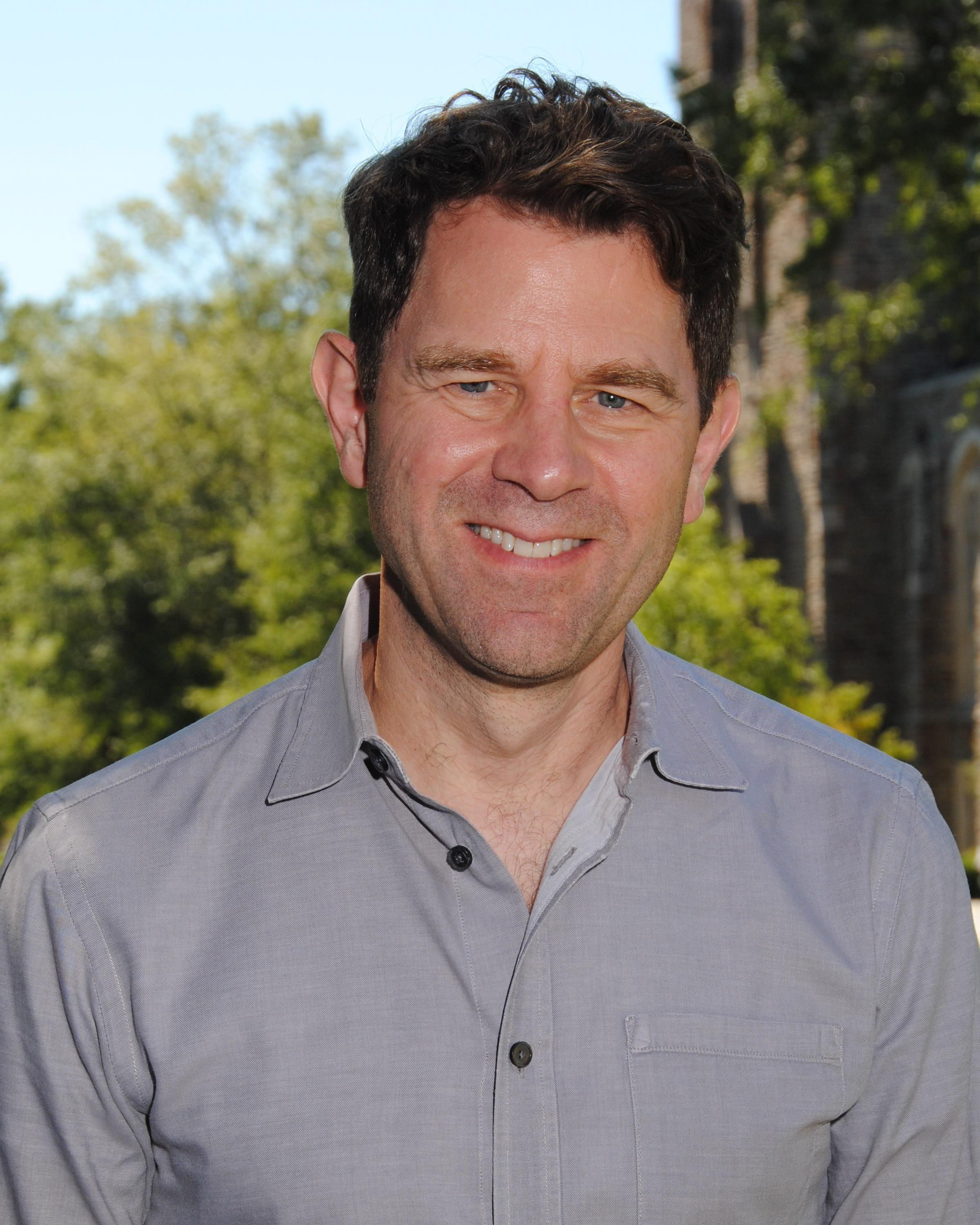
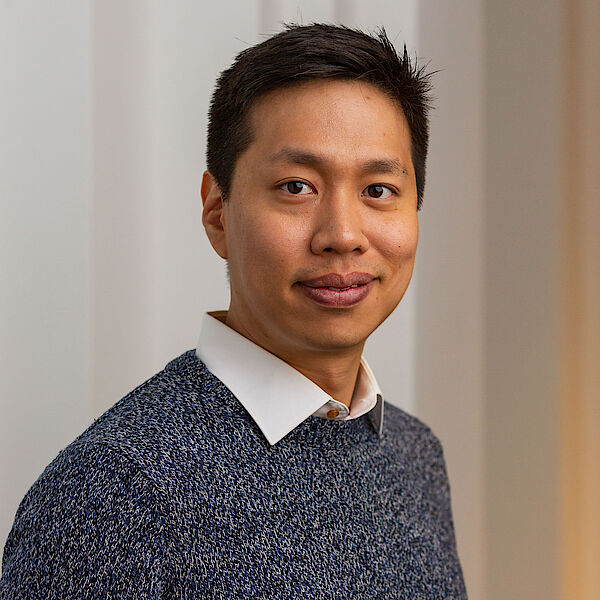
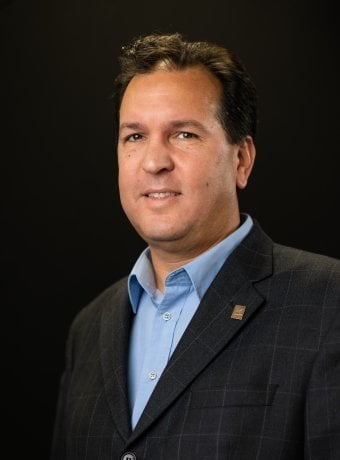
Yann LeCun is the Chief AI Scientist at Meta and holds the Jacob T. Schwartz Professorship at New York University in Computer Science, Data Science, Neural Science, and Electrical and Computer Engineering. He is a member of the National Academy of Engineering, National Academy of Sciences, and Académie des Sciences, and a fellow of ACM, AAAI, AAAS, and SIF. Research Interests: AI, Machine Learning, Computer Vision, Robotics, Computational Neuroscience, Physics of Computation. Labs: CILVR Lab (Computational Intelligence, Learning, Vision, Robotics), Computational and Biological Learning Lab at Courant Institute, Meta FAIR (Fundamental AI Research). Scientific Awards include the ACM Turing Award (2018), Queen Elizabeth Prize for Engineering (2025), VinFuture Grand Prize (2024), and multiple honoris causa doctorates. He has mentored numerous PhD students and postdocs, including Ying Wang, Yilun Kuang, and Quentin Le Lidec. Recent Publications focus on self-supervised learning, world models, video analysis, and representation learning, with key contributions to autonomous machine intelligence architectures.
Professor Evonne Miller is a leading academic at Queensland University of Technology (QUT), where she holds the title of Professor of Design Psychology and serves as Director of the QUT Design Lab . Her work bridges healthcare design , participatory co-design , and planetary health , focusing on creating inclusive environments for vulnerable populations. As a Fellow of the Australian Association of Gerontology , she chaired the 56th AAG National Conference in 2023 and has pioneered innovative approaches to aged care , prison healthcare , and climate change engagement . PhD (University of Otago) Bachelor of Arts (Psychology) Bachelor of Commerce (Marketing) Her research expertise spans design thinking , arts-based knowledge translation , and health systems transformation , with over $16M AUD in competitive grants from ARC, NHMRC, and Queensland Health. Notable projects include Grief Guide AI , HEAL (Healthcare Excellence AcceLerator) , and intergenerational living campuses . She has published 140+ academic works , including books on healthcare design and creative research methods. Recent publications demonstrate her focus on AI in mental health , VR training , social prescribing , and arts-based interventions across diverse contexts like prison healthcare and voluntary assisted dying . Awards include Good Design Australia and National Communication Association recognitions, with her work influencing policy changes such as direct access to pain relievers in prisons. As a Senior Fellow of the Higher Education Academy , she teaches research methods and design thinking while leading co-design workshops globally. Her advocacy for human-centered design extends to climate anxiety , disaster resilience , and everyday activism , supported by a free co-design resource repository for global practitioners.
Shih-Yi Chien is an Associate Professor in the Department of Management Information Systems at National Chengchi University, Taipei, Taiwan. His research focuses on User Experience , Human-Robot Interaction , and Robotics , with applications in Information Behavior and Machine Learning . Education: Ph.D. in Information Sciences from University of Pittsburgh (2009–2017). Professional Experience: Assistant Professor (2018–2023), then Associate Professor (2023–present) at NCCU. His research spans Explainable AI (XAI), Dementia Prediction , Fake News Detection , and Human-Automation Trust . Recent work includes cross-cultural studies on AI perception and neuromarketing applications in e-commerce robotics. Publications appear in Information Systems Frontiers , IEEE Transactions on Human-Machine Systems , and ACM/IEEE International Conference on Human-Robot Interaction . Notable scientific awards include: 2024 Yushiu Creative Award (Silver) 2023 National Somatic Interactive Technology First Prize 2022 Fubon Life Insurance Thesis Excellence Award Multiple INFORMS/IEEE/HICSS conference recognitions He has led research grants from Taiwan's National Science and Technology Council (MOST) on topics like human-multirobot cognitive processes and AI-driven high-age dementia care . Collaborative labs include the Ambient e-Services Laboratory and Digital Innovation & Management Research Lab at NCCU, focusing on smart contracts , human-robot collaboration , and digital sustainability .
Tobias Egner is Professor of Psychology and Neuroscience at Duke University. He serves as Chair of Psychology and Neuroscience and is affiliated with the Duke Initiative for Science & Society, Center for Brain Imaging and Analysis, Center for Cognitive Neuroscience, and Duke Institute for Brain Sciences. Ph.D. and B.S. from University of London Postdoctoral training at Columbia University (2003-2006) and Northwestern University (2006-2009) His research focuses on cognitive control —how internal goals guide behavior—and spans computational modeling, neuroimaging, and neurostimulation studies of task switching , cross-task interference , and cognitive stability/flexibility trade-offs . Recent work investigates domain-specific cognitive flexibility and one-shot stimulus-control learning . Articles reveal neural substrates in prefrontal cortex, caudate nucleus, and parietal regions. Key themes in his 15 most recent publications (2024-2025) include cognitive stability , task-set reactivation , contextual adaptation , and neural dynamics across disciplines like Neuroscience, Cognitive Psychology, and Computational Modeling. Scientific Honors : Mid Career Award (BACN, 2024), Fellow (APS & Psychonomic Society), Honorary Guest Professor (Southwest University, China) Grants include the Duke-NCCU Interdisciplinary Postdoctoral Training Program (2024-2029), Neurocognitive Mechanisms of Control (2023-2028), and Mechanisms of Social Behavior (2016-2026). He teaches courses in cognitive neuroscience and advanced research methods.
Sangyoung Park is an Assistant Professor of Smart Mobility Systems at the Faculty of Mechanical Engineering and Transport Systems, Technical University of Berlin, and is co-affiliated with the Einstein Center for Digital Future. His research focuses on two main areas: enhancing vehicle safety through digitalization and connectivity, and advancing the electrification of the transport sector with emphasis on electric vehicle battery systems design and management. He leads the Chair of Smart Mobility Systems at TU Berlin, where his team investigates how vehicle connectivity can improve energy efficiency, traffic flow, and safety in autonomous vehicle systems. Dr. Park completed his PhD in Electrical Engineering and Computer Science at Seoul National University in Korea, where he focused on energy management techniques for hybrid energy storage systems in electric vehicles. Before joining TU Berlin in 2018, he conducted postdoctoral research at the Technical University of Munich, working on energy management for smartphones in collaboration with Google and studying battery aging processes. His research interests span smart mobility systems, electric vehicle battery management, energy consumption optimization, vehicle connectivity, and autonomous driving systems. Park's work bridges the gap between design engineers and software engineers, investigating how different energy storage components (fuel cells, supercapacitors, lithium-ion batteries) should be interconnected and managed together for maximum efficiency. His research also addresses the design of charging infrastructure for electric vehicles. Analysis of Dr. Park's recent publications reveals a strong focus on digital twin technology for teleoperated driving, battery management systems for electric vehicles, and vehicle connectivity for improved safety and efficiency. His research increasingly integrates cybersecurity aspects of connected vehicles and explores novel approaches to extend battery lifespan through advanced cell balancing techniques. The interdisciplinary nature of his work connects electrical engineering, computer science, transportation systems, and urban infrastructure planning. Dr. Park supervises multiple doctoral students, including Philipp Kremer, Ongun Türkçüoglu, Kil Young Lee, Maria Claudia Miguel de Priego, Muzaffer Citir, Andrea Reindl, Subhendu Bhadra, and Hueseyin Türkyilmaz. His research is supported by various funding sources including the ECDF grant, DAAD projects (ide3a), and government scholarships. He collaborates with institutions including OTH Regensburg and Siemens Mobility. His laboratory, the Smart Mobility Systems group, focuses on developing system-level approaches for measuring, analyzing, and balancing energy consumption in battery-powered mobile systems. The team investigates how direct communication among autonomous vehicles can enable control scenarios that improve energy efficiency, traffic flow, and safety beyond what human drivers or isolated autonomous vehicles can achieve.
Yiannis Karayiannidis is a Senior Researcher (equivalent to Associate Professor/Research) with the Division of Systems and Control (SYSCON), Department of Electrical Engineering at Chalmers University of Technology. He maintains a significant affiliation with the Department of Robotics, Perception and Learning at KTH Royal Institute of Technology, demonstrating his cross-institutional impact in the Swedish robotics community. Dr. Karayiannidis earned his Diploma in Engineering in 2004, followed by a Ph.D. in Engineering in 2009, and achieved Docent status in 2017. His academic journey has focused on robotics and control systems, establishing him as a leading researcher in these fields. His primary research interests span robot control, robotic manipulation in human-centered environments, dual arm manipulation, force control, robotic assembly, control of physical human-robot interaction, multi-agent robotic systems, adaptive control and nonlinear control systems. Dr. Karayiannidis has made significant contributions to the understanding of deformable object manipulation, contact-rich robotic tasks, and human-robot collaboration. His work bridges theoretical control systems with practical robotic applications, particularly in scenarios requiring precise physical interaction. Analysis of his recent publications reveals a strong focus on advanced manipulation techniques, particularly for deformable linear objects, and human-robot collaborative tasks. His research increasingly incorporates machine learning approaches, especially reinforcement learning, to address complex manipulation challenges. There is also a clear emphasis on practical applications in industrial settings, with several projects related to robotic assembly and cable routing. Dr. Karayiannidis serves as Associate Editor for the IEEE Robotics and Automation Letters, IEEE/RSJ International Conference on Intelligent Robots and Systems (IROS), and the European Control Conference. He is also the treasurer of the IEEE Robotics Chapter in Sweden and a WASP-affiliated researcher. He has served as Principal Investigator for multiple research projects including DARMA and DARMA_bridge (funded by WASP), CHROMA (funded by VR), and the H2020 SARAFun project. His current projects include "Learning & Understanding Human-Centered Robotic Manipulation Strategies" (2020-2025), "Computer Vision and Machine Learning for Robot Systems" (2019-2021), and "ViMCoR" (2019-2021) in collaboration with Volvo Group. Dr. Karayiannidis is actively involved in the robotics research community through his editorial roles and project leadership. His work connects theoretical control systems with practical robotic applications, particularly in industrial and human-robot collaborative settings.
Nathir Rawashdeh is an Assistant Professor in the Department of Applied Computing at Michigan Technological University , with an affiliated appointment in Electrical and Computer Engineering . He is a Senior Member of the IEEE and a member of the Institute of Computing and Cybersystems (ICC) and Great Lakes Research Center . Education: Ph.D., Electrical Engineering, University of Kentucky, 2007 MS, Electrical and Computer Engineering, University of Massachusetts, Amherst, 2003 BS, Electrical Engineering, University of Kentucky, 2000 Dr. Rawashdeh's research focuses on unmanned vehicle perception , image analysis , control systems , and mechatronics , with applications in autonomous driving, winter weather adaptation, and industrial automation. His work includes sensor fusion, deep learning, and AI-enhanced manufacturing solutions. Recent publications highlight advancements in winter weather autonomous driving , UV disinfection robotics , and AI-driven industrial inspection systems . His research spans mechatronics curriculum development, industry 4.0 integration, and cross-cultural educational initiatives. Scientific Awards: Senior Member of the IEEE Dr. Rawashdeh has secured over $2 million in funding from organizations including the NSF , Ford Motor Co. , NIST , and the European Commission . His grants support projects like GPU clusters for research, winter weather autonomous driving standards, and UV sterilization robotics. He leads the Mobile Robotics Lab at Michigan Tech, focusing on collaboration and innovation in autonomous systems and mechatronics research.
Annarita De Maio serves as a Researcher in Operations Research (MAT/09) at the Department of Economics, Statistics and Finance (DESF) of the University of Calabria, where she teaches Logistics, Operations Research, and Mathematical Methods for Economics courses across undergraduate and graduate programs including Economics, Data Science, and Management Engineering. PhD in Mathematics and Computer Science (2018), University of Calabria Dissertation: Integrated Logistics and Last-Mile Deliveries (developed with Procter & Gamble) Research periods at P&G Brussels and CIRRELT/Laval University (Quebec) Her research centers on Logistics 4.0 innovations with dual emphasis on sustainable last-mile delivery systems (crowdshipping, autonomous robots, locker networks) and smart tourism applications . Current projects integrate IoT and AI for optimizing pharmaceutical distribution, perishable goods logistics, and urban tourist trip planning while addressing environmental constraints and stochastic demand patterns. Recent publications (2022-2025) reveal three thematic clusters: (1) stochastic optimization for dynamic delivery systems, (2) sustainable urban logistics solutions using multi-modal transport, and (3) data-driven tourism management frameworks. Her work consistently bridges theoretical modeling with industrial case studies involving Italian companies and municipal authorities. As an active member of DESF's Quantitative Methods for Economics, Finance and Management research group, she contributes to regionally and nationally funded projects focusing on mathematical programming applications. Her international conference participation includes speaking and organizing roles at major logistics and operations research events. Dr. De Maio collaborates within the department's research ecosystem through the Quantitative Methods group, which develops computational models for decision-making in finance, actuarial science, and transportation. Current initiatives explore crowdshipping economics, green tourist trip design, and risk-aware inventory systems for perishable commodities.
Professor Günter Maier is a distinguished academic in Work and Organizational Psychology at Bielefeld University, Germany, situated within the Faculty of Psychology and Sport Science, Department of Psychology (Unit 10 - Work and Organizational Psychology). He maintains dual affiliations with the Department of Psychology and the Research Institute for Cognition and Robotics (CoR-Lab), reflecting his interdisciplinary approach bridging psychology with robotics and artificial intelligence. His academic journey began with a Diploma (MSc) in Psychology from LMU Munich in 1992, followed by a summa cum laude Doctorate in 1996. After positions as Research Assistant, Scientific Associate, and Assistant Professor at LMU Munich, he joined Bielefeld University as Professor in Work and Organizational Psychology in 2003, where he continues his tenure. His research spans human-robot interaction dynamics, leadership behavior, corporate social responsibility, and AI implementation in workplace contexts. Professor Maier's research reveals fascinating asymmetries in human social responses to robots versus humans, demonstrating that exclusion by robot coworkers hurts less while inclusion by human coworkers satisfies more. His work on leadership examines daily behaviors and their impact on leader well-being through team identification, while his CSR research investigates relationships with employee green behavior and potential negative consequences. His recent publications increasingly focus on AI ethics in personnel selection, healthcare scheduling, and resource allocation. Methodologically, he has pioneered AI-assisted research tools, developing techniques for creating AI-generated images for vignette studies and evaluating GPT models for qualitative data analysis. His work aligns with Bielefeld University's strategic research area of the Socio-Technical World, investigating how humans, robots and AI interact in complex environments. As an educator, Professor Maier teaches across multiple Work and Organizational Psychology modules, including Basic and Advanced Applied Subject courses and Project Modules in Work, Organizational and Social Psychology. His teaching reflects his research interests, preparing students for technology-integrated workplaces through modules like 27-AF-AO1, 27-AF-AO2, and 27-AP-ProjectAOS.
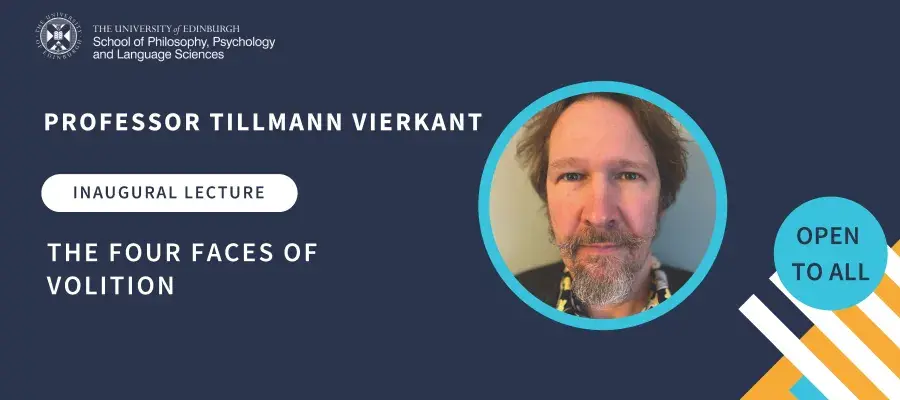
Professor Tillmann Vierkant is affiliated with the University of Edinburgh , working in the College of Arts, Humanities and Social Sciences within Philosophy, Psychology & Language Sciences . His inaugural lecture, 'The Four Faces of Volition,' explores the multifaceted nature of human will, emphasizing choice, control, rationality, and social scaffolding. His work bridges philosophy of mind, cognitive science, and AI ethics, addressing questions about free will, moral responsibility, and the ethical implications of autonomous systems. Research Interests : Philosophy of mind, free will, metacognition, self-control, AI ethics, and social dimensions of volition. Recent Publications : Focus on AI welfare, responsible agency, ethics of autonomous systems, and cognitive theories of volition. Scientific Awards : Not explicitly mentioned in the provided text. Advising & Grants : No specific details provided.
Dr. Al Edwards is a Professor in the Department of Pharmacy within the School of Chemistry, Food and Pharmacy at the University of Reading. His extensive research portfolio spans over two decades, with a clear evolution from immunology and dendritic cell biology in his earlier career to his current focus on microfluidic diagnostic devices and point-of-care testing technologies. Professor Edwards' research interests center on developing innovative diagnostic solutions, particularly in microfluidics and point-of-care testing. His work bridges engineering and clinical applications, with significant contributions to antibiotic susceptibility testing, vaccine delivery systems, and smartphone-based diagnostic platforms. His research has evolved from fundamental immunological studies to highly applied diagnostic device development, demonstrating a strong translational research trajectory. His publication record shows a clear trend toward practical diagnostic solutions with clinical applications, particularly in antibiotic susceptibility testing and point-of-care diagnostics. The integration of microfluidics, 3D printing, and smartphone technology represents the cutting edge of his current research, with numerous publications demonstrating how these technologies can be combined to create accessible diagnostic tools for resource-limited settings. Professor Edwards has been actively involved in mentoring researchers and collaborating across disciplines, as evidenced by his numerous co-authored publications. His work on diagnostic device usability and information design for self-testing demonstrates attention to the practical implementation challenges of diagnostic technologies. His laboratory appears to specialize in developing open-source, low-cost diagnostic platforms using Raspberry Pi systems, 3D printing, and microcapillary technologies. The Cygnus platform for smartphone-based diagnostics and the PiRamid imaging system represent significant contributions to making sophisticated diagnostic technologies more accessible.
Iván Sánchez Milara serves as a University Teacher and Fab Lab instructor at the Faculty of Information Technology and Electrical Engineering, University of Oulu, while pursuing his PhD on 'Making interactive spaces for education'. His teaching portfolio includes Introduction to Computer Systems, Computer Systems, Programmable Web Project, Principles of Digital Fabrication, and Fab Lab-focused courses, alongside training educators in STEAM and Digital Fabrication through Fab Academy. Education: MSc.(Eng) [Institution unspecified] PhD candidate at University of Oulu His research centers on integrating ICT innovations into learning environments to empower educators in creating custom digital content and physical devices. Specializing in Digital Fabrication, Human-Computer Interaction, and Child-Computer Interaction, he develops authoring tools for teachers and investigates Fab Lab integration into formal education systems. Analysis of his 15 most recent publications (2020-2024) reveals a cohesive focus on digital fabrication in educational contexts, emphasizing collaborative making with children/teens, sustainable prototyping, pandemic adaptations for makerspaces, and community-driven STEAM education. His work consistently bridges pedagogical theory with practical technology deployment. He actively contributes to the Make4Change project for unemployed youth and STEAM in Oulu's Community of Practice for educators. As a core member of Fab Lab Oulu and the Center for Ubiquitous Computing, he drives initiatives that merge academic research with real-world educational transformation.
Dr Scott Andrew Brown is a Lecturer at UNSW Arts, Design and Architecture (ADA), specializing in inclusive design practices that center neurodiverse communities. Based in the School of Art & Design, he employs user experience (UX) and interaction design methods to co-create adaptive technologies and multisensory environments with marginalized groups, particularly autistic individuals and their families. Education: PhD in Art, Design and Media (UNSW Sydney) Bachelor of Digital Media with First Class Honors (UNSW Sydney) His research focuses on redefining assistive technology through strengths-based approaches, emphasizing co-production and community-led design. He leads the assistive technology research focus in the Creative Robotics Lab, where he develops responsive sensory spaces and explores social robots for therapeutic applications. Recent projects include evaluating the effectiveness of 'quiet rooms' for autistic children at sporting events and creating adaptive technologies for social engagement. He also founded the Neurodiversity + Embodiment research group and organized the inaugural Autism MeetUp at UNSW Art & Design. While no scientific awards are documented in the provided texts, his work intersects health, disability, and design to advocate for systemic change in technology and service development.
Guy Rosman is an Adjunct Associate Professor at Duke University, affiliated with both the Department of Surgery and the Department of Biostatistics & Bioinformatics. He has extensive academic and industry experience, including postdoctoral work at MIT/CSAIL and roles at IBM Research, RAFAEL Ltd., Medicvision, Invision Biometrics (Intel RealSense), and the Toyota Research Institute, where he leads the Human Aware Interaction & Learning team. Education: Ph.D., MSc, and BSc from the Technion - Israel Institute of Technology in Computer Science. Dr. Rosman’s research focuses on applying machine learning and inference techniques to surgical computer vision, human-aware robotics, autonomous driving, and sensor modeling. His work bridges robotics, AI, and medical applications, emphasizing human-centric systems and real-time learning. Recent publications highlight his contributions to generative robot simulation, surgical event prediction, driver safety interfaces, and shared autonomy. These works span robotics, machine learning, and AI applications in surgery and autonomous systems, with a recurring emphasis on human-aware algorithms and sensor-driven modeling. Scientific Awards: Technion-MIT Post-Doctoral Fellowship, Jacobs-Qualcomm Fellowship. Dr. Rosman’s industry leadership includes developing AI-driven robotics and sensor systems, while his academic roles involve collaborative research across Duke’s departments and MIT/CSAIL. He also co-edited the 2021 book Artificial Intelligence in Surgery , underscoring his interdisciplinary focus.
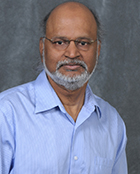
I.V. Ramakrishnan is a Professor in the Department of Computer Science at Stony Brook University. His research spans Artificial Intelligence, Computational Logic, Machine Learning, Information Retrieval, and Computer Accessibility. Ph.D. in Computer Science, University of Texas at Austin (1983) His work focuses on advancing AI and machine learning to solve accessibility challenges for visually impaired users, healthcare informatics, and robotic manipulation. Key contributions include leveraging large language models for multimodal text correction, developing gesture recognition systems for blind users, and applying reinforcement learning to medical data analysis. Recent publications highlight the integration of LLMs in accessibility tools, AI-driven healthcare solutions (e.g., mortality risk prediction, physician attribution), and robotics innovations (e.g., manipulation planning, vertical farming automation). Faculty Service Award (2014) He teaches courses CSE 352 (Artificial Intelligence) and CSE 537 (AI). His research bridges theoretical and applied domains, emphasizing inclusive technology and clinical decision support systems.