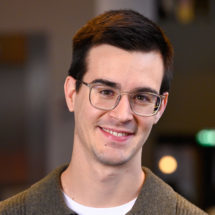
Dr. Asier Moneva is a Postdoctoral Researcher at the Netherlands Institute for the Study of Crime and Law Enforcement (NSCR) and The Hague University of Applied Sciences , specializing in cybercrime , environmental criminology , and situational crime prevention . His work focuses on offender decision-making in cyberspace, cybercrime victimization patterns, and the application of data science to crime analysis. Education : PhD in Criminology (2020), Master in Crime Analysis and Prevention (cum laude, 2017) from Miguel Hernández University. Current Role : Analyzing cybercrime patterns through environmental criminology frameworks and data science methodologies. Moneva's research examines longitudinal offending patterns in cybercrime, particularly through analyses of web defacement archives ( Zone-H data) and hacker behavior. His studies reveal extreme concentration of cybercrime among chronic offenders, with 2.9% of hackers responsible for 68.5% of defacements. He also investigates repeat victimization dynamics in digital environments and the effectiveness of warning banners as deterrents. Recent publications focus on ransomware payment decisions by SMEs, stolen data markets on Telegram, and the intersection of familial relationships with cybercrime involvement. His work combines quasi-experimental designs , crime scripting , and conjunctive analysis to develop prevention strategies.
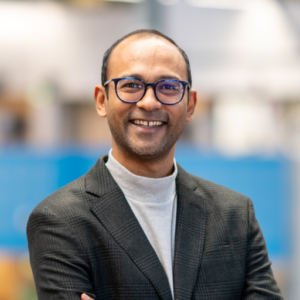
Professor David Abbink is a Full Professor of Haptic Human-Robot Interaction at Delft University of Technology, holding a joint appointment between the Department of Cognitive Robotics in the Faculty of Mechanical Engineering and Industrial Design Engineering since November 2023. He founded the Delft Haptics Lab and co-founded the Cognitive Robotics Department in 2017. Abbink leads the transdisciplinary research and innovation centre FRAIM, which was awarded the prestigious NWO Stevin Premie (Dutch Nobel Prize equivalent) in June 2024. Trained as a mechanical engineer specializing in biomechanics, Abbink's research focuses on human behavior adaptations when interacting with autonomous systems. He has published over a hundred scientific articles on human-robot interaction, haptics, shared control, tele-operation, driver assistance systems, and sensorimotor control. His research has been funded by industry partners (Nissan, Boeing, Renault), RVO (Brightsky project 2022-2026), and the Dutch Science Foundation NWO through personal grants (VENI 2010-2014, VIDI 2015-2019). Abbink's recent work centers on worker-robot relations as an academic focus, collaborating with organizations like Erasmus Medical Centre for nursing work, Schiphol and KLM for baggage handling, and KLM Engine Repair Services for maintenance work. He also serves as scientific director for the Centre for Meaningful Human Control, launched in October 2024. His work bridges engineering, social sciences, and practical applications to responsibly shape the future of work with emerging robotic capabilities. NWO Stevin Premie (2024) Best IEEE SMC journal paper on Cybernetics (2019) Top 25 scientific talents according to New Scientist (2015) Best teacher of Faculty 3mE (2013, 2014) Best teacher of Department of BioMechanical Engineering (seven consecutive years) Abbink has supervised over 110 MSc students and 11 PhD students. His educational contributions include developing the Master Programme in Robotics at TU Delft and receiving international recognition for his course 'The Human Controller.' He is also a prominent science communicator, featured on national television, radio, and major Dutch newspapers, and has delivered lectures at venues like The Royal Institution and Lowlands Festival. Despite his academic commitments, Abbink maintains a drummer persona, having recorded four albums and performed over 400 shows across three continents between 1999-2014.
Himanshu Verma is an Assistant Professor at the Knowledge and Intelligence Design Group within the Faculty of Industrial Design Engineering at Delft University of Technology. His research focuses on Human-AI Collaboration, Cognitive Empathy, and designing AI systems attuned to human needs. Prior to TU Delft, he held postdoctoral roles at the University of Fribourg, EPFL, and HES-SO Valais-Wallis, Switzerland. Education: PhD in Computer Science (EPFL, Switzerland), focusing on collaborative group interactions and shared environments. Postdoctoral research in Human-Computer Interaction and Ubiquitous Computing. Research Interests: Empathy-Centric Design for inclusive technologies. Social Signal Processing in human-AI interactions. Health, well-being, and accessibility in AI systems. Key Projects: Co-leads the PERISCOPE (H2020) research project. Designs tools like EmpathiCH and COCTEAU for empathy-driven decision-making. Teaching: Design Analytics (2023–2024). Empirical Design Research (2024). Labs & Teams: Active in the Knowledge and Intelligence Design Group, focusing on AI ethics, hybrid workspaces, and empathetic systems.
Dr. Dave Murray-Rust is an Associate Professor in Human-Algorithm Interaction Design at TU Delft's Faculty of Industrial Design Engineering. He explores the intersection of humans, data, and AI through design research, focusing on ethical AI systems and sociotechnical interactions. His work bridges computer science, design theory, and digital sociology, addressing challenges like algorithmic fairness and human-AI collaboration. He leads initiatives such as the AI Futures Lab and Data-Centric Design Lab, advancing methods for leveraging behavioral data in design processes. His research emphasizes experiential AI frameworks, metaphors for designers, and the legibility of AI systems. He has been honored with awards including Best alt.HRI 2024 and a CHI 2023 Best Paper Award for contributions to fairness perceptions in algorithmic decision-making. Murray-Rust teaches courses like the Speculative Design Studio and collaborates on projects like DCODE (Designing the Future of AI) and the BrightSky Project. His work extends to public engagement through installations like GeoPact and explorations of blockchain's societal impact. He holds an Honorary Fellowship at the University of Edinburgh.
Prof. Dr. Ben Wagner is a Professor of Media, Technology & Society at Inholland University, Director of TU Delft's AI Futures Lab on Rights and Justice, and Professor of Human Rights & Technology at IT:U. His work bridges social sciences, technology, and human rights, focusing on digital governance, AI ethics, and societal impacts of technological change. He holds a PhD from the European University Institute (2013) and has led institutions like the Center for Internet & Human Rights (Viadrina) and the Sustainable Computing Lab (WU Wien). Key initiatives include Inholland's Digital Rights Research Team (DRRT), Sustainable Media Lab (SML), and contributions to the European Cloud for Heritage OpEn Science (ECHOES). His research emphasizes designing accountable tech systems, digital rights frameworks, and sustainable digital infrastructures. Recent work addresses gaps between legal/ethical guidelines and public sector data practices, AI governance across nations, and audit mechanisms for platform transparency. Awards include the 2023 Best Paper Award at HICSS for AI governance research and a 2013 Best Student Paper at Internet Science. Collaborations span academia, governments, and industries to shape equitable tech policies. Active in advisory roles for ENISA, Patterns Journal, and the UKRI Trustworthy Systems Hub.
Prof. Geert-Jan P.M. Houben is a Professor at Delft University of Technology's Web Information Systems Department within the Faculty of Electrical Engineering, Mathematics and Computer Science. His research focuses on AI ethics, machine learning, data integration, and decision support systems. He has published over 165 works and supervised 24 students. Notable contributions include frameworks for meaningful human control in AI systems and methodologies for bias mitigation in data-driven systems. Editorial roles: Editor for CEUR-WS, Springer, and other publishers since 2012 Awards: Royal Honours from TU Delft (2025) Research emphasizes ethical AI, data engineering, and scalable systems. Recent work addresses AI governance, bias in analytics, and interactive data discovery in modern data ecosystems. He actively contributes to conferences like ACM Web Science and VLDB.
Prof. Emiel Krahmer is a Professor at the Department of Communication and Cognition, Tilburg School of Humanities and Digital Sciences (TSHD), Tilburg University. His research focuses on healthcare communication, digital health technologies, and patient-centered approaches. He explores barriers/facilitators in return-to-work strategies for trauma patients, personalized predictions in rehabilitation, and the role of serious games in health behavior change. His work also addresses ethical challenges in self-monitoring platforms for mental health, emphasizing epistemic justice and algorithmic fairness. Collaborations with medical professionals and interdisciplinary teams highlight his contributions to digital health innovation. Key projects include studies on trauma patient perspectives, implementation of patient-reported outcome measures (PROMs), and game-based interventions. His research bridges communication science and clinical practice, aiming to enhance patient engagement and equitable healthcare delivery through technology.
Dr. Karin van Es is an Associate Professor in the Department of Media and Culture Studies at the Faculty of Humanities, Utrecht University. She serves as project lead for the Humanities at Data School and is an affiliate and impact liaison at the Centre for Digital Humanities. Her work bridges academic research and practical applications in the digital society, with a focus on collaborating with external parties on interdisciplinary projects. She is also part of the GenAI in Education Humanities taskforce at Utrecht University. Her research is situated at the intersection of television studies, software studies, and critical data and algorithm studies, with a particular focus on streaming video culture and industries. Her notable publications include the book The Future of Live (Polity Press, 2016) and co-edited volumes such as The Datafied Society (AUP, 2017), Situating Data (AUP, 2023), Collaborative Research in a Datafied Society (AUP, 2024), and Governing the Digital Society (AUP, 2025). She has published extensively in journals including Television & New Media , Media, Culture and Society , Critical Studies in Television , Social Media + Society , Big Data and Society , and First Monday . Dr. van Es's recent publications reveal a strong focus on the governance of digital platforms, AI ethics, and the impact of streaming services on media consumption. Her work increasingly examines the societal implications of datafication, with particular attention to educational contexts, public values, and methodological innovations for studying digital phenomena. She has pioneered approaches like "data walking" and "data donations" as research methods for understanding how people interact with digital platforms in everyday contexts. Her scholarship demonstrates a consistent commitment to critical technical practice that bridges theoretical insights with practical interventions in the datafied society. Editor of special issue "Critical Technical Practice(s)" for Convergence Organizer of "Innovative Methods for Video-on-Demand Research" workshop (2024) Speaker at ECREA 2024 conference on "Netflix Uncovered: Insights from Data Donations" Member of editorial board for Convergence journal Her media contributions include appearances on WORT 89.9 FM discussing "The Meaning of Live" (2022), participation in the "De Maatschappelijk Betrokken Docent" program (2022), and earlier contributions on topics like "Wat is beeldradio?" (2016) and "Live liveness in realtime" (2015). She leads the Media and Performance Studies research group and is deeply involved with the Data School at Utrecht University. Her work with the GenAI in Education Humanities taskforce focuses on understanding and shaping the integration of generative AI in educational contexts. Through her role at the Centre for Digital Humanities, she helps bridge academic research with practical applications in society, particularly around issues of data governance, digital literacy, and the societal impact of emerging technologies.
Mark D. Smucker is a Professor in the Department of Management Science and Engineering at the University of Waterloo, cross-appointed with the David R. Cheriton School of Computer Science (Faculty of Mathematics). His research focuses on interactive information retrieval systems, including search engines and recommendation systems, aiming to enhance evaluation methods for better prediction of human search performance. He co-organized the TREC Health Misinformation Track (2019–2022) and currently co-leads the TREC DRAGUN Track, addressing health misinformation and trustworthiness assessment in news. Education: PhD (Computer Science, UMass Amherst, 2008), MSc (Computer Science, UW-Madison, 1996), BSc (Physics & Computer Science, Iowa State, 1994). Research interests include design/analysis of interactive IR systems, evaluation frameworks, and human-computer interaction. He has been recognized with the ACM SIGIR 2012 Best Paper Award and teaching excellence awards from the University of Waterloo. Teaching includes courses like Search Engines (MSCI/MSE 541/720) and Databases/Software Design (MSCI 245). Active in organizing TREC tracks and publishing over 50 peer-reviewed articles.
Maarten de Rijke is a Professor at the University of Amsterdam's Informatics Institute, leading the Information Retrieval Lab (IRLab). He specializes in information retrieval, machine learning, and recommendation systems, focusing on neural ranking models, fairness, and conversational search. His work bridges theory and practice, addressing challenges in reproducibility, robustness, and ethical AI. He supervises numerous PhD students and postdocs, including recent defenses by Barrie Kersbergen, Antonis Krasakis, and Vera Provatorova. His lab collaborates internationally, organizing events like SIGIR workshops and the Search Engines Amsterdam (SEA) meetup. Key awards include the Best Reproducibility Paper Award (2025) and Best Paper at WSDM 2021. Research interests span generative retrieval, adversarial robustness, and fairness in ranking. Notable projects include the FULTR dataset, FairDiverse toolkit, and studies on empathetic conversational systems. He actively promotes open science through reproducible methodologies and community-driven benchmarks.
Dr. Dierck Hillmann is an Associate Professor at the Faculty of Science, Department of Biophotonics and Medical Imaging, Vrije Universiteit Amsterdam. He holds a PhD in Holoscopy from Luebeck University (2013). His research focuses on advanced optical imaging techniques, particularly Optical Coherence Tomography (OCT), with applications in retinal imaging, functional signal analysis, and computational imaging. He is affiliated with the LaserLaB - Biophotonics and Microscopy research group. Key research areas include improving OCT resolution through holographic methods, functional imaging of retinal neurons and photoreceptors, and developing computational adaptive optics to enhance imaging quality. His work addresses challenges like speckle reduction, aberration correction, and real-time data processing in biomedical imaging. Dr. Hillmann’s contributions span over 37 publications, including innovations in full-field OCT, optoretinography, and phase-sensitive measurements. He teaches courses such as Computational Optical Imaging and Light-Tissue Interaction. His current project explores imaging individual retinal cells and their functions using advanced techniques. No scientific awards are explicitly listed, but his extensive publication record reflects significant academic impact. Students advised are not specified in the provided materials.
Marcus Gerhold is an Assistant Professor in the Formal Methods and Tools group at the University of Twente's Faculty of Electrical Engineering, Mathematics and Computer Science. His research focuses on model-based testing for software reliability in critical infrastructures, particularly railway systems, alongside significant contributions to game design and programming language analysis. His educational background includes: PhD in Computer Science from University of Twente (2018): Choice and Chance: Model-based Testing of Stochastic Behaviour MSc in Mathematics from Friedrich Schiller Universität Jena (2013): Embeddings of Weighted Morrey Spaces BSc in Mathematics from Friedrich Schiller Universität Jena (2011): Entropy-, Approximation- and Kolmogorov Numbers on Quasi-Banach Spaces Gerhold's research integrates theoretical model-based testing with practical critical infrastructure applications . His work on railway conformance testing addresses EULYNX controller validation, while his game design research explores affective mirroring in NPCs and procedural dungeon generation. The code modernity analysis stream leverages static analysis to quantify legacy code evolution across languages like Python and PHP, revealing version identification challenges through deep learning. Publication trends show consistent focus on model-based testing methodologies (40%), railway safety applications (25%), and innovative game design/code analysis (35%). Recent work increasingly incorporates AI/ML techniques for UML assessment and Python version identification, while maintaining rigorous formal methods foundations. He actively mentors 63 students across all academic levels and contributes to major research initiatives: STORM_SAFE (ERDF, 2024): Daily Supervisor for WP1/WP2 on software reliability for critical infrastructures ZORRO (KIC grant, 2023): Daily Supervisor for WP4 on zero downtime in cyber-physical systems MISSION (MSCA RISE, 2021-2025): Interim coordinator (early 2024) for space systems modeling As part of the Formal Methods and Tools research group, Gerhold participates in European collaborations while serving on SAC-SVT 2024 and FormaliSE 2023 program committees.
Dr. Yara Khaluf is an Assistant Professor in the Information Technology Group at Wageningen University & Research, Department of Social Sciences. She holds a PhD (2014, Paderborn University, cum laude) on robot swarm task allocation, followed by postdoctoral research at Paderborn University (2014–2015) and Ghent University’s IDLab (2015–2021). Her work focuses on computational social science, hybrid human-agent societies, and distributed artificial cognition, leveraging agent-based modeling and systems dynamics for behavior prediction/modulation. She leads European-funded projects like ChronoPilot (EU Horizon2020 FET) and DELICIOS (FWO, 2019–2022). Her research explores interactions between artificial agents and humans, developing cognitive capacities for seamless interaction via social feedback networks. Notable contributions include collective foraging algorithms, time perception modeling, and agent-based simulations for public health interventions. Awards include competitive IGS and DFG fellowships. She collaborates with leading experts in swarm intelligence (Dorigo, Stuetzle), collective decision-making (Hamann, Marshall), and experimental psychology (Johansson, Vatakis). Current projects investigate modulating human time perception and delegation of conflict-of-interest decisions to AI agents. Teaching includes courses on model thinking, agent-based modeling of complex systems, and data science applications in food/consumer science. Her work bridges computational methods with societal challenges, emphasizing scalable solutions for hybrid systems.
Afra Alishahi is a Full Professor at Tilburg University's Department of Cognitive Science and Artificial Intelligence within the Tilburg School of Humanities and Digital Sciences. Her research focuses on computational models of human language acquisition and grounded language learning, leveraging neural models to explore how language processing and acquisition occur. She has held roles including Assistant Professor at Tilburg University (since 2011) and Postdoctoral Fellow at Saarland University (2008-2011). Her work bridges computational linguistics, cognitive science, and artificial intelligence, with contributions to understanding language learning mechanisms through models that integrate visual, auditory, and linguistic data. Education: PhD (university unspecified), with prior academic roles in Iran and Germany. Awards: CoNLL 2017 Best Paper Award, 2023 Outstanding Paper Award, NWO Aspasia Grant (2015), and NWO Natural Artificial Intelligence Grant (2015). Her research has been supported by grants such as the Dutch National Research Agenda-funded project on interpreting deep learning models for text and sound. Research Interests: Grounded language learning, interaction effects in language acquisition, and neural model interpretability. Key areas include multi-modal learning (e.g., linking speech to visual scenes), computational modeling of child language learning, and probing neural networks for linguistic knowledge. She co-organized workshops like BlackboxNLP (2018-2020) and has authored over 60 publications, including influential works on phonology encoding in neural models and gender disambiguation in machine translation. Teaching: Courses include Cognitive Models of Language Learning , Computational Linguistics , and Language, Cognition & Computation . She advises master's theses and leads projects in data science and AI. Lab/Team: Leads research on computational modeling, collaboration with interdisciplinary teams (e.g., with Grzegorz Chrupała, Afsaneh Fazly), and involvement in initiatives like the Interpreting Deep Learning Models for Text and Sound project.
Gonzalo Nápoles is an Assistant Professor at Tilburg University's School of Humanities and Digital Sciences, Department of Cognitive Science and AI. He holds a Doctoral Degree in Computer Science from Rough Cognitive Networks (2014–2017). His research focuses on AI applications in cognitive modeling, pattern classification, and neural networks with interdisciplinary applications in healthcare, finance, and social sciences. Key research areas include Fuzzy Cognitive Maps, data augmentation techniques for neuroimaging, and interpretable machine learning systems. He actively contributes to UN Sustainable Development Goals related to education and innovation. Recent work explores AI ethics, financial risk assessment using dynamic networks, and sensory processing disorder analysis through neural networks. Education: Doctoral Degree in Computer Science, 2017 (Thesis: Rough Cognitive Networks) Prize-winning research includes Best Paper Awards at CIARP 2021 and IWAIPR 2023. He collaborates internationally, hosting academic visitors and serving on multiple PhD committees. Current projects involve stock prediction using graph neural networks and fMRI data augmentation methodologies. Awards: Best Paper Award - CIARP 2021 Best Paper Award - IWAIPR 2023 Nápoles advises on PhD theses in cognitive science and AI applications. His work bridges theoretical advancements with practical implementations in healthcare, finance, and urban systems.