Sara Arena is a Collegiate Professor in the Department of Biomedical Engineering and Mechanics at Virginia Tech , where she also serves as Associate Department Head for Curriculum and Course Coordination . Her work spans biomechanics research and innovative engineering education methods. Education: Ph.D., M.S., and B.S. from Virginia Tech Research Interests: Focus on human movement biomechanics, particularly balance recovery and postural stability, combined with educational research emphasizing cooperative and problem-based learning strategies in engineering education. Current projects include modeling human movement dynamics and improving remote teaching methodologies. Scientific Awards: Leader in Teaching, BEAM (2019, 2023) National Defense Science and Engineering Graduate Fellowship (2008-2011) Panelist for NSF and Department of Defense Key Contributions: Developed novel methods for assessing landing kinematics outside laboratory settings, explored friction requirements in aging populations, and pioneered virtual conferencing tools for problem-based learning. Her work has been published in journals like Annals of Biomedical Engineering and Applied Ergonomics . Collaborations: Partnered with institutions including Virginia Tech, American Society of Engineering Education, and multidisciplinary teams focused on biomedical engineering education and clinical biomechanics.
Raghavendra Ramachandra is a Professor at the Department of Information Security and Communication Technology (IIK) , within the Faculty of Information Technology and Electrical Engineering at the Norwegian University of Science and Technology (NTNU) in Gjøvik. His research focuses on biometric systems, particularly in face, fingerprint, and finger vein recognition, with emphasis on presentation attack detection, morphing attack detection, and deep learning applications. Current research projects include: SALT (2022-2026) : Developing privacy-preserving facial biometric authentication systems. OffPAD (2022-2025) : Creating cryptographic tools and presentation attack detection for fingerprint biometrics. SWAN (2015-2020) : Developing biometric countermeasures against presentation attacks. His recent publications demonstrate technical expertise in: Face morphing attack detection using vision transformers and point cloud networks Image fusion techniques for multispectral biometrics GAN-based synthetic data generation for security evaluation Explainable AI approaches for biometric verification Professor Ramachandra also supervises PhD and Master’s students, and has extensive experience in leading national and EU research initiatives.
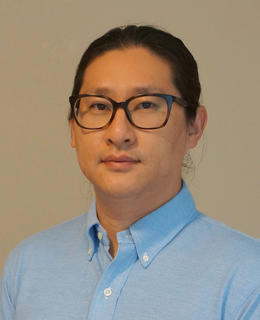
Kangsoo Kim is an Assistant Professor in the Department of Electrical and Software Engineering at the Schulich School of Engineering, University of Calgary, where he leads the Human-X Interaction (HXI) Lab. He holds a Ph.D. in Computer Science from the University of Central Florida and previously served as a postdoctoral researcher at the University of Delaware and the Synthetic Reality Lab at UCF, with an additional appointment in the College of Nursing. Education: Ph.D. in Computer Science, University of Central Florida, 2018 M.S. in Electronics and Computer Engineering, Hanyang University, 2011 B.S. in Electronics and Computer Engineering (Cum Laude), Hanyang University, 2009 Dr. Kim's research focuses on Human-Computer Interaction, particularly in immersive eXtended Reality (XR), including Virtual, Augmented, and Mixed Reality. His work explores virtual avatars, social interaction in XR, perception and cognition, and the integration of XR with IoT and digital twins. He investigates how embodied virtual humans influence social presence, trust, and user behavior in educational, healthcare, and industrial settings. His recent publications span top-tier venues such as IEEE TVCG, ISMAR, and IEEE VR, with themes centered on virtual agents, empathy in XR, avatar embodiment, and industrial applications of XR and digital twins. Trends include the use of AI-powered avatars, physiological feedback integration, and XR for public education and infrastructure safety. Scientific Awards: AKCSE Early Achievement Award (2023) Innovation Award at TechConnect World (2021) ACM SUI Best Paper Award (2019) ICAT-EGVE Best Demo Audience Choice Award (2020) ACM VRST Best Student Paper Award (2017) Dr. Kim actively mentors students and has advised numerous graduate researchers in areas including virtual pets, avatar behavior, XR for health, and industrial applications. He has secured research funding through competitive fellowships and grants, including UCF Graduate Fellowships and IEEE VR Doctoral Consortium support. He has also contributed to patents in AR magnification and serves as an Associate Editor for Presence: Virtual and Augmented Reality. He leads the HXI Lab, which conducts interdisciplinary research bridging computer science, psychology, and engineering to advance XR technologies for real-world impact in education, healthcare, and industry.
Juho Leinonen is an Academy Research Fellow at Aalto University's Department of Computer Science, Finland, specializing in AI-enhanced computing education. His work focuses on leveraging large language models (LLMs) to transform programming instruction through personalized learning analytics and educational technology. Education Background: PhD in Computer Science, University of Helsinki (2019) Docent (Adjunct Professor) in Computer Science, University of Helsinki Postdoctoral research at The University of Auckland, Aalto University, and University of Helsinki Research Focus: Leinonen's work centers on three interconnected pillars: (1) developing fine-grained learning analytics to decode student programming behavior; (2) applying LLMs to create adaptive educational tools for diverse learners; and (3) implementing learnersourcing strategies for scalable resource generation. His research particularly addresses challenges in multilingual programming education and responsible AI integration, with emphasis on non-native English speakers and novice programmers. Publication Trends: Recent publications (2024-2025) reveal a concentrated exploration of generative AI in computing education, with 85% focused on LLM applications. Key themes include synthetic data generation for educational research, multilingual prompting systems, and ethical frameworks for AI feedback. His work demonstrates both practical implementations (e.g., autocompletion quizzes) and critical analyses of AI limitations in educational contexts. Awards & Recognition: ACE2024 Best Paper Award for LLM-generated worked examples study UKICER 2023 Best Paper Award for achievement goals research ACE 2023 Best Practitioner Paper ICER 2022 Best Paper Award for programming exercise generation SIGCSE TS 2022 Best Paper in Computing Education Research ACE 2021 Best Paper Award for contextualized problem descriptions Research Leadership: As principal investigator of the Academy of Finland-funded project 'Advanced Student Modeling and Tailored LLMs for Personalized Learning', Leinonen supervises PhD students and postdocs while leading international collaborations with institutions including The University of Auckland and University of Helsinki. His grant portfolio focuses on ethical AI deployment in education and cross-cultural computing pedagogy. Collaborative Networks: He maintains active partnerships with leading computing education researchers like Paul Denny (Auckland), Arto Hellas (Aalto), and Andrew Luxton-Reilly (Auckland), evidenced by 90% co-authored publications. His work appears consistently in top venues including ACM SIGCSE, ICER, and ACE conferences.
Andrew O'Malley is a Senior Lecturer in the School of Medicine at the University of St Andrews, where he serves as Deputy Programme Director of the Scottish Graduate Entry Medical Programme (ScotGEM) and Deputy Director of Teaching. His work focuses on the intersection of medical education and technology, particularly in the areas of anatomical sciences, digital health, and artificial intelligence. Dr. O'Malley holds a Doctor of Philosophy in Anatomy & Human Identification and a Bachelor of Science in Forensic Anthropology, both from the University of Dundee. His educational background as an anatomist and forensic anthropologist informs his teaching across various subjects in the School of Medicine, including ScotGEM Case Based Learning, medical ethics, and generative artificial intelligence. His research interests center on the use of technology in health professions education, with specific focus on Technology-Enhanced Learning (TEL), telehealth, and generative artificial intelligence. Dr. O'Malley's work contributes to UN Sustainable Development Goals related to quality education and good health. Dr. O'Malley's publications demonstrate a strong trend toward exploring AI applications in medical education, with particular emphasis on diagnostic accuracy, question generation, bias mitigation, and simulation technologies. His recent work shows increasing sophistication in prompt engineering for medical AI applications and attention to equity issues in AI-generated medical content. #TopDownloadedArticle Prize (2024) Best Poster (2023) CELPiE Research Fund Award (2024) Dr. O'Malley actively supervises postgraduate research students and has been involved in multiple research projects including ComSIM: Community Orientated Simulation, and research on AI diagnostic accuracy. He has presented his work at international conferences including the 1st International Conference on Artificial Intelligence in Medical Education in Kuala Lumpur and contributed written evidence to the House of Lords UK Engagement with Space Committee. Dr. O'Malley is affiliated with the St Andrews SETI Post-Detection Hub, reflecting his interest in broader applications of technology and scientific methodology beyond traditional medical education.
David J. Yu is an Associate Professor at Purdue University with primary appointments in the Lyles School of Civil Engineering (75%) and Department of Political Science (25%) . He contributes to interdisciplinary research through Purdue’s Building Sustainable Communities cluster, focusing on sustainability and community resilience. His research examines resilience of coupled systems to change and uncertainty, combining natural, physical, and institutional factors across scales from local to global. Methodological approaches include mathematical modeling , case study analysis , and behavioral experiments to understand human-infrastructure-water interactions. Recent publications demonstrate expertise in socio-hydrology of reservoir operations groundwater governance frameworks agent-based modeling of water systems cognitive biases in water management His work was recognized with an NSF CAREER Award (2022) for innovative research on resilience engineering. He actively seeks graduate students for projects in Civil Engineering, Ecological Sciences, Environmental Engineering, and Political Science programs at Purdue. Current research includes logical interdependencies in water infrastructure and AI-enhanced resilience frameworks for reservoir management.
Hans Vernooij is a Lecturer in Farm Animal Health at the Faculty of Veterinary Medicine, Utrecht University. He specializes in statistical methods and data science applications in veterinary epidemiology and animal health. His areas of expertise include: Statistical methods for veterinary research Applied Data Science in Life Sciences Epidemiological modeling Machine learning applications in animal health Vernooij has extensive experience in developing statistical models for animal health applications. His research focuses on applying advanced statistical techniques and data science methods to solve problems in veterinary epidemiology and farm animal health. He has particular expertise in Random Forest models, as demonstrated during his sabbatical at the Human Sciences Research Council in Pretoria where he developed a model for HIV status prediction based on demographic information and knowledge of HIV prevention from large-scale survey data. His publication record shows consistent contributions across veterinary epidemiology, with recent work emphasizing machine learning applications and big data analytics in animal health surveillance. The research demonstrates a clear trajectory from traditional statistical methods toward more advanced data science approaches. Vernooij is actively involved in teaching and mentoring: Teaches statistics to Bachelor students at the veterinary faculty Supports PhD candidates and Master students during data analysis phases of their research Provides statistics education for the Master of Epidemiology program at the Julius Centre of University Medical Centre
Luis Miguel Bergasa is a Full Professor at the Department of Electronics, University of Alcalá (UAH), with a career spanning over 25 years. He leads the RobeSafe Lab (since 2010) and serves as Director of Digital Transformation at UAH (since 2022). His academic roles include heading the Department of Electronics (2004–2010) and coordinating multiple educational programs. He teaches Perception Systems (Master in Industrial Engineering) Intelligent Control Systems (Computer Science) Computer Vision (Computer Science) His research focuses on Perception Systems for Intelligent Vehicles , emphasizing driver behavior analysis, scene understanding, and sensor fusion via deep learning. He has authored over 300 papers and holds 9 patents. Notable recognitions include being ranked #81 in Computer Science (Spain) by Research.com (2025) and receiving 30+ awards in Robotics/Automotive fields. Recent publications highlight advancements in Transformer-based driver action recognition (2025) Infrastructure-vehicle cooperative frameworks (2025) 3D semantic segmentation for autonomous perception (2024) Simulation-to-reality gap bridging (2024) Scientific Leadership Senior Editor, IEEE Transactions on ITS (2025) International Program Committee roles in 15+ conferences (2024–2025) Co-founder of Vision Safety Technologies Ltd (2009–2016) He supervises 9 active PhD students and has advised 14 former PhD candidates. His group collaborates with institutions in Germany, USA, China, and Spain, including KIT, UC Berkeley, and Northwestern Polytechnic University.
Lihi Zelnik-Manor is a Professor at the Faculty of Electrical and Computer Engineering at the Technion - Israel Institute of Technology . Her research focuses on digitizing the sense of touch, integrating Haptics , Robotics , and Computer Vision to create digital representations of physical properties and develop haptic feedback devices for virtual interactions. Executive Vice President for Innovation and Industry Relations (2023-2026) Vice Dean for Graduate Studies (2022-2023) General Chair: CVPR’21, ECCV’22 Her work spans Neural Architecture Search (NAS) , 3D Reconstruction , and Image Processing , with recent publications on haptic devices (2025), diffusion models (2025), and soft-tissue simulation (2024). She actively contributes to academic leadership through roles in top conferences and community initiatives like the Schmidt Postdoctoral Award steering committee.
Dr. Charles Forceville is an Associate Professor in the Department of Media Studies at the Faculty of Humanities, University of Amsterdam. His academic career spans over three decades with significant contributions to visual and multimodal communication studies. Previously, he served as Head of MA programmes Media Studies (2016-2018) and taught at Amsterdam University College (2008-2021). Forceville's research focuses on visual and multimodal metaphor, cognitive linguistics, relevance theory, and visual rhetoric across diverse media including political cartoons, advertising, children's picture books, documentaries, and animation. His landmark publications include Visual and Multimodal Communication: Applying the Relevance Principle (Oxford University Press, 2020) and Multimodal Metaphor (Mouton de Gruyter, 2009). His recent work examines metaphor in Stand Up 2 Cancer animations, political cartoons, medical animations, and Chinese-American trade conflict representations. His research demonstrates how visual and multimodal metaphors function across cultural contexts, with particular attention to the JOURNEY metaphor schema and its applications in film, animation, and comics. Forceville's methodological approach combines cognitive linguistics with relevance theory to analyze how meaning is constructed visually and multimodally. Among his notable contributions is the development of frameworks for identifying and interpreting visual metaphors where traditional linguistic analysis falls short. His work on pictorial runes (emotion lines in comics), visual argumentation in documentaries, and cultural variations in metaphor representation has significantly advanced the field of multimodal communication studies. Forceville has taught courses on Pictorial & Multimodal Metaphor, Tutorial on Multimodality & Cognition, History & Theory of Documentary Film, and Film Analysis. His extensive publication record of over 170 scholarly works reflects his leadership in establishing multimodal metaphor studies as a rigorous academic discipline.
Sadie Creese is Professor of Cybersecurity in the Department of Computer Science at the University of Oxford. She serves as Director of the Global Cyber Security Capacity Centre at the Oxford Martin School and Director of the Oxford Martin Programme on AI Threat Detection. Additionally, she is a Governing Body Fellow at Worcester College and Chair of Examiners for the MSc in Computer Science. Professor of Cybersecurity, Department of Computer Science, University of Oxford Director, Global Cyber Security Capacity Centre, Oxford Martin School Director, Oxford Martin Programme on AI Threat Detection Governing Body Fellow, Worcester College Chair of Examiners for MSc in Computer Science Sadie Creese holds a DPhil in Computer Science from the University of Oxford, an MSc in Computation, and a BSc (Hons) in Mathematics and Philosophy. Her academic background bridges theoretical computer science with practical applications in security. Her research spans multiple domains of cybersecurity including cyber situational awareness, visual analytics for cybersecurity, predicting organizational cyber-value-at-risk, agent-based simulations for malware propagation, threat modeling and detection, network defense, and cyber-resilience strategies. She also studies national cybersecurity capacity, working with countries and international organizations worldwide. Her interdisciplinary approach integrates insights from computer science, social sciences, and policy studies to address complex security challenges in an interconnected digital world. Analysis of her recent publications reveals a consistent focus on practical cybersecurity applications with strong emphasis on human factors in security systems. Her work bridges technical security mechanisms with organizational and human elements, particularly in areas like insider threat detection, risk communication, and security operations. The research demonstrates a trajectory toward more integrated security frameworks that consider both technical vulnerabilities and human behaviors within complex systems. Sadie Creese has been recognized as one of The 50 most influential women in cyber-security UK . Her work with the Global Cyber Security Capacity Centre has influenced national cybersecurity strategies worldwide, and she actively contributes to policy discussions through platforms like the World Economic Forum's AI Governance Alliance. The 50 most influential women in cyber-security UK Professor Creese has supervised numerous PhD and Master's students including Mary Bispham, Rodrigo Carvalho, Elizabeth Phillips, Marcel Stolz, and Meredydd Williams. Her research has been supported by significant grants including AXIS-sponsored projects on cyber-risk modeling, World Economic Forum collaborations on cybersecurity futures, and Lloyds Register Foundation funding for cyber security research related to the Industrial Internet of Things. She leads major interdisciplinary projects that bridge technical security research with policy implications. Principal Investigator on AXIS-sponsored project 'Analysing Cyber-Value-at-Risk, Residual Risk and models for Systemic Cyber-Risk' Collaboration with World Economic Forum's Shaping the Future of Cybersecurity Platform Co-Chair of Lloyds Register Foundation sponsored Foresight review of cyber security for the Industrial Internet of Things Professor Creese founded and directs the Global Cyber Security Capacity Centre (GCSCC) at the Oxford Martin School, which conducts research into national cybersecurity capacity. She was also the founding Director of Oxford's Cybersecurity Network (now CyberSecurity@Oxford), established in 2008. Her team includes senior researchers like Ioannis Agrafiotis, Louise Axon, and Michael Goldsmith, who collaborate on projects spanning cyber analytics, security protocols, and identity management. The GCSCC works with governments and international organizations to build cybersecurity capacity globally, while the Oxford Martin Programme on AI Threat Detection focuses on emerging security challenges posed by artificial intelligence technologies.
Stefanos Nikolaidis is a tenured Associate Professor in the Department of Computer Science at the University of Southern California (USC), where he directs the Interactive and Collaborative Autonomous Robotic Systems (ICAROS) Lab. His research focuses on enabling robots to interact robustly with humans in dynamic environments through advancements in artificial intelligence, human-robot interaction, procedural content generation, and quality diversity optimization. Education: PhD in Robotics from Carnegie Mellon University (CMU) and MS in Computer Science from MIT. The ICAROS Lab develops interactive agents for real-world tasks while creating diverse testing scenarios to enhance system robustness. Research integrates AI techniques with human-centric design principles across applications like rehabilitation robotics, collaborative manufacturing, and socially interactive embodiments. Recent publications demonstrate trends in quality diversity optimization, human-aware planning, and policy adaptation. Notable works include AutoQD for behavior discovery, CMA-MA for multi-objective optimization, and applications in hair manipulation, rehabilitation personalization, and large language model integration. Scientific Awards: NSF CAREER Award (2022). He actively shares research updates via Twitter and has contributed software tools like pyribs for quality diversity optimization. His work spans theoretical advancements in optimization algorithms and practical implementations in assistive robotics.
Martha Tsigkari serves as an Associate Professor at The Bartlett School of Architecture, University College London (UCL), where she bridges architectural practice with cutting-edge computational research. Her position situates her at the forefront of digital transformation in the built environment, with institutional affiliations spanning UCL's Faculty of the Built Environment and direct contributions to UN Sustainable Development Goals 4 (Quality Education), 11 (Sustainable Cities), and 13 (Climate Action). Her research program critically examines the integration of artificial intelligence, machine learning, and cognitive psychology into architectural design processes. Key investigations include spatial and visual connectivity analysis, XR-enhanced collaborative design environments, and AI-driven optimization of building performance. She explores how digital tools reshape creativity, professional identity, and sustainability outcomes in architecture, with particular focus on data commoditization, skills evolution, and human-AI collaboration in design workflows. Her interdisciplinary approach connects architectural theory with computational neuroscience and industrial digitalization trends. Tsigkari's publication trajectory reveals a clear evolution from computational structural analysis (2012-2017) toward AI ethics and professional transformation (2022-2024). Early work established foundations in performance-driven facades and material systems, while recent output confronts existential questions about architectural practice in the AI era. Her scholarship consistently addresses the tension between technological capability and human-centered design values, with growing emphasis on sustainable development frameworks and educational implications. Scientific Awards: No major awards are documented in the available records. Advising and Grants: While specific supervisees and funding mechanisms aren't detailed in current sources, her extensive collaborative network across 30+ publications indicates active mentorship and research leadership. Co-authorship patterns suggest involvement in multi-institutional projects addressing AECO industry digitalization, with potential ties to UK research councils and industry partnerships like RIBA. Labs and Teams: Tsigkari operates within The Bartlett's digital research ecosystem through recurring collaborations with Kosicki, Tarabishy, and Psarras. Her work manifests in experimental toolsets including Glaucon (XR design environment), HYDRA (optimization framework), and SandBOX (conceptual design system), indicating leadership in UCL's computational design labs focused on human-AI interaction and sustainable building technologies.
Patricia Lucía Barber Pérez is a Full Professor at the University of Las Palmas de Gran Canaria, where she works in the Department of Quantitative Methods in Economics and Management within the School of Economics, Business and Tourism. She is a prominent member of the Health Economics and Public Policies Research Group and serves as Principal Investigator for multiple national and European health workforce planning projects. Her professional activities include teaching courses such as Final Degree Project (Economics), Final Degree Project (Business Administration and Management), and Basic Statistics Applied to the Tourism Sector. Dr. Barber's research focuses primarily on Health Economics with particular emphasis on system dynamics and applied simulation models for healthcare planning and management systems, especially human resources management. Her work encompasses structural models of simultaneous equations and empirical applications in health economics areas including smoking, economic valuation, and equity. She has made significant contributions to understanding healthcare workforce needs, physician supply-demand dynamics, and pandemic economic impacts. The analysis of her recent publications reveals a strong focus on health workforce planning and forecasting, with particular attention to specialist physician needs across various medical fields. Her research employs sophisticated modeling techniques including system dynamics to project future healthcare workforce requirements. A notable trend is her extensive work on pandemic-related economic impacts and healthcare system resilience, reflecting the evolving priorities in health economics research following global health crises. Dr. Barber has participated in numerous research projects funded by the Ministry of Health, European Commission, and local government entities. Her collaborative work extends across Spain and internationally, particularly with Latin American countries on healthcare workforce planning initiatives. She has served as Principal Investigator for major projects including the 2021-2035 Specialist Physician Supply and Demand Report for Spain and various European health initiatives. Her academic contributions span multiple research teams, most notably the Health Economics and Public Policies Research Group at ULPGC. She frequently collaborates with researchers across Spain and internationally, particularly with B. González López-Valcárcel on numerous health economics projects. Her work bridges academic research with practical health policy applications, influencing healthcare planning at regional, national, and European levels.
Dr. Matt Offord is a Senior Lecturer in Experiential Leadership Education within the Management department at the University of Glasgow's Adam Smith Business School. As Associate Director for Learning and Teaching (Scholarship of Learning and Teaching), he leads initiatives in educational innovation and mentors teaching-focused academics. His unique background as a former naval officer with nearly 30 years of service informs his practical approach to leadership education. Offord's research centers on experiential learning methodologies, particularly ecopedagogy, outdoor learning, and educational escape rooms. Drawing inspiration from John Dewey's educational philosophy, he creates learning experiences that develop critical reflection about leadership through unconventional settings and simulations. His work bridges theory and practice with a focus on 'wide awake' consciousness in leadership development. His extensive publication record shows a clear trajectory toward innovative educational approaches, with recent work emphasizing ecopedagogy, AI integration in business education, and sustainable leadership practices. Offord has published in journals including Postdigital Science and Education, Open Scholarship of Teaching and Learning, and Palgrave Communications. Shortlisted for Best Innovation Strategy Award (Association of MBAs and Business Graduates, 2024) Shortlisted for Innovation in Business Education Award (QS Reimagine Education, 2023) Distinction in MSc (Digital Education) (University of Edinburgh, 2023) Distinction in Post Graduate Certificate of Academic Practice (University of Glasgow, 2021) Aspect Innovation Fellow (2023) Senior Fellow of Recognising Excellence in Teaching (RET) Certified Management and Business Educator (CMBE) Offord actively mentors early career academics and PhD students while leading the School's academic efforts in Technology Enhanced Learning and Teaching (TELT) and AI. His current supervision focuses on paradoxical leadership, post-heroic leadership, emotional regulation, and leadership expectations. Significant grant funding supports his work, including the Knowledge Exchange Innovation Fund 2025 (£36,000) for educational escape rooms in maritime DEI training and the Chancellor's Fund 2023-2025 for ecopedagogy teaching projects. His teaching practice spans undergraduate, postgraduate, and executive education levels, with expertise in experiential learning through practical ecopedagogy, outdoor learning, serious games, and simulations. Offord has developed educational escape rooms for business education and maritime leadership training, demonstrating his commitment to innovative pedagogical approaches that connect classroom learning with real-world challenges.