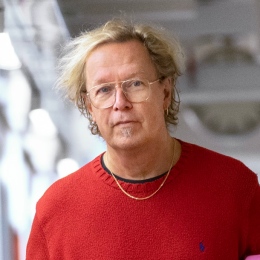
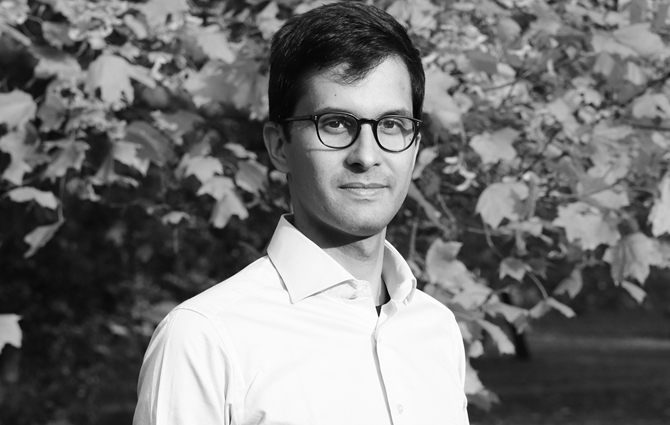
Dean B. Carson is a researcher at Umeå University , affiliated with the Faculty of Medicine, Department of Epidemiology and Global Health , and the Arctic Research Centre . His work focuses on rural health systems, social care workforce challenges, sustainable rural development, and community-based approaches to healthcare and food security. Rural Health : Explores capacity-building in rural health research and medical education reform. Public Health : Analyzes service delivery models and co-creation frameworks for elderly care. Geography : Investigates spatial dynamics in northern peripheries, including food production networks and micro-urbanization. Recent publications (2024-2025) examine topics such as rural health research capacity frameworks , hospital-to-home transfer systems , and non-commercial food distribution networks . His studies often integrate theoretical models like Rural Nursing Theory and Beyond Periphery while emphasizing stakeholder engagement and policy translation. Grants and Collaborations : Funded by the Swedish Research Council Formas, American National Science Foundation (NSF), and Riksbankens Jubileumsfond. Collaborates with Arctic-FROST networks and Lifestyle Migration Hub researchers.
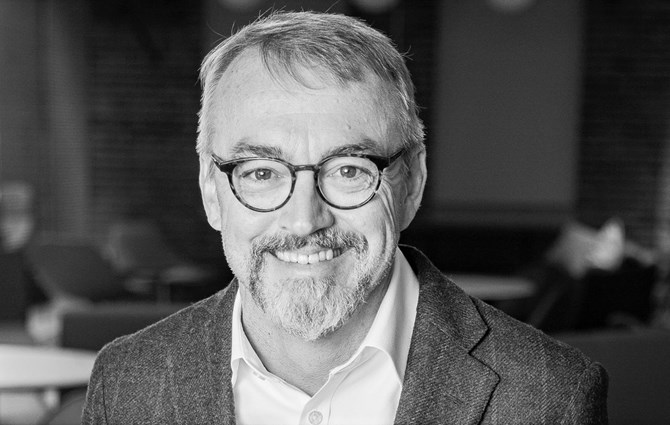
Robert Östling is a Professor of Economics at the Stockholm School of Economics (SSE), affiliated with the Department of Economics and the Karl-Adam Bonnier Center for Governance within the House of Governance and Public Policy. He holds a PhD from SSE (2008) and previously worked at Stockholm University's Institute for International Economic Studies until 2018. His research focuses on applied microeconomics and behavioral economics, particularly examining how wealth impacts attitudes, behavior, and life outcomes using Swedish lottery data. He teaches econometrics, behavioral economics, and economics for MBA students, and serves as program director for SSE's MSc in Economics. Key roles include board membership of the Swedish Economics Association and the Expert Group on Public Economics (ESO), and membership in the scientific advisory board of the Swedish Consumer Protection Agency. He co-founded the popular economics blog Ekonomistas , recognized as 'Swede of the Year' in 2017. Awards include the Assar Lindbeck Medal (2021) and the Arnberg Prize (2009). His research spans wealth effects on labor supply, health, child development, and political behavior. Notable projects include studying lottery winners' long-term well-being and portfolio decisions. Teaching innovations include using animated GIFs for econometrics instruction. He has contributed to policy debates on economic reforms, consumer protection, and pandemic responses. Outreach activities include public writing and policy advisory roles. His research has been featured in outlets like the New York Times and Swedish media. He remains active in academic networks, including the Network for Evidence-Based Policy.
Anastasia Girshina is an Assistant Professor in the Department of Finance at the Stockholm School of Economics (SSE) and Deputy Director at MiDA (the Institute for Micro Data at SSE & SHoF). She also serves as a Research Fellow at the Swedish House of Finance. Her research focuses on household finance, real estate finance, and applied microeconomics, with emphasis on gender disparities in wealth accumulation, fiscal policy impacts, and behavioral finance. Previously, Girshina held a Postdoctoral Fellowship and worked as an Economist at the Luxembourg Central Bank’s Financial Stability Department. Her work has explored topics such as peer effects in stock market participation, housing affordability through tax subsidies, and gender differences in real estate returns. Key achievements include winning a prize for her collaborative study on housing affordability and tax subsidies (2022). Her research often intersects policy design, wealth dynamics, and behavioral insights, with ongoing projects on financial intermediation competition and herding in financial markets. Girshina collaborates with institutions like MiDA and SHoF, leveraging microdata for policy-relevant analysis. Her academic contributions span journals and conferences, with a focus on bridging theoretical models with real-world economic challenges.
Bertram Steininger is an Associate Professor at the Department of Real Estate and Construction Management at KTH Royal Institute of Technology, Sweden. He is affiliated with the cross-disciplinary Digital Futures research center (KTH, Stockholm University, and RISE). His research focuses on quantitative analyses in real estate and finance, emphasizing AI, FinTech/PropTech innovation, natural risk, and investment vehicles like REITs and tokens. He currently directs the international M.Sc. in Real Estate and Construction Management and serves as managing editor of the German Journal of Real Estate Research. Steininger’s academic roles include teaching courses such as Financial Econometrics, Real Estate Finance, and Applied Statistics. His research collaborations span global networks including EFA, EEA, and ERES. Key research themes include tokenization of real estate assets, flood risk pricing spillovers, and infrastructure project cost overruns. He has published extensively in journals like the Journal of Portfolio Management, Journal of Real Estate Finance and Economics, and European Journal of Finance. His work bridges theoretical finance with empirical real estate applications, addressing topics from green housing premiums to blockchain-driven token offerings.
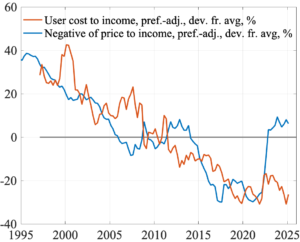
Lars E.O. Svensson is a Professor at the Department of Economics, Stockholm School of Economics (SSE) , specializing in monetary policy, financial economics, and macroeconomic stability. His work critically examines household debt sustainability, mortgage market regulations, and central bank transparency. He has contributed extensively to policy debates in Sweden through särskilt yttrande (special comments) and media engagements. His recent research focuses on the valuation of Swedish housing markets , challenging traditional indicators like price-to-income ratios by emphasizing user-cost metrics. He also investigates the relationship between household debt and consumption behavior during financial crises, debunking the debt-overhang hypothesis in the UK and Australia. Key themes include financial stability , debt-financed overspending , and macroprudential policy design . Notable publications include "Is Swedish Household Debt Too High?" (2025), "Are Swedish House Prices Too High?" (2025), and "Monetary Mystique" (2022). His work appears in NBER Working Papers , CEPR Discussion Papers , and journals like the American Economic Review . Despite frequent policy commentary, no explicit scientific awards are listed in the provided texts.
Roine Vestman is a Professor of Economics at Stockholm University and a visiting researcher at the Swedish House of Finance. He serves as the director for CeMoF and is a Research Fellow at CEPR. Additionally, he holds significant advisory positions including board member at AP7 (Sjunde AP-fonden), scientific advisor to the Swedish Debt Office (Riksgälden), and has previously advised the Swedish FSA (Finansinspektionen) and government inquiries on macroprudential policy. Vestman's educational background includes: Ph.D. in Economics from New York University, USA M.Sc. degree from Stockholm School of Economics Professor Vestman's research focuses on household finance, examining how individuals make consumption, savings, and housing decisions and how these choices impact the broader economy. His work specifically investigates pension plan design, the functioning of mutual fund industries, and household debt dynamics. His research combines theoretical models with empirical analysis of detailed Swedish data to provide insights into financial behavior and policy implications. Vestman has made significant contributions to understanding how default options in pension systems can be optimized to improve outcomes for passive investors. His recent publications demonstrate a strong focus on household financial decision-making, with particular attention to pension systems, housing markets, and investment behavior. Vestman's work often employs sophisticated empirical methods using detailed administrative data from Sweden, allowing for nuanced analysis of household financial behavior. A recurring theme across his publications is the examination of how financial institutions and policies affect individual economic outcomes, with implications for designing better financial products and regulatory frameworks. Through his advisory roles at AP7, the Swedish Debt Office, and previous engagements with Sveriges Riksbank and Finansinspektionen, Vestman actively translates his research into practical policy recommendations. His work on default pension fund allocation has particularly influenced discussions about how to improve retirement savings systems through personalized approaches that consider individual financial circumstances beyond just age.
Gunnar Andersson is a Professor of Demography at Stockholm University's Department of Sociology and Head of the Stockholm University Demography Unit (SUDA). He leads research on fertility, migration, mortality, and family dynamics in Nordic contexts, with a focus on register-based methodologies. His work explores socio-demographic shifts, including fertility decline, migrant health outcomes, and the intersection of welfare policies with family formation. University: Stockholm University Department: Department of Sociology Research Group: Stockholm University Demography Unit (SUDA) Research Interests: Gunnar’s work addresses fertility trends in Sweden and the Nordic region, migration’s impact on population health, and the role of socio-economic factors in family dynamics. Key projects include studies on fertility intentions post-2010, mortality disparities among migrants, and the societal implications of declining birth rates. His studies utilize advanced demographic techniques and longitudinal register data for policy-relevant insights. Recent Research Trends: Publications highlight analyses of Nordic fertility decline, socio-demographic risk factors for COVID-19 mortality, and cross-national comparisons of family policies. Collaborative projects with SUDA emphasize multi-generational and spatial demographic shifts, including residential segregation and commuter mobility in urban Sweden. Grants and Collaborations: Lead researcher in projects funded by Swedish Research Council and EU programs. Oversees the Swedish Generations and Gender Survey (GGS), a key infrastructure for demographic research. Directs the SUNDEM node, leveraging Sweden’s administrative registers for demographic innovation. Labs/Teams: Leads SUDA, a multidisciplinary group analyzing population dynamics. Collaborates with international partners in Denmark, Norway, and Germany for comparative studies.
David T. Robinson is the James and Gail Vander Weide Distinguished Professor at Duke University’s Fuqua School of Business, serving as Research Director of Duke's Innovation and Entrepreneurship Initiative. He holds an honorary doctorate from the Stockholm School of Economics and is a Research Associate at the National Bureau of Economic Research (NBER). His academic journey includes a PhD and MBA from the University of Chicago, an M.S. from the London School of Economics, and a B.A. from the University of North Carolina at Chapel Hill. His research focuses on private equity, venture capital, entrepreneurial finance, and the intersections of innovation, climate policy, and financial literacy. Key contributions include analyses of racial disparities in entrepreneurship financing, the environmental impacts of credit policies, and the governance of strategic alliances. Robinson has advised entities like the Swedish House of Finance and the Private Equity Research Council. Education: PhD & MBA, University of Chicago (2001) MSc, London School of Economics (1993) BA, University of North Carolina at Chapel Hill (1992) Honorary Doctorate, Stockholm School of Economics Professional Roles: Current: Core Faculty in Innovation & Entrepreneurship at Duke Past: Professor of Finance at Columbia University Visiting Professorships at SSE (Stockholm School of Economics) His recent publications explore topics such as minority entrepreneurship barriers, liquidity dynamics in private equity, and the environmental costs of easy credit. He has secured grants from institutions like the National Science Foundation and the Ewing Marion Kauffman Foundation.
Åsa Hansson is an Associate Professor at the Department of Economics and Senior Lecturer at multiple departments at Lund University, including Real Estate Science and the Centre for Economic Demography. She specializes in taxation, public economics, and fiscal policy design, with affiliations spanning Lund Tax Academy and the LU Profile Area on Proactive Ageing. Her research focuses on tax policy impacts, corporate taxation, and interdisciplinary fiscal studies. Education: PhD in Economics from the University of California, Santa Barbara (2000). She has held visiting positions at institutions like Williams College and the University of Santiago, Chile. Currently affiliated with IFN (Institute for Evaluation of Labour Market and Education Policy). Research Interests: Taxation's role in innovation, fiscal federalism, self-sufficiency trends among immigrants, and the interplay between aging populations and housing economics. Her work contributes to UN SDGs related to sustainable cities and economic growth. Awards: Elected to The Royal Physiographic Society (2021). Active in policy advisory roles, including Sweden’s Fiscal Policy Council and Danish tax commission. Supervised 3 PhD projects and reviewed multiple doctoral theses. Engaged in 112+ academic activities, including invited talks on tax rulings and fiscal federalism.
Ståle Holgersen is a part-time lecturer at the School of Humanities, Education and Social Sciences at Örebro University , Sweden. His work focuses on the intersections of capitalism, class struggle, and environmental crises, particularly in urban contexts. Holgersen critiques neoliberal urban planning, housing policies, and climate governance, emphasizing the need for ecosocialist alternatives. Academic Rank: PartTime Lecturer Email: stale.holgersen@oru.se Research Interests include political ecology, far-right environmentalism, urban sustainability critiques, housing justice, and Marxist theory. His recent publications analyze Sweden's climate policy shifts, urban housing crises, and the rise of eco-fascism. The 15 most recent articles (2021–2025) span themes like far-right ecologies , urban capitalism , class-based housing struggles , and ecosocialist strategies . These works often employ dialectical and critical theoretical frameworks.
Martin Carlsson-Wall is a Full Professor at Stockholm School of Economics (SSE) in the Department of Accounting within the House of Governance and Public Policy. He serves as Center Director for both the Center for Municipality Governance and the Center for Security and Resilience. In 2024, he was named "The Linder Chair in Sports and Business," the first Chair at SSE on Sports and Business topics. Since 2017, he has been Program Director for the MSc in Accounting, Valuation and Financial Management, and in 2015, he founded the Center for Sports and Business, which now includes 40 faculty members and has strategic partnerships with major Swedish sports organizations across football, hockey, golf, and skiing. Martin Carlsson-Wall's research focuses on accounting in sports organizations and accounting in inter-organisational relationships across both private and public sectors. His work extensively examines management control systems , particularly in contexts of innovation , growth companies , and risk management . His research often takes a qualitative approach, investigating how accounting practices function in extreme situations (such as the Swedish migrant crisis), high-intensity organizations (like football clubs), and during organizational change processes. Analysis of Professor Carlsson-Wall's recent publications reveals a strong thematic focus on the intersection of accounting practices with sports management and public sector administration. His work demonstrates how management control systems adapt to different organizational contexts, from football clubs to technology firms and public administration during crises. A recurring theme is how accounting practices mediate tensions between different stakeholder interests and how they evolve in response to organizational challenges. His research methodology typically employs in-depth case studies that examine accounting as a social practice rather than merely a technical function. Professor Carlsson-Wall has received significant recognition through his appointment as "The Linder Chair in Sports and Business" in 2024, establishing the first dedicated research position at SSE focusing on the business aspects of sports. As an educator, Professor Carlsson-Wall serves as Program Director for the MSc in Accounting, Valuation and Financial Management and teaches several key courses including BE901 Hybrid Organizations: Value Creation and Strategy at the bachelor's level, and course 3313 Investments and Value Creation in Global Sports (which he directs) and course 3302 Management Control at the master's level. He also supervises master's theses in Accounting and Financial Management. In Executive Education, he teaches on management control, costing, performance management, transfer pricing, investment management, and financial analysis through both open programs and customized corporate offerings. Professor Carlsson-Wall founded and directs the Center for Sports and Business, which has grown to include 40 faculty members and established partnerships with major Swedish sports organizations. He also leads the Center for Municipality Governance and the Center for Security and Resilience, demonstrating his commitment to applying accounting and management control research to practical governance challenges in both public and private sectors.
Kurt Mitman is a Lecturer at the Institute for International Economic Studies (IIES) at Stockholm University. He holds a Professor position at CEMFI and is an Associate Professor at IIES (on leave). His research spans macroeconomics , with a focus on household economics , housing , labor market dynamics , and monetary/fiscal policy . He served as Managing Editor of the Review of Economic Studies (2019-2024) and received an ERC Consolidator Grant for his project HIPSTERMacro . Key research areas: Macroeconomics, Household Debt and Default, Housing Market Shocks Major contributions: Studying unemployment insurance effects, debt-relief policies, and heterogeneous-agent models His work has been widely covered in media outlets including The Wall Street Journal , Bloomberg , and The Economist . He co-organizes the VMACS seminar series and academic conferences like the SITE Session on Macroeconomics and Inequality .
Gualtiero Azzalini is an Assistant Professor in Finance at the Stockholm School of Economics (SSE) and a Research Fellow at the Swedish House of Finance (SHoF). He holds a Ph.D. in Economics from the Institute for International Economic Studies (IIES), Stockholm University. His research focuses on the intersection of macroeconomics and household finance, particularly income risk and its implications for individual and macroeconomic outcomes. Education: Ph.D. in Economics from Stockholm University (IIES). Research Interests: Azzalini examines how income volatility influences household decisions and broader economic dynamics. He combines microdata analysis with theoretical models to explore topics like risk attitudes, policy design, and inequality. His work aims to inform policies addressing economic stability and household welfare. Publications: His notable work includes studies on fiscal adjustments, as seen in the 2016 article exploring the effectiveness of fiscal policy timing and design. Labs/Teams: Affiliated with the Swedish House of Finance, contributing to interdisciplinary research on financial systems and policy.
Erik Hjalmarsson is a Professor of Banking and Financial Economics at the Department of Economics, University of Gothenburg. He holds the Felix Neubergh Chair and previously served as Director of the Centre for Finance. His research focuses on empirical asset pricing, financial econometrics, and long-run stock returns. Hjalmarsson earned his PhD from Yale University and has held roles at the Federal Reserve Board and Winton Capital Management. Education: PhD (Yale University, 2005), M.Sc. in Econometrics (London School of Economics, 2000), B.Sc. in Mathematical Statistics (University of Gothenburg, 1999). Research interests include stock return predictability, high-frequency trading, and econometric methods. His work has been published in top journals like the Journal of Finance and Journal of Financial Economics . Key grants include funding from the Swedish Research Council and Marianne and Marcus Wallenberg Foundation. Awards include the Carl Anderson Prize (2004) and multiple stipends for doctoral education. He supervises PhD students and advises on central bank policies. His recent studies explore long-horizon returns, inflation expectations, and portfolio strategies. Teaching includes PhD courses in econometrics and financial economics. He serves on editorial boards and as a referee for leading journals.
Gustaf Fryksén is a Researcher and doctoral candidate in History at Lund University's Department of History. Affiliated as an Assistant in the History Sweden and the Mediterranean World program and an Archivist in the Department of Collections, his work focuses on Sweden, the Mediterranean, and the Ottoman world from 1680 to 1830. His PhD project, The House of Logie , explores consular families' roles in 18th-century trade and diplomacy through multinational archival research. Fryksén holds degrees in medicine, languages, and archival science, blending interdisciplinary expertise. Education: PhD Candidate in History at Lund University (2015–present) Studies in Medicine, Languages, and Archival Science Research Interests: Maritime History, Consular Studies, Global History Ottoman Studies, Archival Science Swedish-Mediterranean diplomatic and trade networks Teaching: Taught Peace and Conflict Studies at the Department of Political Science (2016–2018). Projects & Grants: Principal Investigator of Defiant Servitude: Consuls and free agents in Ottoman North Africa and the Levant, 1710–1770 Member of Sweden and the Mediterranean World (1600–1900) and LoK: Life Worlds and Knowledge Circulation, 1450–1850 Labs/Teams: Collaborates on international projects like Fred i Sverige, Sverige i Europa and Great Northern War Studies Group .