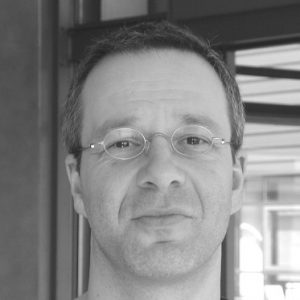
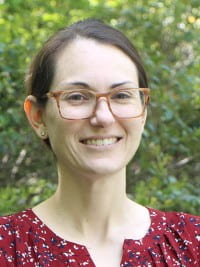
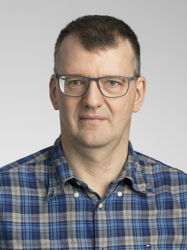
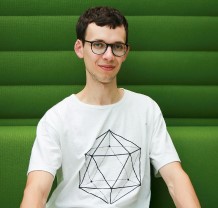
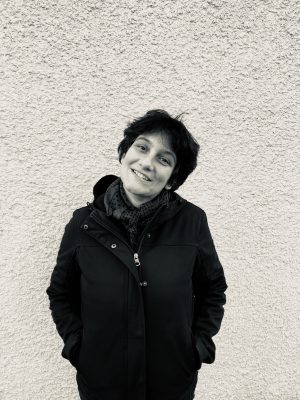
Balázs Brankovics is a Researcher at Wageningen University & Research , focusing on plant pathogens and genomics within the Biointeractions and Plant Health department. His work spans fungal and bacterial pathogens like Fusarium , Pectobacterium , and Xanthomonas , emphasizing molecular detection, mitogenome evolution, and pangenomics. Research Themes : Phylogenetics, pathogenicity mechanisms, diagnostic assay development, and microbial evolution. Key Collaborations : Active in interdisciplinary projects with teams studying plant diseases and pathogenomics. Methodologies : Utilizes pangenome analysis, TaqMan assays, and mitochondrial genome sequencing.
Juergen Kroymann is a Senior Scientist at CNRS, affiliated with the Laboratoire Écologie, Société et Évolution (IDEEV) at Universite Paris-Saclay. His research focuses on evolutionary genetics, plant-insect interactions, and specialized plant metabolism. University: Universite Paris-Saclay Email: juergen.kroymann@universite-paris-saclay.fr Kroymann studies the function and evolution of plant secondary metabolites, particularly glucosinolates in Brassicales, and their roles in host plant defenses against insects. His work explores how genetic variation in metabolic pathways drives ecological adaptation and coevolution with herbivores. His recent publications highlight research on gene conversion, quantitative trait loci, methylthioalkylmalate synthases, and plant defense mechanisms against nematodes and Lepidoptera. Keywords include evolutionary genetics, chemical ecology, and plant-insect coadaptation. Scientific Awards:
Carolyn Elya is an Assistant Professor at the Department of Molecular and Cellular Biology , Harvard University , focusing on parasitic behavioral manipulation and host-pathogen interactions. Her lab investigates the Entomophthora muscae -fruit fly system to uncover molecular and neural mechanisms behind 'zombie' behavior in insects. Developing transgenic techniques for fungal pathogen research Integrating molecular biology, genetics, and neuroscience Research Focus: The lab addresses four key questions: (1) Identifying effector molecules used by E. muscae ; (2) Determining fungal cell contributions to host manipulation; (3) Decoding circadian death timing; (4) Analyzing pathogen impacts on host circadian rhythms. Publication Trends: Recent work spans parasitology , neuroscience , and genetics , with studies on fungal genomics, neural circuits, and viral interactions. Articles frequently explore molecular mechanisms of pathogenesis and evolutionary implications of host manipulation. Awards & Collaborations: No explicit awards listed. Collaborates with institutions like University of Copenhagen and University of Bologna on fungal behavior and neuroimmunology projects. Labs & Teams: Leads the Elya Lab at Harvard's Biological Labs, developing experimental tools for parasitic systems. Partners with researchers in behavioral genetics and fungal ecology.
Eyðfinn Magnussen serves as an Associate Professor in Biology within the Faculty of Science and Technology at the University of the Faroe Islands. With over three decades of academic service, he has established himself as a leading researcher on Faroese wildlife ecology and population genetics, focusing particularly on small mammals endemic to the archipelago. His educational background includes an MSc from the University of Copenhagen (1993) with thesis research on cod growth differences between the Faroe Bank and Faroe Plateau. His academic career progressed from Assistant Professor (2000-2013) to his current Associate Professor position, with additional administrative experience as Vice Dean of the Faculty of Science and Technology (2001-2007). Magnussen's research spans several interconnected domains: small mammal ecology (particularly mountain hares, brown rats, and house mice), population genetics of island species, fish ecology on the Faroe Bank, and climate change impacts on marine ecosystems. His work combines field monitoring with genetic analysis to understand evolutionary adaptation in isolated island populations. The Faroese house sparrow and mountain hare represent two of his most extensively studied species, with long-term population monitoring programs. His publication record demonstrates remarkable breadth and consistency, with 231 total publications including 25 peer-reviewed articles, 25 reports, 22 cruise reports, and 81 popular science articles. Recent work (2021-2025) increasingly focuses on interdisciplinary approaches, connecting ecological research with sociocultural dimensions of resource management in the Faroe Islands. His current projects include studies on Toxoplasma gondii prevalence, Faroese mountain hare populations, and landscape valuation through participatory mapping. Magnussen has supervised one PhD, three MSc, and approximately 27 BSc students, demonstrating strong commitment to academic mentorship. His leadership extends to editorial roles with the Faroese Scientific Journal and participation in Nordic research networks including NorMER (Nordic Centre for Research on Marine Ecosystems and Resources under Climate Change). Through his radio broadcasts, television appearances, and popular science writing, Magnussen actively engages with the public on wildlife conservation topics. His 'Haruveiðan' series of reports on hare hunting since 2012 exemplifies his commitment to translating scientific findings into practical wildlife management guidance for local communities.
Sarah Wong is a **Researcher** at the Pasteur Institute in Paris, France, affiliated with the Department of Mycology and the Immunobiology of Aspergillus team. Her work focuses on fungal pathogens, particularly Aspergillus fumigatus , A. flavus , and Cryptococcus neoformans , investigating their interactions with the human immune system. Her research spans topics like: Cell wall organization and immune recognition Complement system activation and regulation Proteomic analysis of host-pathogen interactions Development of vaccine platforms using fungal vesicles The 15 most recent articles highlight her contributions to understanding: Species-specific immune responses in Aspergillus Complement protein dynamics in infection Hydrogel-based antifungal therapies Transcriptional mechanisms in drug resistance Her collaborations include leading researchers like Dr. Vishu Kumar Aimanianda and Professor Jean-Paul Latgé. While no formal awards are documented in the provided texts, her work has been cited in high-impact journals including Nature Communications , PNAS , and PLoS Pathogens .
Eric Pearlman is a Professor at the University of California, Irvine (UCI) School of Medicine, affiliated with the Departments of Physiology & Biophysics and Ophthalmology & Visual Sciences . He serves as Director of the Institute for Immunology. Research Focus: Dr. Pearlman investigates immune responses in ocular onchocerciasis (river blindness), emphasizing the role of Wolbachia bacteria and Toll-like receptor 4 (TLR4) in pathogenesis. His work spans immunology, parasitology, and ophthalmology. Scientific Contributions: Key publications include studies on: Wolbachia- Onchocerca volvulus interactions (2002) TLR4/MyD88 signaling in keratitis (2006) Multi-epitope vaccine design (2019)
Professor Madhava Meegaskumbura is a leading researcher at Guangxi University 's Guangxi State Key Lab in Forest Ecology & Conservation and College of Forestry. Specializing in Eco-Evolutionary Genetics , his work spans amphibians, freshwater fish, cavefish, and microbiome-disease interactions. He previously served as Full Professor & Principal Investigator in the Department of Molecular Biology at the University of Peradeniya (Sri Lanka) and was a Ziff Environmental Postdoctoral Fellow at Harvard University 's Museum of Comparative Zoology. B.Sc. in Zoology, University of Peradeniya Ph.D. in Biology, Boston University Ziff Environmental Postdoctoral Fellowship, Harvard University His research focuses on adaptive diversification mechanisms, with key projects examining genetic introgression in cavefish radiation , microbiome-pathogen dynamics , and climate-driven amphibian declines . His work integrates molecular tools with ecological and comparative genomic approaches, particularly in South Asian and Chinese biodiversity hotspots. Recent publications highlight his contributions to understanding cavefish diversification in karstic landscapes, microbial community functions in amphibians, and thermal stress responses in aquaculture species. These studies span disciplines like Evolutionary Biology, Microbial Ecology, and Conservation Genetics. Ziff Environmental Postdoctoral Fellowship He serves as Co-Chair for the Amphibian Specialist Group (ASG/IUCN/SSC) and is on the editorial boards of Communications Biology and BMC Ecology and Evolution . His collaborations between China, India, and Sri Lanka advance transboundary conservation science.
Hannes Schuler is an Assistant Professor in the Faculty of Science and Technology at the Free University of Bozen-Bolzano since October 2018. His academic background includes doctoral studies at Universität für Bodenkultur Wien, followed by postdoctoral positions at multiple institutions including University of Notre Dame, Universität für Bodenkultur, and Laimburg Research Centre. His research spans entomology, evolutionary biology, and microbial ecology with a focus on insect-microbe interactions. Schuler investigates Wolbachia symbiosis and its role in speciation processes, insect microbiome dynamics across different environments and life stages, population genetics of invasive species, and vector-pathogen relationships in agricultural pests. His work frequently examines fruit flies (particularly Rhagoletis species), psyllids, and other economically important insects. Analysis of his recent publications (2021-2025) reveals a progression from fundamental research on Wolbachia dynamics and speciation mechanisms toward applied studies of invasive species management, microbiome engineering, and molecular diagnostics for pest control. His work increasingly integrates multi-omics approaches with ecological field studies to understand host-symbiont-pathogen interactions at multiple scales. Schuler has secured significant funding from the Austrian Science Fund for projects on Wolbachia transmission and speciation. He maintains active collaborations with researchers across Europe and North America, particularly in the fields of entomology and microbial ecology. He is a member of several professional societies including the Italian Society of Entomology, German Society of General and Applied Entomology, Entomological Society of America, Gregor Mendel Society Vienna, and Network of Biological Systematics Austria, demonstrating his active engagement with the international entomological community.
Marie-Anne Van Sluys is a Full Professor in the Institute of Biosciences at the University of São Paulo , Brazil. She holds a PhD in Genetics and Microbiology from Université Paris-Sud (France) and a BSc in Biological Sciences from Universidade do Estado do Rio de Janeiro (Brazil). Her research focuses on plant-microbe interactions , genomics , and transposable elements , with applications in sugarcane and grass crops. Her work explores genomic instability in polyploid plants, plant defense mechanisms against pathogens, and evolutionary genomics of plant-microbe systems. She has contributed to understanding gene duplication dynamics and phytohormone production in plant pathogens. Through the GaTE Lab , she investigates transposable elements as drivers of genomic diversity , collaborating internationally on projects like the Earth BioGenome Project . Her recent publications highlight advancements in grass comparative genomics and sugarcane microbiome research.
Pavol Bardy is a Postdoctoral Research Associate at the University of York, affiliated with the York Structural Biology Laboratory and the Department of Biology. He collaborates closely with Prof. Fred Antson and Dr. Paul Fogg, focusing on structural biology research related to viral genome packaging and horizontal gene transfer mechanisms. PhD in Molecular and Cellular Biology and Genetics from Masaryk University (2021) Former research in bacteriophage gene engineering and structural studies under Assoc. Prof. Roman Pantucek and Dr. Pavel Plevka His research explores nucleic acid interactions with viral packaging machinery, emphasizing under-studied viral families and their ecological roles. This work has implications for understanding viral evolution, pathogenicity islands, and nanopore-based DNA sequencing technologies. Recent publications highlight his contributions to genome delivery mechanisms (e.g., penton blooming in microviruses), CRISPR-Cas10-assisted phage engineering, and capsid-mediated DNA mobilization in gut microbiomes. These studies span structural biology, microbiology, and molecular biology. Pavol's work involves interdisciplinary collaborations and structural analysis techniques, including cryogenic electron tomography. His projects aim to uncover conserved viral mechanisms and apply them to biotechnological innovations.
Alice Sotgia is a Lecturer at the School of Humanities and Social Sciences (SHSA) at PSL University, affiliated with the Department of Architecture and Urban Planning (AAP). She holds a Doctorate in spatial planning and urban planning (University of Rome La Sapienza, 2006) and a Master's in Human and Social Sciences specializing in Urban History (University of Rome La Sapienza, 2002). Academic Background: Doctorate (2006), Master's (2002) Research Themes: Housing as heritage, post-COVID urban narratives Labs: ACS Laboratory (co-director/researcher), LAA UMR CNRS 7218 LAVUE (associate researcher) Her research explores urban spaces through socio-anthropological lenses, focusing on: Heritage processes in inhabited spaces Post-COVID urban transformation models Methodological integration of humanities research into architectural projects Recent publications emphasize bacterial infection mechanisms, particularly: CIRBP protein stress responses Listeria monocytogenes pathogenicity RNA regulation in host-pathogen interactions
Dolph Schluter is a Professor in the Department of Zoology at the University of British Columbia, Faculty of Science. His research focuses on the ecological forces driving speciation and evolutionary divergence, particularly in adaptive radiation systems. Key research areas: Ecological speciation, Adaptive radiation, Genetic basis of species differences, Biodiversity gradients Primary study organisms: Threespine sticklebacks in British Columbia lakes (youngest known species pairs), Galápagos finches His work integrates field experiments, genomic studies, and collaborations with institutions like Stanford University and the Fred Hutchinson Cancer Research Center. Current projects examine species persistence under environmental change and genetic mechanisms of trait divergence. Recent publications emphasize parallel genetic evolution, hybridization dynamics, and the interplay of ecological selection with genomic architecture. Notable awards include AAAS Fellowship, the Crafoord Prize (2023), Darwin Medal (2021), and Sewall Wright Award (2008). Scientific Recognition AAAS Fellow (2024) Crafoord Prize (2023) Darwin Medal (2021) Member, Order of British Columbia (2021) Sewall Wright Award (2008) Killam Research Prize (2008) Lab members (D. Beltrán Segura, L. Combrink, Y. Hu, K. Lin) work in experimental ponds and controlled aquaria facilities, studying species interactions and genetic mapping. The lab maintains strict safety protocols for fieldwork and aquatic experiments.
Dr Yi Ding is a Lecturer at the School of Life and Environmental Sciences , University of Sydney, since December 2019. He is affiliated with the Sydney Institute of Agriculture and focuses on functional genomics of cereal rust pathogens. PhD: Max Planck Institute (Marburg, Germany) Postdoctoral Experience: Boyce Thompson Institute (Cornell University, USA), CSIRO (Australia) His research spans plant-microbe interactions , emphasizing molecular signaling, fungal effectors, and membrane transporters. He investigates how rust fungi evolve virulence against host resistance genes, using molecular insights from both host and pathogen perspectives. His recent publications highlight work in: Comparative genomics of cereal rust pathogens Transcriptomic and metabolomic responses to fungal infection Nitric oxide signaling in host-pathogen interactions Population genetics of rust virulence evolution Endophytic and mycorrhizal symbiosis mechanisms Dr Ding supervises PhD student Haixia GUAN and is involved in projects addressing agricultural sustainability, food security, and plant disease resistance. He received a 2023 USDA grant for research on wheat rust resistance and avirulence mechanisms.
Verena Lentsch is an SNSF Postdoctoral Research Fellow at the University of Oxford's Radcliffe Department of Medicine, working in the Simmons Lab: Intestinal Immunity in Health and Disease. She joined the Simmons Lab in 2024 after completing her PhD and a short postdoctoral period at ETH Zurich under Professor Emma Slack. Her research focuses on understanding the critical interactions between gut microbiota and the developing immune system in early life. Dr. Lentsch's educational background includes: PhD from ETH Zurich, Switzerland Postdoctoral training at ETH Zurich with Emma Slack Her research primarily investigates the microbiota-immune axis in early life , examining how factors like birth mode (caesarean vs. vaginal), antibiotic exposure, and feeding methods (breast milk vs. formula) influence gut bacterial colonization and subsequent immune system development. She employs advanced methodologies including multi-omic analyses , spatial transcriptomics , organ-on-a-chip models , and gnotobiotic systems to unravel these complex interactions. The ultimate goal of her work is to identify novel approaches for early disease detection, prevention strategies, and improving health outcomes for premature infants. Dr. Lentsch's publication record demonstrates a strong focus on gut microbiome engineering and vaccine development. Her recent work in Science (2025) explores how vaccine-enhanced competition can enable rational bacterial strain replacement in the gut, while her 2024 Cell Host & Microbe paper investigates metabolic shifts during Salmonella colonization. Her research trajectory shows a consistent emphasis on developing innovative strategies to eliminate enteropathogenic bacteria through rationally designed oral vaccines combined with bacterial niche competitors. Her scientific contributions have gained significant attention, with her 2025 Science paper being picked up by 27 news outlets, blogged about by 3 sources, and referenced across multiple social media platforms including X (59 users) and Bluesky (30 users). As a postdoctoral researcher in the Simmons Lab, Dr. Lentsch collaborates with interdisciplinary teams to advance understanding of intestinal immunity. Her work bridges microbiology, immunology, and translational medicine, with potential applications for improving neonatal health outcomes and developing novel therapeutic approaches for gut-related disorders.
Ellie Barnes is Professor of Hepatology and Experimental Medicine at the University of Oxford, affiliated with the Nuffield Department of Medicine and Translational Gastroenterology Unit. As a Ludwig Adjunct Scholar, she leads research translating laboratory findings into human experimental medicine for liver diseases, including cancer. Her work spans vaccine development, early cancer detection, and immune-mediated liver disorders through major consortia like DeLIVER and STOP-HCV. Her research focuses on applied immunology in liver pathology, with key initiatives in: Developing T cell pan-genotypic vaccines for hepatitis C prevention and hepatitis B cure using simian adenoviral vectors Leading the CRUK-funded DeLIVER programme for hepatocellular carcinoma (HCC) early detection via multi-modal technologies Investigating IgG4-related disease pathogenesis through national registries and immune profiling Advancing stratified medicine approaches and non-invasive liver imaging for fibrosis assessment Analysis of her 2025 publications reveals emphasis on clinical challenges: metabolic dysfunction in chronic hepatitis B, hepatitis C elimination strategies, and viral persistence post-treatment. Earlier work (2014-2018) established foundational insights into HCV vaccine design, viral genomics, and immune evasion. Collectively, her research integrates virology, immunology, and clinical hepatology to address global liver disease burdens through translational pipelines. Scientific recognition includes: FRCP (Fellow of the Royal College of Physicians) FMedSci (Fellow of the Academy of Medical Sciences) Ludwig Adjunct Scholar She secures major grant funding including Cancer Research UK's DeLIVER programme and MRC's STOP-HCV consortium (22 partners). As NIHR Clinical Research Network lead for hepatology in Thames Valley, she oversees clinical studies at Oxford University NHS Trust while mentoring PhD students in immunology and hepatology. The Barnes group operates from the Phase-I vaccine laboratory at Peter Medawar building, collaborating with Oxford Centre for Clinical Magnetic Resonance Research for imaging development. Key initiatives include the DeLIVER consortium (1,000+ patients), STOP-HCV network, and IgG4-RD national registry, reflecting leadership in multi-institutional liver disease research across UK and Southeast Asia.