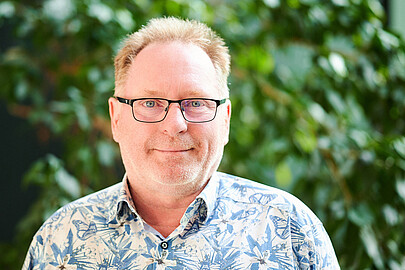
Yin Bao is an Assistant Professor in Plant and Soil Sciences and Mechanical Engineering at the University of Delaware since 2023, previously holding the same position at Auburn University's Department of Biosystems Engineering (2019-2023). He holds a BE in Mechanical Engineering from China Agricultural University (2012) and a PhD in Agricultural and Biosystems Engineering from Iowa State University (2018), followed by postdoctoral research there until 2019. His research focuses on automation technology for agriculture and forestry, leveraging robotics, machine learning, and sensing systems to develop tools for precision farming and plant phenotyping. Key areas include unmanned systems (UGVs/UAVs), spectral imaging, and AI-driven predictive models for crop and livestock management. Recent work emphasizes automated inventory systems for forest nurseries, UAV-based vegetation assessment, and machine learning applications in crop yield prediction. His publications span robotic guidance systems, root segmentation in X-ray CT scans, and equine gait analysis using deep learning. Notable projects include the Robotic Assay for Drought (RoAD) system and the 'smart canopy' sorghum initiative. Collaborative efforts involve integrating multifrequency microwave sensing and electronic nose technologies for crop quality analysis.
Dr. John M. Ruter is the Allan M. Armitage Professor and Director of the UGA Trial Gardens within the College of Agricultural & Environmental Sciences at the University of Georgia. His work integrates plant breeding, genetics, and sustainable nursery crop production, focusing on ornamental plants for southeastern landscapes. Education: B.S. in Ornamental Horticulture, California Polytechnic State University (1984) M.S. in Ornamental Horticulture and Landscape Design, University of Tennessee (1986) Ph.D. in Horticultural Science, University of Florida (1989) Research interests include developing climate-resilient ornamental plants (e.g., Camellia oleifera , hibiscus, crape myrtle), mutation breeding via gamma irradiation, and optimizing nursery production systems. Recent projects focus on polyploid conifer evaluation and tea oil crop development for the southeastern U.S. Recent publications highlight advancements in induced mutagenesis (EMS, gamma irradiation), disease resistance screening (Cercospora leaf spot), and genetic characterization of native and ornamental species. Key subfields include ornamental breeding , genomic analysis , and sustainable production practices . As Director of the UGA Trial Gardens, he leads plant evaluation programs that inform regional landscaping decisions and cultivar development.
Jenny Kao-Kniffin is a Professor in the Horticulture Section of the School of Integrative Plant Science at Cornell University. Her research focuses on the belowground ecology of horticultural landscapes, particularly the ecology and management of invasive plants and weeds in horticultural landscapes, wetlands, and urban ecosystems. She applies concepts from microbial ecology to understand how soil microorganisms impact plant populations both beneficially (aiding in plant growth and fitness) and negatively (keeping populations in check). Dr. Kao-Kniffin's research interests include: Weed science and ecological management of weeds Urban ecology and urban agriculture Rhizosphere biology and plant-microbe interactions Soil microbiome selection and manipulation Ecological approaches to sustainable agriculture Her work centers on three main research areas: selection of rhizosphere microbiomes that modulate plant traits, identifying functional roles of microbiomes that mediate plant growth, and assembly of plant-microbial communities that enhance ecosystem services. She has demonstrated that microbiomes can be manipulated to alter flowering time in plants and has developed ecological approaches for weed management through soil carbon amendments. Her recent publications reveal a strong focus on urban soil microbiomes, nitrogen cycling in agroecosystems, and the application of microbial ecology to sustainable agriculture. The research spans from fundamental plant-microbe interaction studies to practical applications in urban agriculture and weed management, with particular emphasis on how soil amendments and microbial communities can be leveraged for ecological management of plant systems. Notable scientific achievements include: The White House Presidential Early Career Award for Scientists and Engineers (PECASE), 2019 Weihenstephan Science Award, International Collaboration for Early Career Scientists 2017 Cornell University CALS Award for Excellence in Mentoring Undergraduate Students in Independent Research 2013 Dr. Kao-Kniffin actively mentors graduate students and has developed extension programs focused on assisting public and private audiences with methods to manage weedy and invasive plants in horticultural landscapes. Her lab has developed a web-based software program that allows users to select weed management methods based on conventional or organic preferences. She teaches PLSCI 4900: Reflection on Plant Sciences Experiential Learning and maintains an active research program with several ongoing projects in urban agriculture, particularly working with New York City farmers to construct clean soil from local materials.
Luca Sebastiani is a Full Professor in Horticultural Sciences (AGR/03) at Scuola Superiore Sant'Anna in Pisa, Italy, since 2014. He currently coordinates the PhD Course in AgroBioSciences and has previously served as Director of the Institute of Life Sciences (2016-2021). His academic career includes roles as Associate Professor (2002-2014) and Assistant Professor (1998-2002) at the same institution. PhD in Plant Biology from Scuola Superiore Sant'Anna (1996) MSc in Agricultural Sciences from University of Pisa (cum laude, 1991) Postdoctoral research in agricultural biotechnology (1996-1998) Research Interests: Focus on plant-environment interactions, particularly abiotic and biotic stress responses in crops. Key areas include: Physiological and molecular responses to climate change stressors Nutraceutical enhancement of food crops Plant germplasm conservation using molecular markers Agriculture 4.0 integrating AI, IoT, and robotics Phytoremediation using poplar and Brassica species Scientific Contributions: His work bridges molecular mechanisms (aquaporin function, heavy metal transport) with ecosystem-level applications (precision irrigation, contaminant phytoremediation). Recent publications emphasize genome sequencing, stress tolerance modeling, and nutraceutical food development. ISHS Medal for SapFlow Workshop organization (2011) Giovanni Spitali Foundation Award for PhD dissertation (1998) Collaborations: Extensive international collaborations with institutions like Beijing Forestry University, Comenius University, and Purdue University. Currently supervises projects in plant phenotyping, omics technologies, and sustainable crop management.
Simone D. Castellarin is a Professor in the Department of Applied Biology at the University of British Columbia's Faculty of Land and Food Systems, and holds the Canada Research Chair Tier 2 in Viticulture. His research focuses on the molecular and physiological mechanisms governing berry ripening and composition in grapes, blueberries, and raspberries, with emphasis on genomic regulation under environmental stressors like heatwaves and drought. PhD in Plant Biology from the University of Udine (2007) Postdoctoral training at Hochschule Geisenheim University and University of California Davis Research areas include terpene biosynthesis, jasmonate signaling, cuticular wax dynamics, and agronomic strategies for climate change mitigation. Key projects involve remote sensing for vineyard zoning , hormone application effects , and genetic studies of berry quality traits . His work spans collaborations with industry bodies like the BC Wine and Grape Council and academic partners including the Cantu Lab at UC Davis. Recent publications highlight genomic analyses of terpene synthases, water deficit impacts on metabolites, and postharvest quality assessments. Awards include the 2009 Rudolf Hermanns Prize for viticultural research. He supervises numerous PhD and Master's students, and leads the Castellarin Lab at UBC's Wine Research Centre.
Feng Feng is an Assistant Professor in the Department of Biochemistry and Molecular Biology at Oklahoma State University, where he has been employed since August 2020. His research focuses on understanding how plants interact with microbial communities in their rhizosphere under various environmental conditions. Dr. Feng received his Ph.D. in Plant Molecular Biology from Tsinghua University in Beijing, China (2008-2012), followed by an M.S. in Microbiology and B.S. in Biotechnology from Henan Agricultural University in Zhengzhou, China. Ph.D., Plant Molecular Biology, Tsinghua University, Beijing, China (2008-2012) M.S., Microbiology, Henan Agricultural University, Zhengzhou, China (2005-2008) B.S., Biotechnology, Henan Agricultural University, Zhengzhou, China (2001-2005) Dr. Feng's research interests center on plant-microbe interactions, particularly how plants balance immunity and symbiosis signaling pathways when encountering both pathogenic and beneficial microbes in the rhizosphere. His work examines how environmental conditions affect plant decisions to promote or inhibit microbial colonization, with the goal of developing cropping systems that require less chemical fertilizer and are more resilient to climate change. Using molecular, cell biology, genetic, and biochemical approaches, his lab investigates how abiotic environmental factors regulate plant-microbe interactions and how immunity and symbiosis signaling pathways influence broader microbial communities. Dr. Feng's scholarly output shows a consistent focus on plant immunity and symbiosis mechanisms, particularly involving LysM receptor-like kinases and their role in distinguishing between pathogenic and symbiotic microbial signals. His recent work has increasingly emphasized the ecological context of plant-microbe interactions and the potential applications for sustainable agriculture. Dr. Feng serves as an Associate Editor for Frontiers in Microbiology (since 2022) and has editorial roles with several other journals including Frontiers in Plant Science, Horticultural Plant Journal, and iMeta. Associate Editor, Frontiers in Microbiology (2022-present) Editorial Board, Frontiers in Plant Science (2021-present) Editorial Board, Horticultural Plant Journal (2021-present) Editorial Board, iMeta (2021-present) Dr. Feng actively mentors graduate students and postdoctoral researchers, with his lab currently recruiting Ph.D. students and postdocs interested in plant-microbe interactions. He has secured multiple research grants including funding from the U.S. Department of Agriculture and the Oklahoma Center for the Advancement of Science and Technology (OCAST). His laboratory investigates the molecular mechanisms by which plants regulate their interactions with rhizosphere communities, with particular focus on how environmental conditions influence the balance between immunity and symbiosis signaling pathways.
Terence Lee Robinson is a Professor at Cornell AgriTech , affiliated with the School of Integrative Plant Science and Horticulture Section . His work focuses on applied fruit crop physiology to enhance global fruit production. Education : PhD in Horticulture (1984) and MS in Horticulture (1982) from Washington State University; BS in Plant Science (1978) from Brigham Young University. Research Interests center on solving practical fruit production challenges through orchard systems analysis , rootstock evaluation , and crop load management . His field-oriented studies integrate biological and economic assessments of orchard performance. Recent Publications highlight his expertise in apple rootstock testing , chemical thinning , and nutrient management , with global implications for improving fruit quality and orchard productivity under diverse conditions. Scientific Honors : Elected Fellow, American Society for Horticultural Science (2021) Wilder Medal, American Pomological Society (2021) International Fruit Tree Association Hall of Fame (2015) Extension Leadership includes fostering collaborations between Cornell, Michigan State University, and Ontario Canada extension teams, while editing the NY Fruit Quarterly to disseminate research findings.
Gregory Michael Peck is an Associate Professor and Director of Undergraduate Studies for the Plant Sciences Major at Cornell University's School of Integrative Plant Science, Horticulture Section. His research focuses on sustainable tree-fruit production, particularly in organic apple systems , cider apple germplasm evaluation , and crop-load management through pollen tube growth modeling . Award-winning educator (2021 Cornell Teaching, Advising & Mentoring Award) 2018 Grower Advocate of the Year (American Cider Association) Active in outreach through field days, extension publications, and social media Peck's work spans tree-fruit physiology , soil health , and mechanization of orchard practices . He co-teaches Cornell's popular cider appreciation course with microbiologist Kathy Arnink, combining apple production science with fermentation expertise. His research explores phenolic development , nitrogen management , and yeast interactions in cider production systems. Recent publications highlight collaborations in rootstock effects , compost applications , and fermentation chemistry . Peck's career has included work in California, Washington, New York, and Virginia, with training spanning horticulture, plant physiology, soil science, and agricultural economics.
Mustafa TAN is a Professor at Havsa Vocational School of Trakya University and currently serves as Vice Rector of Trakya University since August 2024. He has held various administrative roles, including Director of Edirne Rose and Red Application and Research Center (August 2024–October 2024) and Director of Havsa Vocational School (2020–2024). Previously, he was a Professor and academic leader at Atatürk University's Faculty of Agriculture from 1995 to 2019, serving as Vice Dean (2008–2012) and Department Head. His research focuses on forage crops, quinoa genetics, and agricultural sustainability. Notable projects include studying genetic diversity in forage pea and developing herbicide-resistant quinoa varieties. He has authored/co-authored over 100 publications, including articles on crop improvement, silage quality, and climate-resilient agriculture. Dr. TAN has supervised numerous PhD and MSc students and contributed to books like Alternatif Yem Kaynakları . His work emphasizes practical applications, such as optimizing forage production and enhancing crop resilience in Turkey's high-altitude regions. He has led projects funded by TÜBİTAK and university grants, addressing challenges like quinoa adaptation to arid conditions and nitrogen use efficiency. His contributions extend to editing educational materials and promoting sustainable agricultural practices through publications and conferences.
Lailiang Cheng is a Professor in the Horticulture Section of Cornell University's School of Integrative Plant Science, specializing in the physiological processes of deciduous fruit crops (particularly apple). His research focuses on sugar/malate metabolism, mineral nutrition, and environmental stress responses to improve orchard productivity and fruit quality. He integrates physiological, biochemical, and molecular approaches to study sorbitol signaling and nutrient management in high-density orchards. Education: Doctorate, Oregon State University (1999) Master of Science, Shandong Agricultural University (1989) Bachelor of Science, Shandong Agricultural University (1984) Research Focus: Cheng's work investigates carbon partitioning, malate accumulation, and nutrient transport dynamics in apple trees under abiotic stresses. His extension program delivers nutrient management strategies to the apple industry, while his teaching emphasizes analytical techniques (PLSCI 6170) and crop nutrition principles (PLSCI 4551/6551). Publication Analysis: Recent articles (2021-2025) reveal dominant themes in molecular regulation of fruit acidity, transporter biology, stress-responsive transcription factors, and omics-assisted breeding. Over 70% of publications involve collaborative work on apple genomics, with consistent emphasis on translating basic research into orchard management solutions. Awards & Recognition: No scientific awards mentioned in source materials. Academic Contributions: Advises graduate students in Horticulture; research supported by Cornell University Agricultural Experiment Station. Collaborates extensively with pomology breeders, extension specialists, and molecular biologists globally.
Professor Georg Guggenberger is a distinguished academic at Leibniz University Hannover, where he serves as Professor of Soil Chemistry within the Department of Soil Science at the Institute of Earth System Sciences, Faculty of Natural Sciences. In addition to his research and teaching responsibilities, he holds several significant administrative positions including Vice Dean for Research in the Dean's Office of the Faculty of Natural Sciences, Executive Management at both the Institute of Soil Science and Department of Soil Science levels, and Chair of the Selection Committee for the M.Sc. Landscape Sciences program. Prof. Guggenberger's research program focuses on fundamental processes governing soil organic matter dynamics across diverse ecosystems worldwide, from Arctic to tropical regions. His work investigates biotic and abiotic factors influencing the formation, transport, and stabilization of soil organic matter, with particular emphasis on soil fertility maintenance. He employs advanced methodologies including stable isotope approaches, biomarker analyses, microspectroscopic techniques (XPS, ESEM, NMR, NanoSIMS), and molecular biological methods to study biogeochemical interactions on mineral surfaces, dissolved organic matter dynamics, plant-mycorrhizal-soil interactions, permafrost soil organic matter, and impacts of land use and climate change on soil organisms. Analysis of Prof. Guggenberger's recent publications reveals a strong interdisciplinary research program spanning soil biogeochemistry, carbon cycling, soil microbiology, and climate change impacts. His work integrates field experiments along environmental gradients with laboratory manipulation studies to identify underlying mechanisms. The research shows particular strength in understanding organic matter stabilization mechanisms, microbial contributions to soil processes, and development of sustainable soil management practices that address climate change challenges. Prof. Guggenberger actively contributes to academic service through his leadership roles in examination boards and committees, including the Examination Board for Geosciences programs and the Selection Committee for Landscape Sciences. His administrative responsibilities as Vice Dean for Research demonstrate his commitment to advancing research within the Faculty of Natural Sciences at Leibniz University Hannover.
Tri Setiyono is an Assistant Professor in the School of Plant, Environmental, and Soil Sciences at Louisiana State University (LSU). Previously, he served as a Scientist at the Sustainable Impact Platform of the International Rice Research Institute (IRRI), Los Baños, Philippines (2011–2021), and as a Postdoctoral Research Associate in the Department of Agronomy and Horticulture at the University of Nebraska-Lincoln (2007–2011). He is affiliated with the LSU AgCenter and the LSU College of Agriculture, contributing to research and extension services in precision agriculture and crop resilience. Education: PhD in Agronomy, University of Nebraska-Lincoln (2007) MS in Agronomy, Kansas State University (2003) BS in Agronomy, Bogor Agricultural University (1998) Research interests focus on precision agriculture, remote sensing, and AI applications to enhance crop production resilience against climate change. He specializes in GIS for agronomic research, crop growth models (e.g., ORYZA, SoySim), and integrating SAR and MODIS satellite data for yield estimation. His work emphasizes sustainable practices and technology-driven solutions for row crops in dynamic environments. Publications highlight advancements in rice monitoring systems, soybean and maize modeling, and decision tools for nutrient management. These contributions bridge technological innovation with practical agricultural challenges in Asia and the US. Scientific awards: None explicitly mentioned in the text. Advising and grants: No formal advisees/students are listed. Professional experience includes roles at IRRI and UNL, suggesting involvement in grant-funded research projects, but specific grant details are not provided. Labs/Teams: Associated with Louisiana State University AgCenter research stations and collaborative projects like the RIICE initiative, but no specific lab names or teams are detailed in the text.
Dr. Alim AYDIN serves as a full-time Lecturer at the Department of Horticulture, Faculty of Agriculture, Kirşehir Ahi Evran University since 2023. His academic focus centers on vegetable cultivation and breeding, with specialization in grafting techniques and abiotic stress tolerance mechanisms. Education background: PhD in Horticulture, Erciyes University (2018-2022) MSc in Horticulture, Erciyes University (2015-2018) BSc in Horticulture, Erciyes University (2011-2015) Dr. AYDIN's research program investigates physiological and molecular responses of vegetable crops to environmental stresses, particularly salt tolerance in cucurbits and solanaceous species. His work integrates traditional breeding with molecular marker-assisted selection to develop resilient crop varieties. Current projects examine rootstock-mediated stress mitigation, viral disease resistance, and polyploidy effects in watermelon and tomato breeding. Analysis of his 15 most recent publications reveals dominant research themes in grafting physiology (60% of works), salt stress adaptation (45%), and molecular breeding techniques (35%). His studies predominantly focus on cucurbits (watermelon, cucumber, bottle gourd) and solanaceous crops (tomato, pepper), addressing practical agricultural challenges through hydroponic systems and field trials. Dr. AYDIN actively supervises graduate students and leads research projects funded by TÜBİTAK and university sources. His current grant portfolio includes 'MAS Techniques for Developing Rootstock Candidates Tolerant to Soil-Borne Diseases' (2023-2025, Principal Investigator) and 'Allopolyploid Watermelon Rootstock Development' (2021-2023). He maintains strong collaborative networks with Erciyes University researchers, particularly with Dr. Hakan Başak and Dr. Halit Yetişir. Teaching responsibilities span graduate courses in molecular breeding methods and tropical vegetable cultivation, alongside undergraduate instruction in seed technology, mushroom production, and general vegetable horticulture. His laboratory work emphasizes phenotypic characterization of F2 hybrid populations and stress response profiling under controlled environments.
Prof. LFM (Leo) Marcelis is a Professor and Chairholder at the Department of Horticulture and Product Physiology, Wageningen University & Research. His research focuses on plant physiology in controlled environments, energy-efficient horticultural systems, and vertical farming technologies. He leads major projects such as SKY HIGH and 'LED it be 50%', aiming to revolutionize plant production through smart lighting and sustainable practices. Key research interests include optimizing crop growth under LED lighting, closed-system agriculture, and enhancing resource use efficiency. Marcelis coordinates courses on plant physiology, greenhouse horticulture, and vertical farming. He actively collaborates with industry partners, governments, and international institutions to bridge academic research with practical applications in global horticulture. He serves as Vice Chair of the Leibniz Institute’s Science Advisory Board and as Chief Editor of the Crop and Product Physiology section in Frontiers in Plant Science . His work emphasizes interdisciplinary approaches, integrating physiology, engineering, and data science to address food security and sustainable agriculture challenges. Marcelis advises numerous PhD students on projects related to plant-light interactions, crop modeling, and vertical farming scalability. His research has contributed to advancing energy-saving technologies and improving crop quality in both greenhouse and urban agricultural settings.
Dr. Norman Q. Arancon is an Associate Professor of Horticulture and Director in the College of Agriculture, Forestry & Natural Resource Management (CAFNRM) at the University of Hawaiʻi at Hilo. He holds a B.S. from Xavier University (Philippines), and M.S. and Ph.D. degrees from The Ohio State University. His research focuses on vermicomposting, composting, soil ecology, and sustainable agricultural practices, particularly in tropical environments. Dr. Arancon has contributed extensively to understanding the role of vermicomposts in pest suppression, soil health, and crop productivity. His work emphasizes organic agriculture and tropical fruit crop production, with a strong emphasis on practical applications in field settings. Key areas of investigation include the biological control of nematodes, mites, and other pests using vermicompost-derived products, as well as the optimization of waste-to-resource systems for sustainable farming. Dr. Arancon’s academic contributions span peer-reviewed articles, book chapters, and conference proceedings, reflecting his expertise in integrating ecological principles with agricultural practices. He teaches courses such as Hydroponics and Vegetables (HORT 263), Plant Growth/Development (PPHY 310), and Orchard & Horticultural Crops (HORT 352). His research has been published in journals like Crop Protection , Biocycle , and European Journal of Soil Biology . Dr. Arancon collaborates on initiatives like the Global Agriculture Multidisciplinary International Conference (GAMIC) and contributes to programs within CAFNRM, emphasizing conservation biology and environmental science. His work bridges laboratory research and field applications, fostering sustainable agricultural solutions for tropical regions.