Kelly Arnold is an Associate Professor in the Department of Biomedical Engineering at the University of Michigan. Her research integrates systems engineering principles with immunology to investigate variability in immune responses across infection, vaccination, and injury, with a focus on computational modeling and clinical translation. Research Focus Systems-level immune response modeling Vaccination and antibody functionality Vaginal microbiome-host interactions Chronic lung disease progression Computational serology and proteomics Recent Work Her 2025 studies examine SARS-CoV-2 vaccination responses in cancer patients and computational frameworks for vaginal probiotics. Earlier works (2024-2007) span COPD progression, lupus fibrosis, HIV susceptibility, and tissue engineering for fertility preservation. Methodologies include proteomic profiling, network modeling, and microfluidic systems.
Massimo Mischi is a Full Professor at the Faculty of Electrical Engineering of the Eindhoven University of Technology (TU/e) and chairs the Signal Processing Systems (SPS) Division , the largest division at TU/e with over 250 researchers. He founded the Biomedical Diagnostics (BM/d) Lab in 2012, which now includes 180 researchers and clinical/industrial advisors, focusing on biomedical signal processing for diagnostics and monitoring.
Dr. Frances Chen is a Professor and Area Coordinator in the Department of Psychology at the University of British Columbia (UBC), located on the traditional, ancestral, and unceded territory of the Musqueam People. She holds a PhD from Stanford University (2009). Her research integrates health psychology, social psychology, and neuroendocrinology to explore how social experiences influence mental and physical health. Key areas include the physiological impacts of loneliness, social support, and hormonal changes during puberty on adolescent development. Education: PhD, Psychology, Stanford University, 2009 Research Focus: Dr. Chen investigates how social interactions 'get under the skin' through studies on loneliness, stress, conflict negotiation, and hormonal mechanisms. Her work emphasizes interventions to enhance social connection and reduce health disparities. Recent Article Trends: Recent publications highlight interdisciplinary approaches, including genetic influences on depression, effects of near-infrared lighting on cognition, and longitudinal studies on adolescent hormonal contraceptive use. Her work bridges basic science and applied health outcomes. Awards & Grants: Michael Smith Health Research BC C2 Award (2022) Killam Faculty Research Fellowship (2019) Teaching & Learning Enhancement Fund Grant (2025) SSHRC Prosociality Project Funding (2023) Lab & Mentorship: Director of the Social Health Lab, she mentors graduate and undergraduate students, prioritizing equity and inclusion. Recent lab achievements include studies on teen health development and interventions to improve student success in psychology programs. Lab Initiatives: UBC Teen Health and Development Study (longitudinal hormonal/mental health tracking) NIR lighting health impact research (collaborative interdisciplinary project) Prosociality 'in the Wild' SSHRC project
Lars Engstrand is a Professor in infection control at Karolinska Institutet, heading the Translational Microbiome Research and Pandemic Preparedness group within the Department of Microbiology, Tumor and Cell Biology. His research spans multiple disciplines with a focus on translational microbiome research and pandemic preparedness. Engstrand's research interests center on understanding the human microbiome's role in health and disease, particularly in women's reproductive health and gastroenterology. His group has established multiple large-scale clinical studies including SweMaMi (Swedish Maternal Microbiome project), BASIC (associations between microbiota and preterm birth), VaMiGyn (Vaginal Microbiota in Gynaecological health), and several others investigating the vaginal microbiome's relationship to pregnancy outcomes, HPV infection, and cervical cancer. His team also conducts significant research on gut microbiome in inflammatory bowel disease and colorectal conditions through projects like PopCol and KOLBIBAKT. Analysis of Engstrand's most recent publications reveals a strong focus on the relationship between microbiome composition and women's health outcomes. His research consistently examines how vaginal, gut, and oral microbiomes influence pregnancy complications, preterm birth, HPV infection, and mental health during pregnancy. The work often employs large cohort studies with comprehensive sampling strategies across multiple body sites and time points, providing robust data for understanding microbiome dynamics in health and disease. Engstrand leads the Microbiome Exploration and Development for Intervention (MEDI) initiative and the National Pandemic Center (NPC) at Karolinska Institutet. The NPC conducted large-scale sequencing during the COVID-19 pandemic and has amassed over 1.5 million samples. His research group includes multiple specialized teams focusing on culturomics, bioinformatics, labcore operations, women's health research, and pandemic preparedness.
Jeffrey T. Jensen, M.D., M.P.H., is the Leon Speroff Professor and Vice Chair for Research in the Department of Obstetrics and Gynecology at Oregon Health & Science University (OHSU). He holds joint appointments as Professor of Public Health and Preventive Medicine and serves as a Core Scientist at the Oregon National Primate Research Center (ONPRC). Dr. Jensen completed his medical degree at Emory University, a Master of Public Health at the University of Washington, and residency training at OHSU. Research Focus: Dr. Jensen leads translational and clinical research programs focused on contraceptive innovation. His work emphasizes nonhuman primate models to develop: Novel contraceptive agents targeting oocyte-specific pathways Non-surgical permanent contraception methods Optimized emergency contraception for diverse populations He directs OHSU's Women’s Health Research Unit and the Gates Foundation-funded Oregon Permanent Contraception Research Center (OPERM). Recent Publications: His 15 most recent articles (2023-2025) demonstrate concentrated expertise in: Advanced hormonal contraceptive formulations (IUDs, vaginal rings, oral agents) Weight-adjusted dosing strategies for emergency contraception Biomarker validation for contraceptive efficacy monitoring Real-world assessment of bleeding pattern management Leadership & Collaboration: Dr. Jensen is Principal Investigator of the NICHD Contraception Clinical Trials Network and collaborates with global health organizations (CONRAD, FHI360, Population Council). He serves as Deputy Editor for the journal Contraception and consults for multiple pharmaceutical companies on product development.
Shanna Swan is a renowned epidemiologist and Professor of Environmental Medicine and Public Health at the Icahn School of Medicine at Mount Sinai. She holds a PhD in Statistics from UC Berkeley (1963), an MA in Biostatistics from Columbia University, and a BA in Mathematics from City College of New York. Her career spans academia, public health institutions, and research on environmental health impacts. Notable roles include work at Kaiser Permanente, California Department of Health Services, University of Missouri, and University of Rochester. Her research focuses on endocrine-disrupting chemicals (EDCs), sperm count decline, and reproductive health. Her groundbreaking 2017 study revealed a 50% sperm count drop in Western men over 40 years, later updated to show acceleration since 2000. She authored the influential book Count Down (2021), addressing environmental threats to human fertility. Key contributions include forming California’s reproductive health group and leading National Academy of Sciences committees on EDCs. Swan advocates for science-driven public health policy, emphasizing the need to address chemical exposures. Her work bridges statistical rigor with real-world impact, influencing global discussions on fertility and environmental safety. Awards include the Ward Medal in Logic (CCNY). She remains active in advancing research, education, and community action to safeguard human health and reproduction.
Angelica Lindén Hirschberg is a Professor of Obstetrics and Gynecology (specializing in reproductive medicine) at Karolinska Institutet and a Senior Consultant in gynecological endocrinology at Karolinska University Hospital. She holds dual roles in academic leadership and clinical practice, focusing on disorders of reproductive function, endocrine-metabolic dysfunction, and hormonal conditions in women. Her affiliations include the Department of Women’s and Children’s Health, Reproductive Endocrinology and Metabolism Research Group, and the Division for Neonatology, Obstetrics, Gynaecology, and Reproductive Health. Education and Career: MD (Karolinska Institutet, 1984) PhD (Karolinska Institutet, 1989) Professor in Obstetrics and Gynecology (2007) Board member of international societies (ISGE, EMAS) Research Focus: Her translational research spans PCOS, obesity-related reproductive dysfunction, premature ovarian insufficiency, and disorders of sex development. Projects include hormonal impacts on athletic performance, immune therapy for ovarian dysfunction, and endometrial cell biology. Collaborations involve national/international networks and clinical trials (e.g., PROBES trial). Publications: Recent work emphasizes PCOS pathophysiology, menopausal health, and hormonal interventions in athletes. Key trends include single-cell profiling of endometrium, immunomodulatory therapies for POI, and non-hormonal treatments for vasomotor symptoms. Awards: King’s Seraphim Medal (2018) 2016 Grand Prize in Sport Science Appointed Royal Gynecologist (2009) Teaching and Mentorship: Coordinates courses on reproductive endocrinology, supervises PhD students (e.g., Esin Ylmaz), and chairs the PhD Study Director at her department. Authored over 25 book chapters on women’s health and sports medicine. Grants and Labs: Secured Swedish Research Council funding for POI trials. Her lab integrates experimental (Bioclinicum) and clinical (Women’s Health Research Unit) research.
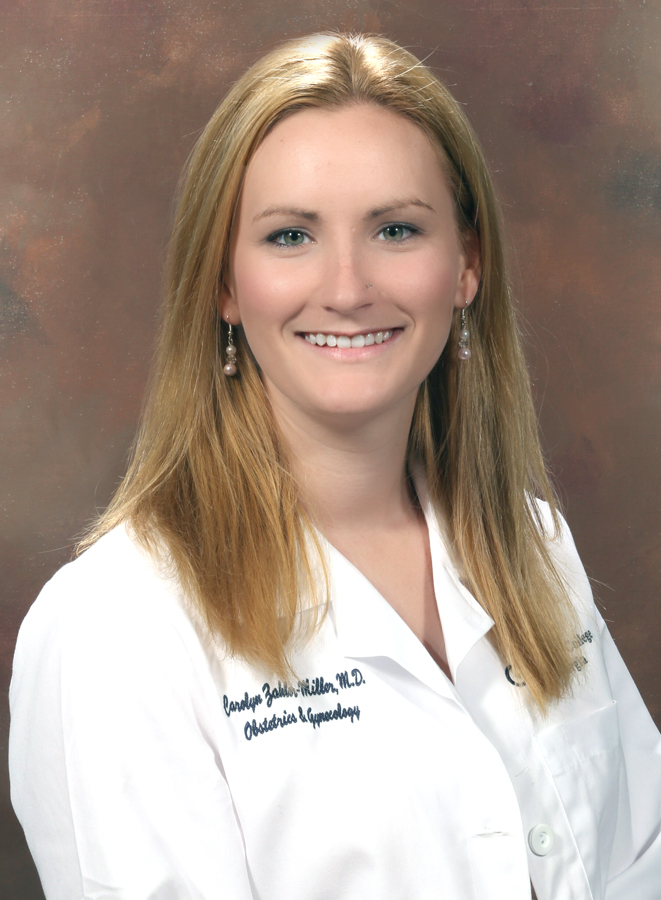
Carolyn Zahler-Miller serves as Associate Professor and Assistant Dean for Clinical Integration at Augusta University's Medical College of Georgia, Department of Obstetrics and Gynecology. She directs the Ob/Gyn medical student clerkship and provides clinical care at downtown Augusta and Grovetown sites, specializing in abnormal uterine bleeding, PCOS, menopausal medicine, and breastfeeding optimization. Her educational background includes: MD, University of Florida, 2014 BS in Chemistry, University of Florida, 2010 Dr. Zahler-Miller's research focuses on women's health across the lifespan, with expertise in abnormal uterine bleeding, PCOS, menopausal disorders, breastfeeding medicine, HPV vaccination, and gestational diabetes. Her work integrates clinical practice with educational innovation to develop evidence-based interventions for patient care and physician training. Recent publications (2023-2025) demonstrate her commitment to translational research, spanning mobile health applications for breastfeeding support, RSV prevention in newborns, surgical decision-making in benign gynecology, menopausal sexual health therapies, and cost-effective surgical training models. These works highlight her dual focus on clinical outcomes and medical education advancement. Notable honors include: AU/MCG Woman Who Inspires (2023) Fellow of the American College of Obstetricians and Gynecologists (2021) As an educator, Dr. Zahler-Miller teaches 12+ medical student courses, chairs the Ob/Gyn Student Advising Committee, and serves on departmental and college committees including the Executive Committee and Curriculum Enrichment Committee. She actively shapes medical education through curriculum development, student mentorship, and clerkship leadership while maintaining clinical practice in general obstetrics and gynecology.
Anna Dreber Almenberg is the Johan Björkman Professor of Economics at the Stockholm School of Economics (SSE), specializing in meta-science and behavioral economics. She holds a chaired professorship and is actively involved in advancing research credibility through initiatives like Lab2 and the Institute for Replication. Her work focuses on replication studies, predicting replication outcomes, and investigating economic preferences influenced by biological factors like testosterone. She serves as an Editor at the Journal of Political Economy Microeconomics, emphasizing credible results over clear outcomes. Dr. Dreber Almenberg’s research spans experimental economics, including large-scale studies such as a testosterone administration trial involving 1,000 participants. She is a Wallenberg Scholar and a member of prestigious academies (KVA and IVA). Her recent work critiques selective reporting of placebo tests in economics and explores design heterogeneity in replications. Her key contributions include high-powered replications of asset market results and collaborations on hormone administration studies (e.g., contraceptive pill effects). She advocates for pre-registration and transparency in research, reflected in her editorial role and involvement with journals like Nature Human Behaviour.
Associate Professor Jenni Ilomaki holds a position at Monash University's Centre for Medicine Use and Safety. With expertise in clinical pharmacy, epidemiology, and public health, she leads a research group analyzing administrative claims data. Her work spans collaborations with governmental and non-governmental organizations globally, yielding over 150 peer-reviewed publications and $4 million in grants. She previously served as Chair of ASCEPT's Pharmacoepidemiology Special Interest Group and currently serves as Science Lead for the Monash Addiction Research Centre and Executive Editor of the British Journal of Clinical Pharmacology. Education includes a Bachelor of Science (Pharmacy) from the University of Kuopio (1999) and Master of Science (Pharmacy) from the University of Kuopio (2004). She completed a PhD in alcohol epidemiology at the University of Eastern Finland (2011) and a postdoc at the University of South Australia (2011-2014). Notable recognitions include Young Epidemiologist of the Year (2011) and the Ronald D. Mann Best Paper Award (2021). Key research focuses on quality use of medicines, medicine safety, large population studies, and innovative epidemiological methods. Major projects include developing clinical decision support tools for cardiovascular prevention, analyzing preventable hospitalizations in aged care, and investigating psychotropic medication trends in youth. Her work contributes to UN Sustainable Development Goals related to health equity and non-communicable disease reduction. Recent publications emphasize drug repurposing (e.g., SGLT2 inhibitors), opioid prescribing patterns, hip fracture outcomes, and dementia detection algorithms. She chairs multinational studies on stroke and myocardial infarction cost burdens, demonstrating interdisciplinary impact across pharmacology, epidemiology, and health economics.
Professor Siladitya Bhattacharya is Vice-Principal (Global Engagement) at the University of Aberdeen , affiliated with the School of Medicine, Medical Sciences and Nutrition . A leading figure in reproductive medicine, he combines clinical expertise with extensive research in infertility, epidemiology, and health services. MD in Obstetrics and Gynaecology (University of Aberdeen, 1997) FRCOG and MRCOG (Royal College of Obstetricians and Gynaecologists) Subspecialty Accreditation in Reproductive Medicine (1999) His research focuses on reproductive health epidemiology , infertility outcomes , clinical and cost-effectiveness of interventions , and systematic reviews . He leads major randomized trials and health technology assessments in endometriosis, IVF strategies, and male hypogonadism. His work integrates epidemiological methods with real-world clinical data to inform policy and practice. Recent publications highlight trends in endometriosis management , embryo transfer strategies , testosterone therapy , and core outcome set development for infertility research. His articles span high-impact journals like The Lancet , BMJ , Human Reproduction , and Cochrane Database , reflecting a strong emphasis on evidence-based medicine and meta-analytic approaches. His scientific honors include the MRCOG Prize Medal, ESHRE Established Clinician Award, and multiple Wellcome and NIHR awards. He has held key editorial roles as Editor-in-Chief of Human Reproduction Open and Editor for Cochrane Gynaecology and Fertility . Prof. Bhattacharya supervises PhD students and leads the International Network for Research in Reproductive Medicine (INREM) . He has secured substantial funding from NIHR, MRC, CSO, and Wellcome Trust for projects on endometriosis, IVF, and male infertility. His advisory roles include NHS boards, FIGO, RCOG, and international research consortia. He leads global collaborations across the UK, USA, India, Australia, and Europe, advancing research in reproductive health through multi-centre trials and consensus development.
Dr. Naomi Ellis is an Associate Professor of Health Research at Staffordshire University, affiliated with the Faculty of Health, Education, Policing and Sciences. She holds a PhD in qualitative research examining physical activity as mental health therapy, alongside MSc and BSc qualifications in Sport and Exercise Science with Psychology. Her academic roles include module leadership and teaching across undergraduate and postgraduate programs focusing on research methods, public health, and sport psychology. Her research expertise spans physical activity’s impact on mental health, green space health benefits, and health equity in mid-life populations. She employs interpretative phenomenological analysis (IPA) and has conducted studies in prisons, deprived urban communities, and NHS programs. Key projects include evaluating NHS Health Check communication, social marketing for mental health, and the role of nature in well-being during the pandemic. Publications highlight her focus on cardiovascular risk communication, suicide risk assessment practices, and women’s football health issues. Teaching responsibilities include leading research methods modules and supervising student projects. Professional memberships include the British Psychological Society and Higher Education Academy. Recent work explores multimorbidity patterns, digital health interventions, and housing-first policies’ health impacts. Her research consistently bridges qualitative methodologies with applied health challenges in clinical and community settings.
Professor Stephen Bird is a renowned performance scientist and strength and conditioning expert at the University of Southern Queensland (USQ), leading the School of Health and Medical Sciences. He holds the title of Professor (Sport and Exercise Science) and directs the High-Performance Sport program. His roles include Editor-in-Chief of the International Journal of Strength and Conditioning and advisor to organizations like the Australian Strength and Conditioning Association. Education: BHumMov(ExSc), BHumMov(Hons), and PhD from Charles Sturt University. Research Focus: Strength and conditioning methodologies, nutritional supplementation, athlete recovery, and technology-driven performance optimization. Key Projects: '2 WIN 2032' student-athlete empowerment initiative, NBA sleep health studies, and blood flow restriction (BFR) training for muscle/bone health in space travel. Affiliations: Institute for Resilient Regions (IRR), National Health and Medical Research Council (NHMRC) peer review, and collaborations with Flinders University, University of Gloucestershire. Research interests span elite athlete performance (basketball, rugby, hockey), female athlete health, and applications of pupillometry and wearable tech for fatigue monitoring. Awards include the prestigious ESSA Medal (2006) and Life Membership (Western Region Academy of Sport). Teaching includes courses on strength training, sports nutrition, and athlete workload monitoring. He has supervised over 20 doctoral and master’s students, contributing to >40 research outputs annually. Grants include a $832k Quantum wearable sensor project (2024) and $240k AI-driven motion capture initiative. His work bridges academia and elite sport, advising teams like the Brisbane Bullets (NBL) and GB Women’s Basketball. Recent trends in publications emphasize NBA performance metrics, sleep science, and interdisciplinary solutions for athlete resilience.
Andrea Meltzer is an Associate Professor and Director of the Social Psychology Area at Florida State University's Department of Psychology, within the College of Arts and Sciences. Her work employs experimental and longitudinal methods from an evolutionary perspective to study intimate relationships, focusing on how personal qualities influence relationships and vice versa. She earned her Ph.D. from the University of Tennessee in 2012. Research interests include hormonal contraceptive effects, ovulatory shifts, sexual selection, life history strategies, body image, and marital dynamics. The ACR Lab explores topics such as sexual afterglow duration, partner-specific desire, and pandemic-related marital communication. Dr. Meltzer is currently recruiting a graduate student for Fall 2025. Publications emphasize dyadic sexual desire calibration, attachment insecurity impacts on marital stability, and the role of sociosexuality. Her work bridges evolutionary theory with contemporary relationship challenges, often using innovative methodologies like smartphone tracking and virtual dating experiments.
Prof. Dr. Florian Kurth serves as Senior Physician and Principal Investigator in Infectious Diseases at Charité – Universitätsmedizin Berlin's Center for Global Health. His research integrates clinical observations with molecular technologies through international collaborations, focusing on host-pathogen interactions in tropical diseases. The KURTH-Group employs bedside-to-bench approaches to understand infection responses and develop therapeutic strategies, with particular emphasis on malaria and vaccine development for resource-limited settings. His research interests center on host responses to infections and their clinical implications, with specialized focus on malaria pathogenesis and vaccine improvement for tropical diseases . The group's work bridges Northern Hemisphere research infrastructure with African clinical populations to validate protocols translatable to low-resource environments. Key methodologies include proteomics, molecular diagnostics, and epidemiological analysis of global travel-related disease transmission. Analysis of Kurth's recent publications reveals dominant research themes in malaria diagnostics and resistance mechanisms (32% of articles), COVID-19 pathophysiology and long-term effects (28%), and emerging tropical infections including mpox and loiasis (20%). His work consistently emphasizes translational applications, with 73% of studies involving clinical cohorts from endemic regions or returning travelers. Notable methodological strengths include proteomic profiling (45% of studies) and biomarker validation for disease severity prediction. Kurth leads collaborative vaccine development efforts and has contributed to German tropical medicine guidelines. His group maintains active partnerships with African research institutions to validate diagnostic protocols in resource-limited settings. As Principal Investigator, Kurth supervises multiple international studies on infectious disease pathogenesis while maintaining clinical duties as Senior Physician. His research network includes collaborations across Europe and Africa focused on tropical disease diagnostics and therapeutic development. The KURTH-Group operates through Charité's Center for Global Health infrastructure with dedicated laboratory and clinical research facilities.