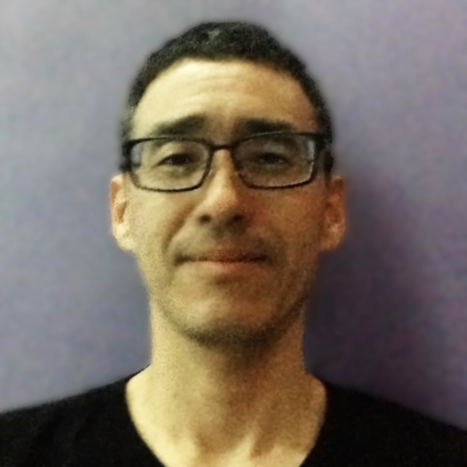
Satoshi Tomioka is a Professor in the Department of Linguistics and Cognitive Science at the University of Delaware, affiliated with the College of Arts & Sciences. He holds a B.A. from International Christian University (Tokyo) and a Ph.D. from the University of Massachusetts Amherst. His expertise spans semantics, pragmatics, syntax, and prosody, with a focus on Japanese and comparative East Asian linguistics. Education: B.A. in Liberal Arts (1987), International Christian University; Ph.D. in Linguistics (1997), University of Massachusetts Amherst. Research interests include ellipsis, anaphora, wh-interrogatives, distributivity, and contrastiveness. He investigates how prosody interacts with syntax and semantics in Japanese, exploring topics like focus marking, intervention effects, and scalar implicatures. Recent work examines associative plurals and pragmatic disambiguation in embedded questions. Publications analyze theoretical and empirical questions in linguistic interfaces, such as Bare quotatives as embedded speech acts (2024) and Focus without pitch boost (2022). His work bridges formal semantics and experimental approaches, addressing challenges in cross-linguistic typology and cognitive aspects of language processing.
Rutgers, The State University of New JerseyUnited States
Mark Baker is a Professor of Linguistics and Cognitive Science at Rutgers University. His work focuses on comparative syntax, linguistic universals, semantic roles, and the study of Amerindian and African languages. He holds the title of Distinguished Professor and maintains an office in Scott Hall. As of 2021, his office hours were by appointment due to sabbatical leave. His research interests include syntactic diversity, its limits, and patterns across languages. Notable themes in his work involve logophoric pronouns, switch-reference mechanisms, and the relationship between case systems and agreement structures. He has contributed to discussions on language typology, formal syntax, and the cognitive foundations of linguistic structures. Baker teaches advanced syntax courses and has published extensively on topics ranging from Panoan languages to theoretical models in generative grammar. His recent articles explore syntactic variation, morphosyntactic alignment, and interdisciplinary connections between linguistics and cognitive science. He serves on editorial boards and has reviewed for journals such as Journal of East Asian Linguistics and Yearbook of Corpus Linguistics and Pragmatics . His work bridges formal linguistic theory with empirical cross-linguistic analysis, emphasizing the interplay between universal grammatical principles and lineage-specific traits.
Patrick Sturt is a Reader in Psychology at the University of Edinburgh's School of Philosophy, Psychology and Language Sciences. His research focuses on syntactic processing in language comprehension, computational models of incremental parsing, anaphor resolution, and eye movements in reading. With over 100 publications and more than 3,300 citations, he is a recognized expert in psycholinguistics and language processing. Dr. Sturt's research interests span multiple areas of language processing. He investigates how humans comprehend sentences in real-time, with particular focus on syntactic structures, agreement phenomena, and anaphoric reference. His work often employs eye-tracking methodologies to examine the moment-by-moment processing of linguistic information. He has made significant contributions to understanding how readers handle syntactic ambiguities, garden-path sentences, and the role of prediction in language comprehension. His recent publications demonstrate a strong focus on cross-linguistic studies, particularly examining language processing in Mandarin Chinese and Korean. Many of his studies investigate how syntactic and semantic information interact during comprehension, and how linguistic structures like honorifics, classifiers, and non-canonical word orders are processed. His work bridges theoretical linguistics with experimental psycholinguistics, providing empirical evidence for models of sentence processing. Dr. Sturt actively supervises PhD students including Carine Abraham, Wenjia Cai, Chiuchou Hao, Ruomeng Zhu, and Christy Gu. He teaches Psychology of Language 1 and 2 at the MSc level, as well as Data Analysis for Psychology in R for first-year undergraduates. His teaching reflects his research expertise, providing students with both theoretical knowledge and practical analytical skills. Based in Room G29 of the Psychology Building at 7 George Square, Edinburgh, Dr. Sturt maintains regular office hours on Tuesdays from 3-4pm, providing accessibility to students and colleagues. His email address is patrick.sturt@ed.ac.uk.
Dr. Luke Fleming is an Associate Professor in the Department of Anthropology at the University of Montreal's Faculty of Arts and Sciences. His research focuses on comparative linguistic anthropology, particularly the typology of honorific systems, kinship-related linguistic avoidance practices, and sociolinguistic dynamics in indigenous and small-scale societies. He has authored over 20 peer-reviewed publications and led numerous research projects funded by the Social Sciences and Humanities Research Council of Canada (SSHRC) and international institutions. Teaching responsibilities include courses on sociolinguistics, linguistic anthropology, and language and culture. He supervises graduate students engaged in interdisciplinary research spanning from Sri Lanka to the Amazon basin. Current projects investigate honorific pronoun systems across Theravada Buddhist communities and Tamil language usage in South Asia. Lead researcher for SSHRC-funded projects studying honorific systems and small-scale sociolinguistics Published in Journal of Linguistic Anthropology , Language in Society , and Anthropological Linguistics Advisor to 9 graduate students since 2018 Research networks include collaborative projects with Patagonian language speakers and ongoing comparative studies linking Southeast Asian honorifics to African avoidance practices. His forthcoming book On Speaking Terms examines kinship-related linguistic avoidance worldwide. Active in program development for interdisciplinary anthropology degrees, contributing to 15 academic programs at undergraduate and graduate levels.
Professor El Mustapha Lahlali is a distinguished academic at the School of Languages, Cultures and Societies, University of Leeds, where he holds the position of Professor of Applied Linguistics and Media. His research and teaching focus on Arabic media discourse, critical discourse analysis, translation, ideology, and pedagogy. Education: BA in Applied Linguistics MA in Applied Linguistics PhD in Critical Discourse Analysis and Classroom Discourse His research interests span Arab media and society, discourse analysis in educational and political contexts, appraisal theory, translation and ideology, and teaching Arabic as a foreign language. He has published extensively on media discourse, political rhetoric, and translation practices in Arabic contexts, contributing significantly to the understanding of linguistic strategies in media and political communication. His recent publications reflect a strong focus on discourse in conflict, media framing, translation challenges, and pedagogical development. These works collectively emphasize critical analysis of Arabic media, political transitions, and intercultural communication, revealing trends in ideological representation and linguistic power dynamics. Scientific Awards: No specific awards listed in the text. Professor Lahlali has supervised 27 PhD students to completion and currently mentors several more on topics including media translation, ideology, discourse analysis, and pedagogy. He has served as internal and external examiner for over 100 PhD theses across the UK and internationally. He has secured and contributed to numerous research grants in Arabic, linguistics, and Middle Eastern studies. His leadership extends to organizing over 45 academic events, including conferences and workshops. He is actively involved in research groups and welcomes PhD applicants in areas related to Arabic media, discourse analysis, and translation. He is a key figure in professional associations such as BATA (Founder and President), BRISMES, UCML, and APETAU.
Yoshiko Matsumoto is the Yamato Ichihashi Professor in Japanese History and Civilization and Professor of East Asian Languages and Cultures at Stanford University, with a courtesy appointment in Linguistics. She has been a faculty member at Stanford since 1992, progressing from Assistant Professor to her current distinguished position. Matsumoto also serves as coordinator of the Japanese Language Program and has held significant administrative roles including Chair of the Department of Asian Languages (2003-2005) and Interim Chair of the Department of East Asian Languages and Cultures (2016). Matsumoto earned her Ph.D. in Linguistics from the University of California, Berkeley (1989), following M.A. degrees in Linguistics from UC Berkeley and General and Applied Linguistics from the University of Tsukuba, an M.I.A. in American Studies from the University of Tsukuba, and a B.A. in English Language & Literature from Japan Women's University. Professor Matsumoto's research focuses on linguistic pragmatics from cross-linguistic perspectives, with particular expertise in Japanese language. Her work spans structural and sociocultural aspects of language in use, including noun-modifying clause constructions, honorifics, discourse markers, and the intersection of language with gender and aging. She has pioneered research on conversational narratives of older adults, examining how ordinary framing strategies help individuals navigate difficult experiences. Her current projects explore intergenerational communication through haiku, communicative abilities of people with dementia, and noun-modifying constructions across Eurasian languages. Matsumoto's scholarship consistently bridges theoretical linguistics with practical applications for understanding human communication in diverse social contexts. Matsumoto's recent publications reveal a growing focus on practical applications of linguistic research for social benefit, particularly in intergenerational communication and dementia care. Her work increasingly integrates arts-based approaches, especially haiku poetry, to bridge generational divides and enhance communication with elderly populations. The research shows a consistent trajectory from theoretical linguistic frameworks toward applied, human-centered language studies that address real-world challenges in aging societies, with particular attention to how ordinary language practices help individuals navigate life transitions and difficult experiences. Dean's Award for Distinguished Teaching, School of Humanities and Sciences, Stanford University (2000) Richard E. Guggenhime Faculty Scholar, Stanford University (2000-2003) Violet Andrews Whittier Fellow, Stanford Humanities Center (2019-2020) Faculty Research Fellow, Michelle R. Clayman Institute for Gender Research (2014-2015) Research Fellow, Japan Foundation (2002) Internal Fellow, Stanford Humanities Center (2005-2006) Presidential Fund for Innovation in the Humanities, Stanford University (2009-2011) Professor Matsumoto has mentored numerous students through her teaching in Japanese language and linguistics courses, including specialized offerings on language and aging, points in Japanese grammar, and haiku-based communication. Her research has been supported by prestigious grants from the National Endowment for the Humanities, the Japan Foundation, and Stanford's Presidential Fund for Innovation in the Humanities. She has served on multiple editorial boards including the Journal of Pragmatics since 1992, demonstrating long-standing leadership in her field. Matsumoto has also advised students through individual studies and thesis projects in East Asian Languages and Cultures. Matsumoto leads several collaborative research initiatives including the 'Sharing Conversations' project which examines intergenerational communication through haiku, and research on communicative abilities of people with dementia. Her work often involves interdisciplinary teams spanning linguistics, gerontology, and creative arts, with fieldwork conducted in both Japan and the United States. The 'Noun-Modifying Constructions in Languages of Eurasia' project represents a major international collaboration examining linguistic structures across cultural boundaries. She also directs the 'Language, Old Age and Gender in Japan' project supported by the Stanford University/Japan Foundation, and the 'Difficult Conversations Continue: Memories of the 3.11 Disaster and Bereavement Narratives' project focused on post-disaster communication.
Peter Backhaus is a Professor at Waseda University's School of Education, Tokyo. He is affiliated with the Graduate School of Education and Faculty of International Research and Education, contributing to both academic and societal contexts through interdisciplinary research. Doctor of Philosophy (PhD) from Germany ResearchGate profile verified via institutional email His research focuses on Sociolinguistics, Pragmatics, Stylistics, and Linguistic Landscapes , with a strong emphasis on multilingualism in Japanese public spaces and communication dynamics in eldercare facilities. Key themes include institutional interactions, language policy, and discourse analysis. Recent publications like “Magica Spellings” (2025) and “Care Communication” (2017) highlight his expertise in language contact, policy, and healthcare discourse. His work has been cited over 3,699 times (Google Scholar), with an h-index of 13. 2018 Waseda Research Award recipient for outstanding scholarly contributions He has led research projects funded by JSPS, including studies on Japanese spam language (2013-2016) and immigrant language policies (2008-2010). His teaching portfolio at Waseda University includes courses in English linguistics, sociolinguistics, and communication studies.
Paul Portner is a Professor in the Department of Linguistics at Georgetown University. He holds a Ph.D. from the University of Massachusetts and a B.A. from Princeton University. His research focuses on semantics and pragmatics, particularly their interfaces with syntax, exploring topics such as verbal mood, speaker-addressee relations, and modality. He has led NSF-funded projects on clause types and gradable modal expressions, collaborating with researchers like Raffaella Zanuttini and Aynat Rubinstein. His book Mood (2018) and numerous articles in journals like Natural Language Semantics and Language reflect his contributions to formal semantics and pragmatics. Current projects include studies on speech style and politeness, and a book under contract with Oxford University Press. Portner teaches courses such as Semantics and Pragmatics and frequently participates in summer schools globally. Education : - Ph.D. in Linguistics, University of Massachusetts - B.A. in Linguistics, Princeton University Research Interests : - Syntax-semantics interface - Modality and mood systems - Pragmatics of discourse - Cross-linguistic variation in speech styles Funded Projects : - NSF BCS-0234278: 'Clause Types: Form and Force in Grammatical Theory' (with Zanuttini and Pak) - NSF BCS-1053038: 'The Semantics of Gradable Modal Expressions' (with Katz, Herburger, and Rubinstein) Advising & Grants : - No formal student advisees listed in the provided materials. - Collaborations with international scholars in computational linguistics and formal semantics. Labs/Teams : - Active participation in interdisciplinary research groups at Georgetown and global institutions, focusing on mood systems and linguistic pragmatics.
Dr. Harper B. Keenan is an Assistant Professor at the University of British Columbia’s Faculty of Education, Department of Curriculum and Pedagogy. He previously held a postdoctoral fellowship at Stanford Graduate School of Education and earned his PhD in Curriculum and Teacher Education from Stanford in 2019. His research focuses on critical trans pedagogies, anti-racist queer and trans education, and the intersection of colonialism, race, and gender in schools. Institution: University of British Columbia Department: Department of Curriculum and Pedagogy Academic Rank: Assistant Professor Dr. Keenan’s work interrogates how adults teach children to navigate oppressive systems while creating spaces for transformative inquiry. He advocates for pedagogies that embrace children’s curiosity about topics like colonialism, gender, and violence, emphasizing classroom environments that foster self-directed learning and critical engagement. His recent publications explore trans worker safety in PK-12 schools, methodological innovations rooted in transgender experiences, and the reimagining of curriculum to challenge binary norms. Key trends in Dr. Keenan’s scholarship include: Centering trans and queer epistemologies in educational research Critiquing standardized testing and colonial narratives in elementary education Developing anti-racist, decolonial approaches to teaching history Advocating for gender-neutral honorifics and inclusive language Dr. Keenan’s awards include the Robert Quartermain Professorship of Gender and Sexuality Research in Education and a 2022 NAEd/Spencer Foundation Postdoctoral Fellowship . He maintains active collaborations with trans educators and scholars, including co-authoring policy briefs and participating in national dialogues on transgender justice in schools.
Trevor Evans is an Associate Professor in the Department of History and Archaeology at Macquarie University, within the School of Humanities. He specializes in ancient languages, particularly post-classical Greek, and focuses on documentary texts, the Septuagint, and lexicography. Evans holds a BA (Hons) from the University of New England (1992) and a PhD from the University of Sydney (1998), supervised by John A.L. Lee. His career includes roles as a Research Officer and Macquarie University Research Fellow before joining the University of Oxford as an Assistant Editor of the Dictionary of Medieval Latin from British Sources and Senior Golding Fellow. Returning to Macquarie in 2007, he has held roles such as Senior Lecturer and Associate Professor, coordinating ancient-language teaching and directing the Macquarie Ancient Languages School (MALS). Educations: Bachelor of Arts (Hons) in Classics, University of New England (1992) PhD in Ancient Greek Linguistics, University of Sydney (1998) Research Interests: Evans’ work centers on ancient languages, including the linguistic analysis of Greek papyri and inscriptions, the Septuagint’s syntactic features, and lexicography. He explores sociolinguistic aspects of documentary texts, such as the Zenon Archive, and Hebrew influence on Greek biblical translations. His studies bridge textual criticism, historical linguistics, and cultural history. Recent Article Trends: Recent publications address Koine Greek in documentary sources, Septuagint syntax, and lexicographical challenges. His work emphasizes interdisciplinary approaches, combining textual evidence with sociolinguistic analysis to uncover linguistic and cultural dynamics in ancient texts. Awards: 2021: Elected Fellow of the Australian Academy of the Humanities Grants & Advising: Evans has led projects such as The Good, the Indifferent, and the Unintelligent: A Comparative Lexical Analysis of Three Books of the Septuagint (2018–present) and Written and spoken Greek from the fifth century CE (2014). He advises students on topics like Greek documentary texts and Septuagint language. Labs/Teams: As Director of the Macquarie Ancient Languages School (MALS), he oversees programs in ancient Greek, Latin, and Hebrew, fostering interdisciplinary language education.
Sunil Bhatt is an Associate Professor of Teaching specializing in Hindi-Urdu language instruction within the Department of Asian Studies at the University of British Columbia's Faculty of Arts. With a background in Comparative Linguistics and experience teaching South Asian languages across multiple continents, he brings a unique perspective to language education. His research focuses on linguistics, particularly Hindi-Urdu language teaching, sociolinguistics, and language acquisition. He has published extensively on topics including honorifics in Hindi, bilingual situations in India, and the integration of Bollywood culture in language instruction. His work demonstrates a commitment to understanding the complex sociopolitical dimensions of language teaching in South Asian contexts. Bhatt's recent publications reveal a consistent focus on pedagogical approaches to Hindi-Urdu instruction, with emphasis on heritage learners, pandemic-era teaching adaptations, and the relationship between language and cultural identity. His research spans theoretical linguistics, applied language teaching, and sociolinguistic analysis of language communities. As an educator, he teaches foundational and advanced courses including Introductory Hindi-Urdu, Sufi and Bhakti Devotional Literatures, and Introduction to Hindi Film, demonstrating his integration of language instruction with cultural studies. His scholarly contributions extend beyond traditional publications to include textbooks, edited volumes, and digital learning resources that have significantly impacted Hindi-Urdu language pedagogy internationally.
Heidi B Harley is a Professor of Linguistics at the University of Arizona since 1999, specializing in syntax, morphology, and lexical semantics with a focus on Hiaki (Yaqui), Italian, Japanese, Korean, Irish, Icelandic, and Georgian languages. She has published extensively in journals like Language , Linguistic Inquiry , and Natural Language and Linguistic Theory , and authored the textbook English Words: A Linguistic Introduction . Education: Ph.D. in Linguistics from MIT, B.A. in English and Linguistics from Memorial University of Newfoundland Research: Distributed Morphology, argument structure, event structure, suppletion, verb-initial languages, and cross-linguistic comparison Recent publications examine root identity in Hiaki, phase-theoretic mismatches in morphology, and force-theoretic models of telicity. Her work reveals deep connections between morphological locality, syntactic structure, and semantic interpretation across diverse languages. Scientific Awards: Fellow of the Linguistic Society of America (2018) Graduate and Professional Education Teaching and Mentoring Award (2011) Earl Carroll Magellan Fellowship (2010)
Eugenia Diegoli is an Assistant Professor in the Department of Asian and North African Studies at Ca' Foscari University of Venice, where she conducts research on Japanese and Korean language, pragmatics, and computer-mediated discourse. She is currently working on the SELFEE (SELF-Evaluative Emotions in English and Japanese) project. Her research focuses on the linguistic expression of emotions, apologies, politeness, and cross-cultural communication, primarily using corpus-assisted discourse analysis. Her work bridges Japanese and Western linguistic traditions and explores meta-discourses on linguistic correctness, emotional expressions in online spaces, and the semantics of shame and guilt. She has conducted extensive research on apology-like behavior in Japanese digital environments. Her recent publications include a 2025 monograph Online Apologies in Japanese (Brill) and numerous peer-reviewed articles in journals such as Journal of Pragmatics , Language and Cognition , and Intercultural Pragmatics . Her work shows a strong trend in analyzing digital discourse, emotional language, and sociopragmatic variation in Japanese, with increasing cross-linguistic comparisons involving English, French, and Korean. Her scientific awards include the Seal of Excellence for an MSCA post-doctoral fellowship and multiple fellowships such as the Marco Polo and JASSO scholarships. She has also received the Best Doctoral Student Paper Award at ICDP-1 (2022). She has advised and tutored students at the University of Bologna and is actively involved in academic service as a reviewer for several journals, including Journal of Pragmatics and Corpus Pragmatics . She has presented her research at international conferences such as IPRA, ADDA, and Corpora. She has also engaged in public outreach through webinars on Japanese language topics during the European Researchers' Night. She has been a Visiting Research Scholar at Meiji University, Waseda University, and Lancaster University. Her languages include native Italian, C2 Japanese (JLPT N1), and C2 English (IELTS 8.0).
Minju Kim is a Professor in the Korean Department within the School of Modern Languages and Literatures. She holds significant academic and editorial roles, including President of the International Circle of Korean Linguistics (ICKL) and Editor-in-Chief of The Korean Language in America . Her expertise spans Pragmatics, Grammaticalization, Discourse Analysis, Language and Gender, and Language Education. She earned her B.A. and M.A. from Yonsei University and her Ph.D. from the University of California, Los Angeles (UCLA). Dr. Kim’s research focuses on Korean linguistic structures, including honorifics, stance markers, and historical grammaticalization processes. Notable contributions include studies on Korean connectives, modal particles, and gendered language use in media. She has received the Korea Foundation Field Research Grant (2025). Her publications reflect interdisciplinary engagement in linguistics and sociolinguistics, with recent work addressing topics like Korean semi-honorific styles and cross-linguistic comparisons. She actively contributes to academic discourse through editorial roles and international collaborations.
Austin Hancock serves as an Assistant Teaching Professor of French in the Department of World Languages and Cultures at Northeastern University's College of Social Sciences and Humanities. His research interrogates the intersections of modernism and popular culture in the francophone world, with sport—particularly boxing—serving as a critical cultural lens for examining avant-garde movements. Education Ph.D. in French Language and Literature, Princeton University (2022) Research Interests Dr. Hancock's scholarship centers on how early 20th-century French avant-garde movements engaged with sports culture, revealing how athletic practices like boxing shaped literary and artistic expressions. His work bridges gender theory, cultural history, and materialist philosophy to analyze masculinities, queer identities, and socio-religious structures within modernist frameworks. Key methodologies include close reading of periodicals, performance studies, and transnational cultural analysis of francophone texts. Recent Publications Hancock's publications demonstrate a cohesive trajectory examining physical culture's role in modernist aesthetics, with boxing functioning as both literal practice and metaphorical battleground. His work connects Dadaist periodicals to sporting arenas, queer reinterpretations of masculine spaces, and materialist engagements with religious thought in French poetry, revealing sport as a vital site for ideological contestation in avant-garde circles. Scientific Awards and Fellowships Harold W. Dodds Honorific Fellowship, Princeton University Princeton Institute for International and Regional Studies (PIIRS) Fellowship FIT Summer Funding for Scholarly Travel and Research (Italian Language Training) Princeton Dean’s Fund for Scholarly Travel (CNRS Colloquium) Advising and Grants While specific student mentorship details aren't documented, Hancock secured significant Princeton-funded research support including international travel grants for archival work at the CNRS in Paris and language training, demonstrating strong grant acquisition capabilities for humanities research. His funding portfolio reflects deep engagement with transnational academic networks. Labs and Teams No dedicated research laboratories or formal teams are referenced in available materials, though his work shows collaboration with institutions like the CNRS and participation in international colloquia focused on avant-garde studies.