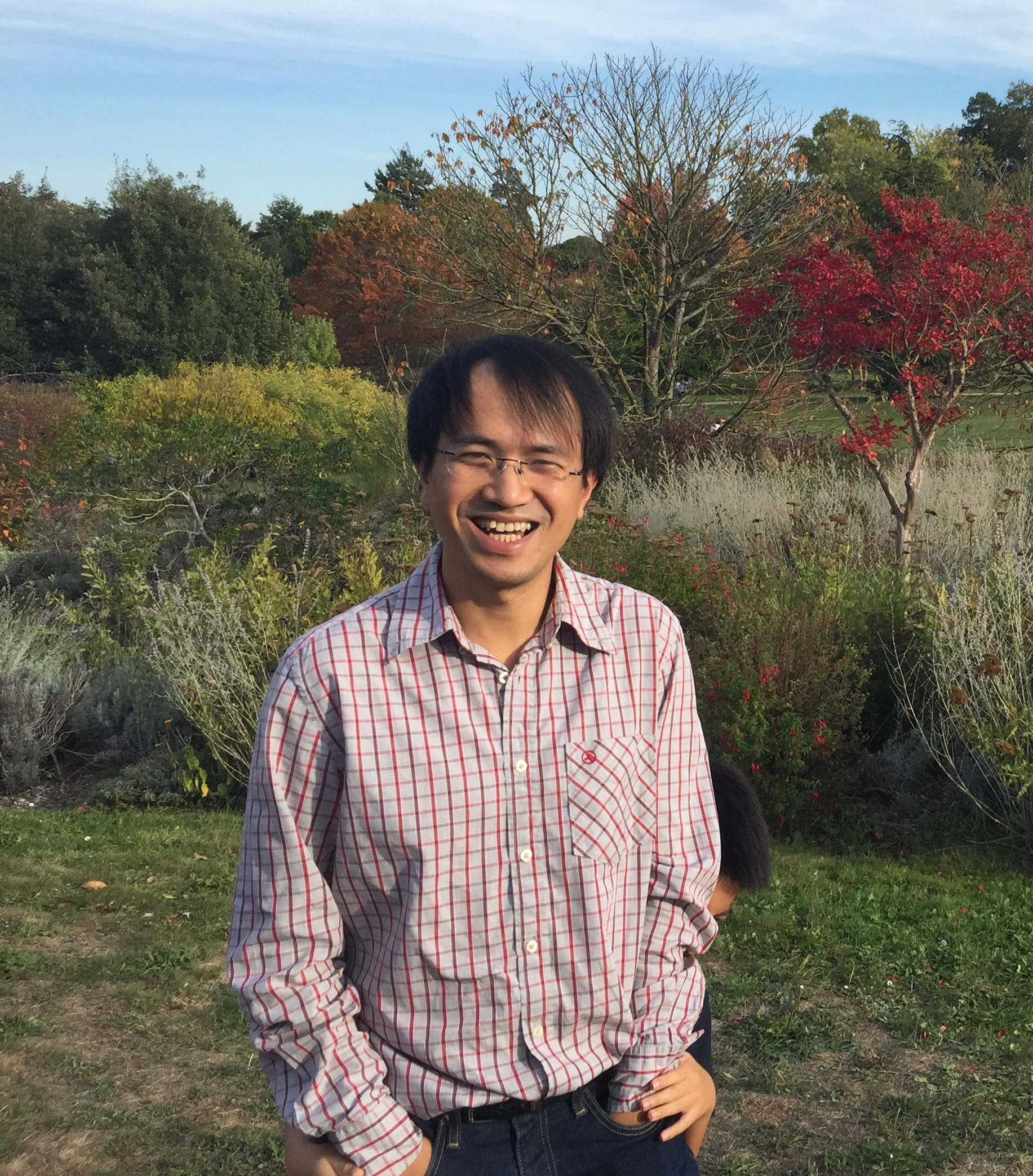
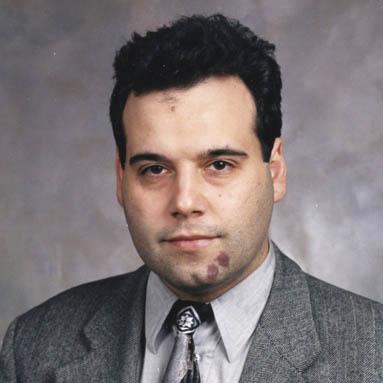
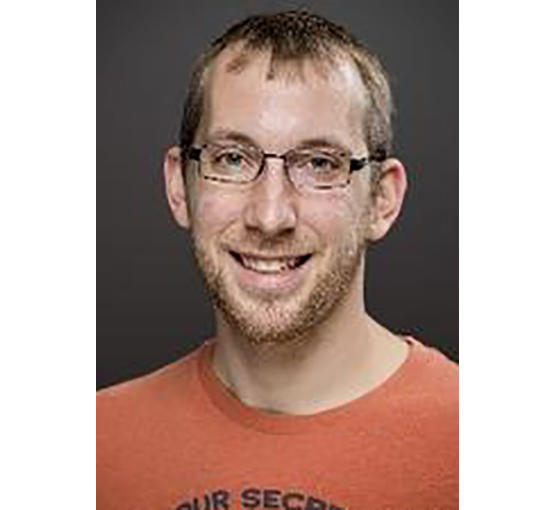
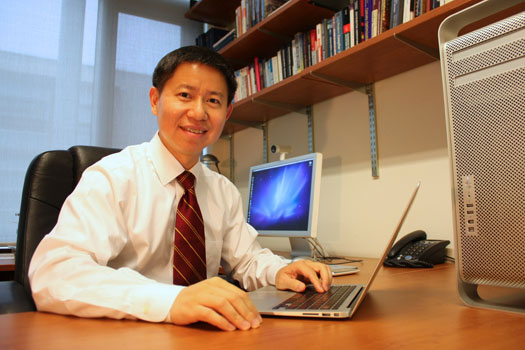
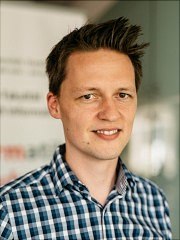
Duong Hieu Phan is a Professor at Telecom Paris, part of the Institut Polytechnique de Paris, and Head of the Cybersecurity-Cryptography team. He holds a Ph.D. in Computer Science from Ecole Normale Supérieure and has extensive postdoctoral experience at University College London and research roles at France Telecom R&D. His academic career includes roles as an assistant/associate professor at LAGA, University of Paris 8 (2007–2015), and later as a professor and director of the Master 2 Maths CRYPTIS program at XLIM, University of Limoges (2015–2020). His research focuses on cryptography, with emphasis on provable security, functional encryption, privacy-preserving systems, and anamorphic cryptography. Key areas include secure communication mechanisms against oppressive surveillance, decentralized systems, and post-quantum security. He has contributed to foundational work on CCA security for FHE, quantum-resistant protocols, and verifiable functional encryption. Prof. Phan is actively involved in professional committees, including IACR ASIACRYPT and PKC steering committees, and editorial boards such as the IACR CIC Journal. He promotes Franco-Vietnamese scientific collaboration through roles in the CNRS IRL partnership. His teaching spans cryptography, algorithms, and mathematics at undergraduate and master’s levels, including program coordination and research supervision.
Dr. Rachel Player is a Senior Lecturer in the Department of Information Security at Royal Holloway, University of London . Her research focuses on post-quantum cryptography, lattice-based cryptographic schemes, homomorphic encryption, and quantum algorithm applications in cryptanalysis. She holds a PhD in Information Security from Royal Holloway, supervised by Prof. Carlos Cid and Prof. Sean Murphy. Education: PhD in Information Security, Royal Holloway, University of London (supervisors: Prof. Cid & Prof. Murphy) Research Interests: Rachel explores cutting-edge areas in cryptography with a focus on privacy-preserving technologies. Her work bridges theoretical advancements and practical implementations, particularly in homomorphic encryption and post-quantum security protocols. Recent efforts emphasize applying quantum algorithms to cryptanalytic challenges. Professional Activities: Rachel actively contributes to standards development in cryptography, including organizing HomomorphicEncryption.org meetings and participating in ISO/IEC JTC 1/SC 27/WG 2 (cybersecurity standards). She also serves as an editor for the Designs, Codes and Cryptography journal. Labs/Teams: Collaborations include the PolSys team at Sorbonne Université (Paris) and the EU H2020 PROMETHEUS project. Current research is anchored in Royal Holloway's Information Security Department.
Berk Sunar is a Professor of Electrical & Computer Engineering and the founder of the Vernam Applied Cryptography and Cybersecurity Laboratory at Worcester Polytechnic Institute (WPI). He joined WPI in 2000 after holding postdoctoral and research roles at Oregon State University (OSU) and Trust Inc. His work focuses on applied cryptography, microarchitectural security, AI security, post-quantum cryptography, and homomorphic encryption. Sunar received his BSc from Middle East Technical University (1995) and PhD from Oregon State University (1998). Research interests include vulnerabilities in hardware (e.g., Rowhammer, TPM-FAIL), side-channel attacks, and cryptographic implementations. Notable contributions include discovering flaws in Intel CPUs and TPM chips affecting billions of devices, as well as developing defenses like cuHE (GPU-accelerated homomorphic encryption). Publications highlight breakthroughs in transient execution attacks (e.g., LVI, RIDL), post-quantum signature schemes (Dilithium), and cloud security (Firecracker VMM vulnerabilities). Awards include NSF CAREER (2002) and IBM Pat Goldberg Best Paper (2007). Advised over 30 graduate students, many of whom hold senior roles in academia and industry. Current research addresses AI security, quantum-resistant algorithms, and automated attack detection via machine learning. The Vernam Lab remains a hub for cybersecurity innovation.
Petr Kuznetsov is a Professor at Telecom Paris (Institut Polytechnique de Paris), affiliated with the Department of Computer Science and Networks (INFRES). He leads the Autonomous Critical Embedded Systems (ACES) research team at the Information Processing and Communication Laboratory (LTCI). His work bridges theoretical foundations and practical applications in distributed systems. Research Focus: Kuznetsov specializes in distributed algorithms, synchronization protocols, failure detection mechanisms, and the application of algebraic topology to distributed computing. His recent work explores Byzantine fault tolerance, blockchain consensus, and concurrency in networking infrastructures. Recent Publication Trends (2015-2025): His articles predominantly focus on scalability and resilience in distributed systems, with emerging themes in blockchain technologies, Byzantine fault tolerance, and concurrency optimization. Theoretical contributions include computability theorems and complexity bounds, while applied work targets payment systems and distributed ledgers. Awards & Honors: Best Paper Award at DISC 2019 for Scalable Byzantine Reliable Broadcast Best Student Paper Award at PODC 2018 for An Asynchronous Computability Theorem for Fair Adversaries Projects & Advising: He directs the TrustShare Innovation Chair (large-scale data synchronization) and DISCMAT (mathematical foundations of distributed computing). Actively seeks PhD candidates for projects on distributed algorithms and concurrency. Laboratory & Teams: Heads the ACES team at LTCI, focusing on critical embedded systems and fault-tolerant distributed architectures. Collaborates internationally through workshops like SPTDC.
Prof. Dr. Willi Meier serves as a Lecturer for mathematics and cryptology at the Institute for Sensors and Electronics within the School of Engineering and Environment at FHNW (University of Applied Sciences and Arts Northwestern Switzerland) in Windisch, Switzerland. With an extensive publication record spanning over three decades (1988-2025), he maintains an active research profile in cryptographic analysis. Dr. Meier's research primarily focuses on cryptanalysis of symmetric cryptographic primitives, with particular expertise in stream ciphers, block ciphers, and hash functions. His work frequently employs algebraic techniques, differential cryptanalysis, and mathematical modeling approaches to analyze cryptographic security. Recent research has centered on analyzing modern ciphers like Grain, Keccak, RIPEMD-160, and various lightweight cryptographic designs, often developing novel attack methodologies such as coefficient grouping and algebraic meet-in-the-middle approaches. His publication trends over the last five years show consistent high productivity in top-tier venues including CRYPTO, EUROCRYPT, ASIACRYPT, and IACR Transactions on Symmetric Cryptology. The research spans both theoretical advancements in cryptanalytic techniques and practical applications to real-world cryptographic standards. A significant portion of his recent work involves collaborations with international researchers, particularly Fukang Liu, Takanori Isobe, and Santanu Sarkar, reflecting his integration within the global cryptographic research community. Dr. Meier's work has practical implications for cryptographic standardization and implementation security, with analyses of protocols used in telecommunications (TETRA), lightweight IoT applications, and post-quantum cryptographic candidates. His research continues to contribute to the fundamental understanding of symmetric cryptographic primitives and their security margins.
Alessandra Scafuro is an Associate Professor in the Department of Computer Science at North Carolina State University. Her research focuses on theoretical and applied cryptography, particularly cryptographic protocols such as zero-knowledge proofs, secure multi-party computation, and blockchain technologies. She bridges foundational theory with practical implementations to solve real-world security challenges. Ph.D., Computer Science, University of Salerno (2013) B.S., Computer Science, Technische Universität Wien (2008) Research interests include: Design of modular and composable cryptographic protocols Privacy-enhancing techniques for blockchain systems Post-quantum secure cryptographic constructions Trust and anonymity in distributed environments Recent publications explore anonymity in blockchain consensus, zero-knowledge arguments from blockchains, and secure computation paradigms. Her work is supported by grants from NSF, Horizen Labs, Protocol Labs, and Cisco Systems. Dr. Scafuro actively mentors students and contributes to program committees such as EUROCRYPT 2024 and ACM CCS 2024 . She leads the Mutually Accountable Anonymous Systems project within the Wolfpack Security and Privacy Research Lab.
Brandon Lucia is a Full Professor in the Department of Electrical and Computer Engineering at Carnegie Mellon University's College of Engineering. He leads the abstract research group focusing on the intersection of computer architecture, systems, and programming languages. His work bridges theoretical foundations with practical implementations in energy-constrained environments. Lucia's research centers on intermittent computing systems and edge computing in extreme environments. His work on energy-harvesting systems has established fundamental principles for batteryless computing, while his orbital edge computing research pioneers computational intelligence for nanosatellite constellations. These research thrusts address critical challenges in reliability, efficiency, and programmability for systems operating under severe power constraints. His publication record shows a clear evolution from foundational work on intermittent computing models to sophisticated applications in space computing and edge intelligence. Recent publications demonstrate increasing integration of dataflow architectures with energy-harvesting constraints, particularly in satellite constellations where computational resources must be managed across distributed, power-constrained platforms operating in extreme environments. NSF CAREER Award (2017) IEEE TCCA Young Computer Architect Award (2019) Sloan Foundation Fellowship (2021) ASPLOS Best Paper Awards (2018, 2020) OOPSLA Distinguished Paper and Artifact Awards (2015) Lucia actively mentors numerous PhD students including Brad Denby, Zhuo Cheng, and Emily Ruppel, many of whom contribute significantly to his research program. His abstract research group maintains strong industry connections while pursuing fundamental advances in computing systems. The group has developed multiple open-source tools including Legerdemain for program analysis and MultiCacheSim for cache coherence simulation. His laboratory work spans from theoretical foundations of intermittent computing to practical implementations in space systems. Current projects include computational nanosatellite constellations, energy-minimal dataflow architectures, and secure edge computing systems that operate reliably despite frequent power failures.
Nir Bitansky is an associate professor of computer science at New York University's Courant Institute, part of the Theory Group and Cryptography Group. He previously held a faculty position at Tel Aviv University (now on leave) and was a postdoctoral researcher at MIT CSAIL, advised by Vinod Vaikuntanathan. His Ph.D. from Tel Aviv University was under Ran Canetti. His research focuses on foundational aspects of cryptography and computational complexity, including zero-knowledge proofs, obfuscation, and post-quantum security. Research Interests: His work bridges theoretical computer science and cryptography, addressing topics such as secure computation, cryptographic hardness assumptions (e.g., LWE, PPAD), privacy-preserving protocols, and quantum-resistant cryptography. Key areas include randomized encodings, succinct arguments, and the interplay between complexity theory and cryptographic primitives. Publications: His recent work emphasizes post-quantum cryptography (e.g., zero-knowledge protocols, commitment schemes) and foundational results in obfuscation. Notable contributions include advancements in batch proofs, non-interactive arguments, and the cryptographic hardness of local search problems. Students and Postdocs: Advised Ph.D. students include Sapir Freizeit, Nathan Geier, and Omri Shmueli (co-advised with Zvika Brakerski). Hosted postdocs such as James Bartusek (now at Columbia) and Rachit Garg. Collaborates widely, co-authoring papers with figures like Vinod Vaikuntanathan and Omer Paneth. Affiliations: Serves on program committees for top venues (e.g., CRYPTO, EUROCRYPT, FOCS). Taught courses on cryptography fundamentals, advanced topics, and lattices at TAU and NYU.
Ryan Henry is an Assistant Professor in the Department of Computer Science at the University of Calgary. His research focuses on applied cryptography, emphasizing the development of secure systems that prioritize user privacy. His work spans designing privacy-enhancing technologies, implementing cryptographic protocols, and analyzing number-theoretic attacks on cryptographic assumptions. He also explores theoretical aspects of cryptographic efficiency and practical deployment challenges. While specific educational background details are not provided in the text, his research contributions highlight expertise in cryptography, secure systems, and privacy-preserving technologies. His work has addressed topics such as Private Information Retrieval (PIR), secure messaging, and blockchain privacy. Key research interests include: Secure Multiparty Computation Privacy-Preserving Data Access Efficient Cryptographic Protocols Zero-Knowledge Proofs IoT Security Cryptocurrency and CBDC Design His recent publications emphasize advancements in distributed systems security, privacy in recommendation systems, and cryptographic efficiency. Notable contributions include the Grotto and Duoram frameworks for secure computation, and proposals for Canadian CBDC frameworks. Despite extensive research output, no scientific awards or grants are explicitly mentioned in the provided text. Collaborations and lab affiliations are not detailed, though his work suggests involvement in interdisciplinary projects on privacy and security technologies.
Dario Fiore is an Associate Research Professor at the IMDEA Software Institute in Madrid, Spain. He holds a Ph.D. in Computer Science from the University of Catania, Italy (2010), and has held postdoctoral positions at institutions including Max Planck Institute for Software Systems (Germany), New York University (USA), and École Normale Supérieure (France). His research focuses on Cryptography and Security, particularly designing provably-secure cryptographic primitives for Cloud computing applications, including secure data delegation, homomorphic authenticators, zero-knowledge proof systems, functional encryption, and homomorphic encryption. He advises multiple PhD students and has led projects like the ERC Consolidator Grant PICOCRYPT (2021–2026). He has been recognized with awards such as the ACM SIGMM Test of Time Honourable Mention (2022) and the IET Information Security Premium Award (2020). Education: Ph.D. in Computer Science, University of Catania, Italy (2010) Visiting Student: IBM T.J. Watson Research Center and New York University (USA) Research Interests Fiore’s work bridges theoretical and practical aspects of Cryptography, emphasizing efficiency and real-world applications. Key areas include: Secure delegation of computation/data to Cloud systems Homomorphic encryption and authenticators Zero-knowledge proof systems (e.g., zkSNARKs) and functional encryption Cryptography for privacy-preserving machine learning and decentralized systems Grants & Projects ERC Consolidator Grant PICOCRYPT (2021–2026) NEC Laboratories Europe collaboration (2024) ESPADA and PRODIGY EU projects Awards ACM SIGMM Test of Time Honourable Mention (2022) IET Information Security Premium Award (2020) ACM CCS 2022 Top Reviewer Award Labs & Teams Fiore leads a dynamic research group with active collaborations in cryptography, including postdocs, PhD students, and industry partnerships with Protocol Labs, Nomadic Labs, and Tezos Foundation.
Liang Xue is an Assistant Professor in the School of Information Technology at York University. She holds a PhD in Electrical and Computer Engineering from the University of Waterloo (2022) and completed a postdoctoral fellowship at the University of Guelph’s School of Computer Science (2022–2024). Her research focuses on applied cryptography, blockchain security, privacy-preserving AI, and cybersecurity in cloud and IoT systems. She has published in top-tier journals like IEEE Transactions on Dependable and Secure Computing, and conferences such as IEEE International Conference on Communications. Her work addresses challenges in data privacy, secure authentication, and regulatory compliance in decentralized systems. Recent projects include privacy-enhancing technologies for access control, blockchain-based data trading frameworks, and federated learning with privacy guarantees. She actively contributes to standards for cybersecurity in smart cities and next-generation wireless networks.
Hokeun Kim is an Assistant Professor in the School of Computing and Augmented Intelligence (SCAI) at Arizona State University (ASU), part of the Ira A. Fulton Schools of Engineering. He previously held positions at Hanyang University (2021-2023) and worked in industry roles at Google, LinkedIn, and HP Labs. His research focuses on cyber-physical systems, IoT security, and computer architecture, with a particular emphasis on safety and security aspects of time-sensitive systems. Education: Ph.D. in EECS, University of California, Berkeley (2017) M.S. in EECS, Seoul National University (2012) B.S. in Computer Science and Engineering, Seoul National University (2010) Research Interests: Kim’s work spans secure IoT frameworks, real-time embedded systems, and edge computing. He develops tools like the Secure Swarm Toolkit (SST) and Lingua Franca, addressing challenges in distributed system security, interoperability, and performance. Key Contributions: Authored over 30 peer-reviewed publications in top venues like IEEE Transactions, ACM Conferences, and DATE. Received the ACM/IEEE Best Paper Award (IoTDI 2017) and IEEE Micro Top Picks Honorable Mention (2017). Active in organizing conferences (e.g., DATE, FDL) and serves on technical committees for top journals/conferences. Teaching: Courses include Computer Architecture I/II, Real-Time Embedded Systems, and IoT design at both undergraduate and graduate levels.
Kristian Gjøsteen is a Professor at the Department of Mathematical Sciences within the Norwegian University of Science and Technology (NTNU) . He actively contributes to the Algebra Group and specializes in cryptographic systems with a focus on electronic voting , security proofs , and privacy-enhancing technologies . Educational Background: MSc and PhD from NTNU Research Interests: His work spans cryptography , key exchange protocols , cloud security , and formal verification of security mechanisms. Particular emphasis is placed on coercion-resistant voting systems , lattice-based encryption , and blockchain privacy models . Article Trends: Recent publications demonstrate expertise in post-quantum cryptography , machine-checked security , and privacy-preserving voting architectures . Collaborative efforts explore hybrid cryptographic schemes , verifiable decryption , and mix-net implementations for secure elections.
Baochun Li is a Professor and Associate Chair, Research at the Edward S. Rogers Sr. Department of Electrical and Computer Engineering at the University of Toronto , with a cross-appointment to the Department of Computer Science. He holds the Bell Canada Endowed Chair in Computer Engineering since 2005. Education: B.Engr. from Tsinghua University (1995), M.S. and Ph.D. from University of Illinois at Urbana-Champaign (1997, 2000) His research interests span cloud computing , distributed systems (including federated learning), security and privacy , and networking , often integrating control theory , game theory , and network coding into practical systems. Recent work focuses on asynchronous federated learning , secure mechanisms for UAV teams , and transformer-based distributed inference . His 15 most recent publications emphasize federated learning , security in distributed systems , and transformer optimization , reflecting trends in large language models and edge computing . Awards and Recognitions: IEEE Fellow (2014) IEEE INFOCOM Achievement Award (2024) Fellow of the Canadian Academy of Engineering (2023) University of Toronto McLean Award (2009) He has contributed extensively to teaching , including launching the first Canadian university course on Rust programming in Fall 2024 and receiving a Departmental Teaching Award (2011). As a professional service leader , he has chaired major conferences like IEEE INFOCOM and IEEE ICDCS.
Mathias Fischer is Professor for Computer Networks at the University of Hamburg since December 2021, affiliated with the MIN Department of Informatics. He previously served as an assistant professor at Universität Hamburg (2016-2021), University Münster (2015-16), and held postdoctoral positions at the International Computer Science Institute/UC Berkeley (2014-15) and the Center for Advanced Security Research Darmstadt/TU Darmstadt (2012-14). His educational background includes a PhD in Computer Science from TU Ilmenau (2012) and a diploma in Computer Science from the same institution (2008). He also served as Head of Data Literacy Education in IT Support at the University of Hamburg's ISA Center. Professor Fischer's research spans critical areas of modern network infrastructure, with particular emphasis on IT and network security , resilient distributed systems , and network monitoring . His work addresses fundamental challenges in cybersecurity including botnet monitoring, intrusion detection, and critical infrastructure protection. His research group actively investigates P2P networks and develops innovative approaches to network security that balance functionality with privacy preservation. Analysis of his recent publications reveals a strong focus on privacy-enhancing technologies, network security protocols, and resilient distributed systems. His research trajectory shows increasing attention to practical implementations of security solutions for edge computing environments, digital twin networks, and time-sensitive networking applications. The work demonstrates sophisticated integration of cryptographic techniques with network architecture design to address emerging security challenges in distributed systems. Among his notable recognitions are the Claussen-Simon Competition for Universities (2019), the University Prize of the Claussen-Simon Foundation (2019), and an Outstanding Paper Award at ACSAC (2018). Claussen-Simon Competition for Universities (2019) University Prize of the Claussen-Simon Foundation 2019 Outstanding Paper Award at ACSAC (2018) Professor Fischer leads multiple significant research projects including SOVEREIGN (Technologically sovereign security monitoring), RESISTANT (Resilient zero-trust platform for aircraft), and Dynamic situational awareness for rescue teams. His research group comprises numerous doctoral and master's students working on cutting-edge network security challenges. Current projects focus on developing resilient data and AI platforms for crisis situations, security monitoring for critical infrastructures, and innovative home network security solutions. The Computer Networks research group at the University of Hamburg, led by Professor Fischer, maintains active collaborations with industry and academic partners. The group operates specialized laboratories focused on network security testing, intrusion detection systems, and resilient network architectures. Current research directions include QUIC protocol security, federated learning security, and privacy-preserving network analytics, with strong emphasis on practical implementations that address real-world security challenges.