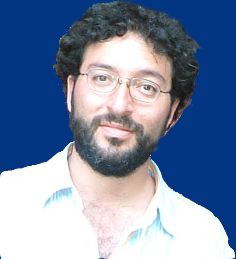
Andrej Bogdanov is a Professor at the University of Ottawa in the School of Electrical Engineering and Computer Science . He earned his B.S. and M.Eng. from MIT and Ph.D. from UC Berkeley . Before joining Ottawa, he held positions at the Chinese University of Hong Kong , ITCS (Tsinghua) , DIMACS (Rutgers) , and the Institute for Advanced Study . He has served as a Visiting Professor at the Tokyo Institute of Technology (2013) and the Simons Institute (2017, 2021). Research Interests : Computational complexity, cryptography foundations, pseudorandomness, one-way functions, property testing, quantum algorithms, and sublinear-time algorithms. Teaching : Courses on Discrete Mathematics, Great Algorithms, Computational Complexity, and Cryptography at University of Ottawa, Chinese University of Hong Kong, and Rutgers University. Publications : 15+ recent works in TCC , CRYPTO , ICALP , RANDOM , and journals like Journal of Cryptology and Theory of Computing . Service : Program co-chair for SAC 2026 , and committee member for major conferences including CRYPTO , TCC , Eurocrypt , and FOCS . Advising : 12 current and former Ph.D./M.Phil. students, with postdoctoral advisees at institutions like IIT Palakkad and Academia Sinica . His work bridges theoretical computer science with applications in cryptography, quantum computing, and network security.
Dr. Kalikinkar Mandal is an Associate Professor in the Faculty of Computer Science at the University of New Brunswick (UNB), Fredericton, Canada. He holds the prestigious NB Power Cybersecurity Research Chair for smart grid security and privacy, a position supported by $500,000 in funding from NB Power for a five-year term. Dr. Mandal is also a member of the Canadian Institute for Cybersecurity (CIC), an ACM member, and a member of the International Association for Cryptologic Research (IACR). Education: PhD in Electrical and Computer Engineering from the University of Waterloo (2013) MTech in Computer Science from the Indian Statistical Institute, Kolkata (2009) Additional Master's degree in Mathematics Dr. Mandal's research broadly focuses on cryptography, cybersecurity, and privacy, with specific expertise in lightweight cryptography, privacy-preserving computation, security and privacy in smart grids and Internet of Things (IoT), trusted computing, and high-speed cryptography. His work addresses critical challenges in securing emerging technologies, particularly in energy infrastructure where cybersecurity threats can have severe consequences for essential services. His research bridges theoretical cryptography with practical applications in real-world systems. Analysis of Dr. Mandal's recent publications reveals a consistent focus on cryptographic techniques for resource-constrained environments, particularly for smart grid and IoT applications. His work spans theoretical foundations of cryptographic primitives, practical implementations of lightweight ciphers, and innovative privacy-preserving protocols for emerging technologies. A notable trend in his research is the development of efficient cryptographic solutions that balance security requirements with performance constraints in critical infrastructure systems. Scientific Awards: NB Power Cybersecurity Research Chair ($500,000 funding) Contributor to multiple cryptographic algorithms (ACE, SPIX, SpoC, WAGE) that reached Round 2 of NIST Lightweight Cryptography standardization Dr. Mandal actively mentors graduate students in cybersecurity research, currently supervising three students working on cryptographic protocols for cyber-physical systems, cybersecurity in advanced metering infrastructure, and privacy for electric vehicles. His NB Power Cybersecurity Research Chair supports research that provides training opportunities for both graduate and undergraduate students, preparing them as future cybersecurity leaders. Through direct applied research, knowledge dissemination, and student training, his work addresses critical challenges in power and security infrastructure. Dr. Mandal is actively involved in several research initiatives related to lightweight cryptography. He is part of the development teams for ACE, SPIX, SpoC, and WAGE - all of which were Round 2 candidates in the NIST Lightweight Cryptography standardization project. His GitHub repository (comsec-lwc) contains reference and optimized implementations of these cryptographic algorithms. He also contributes to the Canadian Institute for Cybersecurity at UNB, focusing on practical applications of cryptographic techniques in critical infrastructure security.
Mostafa Taha is an Assistant Professor at Carleton University's Systems and Computer Engineering Department within the Faculty of Engineering and Design. He holds a PhD from Virginia Tech (2014) and has held postdoctoral roles at Worcester Polytechnic Institute and Western University. His research focuses on securing embedded systems and IoT against implementation attacks, including side-channel analysis, leakage-resilient designs, and cryptographic algorithm hardening. He has contributed to projects like LR-Keymill, a keystream generator with inherent SCA resistance, and has served on program committees for conferences such as DATE and SPACE. Education includes a PhD in Computer Engineering (Virginia Tech), M.Sc. in Electrical Engineering (Assiut University), and B.Sc. in Electrical Engineering (Assiut University). His work spans hardware security, cryptographic implementations, and vehicular networks. Awards include Egyptian Government and Assiut University scholarships for his PhD and M.Sc., respectively. Research interests emphasize quantifying side-channel resistance, leakage-resilient architectures, and lightweight cryptographic implementations. Notable publications include work on AES S-box optimization, threshold implementations for SIMON, and quantifying masking strength in software. He teaches courses on cryptographic implementations, computer systems design, and digital systems at Carleton. Publications reflect a focus on hardware-oriented security, with contributions to conferences like CHES, FDTC, and HOST. His work on LR-Keymill demonstrates a novel approach to SCA resistance without explicit countermeasures, achieving 67.9-bit post-attack complexity. Awards and industrial connections highlight his impact in embedded system security.
Dr. Guang Gong is a Professor in the Department of Electrical and Computer Engineering at the University of Waterloo and a former University Research Chair. She is an IEEE Fellow with expertise in cryptography, security, and wireless communications. Her research focuses on lightweight cryptographic systems, IoT security, blockchain-based security, privacy-preserving machine learning, and signal design for CDMA/OFDM/MIMO systems. Notable contributions include the WG stream cipher family and submissions to NIST's Lightweight Cryptography competition. Education: Post-doctorate in Electrical Engineering, Fondazione Ugo Bordani, Italy (1992) Doctorate in Electrical Engineering, UESTC, China (1990) Master's in Applied Mathematics, Northwest Telecommunication Eng. Inst., China (1985) Bachelor's in Mathematics, Xiachang Normal College, China (1981) Research Interests: Lightweight cryptography, IoT security, blockchain, privacy-preserving machine learning, physical-layer security, and signal design for wireless systems. Her work bridges theoretical cryptography with practical implementations for embedded devices and RFID systems. Recent Trends in Publications: Focus on zero-knowledge proofs (zkSNARKs), secure blockchain frameworks, relay attack detection, and optimized cryptographic algorithms. Recent work explores privacy-preserving protocols for high-dimensional data and secure hardware implementations of lightweight ciphers. Awards: 2023 George Boole International Prize 2016 Research Excellence Award (UWaterloo) 2006 Outstanding Performance Award (UWaterloo) Multiple fellowships and recognitions in China and Italy Teaching & Mentorship: Teaches courses like ECE 409 (Cryptography), ECE 628 (Network Security), and ECE 614 (Communications). Actively supervises graduate students in cybersecurity and wireless systems. Current openings for graduate applications. Labs & Collaborations: Leads research on secure IoT systems, blockchain integration, and hardware-software co-design for cryptographic primitives. Collaborations include projects with NIST and industry partners for lightweight cipher implementations.
Dr. Stephane Lemieux is an Assistant Professor in the Department of Computer Science at MacEwan University, where he joined in 2019 to pursue research in cyber insurance. His career spans seven years in academia, including roles as a postdoctoral fellow, contract assistant professor, and professor in cryptography and cyber security, alongside eight years in actuarial and financial risk management in various industries. He holds a PhD in Mathematics from the University of Alberta and dual Master’s and Bachelor’s degrees in Mathematics from Carleton University. Education: PhD in Mathematics, University of Alberta M.Sc. in Mathematics, Carleton University B.Sc. in Mathematics, Carleton University Research Interests: Dr. Lemieux specializes in cyber insurance and risk management, cryptography, agricultural insurance, actuarial science, and theoretical computing. He explores privacy-preserving data analysis techniques and abstract algebra, with a focus on group theory and its applications in security frameworks. His work bridges mathematical theory with practical risk assessment and cybersecurity solutions. Publications Trends: His scholarly output includes cryptographic methodologies (e.g., patents on encrypted data systems) and foundational mathematics research (e.g., studies on group theory). His career transition to academia has emphasized interdisciplinary applications of his expertise in cybersecurity and actuarial science. Awards: Federal Deputy Minister's (team) Award, Agriculture Agri-food Canada (2015) Advising & Grants: Though no formal advisees are listed, his research has been supported by grants such as the Brandon University Research Grant (2008), Early Commercialization Grant (2007), and Patent and Legal Fund Grant (2007). His industry experience spans roles like Senior Actuarial Analyst at Economical Insurance and Director of Financial Risk Management at Sunlife Financial. He has also contributed to risk management in Canada's agricultural sector.
M. Anwar Hasan is a Professor in the Department of Electrical and Computer Engineering at the University of Waterloo, where he has been a faculty member since January 1993. He was promoted to Associate Professor with tenure in 1998 and to full Professor in 2002. At Waterloo, he is also a member of the Centre for Applied Cryptographic Research, the Center for Wireless Communications, and the VLSI Research group. He previously spent 1992 as a post-doctoral fellow at the University of Victoria. Dr. Hasan received his B.Sc. and M.Sc. degrees in electrical and electronic engineering and computer engineering, respectively, from the Bangladesh University of Engineering and Technology in 1986 and 1988. He earned his Ph.D. in electrical engineering from the University of Victoria in 1992. His research focuses on cryptographic computations and embedded systems, dependable and secure computing, computer and network security, and computer arithmetic and architecture. His work has particularly emphasized efficient implementations of cryptographic algorithms, especially elliptic curve cryptography, with attention to side-channel attack resistance and fault tolerance. He has made significant contributions to finite field arithmetic, which forms the mathematical foundation for many cryptographic systems. Dr. Hasan's recent publications demonstrate continued leadership in cryptography, with work spanning traditional cryptographic implementations, post-quantum cryptography (particularly isogeny-based approaches), blockchain applications, secure multi-party computation, and hardware optimization for cryptographic operations. His research maintains a strong focus on both theoretical foundations and practical implementations. Raihan Memorial Gold Medal President's Research Scholarship (awarded four times at University of Victoria) Faculty of Engineering Distinguished Performance Award (2000) Outstanding Performance Award (2004) As a member of the Centre for Applied Cryptographic Research, Dr. Hasan has led numerous research projects in cryptographic hardware and software implementations. He served as an associate editor of the IEEE Transactions on Computers from 2000 to 2004 and has been involved in program and executive committees for several conferences. His research has been supported by various grants that have enabled him to supervise numerous graduate students and postdoctoral fellows, though specific grant details are not provided in the source material. Dr. Hasan's laboratory work has focused on implementing efficient and secure cryptographic systems, particularly examining side-channel attacks and developing countermeasures. His research team has produced numerous technical reports through the Centre for Applied Cryptographic Research (CACR) at Waterloo, demonstrating a sustained research program in cryptographic engineering.
Maher Ahmed is an Associate Professor at the Faculty of Science, Wilfrid Laurier University. His research focuses on pattern recognition, artificial neural networks, and expert systems. He has contributed to diverse fields including robotics, medical informatics, network security, and computer vision. Key research interests include developing algorithms for shape representation, improving network anomaly detection, and applying machine learning to financial fraud prevention. His work bridges theoretical computer science with practical applications in healthcare and autonomous systems. Publications span robotics localization, medical literature reviews, encryption techniques, and sign language recognition, reflecting a cross-disciplinary approach. He currently holds no listed awards but maintains an active research agenda with a focus on applied artificial intelligence.
Dr. Saeed Samet is a Professor in the School of Computer Science at the University of Windsor. His research focuses on cybersecurity, privacy-preserving data mining, federated learning, blockchain technology, and healthcare informatics. He has led projects such as the privacy-preserving personal health record system (P3HR) and the decentralized electronic health records (DEHR) model leveraging blockchain. Samet actively engages in interdisciplinary collaborations, including developing frameworks like SEERa for community prediction and RNBFT for scalable Byzantine consensus. He advises students like Saghi Khani on topics such as social isolation detection algorithms. Notably, his work addresses adversarial attacks in machine learning and federated learning security. Samet has contributed to initiatives like the International Collegiate Programming Contest and the WE-Spark Health Institute grants. Education While formal academic credentials are not explicitly detailed in the text, Samet holds a professorship, indicating advanced qualifications in computer science or related fields. His extensive publications suggest doctoral-level expertise. Research Interests Samet’s research spans cybersecurity mechanisms, privacy-preserving methodologies (e.g., homomorphic encryption, federated learning), blockchain applications in healthcare, and machine learning robustness. Recent work emphasizes scalable consensus algorithms (RNBFT), adversarial defense in federated learning, and frameworks for decentralized data evaluation. His projects often integrate real-world challenges, such as combating fake news via generative AI and enhancing pandemic response through blockchain-based patient tracking. Awards & Grants Recipient of a WE-Spark Health Institute grant for innovative research in Windsor-Essex (2021). His work on social isolation algorithms (2020) and privacy-preserving statistical analysis (2019) underscores sustained funding support for impactful projects. Advising & Grants Advises Saghi Khani on machine learning algorithms for social isolation detection. Collaborates on grants involving interdisciplinary teams, such as the $287,000 WE-Spark Health Institute award. His research often bridges academia and industry, addressing practical challenges in healthcare and cybersecurity. Labs & Teams Leads initiatives in the School of Computer Science’s research groups, focusing on privacy-preserving systems and distributed learning. Collaborates with organizations like the WE-Spark Health Institute and the University of Windsor’s interdisciplinary teams on projects such as the DEHR blockchain model and federated learning frameworks.
Aephraim M. Steinberg is a University Professor in the Department of Physics at the University of Toronto, affiliated with the Faculty of Arts and Science. He leads the Quantum Optics Group and is a Senior Fellow of the Canadian Institute for Advanced Research (CIFAR), co-directing its Quantum Information Science program. His research focuses on experimental quantum mechanics, quantum measurement, and quantum information processing, with contributions to foundational questions in quantum theory and applications in quantum technologies. Education: B.S. from Yale University (1988), Ph.D. from UC Berkeley (1994). Postdoctoral fellowships include the Chateaubriand Fellowship at Université de Paris VI (1994) and NRC Fellowship at NIST (1995–96). Research Interests: Experimental studies of quantum foundations, including weak measurement, tunneling times, and quantum paradoxes. Develops technologies for quantum information, such as entangled photon sources and quantum metrology. Explores ultracold atoms, Bose-Einstein condensates, and light-matter interactions at the quantum level. Awards: APS Doctoral Thesis Prize (1996), Polanyi Prize (1997), Herzberg Medal (2006), Rutherford Medal (2006), Royal Society of Canada Fellowship (2016). Fellowships from OSA, APS, and IOP. Grants & Collaborations: Funded by NSERC, CIFAR, FQXi, and DARPA. Collaborates with institutions worldwide, including Perimeter Institute, Institut d'Optique, and Laboratoire Kastler-Brossel. Labs & Teams: Directs the Quantum Optics Group at U of T, contributing to the Center for Quantum Information and Quantum Control (CQIQC). Hosts a dynamic team of graduate students, postdocs, and international visitors.
Aephraim M. Steinberg is a University Professor of Physics at the University of Toronto, holding one of the highest academic honors at the institution since 2021. He is a leading researcher in quantum physics, specializing in quantum measurement, ultracold atoms, quantum optics, and quantum information processing. Steinberg serves as co-Director of the CIFAR Quantum Information Science program and is an affiliate member of the Perimeter Institute for Theoretical Physics. Steinberg received his B.S. from Yale University in 1988 and his Ph.D. from UC Berkeley in 1994. His research program uses both nonclassical two-photon interference and laser-cooled atoms to investigate fundamental quantum phenomena. His work spans quantum information & computation, decoherence and the quantum-classical boundary, tunneling times, weak measurement and retrodiction in quantum mechanics, and the control and characterization of novel quantum states. Notably, his group has made groundbreaking contributions to understanding quantum tunneling times, weak measurements, and quantum metrology beyond classical limits. His recent publications reveal a strong trend toward quantum metrology and precision measurement, with significant work on multiparameter estimation, weak-value amplification, and sub-Rayleigh imaging techniques. His research increasingly bridges fundamental quantum foundations with practical quantum technologies, particularly in quantum information processing and quantum cryptography. His group's work on quantum fully homomorphic encryption represents cutting-edge applications of quantum information theory. Fellow of the Royal Society of Canada (2016) Physics World Breakthrough of the Year (2011) E.W.R. Steacie Memorial Fellowship (2007) CAP Herzberg Medal (2006) RSC Rutherford Medal (2006) APS Doctoral Thesis Prize (1996) Steinberg has mentored numerous graduate students who have gone on to successful careers in academia and industry, including positions at MIT, Xanadu, and NIST. His research is generously supported by major funding agencies including NSERC, CIFAR, FQXi, and the Fetzer Franklin Foundation. His group maintains strong international collaborations with institutions worldwide, reflecting his prominence in the quantum physics community. Based in labs MP 054/056 at the University of Toronto, Steinberg's Quantum Optics Group operates cutting-edge experimental setups for studying Bose-Einstein condensates, quantum measurement, and quantum information processing. His group maintains strong connections with the Center for Quantum Information and Quantum Control (CQIQC) and the Institute for Optical Sciences at U of T, forming a vibrant quantum research ecosystem in Toronto.
Stacey Jeffery serves as Professor of Quantum Information at the University of Amsterdam's Korteweg-de Vries Institute for Mathematics since 2023 and Senior Researcher at Centrum Wiskunde & Informatica (CWI) and QuSoft since 2017. Her foundational work bridges theoretical computer science and quantum information processing, with emphasis on algorithmic frameworks and cryptographic security in quantum systems. Her educational trajectory includes a PhD in Computer Science from the University of Waterloo (2014), where she was affiliated with the Institute for Quantum Computing, following prior research at Caltech as an IQIM Postdoctoral Fellow. Jeffery's research centers on quantum algorithms and quantum cryptography, with pioneering contributions to quantum walk frameworks that enable quadratic speedups for graph problems. She has developed critical frameworks for secure delegation of quantum computation and advanced models for quantum error correction. Her work on multidimensional quantum walks and subroutine composition establishes new paradigms for quantum algorithm design, while investigations into space-time tradeoffs challenge fundamental limits of quantum computation. These theoretical advances directly enable practical quantum cryptographic protocols and error mitigation strategies. Analysis of her 15 most recent publications reveals a cohesive evolution toward unified frameworks for quantum algorithm composition, particularly through quantum walk methodologies. Her 2023-2025 works demonstrate increasing sophistication in error reduction techniques and space-efficient quantum computation, while maintaining strong connections to cryptographic applications like software leasing and multi-party computation. The consistent focus on foundational complexity questions—span programs, query complexity, and graph connectivity—underscores her commitment to advancing theoretical underpinnings of quantum computing. Her scientific recognition includes: NWO WISE Fellowship NWO Veni Grant ERC Starting Grant QDNL Award (for co-founding WIQD) CIFAR Fellow in Quantum Information Science Jeffery leads significant research initiatives including an ERC Starting Grant and NWO-funded projects. Her academic mentorship extends through QuSoft's collaborative environment, though specific advisee names aren't publicly cataloged. Professional service includes co-chairing QIP 2022, chairing TQC's steering committee (2021), and directing the Lorentz Center Informatics Advisory board. She actively shapes community standards through roles in QCrypt and ACM SIGACT. As a core QuSoft researcher and co-founder of WIQD (Women in Quantum Development), Jeffery drives both technical innovation and diversity initiatives. Her laboratory focuses on quantum algorithm frameworks with real-world cryptographic applications, while WIQD—awarded the inaugural QDNL Award—creates vital networking and development opportunities for women across quantum technology sectors. Current efforts target quantum subroutine composition and space-efficient error correction for near-term quantum devices.
Anwar Hasan is a Professor in the Department of Electrical and Computer Engineering at the University of Waterloo. He specializes in cryptography, post-quantum cryptography, and secure computation, with a focus on algorithm optimization, cryptographic hardware implementation, and energy efficiency. His work spans theoretical foundations and applied systems, including blockchain technology, fault-tolerant cryptosystems, and secure multiparty computation. His research interests emphasize developing quantum-resistant cryptographic protocols, improving efficiency in cryptographic algorithms (e.g., EdDSA signature verification, CSIDH optimization), and designing secure systems against adversarial attacks (e.g., poisoning in federated learning, covert adversary models). He also explores energy consumption analysis of cryptographic algorithms, particularly in the context of NIST PQC standards and elliptic curve-based systems. Recent work includes contributions to threshold cryptography (isogeny-based schemes), decentralized oracle networks (CountChain), and privacy-preserving blockchain applications (AdChain). His publications frequently address hardware-software co-design for cryptographic primitives, emphasizing both theoretical advancements and practical implementation challenges. Dr. Hasan’s research also extends to applied areas such as fraud detection systems, digital rights management using blockchain, and energy efficiency in embedded cryptographic systems. He collaborates on projects involving secure communication in cloud computing and resilient key management for mobile applications.
Christopher Nielsen is a Professor and Associate Chair for Graduate Studies in the Department of Electrical and Computer Engineering at the University of Waterloo. His affiliations include the Executive Committee, Full-Time Faculty, and other academic groups. He is reachable at cnielsen@uwaterloo.ca and EIT 4106. His research interests span Artificial Intelligence in Healthcare, Control Systems, and Robotics. Key focuses include medical imaging (e.g., retinal disease analysis, federated learning for healthcare), adaptive control systems, and cybersecurity in AI applications. He also explores spinal surgery outcomes and human-robot interaction. Recent work emphasizes AI-driven solutions for retinal age prediction, cybersecurity in medical AI, and advanced control methodologies for robotics and automotive systems. His publications reflect interdisciplinary collaboration between engineering, medicine, and data science. Notable technical trends in his articles include: 1) AI integration into medical diagnostics, 2) adaptive control for complex systems, 3) privacy-preserving federated learning architectures, and 4) human-centered robotics navigation. No scientific awards are explicitly listed. His advising record and grant activities remain unspecified in available texts. His professional webpage (ece.uwaterloo.ca/~cnielsen/) provides further technical details on ongoing research.
Xiaoxiao Shaun Li is an Assistant Professor in the Department of Electrical and Computer Engineering at the University of British Columbia (UBC), with an adjunct position at Yale School of Medicine. She holds positions as faculty at the Vector Institute and is a Canada CIFAR AI Chair and Canada Research Chair (Tier II) in Responsible AI. Her research focuses on developing trustworthy and efficient machine learning systems, particularly in federated learning, medical imaging, and agentic AI. Dr. Li earned her Ph.D. from Yale University and completed postdoctoral work at Princeton University. Education: B.S. (Honors), Zhejiang University, China, 2015 Ph.D., Yale University, 2019 Research Interests: Trustworthy AI foundational theories and algorithms Federated learning frameworks for privacy-preserving applications Agentic AI systems with robust decision-making Medical imaging analysis and fairness benchmarking Interpretable neuroimaging models for brain disorder prediction Grants & Awards: Canada Foundation for Innovation Grant (PI, 2023) UBC Green Lab Fund (PI, 2023) Canada Research Chair Tier II (2022–2027) Labs & Teams: Dr. Li leads the Trusted and Efficient AI (TEA) Lab at UBC, focusing on next-generation AI systems. The lab collaborates with industry partners like Vector Institute and academic institutions globally to bridge research and clinical applications.