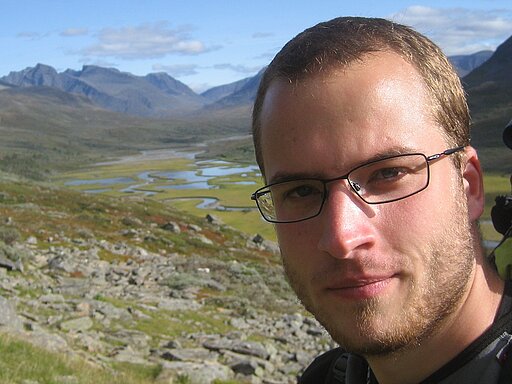
Remco Duits is Associate Professor at Eindhoven University of Technology, leading research in mathematical image analysis and geometric deep learning. His work develops PDE-based methods on Lie groups for medical imaging, crack detection in infrastructure, and optimal transport. Key innovations include equivariant neural networks for homogeneous spaces and geodesic tracking algorithms for vascular analysis. Dr. Duits holds an ERC Starting Grant (2013) for Lie Group Analysis in Medical Imaging and an NWO VICI Grant (2021) for Geometric Learning. His team pioneers data-driven Cartan connections for vascular tree tracking and PDE-CNN architectures with axiomatic foundations.
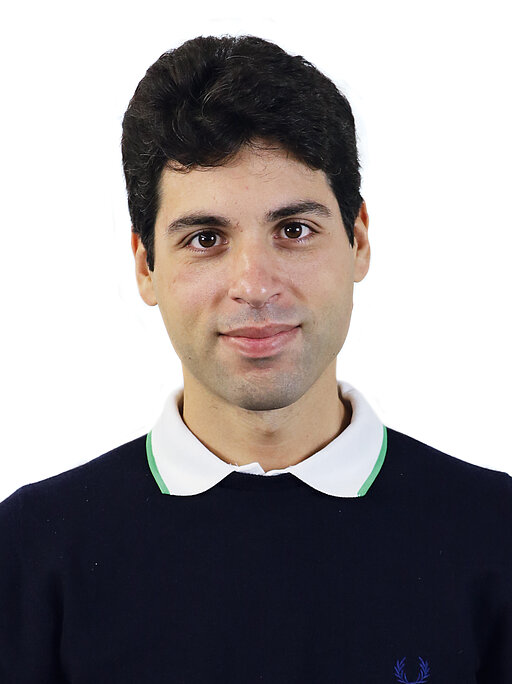
Yang Chen is a Lecturer in the Department of Mechanical Engineering at the University of Bath, affiliated with multiple research centres including the Centre for Integrated Materials, Processes & Structures (IMPS) and the Centre for Regenerative Design & Engineering for a Net Positive World (RENEW). He holds a PhD from the Université Paris-Est (collaborating with French Alternative Energies and Atomic Energy Commission) and completed postdoctoral research at the University of Oxford. His research focuses on advanced techniques for data-rich experiments and simulations in heterogeneous materials, particularly fibre-reinforced composites applied in aerospace, automotive, and nuclear energy sectors. Key expertise includes FFT solvers, X-ray computed tomography, nonlinear mechanical modelling, and fluid flow in porous media. He has secured prestigious fellowships, including the EPSRC Future Composites Research Hub Innovation Fellowship and the Humboldt Fellowship. Teaching responsibilities include the ME20016 Solid Mechanics 3 course for mechanical engineering undergraduates. Current PhD supervision opportunities span topics like hydrogen storage composites, nuclear fusion materials, and nuclear waste management. He actively collaborates on projects such as HyFIVE (Hydrogen Storage) and explores advanced ceramic materials for nuclear energy. His work aligns with UN Sustainable Development Goals, emphasizing sustainable innovation and energy solutions. Notable contributions include developing physics-informed neural networks for resin flow prediction and machine learning-based emulators for constitutive modelling. His publications address fracture mechanics, computational homogenization, and material degradation under irradiation. He is open to supervising doctoral students through funded programs like ZENITH and GW4+ DLTP.
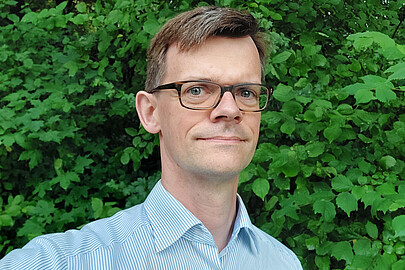
Yeoh Chin Vern is a Lecturer at the Malaysia School of Engineering, Monash University. He holds a PhD in Mechanical Engineering (2022) focusing on Direct Numerical Simulation, Study, and Quantification of Fractal Grid-Generated Turbulent Flows . His research expertise spans Computational Fluid Dynamics (CFD), Lattice Boltzmann methods, turbulent flows, and multiphysical modeling. He has contributed to projects on graphene-enhanced electronics cooling and ion-exchange membrane dynamics. His research interests include turbulence modeling, nonlinear dynamics, and applications in microfluidics and heat transfer. Notable work involves fractal grid-generated turbulence optimization, pressure wave dynamics in CFD, and surface roughness effects in microchannel flows. Recent publications (2020–2025) highlight advancements in lattice Boltzmann simulations, Reynolds stress modeling, and fractal grid configurations. He collaborates on interdisciplinary projects addressing sustainable cooling solutions and ion partitioning mechanisms. Yeoh has been a Chief Investigator (CI) on two research projects: Graphene Enhanced Devices for Electronics Cooling (2024–2026) and Decoding the Role of Valency in Multi-valent Ion Partitioning through Ion-Exchange Membranes (2023–2026).
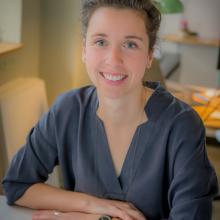
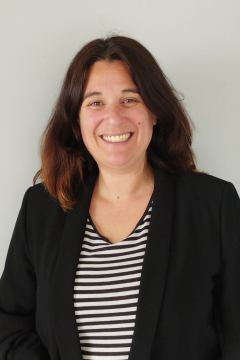
Audrey Desjardins is an Associate Professor of Interaction Design at the University of Washington’s School of Art + Art History + Design. She also holds adjunct positions in Human Centered Design and Engineering and Digital Arts and Experimental Media. Her research critically examines how technologies are integrated into domestic spaces, focusing on IoT systems and data transparency. She employs speculative design, participatory methods, and first-person research approaches to challenge homogenized visions of smart homes. Her work has been published in top venues like ACM CHI, DIS, and CSCW. Desjardins earned a PhD and MA from Simon Fraser University’s School of Interactive Arts + Technology and a BA in Industrial Design from Université de Montréal. She previously worked as a research assistant at SFU’s Everyday Design Studio and as an industrial designer at Claude Mauffette Design Industriel. Her current projects include Studio Tilt, a design research studio exploring human-object interactions, and the Data Epics initiative materializing home IoT data through literary narratives. She has received grants from NSF and Mozilla, and her work has been exhibited internationally. Key awards include a CHI 2019 honorable mention and a Mellon Faculty Fellowship in the Arts (2019-2020). Key Research Themes : IoT critique, domestic technology, data visualization, speculative artifacts, participatory design Notable Projects : Voices and Voids (voice data performance), (In)Visible Data (home IoT engagement), Data Imaginaries (art exhibition) Service : Technical Program Chair for ACM DIS 2020, Associate Chair for multiple CHI/DIS conferences, Co-Guest Editor for TOCHI’s First-Person Research issue
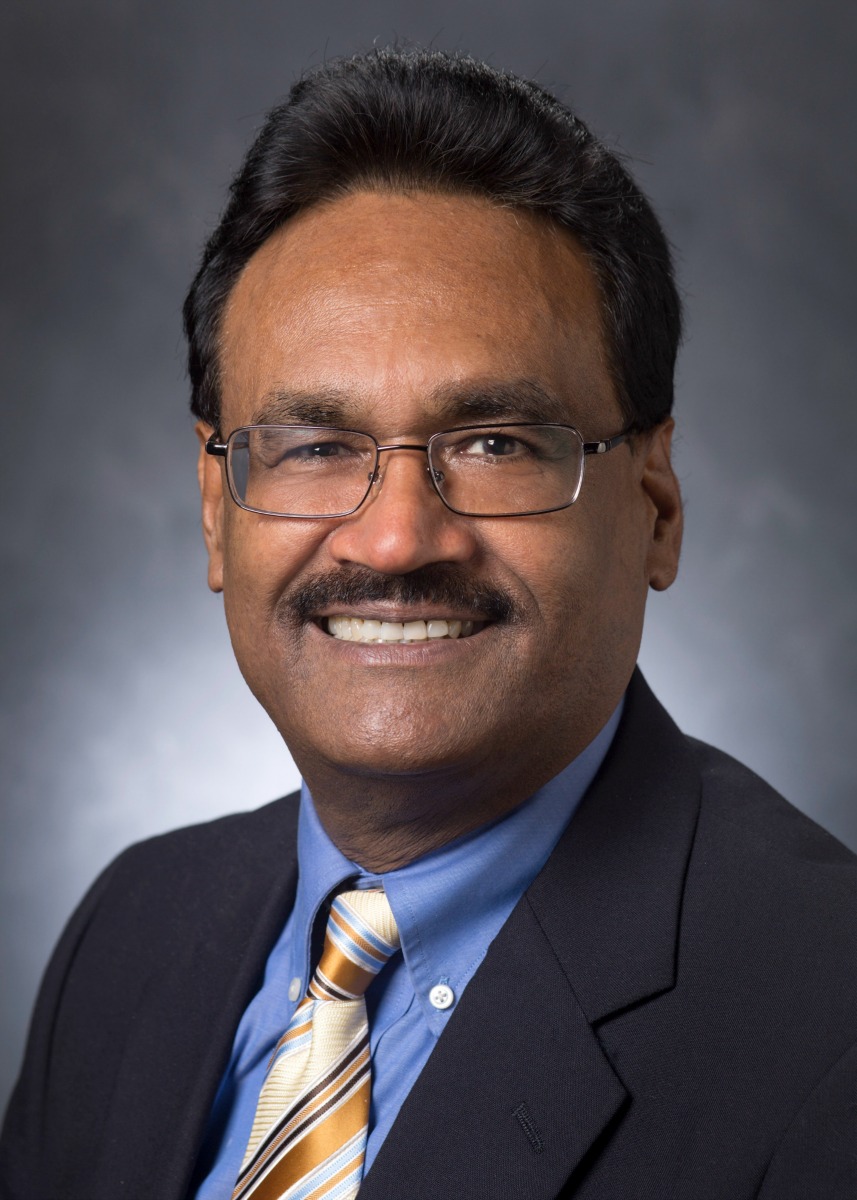
Dr. Rakesh K. Singh is a Professor in the Department of Food Science & Technology at the University of Georgia, part of the College of Agricultural and Environmental Sciences (CAES). His research focuses on value-added food processing using advanced technologies such as UV irradiation, high-pressure processing (HTST), atmospheric cold plasma, and radio frequency (RF) heating. Key projects include aflatoxin decontamination in peanuts, pathogen inactivation in dairy and juices, and optimization of food powder pasteurization. He teaches courses such as Food Science Internship (FDST 3910/8910) and Multidisciplinary Topics in Foods (FDST7020E). His work bridges food safety, engineering, and biochemical analysis, with recent publications emphasizing novel decontamination methods and material science applications in food processing. Research interests span food safety innovations, thermal and non-thermal processing technologies, and the physicochemical properties of food matrices. Notable studies include RF-assisted milk powder pasteurization, cold plasma modification of dairy proteins, and UV/H₂O₂ detoxification systems. His contributions address challenges in food preservation, microbial control, and quality enhancement across diverse products like meats, juices, and spice powders. Publications highlight interdisciplinary approaches, combining engineering principles with biochemical insights. Recent trends in his work include optimization of RF heating uniformity, evaluation of novel antimicrobial coatings, and mechanistic studies of food toxin interactions. His research has implications for both industrial food processing and academic advancements in food safety methodologies.
Lambert Theisen is a PhD student and Researcher at RWTH Aachen University's Applied and Computational Mathematics (ACoM) department. He holds a BSc (2014–2018) and MSc (2018–2019) in Computational Engineering Science from RWTH Aachen. His research focuses on PDE eigenvalue problems, asymptotic analysis, directional homogenization, and numerical methods for rarefied gas dynamics. He has held research roles at RWTH Aachen, the University of Stuttgart's NMH/IANS, and ABB Corporate Research. His research spans computational fluid dynamics, domain decomposition methods, and preconditioning techniques for eigenvalue algorithms. Notable contributions include finite element solvers for electrolyte models and FEniCS-based simulations of rarefied gas flows. His work often integrates advanced mathematical frameworks with high-performance computing. Teaching roles include assistantships for courses like 'Mathematical Aspects in Computational Chemistry' and 'Higher Mathematics for Engineers.' His publications are tracked via ORCid and emphasize scalable eigensolvers, mesh generation, and tensorial methods. He maintains a personal website at thsn.dev for research updates.
Dr. Andrew Hammond is a Senior Lecturer in the Politics of Religion and Contemporary Islamic Studies at the Centre for Arab and Islamic Studies (CAIS) within the ANU College of Arts & Social Sciences. Previously, he held positions as a Lecturer in Turkish History at the University of Oxford, a Middle East policy fellow at the European Council on Foreign Relations, and editor at the Sanaa Center for Strategic Studies. He currently serves as a senior non-resident fellow at the Middle East Institute Switzerland. His academic qualifications include a DPhil in Oriental Studies from Oxford, an MPhil in Modern Middle East Studies from Oxford, and a BA in Arabic and History from SOAS, University of London. Hammond’s research focuses on modern Islamic thought, Islamic political movements, Late Ottoman Islam, Arabic media, Gulf politics, and early Islamic history. He has conducted extensive archival work using materials in Arabic, Ottoman Turkish, modern Turkish, and Persian. His notable publications include Late Ottoman Origins of Modern Islamic Thought (2022), Popular Culture in North Africa and the Middle East (2017), and The Islamic Utopia: The Illusion of Reform in Saudi Arabia (2012). He contributes regularly to Arab Media & Society and Middle East Eye . His academic interests span Quranic exegesis, Salafism’s evolution, Ottoman intellectual history, and media’s role in shaping religious discourse. His recent work examines the intersections between media strategy and state influence in Saudi Arabia and the Gulf. Hammond’s interdisciplinary approach integrates historical analysis with contemporary policy debates, particularly around Middle Eastern political Islam and media governance. Prior to academia, he worked with BBC Arabic, Reuters, and other media outlets across Egypt, Saudi Arabia, and the UAE. He remains active in policy circles, providing expert commentary on Middle Eastern affairs. His editorial roles and media contributions highlight his commitment to bridging academic research with public understanding of complex regional dynamics.
Prof. Malte Jochum is an Assistant Professor in the Department of Global Change Ecology at the University of Würzburg. His research focuses on understanding how global environmental changes affect ecological communities, particularly in soil systems and multitrophic interactions. He holds a Ph.D. from the University of Göttingen (2016) and has conducted postdoctoral research at institutions in Leipzig, Bern, and Göttingen. His work bridges theory and application in biodiversity-ecosystem functioning, energy flux modeling, and invasive species impacts. Education: 2012–2016: Ph.D. in Biology, University of Göttingen (summa cum laude) 2007–2012: B.Sc./M.Sc. in Biology, TU Darmstadt Research Interests: Prof. Jochum investigates how climate change, land-use intensification, and biological invasions disrupt ecosystem processes. His key areas include: Energy flux dynamics in above- and belowground communities Effects of earthworm invasions on soil biodiversity Quantitative approaches to biodiversity-ecosystem functions Global datasets on elemental stoichiometry and community traits He has contributed to influential studies like the StoichLife dataset and pioneered energy flux methodologies in food webs. Publications Trends: His recent work emphasizes global-scale patterns (e.g., springtail metabolism, Baltic Sea food webs) and applied challenges like sustainable land use. He frequently collaborates on datasets linking plant-animal stoichiometry and climate impacts. Grants & Teams: Leads the Junior Professorship at Würzburg and collaborates with teams like the iDiv Halle-Jena-Leipzig. He advises student assistants and coordinates international projects on soil biodiversity communication (e.g., Communicating Soil Biodiversity Research to Kids ). Labs/Teams: Active in the Department’s research groups focusing on global change ecology, with links to the Jena Experiment and tropical land-use networks in Indonesia.
Francesco Cattafi is a post-doctoral researcher in differential geometry at the Chair of Mathematics X (Geometry) of Julius-Maximilians-Universität Würzburg, funded by the DFG Walter Benjamin Programme. He conducts research on Lie groupoids/algebroids, Cartan geometries and the geometry of PDEs, and is currently on the academic job market for positions starting Fall 2025. Education PhD in Mathematics (2015–2020) – Universiteit Utrecht, The Netherlands MSc in Mathematics (2013–2015) – Università degli Studi di Torino, Italy BSc in Mathematics (2010–2013) – Università degli Studi di Torino, Italy Research Interests Cattafi's work lies at the intersection of differential geometry, Lie theory and the geometric theory of PDEs. His primary focus is on Lie groupoids and algebroids , investigating their role in describing symmetries and equivalences of geometric structures. He studies Cartan geometries and G-structures to understand integrability via multiplicative forms and Pfaffian systems. A recurring theme is translating analytic questions about PDEs into geometric problems involving Lie pseudogroups and Morita equivalences. Publications Overview Since 2016 Cattafi has authored or co-authored seven peer-reviewed papers spanning foundational aspects of transitive differential geometry and applications to Poisson and symplectic geometry. Early work with Palese and Winterroth explored variational calculus and Noether currents, while his PhD-era collaborations with Crainic and Salazar linked PDE analysis to Pfaffian fibrations. Recent preprints treat PB-groupoids versus VB-groupoids and novel groupoid-theoretic approaches to symmetry and equivalence problems. Grants & Fellowships DFG Walter Benjamin Fellowship (2021–present) – Julius-Maximilians-Universität Würzburg Junior Research Fellowship (2021) – Erwin Schrödinger Institute, Vienna Post-doctoral grant (2021) – Wolfgang Pauli Institute, Vienna Post-doctoral grant (2020) – KU Leuven, Belgium Contact & Online Presence Room 00.003, Building 31 (Physics East), Emil-Fischer-Straße 31, 97074 Würzburg, Germany Email: francesco.cattafi@uni-wuerzburg.de ORCID: 0000-0001-9785-0770
Prof. Dr. Ulrich Derenthal is a Professor in the Department of Algebra, Number Theory and Discrete Mathematics at Leibniz University Hannover, within the Faculty of Mathematics and Physics. He holds management roles in the Institute of Algebra, Number Theory and Discrete Mathematics and is a member of the Riemann Center for Geometry and Physics. His research focuses on number theory, algebraic geometry, and the study of rational points on algebraic varieties, with particular emphasis on Cox rings, universal torsors, and Manin’s conjecture. Key roles include membership in the Faculty Council and the Leibniz School of Education Leadership Board. His teaching spans advanced courses in number theory, algebraic geometry, and arithmetic geometry, reflecting his expertise in these areas. Derenthal has extensively contributed to the field through numerous publications, including works on Cox rings and their applications to rational points on varieties. Research interests include the geometry of del Pezzo surfaces, singular varieties, and the interplay between arithmetic and algebraic geometry. Collaborations with institutions like the Riemann Center and international workshops highlight his active involvement in the academic community. No scientific awards are explicitly mentioned, but his contributions are recognized through his extensive publication record and academic leadership.
Elena Mas Marzá is an Associate Professor of Applied Physics at Universitat Jaume I and serves as the Director of the Institute of Advanced Materials (INAM) since March 2023. With a multidisciplinary background in organometallic chemistry, homogeneous catalysis, and optoelectronics, she leads the RG3 Electrocatalysis and Energy (ECATEN) research group. Her work focuses on catalyst development for chemical valorization and designing optoelectronic devices for photoelectrochemical applications. Her research spans electrocatalysis , CO2 activation , biomass conversion , and perovskite solar cells . She has attracted international collaborations across Spain, the UK, and Japan, with a focus on sustainable energy solutions. Elena’s expertise in metal-based catalysts , electrode materials , and electrochemical processes underpins her contributions to green chemistry and solar fuel technologies. Recent publications highlight advancements in hydrogen production via electrodehydrogenation HMF conversion using alloy electrodes photoelectrochemical stability analysis biomass valorization techniques Her work has been cited over 4,300 times, reflecting its impact in electrochemistry and materials science. Current leadership roles include Director of INAM (2023-present) and Secretary of INAM (2020-2023), where she oversees strategic research initiatives in advanced materials.
Fanny Kassel is a distinguished French mathematician and CNRS Research Director at the Institute of Advanced Scientific Studies (IHES) since 2016, specializing in geometric group theory, discrete subgroups of Lie groups, and pseudo-Riemannian geometry. Her work has significantly advanced our understanding of geometric structures, dynamical systems, and spectral theory related to discrete group actions. Education: Studied at Lycée Louis-le-Grand Entered École Normale Supérieure in 2003 PhD from University of Paris Sud XI - Orsay in 2009 under Yves Benoist Research Interests: Fanny Kassel's research focuses on the geometric, dynamical and spectral aspects of discrete subgroups of Lie groups. She has made significant contributions to understanding flat Lorentzian manifolds of dimension 3, solving a conjecture by Drumm and Goldman from the early 1990s. Her work explores the actions of discrete groups on homogeneous spaces in connection with various geometric structures on manifolds (pseudo-Riemannian or projective) and higher-order Teichmüller-Thurston theory. Her research bridges several mathematical disciplines, connecting representation theory with geometric structures and dynamical systems. She has particularly advanced our understanding of convex cocompactness in various geometric settings, including real projective geometry and pseudo-Riemannian hyperbolic spaces. Research Trends: Analysis of Kassel's most recent publications reveals a consistent focus on extending classical concepts of discrete group actions to broader geometric contexts. Her work increasingly explores connections between different geometric structures (projective, pseudo-Riemannian, hyperbolic) through the lens of discrete group actions. A notable trend is her development of "convex cocompactness" theory across multiple geometric settings, providing unifying frameworks for previously disconnected areas of research. Her collaborations, particularly with Danciger and Guéritaud, have been highly productive in advancing these interconnected research directions. Awards and Recognition: CNRS Bronze Medal (2015) ERC Starting Grant (2016) ICM Rio Invited Lecturer (2018) Mathematics Medal of the French Academy of Sciences (2024) Grants and Collaborations: Kassel has led significant research projects including the ERC Starting Grant DiGGeS. She organizes the "Geometry and Discrete Groups" seminar at IHES and has organized numerous workshops and conferences. Her extensive collaborations include work with prominent mathematicians such as Jeffrey Danciger, François Guéritaud, Olivier Guichard, and Anna Wienhard. These collaborations have resulted in a rich body of work connecting geometric group theory with differential geometry and dynamical systems. Research Environment: Kassel works within the Alexander Grothendieck Laboratory at IHES, a premier research environment for mathematics and theoretical physics. She actively participates in the mathematical community through organizing seminars, workshops, and conferences. Her research group and collaborations form a vibrant network exploring the frontiers of geometric group theory and related fields.
Marcello Romagnoli is a Full Professor at the Department of Engineering 'Enzo Ferrari' of the University of Modena and Reggio Emilia. His research focuses on materials science, fuel cells, and renewable energy technologies. He teaches courses on fuel cells, applied chemistry to materials, ceramic process science, and hydrogen applications in electric transportation. Research Interests His work emphasizes advanced ceramic materials, electrochemical systems, and sustainable energy solutions. Key areas include PEMFC and SOFC development, hydrogen production techniques, and composite materials for fuel cell components. He explores innovative manufacturing processes like 3D printing for electrode fabrication and geopolymer-based materials from industrial waste. Teaching Responsibilities Fuel Cells (Master's in Civil & Environmental Engineering) Applied Chemistry to Materials (Environmental Engineering Pathway) Ceramic Process Science & Engineering (Materials Engineering) Hydrogen and Fuel Cells in Electric Transportation (Advanced Automotive Engineering) Publications Recent work includes studies on 3D-printed conductive inks, hydrogen production via aluminum reactions, and biochar applications. His articles address material characterization, nanofluid thermal properties, and composite bipolar plate design for fuel cells. Grants and Labs While specific grants are not detailed here, his involvement in courses like MAMA-MEA and FCHgo suggests participation in funded research initiatives. He collaborates on projects involving additive manufacturing and sustainable material development.
Federico A. Rossi is a Professor at the University of Perugia, Italy, specializing in differential geometry and Lie theory with emphasis on Einstein manifolds, solvmanifolds, and pseudo-Riemannian structures. His research explores geometric properties of Lie groups and homogeneous spaces through special metric constructions. His primary research focuses on ad-invariant metrics, indefinite Einstein metrics, and Killing spinors on Lie groups. He investigates uniqueness properties of geometric structures and constructs non-standard examples beyond classical nilsolitons, particularly in pseudo-Riemannian contexts. This work bridges differential geometry, mathematical physics, and Lie theory with applications to theoretical physics models. Analysis of his 15 most recent publications (2025-2019) reveals consistent exploration of Einstein solvmanifolds and nilmanifolds with indefinite metrics. Key themes include diagram involutions for Ricci-flat metrics, ad-invariant metrics on nonnice Lie algebras, and pseudo-Kähler structures. His contributions extend Riemannian geometry results to broader pseudo-Riemannian settings, demonstrating interdisciplinary relevance. No information regarding student advising or research grants is available in the provided text.
Alexis Giauque is a Researcher at the Laboratory of Fluid Mechanics and Acoustics (LMFA - UMR 5509) affiliated with École Centrale de Lyon in Lyon, France. His primary research focuses on computational fluid dynamics (CFD), aeroacoustics, and turbulence modeling with applications to propulsion systems and noise prediction in turbomachinery. His work leverages advanced numerical methods like Large-Eddy Simulation (LES) and hybrid machine learning approaches to study complex flows in transonic fan stages, dense gases, and compressible systems. Key Research Themes: LES modeling of tip-leakage vortices and separation bubbles Lattice Boltzmann methods for turbulent flows Direct noise prediction in ultrahigh-bypass-ratio turbofans Experimental validation of real gas annular cascade flows His recent studies prioritize improving turbulence models for dense gas flows and optimizing blade designs to reduce propulsion noise. Collaborations involve experimental facilities and numerical code development (e.g., SU2, ANN-based LES models).