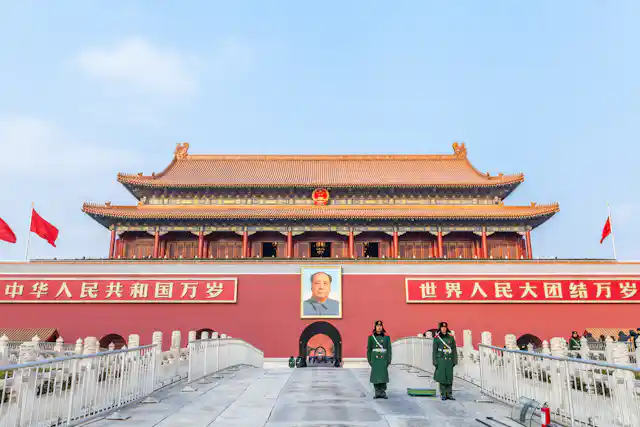
Prof. Dr. Daniel Leese is a full professor of History and Politics of Modern China at the University of Freiburg's Institute of Sinology. He specializes in 20th-century Chinese history, focusing on the Communist Party's legacy and transitional justice. Current research includes a dual biography of Chiang Kai-shek and Mao Zedong, and analysis of PRC information systems. Education: PhD in International History (2006, International University Bremen). Academic roles include ERC grant leadership (2014-2019) and FRIAS Senior Fellowship (2018-2019). Awards include Carl Friedrich von Siemens Fellowship (2022/2023). Key publications: Maos langer Schatten (2021) Justice After Mao (2023) Chinesisches Denken der Gegenwart (2023) Research emphasizes Mao's political impact, historical justice mechanisms, and institutional memory. Maintains a digital archive of Mao-era documents (maoistlegacy.de).
Yuhua Wang serves as the Ford Foundation Professor of Modern China Studies within Harvard University's Faculty of Arts and Sciences, Department of Government. His scholarly work establishes him as a leading authority on Chinese political development, state capacity, and historical institutional analysis across imperial and contemporary contexts. His academic foundation includes: B.A. from Peking University Ph.D. from the University of Michigan Professor Wang's research program integrates comparative politics with Chinese studies through core interests in bureaucracy , institutions , judiciary and public law , political economy & development , political geography , and state-society relations . He employs a methodological triad of historical , qualitative , and quantitative approaches to analyze China's political evolution. His work uniquely bridges macro-historical patterns with contemporary governance challenges, particularly examining how historical legacies shape modern state capacity and institutional resilience in authoritarian contexts. Analysis of his publication trajectory reveals consistent focus on state development mechanisms, with increasing sophistication in comparative historical methodology. Recent work demonstrates expanded geographic scope beyond China while maintaining analytical depth in imperial political economy. His research shows growing integration of cross-national datasets with deep historical case studies, reflecting broader trends in political science toward mixed-method designs for complex institutional analysis. His distinguished recognition includes: 2023 Lubbert Best Book Award in Comparative Politics from the American Political Science Association for The Rise and Fall of Imperial China Harvard College Professor appointment (2025) Professor Wang maintains active research leadership through extensive publication in premier journals including American Political Science Review and Comparative Political Studies , with significant contributions to theoretical frameworks like State-in-Society 2.0. His work generates substantial policy-relevant insights on corruption, judicial review, and urban governance in China. As a core faculty member in Harvard's Government Department, he contributes to the university's intellectual ecosystem through cross-disciplinary collaboration and participation in research initiatives focused on Asian political development, though specific lab affiliations are not documented in available sources.
Odd Arne Westad is the Elihu Professor of History at Yale University, specializing in modern international and global history with a focus on East Asia since the 18th century. He previously held positions at Harvard University and the London School of Economics. His research bridges Cold War studies, empire/colonialism, and China's economic reforms. Education: BA in History, Philosophy, and Modern Languages (University of Oslo) Graduate Degree in US/International History (University of North Carolina at Chapel Hill) Research Interests: Global Cold War dynamics and post-colonial transformations China’s international history and imperial trajectories Economic reforms in late 20th century China and their global impact Key Publications: The Cold War: A World History (2017) Restless Empire: China and the World Since 1750 (2012) The Global Cold War (2007) Awards: Fellow of the British Academy Fellow of multiple national academies Professional Activities: Active in global history networks, advising doctoral students on Cold War and Asian history. Teaches courses on empire, decolonization, and modern East Asia.
Timothy Cheek is a Professor at the University of British Columbia with dual appointments in the School of Public Policy and Global Affairs and the Department of History. He holds the prestigious Louis Cha Chair in Chinese Research and serves as Co-Director of the Centre for Chinese Research at the Institute of Asian Research (IAR). Having joined UBC in 2002, Professor Cheek is a leading scholar of modern Chinese history with expertise in Chinese intellectual history and the Chinese Communist Party. Professor Cheek's educational background includes: Ph.D. in History and East Asian Languages from Harvard University (1986) M.A. in History from The University of Virginia (1980) B.A. in Asian Studies (Honours) from Australian National University (1978) His research focuses on three interconnected areas of modern Chinese history: the history of the Chinese Communist Party within China's twentieth-century revolutionary context; contemporary Chinese thought and society, particularly the role of intellectuals in public life; and Mao Zedong studies. Professor Cheek leads the "Revisiting the Revolution" collaborative translation project, bringing Chinese scholarship on revolutionary history to English-speaking audiences. He is also working on a major project mapping Chinese statecraft from the Ming Dynasty to the present. Professor Cheek's scholarly output reveals consistent engagement with Chinese intellectual history and political development. His recent work shows increasing focus on contemporary China under Xi Jinping, examining ideological governance and the reassertion of party control. He maintains strong interest in the historical roots of current political developments, particularly through the lens of Mao-era political practices and their legacy. Among his notable recognitions: Fellow of the Royal Society of Canada (RSC) in the Academy of Arts and Humanities (2023) Professor Cheek actively supervises graduate students, co-mentoring MA and PhD candidates in modern Chinese history with Dr. Jeremy Brown of Simon Fraser University. His research has been supported by multiple SSHRC grants, including a major 2014-2019 project on "Reading and Writing the Chinese Dream" examining public intellectuals in contemporary China. As Co-Director of the Centre for Chinese Research at UBC's Institute of Asian Research, Professor Cheek leads one of Canada's premier institutions for China studies, facilitating research collaborations between Canadian and Chinese scholars and supporting the "Revisiting the Revolution" translation project that brings Chinese historical scholarship to international audiences.
Dr. Olivia Cheung is a Lecturer in Politics at the Department of European & International Studies, King’s College London. She holds multiple affiliations including China Fellow at the Centre for Security, Diplomacy and Strategy (CSDS) at Vrije Universiteit Brussel, Affiliate of the Lau China Institute, and Michael Moran Associate Editor for Government and Opposition . Her academic background includes an MPhil and DPhil (PhD) in Politics from the University of Oxford, where she was a Swire Scholar and Rhodes Scholar. Prior to her current position, she served as a Research Fellow at SOAS China Institute and Teaching Fellow at the University of Warwick, directing the MA in International Politics and East Asia. Her research focuses on Chinese politics and foreign policy, Xi Jinping Thought, comparative political leadership, international orders, and authoritarianism. Key projects explore domestic-political intersections in China’s foreign strategy and its global rise. She has contributed to prominent journals like China Quarterly , Third World Quarterly , and Pacific Affairs , with her work featured in The Economist , New York Times , and BBC documentaries. Dr. Cheung co-authored The Political Thought of Xi Jinping (Oxford UP, 2024), a Financial Times-recognized title, and Factional-Ideological Conflicts in Chinese Politics (Amsterdam UP, 2023). She is also working on a forthcoming book on China’s global strategy. Her awards include the Swire and Rhodes scholarships, reflecting her academic excellence. She actively advises media and participates in strategic dialogues (Tracks 1.5/2), and her research on China’s international strategy is part of the Geoeconomics and Technology Initiative at King’s College London.
Dr. Tani Barlow is the George & Nancy Rupp Professor of Humanities and Professor of History at Rice University, affiliated with the Chao Center for Asian Studies and the Center for the Study of Women, Gender, and Sexuality. A leading scholar in Modern Chinese intellectual history, her work bridges gender studies, media culture, and transnational feminism. She co-founded the Chinese Commercial Advertising Archive and edits the acclaimed journal positions: asia critique . Her research examines late 19th to early 20th century China through lenses of consumer culture, feminist theory, and cultural ephemera. Notable books include In the Event of Women (2018) and The Question of Women in Chinese Feminism (2004). Barlow holds visiting professorships at Tsinghua University, Hitotsubashi University, and the University of Bologna. She has directed major projects like the Rockefeller Foundation's Critical Asian Studies initiative and the Luce Foundation’s Ephemera Project. Her articles span journals like Boundary 2 and differences , analyzing topics from advertising art to Marxist sociology. Her recent work explores digital humanities applications in historical research and the intersections of capitalism with gendered identities in China. Barlow mentors advanced graduate students specializing in modern Chinese history with technical skills in data analysis and cultural theory. Her interdisciplinary approach integrates visual studies, political economy, and feminist critique to reframe understandings of China’s modernization processes.
Glenn Tiffert is a Distinguished Research Fellow at Stanford University's Hoover Institution, specializing in modern Chinese history and contemporary US-China relations. He co-chairs Hoover's program on the US, China, and the World and leads Stanford's participation in the NSF SECURE program, a $67 million initiative authorized by the CHIPS and Science Act of 2022. Tiffert is a historian of modern China with expertise in the political and legal history of the People's Republic of China. His research focuses on the construction of China's court system and judiciary, the drafting of the 1954 PRC Constitution, and the suppressed genealogy of the rule of law in China. He has pioneered the integration of computational methods into Chinese historical studies and is currently completing the first archival study in any language of the takeover and reconstitution of a Chinese state organ (the courts) by the Chinese Communist Party. His recent publications reveal a strong trend toward analyzing China's global influence operations, research security challenges, and technological competition between the US and China. Tiffert's work increasingly addresses how authoritarian regimes exploit vulnerabilities in open knowledge ecosystems, particularly examining China's 'sharp power' projection and efforts to reshape global narratives. Co-chairs the Hoover project on China's Global Sharp Power Executive committee member of the Academic Security and Counter-Exploitation Program Participant in multiple Hoover research teams including Taiwan in the Indo-Pacific Region and Semiconductors security working group Testified before the U.S. Senate Select Committee on Intelligence on Chinese malign influence operations Tiffert collaborates extensively with government and civil society partners worldwide to document and build resilience against authoritarian interference with democratic institutions. His work spans academic research, policy development, and public education on the security and integrity of knowledge ecosystems, particularly academic, corporate, and government research.
Dr. Hongxuan Lin serves as an Assistant Professor in the Department of Southeast Asian Studies at the National University of Singapore (NUS), Faculty of Arts and Social Sciences. His academic work centers on the complex relationship between Islam and Marxism in Indonesia, with broader interests in progressive Islamic discourses across the Muslim world. As a faculty member at one of Asia's premier research universities, Dr. Lin contributes significantly to Southeast Asian studies through his research, teaching, and publications. Dr. Lin earned his Doctor of Philosophy in History from the University of Washington, Seattle, between 2015 and 2020. His doctoral research focused on Indonesian intellectual history, examining how Muslim identity and Marxist analytical frameworks coexisted in the minds of Indonesian nationalists during the anti-colonial struggle and early republic period. His supervisors were Laurie J. Sears, Christoph Giebel, and Vicente L. Rafael, all prominent scholars in Southeast Asian studies. Dr. Lin's research primarily investigates the intersection of Islam and Marxism in Indonesia from 1915 to 1965, exploring conciliatory discourses where Marxist ideas were theorized as compatible with Islam within frameworks of anti-colonial resistance. He examines how Indonesian intellectuals adapted global political currents to local contexts, challenging state-driven narratives that position Islam and Marxism as mutually exclusive. His work also considers women's contributions to these discourses and is expanding to study the circulation of progressive Islamic ideas across the Indian Ocean region connecting Egypt, Arabia, Iran, South Asia, and the Malay Archipelago. His research reveals how progressive Islamic thinkers addressed socio-economic inequity, women's rights, intercommunal tolerance, and religious governance. Dr. Lin's publications demonstrate a consistent focus on Southeast Asian political history, particularly Indonesia's intellectual landscape during the colonial and post-colonial periods. His scholarship reveals patterns of creative adaptation where Indonesian thinkers engaged with global political currents while transforming them for local contexts. A notable trend across his work is the examination of transnational intellectual networks that connected Southeast Asia with broader global movements, showing how ideas traveled and were transformed across borders. His research challenges simplistic narratives about religious and political identity, revealing instead complex intellectual traditions that defy easy categorization. Dr. Lin is multilingual with proficiency in Indonesian (reading, writing, speaking, and understanding), Chinese (Mandarin) (reading, writing, speaking, and understanding), Dutch (reading), and French (reading). This linguistic capability supports his research across multiple archives and sources in different languages, enhancing the depth and authenticity of his historical analysis. His work bridges multiple disciplinary approaches including history, political science, religious studies, and post-colonial theory.
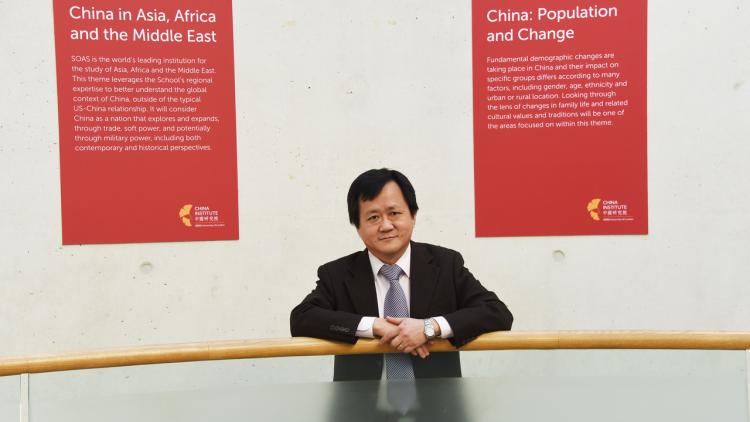
Roles and Affiliations: Steve Tsang is the Director of the SOAS China Institute at the School of Oriental and African Studies (SOAS), University of London. Previously, he served as Head of the School of Contemporary Chinese Studies at the University of Nottingham (2016) and held positions as Professorial Fellow (now Emeritus Fellow) at St Antony’s College, Oxford. He maintains strong ties with both SOAS and the Nottingham China Policy Institute through his editorial and research activities. Education: Steve Tsang holds an MA and DPhil (PhD) from the University of Oxford. Research Interests: His work focuses on Chinese politics, the evolution of China’s political system, and the Chinese Communist Party’s engagement with democracy and human rights. He explores China’s foreign policy dynamics, including soft power strategies, relations with the UK, EU, U.S., and Asia, as well as geopolitical issues like Taiwan’s security and Hong Kong’s post-colonial governance. His historical research delves into 20th-century Chinese history, decolonization processes, and colonial legacies in Hong Kong. Publications Trends: Recent scholarship emphasizes Xi Jinping’s political thought and its global implications, alongside analysis of China’s technological ambitions and military strategy. Earlier work chronicled Taiwan’s democratization journey and explored Hong Kong’s administrative challenges during its transition to Chinese rule. A consistent thread is the interplay between historical narratives and contemporary policy-making. Advising and Grants: He has supervised PhD theses on topics ranging from Taiwan’s party-movement relations to UK-China relations. Major research projects include a Smith Richardson Foundation-supported study on China’s global strategy under Xi Jinping. His advisory roles extend to governmental bodies, having testified before UK Parliament committees and the Canadian House of Commons. Labs/Teams: Central to his work is the SOAS China Institute, which focuses on China’s domestic and international dynamics, and the Nottingham China Policy Institute, where he previously led research initiatives.
Jenny Huangfu Day, a Professor of History and the Francis Young Tang '61 Chair in China Studies at Skidmore College, specializes in the intellectual, diplomatic, and legal history of late imperial and modern China. She earned a PhD from the University of California San Diego (2012) and a BA from the University of Washington (2007). Education: PhD in History, University of California San Diego (2012) BA in History, University of Washington (2007) Research Interests: Her work bridges intellectual history , legal history , and diplomacy to examine how China negotiated sovereignty and political legitimacy from the Qing Dynasty to the Republican era. Current projects analyze the politicization of historical education and transnational legal negotiations . Her publications include monographs on Qing diplomatic missions and extradition law , alongside peer-reviewed articles in Law and History Review , Modern Asian Studies , and 中华文史论丛 . She has also contributed to digital humanities projects like Visualising China and public intellectual forums such as 澎湃新闻 . Scientific Awards: Outstanding Academic Title of 2019 by ACRL Choice for *Qing Travelers to the Far West* Academic Leadership: As Interim Chair of the History Department at Skidmore College (Fall 2025), she oversees curriculum development and faculty mentorship, with a focus on integrating interdisciplinary methodologies into China studies.
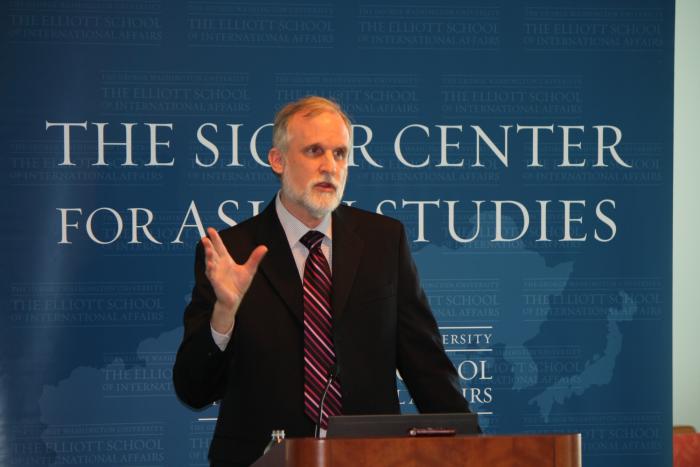
Bruce J. Dickson is a Professor of Political Science and International Affairs at The George Washington University's Elliott School of International Affairs, specializing in Chinese domestic politics, authoritarian regimes, and U.S.-China relations. He has been a full-time faculty member since 1993. Education: Ph.D. in Political Science from the University of Michigan His research examines the Chinese Communist Party's adaptability, economic reforms, state-society relations, and regime support mechanisms. He has authored influential books including The Dictator's Dilemma (2016) and The Party and the People (2021), analyzing authoritarian survival strategies in China. His recent publications focus on topics like tax consciousness in urban China, anti-corruption dynamics, and the CCP's institutional evolution. Articles appear in journals such as Asian Survey , China Quarterly , and Comparative Political Studies . Professor Dickson has received research grants from prestigious organizations including the National Science Foundation, Smith Richardson Foundation, U.S. Institute of Peace, and Woodrow Wilson International Center for Scholars. He serves as a frequent commentator on Chinese and Taiwanese politics for media outlets like CNN, NPR, BBC, and VOA.
Guido Samarani is a Senior Researcher at the Department of Asian and North African Studies , Ca' Foscari University of Venice, since 2020. Previously a Professor at the same institution (2000-2020), his work focuses on Chinese history , political transitions , and Italy-China relations . Director, Marco Polo Center for Global Europe-Asia Connections (2018-2021) Guest Professor, Zhejiang University (China) Member of multiple editorial and scientific committees including European Journal of East Asian Studies Research Interests center on: 20th-21st Century Chinese Political History Communist Party of China's Development Cold War Italy-China Interactions Global Historiography of China Publications include monographs on Mao Zedong, Red China, and the 100-year history of the CCP. His works explore the interplay between revolutionary ideology , diplomacy , and historiographical debates . Scientific Recognition : Honorary Member, Italian Association of Chinese Studies (2022-) Active in conference organization , he chaired panels on Eurasian geopolitics, Belt and Road Initiative, and comparative studies of Italian and German interactions in China. His editorial roles span journals like Mondo Cinese and Sinica Venetiana .
Jon Taylor is a Professor of Political Science and Chair of the Department of Political Science and Geography at the University of Texas at San Antonio (UTSA), where he also serves as Associate Dean for Faculty Success within the College of Liberal and Fine Arts. His academic career focuses on Chinese politics and public policy, Chinese and U.S. urban politics and urbanization, and comparative public sector ethics. Taylor received his academic training at the University of Oklahoma, where he earned his B.A. in Political Science and History (1983) M.A. in Political Science (1987) Ph.D. in Political Science (1993) Dr. Taylor's research spans several interconnected areas with a strong emphasis on comparative politics. His primary research interests include Chinese politics and public policy, with particular focus on urban development in Western China, China's national urbanization plan, the Communist Party's online accountability system, and provincial-level public corruption in China. He has made significant contributions to understanding the role of indigenous Chinese political science within the global discipline. As a native Texan, he also maintains an active research agenda on Texas and San Antonio politics and government, frequently contributing opinion and analysis pieces to both Chinese and U.S. media. His scholarly work demonstrates a consistent engagement with questions of governance, political development, and the interplay between global academic trends and local political contexts. Taylor's publication record reveals a consistent trajectory of scholarly engagement with Chinese political development, particularly focusing on urbanization, governance, and the evolution of political science as a discipline within China. His work often bridges theoretical frameworks with practical policy analysis, demonstrating expertise in both Chinese political systems and American politics, particularly at the state and local levels. A notable pattern in his scholarship is the examination of how Chinese political institutions adapt and evolve while maintaining distinctive characteristics. While specific major awards are not listed in the available information, Dr. Taylor has been an active participant in academic discourse through numerous presentations at prestigious venues including the Asia Society Texas, the Naoko Shirane Foundation Leadership Lecture Series, and the UTSA Model UN. His presentations often address timely topics in U.S.-China relations and contemporary political developments. As Department Chair and Associate Dean for Faculty Success, Dr. Taylor plays a significant leadership role in mentoring junior faculty and shaping the academic direction of his department. His teaching portfolio includes courses on Texas Politics and Society, Foreign Policy Analysis, Democracy and World Politics, Current Issues in World Politics, Seminar in Chinese Foreign Policy, and Urban Planning and Development, reflecting the breadth of his expertise across American politics, comparative politics, and international relations.
Chongyi Feng is Associate Professor in China Studies at the University of Technology Sydney (UTS) and adjunct Professor of History at Nankai University, Tianjin. He served as head of China Studies at UTS for 11 years from 1995-2006. As China's first holder of PhD in contemporary Chinese history, he brings unique expertise to his position within the Faculty of Design and Society's Social and Political Sciences department. Dr. Feng's research focuses on intellectual and political development in modern and contemporary China, political economy of China's provinces, and the growth of rights consciousness and democratic forces leading to constitutional democracy. His work explores the intellectual and political changes within China, particularly examining the evolution of democratic thought and practice. His scholarship bridges historical analysis with contemporary political developments, providing critical insights into China's political trajectory. His recent publications demonstrate a consistent focus on Chinese political development, democracy movements, and the CCP's internal dynamics, with particular attention to the challenges of authoritarian resilience and democratic transition. His work also critically examines China's international relations, particularly the methods of Chinese 'soft power' projection in democratic societies like Australia. Named one of the hundred Chinese public intellectuals in the world since 2005 Author of numerous influential books including 'China's Constitutional Transformation' (2014) and 'Liberalism within the CCP' (2009) Editor of significant collections including 'The Political Economy of China's Provinces' (1999) Recipient of multiple ARC research grants focusing on Chinese democracy and political development Dr. Feng has actively engaged with media and public discourse, particularly regarding China-Australia relations and human rights issues. His personal experience being detained by Chinese officials in March 2020 for ten days while conducting research on Chinese human rights lawyers has informed his critical perspective on Chinese state power and its international reach.
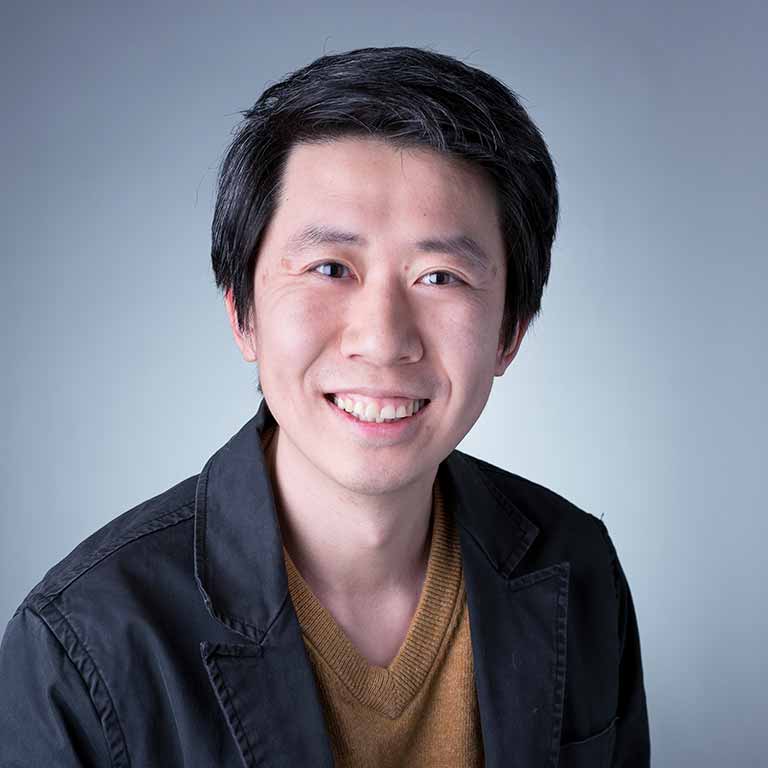
Tie Xiao serves as Associate Professor and Director of Undergraduate Studies in the Department of East Asian Languages and Cultures at Indiana University's Hamilton Lugar School of Global and International Studies, where his research investigates modern Chinese literature within transnational intellectual and political frameworks, focusing on intersections between human sciences, literature, and historical contexts across the twentieth and twenty-first centuries. His academic foundation includes: PhD in Chinese Studies from University of Chicago (2011) MA from University of Wisconsin–Madison (2005) BA from Peking University (2002) Xiao's scholarship critically examines enduring tensions in modern thought—reason versus intuition, solitude versus solidarity, and energy versus fatigue—tracing their manifestations through literary genres, disciplinary boundaries, and geographic borders. His interdisciplinary humanistic approach reveals how these conceptual conflicts persist within Chinese intellectual history, particularly through analyses of revolutionary movements and mass psychology. His publication trajectory from 2012-2019 demonstrates sustained engagement with political crowds and intellectual history in modern China, highlighted by the monograph Revolutionary Waves: The Crowd in Modern China (2017) and co-edited special issue on contemporary political crowds (2013). Articles consistently analyze key thinkers like Zhu Qianzhi while exploring self-writing, revolutionary imagination, and cross-cultural literary exchanges, with recurring emphasis on how figurative language mediates political concepts across cultural contexts. His scholarly contributions have earned significant recognition: Fellowship, Institute of Humanities and Social Sciences, Peking University, China (2019 Fall) New Frontiers in the Arts and Humanities Experimentation Fellowship, Indiana University (2018) Trustees Teaching Award, Indiana University (2017) Fellowship, Nantes Institute for Advanced Study, France (2015) Junior Scholar Grant, Chiang Ching-kuo Foundation (2014-2015) CAHI Faculty Fellowship, Indiana University (2014) Postdoctoral Fellowship, UC Berkeley Center for Chinese Studies (2011-2012) As Director of Undergraduate Studies, Xiao oversees curriculum development and student advising for East Asian Languages and Cultures majors, teaching courses ranging from Popular Culture in East Asia to Twentieth-Century Chinese Literature. His research has been supported by competitive grants from the Chiang Ching-kuo Foundation, Nantes Institute, and multiple Indiana University fellowships, reflecting sustained institutional investment in his transnational humanities scholarship.