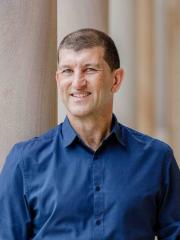
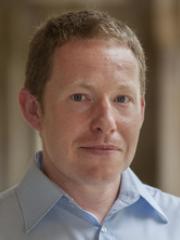
Professor Gary Magee is a leading academic in economic history at Monash University's Department of Economics within the Faculty of Business and Economics. He holds concurrent roles as a Research Affiliate at the Australian National University's Centre for Economic History and has previously served as Director of the Asian Economics Centre (University of Melbourne), Head of La Trobe University's School of Economics and Finance, and Deputy Dean (Research) at Monash. Education: B.A. History (Monash University), First-Class Honours in Economics (La Trobe University, D.M. Myer Medallist), PhD (Nuffield College, Oxford as a Commonwealth Scholar). Research Focus: Economic history, political economics, authoritarian societies, innovation, globalisation. Awards: Fellowships from the Academy of Social Sciences (Australia) and Royal Historical Society (UK). Visiting Roles: Held fellowships at institutions including the University of Oxford, Russian Academy of Sciences, King's College London, and China Development Institute. Publications span monographs like Palgrave Studies in Economic History , contributions to Cambridge Economic History series, and top journals including Economic History Review and Journal of Economic History .
Amy King is an Associate Professor in the Strategic & Defence Studies Centre at The Australian National University’s Coral Bell School of Asia-Pacific Affairs. She specializes in China-Japan relations, the economics-security nexus, and the historical and contemporary role of China in shaping international economic order. King holds a D.Phil in International Relations from the University of Oxford (as an Australian Rhodes Scholar) and an M.Phil in Modern Chinese Studies. Her research has been supported by prestigious fellowships including the Australian Research Council DECRA and Westpac Research Fellowships. Her work bridges historical analysis and contemporary policy, examining how ideas shape state behavior. Key themes include post-WWII economic order formation, Sino-Japanese diplomatic dynamics, and the legacy of historical narratives in modern geopolitics. King has led initiatives on gender equity in academia, receiving the ANU Clare Burton Award for her contributions. She currently directs projects investigating China’s historical and contemporary contributions to global economic frameworks, supported by ARC and Westpac funding. Awards include the Paul Bourke Award for early-career research excellence and recognition for her executive education programs on China-Japan relations targeting policymakers. Her interdisciplinary approach integrates archival research with contemporary policy analysis, emphasizing the interplay between economic strategy and security paradigms in Asia-Pacific affairs.
Ari Larissa Heinrich (he/they) serves as Professor of Chinese Media and Literature and Director of the Gallery at the Australian Centre on China in the World within the School of Culture, History & Language at Australian National University. A Fellow of the Australian Academy of Humanities, Heinrich holds advanced degrees from Harvard University (MA in Chinese Literature) and UC Berkeley (PhD in Chinese Studies). Heinrich's research centers on experimental visual cultures from China, Taiwan, and Hong Kong, with distinctive focus on biological materials including body parts, pathological specimens, and organic chemicals. Their work intersects queer theory, medical illustration, and transnational art practices, examining phenomena like the exhibition of Chinese cadavers in global anatomical displays and the use of melanin in posthuman art. Key research areas include cyborg aesthetics, modern Chinese literature, and queer visual culture as evidenced by fingerprint analysis showing 100% China Arts/Humanities concentration. Research outputs reveal significant scholarly impact with 43 publications since 2004, including books, translations of Taiwanese queer literature, and peer-reviewed articles. Recent work trends show intensified activity since 2020, particularly in posthuman studies and queer Chinese art. Heinrich's 2024-2022 publications demonstrate methodological innovation blending medical humanities with experimental media. Fellow of the Australian Academy of Humanities ARC Future Fellowship recipient Andy Warhol Foundation Arts Writers Grant awardee Heinrich leads research projects including the 2023 ARC-funded "Team Translation of Ta-wei Chi's A Queer Invention in Taiwan," supervises research students in Chinese visual culture, and directs gallery exhibitions at the Australian Centre on China in the World. Current work engages with Lu Yang's digital art transformations and melanin-based posthuman aesthetics through international collaborations.
Simon Burgess is a Senior Lecturer at the UNE Business School, specializing in ethics, leadership, and policy evaluation. He holds a PhD from Monash University and has diverse qualifications in humanities and commerce. His career includes roles in community development, youth mental health services, and social policy design with the Cape York Institute. He has received teaching excellence awards from the UNE Business School in 2016 and 2021. Education: PhD, Monash University BA(Hons), Monash University BA, University of Melbourne BCom, University of Melbourne Research Interests: Focuses on ethical leadership, business ethics, reconciliation, and policy evaluation. His work integrates philosophical concepts like virtue ethics with contemporary challenges in governance and social policy. His publications span ethics, leadership in Chinese governance, and innovative approaches to policy evaluation. Key contributions include analysis of China’s Social Credit System, Confucian leadership under Xi Jinping, and the role of hope and resilience in policy frameworks. Dr. Burgess advises postgraduate students in business ethics, professional ethics, and ethical leadership. His external engagements include affiliations with the Australasian Association for Professional & Applied Ethics and the Australasian Business Ethics Network. His research also addresses workplace civility, social policy reform, and historical reconciliation processes. Collaborations include work with Noel Pearson on welfare reform in Cape York, emphasizing structural policy shifts toward self-determination.
Professor Paul Walker is a renowned academic in architecture at the University of Melbourne's Melbourne School of Design. He holds the rank of Professor and has previously served as Head of Architecture & Urban Design and Deputy Dean. His research focuses on architectural history, theory, and design, with a particular emphasis on mid-20th century architecture in Australia and New Zealand, colonial museum buildings, and the work of architect John Andrews. Walker has coordinated the Master of Architecture program and contributed to urban design education through subjects like 'Urban Environments.' Education: BArch (Hons) from the University of Auckland (1981), PhD from the same institution (1987). He practiced in New Zealand before joining academia, notably contributing to the Victoria University of Wellington Student Union building, which won a design award in 1993. Research Interests: Walker explores the intersections of architecture with colonial history, urban development, and cultural identity. His current ARC Discovery project investigates John Andrews' architectural legacy across Canada, the U.S., and Australia. He has authored critiques for journals like Architecture Australia and chaired panels at the World Architecture Festival. Professional Contributions: Co-editor of Fabrications journal (2007–2012), contributing editor to Architecture Australia (2001–2012), and juror at the World Architecture Festival. His work bridges academic research and practical architectural critique. Labs/Teams: Leads an interdisciplinary ARC-funded project collaborating with institutions in Australia, Toronto, and Boston. His research frequently involves international partnerships to explore architectural history's global dimensions.
Professor Bonnie S. McDougall is a Visiting Professor at the University of Sydney's Department of Chinese Studies, part of the Faculty of Arts and Social Sciences. She holds an Emeritus Professor title from the University of Edinburgh, where she founded the Chinese Studies program in 1990. Her expertise centers on modern Chinese literature, literary translation, and cultural studies. Born in Sydney, she studied Chinese at Peking University (1958-59) and has held academic positions at institutions including Harvard, SOAS, and Hong Kong universities. McDougall's research focuses on the socio-political dimensions of translation in modern China, particularly during the Cultural Revolution era. She has translated seminal works by authors like Bei Dao, Ah Cheng, and Dung Kai-cheung, emphasizing marginalized voices in 20th-century Chinese literature. Her books include Translation Zones in Modern China (2011) and Love-letters and Privacy in Modern China (2002). She co-edits Translation Review and teaches translation at institutions in China and internationally. Recent work explores power dynamics in translation relationships and comparative epistolary traditions. Her 2023 publication examines translator-author interdependence, while 2021 research analyzes collaborative translation practices. McDougall's 2017 translation of Cantonese Love Stories highlights urban narratives in Hong Kong. Her career spans over five decades with notable contributions to both academic scholarship and literary translation. McDougall remains active in advancing cross-cultural literary exchange through her publications and editorial work.
Beatrice Trefalt is an Associate Professor in Japanese Studies at the School of Philosophical, Historical and International Studies, Faculty of Arts, Monash University. She specializes in modern Japanese history, with a focus on the legacies of the Asia-Pacific War, war memory, repatriation, war crimes trials, and commemoration. She coordinates the Major in Global Asia and is actively involved in PhD supervision. Education: PhD in Asian Studies, awarded for thesis on Japanese 'stragglers' and war memory, recipient of ASAA President's Prize (2003) Double major in History and Japanese, La Trobe University Honours thesis on the Showa Emperor's Monologue and symbolism in post-defeat Japan Research conducted in Tokyo under Monbusho Scholarship Her research centers on the cultural and political dimensions of war memory in Japan, particularly how repatriation, war crimes trials, and the return of soldiers shaped national identity. She explores how institutions like the Japanese Red Cross, state rituals, and media narratives have constructed collective memory. Her work bridges history, political science, and memory studies, often analyzing understudied cases such as war remains repatriation missions to New Guinea. The 15 most recent publications reflect a sustained engagement with themes of memory, justice, and repatriation. Her work spans historical analysis, visual culture, and legal-political dimensions of postwar reconciliation. She frequently examines how personal narratives intersect with state-led commemoration, using archival sources, photographs, and media texts to trace shifting public memories of war. Scientific Awards: ASAA Presidents Prize for Best Thesis in Asian Studies (2003) NSW Premier History Awards (2017), for co-authored book Japanese War Criminals Vice Chancellor's Award for Excellence in Honours Supervision – Special Commendation (2015) She has secured competitive research funding, including multiple ARC grants, most notably for projects on post-war repatriation and the release of Japanese war criminals. Her advisory role includes supervising honours and PhD students, with a commitment to mentoring emerging scholars in Asian studies. She is a key contributor to public history through media engagements on topics like Hiroo Onoda and Godzilla as cultural metaphors for war trauma. Her research is associated with laboratories and collaborative networks focused on war and memory, including partnerships with scholars from ANU, Murdoch University, and international institutions. She contributes to the UN Sustainable Development Goals, particularly those related to peace, justice, and strong institutions through historical accountability.
Robert Burne is an Honorary Professor at the University of Queensland and Honorary Associate Professor at the Australian National University's Research School of Earth Sciences. He holds guest professorships at Southwest Petroleum University and Chongqing University in China. His career spans over five decades, with extensive experience in sedimentology, geobiology, and coastal geoscience. Education: B.Sc. (Honours Geology, 1966, Wales), D.Phil. (Sedimentology, 1969, Oxford), M.Phil. (Geobiology, 2016, ANU). He has held roles such as Principal Research Scientist at the Australian Geological Survey Organisation and Project Leader for the United Nations Development Programme's IGCP 261 on stromatolites. Research Interests Dr. Burne specializes in microbialites, geobiology, and facies analysis. Key areas include the study of modern and ancient microbialites (e.g., Shark Bay stromatolites), carbonate sedimentology, and turbidite systems. His work integrates field studies, geochemistry, and mathematical modeling to understand biogenic sedimentary processes. Publications & Trends His research spans microbialite mineralization, ooid formation, and the environmental significance of sedimentary deposits. Recent work focuses on Cambrian red beds, Ediacaran-Cambrian transitions, and Triassic paleoenvironments. Awards & Grants Dr. Burne has led numerous international projects, including UNESCO's IGCP 261. His work has been supported by grants from Australian and international agencies. Notable contributions include the discovery of Stevensite in thrombolites and reinterpreting stromatolite growth mechanisms. Labs & Collaborations Collaborations include research with ANU, UQ, and institutions in China. He actively contributes to field studies in Australia, South China, and the South Pacific, emphasizing interdisciplinary approaches to geobiological problems.
Beate Josephi is an Honorary Senior Lecturer at the School of Arts and Humanities, Edith Cowan University (ECU). Her qualifications include a Doctor of Philosophy from Germany (1978) and other academic achievements from institutions in Germany and Australia. Research interests span journalism studies, media's role in democracy, comparative media systems, and investigative journalism. Her work explores global media dynamics, cross-cultural reporting, and journalistic ethics, with a focus on Australia and Germany. Notable outputs include analyses of freelance journalism during the pandemic, democracy-journalism interdependencies, and environmental reporting in China. Publications highlight her expertise in journalism education, global journalistic practices, and media's societal impact. She has supervised doctoral research on topics like sportswriting history, Australian identity through media, and comparative literary journalism between Australia and Germany. While no formal awards are listed, her extensive academic contributions reflect significant scholarly influence. Education: Doctor of Philosophy, Germany (1978) Other NT higher ed institution, Australia (1985) Germany (1971) Advising: PhD: Seventy years of sportswriting at the West Australian PhD: Australian identity and press in international sporting events PhD: Comparative Australian-German literary journalism
Dr. Alexey Muraviev is an Associate Professor of National Security and Strategic Studies at Curtin University's School of Media, Creative Arts and Social Inquiry (Faculty of Humanities). He leads the Strategic Flashlight forum and previously served as Academic Lead of Curtin's Defence strategic initiative. His expertise spans Russian defense policy, maritime security, and Asia-Pacific geopolitics. Education: Bachelor of Arts with 1st Class Honours (Social Sciences), Curtin University (2000) Doctor of Philosophy (Political Science), Curtin University (2005) Research Interests: Focus on maritime security (modern naval power, maritime terrorism), Russia's strategic policy and military modernization, Russia's role as a Pacific power, alliances in the Asia-Pacific, and future warfare trends. Key projects include studies on the Russian Pacific Fleet, Russian defense modernization in the Far East, and maritime terrorism. Media and Awards: Multi-award-winning analyst, with accolades including the 2019 Globelynx Award for International Media Engagement and multiple Curtin Media Commentary awards. Regular contributor to BBC, CNN, and The New York Times. Recognized as an ARC 'Expert of International Standing' (2007-2010). Teaching: Postgraduate courses on Russian/Eurasian Studies, Indian Ocean security, and strategic geography.
Associate Professor Patrick Jory is a distinguished scholar of Southeast Asian History at the University of Queensland's School of Historical and Philosophical Inquiry, where he serves as Director of Research Training (Higher Degree Research). With a career spanning over two decades, he has established himself as a leading expert on Thai history, politics, and religious studies. His academic journey began at the University of Western Australia, continued at Walailak University in Thailand, and has flourished at the University of Queensland since 2011. Dr. Jory's research interests form a comprehensive exploration of Southeast Asian societies, with particular emphasis on Thai political, intellectual, and religious history. His work delves into the intricate relationships between Theravada Buddhism and state formation, the historical development of secularization in Asia, and the complex dynamics of the conflict in southern Thailand/Patani region. He has made significant contributions to understanding Islam and Muslim societies in Southeast Asia within their broader historical and political contexts. His scholarship bridges historical analysis with contemporary political developments, offering nuanced perspectives on Southeast Asian politics that challenge simplistic narratives. Jory's prolific publication record demonstrates remarkable thematic consistency while expanding into new areas of inquiry. His recent works reveal a growing focus on the politics of death and sovereignty, state building processes, and the civilizing processes in Thai society. The 2021 publication of A History of Manners and Civility in Thailand represents a culmination of his long-standing interest in social behavior and cultural norms. His scholarship consistently challenges conventional interpretations, as seen in his work on Thai monarchy, republican traditions, and the historical relationship between Siam and imperial China. Manners in Thailand's Social and Political Transformation, 1880-1980 (ARC Discovery Projects, 2018-2022) The Politics of Politeness: A History of Manners in Thailand (UQ New Staff Research Start-Up Fund, 2011-2012) Professor Jory has supervised numerous PhD candidates across diverse topics related to Southeast Asian history and politics. His supervision portfolio reflects the breadth of his expertise, spanning Chinese diaspora studies, Islamic movements, political history, and cultural studies across the region. His commitment to mentoring the next generation of scholars is evident in his extensive supervision record, which includes both principal and associate advisory roles for doctoral candidates working on projects from Indonesia to Vietnam to Sri Lanka. His research continues to shape contemporary understanding of Thailand's complex historical trajectory and its implications for current political developments in Southeast Asia.
Professor Andrew Phillips is an Associate Professor of International Relations and Strategy at the School of Political Science and International Studies , University of Queensland. His research explores the interplay between war, strategy, and international order, focusing on Great Power rivalry, asymmetric violence, and the historical evolution of global politics. Doctor of Philosophy, Cornell University His research spans International Relations , International Security , and Strategic Studies , with a particular interest in pre-Western international systems, empire dynamics, and postcolonial order transformations. Recent work under his ARC Future Fellowship (2024-2028) examines how rising powers achieve regional domination in Asia from 1500CE to the present. His publications since 2016 reveal a focus on empire studies , international hierarchy , and historical institutionalism , including books like How the East Was Won (2021) and Outsourcing Empire (2020). These works analyze Great Power dynamics , sovereignty , and colonial governance through a historical lens. Current research projects include "Paths to Primacy" (ARC Future Fellowships 2024-2028) and "Balance of Power vs. Empire" (ARC Discovery Projects 2022-2025). He has supervised PhD candidates on topics such as "Three Warfares" (hybrid war with Chinese characteristics), "Middle Power Diplomacy" (Indonesia), and "Global Constitution of Nation-States" (China, Japan, Vietnam). As a Visiting Fellow at the Australian Defence College (2024-2028), he teaches grand strategy to senior military leaders. He also served as a Resident Fellow at the Australian War College (2023), contributing to defense education programs.
Associate Professor Andrew Carr is an academic at the Strategic and Defence Studies Centre (SDSC) at Australian National University (ANU). He specializes in Australian Defence Policy and Strategic Theory, with a focus on regional security dynamics in the Asia-Pacific. His research explores great power competition, middle power strategy, and the intersection of military doctrine with geopolitical realities. Education: PhD in Government (University of Canberra), BA Hons (1st class) and BCom (both from University of Canberra). Research Interests: Australian Defence Policy and its evolution since 1976 Strategic Theory innovations in complex geopolitical environments Geopolitical implications of Australia's geographic isolation Alliance dynamics within ANZUS and US-Australia relations Military strategy concepts like tempo, deterrence, and archipelagic defense Current Projects: Co-authoring a history of Australia’s Defence White Papers (1976-2020) with the Department of Defence, and preparing his upcoming book Defending Terra Australis: Paradoxes of Strategy and Geography for Cambridge University Press. Grants & Advising: Supervises research students and leads multiple funded projects including Pathways of Deterrence: Causal Chains of 21st Century Signalling (2024-2027) and Forward Motion - Strategic Rationales of forward presence and their implications for Army (2020-2022).
Dr. Charles Miller is a Lecturer at the School of Politics & International Relations, The Australian National University. His research focuses on international relations, political science, military history, and conflict studies. He holds a PhD in Political Science from Duke University, Durham, NC, USA. Research interests include historical conflict analysis, propaganda's impact on military performance, colonial military systems, voter behavior in policy decisions, and modern geopolitical strategies such as China's economic coercion. His work spans interdisciplinary topics from World War II studies to contemporary international affairs. Recent publications explore the Historical Conflict Event Dataset, German soldiers' motivation in WWII, and China's implicit economic tactics. He has led projects like 'How can Army reduce prejudice and foster empathy towards the population of strategically crucial regions?' (2016–2017). No scientific awards are explicitly mentioned, but his research has been widely cited, reflecting significant academic impact. He is registered to supervise research students but no specific advisees are listed.
Dr David Brophy is a Senior Lecturer in Modern Chinese History at the University of Sydney, affiliated with the China Studies Centre. He holds an ARC Discovery Early Career Research Fellowship for his project on 'Empire and Religion in Early Modern Inner Asia.' His research focuses on the social and political history of China’s northwest, particularly Xinjiang Uyghur Autonomous Region, and its connections with the Islamic and Russian/Soviet worlds. Brophy completed his MA and PhD at Harvard University before joining the University of Sydney in 2013. Research Interests: History of Qing and Republican China Early Modern Eurasia Colonialism and National Movements Islamic Studies (Sufism) Teaching: Courses include 'China in the Nineteenth-Century World,' 'Modern Chinese History,' and 'Beyond the Great Wall: China’s Frontiers.' He supervises research on modern Chinese history, Xinjiang politics, and Eurasian empires. Awards: ARC Discovery Early Career Research Fellowship (2017–present) Labs/Teams: Active member of the China Studies Centre. His work bridges historical analysis with contemporary geopolitical discourse, evidenced by his media engagement on Sino-Australian relations.