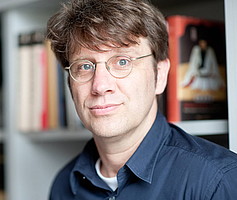
Professor Max Deeg is a leading scholar in Buddhist Studies at Cardiff University , holding a personal chair since 2009. With a career spanning institutions in Germany, Austria, and the UK, his research focuses on transcultural Buddhist history from India to East Asia, Chinese Buddhist travelogues , and interreligious encounters in medieval China. He has held visiting positions at universities in Japan, Nepal, the US, and Germany, and currently directs the Centre for the History of Religion in Asia (CHRA) . PhD from University of Würzburg (1990) Dr. phil. habil. in Religious Studies (1998) Full Professor at University of Vienna (2002-2006) His research explores Buddhist narratives as tools for constructing religious identity, foundation myths in trans-Himalayan contexts, and terminology evolution in Chinese Buddhist translations. Recent publications analyze Indian Buddhist monasticism through Chinese sources and religious concepts like xin (trust) across Buddhist, Manichaean, and Christian traditions. Awarded the KHK Visiting Research Fellowship (2016) and a DAAD Scholarship (1986-87) , Prof Deeg contributes to editorial boards of major journals. He supervises PhD students and teaches Buddhist Studies , Life of the Buddha , and Chinese Buddhist Texts .
Harald Fuess is a Professor of Cultural Economic History at the Heidelberg Centre for Transcultural Studies since 2009. He holds a Ph.D. from Harvard University and B.A. from Princeton University , with prior teaching roles at the University of Sheffield, Sophia University, and visiting appointments at Oxford, Duisburg-Essen, Columbia, and Tokyo University. He serves as the Erasmus Coordinator for Asian Studies and as University Scientific Coordinator of the Hexagon Alliance . Education: Princeton University – B.A. Harvard University – M.A., Ph.D. His research spans modern Japanese history , gender dynamics , transcultural economic relations , and Eurasian cultural flows . Publications focus on Japan's legal sovereignty, consumption patterns, and the Meiji Restoration's global impact. Key academic contributions include leadership roles such as President of the European Association for Japanese Studies (2008-2011) and ongoing membership in its Executive Council (since 2000) . He has held administrative positions including Director of the Cluster Graduate School Transcultural Studies (2012-2017) and Speaker for Research Area C "Health and Environment" (2009-2012) . Recent publications analyze topics ranging from historiography of the senses to colonial legal frameworks in East Asia. His work bridges historical analysis with contemporary issues like tourism's economic impact and intellectual property evolution in transnational contexts.
Sebastian Conrad is a Professor of Modern History and Global History at the Friedrich Meinecke Institute, Freie Universität Berlin. He earned his academic credentials through training in German and Japanese history, later expanding into colonial/postcolonial and global history. His roles include directing the MA program 'Global History' and the graduate school 'Global Intellectual History,' alongside leading the Cluster of Excellence 'Temporal Communities.' Research focuses on global history frameworks, including colonialism, nationalism, and the Enlightenment's global dimensions. Notable works include What is Global History? (2016) and Die Königin: Nofretetes globale Karriere (2024), exploring cultural globalization and historical iconography. He has held fellowships at institutions like the Institute for Advanced Study in Berlin and has authored over 20 books and numerous articles. Advises PhD projects on topics like veterans' movements, waste moralities, and Ottoman political communities. Awards include membership in the Berlin-Brandenburg Academy and Academia Europaea. His work bridges historical scholarship with contemporary debates on memory, colonial restitution, and global interconnectedness.
Prof. Joachim Kurtz is a Full Professor of Intellectual History at Heidelberg University’s Cluster of Excellence Asia and Europe in a Global Context since 2009. Previously, he held positions at Emory University (2003–2010) and the University of Erlangen-Nuremberg. He earned a Dr. phil. (summa cum laude) in Chinese Studies from Erlangen-Nuremberg (2003) and an M.A. in Chinese Studies, Political Sciences, and Philosophy from the Free University of Berlin (1997). His research focuses on Late Imperial Chinese intellectual history, transcultural exchanges between Europe, China, and Japan, and translation studies. Notable works include The Discovery of Chinese Logic (2011) and co-edited volumes on conceptual history and transcultural frames. He has organized conferences such as “Standards of Validity in Late Imperial China” (2013) and “Reading the Signs: Languages of Prognostication in Chinese History” (2013). Awarded grants include the HERA-funded “East Asian Uses of the European Past” (2016–2019) and DFG grants for projects on global concept histories. He is a Corresponding Member of the Hamburg Academy of Sciences (since 2015) and active in the Association for Asian Studies and European Association of Chinese Studies. His work bridges historical and transcultural studies, emphasizing knowledge circulation and conceptual transformation. Major contributions include analyzing Jesuit paratexts, Liang Qichao’s translation of Fichte, and the formation of modern Chinese academic disciplines.
Peter J. Katzenstein is the Walter S. Carpenter, Jr. Professor of International Studies at Cornell University and a Visiting Research Professor at the WZB (Social Science Center Berlin). He is a leading scholar in international relations and comparative politics, with extensive contributions to the study of global power, culture, and political economy. His research interests include: Power and uncertainty in world politics Civilizational identities and regional orders German and European politics Cultural norms in national security Protean and relational power His work bridges constructivist theory, historical sociology, and political economy, emphasizing ideational and cultural factors in international affairs. Katzenstein’s recent publications explore the decline of American hegemony, the role of time and space in global politics, and the dynamics of uncertainty. His books often integrate interdisciplinary insights, combining political theory with empirical case studies across regions, particularly Europe and East Asia. His scientific awards include: Johan Skytte Prize (2020) Susan Strange Award (2011) Woodrow Wilson Prize (1986) Helen Dwight Reid Award (1974) Stephen H. Weiss Presidential Fellow (2004) Honorary Lifetime Member, Swiss Political Science Association He is also a member of the American Academy of Arts and Sciences, the American Philosophical Society, and the British Academy. Katzenstein has chaired or served on over 100 dissertation committees at Cornell, mentoring generations of political scientists. He has led the Cornell Studies in Political Economy book series since 1982, publishing 148 books and shaping the field through editorial leadership. His teaching has been recognized with multiple university-wide awards, reflecting his sustained excellence in undergraduate education. He has held fellowships at the Institute for Advanced Study (Princeton), Stanford’s Center for Advanced Study in the Behavioral Sciences, the Russell Sage Foundation, the Woodrow Wilson Center, and the Wissenschaftskolleg Berlin, underscoring his international scholarly stature.
Prof. Roger Goodman is the Nissan Professor of Modern Japanese Studies at the University of Oxford and Warden of St. Antony's College. He holds leadership roles in the Oxford School of Global and Area Studies (OSGA) and the Social Sciences Division. His career spans over 40 years, including a doctorate in social anthropology (1982), a Junior Research Fellowship (1985–88), and professorships at the University of Essex and Oxford. His research focuses on Japanese education, social policy, and comparative studies of East Asia and the UK. Education: PhD in Social Anthropology (St Antony’s College, 1982) Affiliations: Nissan Institute of Japanese Studies, OSGA, St Antony’s College Research interests include Japanese education systems, youth culture, social welfare policies, and cross-cultural comparisons. His work bridges anthropology and sociology, addressing themes like demographic shifts, university governance, and policy reform. Notable publications include Family-Run Universities in Japan (2020) and Children of the Japanese State (2000). Awards: Fellow of the Academy of Social Sciences (2013), Academy President (2020–) He has supervised ~40 doctoral theses, covering topics from Shinto shrines to education reform. His teaching emphasizes anthropological perspectives on Japanese society, including kinship systems, gender, and popular culture.
Hans Martin Krämer is a Professor of Japanese Studies at the Institute of Japanese Studies, University of Heidelberg. His research focuses on the religious history of modern Japan, with an emphasis on cultural and societal transformations in East Asian contexts. Research Areas: Religious history of modern Japan Japanese cultural studies Historical anthropology of East Asia
Professor Axel Klein holds the Chair for Japanese Politics at the University of Duisburg-Essen, affiliated with both the Institute for East Asian Studies (IN-EAST) and the Institute for Political Science. Since joining the university in October 2011, he has taught core courses including The Political System of Japan, Intercultural Communication, and Climate and Environment in Japan, while maintaining an active research profile in East Asian comparative politics. His academic trajectory includes a Senior Research Fellowship at the German Institute for Japanese Studies in Tokyo (2007-2011) and foundational work at the University of Bonn where he completed his habilitation. Dr. Klein earned his PhD in 1998 from the University of Bonn with a dissertation on Japanese electoral system reform, followed by his habilitation in 2005 focusing on Japan's political system. His scholarly development reflects deep institutional engagement with German-Japanese academic exchange programs and specialized research centers. Klein's research program centers on Japanese political institutions with expanding comparative dimensions across East Asia. He has established significant expertise in Kōmeitō party dynamics, religious-political interactions, and electoral systems, recently pivoting toward populism studies in Japan, South Korea, and Taiwan. His methodological approach combines historical institutionalism with contemporary case analysis, often examining demographic and environmental policy challenges through political lenses. Analysis of his publication record since 2014 reveals three interconnected trajectories: sustained examination of Kōmeitō's coalition strategies with the LDP, innovative work on religious organizations in Japanese politics (particularly Sōka Gakkai), and emerging scholarship on East Asian populism that challenges Western-centric frameworks. His 2025 article in the Journal of East Asian Studies represents a critical intervention questioning political science's neglect of non-Western populist manifestations. No scientific awards are documented in the available biographical materials. Professor Klein's academic leadership includes organizing the 2020-2021 International Lecture Series on East Asian Populism at IN-EAST, demonstrating capacity for research coordination. While specific doctoral students aren't listed, his extensive co-authorship patterns and course supervision suggest active mentorship. His collaborative projects often involve German-Japanese research teams focusing on demographic change and electoral behavior. As a core faculty member of IN-EAST, Klein contributes to one of Europe's premier East Asian research hubs. His involvement in the lecture series on East Asian populism and co-editorship of the Kōmeitō monograph series highlights his role in building international scholarly networks. Current work appears focused on comparative populism studies while maintaining his signature expertise in Japanese party politics and religious-political intersections.
Dr. Steve R. Entrich is a Research Fellow at the Institute of Educational Science at the University of Innsbruck, Austria, specializing in educational inequality and shadow education systems. He holds a Ph.D. in Educational Sociology from the University of Potsdam (2016, summa cum laude) and has held postdoctoral fellowships at the Free University of Berlin (2018–2019) and the University of Zurich. His research examines global shadow education trends, transnational human capital accumulation, and the intersection of education policy with socioeconomic disparities. Education : Ph.D. in Educational Sociology (summa cum laude), University of Potsdam (2016) Magister Artium in History/Educational Sciences, University of Potsdam (2010) Studies in Japanese and Chinese Languages, Humboldt University and University of Potsdam Research Interests : Focuses on explaining persistence of shadow education in East Asia, impacts of educational privatization, and mechanisms reproducing inequality through supplementary education. Key Achievements : Awarded Best Dissertation in Social Sciences (2016), multiple DAAD travel grants, and research fellowships at leading institutions including the German Institute for Japanese Studies (Tokyo). Grants & Projects : Led comparative studies on shadow education in Hong Kong/Germany (2022), transnational education mobility (JTEPS, 2023), and inclusion in teacher training (ProfInk2, 2019–2023). Labs/Teams : Principal investigator for projects like 'Shadow Education in Hong Kong and Germany' and 'Japan Transnational Education Panel Study'. Active in international networks such as CIES and VSJF.
Kerstin Storm is a Full Professor of Sinology and Director of the Institute for Sinology and East Asian Studies at the University of Münster since October 2022. She is also co-founder and spokesperson of the Asia Center at Faculty 09 of the University of Münster since May 2024. Previously, she served as Head of the BMBF project "Variety and Variability of Indigenous Perceptions of Age and Aging in Chinese Poetry" at the University of Trier from 2020-2022. Her academic career includes positions as Assistant Professor at the University of Münster (2013-2017) and Deputy Professor of Chinese Intellectual History and Confucianism at the University of Trier (2017-2018). 2022: Habilitation in Sinology, University of Trier 2008-2014: PhD in Sinology, University of Münster 1999-2005: MA in Sinology, Political Science, and Economic Policy, University of Münster 2001-2002: Chinese language and cultural studies at National Taiwan Normal University Professor Storm's research focuses on decision-making processes and forms of argumentation in the Tang dynasty (618-907), age and aging in premodern China, traditional Chinese poetry, Chinese legal history, concepts of childhood in premodern China, and narrative forms in premodern Chinese prose. Her work bridges historical, literary, and legal studies of imperial China, with particular attention to social structures, age hierarchies, and narrative techniques in historical documents. Through her leadership in the Cluster of Excellence on Transcultural Entanglement and Disentanglement and the Digital Humanities Research Cloud, she has expanded her research into digital methodologies for analyzing historical Chinese texts. Her scholarly output demonstrates consistent engagement with the intersection of law and literature in Tang dynasty China, with increasing attention to transcultural knowledge transfer in later works. The articles reflect methodological diversity, combining philological analysis of classical texts with comparative historical approaches. Recent publications show growing interest in missionary knowledge transfer in 19th-20th century China, indicating an expansion of her research scope beyond the imperial period. 2012: JSPS Postdoctoral Fellowship from Alexander von Humboldt Foundation & Japan Society for the Promotion of Science 2011: Doctoral Scholarship from University of Münster 2001: DAAD Full Scholarship for Chinese language studies at National Taiwan Normal University Professor Storm has supervised doctoral research including Lisa Natascha Kerl's dissertation on missionary knowledge transfer in China. She has received research funding through the BMBF project on indigenous perceptions of age in Chinese poetry (2020-2022) and previously held a Humboldt-JSPS postdoctoral fellowship for research at Kyoto University (2012-2013). Her current research includes leadership of project A3-35 "News from China?" within the Cluster of Excellence. She serves on review panels for the German Research Foundation (DFG) and German Academic Exchange Service (DAAD), demonstrating her active role in shaping research funding in her field. As co-founder and spokesperson of the Asia Center at the University of Münster since 2024 and member of the Center for Digital Humanities since 2022, Professor Storm leads interdisciplinary initiatives connecting sinological research with broader area studies and digital methodologies. Her role as chairwoman of the German Association for Chinese Studies (DVCS) since 2024 further demonstrates her leadership in the academic community.
Dolf-Alexander Neuhaus serves as a senior research fellow at the German Institute for Japanese Studies (DIJ) since February 2024, specializing in the research field 'Japan in transregional perspective.' His academic foundation includes advanced degrees in Japanese Studies and History from Freie Universität Berlin, where he completed his doctoral work on transnational networks in East Asia. His educational trajectory features: Master's degree in Japanese Studies and History, Freie Universität Berlin PhD in History (2022), Freie Universität Berlin, with thesis 'Entangled Asia: Korean Exchange Students and Japanese Protestants, 1880-1923' Neuhaus investigates modern Japanese and Korean history through the lens of transregional entanglements, focusing on educational exchanges, Christian missionary networks, and postcolonial dynamics. His current DIJ research examines Japanese development aid projects and the adaptation of technical education systems across Asia, contextualized within Cold War and post-Cold War discursive shifts regarding Asia. Analysis of his 2024-2025 publications reveals consistent interdisciplinary engagement with East Asian historical networks, particularly examining intersections of religion, education, and political movements. His work bridges diplomatic history, religious studies, and postcolonial theory while maintaining empirical focus on Korean-Japanese interactions and international organizations. Key scholarly recognition includes: DAAD Scholarship supporting research at Tokyo University and Tsukuba University TIFO Scholarship enabling archival work at Yonsei University (Seoul) Neuhaus has secured competitive research funding that facilitated multiple long-term academic stays in Japan and Korea during his doctoral studies. He actively contributes to DIJ's collaborative research environment through projects analyzing transnational actors in East Asian independence movements and Japan's postwar technical assistance frameworks. He currently participates in DIJ's core research initiatives 'Transregional actors across East Asia: Christianity, education, and independence movements' and 'Transforming Empire: Japanese technical assistance and education in postwar Asia,' building upon prior involvement in the Carl Schmitt Reading Group that explored geopolitical thought in East Asian contexts.
Max Planck Institute for the History of ScienceGermany
Ayako Sakurai is an Associate Professor at the School of Business Administration, Senshu University, Japan, where she has taught since 2013. Her research focuses on the international mobility of 19th-century German scientists and their impact on the development of the scientific community in Meiji Japan. She is affiliated with the Max Planck Institute for the History of Science through a collaborative workshop she co-organized in 2020. PhD in History of Science, University of Cambridge (2007) Her work bridges historical analysis of science with transnational cultural exchanges, emphasizing material culture, collecting practices, and the globalization of scientific knowledge. The 2020 workshop at the Max Planck Institute highlighted her interest in natural-historical surveys and expeditions in the Asia Pacific region. Her sole documented publication, "German Naturalists in 19th-century East Asia" (2020), reflects her expertise in 19th-century German scientific expeditions. Her research intersects with subfields such as imperialism, visual culture, and practical knowledge exchange.
Katja Triplett is a Research Associate and Private Lecturer at the Institute of Religious Studies, Faculty of History, Arts and Regional Studies at Leipzig University. She has held academic positions at several prestigious institutions including Georg-August-Universität Göttingen, Philipps-Universität Marburg, and SOAS, University of London. Her current research focuses on Japanese religious history, particularly the intersection of religion and medicine in East Asia. Dr. Triplett completed her habilitation in Religious Studies in 2020 at Marburg University following doctoral studies from 1996-2002. Her academic journey includes significant research periods in Japan through fellowships at the Deutsches Institut für Japanstudien in Tokyo and the Ōtani Universität in Kyoto. Her research interests span religion and society in Japan, religion and medicine, Buddhism in East Asia, and translation policies in religious contexts. She has made significant contributions to understanding how religious worldviews interact with medical practices in historical Japanese contexts, particularly examining the complex relationship between Buddhist traditions and healing practices from 500-1600 CE. Her current DFG-funded research project "Mission as Laboratory" investigates how Jesuits and Japanese converts navigated competing worldviews through translation during the early modern period. Her scholarly output demonstrates consistent focus on religious healing practices, translation dynamics in religious contexts, and the interplay between religious worldviews and medical systems in East Asia. Her publications reveal a deep engagement with historical religious texts, manuscript cultures, and the material dimensions of religious practice. She has particularly examined how religious traditions conceptualized and addressed health, disease, and healing through ritual, textual, and institutional frameworks. Dr. Triplett serves on the Board of the International Association for the History of Religions (IAHR) since 2015, reflecting her standing in the international scholarly community. She has successfully secured multiple research grants, including DFG-funded projects on Japanese religious translation and intercultural perspectives on religion and dietary practices. Her teaching portfolio encompasses diverse courses on Japanese religions, Buddhist traditions across Asia, religious systems in modern Japan, and specialized topics like ritual medicine and religious innovation. She has taught at multiple German universities including Marburg, Göttingen, and Hannover, demonstrating her commitment to training the next generation of scholars in religious studies with a focus on East Asian traditions.
Claudia Derichs is a Professor at the Department of Asian and African Studies, Humboldt-Universität zu Berlin, specializing in transregional Islamic studies, social movements, and gender politics. Her research spans Southeast Asia, the MENA region, and Japan, focusing on political activism, knowledge production, and comparative analysis of authoritarian regimes. Key Fields: Transregional Islamic movements, women under Muslim law(s), social movement theory, gender and development. Education: PhD on Japan’s New Left (1994), informed by fieldwork in the 1980s/90s. Recent Publications highlight global 1960s activism, kinship in political analysis, and decolonizing knowledge. Her 2017 monograph critiques Western Area Studies and advocates transregional connectivities. Articles include analyses of digital media’s role in Malaysia’s political reform (2000s) and contributions to the Routledge Handbook of the Global Sixties (2018). Scientific Awards include a senior fellowship at the Centre for Global Cooperation Studies (Duisburg-Essen, 2017). She actively supervises PhD students and participates in international conferences, such as on epistemic decolonization (2019) and transnational women’s movements.
Steve Entrich is a Post-Doctoral Research Fellow at the Graduate School for East Asian Studies, Freie Universität Berlin, specializing in Japanese Studies. His work focuses on shadow education (private tutoring), social inequality in education , and educational reform policies in East Asia and Europe. Education: Ph.D. in Educational Sociology, University of Potsdam (2016, summa cum laude) Magister Artium in History and Educational Sciences, University of Potsdam (2010) His research examines how out-of-school education affects social mobility, with comparative analyses of Japan, Germany, and Korea. Key themes include educational decision-making , policy impacts , and global educational trends . Using datasets like PISA, LifE, and HHSS, he merges quantitative regression models and qualitative content analysis . Recent publications address shadow education in Germany and Japan, social inequality mechanisms, and transnational human capital accumulation. His work has earned the 2016 Best Doctoral Dissertation Award (University of Potsdam) and multiple DAAD travel grants (2013–2018). As an advisor, he has supervised 1 PhD student , 11 Master’s theses , and 11 BA theses at the University of Potsdam, while co-organizing international conferences and serving as reviewer for journals like Comparative Education Review and Asia Pacific Journal of Education .