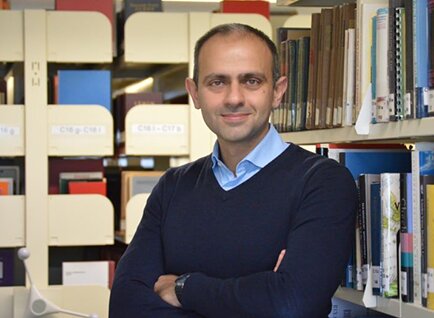
Zaur Gasimov is a Lecturer at Johannes Gutenberg University Mainz and currently serves as DAAD Departmental Coordinator and Co-Head at the Faculty of Economics and Administrative Sciences, Turkish-German University. He holds a habilitation in Modern History and Eastern European History, with a focus on Eastern European History, political science, and sociology. Education : B.A. in International Relations from Baku State University; M.A. from Catholic University of Eichstätt-Ingolstadt; Doctorate in Eastern European history Research : Concentrates on Russian-Turkish relations, nationalism in Eastern Europe, cultural transfer processes, and historical narratives. His habilitation thesis analyzed Polish-Turkish anti-Soviet alliances. Publications : Authored monographs on Prometheism, Azerbaijani historiography, and Russification policies. Collaborated on comparative studies of cultural transfer and Ottoman-Russian entanglements.
Leibniz Institute for Jewish History and CultureGermany
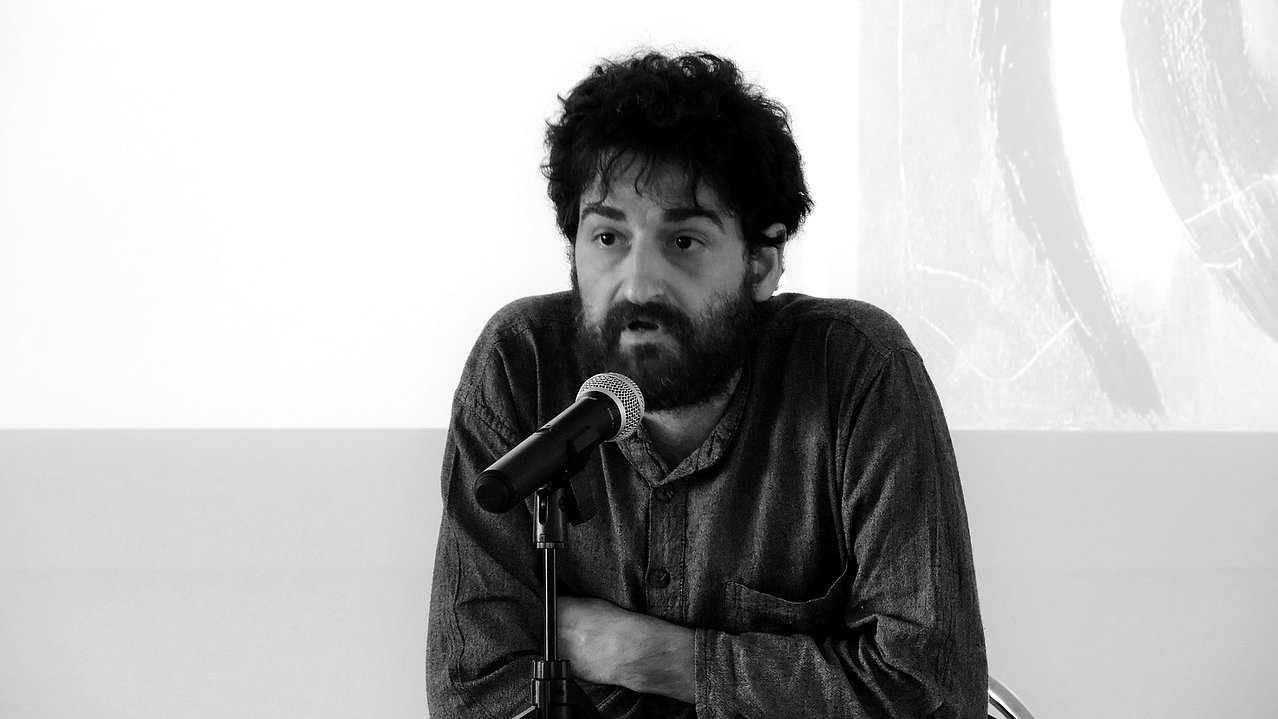
Dr. Enrico Lucca serves as a Research Fellow at the Dubnow Institute, where he has held the position of Research Associate since January 2018. He concurrently coordinates the Research Unit 'Knowledge', the Institute's Forum, and oversees peer reviewing for the Dubnow Institute Yearbook. His academic work centers on twentieth-century European-Jewish history and thought, with specialized focus on knowledge transfer between Europe and Israel/Palestine, intellectual history, and institutional history within Jewish contexts. Lucca completed his Master's degree in Philosophy at the University of Milan in 2007, followed by doctoral studies (2009-2012) at the same institution, culminating in a dissertation titled 'A Dialectic Vision of Jewish History. Gershom Scholem and the Legacy of Messianism.' His academic training includes post-graduate specialization in Cultural Studies at Scuola Alti Studi in Modena (2009) and visiting research periods at the University of Chicago Divinity School (2009-2010) and Hebrew University of Jerusalem (2011). His research traverses European-Jewish intellectual history, Jewish cultural studies, and philosophy of religion, with particular emphasis on messianic thought, Kabbalah studies, and Hebrew literature. Lucca's scholarship frequently examines biographical and institutional frameworks that shaped Jewish thought in the twentieth century, especially through figures like Gershom Scholem, Franz Rosenzweig, and Hugo Bergmann. His methodological approach integrates cultural history with philosophical analysis to explore knowledge transmission across geographical and temporal boundaries. Analysis of his 15 most recent publications reveals consistent engagement with Central European Jewish intellectual migration to Palestine/Israel, institutional history of the Hebrew University, and critical reinterpretations of Scholem's legacy. His work demonstrates interdisciplinary breadth across history, philosophy, and literary studies, with recurring themes of linguistic identity, cultural transfer, and the interplay between mysticism and modernity in Jewish thought. No scientific awards are documented in the provided materials. While no formal students are listed, Lucca has secured significant research funding including a Gerda Henkel Foundation fellowship (2016-2017) for 'German-Jewish Knowledge and Cultural Transfer 1918–1948' and currently serves as Principal Investigator for the German Research Foundation-funded International Research Training Group 'Belongings: Jewish Material Culture in Twentieth-Century Europe and Beyond' (since 2024). Lucca actively leads the Research Unit 'Knowledge' and co-directs the International Research Training Group 'Belongings'—a tripartite collaboration between the Dubnow Institute, Leipzig University, and Hebrew University of Jerusalem—focusing on material culture approaches to Jewish history through comparative, transnational frameworks.
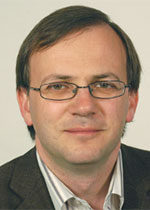
Stefan Rohdewald is a Professor of East and Southeast European History at the University of Leipzig since 2020. His research focuses on the historical entanglements between Eastern Europe and the Middle East, emphasizing transconfessionalism, urban history, and memory discourses. Education: Studied and completed his doctorate at the University of Zurich (2004), habilitation at Passau (2005–2012). Affiliations: Past professor at Giessen (2013–2020), research associate in Passau (2003–2012), and Max Planck scholarship for doctoral research. Research interests span Transottoman studies, examining mobility dynamics between Eastern Europe, the Ottoman Empire, and Persia. He leads the DFG priority program Transottomanica (2017–2023) and contributes to decolonial and transimperial frameworks in Ukrainian history. Recent publications include analyses of geopolitical imaginaries, edited handbooks on the Black Sea region, and studies on Ottoman-Europe knowledge exchange. His work critiques national historiographies and explores multiculturality in Habsburg Bosnia-Herzegovina.
Sergiusz Michalski is a Professor at the Institute of Art History within the Faculty of Philosophy at the University of Tübingen, where he has held his position since 2001. Previously, he served as Managing Director of the Art History Institute at TU Braunschweig from 1996-2001 and completed his Habilitation at Goethe University Frankfurt in 1995. His distinguished academic career spans multiple European institutions including universities in Munich, Leipzig, Frankfurt, Kiel, Fribourg, Zurich, and Torun. Michalski's research focuses encompass Reformation and Art, Mannerism, 16th and 17th century Dutch and Flemish painting, Art theory, 18th century French painting, 20th century art, Public monuments, and Methodological questions in art history. His scholarly output includes approximately 270 publications with notable books such as 'The Reformation and the Visual Arts' (1992), 'Public Monuments' (1998), 'L'art de l'Europe Centrale' (2008), and 'Einführung in die Kunstgeschichte' (2015). His recent publications demonstrate continued engagement with contemporary issues in art history, particularly in public monument discourse, digital methodologies, and Central European art traditions. Michalski has edited several prominent art history journals including Ars Artibus et Historiae, Folia Historiae Artium, and Ikonotheka. Member of Royal Swedish Academy for Literature and Humanities Member of Polish Academy for Sciences and Arts Member of Göttingen Academy of Sciences Member of Academia Europaea / The Academy of Europe London Member of Latvian Academy of Sciences Member of Council of Experts of European Science Foundation Michalski maintains an active research profile with recent publications addressing digital methodologies in art history, contemporary monument discourse, and Central European art traditions. His international scholarly network is reflected in his editorial roles and academy memberships across Europe.
Dr. Fabian Baumann is a historian specializing in Eastern European history, particularly nationalism and empire in Russia, Ukraine, and East Central Europe. He holds a position as Postdoctoral Research Fellow at Heidelberg University's Karl Jaspers Centre and previously held fellowships at institutions including the University of Chicago and the University of Vienna. His research emphasizes the agency of individuals in shaping national identities, as seen in his award-winning monograph Dynasty Divided , which examines the Shul’gin family’s divergent national allegiances. Education: PhD in East European History (University of Basel, 2020) M.Phil in Slavonic Studies (University of Oxford, 2016) BA in Russian and English Language (University of Geneva, 2012) Research Interests: His work explores the construction of national identities beyond ethnic determinism, focusing on the interplay of state-building, loyalty, and dissent. Current projects include the prosecution of state enemies in interwar Czechoslovakia and co-editing the Handbook of Ukrainian History (Oxford UP, 2028). Awards: 2024 W. Bruce Lincoln Book Prize 2025 Alexander Nove Prize Grants and Fellowships: Recipient of Swiss National Science Foundation (SNSF) grants, including Postdoc.Mobility fellowships at the University of Chicago and RECET Vienna. Labs/Teams: Active in the Karl Jaspers Centre and collaborative projects with the RECET research group.
Detlef Pollack is a Senior Professor and Chair of Sociology of Religion at the Institute for Sociology, University of Münster. He has held this position since August 2022, following a distinguished academic career that includes serving as Professor of Sociology of Religion at the Westphalian Wilhelms University Münster from 2008 to 2022, and as Professor of Comparative Cultural Sociology at the Viadrina European University Frankfurt (Oder) from 1995 to 2008. Pollack has been a member of the board of the Excellence Cluster "Religion and Politics" at the University of Münster since 2023 and previously served as its deputy speaker (2019-2021) and speaker (2015-2018). Pollack's academic background includes a habilitation from Bielefeld University (1994) in Sociology, a doctorate in Sociology of Religion (summa cum laude) from Leipzig University (1984), and theological studies at Leipzig University (1976-1981). His academic journey reflects a deep engagement with both theological and sociological perspectives on religion. Professor Pollack's research focuses on religious change in Western and Eastern Europe and the USA, political culture in Eastern and Central Europe, GDR research, systems theory, and differentiation theory. His work bridges historical analysis with contemporary sociological theory, particularly examining how religious institutions and practices adapt to modern social structures. He has made significant contributions to understanding secularization processes, religious pluralism, and the relationship between religion and modernity. Pollack's extensive publication record demonstrates consistent engagement with major debates in the sociology of religion. His recent work explores religious responses to global crises, religious fundamentalism, and the complex relationship between religion, politics, and national identity in contemporary Europe. His research often employs comparative methodologies, examining religious phenomena across different cultural and national contexts. Among his notable achievements are the Karl-Polányi-Preis from the Hungarian Sociological Society (2018), his fellowship at the Lichtenberg-Kolleg in Göttingen (2011), and his Max Weber Chair at New York University (2003). He has also been recognized with fellowships at Princeton University (1993) and the Wissenschaftskolleg Berlin (1996). Pollack actively contributes to academic discourse through his leadership roles in professional organizations, including the International Society for the Sociology of Religion (since 1995) and the Sociology of Religion section of the German Sociological Association (since 1994). His teaching portfolio includes seminars on postcolonial theory, Western modernity in times of global crisis, religious fundamentalism, secularization, and the relationship between religion and politics in Russia, Germany, and the USA.
Prof. Dr. Miloš Řezník is a prominent historian and Professor of European Regional History at the Faculty of Philosophy, Chemnitz University of Technology. He has held this position since 2009 and served as Pro-Dean of the Faculty. From 2014 to 2024, he was Director of the German Historical Institute in Warsaw. His academic career spans institutions in Prague, Liberec, Leipzig, and Chemnitz, reflecting a deep engagement with Central and Eastern European history. PhD and Habilitation in General History, Palacký University Olomouc Extensive research on collective identities, nationalism, borderlands, and elite transformations in Central Europe Expertise in Polish, Czech, Galician, and Habsburg history Longstanding leadership roles in German-Czech and German-Polish historical commissions His research interests center on the cultural and political dynamics of regional identities in Central and Eastern Europe, especially in border regions such as Silesia, Bohemia, Pomerania, and Galicia. He explores how historical memory, nationalism, and elite strategies have shaped regional consciousness from the 18th to the 20th century. His work bridges historiography, cultural studies, and political history, with a strong focus on transnational and comparative perspectives. The 15 most recent publications reveal a consistent thematic trajectory: the interplay between regionalism, ethnicity, memory, and state formation in Central Europe. Key sub-themes include the Kashubian movement, Habsburg provincial governance, German-Czech-Polish relations, and the symbolic politics of historical figures and events. His scholarship increasingly engages with theoretical frameworks such as retrotopia, ethnoregionalism, and the institutionalization of historical science. Scientific Awards and Honors: Foreign Member, Polish Academy of Arts and Sciences (2023) Member, Scientific Advisory Board, Federal Foundation for the Study of Communist Dictatorship in East Germany (2025) Member, Scientific Council, Bundeskanzler-Helmut-Kohl-Stiftung (2022) Member, Johann Gottfried Herder Research Council (2011–present) Prof. Řezník has supervised numerous academic projects and dissertations, particularly through collaborative EU and DFG-funded initiatives focused on cross-border history. He has served as editor for multiple academic series and journals, including Journal of Modern European History (2019–2024). His institutional roles include membership in evaluation committees for the European Research Council, DFG, and Czech Science Foundation. He leads or has led several major research initiatives, including the Interreg Project: Cultural Heritage of the Vogtland and Egerland , and has organized numerous international conferences on Central European history, memory, and regionalism. His work is deeply embedded in transnational academic networks, particularly through the German Historical Institute in Warsaw and the Kompetenzzentrum Mittel- und Osteuropa Leipzig.
Rhenish Friedrich Wilhelm University of BonnGermany
Christoph Witzenrath is a Professor for Premodern Slavery and Strong Asymmetrical Dependencies at the University of Bonn's Bonn Center for Dependency and Slavery Studies (BCDSS). His research spans Eurasian history, focusing on nomadic-settled relations, slave trade, and state-dependent group dynamics. Education: Ph.D. in History, King’s College, University of London (1999–2005) M.A. in History and Political Science, University of Freiburg, Humboldt University, and Free University Berlin (1991–1998) Witzenrath's work interrogates the structural gaps between premodern states and dependent populations, comparing Eurasian systems to community-oriented African models. His transdisciplinary approach integrates legal, cultural, and political frameworks, emphasizing liberation narratives and asymmetrical dependencies. Key article themes include Muscovite-Ottoman interactions, Siberian expansion, and transcultural legitimacy. His award-winning monograph Cossacks and the Russian Empire (2009) explores frontier governance and rebellion dynamics. Scientific Awards & Funding: DFG Priority Program funding (2017–2020) King’s College London research studentship (1998–2001) Leverhulme Early Career Fellowship (2007–2009) Shklar Fellowship at Harvard (2010) He has supervised 40 national/international lectures and mentored researchers like Turkana Allahverdiyeva and Stanislav Mohylnyi. As founding member of the Transottomanica project (2017–2020), he advanced mobility studies across Eurasia.
GIGA German Institute of Global and Area StudiesGermany
Hager Ali is a Doctoral Researcher at the German Institute for Global and Area Studies (GIGA), specifically affiliated with the GIGA Institute for Middle East Studies, and is part of the GIGA Doctoral Programme since October 2018. Ali also serves as an External Editor for the thematic series "Autocracies with Adjectives" at the Loop, ECPR's Political Science Blog since March 2022, and maintains a career as a freelance journalist since 2010. German Institute for Global and Area Studies (GIGA) - Institute for Middle East Studies (2018-present) Central European University (CEU) - Teaching appointments (2025) Institute for Peace Research and Security Policy (IFSH) - Teaching appointments (2024) Ali's research focuses on civil-military relations in the Middle East and North Africa, military coups and civilian control of armies, authoritarian regimes and institutions, regime stability and destabilization, party systems and cleavages, and German military deployments in the MENA-Region and Sahel. The doctoral dissertation examines "Praetorianism in the MENA-Region: Military Governance and Civilian Control across Regime Types." Ali's work demonstrates sophisticated methodological approaches to understanding authoritarian resilience and military politics through comparative analysis. Ali's publication record reveals a consistent focus on Sudanese politics and civil-military relations, with increasing attention to contemporary conflicts since 2022. The research combines theoretical insights from comparative authoritarianism studies with detailed empirical analysis of military institutions and political transitions in the Middle East and North Africa. Recent work shows a growing emphasis on practical policy implications, particularly regarding peace negotiations in Sudan and the role of civilian actors in conflict resolution. Shortlisted for the Best Blog Award of 2022 by ECPR's Political Science Blog "The Loop" (2023) Ali actively contributes to academic discourse through conference presentations, policy papers, and media commentary. Recent engagements include serving as a discussant at the ECPR General Conference 2024 on "Trends in autocratic practices and behaviors" and scheduled lectures on the Sudan conflict in 2025. Ali has established collaborations with institutions like the German Institute for International and Security Affairs (SWP) and maintains strong connections with academic networks across Europe. As a member of the GIGA research programme on Accountability and Participation, Ali contributes to interdisciplinary research on governance and political institutions. Ali participates in multiple ECPR Standing Groups including Political Methodology, Political Violence, Comparative Political Institutions, and Critical Peace and Conflict Studies, demonstrating engagement with diverse methodological and theoretical approaches to political science research.
Wiebke Kirleis is Professor for Environmental Archaeology and Archaeobotany at the Institute for Pre- and Protohistory, Faculty of Arts and Humanities, Christian-Albrechts-Universität zu Kiel (CAU). She has held this position since May 2014 and was previously a junior professor at the same university from 2008 to 2014. She is actively involved in major interdisciplinary research projects, including the Cluster of Excellence ROOTS and the Collaborative Research Centre 1266 'Scales of Transformation', where she serves as co-speaker and technical platform speaker. PhD in Natural Sciences, University of Göttingen (2002) Diploma in Biology, University of Göttingen (1998) Studies in Botany, Anthropology, and Environmental History, University of Göttingen (1990–1998) Wiebke Kirleis' research centers on the interaction between humans and plants during the late Pleistocene and Holocene, with a focus on plant economy, domestication, agricultural development, and landscape transformation. Her work explores how wild and cultivated plants were used for nutrition, ritual, and technical purposes, and how agricultural innovations such as ploughing and manuring impacted Central European landscapes. She has a strong geographical focus on Northern and Central Germany, Southeastern Europe, the Near and Middle East, and Southeast and East Asia, particularly Indonesia. Her methodological expertise includes archaeobotany (analysis of charred and waterlogged plant remains), palynology (pollen and spore analysis from sediment cores), and anthracology (study of charcoal remains). Her recent research includes studies on broomcorn millet diffusion, early farming in Scandinavia and Russia, and plant use in Bronze Age settlements across Europe and Turkey. She leads and collaborates on numerous interdisciplinary projects, emphasizing the integration of botanical data into broader archaeological narratives. Her publications reflect a consistent trend in environmental archaeology, focusing on plant domestication, agricultural transitions, and human-induced landscape change. Keywords across her recent work include archaeobotany, palynology, Neolithic and Bronze Age subsistence, and environmental reconstruction. Her research spans subfields such as food security, cultural transmission of plant use, early monumentality, and socio-economic aspects of prehistoric agriculture. Board member, Cluster of Excellence ROOTS Co-speaker, CRC 1266 'Scales of Transformation' Speaker, ROOTS Technical Platform Board member, Johanna-Mestorf-Akademie Chair, Scientific Advisory Board, Dithmarschen Stone Age Park (since 2023) Full member, German Archaeological Institute (DAI) Elected member, Commission for Archaeology of Non-European Cultures (KAAK) Wiebke Kirleis has supervised numerous research projects funded by the DFG and other agencies, including the Graduate School 'Human Development in Landscapes'. She has advised students and collaborated internationally with institutions in Italy, Norway, Indonesia, and Australia. Her leadership roles in academic self-administration include serving on planning, budget, and equality committees at CAU Kiel. She is committed to science communication, having launched the digital exhibition 'Alles bleibt anders' and produced educational films on archaeobotany. She is also involved in mentoring female postdocs through the via:mento program. She leads the archaeobotanical component in the 'Superfood' module of the SFB 1266 digital exhibition and is actively involved in the ROOTS Cluster’s Subcluster 'Dietary ROOTS'. Her lab and research team operate within the Institute for Pre- and Protohistory, contributing to the university’s strong focus on interdisciplinary landscape archaeology.
PD Dr. Ansgar Schanbacher serves as a Research Fellow at the Institute for Regional Historical Research, University of Göttingen, specializing in environmental and urban history of Early Modern Central Europe and the Netherlands. His work examines resource management and hazard responses in cities like Braunschweig, Würzburg, and Utrecht through interdisciplinary environmental history frameworks. His academic formation includes a Dr. phil. from Göttingen University (2011-2015) on Potato Blight and Famine in Northwestern Germany (1845-1848), completed within the Research Training Group Interdisciplinary Environmental History. Earlier, he earned an M.A. in History, Economy, and Polish Language/Literature from Leipzig University and Lublin's Catholic University (2003-2010), followed by freelance translation work (2009-2011). Schanbacher's research centers on Environmental History, Urban History (17th-19th centuries), History of Science, and Eastern European History. His scholarship reveals how early modern cities navigated ecological challenges through municipal policies, technological adaptations, and social coping mechanisms, with particular attention to waste management, fire prevention, food crises, and horticulture across German and Dutch urban contexts. His 15 most recent publications demonstrate consistent focus on urban environmental resilience, showing evolution from specific hazard case studies (fires, earthquakes) toward broader sustainability frameworks. Key trends include comparative analysis of municipal responses, interdisciplinary methodology bridging history and environmental science, and contextualization of historical practices within modern sustainability discourse. His scientific recognition includes: Prize of the Historical Commission for Lower Saxony and Bremen (2016) DFG Scholarship at Göttingen University (2011-2014) DAAD Scholarship for Poznań/Kraków (2008) Grant leadership includes Scientific Coordination of 'Sustainability as Argument' (2016-2020) and a 2016 Graduate School of Humanities research grant. He actively disseminates research through the 'Stadtgeschichten' urban history blog (co-editor), 'Epidemien in der frühneuzeitlichen Stadt' podcast series, and public lectures on Central European urban environments. Current affiliations include the European Society for Environmental History and European Association for Urban History, with contributions to the Portal zur Geschichte and Frauenstift Gandersheim projects. Based at Göttingen University's Heinrich-Düker-Weg campus, he maintains active scholarly engagement through editorial work, conference presentations, and interdisciplinary collaborations exploring historical dimensions of urban sustainability.
Rhenish Friedrich Wilhelm University of BonnGermany
Dr. Vitali Byl is a Postdoctoral Researcher at the Bonn Center for Dependency and Slavery Studies (BCDSS), funded by a DFG Research Grant. Previously, he held part-time research roles at the University of Greifswald, including coordinating the Virtual University of the Baltic Sea Region and contributing to DAAD-funded projects on spatial data analysis and Belarusian forest sustainability. He earned his PhD from the University of Greifswald's IRTG 1540 program in 2021 with a thesis on witch trials in the Grand Duchy of Lithuania. His academic career includes roles at Belarusian National Museums and fellowships from the Polish Government and New Europe College. His research focuses on early modern history, particularly race, slavery, and witchcraft in Eastern European contexts. Current projects explore African communities in the Polish-Lithuanian Commonwealth and the intersections of proto-globalization, racial ideologies, and forced labor systems. His work bridges legal history, cultural studies, and transnational networks. Awards include the Konstanty Kalinowski Scholarship (2019–2020) and a Pontica Magna Fellowship (2018–2019). His publications span academic monographs, peer-reviewed articles on witch trials and ethnic minorities, translations of historical sources, and popular works on Belarusian heritage. He has contributed to documentaries, including consulting on Holocaust resistance films and producing cultural heritage films about Niasvizh.
Daniela Zupan is an Associate Professor of European Cities and Urban Heritage at the Institute for European Urban Studies, Faculty of Architecture and Urbanism, Bauhaus-Universität Weimar. She holds a Dr.-Ing. in Architecture and Mag. phil. in Slavic Studies. Her research focuses on urban political economies, post-socialist urban transformations, and authoritarian urbanism across Central/Eastern Europe and Russia. She directs the Institute for European Urban Studies and contributes to the International Heritage Centre and doctoral admissions. Education: Diploma in Architecture (Graz University of Technology) Master's in Slavic Studies (University of Graz) Doctorate in Urban Planning (University of Stuttgart) Research emphasizes city-making politics, housing studies, and spatial planning innovations. Current projects explore authoritarian urban governance and post-socialist city dynamics. She has published widely in journals such as Antipode and Environment and Planning C . Her work uses discourse analysis to trace how urban policies reflect political-economic agendas. Recent focus areas include: Comfortization strategies in Russian cities Crisis narratives in post-war housing Neoliberal urbanism in Moscow Leadership roles include editorial board membership for Interdisciplinary Housing Research and participation in key institutional boards.
Prof. Dr. Silvia von Steinsdorff serves as Professor of Comparative Democracy and the Political Systems of Eastern Europe at Humboldt University of Berlin's Institute of Social Sciences since 2009. She co-directs the Integrated Research Institute Law & Society (LSI) and holds the position of Vice Dean for Research and International Affairs at the Faculty of Humanities, Cultural, Educational and Social Sciences. Her research centers on political systems operating in the democracy-autocracy gray zone, with emphasis on de-democratization processes and institutions at the politics-law interface. Regional expertise spans Central and Eastern Europe (particularly Russia and post-Soviet states) and Turkey, examining constitutional courts, judicial independence, and authoritarian legal strategies. Current work analyzes threats to judicial autonomy across 40 Council of Europe states through the Einstein/Mercator-funded project "Judicial Autonomy under Authoritarian Attack". Publication trends reveal deepening focus on constitutional erosion mechanisms, with recent articles exploring rule of law backsliding, authoritarian parliamentary practices, and cross-national judicial reasoning patterns. Her interdisciplinary approach bridges political science and legal studies, consistently highlighting how formal institutions adapt under democratic stress. As co-founder and former director (2015-2018) of the Berlin Graduate School of Social Sciences, she has shaped doctoral training while securing major research funding. Her leadership extends to curriculum development for international Master's programs and collaborative projects with European and Turkish scholars. Current administrative responsibilities include advancing research agendas as Vice Dean and steering LSI's interdisciplinary initiatives.
Leibniz Institute for the History and Culture of Eastern EuropeGermany
Gwendolyn Sasse serves as Director of ZOiS (Centre for Eastern European and International Studies) in Berlin since October 2016 and Einstein Professor for the Comparative Study of Democracy and Authoritarianism at the Department of Social Sciences of the Humboldt-Universität zu Berlin since April 2021. Her academic background includes studies in history, Slavonic studies and political science at the University of Hamburg, followed by an MSc and PhD in political science at the London School of Economics. Her career path led her from Assistant Professor at the Central European University to Lecturer/Senior Lecturer at the London School of Economics before moving to Oxford in 2007. Professor Sasse's research focuses on post-communist transitions with particular emphasis on Ukraine, comparative democratization and authoritarianism , ethnic conflicts , Eastern European migration patterns , and EU enlargement processes . Her work provides critical analysis of political transformations across the post-Soviet space and European integration dynamics. As Director of ZOiS, she leads one of Germany's premier research institutions dedicated to Eastern European studies, shaping scholarly discourse and policy-relevant research on the region. Her leadership bridges academic research with practical policy implications for European-Eastern European relations.