Dominique Foray is a Professor at Ecole Polytechnique Fédérale de Lausanne (EPFL) and holds the Chair of Economics and Management of Innovation (CEMI). He is a member of the Swiss Council for Science, chairman of the KOF Swiss Economic Research Institute's Advisory Board, and a foreign member of Columbia University's Center of Capitalism and Society. His career includes extensive advisory roles, such as with the European Commission's 'Knowledge for Growth' group and Germany's Expert Commission for Research and Innovation. Education: Ph.D. in Economics, University Lumière of Lyon (1984) Habilitation à diriger des recherches, University Lumière of Lyon (1992) Foray's research focuses on the economics of innovation, knowledge-based economy dynamics, technology policy, smart specialization strategies, and institutional frameworks for innovation. He has authored seminal works including The Economics of Knowledge (MIT Press, 2004) and Smart Specialisation (Routledge, 2015). His recent publications explore mission-oriented innovation policies, smart specialization in EU contexts, and knowledge diffusion mechanisms. Foray's work bridges academic theory with practical policy design, influencing regional and national innovation strategies globally. Advising: Past EPFL PhD students: Aouinait Camille Marguerite, Ayoubi Charles Chadi, Baruffaldi Stefano Horst, Bednyagin Denis, Bogers Marcellus, Coffano Monica, Conti Annamaria, Cristelli Gabriele, Gaulé Patrick, Hamdan Livramento Intan Maizurah, Marino Marianna, Muñoz Tellez de Kieffer Viviana Carolina, Pellegrin Claudia, Simeth Markus Foray's institutional roles include leadership in European policy initiatives and contributions to the World Bank's studies on innovation's role in economic growth. His interdisciplinary approach integrates economics, policy analysis, and technology management to address grand societal challenges through innovation.
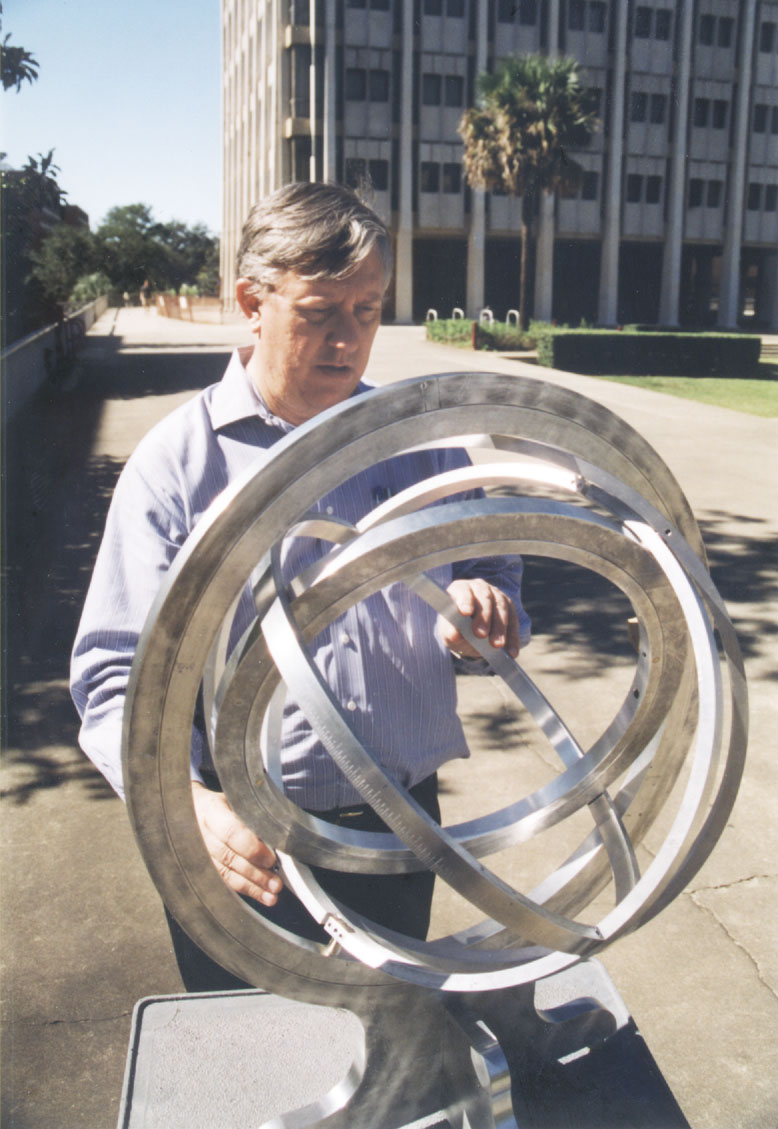
Dennis W. Duke is a Professor of Physics at Florida State University, with a joint appointment in the Department of Physics within the College of Arts and Sciences and the School of Computational Science. He has been a faculty member at FSU since 1979, progressing from Visiting Assistant Professor to his current position as full Professor since 1992. Duke has also held significant leadership roles including Director of the Supercomputer Computations Research Institute (1993-1998) and Director of the San Diego Supercomputer Center (1996-1997). Duke's research spans multiple disciplines with primary focuses on the history of ancient astronomy, computational physics, and high-performance computing. His work in ancient astronomy includes detailed studies of Greek, Babylonian, and Indian astronomical traditions, with particular emphasis on planetary models, trigonometry development, and historical measurement techniques. In computational science, he has made contributions to nonlinear dynamics, chaos theory, and statistical process control. Duke is particularly known for creating educational computer animations of ancient planetary models that have become valuable teaching tools. Analysis of Duke's 15 most recent publications reveals a consistent focus on historical astronomy, with approximately 75% of his work dedicated to analyzing ancient astronomical systems from Greek, Babylonian, and Indian traditions. The remaining publications address statistical methods and computational techniques. His historical research often combines mathematical analysis with historical scholarship to reconstruct and understand ancient astronomical practices. COFRS Award, The Florida State University (1985) COFRS Award, The Florida State University (1986) Developing Scholar Award, The Florida State University (1986) President's Continuing Education Award, The Florida State University (1992) Duke has been extensively involved in professional service, serving on numerous national committees related to supercomputing and organizing major conferences including multiple Supercomputing 'XY events from 1988 through 2006. His teaching extends beyond traditional academic boundaries through public outreach initiatives such as chairing the Board of Directors for Tallahassee Free-Net, Inc. and serving on the Leon County Schools Information Services Advisory Board. He has supervised numerous graduate students in computational physics and the history of science, though specific student names are not documented in the provided materials. Duke maintains an active research laboratory focused on computational ancient astronomy, where he develops mathematical models and computer animations to visualize historical astronomical concepts. His team has created an extensive collection of interactive animations demonstrating planetary models from Ptolemy through Copernicus, which are widely used in educational settings. Current projects include further analysis of ancient star catalogs and the development of more sophisticated visualization tools for historical astronomical concepts.
Ian Ewart is an Associate Professor at the University of Reading's School of the Built Environment, serving as Head of Construction and Engineering Management and Research Group Lead for Organisation, People and Technology. He chairs the Research Ethics Committee since 2016 and supervises undergraduate/postgraduate dissertations. His academic journey spans engineering and anthropology: DPhil Social and Cultural Anthropology, University of Oxford, St Hugh's College (2007-2012) MSc Material Anthropology and Museum Ethnography, University of Oxford, St Hugh's College (2006-2007) BA (Hons) Archaeology and Anthropology, University of Oxford, Harris Manchester College (2003-2006) Diploma in Management Studies, University of the West of England (1990-1994) BEng (Hons) Mechanical Engineering, Staffordshire University (1983-1987) Ewart's research integrates ethnographic methods with digital technology studies, examining human-technology interactions in construction and domestic settings. His work bridges engineering practice and social anthropology, focusing on skill transmission, sustainable design, and multisensory experiences in virtual environments. Publications from 2025-2013 reveal a dominant trajectory in digital twins for socio-ecological sustainability, VR-based occupant behavior prediction, and HBIM for heritage conservation. The corpus demonstrates consistent cross-disciplinary innovation, merging archaeological reconstructions with healthcare applications while maintaining anthropological rigor. Key recognition: ESRC Future Research Leader fellowship (2013) for Designing Healthy Homes project He supervises PhD candidates like Afolabi Dania (Nigerian sustainable construction) and Joanna Hull (Heritage BIM), leveraging ESRC funding for ethnography-VR health studies. His grants emphasize participatory design and real-world impact assessment in built environments. Leaders the Organisation, People and Technology research group, developing multisensory Roman town reconstructions with sound/smell integration to advance archaeological and architectural experience modeling.
Dr. Zara Ersozlu is a Senior Lecturer in Mathematics Education within the School of Education at the University of Newcastle, Australia. With a distinguished international career spanning multiple continents, she has held academic positions at prestigious institutions including North Carolina State University (USA), Gazi and Gaziosmanpasa Universities (Turkey), National Taiwan Normal University (Taiwan), The University of Western Australia, Murdoch University, and Deakin University. Her academic journey includes tenured positions as an Associate Professor and leadership roles as Department Head and Chair in teacher education disciplines. Currently, she teaches undergraduate and postgraduate courses in mathematics education, including Effective Pedagogies in Primary Mathematics, K-6 Mathematics, K-6 Numeracy, and Digitally Supported Learning. Dr. Ersozlu earned her Doctor of Philosophy from Firat University in Turkey and her Master of Art from Sakarya University. Her extensive academic preparation is complemented by five years of practical teaching experience in public schools prior to entering academia. This blend of theoretical knowledge and practical classroom experience informs her approach to teacher education and educational research. At the broadest level, Dr. Ersozlu's research investigates solutions to real-life problems impacting people's well-being, success, and capacity to achieve. Her scholarly work spans primary and secondary mathematics education, the psychology of mathematics (including metacognition, self-regulation, and anxiety), cross-cultural educational studies, teacher education, virtual simulated learning environments, and educational assessment. She has increasingly focused on the transformative potential of AI and machine learning in education, exploring how these technologies alter teaching, learning, and research processes. Her methodological expertise encompasses both quantitative and qualitative approaches, allowing her to effectively analyze both small and large educational datasets. Analysis of Dr. Ersozlu's recent publications reveals a strong emphasis on mathematics anxiety, teacher education, and the integration of technology in learning environments. Her work demonstrates a consistent focus on practical applications of educational research to address real-world challenges in mathematics education. The interdisciplinary nature of her research connects educational psychology, technology integration, and cross-cultural perspectives, with particular attention to how these elements intersect in teacher preparation and student learning outcomes. 2023 ATEA Research Recognition Award from the Australian Teacher Education Association 2021 Fellow of the Higher Education Academy (Advance HE, UK) 2010 Fellowship Program for Postdoctoral Researchers from the Council of Higher Education of Turkey Dr. Ersozlu is deeply committed to mentoring the next generation of scholars, currently supervising four PhD students and having successfully guided ten students to completion. Her grant portfolio includes significant funding for projects such as Best Practice Guidelines for RPL in Initial Teacher Education Programs ($60,000), Exploring the Reciprocal Relationship Between Mathematics Anxiety and Mathematical Resilience ($2,599), and multiple conference travel awards. She serves as an Associate Editor for several prominent journals including the International Electronic Journal of Mathematics Education and as Editor for Interdisciplinary STEM Education. Her editorial work reflects her standing as a respected voice in mathematics education research. Dr. Ersozlu's academic leadership extends to her role in developing innovative teaching approaches that integrate virtual simulation technology and learning analytics. Her work with TeachLivE™, a mixed-reality classroom simulation platform, demonstrates her commitment to creating authentic learning experiences for teacher education students. Through these initiatives, she bridges the gap between educational theory and classroom practice, preparing future educators to effectively implement evidence-based teaching strategies in diverse learning environments.
Meg Rithmire serves as the James E. Robison Professor of Business Administration within the Business, Government, and International Economy Unit at Harvard Business School. She holds concurrent faculty affiliations at Harvard's Weatherhead Center for International Affairs, Fairbank Center for East Asian Studies, and Harvard Faculty Committee on Southeast Asia, where she convenes the Chinese Economy Seminar. Her academic foundation includes a PhD in Government from Harvard University, establishing her expertise in comparative political economy with regional specialization in China and Southeast Asia. Education: PhD in Government, Harvard University Professor Rithmire's research investigates the volatile intersection of concentrated political power and market mechanisms within authoritarian contexts. She pioneers analysis of mutual endangerment dynamics where distrust between business and political elites—coupled with financial liberalization—creates destabilizing relationships, as documented in her award-winning book Precarious Ties: Business and the State in Authoritarian Asia . Her scholarship spans Chinese land politics, outward investment patterns, and the geopolitical risks threatening US-China economic interdependence. Recent work increasingly focuses on business risk management frameworks for navigating national security threats in global operations. Analysis of her 15 most recent publications reveals a sharp pivot toward geopolitical risk governance, with 60% of her 2022-2025 output addressing business resilience in deteriorating US-China relations. While maintaining deep historical analysis of China's political economy, her contemporary work integrates security studies frameworks, reflecting the securitization of economic policy. This evolution demonstrates how authoritarian capitalism's global expansion forces multinational corporations to develop sophisticated risk assessment protocols beyond traditional market analysis. Awards & Honors: 2023 HBS Student Association Faculty Teaching Award for Outstanding Teaching in the Elective Curriculum 2020 Greenhill Award for Outstanding Service to the HBS Community 2015 Charles M. Williams Award for Teaching Excellence 2015 HBS Student Association Faculty Award for Outstanding Teaching in the Required Curriculum Professor Rithmire advises executive education programs on geopolitical risk management while co-chairing the U.S. Chamber of Commerce Foundation's Business Geopolitical Risk and Resilience initiative. Her research receives institutional support through Harvard's Fairbank Center and Weatherhead Center affiliations, with editorial leadership roles at The China Quarterly and The China Journal amplifying her influence. Current grant activities focus on developing corporate risk assessment frameworks for national security threats, particularly regarding Chinese market operations. She leads the Business Geopolitical Risk and Resilience initiative with the U.S. Chamber of Commerce Foundation, convening multinational executives and policymakers to develop practical risk management protocols. Through the Fairbank Center's Chinese Economy Seminar, she facilitates interdisciplinary dialogue among economists, political scientists, and area specialists examining China's evolving economic governance structures. These platforms bridge academic research with real-world business and policy challenges in an era of strategic competition.
Arman Eshraghi is a Professor of Finance and Investment at Cardiff Business School , with 15 years of academic and industry experience. He founded the Cardiff Fintech Research Group , leads the Digital Transformation Innovation Institute 's fintech theme, and co-directs the Behavioral Finance Working Group . He serves as Editor-in-Chief of International Review of Economics and Finance and Senior Editor in multiple journals. Key academic appointments: Cardiff University (2018–present), University of Edinburgh (2013–18) International fellowships: Development Bank of Japan, University of Canterbury (New Zealand), UCL Industry engagement: Federal Reserve Bank (NY), Alan Turing Institute, CFA Society UK, CityUK Research Focus: Behavioral finance, corporate finance, financial technology, and interdisciplinary accounting. His work examines retail investor psychology, fund manager behavior, CEO decision-making, and fintech impacts on financial markets. He has published in Review of Financial Studies , Harvard Business Review , and Financial Times . Scientific Contributions: EFMD Global, Emerald Literati, and European Financial Group awards Keynote speaker at global conferences (New York, London, Mumbai, Frankfurt) Media citations in Financial Times , BBC , Forbes , and Bloomberg Teaching & Leadership: Delivers award-winning MSc/MBA/PhD courses in UK, Europe, and Asia. Holds a Postgraduate Certificate in Academic Practice and Fellow of AdvanceHE. Designed executive programs for firms including Aetna CVS Health and Scottish Widows. Research Leadership: Co-organizes international conferences like the Cardiff Financial Technology Conference and European Financial Management Association Meeting . Supervises PhD students on topics spanning fintech, behavioral finance, and CEO lifestyle impacts.
Assoc. Prof. Dr. Sema Alaçam Doğan has been affiliated with Istanbul Technical University since 2014, serving as an Associate Professor in the Department of Architecture . She has held administrative roles including Deputy Head of Department and Erasmus Coordinator. Education : PhD in Informatics in Architectural Design (2008-2014), MS in Informatics in Architectural Design (2005-2008), and BS in Architecture (1999-2005) from Istanbul Technical University. Her research explores Computational Design , Artificial Intelligence in Architecture , and Sustainable Material Innovation . She investigates digital tools for heritage preservation, daylight optimization in BIM, and cognitive development in architecture students. Recent publications analyze AI-assisted design literacy , machine learning for Sinan mosques , and environmental comfort in Harran houses . Her work integrates algorithmic frameworks with sustainable practices. Scientific awards include multiple ITU Publication and Performance Awards (2021-2024), FABFEST Prizes , and the 2024 Artemis Educator Award from NASA. Active projects like "Physical Computation in Architectural Drawing" and "Robotic Fabrication with Recycled Wind Turbine Blades" demonstrate her leadership in computational and sustainable research.
Prof. Dr. Mona Hess is a Full Professor and Chairholder of the Chair of Digital Heritage Technologies at Otto-Friedrich-Universität Bamberg , Germany. She directs the M.Sc. Digital Technologies in Heritage Conservation program and serves as Vice-Speaker at the Centre for Heritage Conservation Studies and Technologies (KDWT) . Her work bridges digital documentation, 3D imaging, and heritage conservation, with a focus on cultural landscapes, historic timber, and artifact preservation. Education : Dipl.-Ing. in Architecture (TUM), M.A. in Heritage Conservation (University of Bamberg), Ph.D. in 3D Imaging Metrology for Cultural Heritage (University College London, 2015) Her research spans 3D laser scanning, photogrammetry, SLAM-based recording , and digital twin environments , particularly for structural monitoring, museum artifacts, and historic gardens. She leads projects like VirScan3D (virtual laser scanner simulator) and 3DPetrie (UCL Petrie Museum 3D models) and collaborates on international initiatives such as the British Museum War Canoe digital repatriation. Recent publications emphasize automated defect analysis in timber, multi-modal imaging for ceiling art, and linked open data in heritage. She has contributed to CIPA ICOMOS as an expert member and will chair their Education and Dissemination Commission (2024). Scientific Awards : Fellow of the UK Higher Education Academy (2016), Associate Fellow of the Higher Education Academy (2014) She teaches courses in Digital Object Recording , 3D Spatial Data Modeling , and Science Communication , and organizes international summer schools on heritage monitoring. Her lab, the Chair of Digital Heritage Technologies , collaborates with institutions in Italy, Spain, and the UK, focusing on interdisciplinary innovation in heritage conservation.
Golan Levin is Professor of Electronic Art at Carnegie Mellon University's School of Art, with courtesy appointments in the School of Design, School of Architecture, School of Computer Science, and Entertainment Technology Center. From 2009 to 2022, he served as Director and Co-Director of CMU's Frank-Ratchye STUDIO for Creative Inquiry, a laboratory dedicated to supporting atypical, anti-disciplinary research at the intersection of arts, science, technology, and culture. Levin's research spans interactive art, digital fabrication, information visualization, and generative design. He explores the critical potential of visualization, generative computation for expressive form, and how abstraction connects to realities beyond language. His practice engages interactive gestural robotics, nonverbal interaction aesthetics, and tactical applications of personal digital fabrication through responsive artifacts and media provocations that highlight human-machine relationships. His publications reveal consistent innovation in real-time audiovisual systems, interactive fabrication interfaces, and pedagogic tools for artists. Key trends include slit-scan video techniques, tangible augmented-reality performance, and noise-based visualizations, demonstrating his commitment to expanding human action vocabulary through digital media while bridging artistic expression with computational systems. Levin's work has received significant recognition: Permanent collection inclusion at Museum of Modern Art (MoMA) Whitney Biennial exhibition "50 Designers Shaping the Future" by Fast Company (2012) Competitive grants from National Endowment for the Arts, National Endowment for the Humanities, Creative Capital, and Rockefeller MAP Fund As an educator, Levin teaches "studio courses in computer science" on interactive art, experimental capture, and generative design, emphasizing computation as a medium for critical inquiry. His research funding from major cultural institutions supports interdisciplinary exploration at the arts-technology nexus. The Frank-Ratchye STUDIO for Creative Inquiry, which he directed for 13 years, remains a vital hub for anti-disciplinary collaboration, continuing his legacy of fostering creative agency through technology-infused artistic practice.
Cangbai Wang is a Professor of Migration, Heritage and Language at the University of Westminster and co-founder of HOMELandS (Hub On Migration, Exile, Languages and Spaces). He holds a PhD in Asian Studies from the University of Hong Kong (2003) and previously worked as a Post-doctoral Fellow/Honorary Assistant Professor at the University of Hong Kong and Visiting Lecturer at City University of Hong Kong. Academic focus: Transnational migration, Chinese diasporas, cultural heritage Co-Director of HOMELandS since 2014 (elevated to Research Centre in 2023) External Examiner for 20 institutions including University of Birmingham (2024), University of Cambridge (2020), and Nanyang Technological University (2024) His research explores the intersection of migration and material culture , emphasizing how diasporic communities negotiate identity through heritage practices. Recent work examines museum representations of Chinese diasporas and language dynamics in multicultural London. He has led the AHRC-funded Global Diasporic Chinese Museums Network Initiative (2023-2025) and contributed to policy discussions on diaspora engagement with Chinese municipal governments. Key publication: Museum Representations of Chinese Diasporas (Routledge 2021) and Negotiating Identities, Language and Migration in Global London (Multilingual Matters 2024). Supervised PhDs include Denise Kwan’s The talking of objects: migratory experiences and Chinese women in UK (2020) and Xiao Ma’s ongoing London Chinatown: heritage making and diasporic identities . Active in academic leadership: Co-editor: Routledge Research on Museums and Heritage in Asia Editorial board: Social Transformations in Chinese Societies (since 2024) International editorial board: Chinese Overseas Review (since 2020) UKRI FLF Peer Review College member
Nick Montfort is a Professor of Digital Media at Massachusetts Institute of Technology (MIT) and Professor II & Principal Investigator at the University of Bergen 's Center for Digital Narrative. He directs MIT's Trope Tank lab/studio and contributes to platform studies, critical code studies, and electronic literature. Ph.D. in Computer and Information Science from University of Pennsylvania (2007) M.A. in Creative Writing (Poetry) from Boston University (2001) S.M. in Media Arts and Sciences from MIT (1998) B.S./B.A. in Computer Science and Liberal Arts from University of Texas at Austin (1995) Montfort's research focuses on computational creativity and digital poetics , particularly through exploratory programming and constraint-based writing . He has developed over ten computer-generated print books and co-edited MIT Press volumes like The Future and The New Media Reader . His work bridges computer science and literary arts , emphasizing algorithmic expression and platform-specific creation. His recent computational works include All the Way for the Win (2025), written entirely in three-letter words, and collaborations like The Deletionist and Sea and Spar Between . Notable books cover interactive fiction ( Twisty Little Passages ), platform studies ( Racing the Beam ), and generative literature ( 10 PRINT ). He also co-edits the Hardcopy and Using Electricity book series. Montfort's academic contributions span digital narrative systems , creative code , and computer-generated literature . His 101 BASIC Poems and Output: An Anthology of Computer-Generated Text exemplify his focus on code as cultural artifact and algorithmic literary practice . He has presented at major conferences including ELO, C&C, and Digital Arts and Culture, addressing topics from minimalist computational poems to narrative modeling . Through collaborations with institutions like University of Bergen and MIT's Comparative Media Studies/Writing, Montfort explores digital storytelling , machine-generated poetry , and platform-specific creativity . His academic leadership includes directing the Trope Tank and co-founding Bad Quarto press.
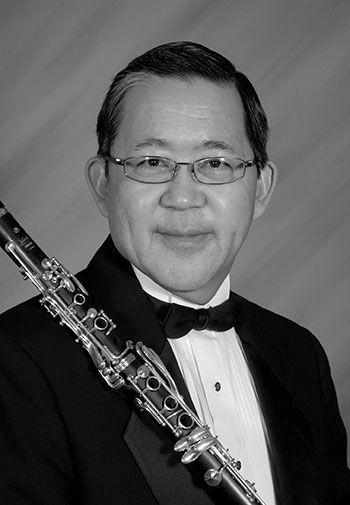
Miles M. Ishigaki serves as Professor of Music in the Department of Music within California State University, Fresno's College of Arts and Humanities. He has taught applied clarinet, chamber music, music theory, and music appreciation at Fresno State since 1987 while directing the university clarinet choir. From 1989-2017, he held the position of state chair for the National Association of College Wind and Percussion Instructors, demonstrating sustained institutional commitment. His academic credentials include: Doctor of Musical Arts in Performance, University of Oklahoma (1988) Doctoral study in Music Performance, University of Arizona (1981-1982) Master of Music in Performance, Colorado State University (1981) Dual Bachelor's degrees: Music Education and Music Performance, University of Northern Colorado (1978) Dr. Ishigaki's research centers on the dialectic between intuition and analytical understanding in musical performance, particularly regarding clarinet repertoire. His seminal work documents interpretive approaches of legendary clarinetists including Larry Combs, Stanley Hasty, and Leon Russianoff, focusing on Stravinsky's Three Pieces for Solo Clarinet. His collaborative research with Dr. Michael Rogers bridges music theory and performance practice, revealing how structural analysis informs expressive execution. This scholarly trajectory consistently examines the cognitive and technical dimensions of artistic mastery. His publications from 1988-2017 reveal evolving emphases from symposium documentation and performance analysis toward technology integration in music education, culminating in the 2017 Music Fundamentals ebook. Collectively, his work establishes clarinet pedagogy as both scientific discipline and artistic practice, with growing attention to digital learning environments while maintaining core focus on interpretive authenticity. His recognitions include: 2013 Provost's Teaching Award in Technology for innovative digital pedagogy 2006 Honorary Alumnus distinction from University of Northern Colorado Dr. Ishigaki has mentored exceptional students who have earned Fulbright Scholarships, McNair Doctoral grants, and participation in national honor ensembles. His studio consistently produces competition winners while he maintains active performance engagements with regional orchestras and international venues. Beyond academia, he serves as COO of I&M, Inc., applying sustainable technology principles to water and energy systems, demonstrating interdisciplinary impact beyond music. As founder of both the West Coast Clarinet Congress and Fresno State Faculty Clarinet Quartet, he cultivates professional communities while maintaining Yamaha Artist status. His community outreach through organizations like the Japanese American Citizen's League and Valley Children's Hospital reflects deep civic engagement alongside scholarly pursuits.
Keigo Kobayashi is an Associate Professor at Waseda University's Faculty of Science and Engineering, School of Creative Science and Engineering, Department of Architecture. He has served in this position since 2016, previously holding the rank of Assistant Professor from 2012 to 2016. His professional journey includes significant experience at the Office for Metropolitan Architecture (OMA) in Rotterdam, where he worked as a Senior Architect and Project Architect from 2007 to 2012. His educational background includes a Master of Architecture II from Harvard University's Graduate School of Design (2005), a Master of Architecture from Waseda University's Graduate School of Science and Engineering (2003), and a Bachelor's degree in Architecture from Waseda University's School of Science and Engineering (2002). Kobayashi's research focuses on architectural planning and city planning, with particular interests in food-related architecture, spatial behavior, and sustainable design. His work explores the intersection of architecture with everyday life, examining how spatial configurations influence human behavior and community formation. Recent research has investigated food systems in urban contexts, playful approaches to spatial design, and the relationship between architectural form and environmental performance. His publications demonstrate a strong focus on practical applications of architectural theory, with projects spanning from food truck design in Shodoshima to zero-energy housing solutions and innovative approaches to architectural education. His work shows a consistent interest in how architecture can respond to contemporary social challenges while maintaining theoretical rigor. Excellence in Concrete Construction Award 2019, American Concrete Institute (ACI), Qatar National Library / OMA Kobayashi actively contributes to architectural education through various committee memberships, including serving as Chief of the Subcommittee on Strategies for International Compatibility in Architectural Education at the Architectural Institute of Japan and leading the Caberra Accord Correspondence Subcommittee at the Japan Accreditation Board for Engineering Education. His teaching portfolio at Waseda University is extensive, covering architectural design studios from undergraduate to doctoral levels. He leads several research initiatives, including the Wakusei Project in Tosa, Kochi, NPO PLAT (Platform for Architectural Thinking), and the European Thinkbelt/McDonald's Radio University project which represents an innovative approach to architectural education and community engagement, particularly in contexts of migration and cultural exchange.
Kelly Askew is a Professor of Anthropology and Afroamerican & African Studies at the University of Michigan’s College of Literature, Science, and the Arts. She holds a PhD in Anthropology (Harvard, 1997) and a BA in Music and Anthropology (Yale, 1997), with over three decades of fieldwork in Tanzania and Kenya. Education PhD in Anthropology, Harvard University (1997) BA in Music and Anthropology, Yale University Key Roles Chair of the Department of Anthropology Niara Sudarkasa Collegiate Professor Her research bridges three primary domains: Postsocialist transitions (e.g., property rights formalization and land conflicts), art and political aesthetics (e.g., Swahili music, African visual arts, ethnographic filmmaking), and indigenous political movements (e.g., Maasai and Parakuyo pastoralists). She has produced award-winning documentaries like The Chairman and the Lions (2013) and Maasai Remix (2019), which examine cultural resilience and land rights. Scientific awards include being a finalist for the African Studies Association Herskovits Award (2002). Recent publications analyze land dispossession mechanisms, postsocialist cultural production, and media’s role in political identity. She has secured grants from the National Science Foundation, National Endowment for the Humanities, and Ford Foundation.
Dr Shu-Ling Lu is an Associate Professor at the University of Reading , serving as Director of the MSc Project Management Programme and a Member of Senate . Her research spans Innovation Management , Quality Control , and Net Zero Transitions in construction, alongside Heritage Building Integration and Gender Dynamics in built environment sectors. Her academic journey includes a PhD , MSc in Construction Engineering , and a Diploma in Architectural Engineering , all from institutions in Taiwan and the UK, complemented by a Postgraduate Certificate in Higher Education Practice from the University of Salford. Research Interests : Innovation in construction, quality management, heritage conservation, net-zero transitions, gender equity, and system dynamics applications. Article Trends : Focus on defects analysis , heritage integration , gender dynamics , system dynamics , and net-zero strategies across 15 recent publications. Scientific Awards : Fellow of the Chartered Institute of Building (FCIOB) Fellow of Higher Education Academy (FHEA) Full member, Association for Project Management (MAPM) BSI Committee Participation (Quality Management Standards) Supervision & Grants : Mentored 7 PhD students and led/co-led projects funded by Natural Environment Research Council (NERC) , EPSRC , and COST , with total grants exceeding £500,000.